

The blunt answer: yes, it’s okay to use mindfulness—but no, it is not okay to delay clinically urgent responses. The trick is this: mindfulness should speed up your smart response, not slow down your actual response.
Let me be very clear up front: if your pager goes off for a crashing patient and you stop to do a 3‑minute breathing exercise, you’re wrong. Ethically, professionally, and probably legally. But if your pager goes off and you take one intentional breath while you’re already moving toward the room or phone—that’s exactly what you should be doing.
You’re not choosing between patient care and mindfulness. You’re choosing between reacting on autopilot vs. responding with clarity while still meeting every time‑critical obligation.
The core question: what are you actually doing with mindfulness?
“Using mindfulness instead of immediately responding to pages” can mean a few very different things:
- Taking 1–3 mindful breaths while your hand is already reaching for the phone
- Taking 10–20 seconds to orient yourself, check the screen, and prioritize
- Taking 1–2 minutes to “center” before calling back
- Ignoring the pager while you meditate or complete an app-based practice
Options 1 and 2 are not only okay—they’re healthy and usually make you safer and more effective.
Option 3 is sometimes okay, sometimes not—it depends entirely on urgency and context.
Option 4 is not okay in any acute care setting. That’s neglect, not mindfulness.
So the ethical line is not “mindfulness vs. immediate response.”
The line is: Do you maintain safe, timely patient care while using micro‑mindfulness techniques?
Time-critical reality: not all pages are equal
Let’s ground this with how pages typically break down in a hospital.
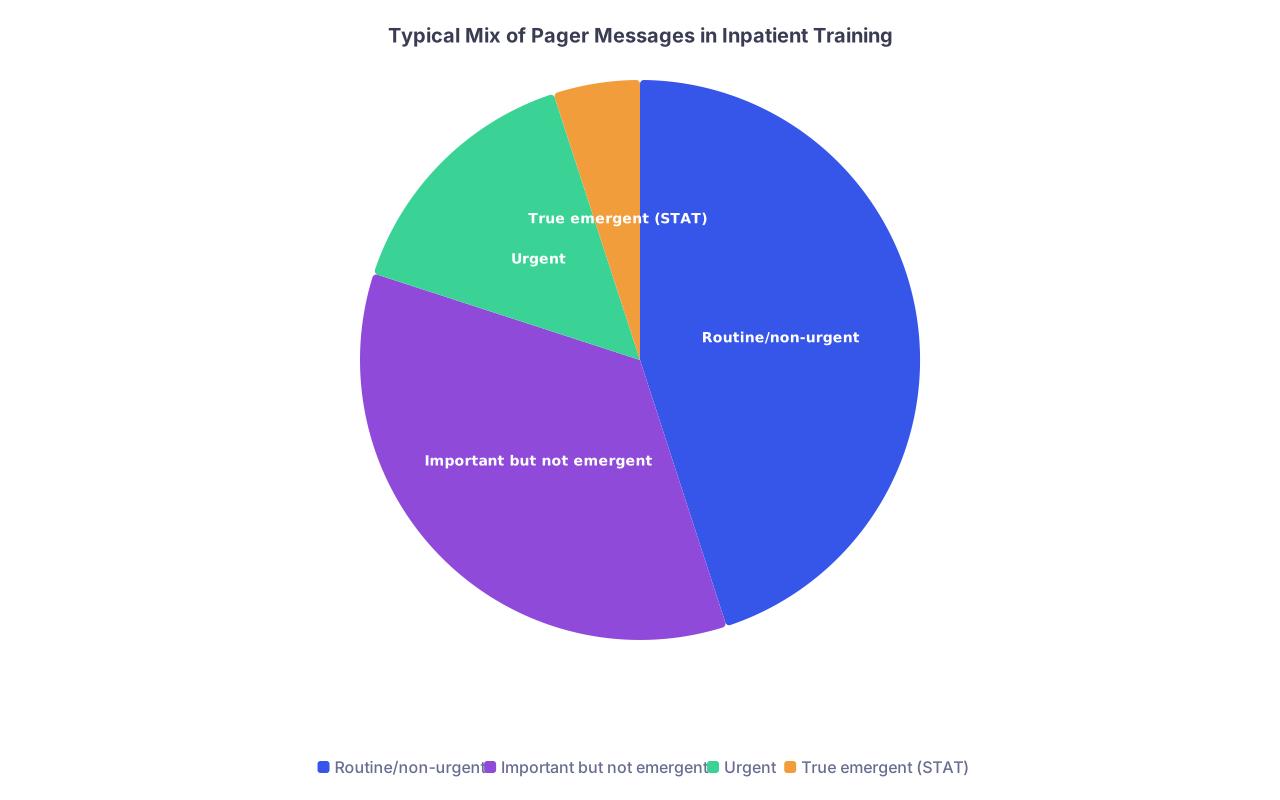
| Category | Value |
|---|---|
| Routine/non-urgent | 45 |
| Important but not emergent | 35 |
| Urgent | 15 |
| True emergent (STAT) | 5 |
Most pages aren’t codes. Many aren’t even close. But some absolutely are.
Here’s the ethical framework:
STAT / Code / RRT / “not responding” / “can’t feel a pulse” / “SpO2 70s” / “BP 60/30”
You move first. You breathe while moving, not instead of moving.Clearly urgent but not code-level (“new chest pain”, “new focal neuro deficit”, “massive GI bleed”, “acutely suicidal comments”)
You respond immediately—no “let me finish this 5‑minute meditation.” One breath, then phone.Important but not crashing (“high fever, stable vitals”, “pain uncontrolled but vitals fine”, “blood sugar 350 but asymptomatic”, “med dosing question”)
Here you can afford a 5–15 second reset to keep from snapping or making dumb charting mistakes.Routine (“diet order clarification”, “sleep med request”, “lab redraw”, “PT wants updated orders”)
You can usually finish the sentence with your current patient, then respond. Mindfulness here primarily protects you from frustration and burnout.
The key: urgency dictates how long you can pause, not your stress level.
How to use mindfulness without delaying care
Here’s what I recommend resident and student wise, based on what actually works at 2 a.m. when you’re on call.
1. Build “micro-pauses” into the first 2–3 seconds
You do not need two minutes. You need two seconds used well.
Try this sequence when the pager goes off:
- Feel your feet on the floor or your body in the chair. One second.
- Slowly let your exhale be just a bit longer than usual. Another second.
- While you’re exhaling, your eyes are already on the screen, reading who/where/why.
You’re not frozen. You’re aware. You answer or move immediately after that.
Typical internal script I’ve seen work:
“Buzz → feet → long exhale → read → respond.”
That’s mindfulness. And it takes about as long as fumbling with your badge.
2. Respond while regulating
You don’t have to be calm before you respond. You can become calmer as you go.
A code pager goes off. What’s acceptable:
- You stand up fast. You’re already walking.
- While walking, you take one slow deep breath, one long exhale, and consciously drop your shoulders.
- You mentally say: “Okay, one thing at a time: ABCs, call for help, don’t solo this.”
What’s not acceptable:
- You stay seated to complete a full body scan.
- You justify a delay with “I make better decisions when mindful.”
If you’re in acute care, patient physiology beats your preferred practice style. Every time.
3. Use clear communication as a mindfulness tool
Mindfulness isn’t only breathing. It’s also exact, deliberate communication that reduces chaos.
Examples:
Pager: “Pt in 310 having chest pain”
You: “This is Dr. X. I’m on my way to the bedside now. Put them on the monitor, get vitals, get an EKG if you can, and call RRT if they look unstable. I’ll be there in under 2 minutes.”Pager: “Family wants update, angry at nurse”
You (calling back): “I’m currently at another bedside. I can come in about 10–15 minutes. Is anyone unsafe right now, or is this mainly about communication and frustration?”
That’s mindful—clear timing, clear expectations, and attention to safety.
4. Protect current patient while honoring the page
You’re in the middle of explaining a new cancer diagnosis and your pager explodes. Ethically messy moment.
Here’s the move:
You glance quickly at the pager: if it’s “STAT,” you say:
“I’m so sorry, this is an emergency page. I have to step out right now. I will come back as soon as I possibly can, or have my colleague step in. I’m not abandoning this conversation.”
You leave. You breathe in the hallway.If it’s non‑STAT (“pain med request”, “dressing change question”), you use mindful transparency:
“My pager is going off. I want to finish what I was explaining. I’m going to silence it for the next minute so I can stay fully with you, then I’ll step out and respond. Is that okay?”
Mindfulness here is choosing presence over flailing multitask mode.
Ethical bottom line: what do you owe your patients?
There are three non-negotiables, no matter how psychologically sophisticated you are.

| Step | Description |
|---|---|
| Step 1 | Pager goes off |
| Step 2 | Look at message |
| Step 3 | Move immediately |
| Step 4 | Micro breath while moving |
| Step 5 | Call back now |
| Step 6 | Use mindful tone |
| Step 7 | Finish current sentence |
| Step 8 | Return call within reasonable time |
| Step 9 | Emergent risk? |
| Step 10 | Time sensitive? |
Duty of care
You have:
- A duty to respond to urgent communications in a timeframe consistent with your role and the clinical setting
- A duty not to knowingly delay time-sensitive care for personal regulation
- A duty to maintain enough mental clarity to make safe decisions
That third duty is where mindfulness comes in. Chronic reactivity, anger, or panic put patients at risk too. A burned-out, flooded intern is not “safer” just because they responded 5 seconds faster but made a bad decision.
Beneficence and nonmaleficence
Ethically speaking:
- If your mindfulness practice reduces your likelihood of snapping at nurses, missing key info, or writing sloppy orders because you’re dysregulated → that serves beneficence.
- If your mindfulness practice increases response time for acutely ill patients → that violates nonmaleficence.
So you calibrate: micro mindfulness in the urgent; longer mindfulness in the routine or between tasks.
Practical scripts: what’s actually okay to do
Here are very concrete patterns that work in real training environments.
When the page is clearly urgent
You:
- Stand or start walking before you’ve fully processed the content
- Breathe on the move
- Use one mental anchor: “First vital signs, then differential”
What you do not do:
- Stay seated to finish a 4‑cycle box breathing routine
- Say to yourself, “I can’t respond until I feel centered”
When the page is probably non-urgent
You can:
- Finish your sentence with the current patient and say, “Give me 15 seconds to respond to this, then I’m right back with you.”
- Take one slow inhale and longer exhale before dialing.
- Intentionally soften your tone: “Hi, this is Dr. X, sorry if you’ve been waiting.”
The mindfulness here prevents the classic snarky “What do you NEED?” response that destroys team trust.
When you’re overwhelmed by constant paging
This is where mindfulness really matters.

You can:
- Between pages (not during a crashing patient), take 30–60 seconds to close your eyes, feel your breath, and label what’s happening: “Overwhelmed. Tired. Still capable.”
- Use mindful prioritization: write down “Stat → urgent → routine” with times.
- Step away for a brief mindful reset when your shift partner covers for you. That’s not selfish; it’s survival.
You can’t:
- Ignore ringing devices under the label of “self-care” when you’re the responsible clinician
- Tell nurses “I was meditating” when they were trying to reach you about a decompensating patient
How to explain your approach to colleagues
If you’re worried others will think you’re “slow” or “touchy-feely,” don’t use the word mindfulness at all. Use words they already respect: “clear,” “focused,” “safe.”
Example framing with a co-resident:
“I’ve realized I make fewer stupid mistakes if I mentally pause for one breath when the pager goes off. It doesn’t slow me down—if anything it keeps me from barking or writing the wrong order. If it’s STAT, I’m obviously moving while I do it.”
Or with nursing:
“If you ever think I’m not responding quickly enough for a sick patient, I want you to say that explicitly on the page or phone. I might take a deep breath while walking, but I won’t sit on anything time‑sensitive.”
That’s mindfulness backed with accountability. People can work with that.
Where longer mindfulness actually belongs
You want real, restorative practice? Put it:
- Before sign-out, in the call room or your car
- After a bad outcome, as a 5–10‑minute reset
- On days off, as a regular sitting or movement practice
- In structured programs (MBSR, physician wellness groups, therapy)

The more you build trait-level mindfulness outside the chaos, the less you need “big” interventions in the moment. Then those 2–3 second micro-pauses genuinely shift your nervous system because you’ve trained that capacity.
Simple decision guide: can I pause?
Use this quick internal checklist:
| Situation | Acceptable Pause | Example Practice |
|---|---|---|
| Code / STAT / RRT | 0–1 sec | Breathe while moving |
| Clearly urgent, not code | 1–3 sec | One slow exhale, then call |
| Important but stable | 5–15 sec | Brief orienting, then respond |
| Routine, no safety concern | 30–60 sec | Finish task, then call |
If you’re above those ranges, you should have a good clinical reason (not “I needed a complete reset”).
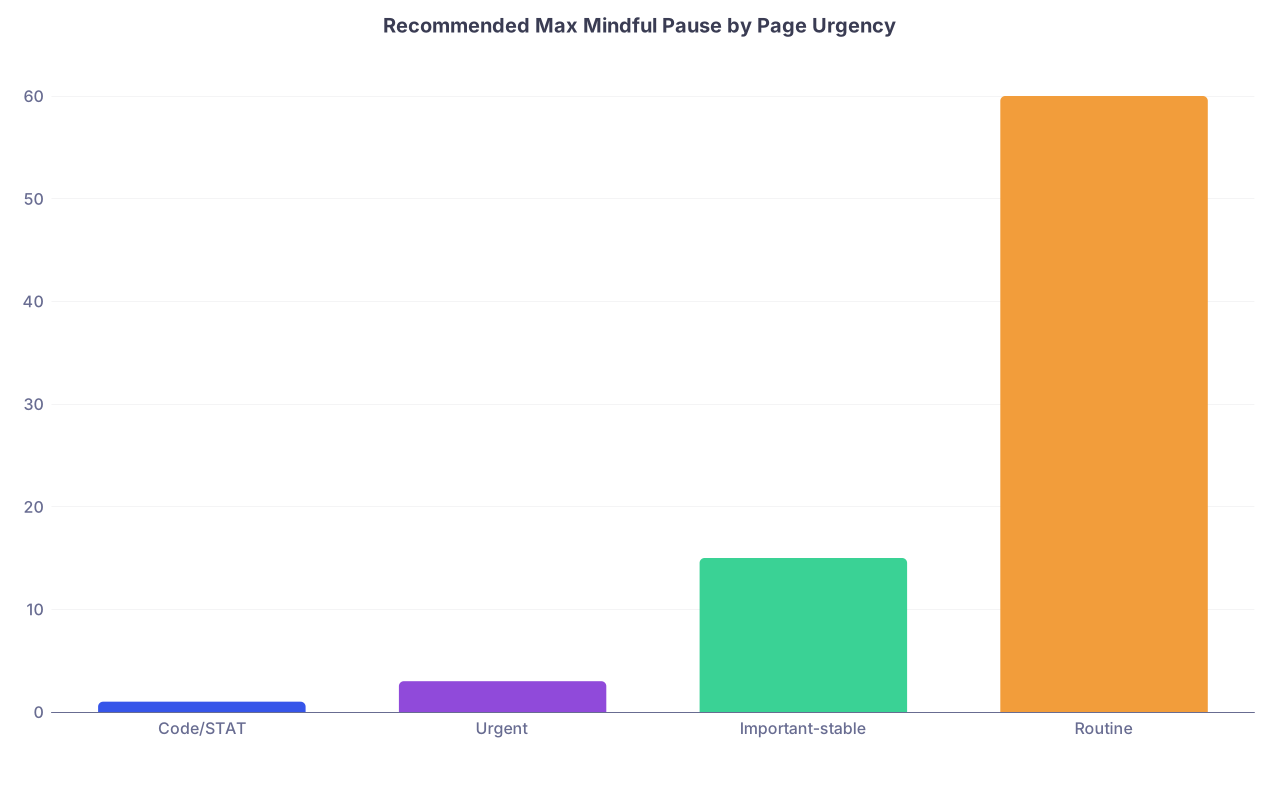
| Category | Value |
|---|---|
| Code/STAT | 1 |
| Urgent | 3 |
| Important-stable | 15 |
| Routine | 60 |
The bottom-line answer
So, is it okay to use mindfulness instead of immediately responding to pages?
Here’s the clean, honest answer:
- It’s okay—and smart—to use 1–3 second mindful micro-pauses as you respond.
- It’s not okay to significantly delay urgent or emergent responses in the name of mindfulness.
- The more critical the situation, the shorter the pause—and the more your mindfulness happens while you move, not before.
- For non-urgent pages, brief mindful pauses that improve your tone, clarity, and decisions are ethically sound and clinically helpful.
You are not choosing between being a “good mindful person” and a “good doctor.” You’re choosing how to use mindfulness so you can be both.

FAQ (7 questions)
1. Can I ever ignore a page to finish a mindfulness exercise?
If you’re clinically responsible for patients at that moment, no. You can silence non-urgent notifications for short pre-defined periods only when you’ve handed off coverage or are off duty. Mindfulness does not exempt you from being reachable when you’re on.
2. What if I genuinely panic when my pager goes off—shouldn’t I calm down first?
You calm down while responding. Stand up, start walking or pick up the phone, and pair that action with a long exhale. If the panic is severe or persistent, that’s a sign you need deeper support (therapy, coaching, schedule adjustments), not just more in-the-moment techniques.
3. Is it unprofessional to admit I’m using mindfulness at work?
It depends on culture, but usually you don’t need to label it. Saying “I’m just taking a second to get my thoughts straight so I don’t miss anything” is usually well received. Many attendings already do this—they just call it “taking a moment.”
4. How do I handle constant pages without losing my mind?
Use batching when safe: respond to true urgencies immediately, cluster lower-priority issues every 10–15 minutes. Between clusters, take a 30–60 second reset: stand, breathe, quickly re-prioritize. And talk with your team about what really needs paging vs. sign-out vs. an order set.
5. Could I get in legal trouble for delaying a response due to mindfulness?
You’d get in trouble for delaying an appropriate response, period. The reason would matter little. If an emergent issue wasn’t addressed in a timely way, “I was meditating” will not protect you and will look bad. Keep emergent response times fast; keep mindfulness micro in those contexts.
6. Are there specific mindfulness techniques best suited for pager chaos?
Yes: single-breath awareness, longer exhale breathing, feeling your feet on the floor, and brief labeling (“overwhelmed, okay, next action is…”) are ideal. They’re fast, portable, and you can do them while you’re already in motion.
7. How can I train this so it becomes automatic on busy shifts?
Practice off-shift first. Set a timer or use normal phone notifications as “mini-pager drills”: notification → one breath → read → respond. Build a 5–10 minute daily mindfulness habit on days off. Over time, your nervous system learns the pattern, and those 1–3 second pauses at work become natural and effective, not forced.
Key points to keep:
- Urgency dictates how long you can pause, not your stress level.
- Micro-mindfulness (seconds) is not just okay—it usually makes you safer, if you still respond promptly.
- Longer practices belong between tasks or off shift, never as a reason to delay emergent care.


