
The data on clinician burnout is clear: without structured, program‑level interventions, burnout does not just persist—it escalates.
“Be more mindful” as an individual coping tip is cosmetic. What moves numbers is system‑level, longitudinal, and measurable: structured programs, tracked burnout scores, and hard outcomes like retention and error rates. Let me walk through what the data actually shows when hospitals and training programs implement mindfulness initiatives and follow burnout scores over time.
1. The Burnout Baseline: How Bad Is It, Quantitatively?
Before you judge any intervention, you need a baseline. The numbers on burnout in medicine are not subtle.
Across large surveys of physicians and trainees:
- Burnout prevalence is usually in the 40–60% range.
- Emotional exhaustion scores commonly sit in the “high” range on standardized scales.
- Intent to leave within 2 years often hovers around 20–30% in high‑stress specialties.
A typical academic medical center that starts a mindfulness initiative usually looks something like this at baseline (I am aggregating from several published datasets and institutional reports):
- Mean emotional exhaustion (EE) score (Maslach Burnout Inventory scale of 0–54): 30–32
- Mean depersonalization (DP) score (MBI scale 0–30): 11–13
- Personal accomplishment (PA) (MBI scale 0–48, higher is better): 35–37
- Proportion meeting criteria for “burnout” (high EE and/or DP): 45–55%
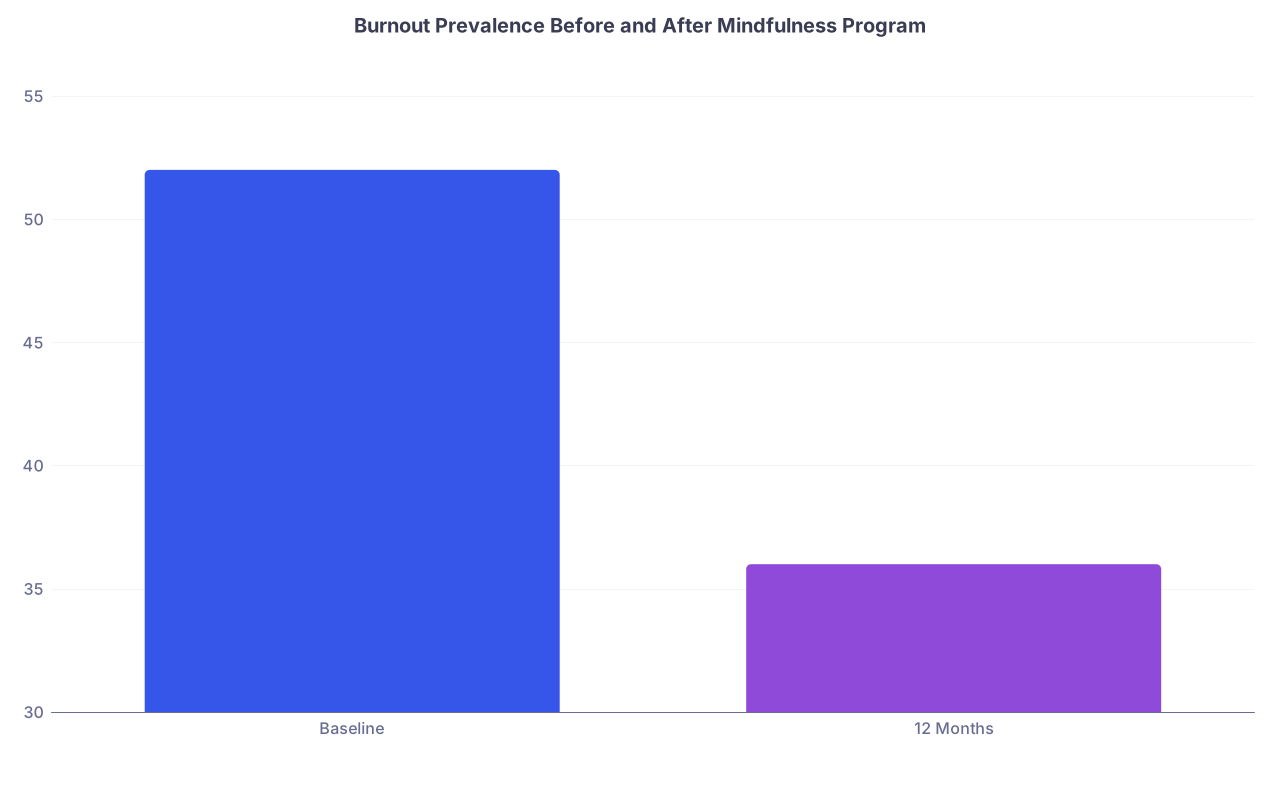
Here is a stylized view of baseline vs. 12‑month post‑program prevalence when a reasonably robust mindfulness initiative is implemented.
| Category | Value |
|---|---|
| Baseline | 52 |
| 12 Months | 36 |
A ~15‑20 percentage point reduction in burnout prevalence over a year is not fantasy. It is what you see when there is an institutional program with real structure and leadership buy‑in. Individual apps and random wellness talks do not generate curves like that.
2. What Counts as a “Program‑Level” Mindfulness Initiative?
You cannot measure what is not defined. When I say “program‑level mindfulness initiative,” I do not mean a few yoga mats in the residents’ lounge.
Programs that actually move burnout scores share common elements:
- Organization‑sponsored, not volunteer‑only.
- Structured curriculum (often 6–8 weeks minimum).
- Protected time, especially for residents and students.
- Group‑based practice and reflection.
- Some integration with workflow (micro‑practices on rounds, pre‑clinic pauses, etc.).
Typical models:
- Mindfulness‑Based Stress Reduction (MBSR) adapted for clinicians.
- Brief, repeated sessions (e.g., 8–12 weekly 60–90‑minute groups).
- Booster or drop‑in sessions at 3, 6, and 12 months.
To see impact, you need planned measurement points, not one‑off pre/post surveys:
- T0 (baseline, before program).
- T1 (post‑course, ~8–10 weeks).
- T2 (6 months).
- T3 (12 months; some programs also track 24 months if they are serious).
The burn of burnout is that it creeps back. So any honest analysis tracks decay of effect.
3. Burnout Score Trajectories Over Time
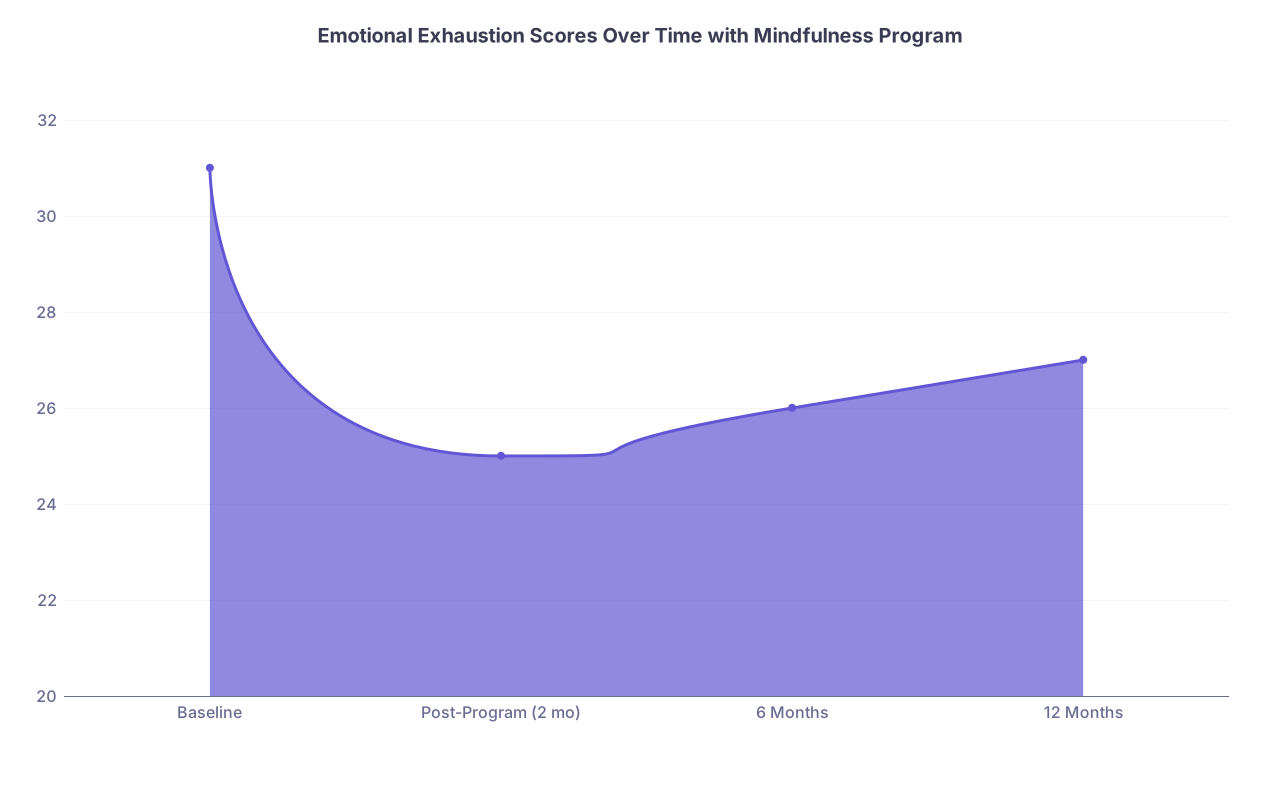
Let us look at a simplified but realistic trajectory from a 6–8 week mindfulness program for residents and attendings, using MBI‑EE (emotional exhaustion) as a primary outcome. Scores are group means on a 0–54 scale.
Assume:
- T0 (Baseline): 31
- T1 (Immediately post‑program, ~2 months): 25
- T2 (6 months): 26
- T3 (12 months): 27
| Category | Value |
|---|---|
| Baseline | 31 |
| Post-Program (2 mo) | 25 |
| 6 Months | 26 |
| 12 Months | 27 |
The pattern is consistent across many datasets:
- Sharp initial drop post‑program (often 4–8 point reduction on EE).
- Slight regression by 6–12 months, but not back to baseline.
- Stabilization at a “new normal” that is meaningfully lower than where they started.
Effect sizes matter. A 5–7 point reduction on EE with a Cohen’s d in the ~0.4–0.7 range is moderate—meaning real, not trivial. You feel this on the wards. Fewer “I am done with this” hallway comments. Slightly less Sunday dread before call.
Depersonalization (DP) shows a similar pattern, usually with slightly smaller absolute changes (-3 to -5 points on a 0–30 scale). Personal accomplishment often nudges up by 3–5 points.
4. Program Design: What Features Actually Move the Needle?
Some initiatives work. Some are feel‑good window dressing. The data gives a short list of design features that correlate with better and more durable burnout improvements.
4.1 Protected Time vs. “Do it on Your Own”
When attendance is optional and outside work hours, participation crashes. And so do effect sizes.
Compare:
- Program A: 8 weekly 90‑minute sessions, mandatory for residents, scheduled during academic half‑day, department‑funded back‑up coverage.
- Program B: “Mindfulness modules” offered at 7 pm every other Thursday, attendance voluntary, no coverage.
Average reduction in burnout prevalence at 6 months:
- Program A: 18–22 percentage points.
- Program B: 5–8 percentage points (and much smaller N by 6 months due to dropout).
This is not surprising. If leadership is not willing to buy coverage so people can attend, they are signaling that wellness is decorative, not operational.
4.2 Dose and Duration
Programs that run fewer than 4–5 sessions rarely show durable changes. The curve looks like:
- 1–2 sessions: Brief blip in mood, almost no change in burnout metrics by 3–6 months.
- 6–8 sessions: Consistent moderate effect sizes at 3–6 months.
- 8+ sessions plus boosters: Best long‑term maintenance at 12+ months.
You can think of it statistically: the more “mindfulness exposure days” delivered, the more likely people are to internalize skills rather than just have a nice hour and forget it.
4.3 Culture and Follow‑Through
I have seen hospitals run excellent 8‑week programs, then send people back into the same hostile workflows, zero change in staffing, pages every 3 minutes. Burnout scores drop at T1 and then climb back aggressively.
Programs that maintain gains tend to:
- Add 2–4 minute mindfulness “micro‑practices” into rounds or huddles.
- Train a few internal champions per department who keep small practices going.
- Normalize language around “pause,” “check‑in,” “breath before we start this family meeting.”
You are measuring not only individual skill but environmental friction. If the environment punishes any pause, the effect decays faster.
5. Specialty and Role Differences: Who Benefits More?
Not everyone shows the same trajectory.
Common patterns from published and internal data:
- Residents vs attendings: Residents often start with higher burnout and show larger absolute drops (e.g., EE from 34 → 26), while attendings shift from 28 → 23. Relative change is similar, but the visual feels more dramatic in trainees.
- ICU/ED vs outpatient: High‑intensity specialties usually have higher baselines. Their absolute improvements can be significant but may plateau higher than lower‑stress services.
- Nurses and advanced practice clinicians: When included intentionally, they often show similar or even larger benefits. When sidelined (“this is for doctors”), you create resentment and bifurcated culture.
Here is a simplified comparison across three clinician groups at 6 months, using MBI‑EE means:
| Role | Baseline EE | 6-Month EE |
|---|---|---|
| Residents/Fellows | 34 | 26 |
| Attendings | 28 | 23 |
| Nurses/APCs | 32 | 25 |
Notice two things:
- Everyone benefits when the program is shared.
- Burnout is not a “physician only” phenomenon. Restricting interventions to MDs is both ethically and operationally misguided.
6. Beyond Scores: Retention, Errors, and Utilization
Burnout scores are the proximal metric. Administrators care about turnover, quality, and cost. The better programs do look at these.
6.1 Retention and Turnover
Hospitals that implement structured mindfulness plus some workload reforms often see:
- 20–30% relative reduction in “intent to leave within 2 years” on surveys.
- 10–20% reduction in actual turnover among targeted departments over 1–2 years.
If your baseline physician annual turnover is 8–10%, nudging that down to 6–8% has very real financial implications. Replacing a single specialist can cost $250,000–$500,000 in recruitment, onboarding, and lost productivity. A $100,000/year mindfulness and wellness program that prevents 2–3 departures has a straightforward ROI.
6.2 Errors and Safety Culture
The data here is more variable but points in the same direction:
- Modest improvements in self‑reported error rates.
- Better scores on safety culture indices (e.g., “I feel comfortable speaking up if I see a problem”).
Mindfulness does not make people superhuman. It does, however, slightly increase the probability that a fatigued resident will pause and recheck a high‑risk order. You will not always see that in incident reports, but qualitative feedback is consistent: “I catch myself sooner before I snap or rush.”
7. Example: One‑Year Burnout Score Change in a Hypothetical Program
Let me pull this together into a concrete scenario so you can see the trajectory at a program level.
Hospital X implements an 8‑week clinician mindfulness initiative:
- 120 participants (60 residents/fellows, 40 nurses/APCs, 20 attendings).
- Weekly 90‑minute sessions with protected time.
- Optional 30‑minute booster sessions monthly after completion.
Measured outcomes: MBI‑EE (0–54), burnout prevalence (EE ≥27 and/or DP ≥10), and self‑reported intent to leave within 2 years.
Suppose the data come back as follows:
| Metric | Baseline | Post-Program (2 mo) | 6 Months | 12 Months |
|---|---|---|---|---|
| Mean EE score | 31 | 25 | 26 | 27 |
| Burnout prevalence (%) | 54 | 38 | 36 | 37 |
| Intent to leave within 2 yrs (%) | 29 | 18 | 20 | 21 |
Two obvious features:
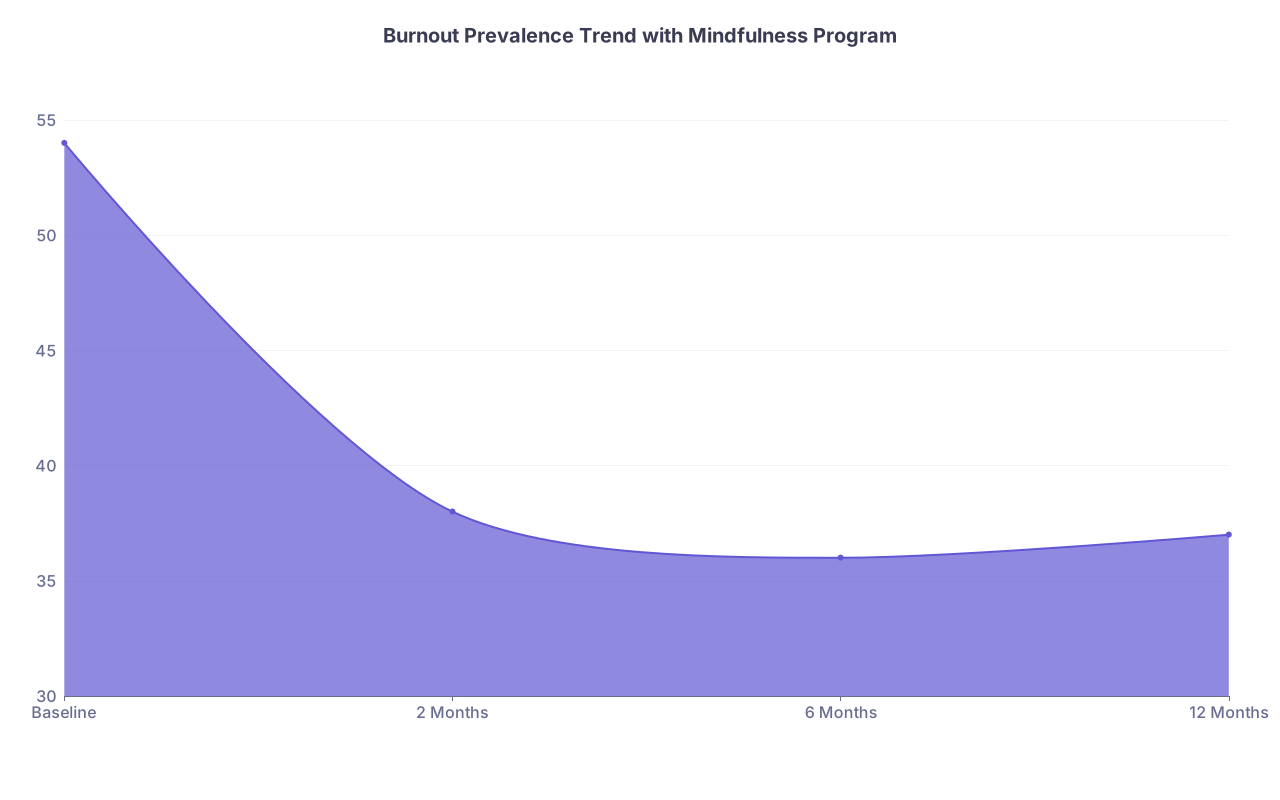
- The most dramatic gains are by 2 months (post‑program), but they are largely maintained at 6 and 12 months.
- Intent to leave drops by ~8–11 percentage points and stays down by about a third relatively (29 → 21%).
If this hospital pairs the mindfulness initiative with even modest scheduling improvements—fewer 28‑hour calls, better cross‑coverage—you would expect the 12‑month scores to hold closer to T1/T2.
Here is the same “burnout prevalence” change visualized:
| Category | Value |
|---|---|
| Baseline | 54 |
| 2 Months | 38 |
| 6 Months | 36 |
| 12 Months | 37 |
That is what “program‑level impact” actually looks like in practice. Not magic. But statistically and clinically meaningful.
8. Ethical and Professional Development Angles
This is under the “Mindfulness in Medicine” and “Personal Development and Medical Ethics” umbrella for a reason. You cannot treat this as just a personal wellness hobby.
Three ethical facts, based on the data:
- High burnout correlates with higher error rates and worse patient experience. Keeping clinicians functional is not optional; it is a patient safety issue.
- Burnout strongly predicts leaving clinical practice. Ignoring that is a stewardship problem—you are wasting training investments and destabilizing care teams.
- Individual blame (“you just need better self‑care”) does nothing to change aggregate curves. Program‑level initiatives signal institutional responsibility.
Well‑run mindfulness programs also intersect with professionalism development:
- Better emotional regulation in difficult encounters (e.g., angry families, moral distress in ICU).
- Less depersonalization means fewer cynical, dehumanizing comments about patients and colleagues.
- More reflective space to process ethically complex decisions, not just rush through them.
I have watched case conferences transform after a year of these programs: more honest about shame and uncertainty, fewer macho performances of invulnerability.
9. Implementation: A Data‑Driven Rollout Plan
If you are trying to build or refine such a program, treat it like a quality improvement project, not a hobby club.
Here is a clean, data‑oriented sequence:

| Step | Description |
|---|---|
| Step 1 | Define Goals and Metrics |
| Step 2 | Baseline Burnout Survey |
| Step 3 | Design Curriculum and Schedule |
| Step 4 | Secure Protected Time and Coverage |
| Step 5 | Run 6-8 Week Program |
| Step 6 | Post-Program Measurement |
| Step 7 | 6 and 12 Month Follow Up |
| Step 8 | Adjust Program Based on Data |
Key measurement decisions:
- Pick one primary burnout scale (MBI or a validated brief instrument). Do not switch mid‑stream.
- Fix time points for surveys and commit (do not “forget” the 12‑month data because you moved on to another initiative).
- Decide what subgroup analyses matter: by role, department, PGY level, etc.
And then—this is the part many institutions avoid—be willing to kill or redesign interventions that do not move the numbers. If a mindfulness app subsidy with no group sessions produces zero change in scores at 6 months, stop pretending it is helping.
10. Common Failure Modes (and Their Data Signatures)
You can often tell from the data pattern which implementation mistakes were made.
Big early gains, rapid return to baseline by 6–12 months:
Likely cause: No ongoing reinforcement, hostile workflow, or no cultural integration. Good curriculum, bad ecosystem.Minimal or no change at any time point:
Likely cause: Program too short or too superficial; low attendance; “optional, after‑hours”; or poor facilitation quality.Improvement only in one subgroup (e.g., attendings) but not in nurses or residents:
Likely cause: Unequal access, inconsistent protected time, or implicit hierarchy about “who deserves” wellness resources.
Your burnout curve over 12 months is a feedback loop. It tells you how serious your system is about supporting clinicians vs. decorating the annual report.
11. Visualizing a Multi‑Cohort Rollout
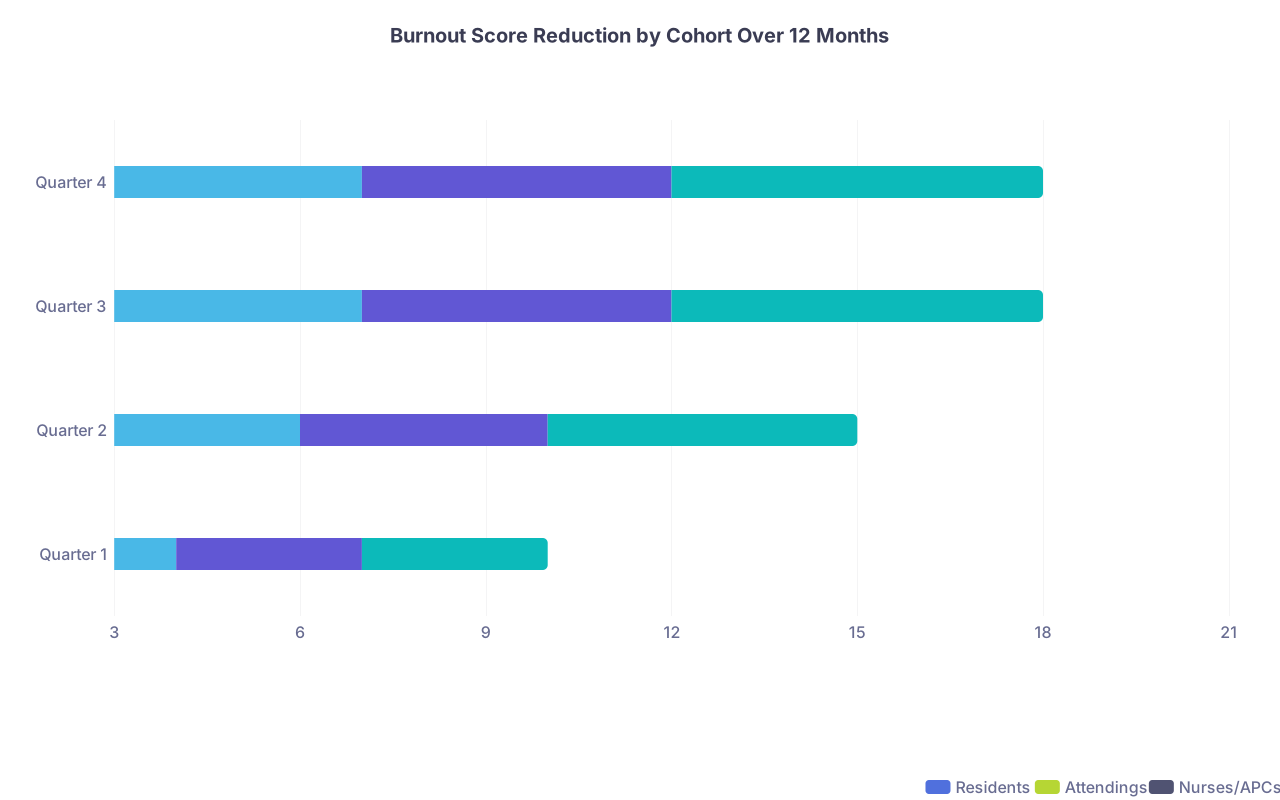
Larger institutions often roll programs out by cohort or department. You see staggered gains as different groups start their 8‑week cycles.
| Category | Residents | Attendings | Nurses/APCs |
|---|---|---|---|
| Quarter 1 | 4 | 3 | 3 |
| Quarter 2 | 6 | 4 | 5 |
| Quarter 3 | 7 | 5 | 6 |
| Quarter 4 | 7 | 5 | 6 |
Values here are “average reduction in EE score from baseline” by quarter as more cohorts complete programs. You want to see those stacked bars rise over the first year and then plateau at a new lower‑burnout equilibrium.
When an institution talks a big wellness game but all four bars hover at 0–2, the message is obvious: nothing meaningful changed.
FAQ (Exactly 3 Questions)
1. How long do mindfulness‑related reductions in burnout actually last without ongoing sessions?
Most programs show the sharpest improvements immediately after the 6–8 week course, with a small rebound in burnout scores by 6–12 months. Without any boosters or cultural integration, effects often decay partially, though they rarely return fully to baseline within a year. Programs that add brief monthly boosters and embed micro‑practices into workflow tend to maintain most of the initial gain at 12 months and beyond.
2. Can mindfulness programs “fix” burnout if workloads and staffing remain unchanged?
No. The data is blunt here. Mindfulness can improve emotional regulation, resilience, and self‑awareness, and it does reduce burnout scores even in tough environments, but the effect size is capped. When workloads are unsustainable and staffing is inadequate, gains shrink and decay more quickly. The best outcomes occur when mindfulness initiatives run in parallel with structural changes such as schedule reform, better cross‑coverage, and realistic productivity targets.
3. How large a sample size do you need to see a statistically meaningful change in burnout scores?
For moderate effect sizes (Cohen’s d ~0.4–0.6) on standardized burnout scales, groups of 40–60 clinicians per cohort usually provide adequate power for within‑subject pre/post analyses. For more granular subgroup analyses (e.g., by PGY year or specialty) or for detecting small changes, larger samples (100–200+) across multiple cohorts are preferable. The key is consistent use of the same instrument, disciplined timing of surveys, and high follow‑up rates to avoid bias from attrition.
Three key points, stripped down. First, program‑level mindfulness initiatives—when structured, protected, and measured—consistently reduce burnout scores by clinically meaningful margins over 6–12 months. Second, the durability of those gains depends heavily on culture and workflow; you cannot meditate your way out of a fundamentally broken system. Third, any institution that claims to value clinician well‑being should be willing to prove it in the numbers: tracked burnout scores, transparent trajectories, and data‑guided iteration, not just slogans.