
What if I send this email and they report me to the chief of staff? What if security escort me out because I asked to shadow someone in a hospital that doesn't even teach medical students?
That knot in your stomach when you look at a local community hospital's website is completely real. I've felt it. You open the page, looking for a clear button that says "Premed Shadowing Application" or "Student Research Portal," and there is... nothing. Just a telephone directory, a list of clinics, and photos of smiling doctors who look far too busy to care about your medical school application.
It feels like trying to board a train that doesn't have a station platform. At big academic medical centers, there are built-in lectures, resident lounges, sub-internships, and formal pipelines. The path is stamped on the floor in color-coded tape. But at community hospitals or independent health systems without residency programs? You're standing in an empty lobby, terrified that even opening your mouth makes you a nuisance.
Here is the truth: not having a residency program doesn't mean a hospital is a dead end. It just means the doors aren't propped open with a neon sign.
In fact, these hospitals can be absolute goldmines for meaningful shadowing, hands-on clinical experience, and letters of recommendation that actually sound personal instead of copy-pasted by an overworked fellow. You just have to change how you look for them. The process is slower. It's localized. And yes, it relies entirely on your own initiative. But you can do this without destroying your nerves.
Know Who Actually Has Influence in These Hospitals
When you don't have a residency director or a clerkship coordinator to email, who are you supposed to talk to? My panicked brain used to assume the only option was to cold-email the Chief of Medicine. Don't do that. That is a quick way to get ignored or, worse, flagged as someone who doesn't understand hospital etiquette.
You need to map the informal network. Hospitals without residents operate on relationships and operational efficiency, not academic hierarchies.
Surprisingly, some of your best advocates won't be physicians at all.
- Nurse Managers and Charge Nurses: They run the units. They know which attendings love teaching, which ones are stressed out, and who is easy to shadow. If a nurse manager likes you, doors magically open.
- Volunteer Coordinators: They are used to dealing with administrative compliance. They know the exact paperwork required to get a non-employee past badge access legally.
- Education Coordinators or Medical Staff Office Staff: Even without residents, hospitals have credentialing departments. They handle continuing medical education (CME) for staff. They know who is active in clinical trials or community outreach.
- Hospitalists and Private Attending Physicians: Hospitalists are employed directly by the facility and often have structured shift patterns, making them more accessible than private practice surgeons rushing between three different surgical centers.
To find these people, dig into the hospital's online staff directory, look up local clinic press releases, or read through the "Our Team" pages on specialty department sites. Look for doctors who publish local health columns or lead community health initiatives. Those are the clinicians who actually enjoy public engagement.
How to Reach Out Without Sounding Desperate or Inappropriate
I used to spend three hours drafting a single five-sentence email, terrified that a typo would end my medical career before it started. The fear of sounding needy can paralyze you into writing a three-page essay explaining your entire life story, your childhood dream of becoming a surgeon, and your deep anxiety about getting into medical school.
Please don't do that. Busy clinicians don't have time to read your personal statement in an inbox preview.
Your outreach needs to be short, respectful, and remarkably low-lift for the recipient. You want to make it as easy as possible for them to say "yes" without feeling like they just accepted a part-time job as your personal career coach.

Here is the golden rule for cold outreach: One short email. One polite follow-up. Then move on.
What to Include in Your Initial Message:
- Who you are: One sentence. (e.g., "I am a gap-year applicant living in [City] preparing for the upcoming application cycle.")
- Why this specific hospital/doctor: One sentence referencing their specific practice, specialty, or community role.
- The explicit ask: Keep it small. Don't ask for "a mentorship relationship." Ask for a single 15-minute phone call or a single half-day of observation.
- The low-lift reassurance: Let them know you already have your immunizations updated, HIPAA training ready (if applicable), and clear availability.
Example Outreach Script:
Subject: Shadowing Inquiry / Local Premed Student - [Your Name]
Dear Dr. [Last Name],
I am a local post-baccalaureate student currently applying to medical school, and I am deeply interested in community internal medicine. I came across your work with the outpatient diabetes clinic at [Hospital Name] and really admire your patient-centered approach.
I am writing to ask if it might be possible to shadow you for a single half-day session this month, or if you might have 10 minutes for a brief phone conversation about your path in medicine. I am fully vaccinated, HIPAA compliant, and happy to complete any hospital credentialing paperwork required.
I know your schedule is extremely demanding, so I completely understand if your current bandwidth doesn't allow for visitors right now.
Thank you for your time and for all you do for our community.
Best regards, [Your Name] [Your Phone Number]
If you don't hear back within 7 to 10 days, send one soft follow-up on the same thread:
Dear Dr. [Last Name], I know how busy your clinic is, so I just wanted to gently bump this to the top of your inbox. If you don't have the capacity for a student right now, no worries at all! Thanks again for your time.
If they don't reply to that, leave it alone. Silence isn't a personal rejection; it just means their inbox is flooded or their department policy is complicated.
Where to Find Opportunities When There Is No Residency Pipeline
When a hospital doesn't have an academic office handing out student assignments, you have to look for alternative entry points. You aren't sneaking in; you're just using doors that aren't marked "Student Center."
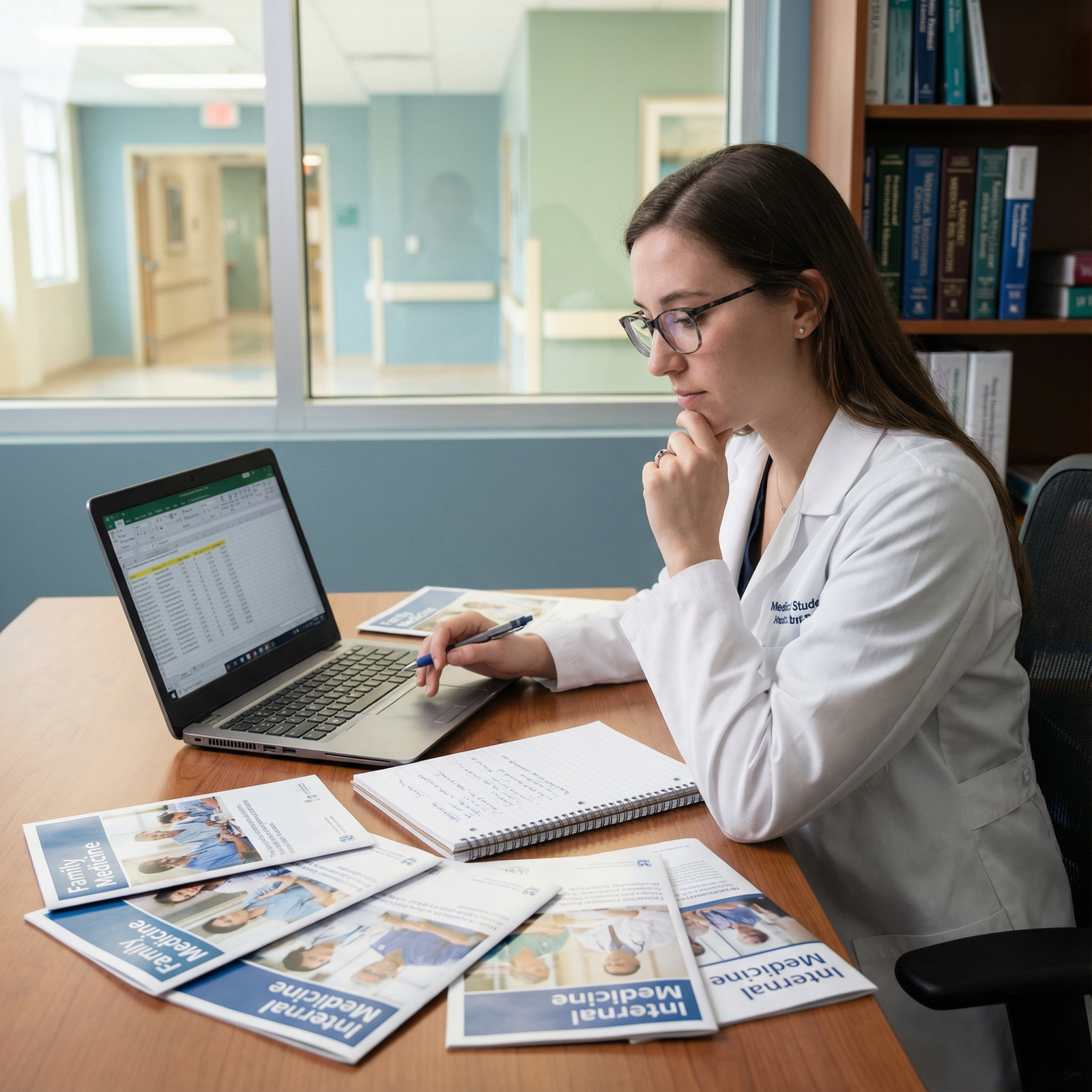
Look closely at these underutilized entry avenues:
- The Hospital Volunteer Department: This is the easiest legal way to get a badge. Once you have a badge, you're an insider. You can talk to nurses on your breaks, meet department unit clerks, and naturally express your interest in shadowing physicians you cross paths with.
- Quality Improvement (QI) and Patient Safety Teams: Non-residency hospitals still have to maintain accreditation. They constantly run QI projects on readmission rates, sepsis protocol compliance, or patient satisfaction. Reach out to the hospital's Quality Director, they are often desperate for meticulous individuals to assist with chart reviews or data collection.
- Outpatient & Affiliated Specialty Clinics: Main hospital buildings often have strict security protocols for non-employees, but satellite outpatient clinics owned by the hospital system are frequently much more flexible.
- Emergency Department Observation Programs: Many community EDs rely on scribes or research volunteers for clinical protocols. Even if they don't have a formal scribe program, the ED Medical Director is used to managing high volumes of staff and may be open to observation shifts.
- Adjacent Allied Health Professionals: Don't limit yourself to MDs and DOs. Physician Assistants (PAs), Clinical Pharmacists, and Physical Therapists work alongside attendings every day. Shadowing a clinical pharmacist in an independent hospital can give you an incredible understanding of pharmacology while putting you right next to the physicians making round orders.
Track everything. The moment you start reaching out to multiple people, your brain will turn into a scramble of panicked "Did I reply to Dr. Smith or Dr. Stevens?" Keep a simple spreadsheet with names, titles, dates contacted, and status.
Turning Brief Encounters Into Real Professional Relationships
Let's say the miracle happens: a private physician or hospitalist says yes. You get to shadow for half a day.
What now? How do you prevent that single shift from fading into nothingness?
Worst-case scenario thinking tells us: "If I email them afterward, I'm being clingy." Nonsense. A professional, polite follow-up is basic courtesy. The key is making sure you don't treat people like stepping stones for a letter of recommendation. Clinicians can smell fake networking from a mile away.
How to Build Genuine Trust:
- Show up early and disappear when appropriate: Arrive 15 minutes early. Read the room. If a patient is deteriorating or a difficult family conversation is happening, ask quietly if the doctor prefers you step into the hallway. They will respect your situational awareness.
- Send a specific thank-you note within 24 hours: Don't just say "Thanks for letting me shadow." Mention something specific you observed. "Thank you for taking the time to show me how you explained the complex test results to the patient in Room 4. Seeing how you alleviated their anxiety was inspiring."
- Offer value, even if it's small: If they mention a clinical article or a community initiative during your shift, follow up on it. "I read that study on SGLT2 inhibitors you mentioned yesterday, fascinating findings on renal protection."
- Maintain sporadic contact: You don't need to email them every week. Send a brief update every 2-3 months. "Hi Dr. [Name], just wanted to drop a quick update: I completed my EMT certification this month! Thanks again for your guidance back in January."
Only after you have established consistent reliability and had multiple positive interactions should you even think about asking for advice on your application or requesting a letter of recommendation.
Common Mistakes That Make Applicants Invisible
When anxiety takes over, we tend to make erratic moves. I've watched brilliant applicants ruin their chances at local hospitals simply because panic drove their strategy.
Avoid these critical mistakes:
- The Mass-BCC Email Blast: Sending the exact same email to 30 doctors at once. Hospital staff talk to each other. If two attendings realize they received the exact same generic template, both will delete it.
- Ignoring the Support Staff: Treating unit clerks, medical assistants, or technicians like obstacles instead of colleagues. If you are rude to the receptionist, the physician will hear about it, and your opportunity will vanish instantly.
- Giving Up After One Unanswered Message: Assuming that a lack of response means "they hate me." Doctors receive hundreds of emails a day regarding patient care, administrative mandates, and billing. Your email simply slipped down the inbox queue.
- Failing to Track Compliance: Showing up without your immunization records, flu shot documentation, or requested paperwork ready. If a coordinator has to chase you down for basic forms, you become a burden.
Rejection and silence are normal parts of this process. They are not a measurement of your worth or your potential as a future physician.
A Simple 30-Day Networking Plan You Can Actually Follow
Stop worrying about the next six months. Focus on a manageable 30-day execution plan. Consistency trumps desperate frantic energy every single time.
Week 1: Mapping & Research
├── Map out 2 local hospitals without residency programs.
├── Identify 5 potential contacts (Volunteer Office, QI Director, Outpatient Attending).
└── Verify your personal compliance docs (immunizations, TB tests, resume).

Week 2: Targeted Outreach
├── Draft custom outreach messages for 3 selected contacts.
├── Send emails Tuesday morning between 7:00 AM and 8:30 AM.
└── Log sent dates in your tracking spreadsheet.

Week 3: Follow-Up & Initial Contacts
├── Send ONE polite follow-up to unanswered emails from Week 2.
├── Respond immediately (within 4 hours) to any positive replies.
└── Complete any required background checks or orientation modules.

Week 4: Execution & Reflection
├── Attend your first shadowing shift, volunteer shift, or phone chat.
├── Send a personalized thank-you email within 24 hours.
└── Schedule your next check-in or follow-up task on your calendar.
Progress isn't measured by whether you secured a letter of recommendation from the Chief of Surgery this month. Progress is measured by following the plan consistently, staying organized, and putting yourself out there despite the anxiety.
You don't need a massive, prestigious university hospital to build a legitimate, powerful professional network. You just need patience, respect, and the willingness to take the first quiet step.