The most important conversations about your residency application never touch ERAS, never hit your email, and never get recorded in your file. They happen in backchannel networking chains. And if you do not understand how they work, you are walking into the Match half‑blind.
Let me tell you what actually happens behind the curtain.
What Residency Backchannel Networking Chains Really Are
Backchannel networking in residency is not some formal conspiracy. It is more like an underground nervous system connecting program directors, faculty, chiefs, and residents across the country.
Everyone in leadership pretends this is “limited” and “rare.” That is fiction.
In reality, there are three overlapping layers:
- Faculty‑to‑faculty and PD‑to‑PD texts/emails
- Resident and fellow group chats/Signal/WhatsApp slacks
- Old‑fashioned phone calls between people who trained together, did fellowship together, or served on committees together
Nobody writes “BACKCHANNEL” at the top of an email. It looks like:
“Hey, got an applicant from your place – what’s the real story?”
“You worked with this guy at away X – solid or headache?”
“We’re ranking [Applicant Name]. Any red flags we should know before we go high?”
And then, somewhere else in the country, your fate shifts, and you will never know why.
How These Chains Form (And Why You’re Not In Them)
Backchannel chains exist because medicine is small and lazy. People trust people they know, more than they trust a polished personal statement or a de‑identified dean’s letter.
Here’s where the real network comes from:
- Residents who did away rotations and then matched elsewhere
- Fellows who split time between institutions
- Faculty who trained together 5–20 years ago and now run programs
- National societies (APDIM, AOA, surgical subspecialty groups) where PDs all see each other twice a year and gossip in hallways
You think of “Program X vs Program Y.” They think of “Oh, that’s Mike’s place. I’ll text Mike.”
You are not the main character in these conversations. You are the file that prompts them to remember someone they did residency with and send a quick text.
And most students completely misunderstand the direction of these networks. They imagine some applicant‑driven strategy: “If I get to know this resident, they will ‘advocate’ for me and call the PD.”
No. The heavy traffic goes the other way:
- PD sees your app
- PD or associate PD asks, “Does anyone know this person?”
- Someone in the room or on the group chat inevitably does
- A quiet, unrecorded mini‑reference check happens in 2–5 messages
Your job is not to “run the chain.” You cannot. Your job is to make sure that when your name shows up in those conversations, the default story is simple: safe, reliable, good to work with.
What Actually Gets Shared Behind The Scenes
Let’s be very blunt. Programs do not care about “holistic review” once they are past their initial screen. They care about avoiding disasters.
On the backchannel, they ask one basic question:
“If I put this person in a call room at 3 a.m., am I going to regret it?”
Here’s the kind of content that moves through those chains, divided into what actually matters and what you think matters but does not.
The stuff that really moves the needle
Work ethic and reliability
“Shows up early, stays late, doesn’t complain” vs. “Chronically late, disappears on notes, always has a story.”
I’ve watched a PD move an applicant down 20+ spots on the rank list after a trusted colleague replied, “Very smart but unreliable and blames others.”Team behavior
Residents do not mince words with each other.- “Great on nights, team loved her”
- “Constant drama with nurses”
- “Argues with seniors; thinks they know more than they do”
This is the most powerful currency in resident group chats. One senior at a big IM program once told me, “If the nurses hate you, I’m not going to bat for you. Period.”
Professionalism and red flags
This is where the backchannel becomes lethal. Things like:- Boundary issues with patients
- Inappropriate comments, aggressive behavior, big ego
- Sketchy charting, embellishing physical exams, near‑misses covered sloppily
These may be “handled” quietly at your home program. They are not forgotten. Another PD can get a one‑line summary: “Had some professionalism issues; we were glad when they graduated.”
True star power
The positive version. There are residents whose names make PDs lean forward:- “Top 1–2 student I’ve worked with in 10 years”
- “This guy carried the team; our seniors still quote him”
- “I’d hire her for faculty here in a heartbeat”
For competitive subspecialties (ortho, derm, plastics, some fellowships), this kind of praise gets you pulled up the list quickly.
Fit relative to program culture
Backchannel messages are usually short but pointed:- “Super academic, might be bored at a small community place”
- “Very independent, will thrive in busy county setting”
- “Late bloomer; needs structure and strong supervision”
Some programs will move you down not because you are “bad,” but because someone they trust says, “They won’t be happy here.”
The stuff you obsess about that matters far less
- Your exact Step score once you are past the cutoff
- Whether your personal statement sounded “unique”
- Perfect wording of your hobbies section
- That one awkward moment in one interview
None of that is driving the backchannel. They’re not texting each other about your love of rock climbing. They’re asking, “Can this person do the job, and will they be a pain?”
How And When Backchanneling Happens In The Application Cycle
It is not constant. There are windows where this goes from background noise to high volume.
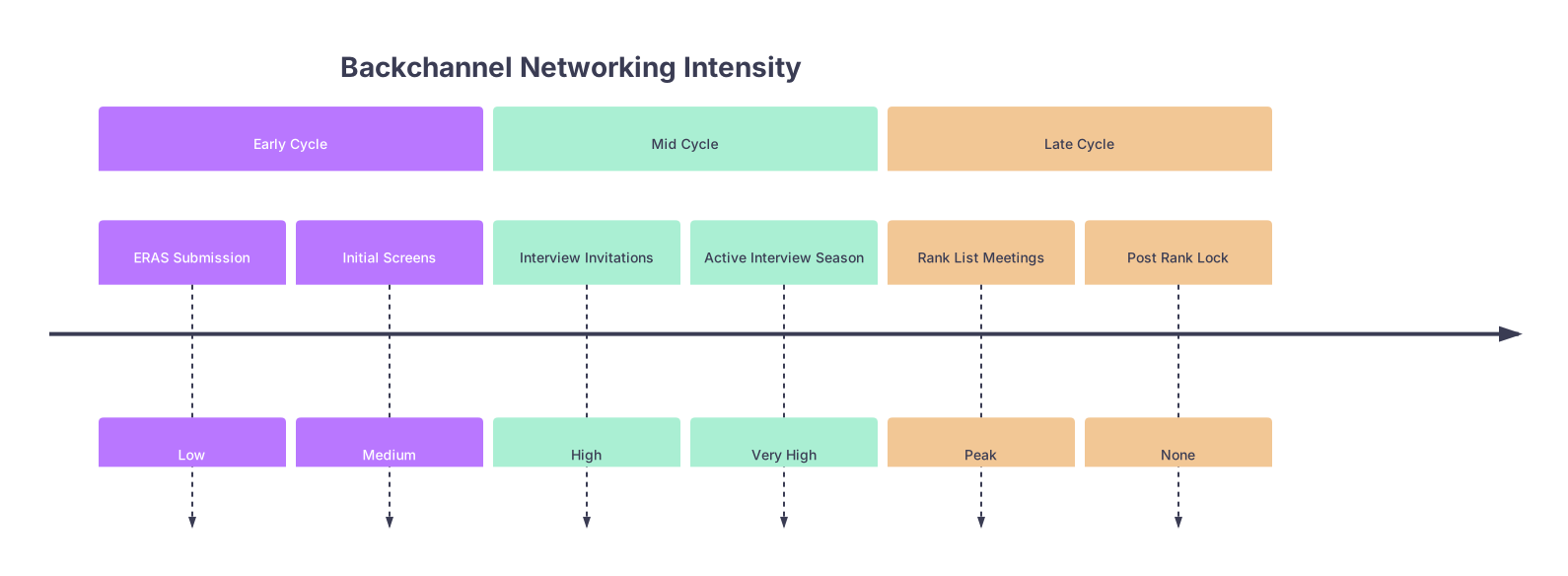
| Period | Event |
|---|---|
| Early Cycle - ERAS Submission | Low |
| Early Cycle - Initial Screens | Medium |
| Mid Cycle - Interview Invitations | High |
| Mid Cycle - Active Interview Season | Very High |
| Late Cycle - Rank List Meetings | Peak |
| Late Cycle - Post Rank Lock | None |
Here is the honest anatomy:
1. Pre‑interview screening
Programs open ERAS and drown in applications. A few things happen:
- PDs and APDs skim filters, then specific names pop: same med school, someone from a favorite program, famous mentor letterhead.
- Quick texts go out: “You know this student from [Med School/Fellowship]? Worth a look?”
- The response can get you pulled out of the pile for an interview or quietly ignored.
This is where being known by anyone in that institution (faculty, fellow, even a senior resident) can give you a silent bump.
2. During interview season
This is where things heat up.
Residents talk. They go from interview day to workroom and debrief each other:
“Had [Applicant Name] today – super nice, but I’m not sure they understand how busy this place is.”
“That guy who wants competitive fellowship, did two aways with us – total gun, no attitude.”
Now layer in the inter‑program connections:
- Your home PD gets a text: “We interviewed your student today. Any reason to be worried?”
- Your away rotation senior fires off a quick email to their chief: “This student was great – you should flag them for rank list.”
- A fellowship director somewhere nudges their old residency program: “We’re interested in this applicant long‑term; you should look closely.”
You will never see any of this. But it absolutely shifts your gravity.
3. Rank list meetings
This is peak backchannel. This is when the quiet phone calls happen.
You have rank lists projected, names color‑coded. A PD hesitates on a borderline candidate:
“Anybody know this person from [other institution]?”
Someone steps out, texts, or calls a trusted colleague for a fast reality check. The answer may move you 30 slots up. Or off the rank list entirely.
At some programs, especially in competitive specialties, I’ve seen explicit “backchannel pending” notes on a few key names before the meeting ends. They submit the final list after those calls.
Real Examples Of How Backchanneling Saved Or Tanked Applicants
Let me give you the kind of stories PDs tell each other over coffee and never put in print.
The save: “We were going to pass”
Applicant from a mid‑tier MD school, Step not flashy, decent research. Applied to a strong academic IM program. On paper, they were fine but not memorable.
What changed:
- The program’s chief resident had rotated at this applicant’s school 2 years prior.
- Saw the name, texted a friend: “Any thoughts on [Name]?”
- Response: “Carried our ICU team, best student I had all year, zero drama.”
Result: They got an interview when they were borderline. On interview day, they performed well. During rank list meetings, that early “best student I had all year” line got repeated. They landed in the top third of the list and matched there.
Without that text, they don’t even get in the door.
The tank: “We dodged a bullet”
Applicant with strong metrics, big‑name letters, applying to a surgical subspecialty. Seductive on paper.
Red flag:
- Home institution quietly documented a “professionalism concern” after repeated conflicts with nurses and another resident. Nothing in the MSPE beyond vague wording.
- PD gets a call from an old co‑fellow at the applicant’s home program: “You’re going to see this person. On paper they look great. In real life they are toxic. We would not take them again.”
Result: The program still interviewed them (pre‑scheduled), but went into it cold. Lukewarm vibes confirmed. They slid from top‑10 projection to off the list. Another program with no backchannel input ranked them high. They matched there. That PD now quietly warns others.
This is the part you have to internalize: bad reputations do not die at graduation. They get exported.
How Your Name Actually Enters These Chains
You do not need some elaborate “networking strategy.” You need exposure with the right people, in the right way, so you exist in the minds of people who actually get asked.
Think of three categories: residents, faculty, and program leadership.
| Source | Typical Influence Level | How They Get Asked |
|---|---|---|
| Program Director | Very High | Direct PD-to-PD calls/texts |
| Core Faculty | High | PDs ask: "How was this student?" |
| Chief/Senior Residents | Moderate-High | Residents' group chats & debriefs |
| Fellows | Moderate | Connections to other institutions |
| Junior Residents | Low-Moderate | Informal mentions, group chats |
Residents
They don’t often initiate backchanneling, but they heavily shape the tone:
- They are the ones telling the “stories” about you after an away rotation.
- They decide if you are “one of us” or someone they’d dread seeing on their call schedule.
- Their unofficial impressions get relayed casually to chiefs, APDs, PDs.
They may also move your name forward: “Hey, [APD], that applicant who did nights with us – they were excellent. Just flagging.”
Faculty
This is where most of the inter‑institutional wiring lives.
- Attendings who move institutions bring their network with them.
- They sit in on rank list meetings and say, “I know this student – I’d be comfortable co‑signing them.”
- They answer those quick “What’s the real story?” texts.
Your job on rotations is not to impress every attending. It is to make 1–2 people remember you in a way that, months later, if they see your name in an email, they nod and say, “Yes, good one.”
Program leadership
This is where big swings happen.
- PDs trade references like currency.
- Associate PDs often serve as the “quiet investigative arm,” calling friends when they’re unsure.
You are not going to “network” your way into their group chats. But you can control what your own PD, clerkship directors, and letter writers actually think of you. That’s the local upstream source of your reputation.
How To Position Yourself So The Backchannel Helps You (Instead Of Hurting)
You cannot control the network. You can absolutely control the signal you send into it.
1. Stop pretending you’re anonymous on rotations
Every rotation is a future backchannel data point. Especially:
- Away rotations
- Sub‑Is at your home program in your chosen specialty
- ICU / ED months where people really see you under stress
Residents talk afterwards. Faculty remember patterns. If you’re “on” only when you think someone is evaluating you, people notice the inconsistency.
Baseline rules you ignore at your own risk:
- Answer pages. Follow up. Close loops.
- Own your mistakes out loud; don’t hide them.
- Respect nurses, RTs, pharmacists. If they like you, that rumor spreads too.
2. Cultivate 3–5 real advocates, not 30 shallow contacts
You do not need to “know everyone.” You need a few people who will voluntarily say, “I’d work with this person again.”
That means:
- Consistently showing up as prepared, curious, and reliable
- Asking for feedback, actually applying it, then circling back
- Letting a few people see you on bad days and still choosing to show up well
People go to bat for students they respect and like, not the ones who handed them the slickest CV.
3. Do not manufacture fake networking
Program directors aren’t impressed by a fourth email thanking them for the “wonderful opportunity to interview.” Residents roll their eyes at transparent flattery.
Better pattern:
- One sincere, specific thank‑you to a resident or faculty who genuinely helped you
- Occasional, low‑pressure updates to a mentor who knows you well (e.g., “I really appreciated your guidance about X; it shaped where I applied.”)
- Zero expectation that anyone is obligated to make calls for you
People can smell transactional behavior. Those are the names that show up in group chats with, “Any of you get a weird vibe?”
4. Protect your online and text reputation
The backchannel isn’t just phone calls. Screenshots live forever. I’ve seen:
- Applicants trashing programs in private group chats, then those screenshots getting forwarded to residents at those same programs.
- “Jokes” about patients or attendings copied and passed up the chain.
If you vent, do it to one trusted human off‑screen. Not in your med school Class of 20XX group chat.
5. Clean up any real red flags the adult way
If you’ve had:
- A professionalism write‑up
- A failed course or remediation
- A serious conflict on a team
You have two choices:
- Pretend it never happened and hope no one talks.
- Address it head‑on with the people writing your letters and your PD.
Option 1 is the fantasy path. Option 2 is what serious people do.
When you own it, reflect, and show changed behavior, at least some attendings will say: “Yeah, they had a bump early, but they grew a lot, and I’d still recommend them.” That kind of framing can blunt a negative backchannel story.
The Future: Backchannels Are Not Going Away – They’re Getting Faster
If you think the era of encrypted group chats and national Zoom meetings is going to decrease informal communication, you're kidding yourself.
The trend lines:
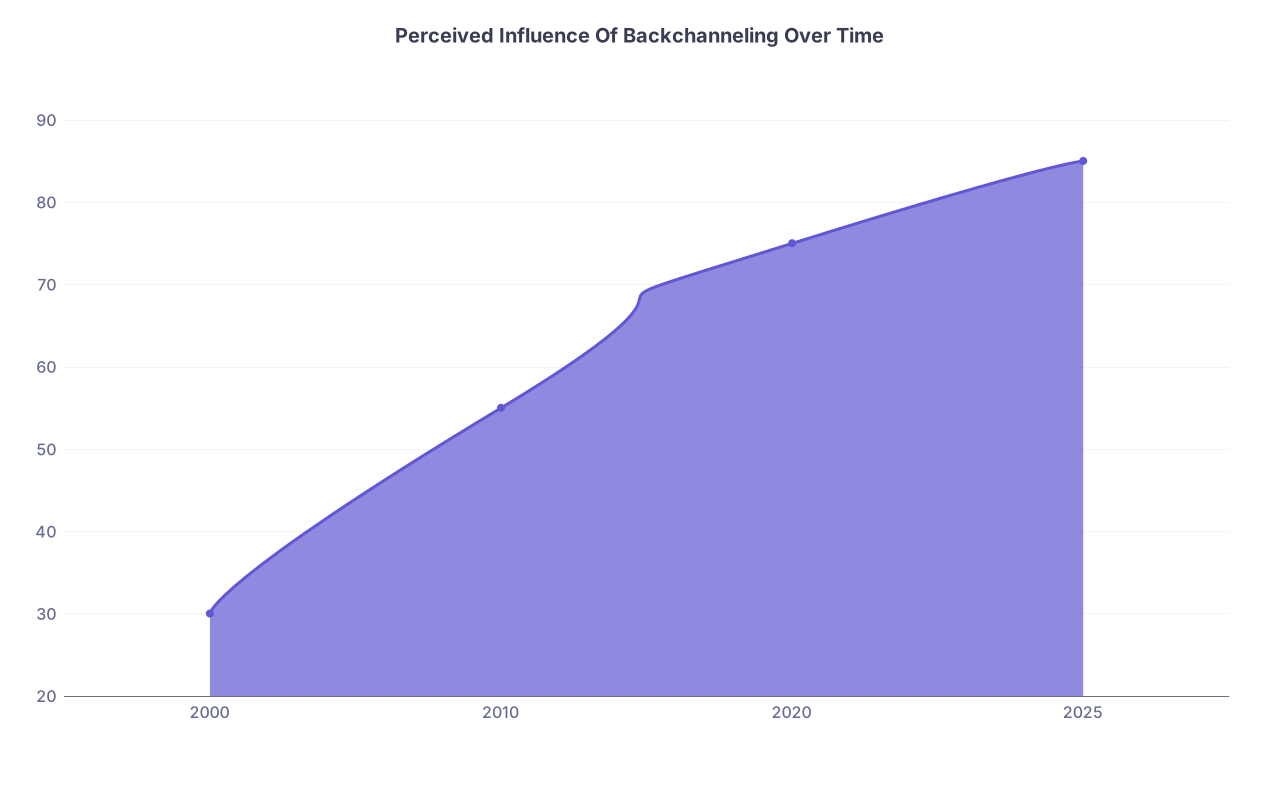
| Category | Value |
|---|---|
| 2000 | 30 |
| 2010 | 55 |
| 2020 | 75 |
| 2025 | 85 |
Programs are more anxious than ever about:
- Match violations
- “Problem residents” who take up disproportionate time, burn out faculty, threaten accreditation
- PR disasters and legal issues
So they do what humans do: they ask people they trust, off the record.
What might change:
- Some specialties will formalize parts of this – more structured phone calls, standardized post‑interview “reference” discussions.
- Others will keep it ad‑hoc but more frequent thanks to constant digital connectivity.
What will not change: the basic human equation. They still ask, “If I hire this person, am I going to sleep better or worse at night?”
If your application brand and your real‑world brand do not match, backchannel networking exposes that mismatch with ruthless efficiency.