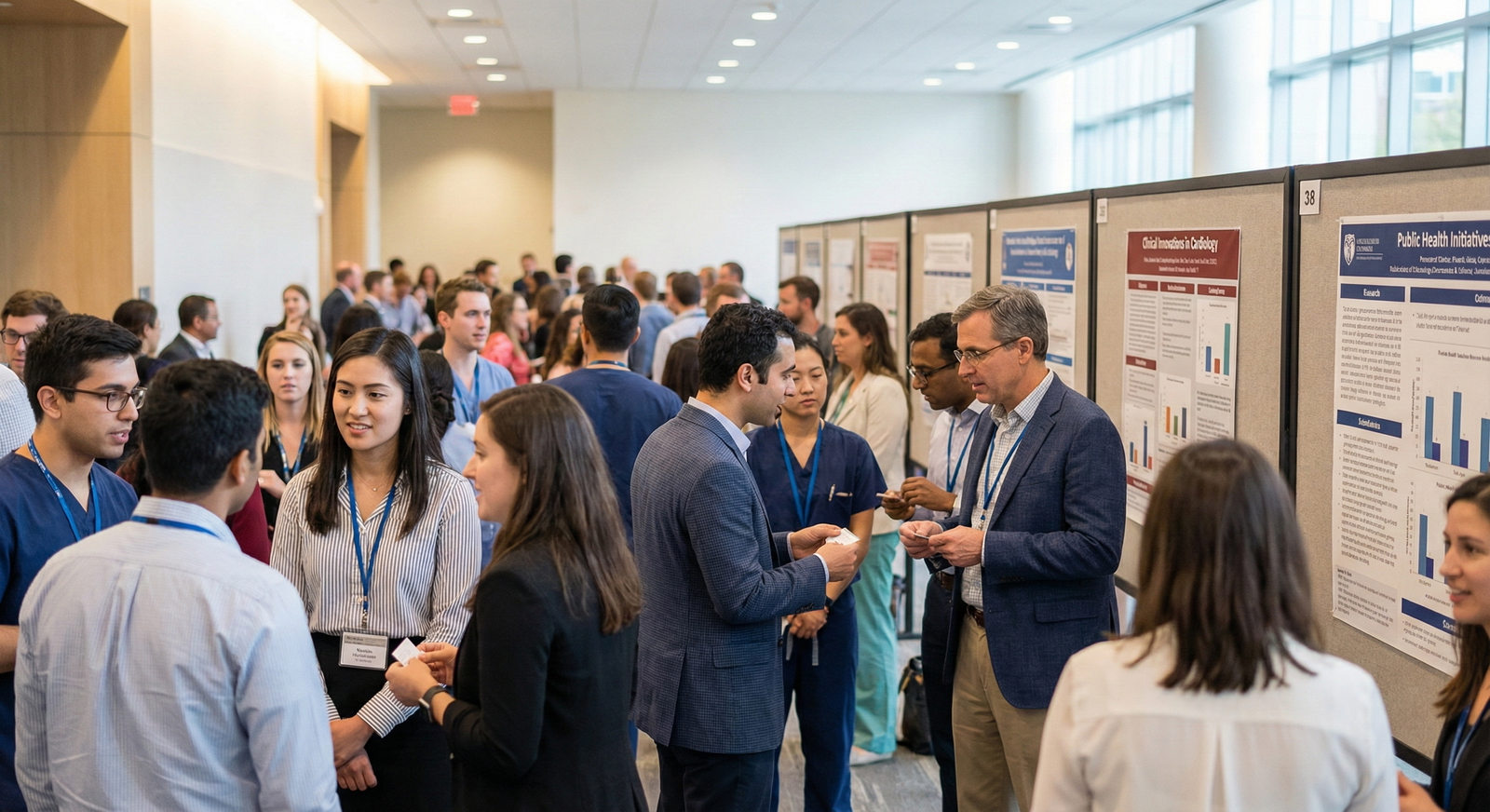
Why Networking Matters So Much for IMGs in General Surgery
For an international medical graduate, general surgery is one of the most competitive fields in the residency match. Strong scores, research, and clinical experience are essential—but often not sufficient. The hidden factor that frequently separates matched and unmatched applicants is strategic, authentic networking in medicine.
In the U.S. system, program directors and faculty prefer applicants they know, or who come recommended by people they trust. As an IMG, you typically start with:
- No existing alumni network in the U.S.
- Limited access to home‑institution “feeder” programs
- Fewer informal connections to chairs, PDs, and residents
Networking is how you bridge this gap. Done well, it helps you:
- Secure observerships, externships, and sub‑internships in general surgery
- Find research positions and publish with reputable teams
- Obtain strong, personalized letters of recommendation
- Learn insider details about programs and their culture
- Signal your commitment and professionalism long before ERAS opens
This IMG residency guide will walk through a practical strategy for medical networking—with specific focus on general surgery residency—so you can build real relationships and improve your chances in the surgery residency match.
Understanding the Landscape: Who You Need in Your Network
Effective networking in medicine is not about “knowing as many people as possible.” It is about knowing the right kinds of people, at different levels, with different roles in your journey.
1. Core Relationship Types in General Surgery
Think of your network as a team with complementary roles:
Sponsors
- Who they are: Department chairs, program directors, senior faculty, influential surgeons.
- What they do: Open doors—offer you interviews, positions, and recommend you to others.
- Example: A division chief who calls a colleague at another institution to recommend you for a research fellowship.
Mentors
- Who they are: Faculty, research supervisors, fellows, or senior residents.
- What they do: Guide your decisions, help you strategize the match, review your CV and personal statement.
- Example: An attending who meets you quarterly to discuss exam prep, publications, and program list creation.
Peers
- Who they are: Co‑researchers, other IMGs, current surgery residents, medical students.
- What they do: Share resources, provide moral support, practice interviews, alert you to unadvertised opportunities.
- Example: A co‑researcher who forwards an email about an open T32 research position in surgical oncology.
Advocates (Letter Writers)
- Who they are: People who know your work closely—research PIs, clinical supervisors, rotation preceptors.
- What they do: Write strong, detailed letters of recommendation and speak for you informally.
- Example: A surgeon who includes specific cases you scrubbed on and your technical progress in your LOR.
For IMGs, building relationships in all four categories is crucial because you often need:
- Mentors to help you understand the U.S. system
- Sponsors to overcome visa and institutional hesitations
- Advocates to write letters that truly stand out
- Peers to keep you informed and motivated
2. Where These People Can Be Found
Typical access points include:
- Academic general surgery departments (US or abroad with U.S. collaborations)
- Conferences and specialty meetings (ACS, SAGES, regional chapters)
- Research labs (clinical trials, outcomes research, basic science)
- Online platforms (LinkedIn, Twitter/X, institutional directories)
- Hospital‑affiliated courses (ATLS, suturing workshops, skills labs)
Your goal is to transform brief contacts into long‑term professional relationships—this guide will show you how.

Building Your Foundation: Professional Identity and Online Presence
Before you start reaching out, you need a clear professional identity and a polished digital footprint. This is how people will remember you and look you up after first contact.
1. Define Your “Professional Story”
You should be able to summarize who you are and what you want in 30–45 seconds. This is your elevator pitch.
Core elements for an IMG interested in general surgery residency:
- Background: Where you trained, any unique experiences.
- Current status: Exams completed, current work (research, observership, clinical role).
- Interests: Specific areas within general surgery (e.g., acute care, colorectal, surgical oncology).
- Goals: U.S. general surgery residency and career trajectory.
Example 45‑second pitch:
“I’m Dr. Singh, an international medical graduate from India with a strong interest in acute care and trauma surgery. I completed my medical school in 2021 and have passed USMLE Step 1 and Step 2 CK. Currently, I’m working on outcomes research in emergency general surgery at [Institution], focusing on optimizing triage for perforated viscus. My goal is to match into a U.S. general surgery residency, ideally in a program with strong trauma and critical care exposure, and ultimately pursue a surgical critical care fellowship.”
Practice this until it feels natural—you’ll use it constantly in conference networking, emails, and brief hallway introductions.
2. Optimize Your LinkedIn and Professional Profiles
In the modern era of mentorship in medicine, many surgeons and residents will look you up online. Make it easy for them to see your potential.
Minimum elements:
- Professional headshot (neutral background, business or clinical attire)
- Clear headline: “International Medical Graduate | Aspiring General Surgeon | Clinical Research Fellow – [Institution]”
- About section: 3–6 short paragraphs summarizing your training, interests, and goals
- Experience: Clinical rotations, research roles, leadership activities
- Publications and presentations: Highlight any surgical content
- Contact info: Professional email
Include your LinkedIn or professional webpage link in your email signature and on your CV. This creates multiple avenues for connection and follow‑up.
3. Clean Up Other Digital Footprints
Program directors and faculty may search your name. Ensure:
- Public social media accounts are professional or neutral
- No unprofessional posts, photos, or comments are visible
- Your name appears consistently (e.g., including middle initial if needed to distinguish you from others)
This step protects the reputation you are working hard to build through medical networking.
High-Yield Networking Opportunities for IMGs in General Surgery
You cannot be everywhere. You need to choose opportunities where your presence is most likely to translate into actual positions and mentorship.
1. Clinical Rotations: The Most Powerful Networking Tool
For an international medical graduate, U.S. clinical experience (USCE) in general surgery is often the single most valuable networking platform.
Why Rotations Matter
- Daily face‑to‑face contact with attendings and residents
- Chance to demonstrate work ethic, reliability, and teachability
- Direct observation that leads to strong, specific LORs
- Firsthand knowledge of program culture—vital for fit and ranking decisions
- Residents who know you can advocate for an interview
How to Maximize Networking on a Rotation
- Arrive early, leave late. Residents notice patterns of reliability.
- Know the patient list cold. Be the student who always knows labs, imaging, and overnight events.
- Ask for responsibility, not favors.
- “If you’re okay with it, I’d like to try writing the post‑op note for bed 4 so I can learn the workflow.”
- Seek small teaching moments.
- “Dr. Lopez, would you mind walking me through your approach to an open inguinal hernia repair when you have time?”
- Express your goals clearly.
- Let the chief resident and at least one attending know you aim to match in general surgery and appreciate any feedback on your readiness.
- End the rotation intentionally.
- Ask for brief feedback.
- If performance was strong, respectfully request a letter or future support.
- Say: “If I have questions during the application season, may I email you for advice?”
These experiences create natural mentorship and advocacy relationships you can build upon for years.
2. Research Positions and Labs as Networking Hubs
Research is not only for publications; it is a central networking engine in academic surgery.
Types of Research Roles
- Clinical outcomes research assistant or fellow
- Basic or translational science research fellow
- Quality improvement (QI) project collaborator
- Surgical education research assistant
Many IMGs enter the U.S. system through a 1–2 year full‑time research position in a general surgery department. This can transform your candidacy and network.
How Research Expands Your Network
- Daily contact with PIs, fellows, residents, statisticians, and administrators
- Multi‑institutional projects connect you with other centers and surgeons
- Abstracts and posters lead to conference networking opportunities
- Good performance may lead to strong letters and direct referrals to programs
Example:
An IMG research fellow works on a multicenter outcomes study under a busy surgical oncologist. The PI introduces them to a colleague who leads a surgical oncology program at another hospital. That colleague later offers an interview for a funded position based on the PI’s recommendation and the IMG’s work on the project.
How to Get Started
- Search departmental websites for “research fellow,” “post‑doctoral fellow,” or “clinical research assistant.”
- Email principal investigators directly with:
- A brief introduction (2–3 paragraphs)
- One‑page CV
- Statement of your goals (residency‑oriented)
- Any publications or presentations attached
- Highlight your reliability, statistics skills (if any), and willingness to work hard.
Persistent, polite follow‑up is crucial—many research roles are filled through informal networking rather than official job postings.

Conference and Online Networking: Turning Brief Encounters into Real Connections
1. Conference Networking: Planning and Execution
Conferences (local, regional, national) are high‑density environments for medical networking.
Relevant meetings for an aspiring general surgeon include:
- American College of Surgeons (ACS) Clinical Congress
- Society of American Gastrointestinal and Endoscopic Surgeons (SAGES)
- Eastern Association for the Surgery of Trauma (EAST)
- American Society of Colon and Rectal Surgeons (ASCRS)
- Regional ACS or state‑level chapters
Before the Conference
- Review the program: Identify sessions and speakers from institutions you’re interested in.
- Make a short target list: 5–10 people or departments to try to meet.
- Prepare your elevator pitch and update your CV (short, digital PDF).
- If you are presenting a poster or talk, practice it thoroughly.
During the Conference
- Visit poster sessions early and often. Poster presenters and discussants are usually very approachable faculty or fellows.
- Introduce yourself clearly:
- “Hello Dr. Chen, I’m [Name], an international medical graduate working in research at [Institution]. I’m very interested in minimally invasive general surgery and enjoyed your session on complex ventral hernia repair.”
- Ask 1–2 thoughtful questions: Show you read or listened actively.
- Express your goals briefly:
- “I’m hoping to apply for general surgery residency in the next [year]. I’d really value any advice you have for IMGs.”
- Ask permission to follow up:
- “Would it be alright if I emailed you after the conference with a brief question about research opportunities?”
Exchange business cards or connect on LinkedIn on the spot when possible.
After the Conference
- Within 48–72 hours, send a concise email:
- Remind them where you met
- Reference something specific you discussed
- Attach your CV only if appropriate (e.g., if you discussed opportunities)
- Example:
Subject: Follow-up from ACS poster session on emergency general surgery
Dear Dr. Rivera,
It was a pleasure meeting you at the ACS Clinical Congress after your discussion of the emergency general surgery outcomes panel. I appreciated your insights about early risk stratification in perforated diverticulitis.
As we discussed briefly, I am an international medical graduate currently working as a research fellow in general surgery at [Institution], with plans to apply for general surgery residency in [year]. If you are aware of any future collaborative research projects in emergency general surgery, I would be grateful to be considered to assist. I have attached my CV for your reference.
Thank you again for your time and for your thoughtful advice for IMGs.
Sincerely,
[Name]
This method converts conference networking into sustained connections.
2. Digital and Social Media Networking in Surgery
Platforms like Twitter/X, LinkedIn, and certain forums or community groups have become important spaces for mentorship in medicine and academic discussions.
Twitter/X in Academic Surgery
Many surgeons, residents, and organizations share:
- Case discussions (with de‑identified details)
- New publications and guidelines
- Calls for collaborators
- Application and interview advice
To use this space professionally:
- Create a profile focused on academic interests:
- Bio: “IMG aspiring general surgeon | Clinical research fellow @ [Institution] | Interested in acute care surgery & surgical outcomes research.”
- Follow:
- General surgery departments
- Notable academic surgeons
- Journals (Annals of Surgery, JAMA Surgery, etc.)
- Societies (ACS, SAGES, Eastern Surgical)
- Engage meaningfully:
- Like and retweet with a brief thoughtful comment
- Share your accepted abstracts or publications
- Avoid discussing patient details or controversial topics unprofessionally
Over time, consistent, respectful engagement can lead to direct messages, invitations to collaborate, and even informal mentorship.
LinkedIn for Professional Connections
- Connect with residents and fellows you meet at conferences or in rotations.
- Join relevant groups (e.g., General Surgery Residents & Students groups).
- Occasionally share: research milestones, conference posters, or relevant articles.
- When sending a connection request, add a brief personalized note referencing where you met.
Mentorship in Medicine: Finding, Growing, and Respecting Surgical Mentors
Mentorship is not a single relationship; it is a network of mentors, each helping you with different aspects of your path.
1. Types of Mentors You Should Seek as an IMG
- Career Mentors: Guide major decisions—when to apply, whether to take a research year, which specialty track.
- Content Mentors: Experts in your area of interest (e.g., colorectal, trauma, HPB) who sharpen your knowledge and research focus.
- Process Mentors: People who know the logistics of the match, visas, and ERAS and can help you with strategy.
- Peer Mentors: Recent graduates or residents just a few years ahead who can share practical tips in real time.
You may need different mentors at different institutions—this is normal and healthy.
2. How to Approach Potential Mentors
Good mentors are busy. Your job is to make it easy and rewarding for them to help you.
Initial email template:
- Subject: “IMG interested in general surgery – request for brief mentorship advice”
- 3–4 paragraphs total:
- Who you are (1–2 sentences)
- What you are doing now (USMLE status, role, research)
- Why you are contacting this person specifically
- Polite, concrete request (e.g., 20‑minute Zoom call or feedback on your overall strategy)
Be clear that you respect their time and are not asking for immediate letters or jobs. Build trust first.
3. Maintaining the Mentoring Relationship
- Be reliable: If you agree to a meeting, show up on time and be prepared.
- Send brief updates: Every 3–6 months, share your progress in 1–2 paragraphs.
- Act on feedback: Even if you can’t follow every suggestion, show that you considered it carefully.
- Offer help where appropriate:
- Assist with literature reviews
- Help with data collection
- Volunteer for tasks that ease their workload
Mentorship is a two‑way relationship; your effort and reliability are the “currency” you give back.
Practical Networking Strategies During the Surgery Residency Match
Once you enter the active application cycle, your networking should become more focused and strategic.
1. Before Applications Open
- Inform close mentors and sponsors of your target application year and specialty.
- Share a draft of your CV and personal statement with them.
- Ask if they would be comfortable writing you a strong letter—and give them plenty of time.
- Update your LinkedIn and, if applicable, your Twitter bio to reflect your application status.
2. During Application Season
Communicating With Programs (Respectfully)
You may send targeted, professional emails to programs where:
- You have a strong connection (research, rotation, mentor link), or
- You have a compelling geographic or institutional reason to be interested.
Structure your message to:
- Introduce yourself succinctly
- Mention your connection to the program
- Express specific interest (not generic compliments)
- Avoid sounding entitled or demanding an interview
Example:
Dear Dr. [Program Director],
My name is [Name], an international medical graduate currently completing a two‑year clinical research fellowship in general surgery at [Institution]. I recently applied to your general surgery residency program via ERAS.
I have been fortunate to collaborate with Dr. [Faculty Name] in [Area], and our work on [topic] has deepened my interest in academic general surgery, particularly in [subfield]. Your program’s strong emphasis on [feature—trauma exposure, research time, community service] aligns closely with my long‑term goals.
I understand how busy this period is for you, and I appreciate your time in reviewing my application.
Sincerely,
[Name, AAMC ID, contact info]
These communications can strengthen your impression if a program is already considering you.
Leveraging Your Network
- Inform mentors when you receive interview invitations from their institutions; they may help you understand what the program values.
- If a mentor has strong ties to a program where you have applied but not heard back, they may choose to voluntarily advocate for you. Do not pressure them.
3. During Interviews
Every interview day is also a networking event.
- Treat every interaction—from pre‑interview virtual socials to post‑interview Q&A sessions—as professional networking.
- Ask residents about their paths, including how they navigated being an IMG (if applicable).
- Connect with residents on LinkedIn afterwards with a brief thank‑you message.
- Take notes on each person you meet; names and stories will be useful when ranking programs or seeking future advice.
4. After Interviews
- Send individualized thank‑you notes to program directors and key faculty within 24–72 hours.
- Express gratitude, highlight something specific you appreciated, and reaffirm your interest if genuine.
- Do not violate NRMP rules—avoid discussing ranking intentions in ways that suggest coercion or explicit ranking promises.
Remember: even if you do not match at a particular program, people you impress may remember you for future opportunities (prelim spots, research roles, fellowships, or even job offers years later).
Common Mistakes IMGs Make in Medical Networking—and How to Avoid Them
Transactional Mindset
- Mistake: Only contacting people when you need something (e.g., a letter or job).
- Solution: Build relationships early. Offer help. Share your progress. Treat networks as long‑term, not one‑time.
Overly Aggressive or Frequent Communication
- Mistake: Repeatedly emailing faculty with no new updates or clear purpose.
- Solution: Space out communications. Always have a specific reason and respect boundaries.
Being Unprepared When Opportunities Arise
- Mistake: Meeting a chair at a conference but not having a clear pitch or updated CV.
- Solution: Maintain a polished CV and practiced introduction at all times.
Neglecting Peers and Residents
- Mistake: Focusing only on senior faculty and ignoring residents.
- Solution: Remember that residents can be powerful advocates and future colleagues.
Unprofessional Online Behavior
- Mistake: Posting sensitive clinical content, complaining about programs, or engaging in public arguments.
- Solution: Treat every online interaction as if your future program director is watching—because they might be.
Final Thoughts: Networking as a Professional Skill for Life
For an international medical graduate pursuing general surgery residency, networking in medicine is not optional—it is a core professional competency.
But importantly:
- Networking is not manipulation or superficial flattery.
- It is the systematic practice of building authentic, respectful relationships, contributing value, and staying connected over time.
If you approach the process with humility, curiosity, and reliability, your network will support you not only through the surgery residency match, but throughout your surgical career—from fellowship choices to academic promotions.
Frequently Asked Questions (FAQ)
1. When should I start networking if I’m an IMG aiming for general surgery?
Ideally, start 1–3 years before your intended application year. This gives you time to:
- Secure research or observership positions
- Build meaningful mentorship relationships
- Obtain strong letters of recommendation
- Attend at least one major conference and present work if possible
Even if you are closer to your application date, begin now; late is still better than never.
2. I’m shy and introverted. Can I still be effective at networking?
Yes. Many excellent surgeons are introverted. Focus on:
- One‑on‑one or small‑group conversations instead of large social events
- Written communication (thoughtful emails, messages)
- Long‑term mentor relationships rather than brief, superficial contacts
Preparation (practicing your introduction, planning questions) reduces anxiety and improves your confidence.
3. How many mentors do I need as an IMG?
There is no fixed number, but most successful applicants have:
- 1–2 primary career mentors (at least one in general surgery)
- 1–3 research or content mentors
- Several peer or near‑peer mentors (residents, fellows, senior IMGs)
Diversity is key—no single person can advise on everything.
4. Is it appropriate to ask a faculty member directly for a letter of recommendation?
Yes—if:
- They have worked with you closely (rotation, research, long‑term project)
- You have performed reliably and received positive feedback
When you ask, be specific and professional:
“Based on our work together on [rotation/project], would you feel comfortable writing a strong letter of recommendation to support my application for general surgery residency?”
Provide your CV, personal statement draft, and a summary of your work with them. This helps them write a detailed, supportive letter.
By applying these strategies consistently, you position yourself not just as an applicant, but as a future colleague in general surgery—someone programs and mentors will be excited to support.