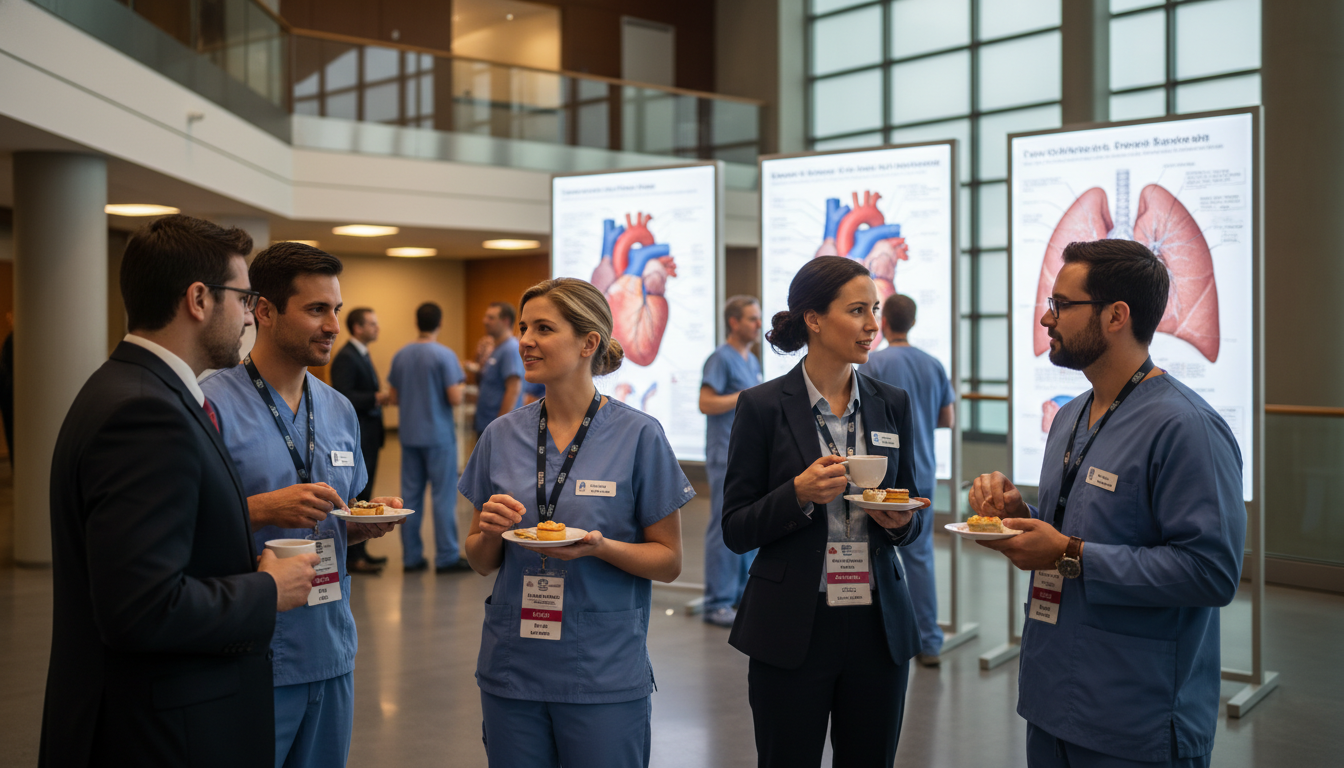
Why Networking Matters So Much for Caribbean IMGs in Vascular Surgery
For a Caribbean IMG targeting vascular surgery, networking in medicine is not optional—it is strategic survival.
Vascular surgery is a small, competitive field. Integrated vascular programs often receive hundreds of applications for a handful of positions. As a Caribbean medical school graduate, you compete not only on board scores and research but also on perceived familiarity and trust. Program directors repeatedly emphasize:
“I am more comfortable ranking someone I’ve seen, worked with, or heard good things about from someone I trust.”
That comfort comes from networking.
For graduates of Caribbean medical schools (SGU and others), networking has three especially critical functions:
Overcoming signal disadvantage
- Caribbean medical school residency applications are sometimes screened more strictly.
- A trusted recommendation from a vascular surgeon, program director, or well-known mentor can move your file from “maybe” to “interview.”
Accessing opportunities that never get posted
- Many research assistant positions, QI projects, and even preliminary surgery positions are filled through word-of-mouth.
- The SGU residency match success stories you see often have a common thread: someone advocated for that student in the right room at the right time.
Building a real understanding of the field
- Vascular surgery is evolving rapidly: endovascular-first approaches, complex aortic work, limb salvage programs, hybrid ORs.
- Networking with people actually doing this work helps you talk, think, and write like a future vascular surgeon—crucial during interviews and away rotations.
The rest of this article will walk through a practical, step-by-step strategy tailored specifically to Caribbean IMGs pursuing vascular surgery: how to network, where to network, and how to convert contacts into concrete outcomes like letters, research, and interviews.
Laying the Foundation: Preparing to Network as a Caribbean IMG
Before you dive into conference networking or email a busy vascular surgeon, you need a solid professional foundation. This makes you easier to support and less risky to recommend.
1. Clarify your narrative as a Caribbean IMG
You should be able to explain, in 30–60 seconds, three things:
- Who you are
- “I’m a fourth-year student from [Caribbean school, e.g., SGU], originally from [home country/city].”
- What you want
- “I’m strongly interested in vascular surgery and pursuing either an integrated vascular program or a general surgery residency with the goal of vascular fellowship.”
- Why vascular surgery
- “I’m particularly drawn to limb salvage and endovascular interventions, especially in underserved populations with high rates of peripheral arterial disease.”
Write this out. Practice it. This becomes your standard introduction when you meet faculty at conferences, during rotations, or through email.
2. Build a clean, focused CV
Networking without a decent CV is like showing up to a job fair with no resume. For vascular surgery specifically:
- Highlight vascular-related content
- Case reports in PAD, carotid disease, aortic pathology
- Research in cardiovascular risk, diabetes, wound care
- Rotations in vascular surgery, interventional radiology, cardiology
- Don’t hide your Caribbean background
- SGU residency match and other Caribbean medical school residency outcomes are improving precisely because students are transparent, hardworking, and well-prepared.
- Keep it concise (2–3 pages)
- Prioritize experiences that show consistency: surgery exposure, procedural fields, QI projects.
Prepare both a PDF and an updated LinkedIn profile that match each other.
3. Establish a professional online presence
Before you send emails or meet surgeons at a meeting, assume they might Google you.
LinkedIn
- Professional photo (clinic or conference style, not casual).
- Headline: “Caribbean IMG (SGU), Aspiring Vascular Surgeon | Research in [X] | Interested in Limb Salvage & Endovascular Therapies.”
- Short “About” section summarizing your story and goals.
PubMed / ResearchGate / Google Scholar (if applicable)
- Link your work so people can easily verify your research background.
Social media caution
- If you use X (Twitter) for professional networking, keep your tone professional, avoid controversial topics, and focus on vascular surgery articles, guidelines, and conference content.
Once this foundation is in place, every interaction you have becomes more powerful: people see you as a serious trainee, not just “another cold email.”
Strategic Networking Channels for Caribbean IMGs Targeting Vascular Surgery
1. Clinical Rotations and Away Rotations: Your Most Powerful Networking Arena
For Caribbean IMGs, clinical rotations—especially in the U.S.—are networking gold. Even if you’re not on a vascular service, you can start building surgical and vascular connections.
A. Core surgery and sub-internships
Use these rotations to:
Identify vascular-friendly surgeons
- General surgeons who regularly consult vascular
- Hospitalists who interact with the vascular team for PAD, DVT, or aneurysm patients
- Ask tactfully: “Does this hospital have a vascular surgery service or an integrated vascular program?”
Signal your interest clearly
- To your residents: “I’m very interested in vascular surgery and would love to work with the vascular team if possible.”
- Ask if you can scrub vascular cases if they occur during your rotation.
Perform like you’re being evaluated for a letter
- Arrive early, read the night before, know your patients, and never disappear from the OR or wards.
- A strong performance on a general surgery service can lead to introductions to vascular surgeons and potential research.
B. Vascular electives and sub-I’s
If you can secure a vascular surgery elective or away rotation:
Treat it like a one-month audition
- Show up early for cases and rounds.
- Offer to help with consult notes, dressing changes, and pre-op workups.
- Read about each case the night before and be ready to discuss indications and basic anatomy.
Network up and down the hierarchy
- Interns and senior residents can later introduce you to research mentors or even tell the program director, “This student was excellent.”
- Scrub with multiple attendings so more than one person can vouch for you.
Ask explicitly (but respectfully) for mentorship
- After you’ve worked hard and shown reliability:
- “Dr. X, I’m a Caribbean IMG hoping to pursue vascular surgery, likely through general surgery first. Would you be open to continued mentorship as I prepare for the match?”
- After you’ve worked hard and shown reliability:
Letters from U.S.-based vascular surgeons who have directly worked with you carry enormous weight in integrated vascular and general surgery applications.

2. Conference Networking: Turning Meetings into Mentorship and Opportunities
Conference networking is one of the strongest levers you can pull—especially in a small field like vascular surgery.
Relevant meetings for vascular surgery and trainees include:
- SVS (Society for Vascular Surgery) VAM (Vascular Annual Meeting)
- Regional vascular societies (Southern, Midwestern, Eastern, Western)
- ACS Clinical Congress, especially the vascular surgery and resident sections
- Local hospital-based vascular surgery symposia
A. Plan before you go
To maximize conference networking:
Study the program early
- Identify sessions on PAD, aortic disease, limb salvage, or topics you’re interested in.
- Note speakers and moderators you’d want to meet—especially those at institutions where you’d like to train.
Prepare an “elevator pitch”
- 20–30 seconds: who you are, Caribbean medical school background, clear vascular interests, and what you’re seeking (mentorship, research, or learning).
Print business cards or networking cards
- Include name, “Caribbean IMG – Aspiring Vascular Surgeon,” email, LinkedIn QR code link.
B. How to approach people at conferences
Approaching senior surgeons can feel intimidating, but conference networking is an expected and respected part of medical networking.
Practical approach scripts:
After a talk or panel
- “Dr. [Name], thank you for your excellent talk on limb salvage. I’m [Name], a Caribbean IMG from [School], very interested in vascular surgery. I particularly appreciated your point about [specific detail]. Would you have any advice for someone like me hoping to pursue vascular surgery in the U.S.?”
At poster sessions
- Visit posters in your interest area. Lead with curiosity:
- “I’m a Caribbean IMG interested in vascular surgery and I’m trying to learn more about [topic]. Could you walk me through your project?”
- Posters are often presented by residents or fellows—ideal near-peer mentors.
- Visit posters in your interest area. Lead with curiosity:
C. Follow-up after conference networking
The real magic happens after the conference.
Within 48–72 hours:
Email follow-up
- Subject: “Thank you from Caribbean IMG interested in vascular surgery”
- Body (brief):
- Remind them who you are and where you met.
- Mention one specific point from your conversation.
- Express interest in staying in touch or asking a specific question later.
LinkedIn connection
- Send a personalized note:
- “We met after your talk at SVS VAM about [topic]. I’m a Caribbean IMG developing a career in vascular surgery and appreciated your advice about [tip]. Would love to stay connected.”
- Send a personalized note:
Over time, this growing network becomes your foundation for learning about research, positions, and unadvertised opportunities.
Deliberate Mentorship: Turning Contacts Into Career-Defining Relationships
Meeting someone once is not mentorship. Mentorship in medicine is a sustained relationship where someone more experienced invests in your growth—and this is crucial in vascular surgery.
1. Types of mentors you need
As a Caribbean IMG, try to intentionally build a small “mentor board”:
- Clinical vascular mentor
- A vascular surgeon who can guide your clinical development, recommend reading, and potentially write letters.
- Academic/research mentor
- Someone (vascular surgeon, cardiologist, or outcomes researcher) who can include you in projects, ideally resulting in abstracts, posters, or papers.
- Career navigation mentor
- Often a senior resident or fellow who understands the integrated vascular program landscape and can tell you frankly where you’re competitive.
No single person has to do it all.
2. How to ask for mentorship without being vague
Instead of “Can you be my mentor?” (which feels heavy), try:
- “I’ve really appreciated your advice on vascular surgery training. Would it be okay if I emailed you a couple of times a year with career questions?”
- “I’m trying to develop as a vascular surgery applicant from a Caribbean medical school. Would you be open to advising me on my plan and, if appropriate, suggesting ways I might build experience in this field?”
Then follow through:
- Send periodic, focused updates (every 3–4 months):
- What you’ve accomplished (exams, rotations, research).
- What’s coming next.
- A specific question (e.g., “Which programs do you think might be realistic for interviews given my profile?”).
Mentors are far more likely to invest in you when they see you taking consistent action.
3. Mentorship medicine as a two-way relationship
You can’t pay back your mentors financially, but you can:
- Be highly reliable (meet deadlines, show up, respond to emails).
- Make their lives easier on research (clean data, good drafts, organized references).
- Represent them well (professional behavior on rotations and at conferences).
Mentors are more likely to recommend you for integrated vascular programs or general surgery positions when you’ve already proven you’re someone they can trust.

Converting Networking Into Tangible Outcomes: Research, Letters, and Match Strategy
Networking is only valuable if it leads to concrete steps that strengthen your residency application.
1. Research: The most accessible “bridge” opportunity
For many Caribbean IMGs, research is the first tangible benefit of medical networking.
A. How to find vascular-related projects
- Ask during rotations
- “Dr. X, I’m very interested in vascular surgery. Are there any ongoing projects or case reports where a motivated student could help?”
- Use residents/fellows as connectors
- “I’d love to get involved in research. Is there someone in the division who frequently works with students?”
Even if the primary investigator isn’t a vascular surgeon, targeted cardiovascular or outcomes research can still signal strong interest and capability.
B. Delivering on research so you’re remembered
To convert research into strong letters and ongoing support:
- Be meticulous with data and references.
- Meet or beat every deadline.
- Volunteer for “unpopular” but necessary tasks (data cleaning, IRB forms, literature review).
- Stay involved through to submission and, ideally, presentation.
Then use this research to:
- Present posters at vascular or surgical conferences.
- Add concrete achievements to your CV.
- Demonstrate to integrated vascular program directors that you understand the field beyond clerkship exposure.
2. Strong letters of recommendation from the right people
Letters are powerful in both integrated vascular and general surgery applications—especially to offset concerns about a Caribbean medical school background.
Ideal letter writers for a Caribbean IMG aiming at vascular surgery:
- At least one vascular surgeon
- From a U.S. clinical rotation or research collaboration.
- Must know you well enough to comment on your work ethic, teachability, and commitment.
- A general surgeon who supervised you closely
- Particularly if they’ve seen you in the OR and on call.
- A research mentor (if your research is significant)
- Especially effective if it’s vascular-focused and has led to presentations or publications.
When asking for a letter, be specific:
- “Dr. X, I’m applying this year to general surgery and integrated vascular programs as a Caribbean IMG from [school]. I’ve really valued working with you. Do you feel you can write me a strong letter of recommendation that highlights my work on [rotation/research]?”
This gives the writer an honorable way to decline if they cannot be enthusiastic.
3. Smart program selection and use of your network
Vascular surgery is small. Program selection and strategy matter.
Use mentors and residents to refine your list
- Show them your scores, CV, and Caribbean background.
- Ask: “Given my profile, which integrated vascular programs might be realistic? Which general surgery programs are vascular-friendly and have a track record of residents matching into vascular surgery?”
Target programs with known Caribbean IMG or SGU residency match success
- Ask around: “Do you know any Caribbean IMG or SGU grads who have matched here or into vascular surgery from your program?”
- Programs that have already successfully trained Caribbean graduates are more likely to be open to your application.
Don’t ignore the general surgery → vascular fellowship pathway
- For many Caribbean IMGs, the most realistic route is:
Caribbean medical school → categorical general surgery → vascular fellowship - Use your network to target general surgery programs with robust vascular exposure, high-volume endovascular suites, and established fellowships.
- For many Caribbean IMGs, the most realistic route is:
Your networking efforts should produce two crucial outcomes by application season:
- A small, trusted circle of mentors who will pick up the phone or send emails for you if needed.
- A refined, realistic program list where you’re not just a file, but a known and recommended applicant.
Practical Communication Templates for Medical Networking
1. Cold email to a potential mentor or researcher
Subject: Caribbean IMG interested in vascular surgery and research
Dear Dr. [Last Name],
My name is [Your Name], and I am a [year] student at [Caribbean medical school, e.g., SGU] currently completing clinical rotations in [location]. I am strongly interested in vascular surgery, particularly [specific area if applicable, e.g., limb salvage or endovascular treatment of PAD].
I came across your work on [specific paper/talk/topic], and it resonated with my interests because [one brief, specific reason]. I am hoping to build my skills in research and contribute meaningfully to a vascular or outcomes-focused project.
If you have any ongoing work where a motivated student could assist with data collection, literature review, or manuscript preparation, I would be very grateful for the opportunity to contribute. I have attached my CV for your reference.
Thank you for considering this request, and regardless, thank you for your contributions to the field.
Sincerely,
[Your Name]
[Caribbean IMG, School]
[Email] | [Phone] | [LinkedIn link]
2. Post-rotation thank-you and networking email
Subject: Thank you and future guidance in vascular surgery
Dear Dr. [Last Name],
Thank you for the opportunity to work with you and your team during my recent [service] rotation at [hospital]. As a Caribbean IMG from [school] interested in vascular surgery, I learned a tremendous amount from your approach to [specific cases or patient care situations].
Your guidance reinforced my desire to pursue a career in vascular surgery, likely through a general surgery residency with eventual vascular fellowship. I would be very grateful to stay in touch and, if you feel it appropriate, occasionally reach out for advice as I prepare for the match.
Thank you again for your time and teaching.
Sincerely,
[Your Name]
These kinds of messages, sent consistently and sincerely, are the backbone of effective medical networking.
FAQs: Networking in Medicine for Caribbean IMGs in Vascular Surgery
1. As a Caribbean IMG, is it realistic to match into an integrated vascular surgery program?
It is possible but challenging. Integrated vascular programs are among the most competitive surgical pathways. For many Caribbean IMGs, pursuing a categorical general surgery residency first, then a vascular surgery fellowship, is more realistic. Effective networking, strong letters from vascular surgeons, and a research portfolio in vascular-related topics can improve your chances for both integrated vascular and general surgery positions. Use your mentorship network to get honest feedback on your competitiveness and to refine your strategy.
2. How early should I start networking if I want a vascular surgery career?
Ideally, start in your third year of medical school, even earlier if possible:
- Use core rotations to identify surgical mentors.
- Attend any local vascular or surgical conferences, even as a student.
- Begin reaching out for research opportunities.
If you are already in your final year, start now—intense, focused networking during your clinical rotations and at key conferences can still make a meaningful difference.
3. What if my Caribbean school has limited direct connections to vascular surgery?
You can still build a strong network by:
- Leveraging any SGU residency match or alumni network lists to identify graduates in surgery or vascular fields.
- Using hospital-based networking during U.S. rotations to connect with vascular teams.
- Attending regional or national vascular conferences and approaching speakers and residents.
- Reaching out via email to vascular divisions at institutions where you rotate, even if you’re not on their service, asking for career advice or research opportunities.
Your geographic and institutional limitations are real, but they can be partly overcome by deliberate outreach.
4. How do I handle rejections or non-responses when networking?
Non-responses are common and not personal, especially with busy surgeons. To handle this:
- Send one polite follow-up after 7–10 days.
- If no response, move on and reach out to others—cast a wide but targeted net.
- Focus your energy where there is genuine engagement; a few committed mentors are more valuable than dozens of lukewarm contacts.
Resilience is part of networking, just as it is part of vascular surgery training itself. Every “yes” you receive can be career-shaping; your goal is simply to give yourself enough chances for those yeses to happen.
By combining thoughtful networking in medicine, strategic conference networking, and purposeful mentorship medicine, Caribbean IMGs interested in vascular surgery can transform their perceived disadvantages into a compelling, supported, and realistic pathway toward residency and beyond.