Networking in medicine is not about handing out as many business cards as possible or collecting LinkedIn connections you’ll never message. For an MD graduate in radiation oncology, networking is about building a small, strong, and genuine community that will help you grow clinically, academically, and personally throughout your career.
Radiation oncology is a relatively small specialty where reputation, relationships, and timing often matter as much as your CV. Whether you’re preparing for the allopathic medical school match, gearing up for a rad onc match, or starting your PGY-2 year, strategic medical networking can open doors to fellowships, jobs, research collaborations, and mentorship medicine opportunities you didn’t even know existed.
Understanding Networking in Radiation Oncology
Radiation oncology has unique networking dynamics compared with larger specialties like internal medicine or surgery.
Why networking matters even more in rad onc
Small specialty, dense networks
Radiation oncology programs and departments tend to be small. Most faculty know each other (or at least know of each other) through conferences, multi-institutional trials, and cooperative groups. That makes:- Positive impressions travel quickly
- Negative or unprofessional behavior equally memorable
Research and academic culture
Rad onc is highly academic, with constant growth in:- Precision medicine
- Imaging and radiomics
- Proton therapy and advanced modalities
- AI, outcomes, and health services research
Being “plugged in” through academic networks can:
- Gain you early access to projects and trials
- Help you find co-mentors at other institutions
- Support multi-center research and quality-improvement work
Job market and fellowship considerations
Positions in radiation oncology can be geographically limited and competitive in certain regions. Hiring departments often ask:- “Who do we know who knows this applicant?”
- “What’s this person like to work with?”
That’s your cue: networking is the real-world context behind your application.
Peer support and career longevity
Burnout, career transitions, and evolving technology are real challenges in residency life and beyond. A solid professional network:- Helps you navigate change
- Provides informal second opinions and career advice
- Makes the field feel less isolating, especially if you’re the only resident on service or in a smaller program
Mindset shift: from “self-promotion” to “mutual value”
Networking in medicine often feels uncomfortable because it’s framed as “selling yourself.” Reframe it as:
“I’m here to build relationships where we both benefit—ideas, feedback, collaboration, opportunities, and support.”
Ask yourself in any interaction:
- How can I be useful, curious, or supportive?
- What can I learn from this person’s experiences?
- How can I follow up in a way that feels natural and not transactional?
Building Your Core Network: Mentors, Peers, and Faculty
Start by building strong, layered relationships where you train. Everything else extends from this foundation.
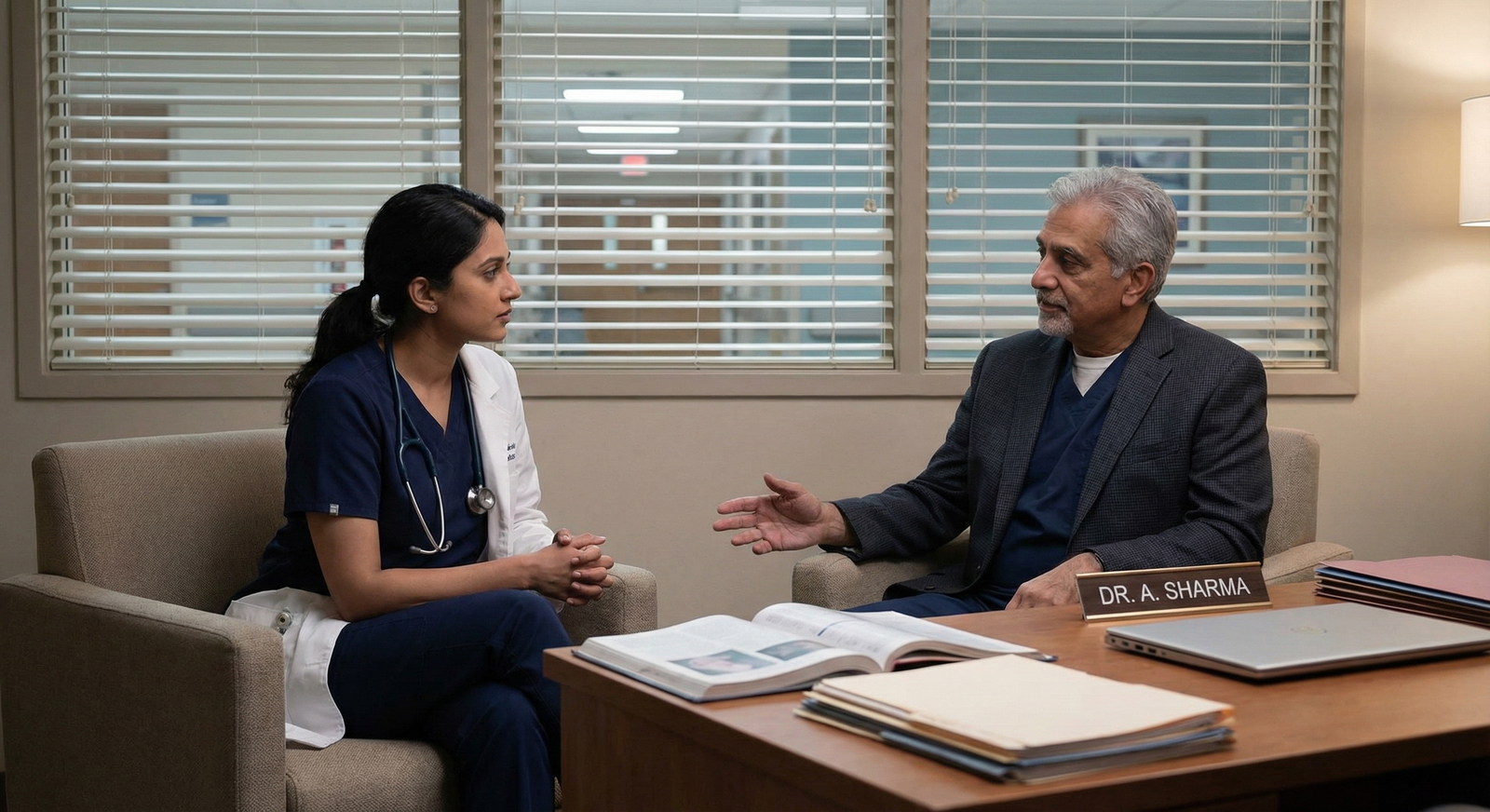
1. Mentors: the backbone of mentorship in medicine
You’ll likely need several types of mentors:
- Clinical mentors – attending physicians who shape your day-to-day approach to patient care and contouring, planning, and workflow.
- Research mentors – faculty actively publishing in your area of interest (e.g., CNS, GI, GU, breast, thoracic, palliative radiation, health services).
- Career mentors – people who understand the broader job market, promotion pathways, and lifestyle trade-offs.
- Peer mentors – residents just a year or two ahead of you who “get it” and can offer tactical advice: “Apply to this course,” “Email this PI,” “Avoid that common pitfall on call.”
How to identify potential mentors
Look for faculty or senior residents who:
- Are respected clinically or academically in areas you care about
- Have a track record of successfully mentoring others (ask co-residents!)
- Communicate clearly and respectfully
- Seem to enjoy teaching and advocacy
Then, reach out with a short, specific email:
“I’m an MD graduate starting in radiation oncology and very interested in CNS and stereotactic radiation. I admire your work on [specific paper or project]. Would you be open to a brief 20–30 minute meeting to discuss potential ways I might get involved in research and learn more about career paths in this area?”
Come prepared with:
- A 1–2 minute professional “story” of who you are
- A copy of your CV
- 1–3 clear questions (e.g., “How did you choose your subspecialty?”, “What early projects would make sense for me?”)
2. Faculty as long-term advocates
Faculty members can be more than attendings who staff your cases. They can become:
- Letter writers for your rad onc match, fellowships, or first job
- Sponsors who mention your name when opportunities arise
- Connectors who introduce you to colleagues nationwide
To build these relationships:
- Be prepared and professional every day on service
- Show curiosity: ask thoughtful questions about cases, protocols, and rationale
- Volunteer for manageable projects (chart reviews, quality improvement, literature reviews)
- Follow through reliably and communicate if timelines slip
A strong faculty ally might someday say at a tumor board, “You should talk to my former resident who’s now at X—this project fits them perfectly.” That’s networking at work.
3. Peer and near-peer networking
Your co-residents and recent graduates are often your most powerful network.
Concrete ways to strengthen these ties:
- Regularly attend resident teaching and journal clubs; speak up, but listen carefully, too
- Share resources: “This contouring atlas helped me, here’s the PDF link”
- Ask graduates where they ended up and how they navigated the job or fellowship search
- Join or help organize program-level social events
These relationships often outlast residency and become your go-to network for:
- Clinical questions (“What fractionation are you using for this?”)
- Research collaborations across institutions
- Insider perspectives on new jobs or leadership positions
Conference and Professional Networking: Making Meetings Count
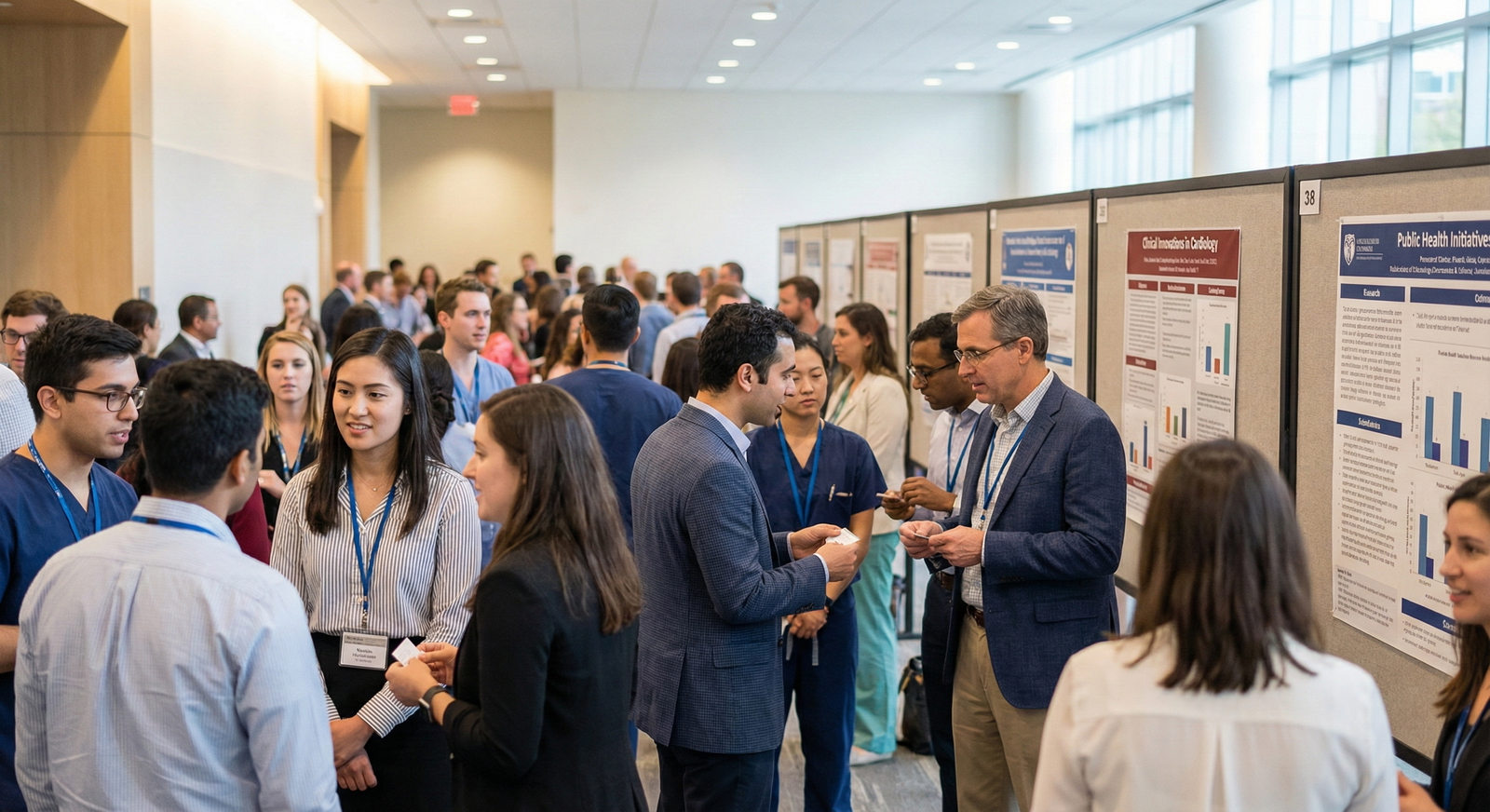
Medical networking is nowhere more visible than at national and regional conferences. For radiation oncology, ASTRO (American Society for Radiation Oncology) is central, but others (ASCO, RSNA, subspecialty meetings) also matter.
Before the conference: get strategic
Clarify your goals
Examples:- “Meet 2–3 potential research collaborators in breast radiation.”
- “Introduce myself to the chair at a program where I’d like to apply for a job or fellowship.”
- “Present my poster confidently and meet others working on similar topics.”
Plan your schedule
- Identify key sessions (e.g., educational sessions, meet-the-expert events, young investigator talks).
- Look for early-career/trainee-specific events; they are often designed for effective conference networking.
- Pre-arrange 2–4 short meetings via email or social media:
“I’ll be at ASTRO this year and really appreciate your recent work on [topic]. If you have 10–15 minutes for a quick coffee during the meeting, I’d love to hear your perspective on early-career opportunities in [subspecialty].”
Update your tools
- CV or brief one-page academic summary
- Professional email signature and LinkedIn profile
- ASTRO or other society profile up to date with your training status and interests
At the conference: how to actually talk to people
Start with trainee-friendly spaces
- Young investigator or residents’ sections
- Poster sessions aligned with your interest area
- Smaller breakout groups and workshops
- Program alumni gatherings or social events
These are easier spaces to join in ongoing conversations without feeling intrusive.
Conversation openers that work
Instead of “So… what do you do?”, try:
- “What brought you to this session?”
- “I saw your name on the program for [talk/poster]. What was the main takeaway from your work?”
- “I’m just starting out in radiation oncology and really interested in [site/disease area]. How did you get into this field?”
For medical networking, curiosity is your superpower. Ask about:
- Their career path
- What they wish they had known at your stage
- How they see the field changing in the next 5–10 years
Presenting a poster or talk
Treat any presentation (poster or oral) as a built-in networking opportunity:
- Prepare a 1–2 minute overview of your project in plain language.
- When someone stops by:
- Introduce yourself clearly.
- Ask what they work on and look for shared interests.
- If the conversation goes well, ask: “Would it be okay if I follow up with you about potential collaboration or feedback on a future project?”
Write their name, institution, and 2–3 keywords about the discussion on your phone or notebook right after they leave.
After the conference: where the real networking happens
Within 48–72 hours:
- Send brief, personalized follow-up emails:
“It was great meeting you at ASTRO during the GI poster session. I really appreciated your insights on [topic]. I’ll explore [resource they suggested] and would love to stay in touch as I develop my interest in [area].”
- Connect on LinkedIn or professional platforms, adding a note to remind them where you met.
- If you discussed a specific idea (e.g., shared database, joint paper), send a concrete next step: outline, timeline, or Zoom proposal.
Sustained conference networking is about gentle, consistent contact—not a single intense conversation once a year.
Digital and Informal Networking: Leveraging Modern Platforms
Not all networking in medicine has to be in person. Especially for an MD graduate in radiation oncology, where institutions may be geographically spread, online presence matters.
Professional social media (X/Twitter, LinkedIn, others)
Radiation oncology has an active community on X (formerly Twitter) and LinkedIn, constantly sharing:
- New research papers and practice-changing trials
- Clinical pearls and contouring resources
- Health policy discussions and advocacy
- Job postings and fellowship opportunities
How to participate responsibly
Create a professional profile
- Use real name, credentials (e.g., “MD, Radiation Oncology Resident”)
- Add a concise bio with subsite interests (e.g., “Interested in CNS, palliative RT, health services research”)
- Include institution and link to your PubMed or institutional page
Start by listening and learning
- Follow major societies (ASTRO, ASCO, ESTRO, national oncology orgs)
- Follow thought leaders, journal editors, and cooperative group PIs
- Observe tone and etiquette before you jump into debates
Contribute thoughtfully
- Share papers you’ve read, with 1–2 lines of commentary or questions
- Highlight your own research in a modest, educational way:
“Our team recently published on [topic] in [journal]. Key takeaway: [1–2 points]. Open to feedback and collaboration.”
- Celebrate others’ work and achievements; be specific and sincere
Avoid pitfalls
- Never share identifiable patient information
- Be cautious about controversial commentary; remember your future employers see your digital footprint
- Handle disagreements professionally and with humility
Email as a networking tool
Email may feel old-fashioned, but it’s still the backbone of medical networking.
Best practices:
- Clear subject lines: “Radiation oncology resident interested in [topic] – brief intro”
- Short, respectful, specific content:
- Who you are
- Why you’re reaching out
- What you’re asking for (brief call, paper suggestion, feedback, potential collaboration)
If someone doesn’t reply:
- Wait 7–10 days
- Send one concise, polite follow-up
- If still no response, move on without taking it personally
Online academic communities
Look for:
- ASTRO early-career or student/trainee groups
- Disease-site working groups that allow trainee participation
- Virtual journal clubs or tumor boards
These can plug you into national networks even if your home program is small.
Networking for the Allopathic Medical School Match and Early Career
Networking starts well before you’re a PGY-2 in radiation oncology. If you’re an MD graduate aiming for a rad onc match or early-career opportunities, strategic relationships can make a meaningful difference.
For MD graduates aiming for radiation oncology residency
Home program advantage—even if indirect
If your allopathic medical school has a rad onc department:
- Attend their tumor boards, teaching sessions, and journal clubs
- Ask for shadowing and short-term research projects
- Let them see your genuine interest over time
If your school does not have rad onc:
- Seek electives or away rotations at nearby academic centers
- Ask your dean’s office which alumni are in radiation oncology and request introductions
- Use national societies to find mentors willing to advise students from smaller schools
Away rotations as networking accelerators These are both an audition and a chance to expand your network:
- Treat every day like a long interview: be on time, prepared, and engaged
- Ask intentional questions about the culture, expectations, and resident life
- Offer to help with small research or QI projects if timing allows
Before you leave:
- Thank key faculty and residents personally
- Ask if they are comfortable giving you feedback on your performance
- Inquire whether they’d be open to writing a letter of recommendation if they feel they know you well enough
Letters of recommendation and sponsorship Strong letters often emerge from strong relationships. To support your letter writers:
- Provide your updated CV and personal statement
- Share your program list and preferences
- Remind them of specific projects or patients you worked on together that illustrate your strengths
Sponsorship goes beyond letters:
- Advocating for you in local or national conversations (“You should interview this person”)
- Helping you connect with alumni in specific geographic regions
For early-career residents and graduates
Targeted networking for job and fellowship searches As you approach graduation:
- Talk early with your program director and trusted mentors about your goals
- Ask them who they know in your target cities or practice types (academic vs. community, proton centers, etc.)
- Request warm introductions rather than cold calls when possible
Tapping alumni networks
- Your program’s graduates often hold positions across the country
- Many are happy to talk honestly about:
- Workload
- Department culture
- Local job markets
- Compensation and negotiation basics
A short, respectful email like:
“I’m a PGY-4 in radiation oncology at [Institution]. I see you’re now at [Institution] in [City]. I’m considering jobs in that region and would really value your perspective on the practice environment there. Would you be open to a brief call sometime in the next few weeks?”
Developing a professional identity Over time, you want your network to associate you with:
- Specific disease-site interests
- A clinical or research niche (e.g., supportive care in radiation, global oncology, AI in planning, outcomes research)
- Professionalism and reliability
That combination makes others more likely to say, “You should talk to [your name]; this is exactly their area.”
Practical Tips to Grow and Maintain Your Network
Daily and weekly habits
On service:
- Learn names of therapists, dosimetrists, physicists, nurses, and administrative staff. Treat them as essential colleagues.
- Strong relationships with the treatment team improve patient care and your reputation.
Email or LinkedIn once a week:
- Reach out to someone new, or follow up with someone you met recently.
- Share a useful paper or resource with a co-resident or junior trainee.
Monthly reflection:
Ask yourself:- Who did I connect with this month?
- Who should I re-engage?
- Where do I want my network to grow (geographically or by subspecialty)?
How to avoid “awkward networking”
- Focus on asking good questions more than on impressing others.
- Show up prepared: know someone’s recent work or role before you talk with them.
- Respect time: if you asked for 15 minutes, keep it to 15 unless they clearly invite more.
- End conversations gracefully:
“I really appreciate your insights. This has been very helpful. Is it okay if I follow up by email if I have more questions as I move forward?”
Being a good “node” in your network
Networking is not just about what you gain. You strengthen your role in the professional community when you:
- Introduce people with shared interests:
“Dr. A, you mentioned needing someone with palliative RT interest. My co-resident Dr. B is working on similar topics—would you mind if I connect you both by email?”
- Share opportunities—courses, scholarships, open positions—with peers and juniors.
- Offer honest but kind guidance to those coming after you, especially medical students or junior residents considering rad onc.
Over time, this generosity compounds. People remember who helped them, and they often pay it forward.
FAQs: Networking in Medicine for MD Graduates in Radiation Oncology
1. I’m introverted and dislike “networking.” Do I still have to do this?
Yes—but you can do it in a way that fits your personality. You don’t need to work a crowded room for hours. Focus on:
- 1:1 or small-group conversations
- Scheduled coffees at conferences
- Thoughtful email exchanges or online collaboration
- Deepening a few high-quality mentoring relationships rather than knowing everyone
Quiet, thoughtful, reliable colleagues are highly valued in radiation oncology; you just need to ensure people actually know you exist and what you care about.
2. How early should I start networking if I want a career in radiation oncology?
Start as soon as you know you’re interested, even as a preclinical or clinical MD student:
- Attend local tumor boards or rad onc lectures
- Ask for a brief meeting with a radiation oncologist to learn about the field
- Join ASTRO or your regional society as a student or trainee member
By the time you apply for the allopathic medical school match in rad onc, you’ll ideally have:
- At least one mentor who knows you well
- Some exposure to the field (clinical or research)
- A sense of which programs or geographic areas might fit you
3. How do I maintain relationships without feeling like I’m “using” people?
The key is genuine reciprocity, even if you’re junior:
- Send occasional updates about your progress and thank mentors for their influence.
- Share relevant articles or events that might interest them.
- Offer help when you can—students or residents often assist with data collection, abstracts, or educational projects.
As long as you’re respectful of their time and sincere in your gratitude, most mentors will not feel “used”; they’ll feel invested.
4. Can networking really influence the rad onc match or job offers, or is it all about my CV?
Your application (scores, publications, letters) matters a lot—but networking can significantly shape:
- Who is excited to interview you
- How comfortable a program feels about your fit
- Who advocates for you behind closed doors
In a small, relationship-driven specialty like radiation oncology, many decisions—formal and informal—are influenced by trusted personal impressions. Networking won’t substitute for hard work or a solid CV, but it can amplify both, guiding you toward the right opportunities and helping others see your potential clearly.
Strategic, authentic networking is not an optional add-on to your training; it’s part of how you build a sustainable, fulfilling career in radiation oncology. Start small, be consistent, and prioritize genuine relationships. Over time, your network will become one of the most valuable assets you carry from residency into the rest of your professional life.