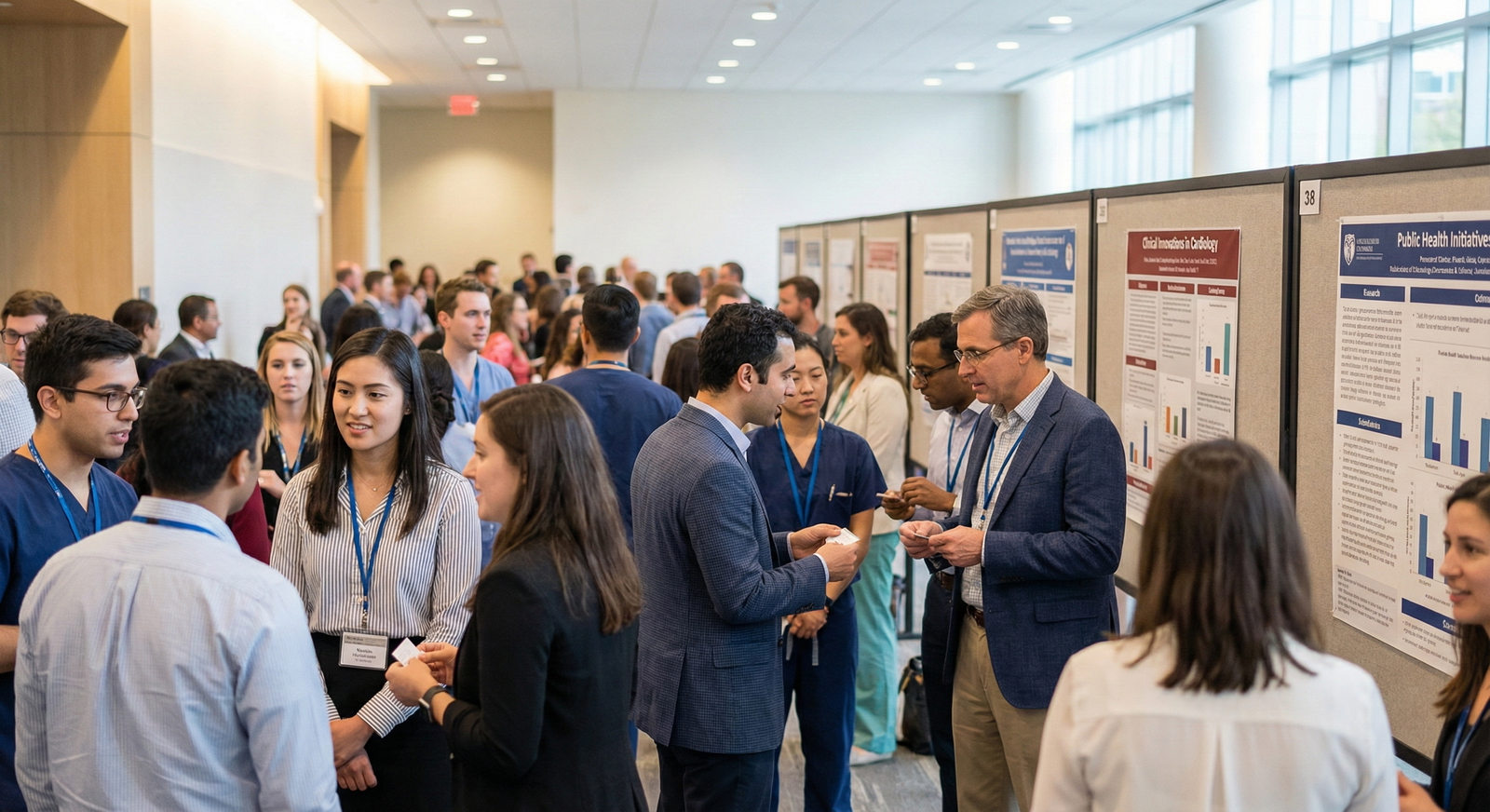
Networking in medicine is often talked about, but rarely taught explicitly—especially in smaller, highly competitive specialties like ophthalmology. Yet for the ophtho match, career development, research opportunities, and day-to-day professional satisfaction, your relationships with people matter as much as your Step scores and surgical skills.
This guide focuses on practical networking in medicine tailored specifically to ophthalmology residency applicants, current residents, and early-career ophthalmologists. You’ll learn how to build authentic relationships, leverage conference networking, find mentorship in medicine, and turn casual connections into long-term professional collaborations.
Why Networking Matters So Much in Ophthalmology
Ophthalmology is a relatively small specialty. That reality makes networking both more powerful and more visible than in larger fields like internal medicine.
1. A small world with long memories
- Many ophthalmologists know each other from:
- Residency or fellowship
- National organizations (AAO, ASCRS, ARVO, subspecialty societies)
- Collaborative research or multi-center trials
- Program directors, chairpersons, and faculty frequently:
- Train together
- Co-author papers
- Serve on the same committees or editorial boards
A strong professional reputation can travel quickly—and so can a problematic one. Thoughtful medical networking helps you become known for reliability, curiosity, and professionalism early on.
2. Impact on the ophtho match
For the ophthalmology residency match, networking can:
- Help you learn the “personality” of programs:
- Is it surgical-heavy or research-heavy?
- Supportive or hierarchical?
- Focused on global health, imaging, or refractive surgery?
- Provide early exposure to programs via:
- Away rotations
- Research collaborations
- Virtual meet-and-greets
- Lead to strong, personalized letters:
- From faculty who truly know your work and character
- From people whose names are recognized by other institutions
While you shouldn’t rely on connections to “rescue” a weak application, thoughtful networking often makes a good application visible to decision-makers.
3. Career-long value
Beyond the match, medical networking in ophthalmology can:
- Help you find mentorship in medicine and sponsorship (mentors who actively advocate for you)
- Open doors to:
- Research projects and multicenter trials
- Fellowship positions
- Speaking opportunities at conferences
- Committee and leadership roles
- Support transitions:
- Academic to private practice (or vice versa)
- New geographic location
- Subspecialty pivot
Think of networking as building your future professional ecosystem, not just collecting business cards or LinkedIn connections.
Foundations of Effective Networking in Medicine
Before diving into conferences or email outreach, it helps to understand the mindset and basic skills that underpin effective networking in ophthalmology.
Networking is about relationships, not transactions
Poor networking often feels like:
- “Can you write me a letter?”
- “Can you help me get a spot in your program?”
- “Can you add me as an author?”
Effective networking feels like:
- “I’m genuinely interested in what you do.”
- “How can I help or contribute?”
- “Can I learn from your experience?”
Your goal is to build mutual, long-term relationships, not quick favors.
The three pillars: curiosity, value, and follow-through
Curiosity
- Ask specific, thoughtful questions:
- “I noticed your work on tele-ophthalmology in diabetic screening—what were the biggest implementation challenges?”
- “How did you decide between a comprehensive practice and a subspecialty fellowship?”
- Listen actively and remember details about people’s interests and projects.
- Ask specific, thoughtful questions:
Value
- As a student or junior resident, what can you offer?
- Help with data collection, chart review, or literature searches
- Drafting abstracts or posters
- Technology skills (basic coding, data visualization, social media for academic groups)
- Value also includes:
- Being reliable
- Meeting deadlines
- Being low-maintenance and solutions-oriented
- As a student or junior resident, what can you offer?
Follow-through
- If you say you’ll send a CV, do it within 24 hours.
- If a faculty gives advice or suggests a paper, read it and circle back with your thoughts.
- Consistent follow-through is one of the fastest ways to stand out.
Building Your Network Before and During Ophthalmology Residency
You don’t have to wait until residency to start building your professional network. Different stages of training offer different opportunities.
As a medical student: laying the groundwork
Identify local ophthalmology champions
- Start with:
- Ophthalmology department website
- Medical school interest groups
- Alumni who matched into ophthalmology
- Send respectful, concise emails (3–5 sentences):
- Introduce yourself
- Express a specific interest
- Ask for one small, concrete thing (e.g., brief meeting, shadowing, advice on getting involved with research)
- Start with:
Join ophthalmology interest groups and national organizations
- Medical school ophtho interest group:
- Attend talks, skills workshops, and guest lectures
- National or regional opportunities:
- AAO medical student engagement programs
- Student or trainee memberships in subspecialty societies (e.g., ASCRS, ARVO, pediatric, retina societies)
- These organizations often have:
- Mentorship programs
- Virtual webinars
- Travel grants for conferences
- Medical school ophtho interest group:
Get involved in research early if possible
- Look for:
- Faculty projects just starting (easier to join early)
- Quality improvement (QI) projects, database reviews, or survey studies
- Treat this as both skill-building and relationship-building:
- Ask how you can be helpful
- Communicate progress regularly
- Meet deadlines
- Look for:
Example:
You email a cornea specialist expressing interest in ocular surface disease and asking if they know of any ongoing projects where a student could help with literature review or data collection. You show up prepared to the first meeting, propose 1–2 specific ways you can help, and then deliver on deadlines. Six months later, that faculty knows your work ethic well enough to write a strong, specific letter for your ophtho match.
During ophthalmology residency: deepening and broadening
Strengthen in-house relationships
- Build good working relationships with:
- Faculty in multiple subspecialties
- Senior residents and fellows
- Ways to do this:
- Ask for feedback and act on it
- Volunteer for department initiatives (journal clubs, teaching med students, QI projects)
- Be visible in a positive, professional way
- Build good working relationships with:
Expand outside your institution
- Attend regional and national meetings (more on conference networking below).
- Join:
- Young ophthalmologist (YO) sections
- Trainee committees
- Participate in:
- Multi-institutional research groups
- Collaborative case conferences or virtual grand rounds
Maintain ties with earlier mentors
- Continue to update medical school or early mentors:
- Major milestones (presentations, publications, awards)
- Subspecialty interests
- These mentors can be advocates when you apply to fellowship or future jobs.
- Continue to update medical school or early mentors:

Conference Networking in Ophthalmology: Step-by-Step
Conferences are among the most powerful networking environments in medicine—especially in ophthalmology, where many leaders and trainees gather in the same physical space.
Here’s how to maximize conference networking before, during, and after the meeting.
Before the conference: strategic preparation
Clarify your goals
- Are you aiming to:
- Learn about certain subspecialties?
- Meet potential research collaborators?
- Explore fellowship programs?
- Connect with leaders in a niche area (e.g., uveitis, pediatric retina, AI in imaging)?
- Prioritize 2–3 goals to guide your schedule.
- Are you aiming to:
Research people you want to meet
- Use:
- Conference program and mobile app
- Faculty and speaker lists
- Your mentors’ networks (“Is there anyone at ARVO I should meet if I’m interested in retina imaging?”)
- Make a short list (10–20 names), categorized as:
- Must meet
- Would be great to meet
- Nice if it happens
- Use:
Send a few targeted emails in advance
- For high-priority contacts, you can write:
- That you’ll be attending the conference
- Why their work interests you (be specific)
- A brief ask: “Would you have 10 minutes for a quick coffee or to say hello after your session?”
- Many will be busy, but even 2–3 successful meetings can be extremely valuable.
- For high-priority contacts, you can write:
Prepare your personal “elevator pitch”
- A 20–30 second introduction:
- Who you are (name, level of training, institution)
- Your interests (clinical/research)
- One current project or goal
- Example:
- “I’m Dr. Smith, a PGY-3 ophthalmology resident at X University, interested in medical retina and tele-ophthalmology. I’m currently working on a project evaluating AI-based diabetic retinopathy screening in primary care clinics.”
- A 20–30 second introduction:
During the conference: practical networking behaviors
Where to position yourself
- Arrive a few minutes early to sessions:
- Sit near people you may want to meet
- Introduce yourself to the person next to you
- Spend time:
- At posters related to your interests
- In trainee networking events, young ophthalmologist receptions, and mentorship breakfasts
- In lines (coffee, registration) where informal conversations can start
- Arrive a few minutes early to sessions:
How to start conversations
- Simple openers:
- “What did you think of that talk?”
- “Are you working in this field as well?”
- “What brings you to this session?”
- For faculty you recognize:
- “Dr. ___, I’m ___, a resident from ___. I’ve followed your work on [topic], especially your paper on [specific detail]. I really appreciated your perspective on [brief point].”
- Simple openers:
Use posters and presentations as conversation anchors
- If you present a poster:
- Stand by it during your session
- Make eye contact and say hello to passersby
- Offer a concise 30–60 second summary
- When visiting others’ posters:
- Ask the presenter: “What’s the key takeaway from your work?”
- Follow up with 1–2 thoughtful questions
- If it aligns with your interests, say: “Would you be open to future collaboration? I’m particularly interested in [specific aspect]. Could we exchange emails?”
- If you present a poster:
Be mindful and professional
- Remember:
- The ophthalmology community is small—assume everyone could be connected to your future interviewer or colleague.
- Avoid complaining about your program, co-residents, or other individuals.
- Dress professionally and behave as if you’re always visible—in sessions, exhibit halls, receptions, and social events.
- Remember:
After the conference: convert moments into relationships
Follow up within 3–5 days
- Send concise, tailored emails:
- Remind them where you met
- Mention something specific you discussed
- If appropriate, attach your CV or the abstract you presented
- Propose a next step (e.g., brief Zoom meeting, collaborative idea, or sending a draft)
- Example:
- “Dear Dr. ___, it was a pleasure meeting you after the retinal imaging session at AAO. I enjoyed hearing about your work on OCT angiography in diabetic macular edema. As we discussed, I’m attaching my CV and a brief summary of our ongoing project at X Institution in case you see opportunity for collaboration.”
- Send concise, tailored emails:
Connect on professional platforms
- LinkedIn or professional societies’ directories:
- Include a personalized note
- Keep your profile updated with ophtho-related experiences
- If appropriate and available, follow their professional social media (e.g., X/Twitter for academic ophthalmology conversations).
- LinkedIn or professional societies’ directories:
Keep the relationship warm
- Periodically send:
- Updates about relevant projects
- A short note if you see a paper or talk of theirs that you read or attended
- A quick message when you present or publish in a related area
- Periodically send:
This is how one brief conference conversation can grow into regular mentorship or collaboration over time.

Mentorship in Medicine: Finding, Nurturing, and Using It Well
Mentorship in ophthalmology is closely tied to networking. Strong mentors amplify your learning, connect you with others, and often become advocates in the ophtho match and beyond.
Types of mentors you should cultivate
Clinical mentors
- Help you:
- Develop diagnostic and surgical judgment
- Navigate subspecialty choices
- Think like an ophthalmologist, not just perform tasks
- Often found among:
- Attending physicians on your rotations
- Faculty whose clinics or ORs you enjoy
- Help you:
Research mentors
- Guide your scholarly development:
- Project design
- Manuscript writing
- Presenting at meetings
- Especially important if you:
- Aim for competitive fellowships
- See yourself in academic medicine
- Guide your scholarly development:
Career/“big-picture” mentors
- Focus on:
- Work–life integration
- Long-term career goals
- Negotiation and job selection
- May be:
- Within or outside your institution
- From your own or a different subspecialty
- Focus on:
Peer mentors
- Senior residents, fellows, or recent graduates:
- Have fresh memory of the ophtho match, fellowship applications, and early career challenges
- Often provide:
- Practical tips
- Emotional support
- Honest feedback from a near-peer perspective
- Senior residents, fellows, or recent graduates:
How to approach potential mentors
Start by observing
- Notice:
- Who teaches well in clinic or OR?
- Whose career pathway resembles what you want?
- Whose leadership style you respect?
- Notice:
Request a brief, specific meeting
- Email asking for:
- 15–20 minutes to discuss your interests and get advice
- Come prepared with:
- A short introduction of your background and goals
- 2–3 focused questions
- Examples:
- “What would you recommend I prioritize in residency if I’m considering a retina fellowship?”
- “How did you decide between a heavy surgical practice and a more balanced clinic/research role?”
- Email asking for:
Make it easy for them to help you
- Send a short, updated CV in advance.
- If you’re asking about a particular decision (e.g., research options, away rotations), briefly outline your options anecdotally.
Being a good mentee
- Be reliable
- Meet deadlines
- Show up on time
- Do what you say you’ll do
- Be prepared
- Read background materials they recommend
- Come with an agenda for meetings
- Be respectful of their time
- Keep emails concise
- Combine questions rather than sending many disorganized messages
- Share credit generously
- Acknowledge your mentors in presentations, papers, and conversations
Mentorship is not about a single superstar mentor; it’s about assembling a mentor mosaic—different people helping with different aspects of your development.
Practical Networking Strategies for the Ophtho Match and Early Career
With the foundations in place, here are concrete strategies you can use for the ophtho match and early-career transitions.
For applicants: networking ethically and effectively
Use away rotations strategically
- Think of them as:
- 4-week extended interviews
- Opportunities to experience a program’s culture
- Networking goals:
- Get to know several faculty personally
- Work closely with residents
- Show up prepared, enthusiastic, and teachable
- Avoid:
- Over-selling yourself
- Name-dropping excessively
- Assuming that being liked guarantees a spot
- Think of them as:
Virtual networking
- Many programs now offer:
- Virtual open houses
- Resident Q&A panels
- Approach them as:
- Information-gathering sessions
- Opportunities to understand what they value
- Professional behaviors:
- Use your full name and affiliation
- Ask thoughtful, non-redundant questions
- Follow up with a brief email if you have a specific interest in that program
- Many programs now offer:
Leverage alumni networks
- Speak to:
- Graduates from your medical school who matched ophthalmology
- Residents from your target programs via shared connections
- Ask:
- How they would describe the culture of their program
- What surprised them about residency
- Occasionally, an alum may:
- Offer to informally introduce you to someone at their program
- Give advice on how to stand out on your application
- Speak to:
Be transparent, but not transactional
- It’s fine to say:
- “I’m very interested in your program and would love to learn how best to convey that interest.”
- But avoid:
- Asking outright for them to “put in a word” unless the relationship is already strong and they offer.
- It’s fine to say:
For residents and early attendings: building long-term professional capital
Find your “micro-community”
- Within ophthalmology, your micro-community might be:
- People focused on a disease (e.g., glaucoma, uveitis)
- People using a technique (e.g., MIGS, gene therapy)
- People in a space (e.g., global ophthalmology, telehealth)
- Medical networking is easier when you repeatedly encounter the same people at:
- Specialized sessions
- Working groups
- Subspecialty society meetings
- Within ophthalmology, your micro-community might be:
Say “yes” to strategic opportunities
- Early in your career, consider saying yes to:
- Moderating sessions
- Joining committees
- Reviewing manuscripts
- These roles:
- Increase your visibility
- Put you in regular contact with leaders
- Let others see your work ethic beyond your CV
- Early in your career, consider saying yes to:
Start small with collaborations
- Propose:
- Multi-center chart reviews
- Joint case series
- Educational projects (co-authored review articles, teaching cases, online modules)
- Focus on:
- Being the person who keeps the collaboration moving
- Communicating clearly and professionally across institutions
- Propose:
Maintain professionalism across all communication channels
- Email and messaging etiquette matters:
- Clear subject lines
- Brief, structured content
- Prompt replies (even if just to acknowledge and set a timeline)
- Online presence:
- Ensure your public profiles reflect how you want to appear to colleagues and potential employers.
- Email and messaging etiquette matters:
FAQs: Networking in Medicine for Ophthalmology
1. Do I really need to network to match into ophthalmology residency?
You can match without “knowing people,” especially with a strong academic and clinical record. However, networking can:
- Help you understand which programs fit you best
- Lead to strong, personalized letters of recommendation
- Increase the visibility of your application among faculty who share your interests
In a small specialty like ophthalmology, networking is less about favoritism and more about ensuring people can confidently vouch for your character and potential.
2. How do I network if I’m introverted or feel awkward in social situations?
Many ophthalmologists are naturally introverted. You don’t need to be loud or charismatic to network effectively. Try:
- Preparing a few go-to questions in advance (e.g., “What projects are you working on right now?”)
- Focusing on one-on-one or small-group conversations instead of big receptions
- Attending structured events (poster sessions, mentorship breakfasts) where the purpose of interaction is clear
Think of networking as curiosity-driven conversation, not performance.
3. Is it appropriate to ask someone I just met to write a letter of recommendation?
Usually not. Strong letters come from people who:
- Have seen your clinical or research work directly
- Can comment on your reliability, professionalism, and growth
A better approach:
- Develop the relationship over time (e.g., research project, close clinical supervision, longitudinal mentorship)
- When the time comes, ask:
“Do you feel you know me and my work well enough to write a strong, supportive letter for my ophthalmology residency application?”
This gives them an honest way to decline if they cannot write a strong letter.
4. How do I keep in touch with mentors and contacts without feeling like I’m bothering them?
Most mentors and professional contacts appreciate concise, purposeful updates. You can:
- Email a brief update every few months or when major milestones occur
- Share accepted abstracts, publications, or residency/fellowship decisions
- Occasionally send a short message thanking them for earlier advice and noting how it helped
Aim for short, specific, and infrequent but consistent communication. That’s how casual interactions turn into long-term professional relationships in ophthalmology.
Networking in medicine within ophthalmology isn’t about having the loudest voice in the room; it’s about building authentic, long-term connections grounded in curiosity, reliability, and mutual respect. If you approach every interaction—whether at a slit lamp, poster session, or mentorship meeting—as an opportunity to learn and contribute, you’ll steadily build a professional network that supports you throughout your training, the ophtho match, and your career.