Why Networking Matters So Much for IMGs in Anesthesiology
For an international medical graduate, the path to anesthesiology residency in the U.S. (or other competitive systems) is rarely straightforward. Exam scores and clinical skills are essential, but they are not enough. The hidden variable that often separates matched from unmatched candidates is structured, intentional networking in medicine.
When program directors review hundreds of applications, the ones that stand out usually have:
- Strong, personalized recommendation letters
- Recognizable names in their CV (mentors, institutions, research groups)
- Advocates who will answer the phone or reply to an email when asked, “What do you think of this applicant?”
Networking is how you build that support system.
For IMGs, this is even more critical because:
- You may not have trained in a system familiar to program directors.
- You’re often starting with no local reputation or alumni base.
- You must overcome visa, cultural, and sometimes language barriers.
- Anesthesiology is competitive; many U.S. graduates are also applying.
A strong professional network can help you:
- Find observerships and research opportunities
- Secure anesthesiology-specific mentorship (not just generic advice)
- Get realistic feedback on your competitiveness
- Receive targeted help with the anesthesia match strategy
- Learn “hidden curriculum” details: which programs consider IMGs, how to approach PDs, what matters in letters, etc.
This IMG residency guide focuses on building and using a network strategically—online, at conferences, and in day-to-day clinical and academic environments—so you are not navigating the anesthesia match alone.
Understanding the Landscape: Networking in Anesthesiology as an IMG
Networking in medicine often feels vague: “Talk to people,” “Put yourself out there,” “Be proactive.” For an IMG in anesthesiology, you need a clearer framework. Think of networking as building three overlapping circles:
- Mentors – Senior physicians or educators who guide your career choices.
- Sponsors/Advocates – People with influence (PDs, APDs, department chairs, senior faculty) who can actively open doors.
- Peers – Residents, fellows, and fellow applicants who share information, resources, and emotional support.
You should aim to cultivate all three.
The Specifics of Anesthesiology Culture
Each specialty has its own networking “personality.” In anesthesiology:
- Teamwork is central – Anesthesiologists interact with surgeons, proceduralists, ICU teams, and nurses. The specialty values calm communication, reliability, and collegiality.
- Subspecialty pathways are strong – Critical care, cardiac anesthesia, regional, pain medicine, and pediatric anesthesia each have their own micro-networks.
- Academic societies are active – National and regional societies (e.g., ASA, ESAIC, CAS, national intensive care/anesthesia societies) organize conferences that are powerful networking hubs.
- Research is broad – From patient safety and quality improvement to perioperative medicine and critical care, there are many entry points for IMGs to contribute.
Understanding how anesthesiologists typically build relationships helps you align your own networking behavior with the culture of the field.
Common IMG Challenges—and How Networking Helps
Challenge 1: Limited U.S. clinical experience
- Networking outcome: Observerships, externships, visiting student electives, or research-involved clinical experiences.
Challenge 2: No “insider” advocacy
- Networking outcome: Mentors or sponsors who will vouch for you in emails or phone calls, or who have name recognition among program directors.
Challenge 3: Unclear program preferences for IMGs
- Networking outcome: Candid information from residents and fellows about which programs welcome IMGs, and what profiles have matched successfully.
Challenge 4: Visa complexity
- Networking outcome: Support from faculty familiar with visa processes, and referrals to programs known to sponsor visas for anesthesiology residents.
Instead of thinking, “I don’t know anyone,” reframe the goal to: “I will systematically build relationships over 12–24 months so I am no longer an unknown name in the anesthesia match.”

Finding and Working with Mentors in Anesthesiology
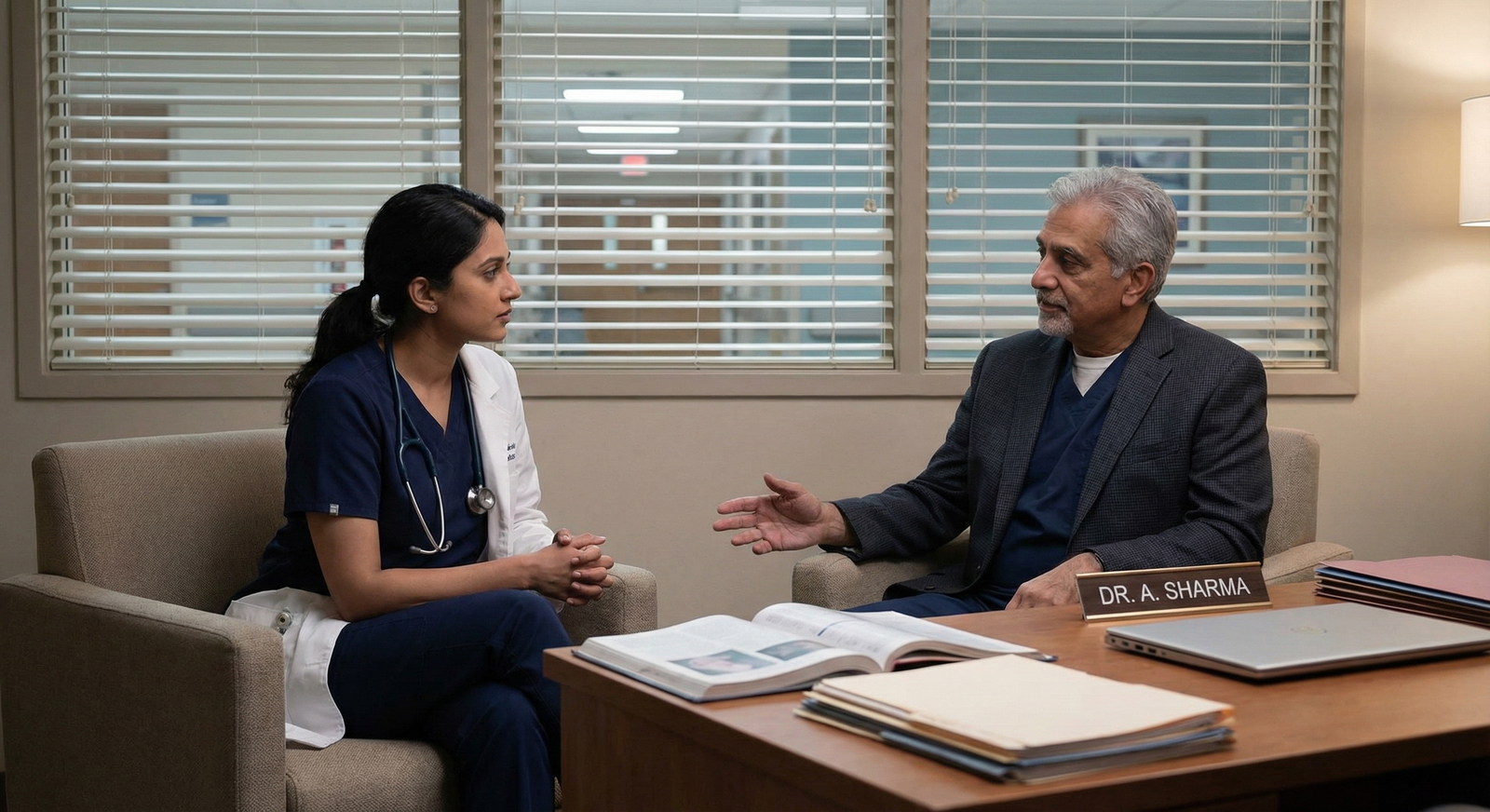
Mentorship in medicine is not luck; it’s a skill you can practice. For IMGs, mentorship in medicine is the backbone of any effective IMG residency guide. In anesthesiology, a good mentor can help you:
- Understand where your profile fits in the anesthesia match
- Choose between research, observerships, or additional degrees
- Navigate conference networking strategically
- Craft a compelling anesthesiology narrative in your personal statement
- Practice anesthesia-focused interview questions and scenarios
Types of Mentors You Should Seek
Aim for a portfolio of mentors rather than a single “perfect” mentor:
Specialty mentor (Anesthesiologist)
- Role: Clarify anesthesiology-specific expectations, recommend conferences, help you get letters.
- Ideal: Faculty member at your target country’s teaching hospital or academic department.
Process mentor (IMG-focused)
- Role: Guide you through exam timelines, application assembly, visa questions.
- Ideal: Former IMG anesthesiology resident or fellow, or faculty who has supported IMGs before.
Career mentor (Long-term)
- Role: Help you think beyond the match—to fellowships (cardiac, critical care), academic vs private practice, and leadership roles.
You may find all three in one person, but more often you’ll assemble them from multiple relationships.
How to Find Mentors as an IMG
Use a structured approach:
Start locally where you are physically present
- If you are already in the U.S., UK, Canada, or another target country, identify anesthesiology departments at nearby hospitals or universities.
- Look at department websites for faculty with keywords: “education,” “residency program,” “medical students,” “global health,” “international programs.”
Use online tools deliberately
- LinkedIn: Search “anesthesiology resident,” “anesthesia fellow,” “program director anesthesiology,” filtered by city or institution.
- Professional societies: Many have mentorship programs (e.g., young anesthesiologists sections, IMG or international outreach sections).
- Alumni networks: Your medical school alumni who matched into anesthesiology abroad, even in other countries, may know people in your target system.
Leverage structured mentorship programs
- National anesthesiology societies sometimes pair students/trainees with mentors.
- IMG support organizations and specialty interest groups may host formal mentorship programs or “office hours.”
How to Make the First Contact
Your initial message should be short, specific, and respectful of time. For example:
Subject: International medical graduate seeking brief anesthesiology career guidance
Dear Dr. [Name],
I am an international medical graduate from [Country/School], currently in [location or current role]. I am very interested in pursuing anesthesiology residency and have been learning more about your work in [clinical area/education/research].I would be grateful for 15–20 minutes of your time for advice on how I can strengthen my application and identify appropriate opportunities (e.g., observerships, research, or electives). I understand you are very busy and would be happy to work around your schedule.
Thank you for considering my request.
Sincerely,
[Full name, medical degree, contact, LinkedIn or CV link]
Key principles:
- Ask for advice, not for a job or letter in the first message.
- Keep the ask small (a short meeting or brief call).
- Show you did basic homework (mention their work or role specifically).
Maintaining a Productive Mentoring Relationship
Once a mentor agrees to help you:
Prepare for meetings
- Send your updated CV beforehand with a short list of questions.
- Have a clear objective: “Is my current profile competitive?”, “Should I prioritize research vs observerships?”, “Which conferences would you recommend for networking?”
Follow through on advice
- If they suggest reaching out to a colleague or applying for a specific opportunity, act promptly and update them.
- This builds trust and signals you are reliable.
Respect boundaries
- Don’t request a letter of recommendation after a single conversation.
- Over time, if you work together (research, clinical exposure, teaching), a letter can be requested naturally: “If you feel you know my work sufficiently, I would be honored to have your support.”
Think long-term
- Mentors can support you beyond the match: fellowship choices, job searches, and leadership roles in anesthesiology.
Conference and In-Person Networking: Turning Events into Opportunities
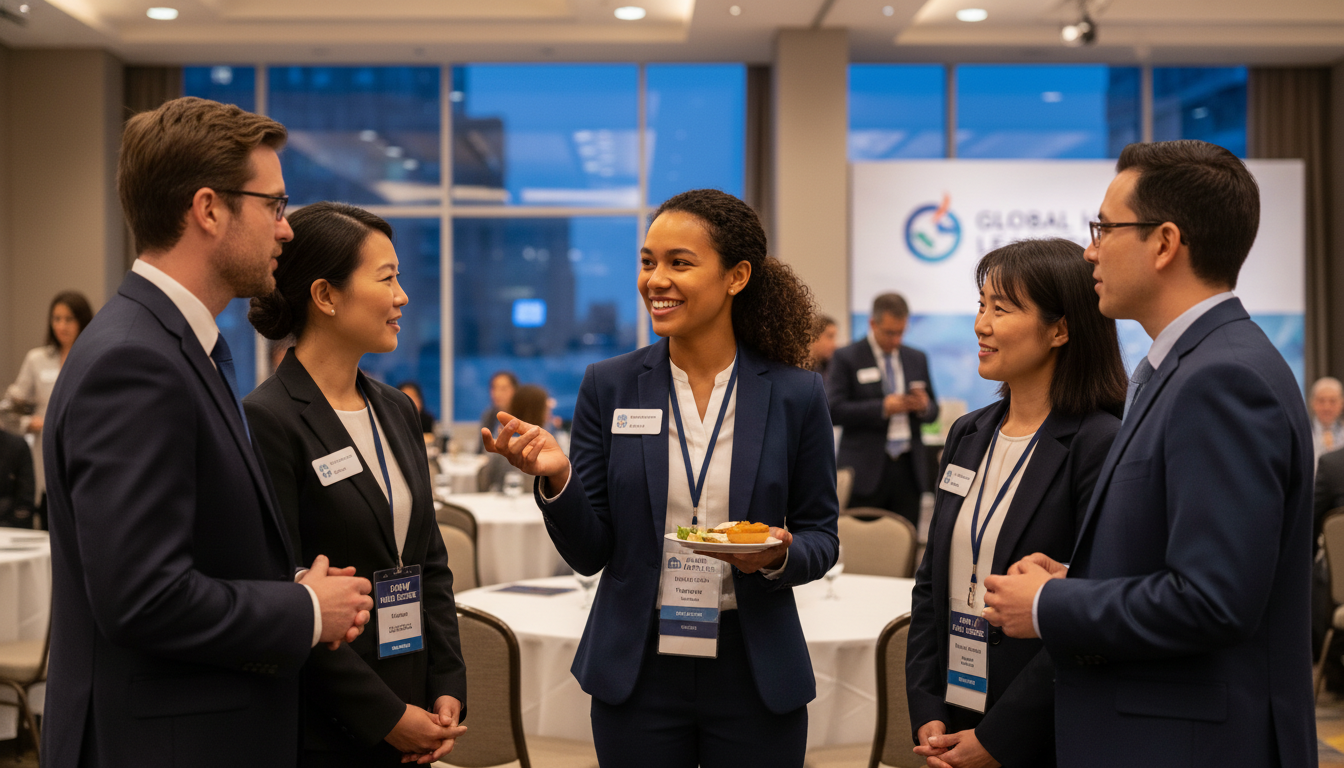
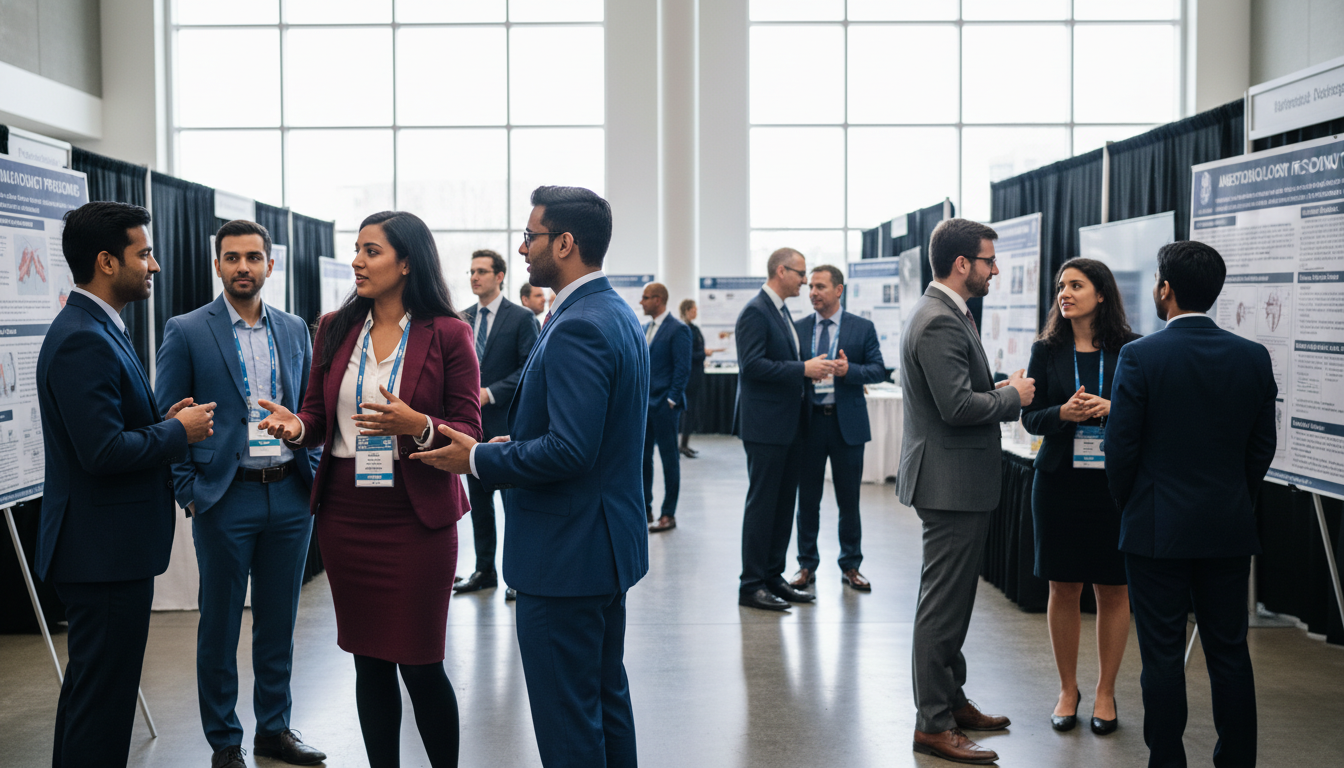
Conferences are concentrated networking environments—especially powerful for IMGs with limited local exposure. Well-planned conference networking can compress months of cold emailing into a few focused days.
Choosing the Right Conferences
Prioritize meetings that maximize anesthesiology exposure and likelihood of interaction:
- National anesthesiology meetings (e.g., American Society of Anesthesiologists or equivalent in your target country)
- Regional or state-level anesthesia conferences – smaller size often means easier access to faculty and PDs.
- Subspecialty meetings (e.g., critical care, cardiac anesthesia, pain medicine) – useful if you already have a research project or strong interest.
If you have limited funds, one well-planned national or regional meeting is more valuable than several poorly utilized ones.
Before the Conference: Preparation is Everything
Study the program
- Identify sessions led by PDs, APDs, and anesthesiology educators.
- Circle poster sessions and “meet the professor” events that match your research or clinical interests.
Reach out in advance
Send short emails like:Dear Dr. [Name],
I am an international medical graduate very interested in anesthesiology and will attend [Conference]. I have been following your work on [topic] and plan to attend your session on [title].If you have a brief moment after your talk, I would appreciate the chance to introduce myself and ask for your advice about developing a career in anesthesiology as an IMG.
Sincerely, [Name]
Even if they don’t reply, you’ve created recognition for when you introduce yourself.
Prepare your “micro-introduction”
A 20–30 second, non-rehearsed but clear intro:- Who you are (“I’m Dr. X, an IMG from [country]”)
- What you’re doing now
- Your anesthesiology interest area (e.g., perioperative medicine, critical care, regional anesthesia)
- What you’re looking for (“I’m preparing to apply for anesthesiology residency and would value brief advice on strengthening my profile.”)
At the Conference: Concrete Tactics
- Arrive early to sessions – Easier to briefly greet speakers beforehand or stay immediately after for questions.
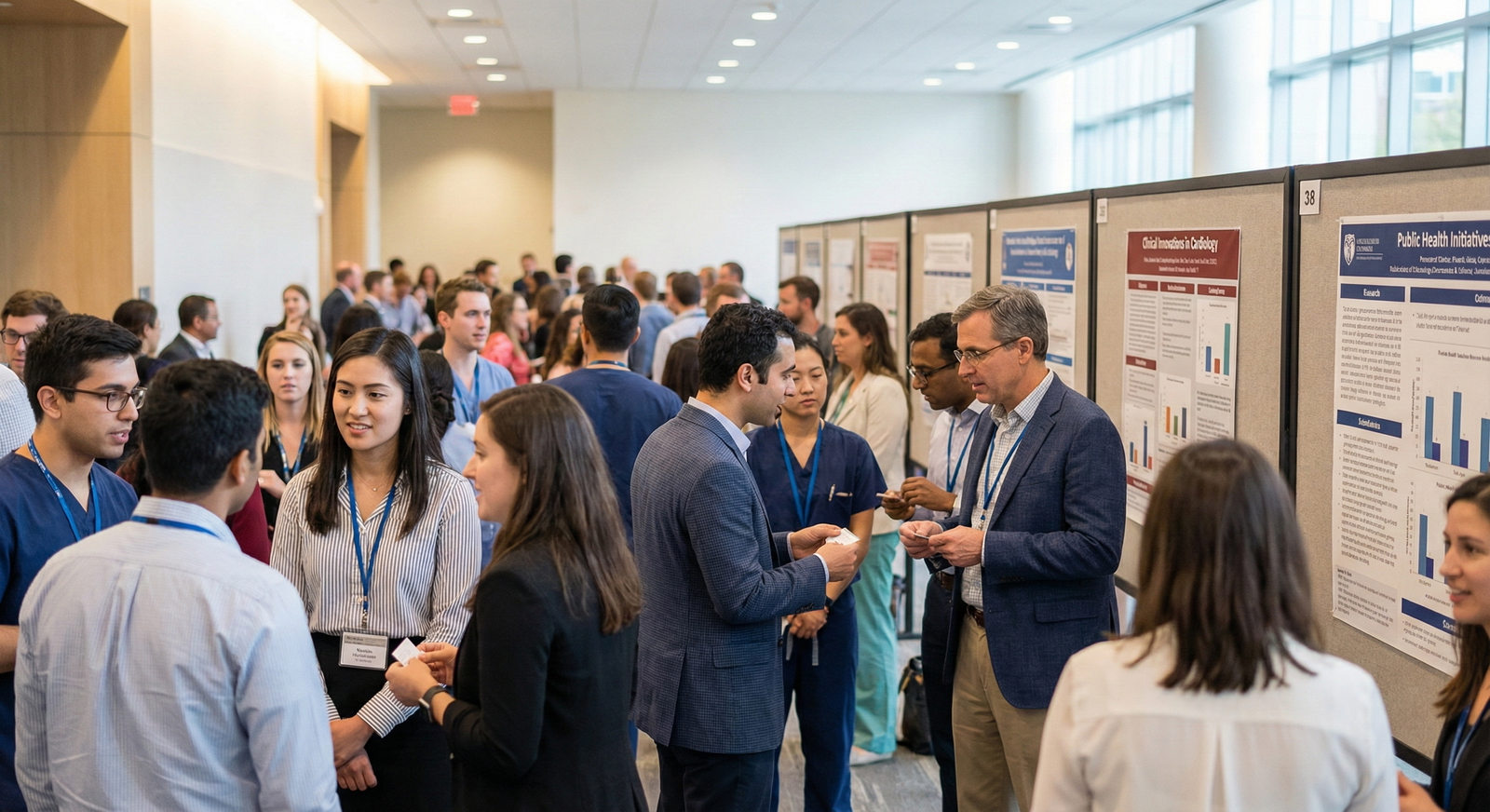
- Use poster sessions strategically – Presenting a poster greatly increases your visibility and gives you an “official” reason to interact.
- Ask thoughtful, concise questions – Not to impress, but to start conversations: “As an IMG hoping to go into anesthesiology, how would you suggest I get involved in research on this topic?”
- Attend resident and trainee events – These are often more relaxed spaces to learn about programs and the anesthesia match experience from those currently in it.
After the Conference: Consolidate Relationships
Within 3–5 days:
Send personalized follow-up emails:
- “Thank you for taking time to speak with me.”
- Mention a specific point from your conversation.
- Ask one small, clear next-step question if appropriate (e.g., “May I send you my CV for feedback?” or “Could you suggest anyone at your institution who might host observerships?”).
Connect on LinkedIn with a short note referencing the meeting.
This post-conference phase is where medical networking becomes durable; most people skip it, so doing it well sets you apart.

Online Networking, Social Media, and Daily Professional Habits
You don’t need to be famous on social media, but you should be visible enough that when someone Googles you, they see a credible, consistent anesthesiology story.
Building a Professional Online Presence
LinkedIn
- Professional headshot and a clear headline:
“International Medical Graduate | Aspiring Anesthesiologist | Interested in Perioperative Medicine & Critical Care” - Fill in your education, clinical experiences, research, publications, and presentations.
- Add a short “About” section that mentions your anesthesiology focus and geographic goals.
- Professional headshot and a clear headline:
Academic platforms
- If you have publications or abstracts, create or update a profile on platforms like ResearchGate, Google Scholar, or institutional pages.
- Link these from your LinkedIn.
Professional behavior
- No unprofessional content on public social profiles. Program staff sometimes search applicants’ names online.
Using Online Platforms to Expand Your Network
- Follow anesthesiology departments and societies on LinkedIn and other platforms.
- Comment thoughtfully on departmental posts, podcasts, or educational threads. Short, substantive comments (e.g., “Excellent summary of postoperative delirium—do you see differences in incidence across age groups?”) can get you noticed.
- Join groups related to global health in anesthesia, IMGs in anesthesiology, or prospective residents.
Daily Networking Habits in Clinical and Academic Settings
If you are already in a hospital or research lab:
- Show up consistently and on time – Reliability is the foundation of sponsorship; no one advocates for someone who is frequently late or unreliable.
- Volunteer strategically – Quality improvement projects, case presentations, simulation sessions, or journal clubs are good visibility points.
- Ask to help with research or education projects in anesthesia or critical care—this is one of the most direct ways to convert simple contact into genuine collaboration.
Over months, these habits turn into relationships that yield mentorship medicine (regular guidance) and, eventually, influential recommendations.
Turning Connections into Concrete Match Advantages
Networking only matters if it translates into tangible benefits for your anesthesiology residency application. Here is how to connect the dots.
1. Strong, Specialty-Specific Letters of Recommendation
Program directors consistently value:
- Letters from anesthesiologists who know you well
- Letters that describe your clinical reasoning, work ethic, teamwork, and communication in the perioperative environment
- Letters from faculty with recognized names or from reputable institutions
How networking helps:
- Getting onto research or clinical teams where faculty can observe your work
- Building enough contact time (weeks to months) to justify a detailed letter
- Creating lines of communication where letter writers are prepared to respond if PDs contact them
When you request a letter, make it easy for the writer:
- Send your CV and a short “summary of experiences with you” document.
- Specify anesthesiology residency as your target and highlight the skills you hope they can speak to (e.g., reliability, professionalism, communication).
2. Honest Assessment of Your Competitiveness
Mentors and program insiders can help you develop a realistic anesthesia match strategy:
- Which exam scores and attempts will limit you in certain regions or programs
- Whether to broaden to preliminary or transitional years, or backup specialties
- Whether a research year, observerships, or additional degrees (e.g., MPH, MSc) will genuinely add value for your situation
This can save you time, money, and emotional energy by focusing your applications where you have a genuine chance.
3. Gaining Insider Insight into Programs
Through residents, fellows, and faculty, you can learn:
- Which programs are supportive of IMGs
- The culture: collegial or toxic, heavy workload or balanced, academic vs clinically heavy
- The importance of particular experiences (e.g., ICU rotations, research output) to them
This doesn’t just help you target your applications; it also helps you tailor your communication (emails, interview answers, second looks) to each program’s values.
4. Advocacy During Application Season
A sponsor might:
- Forward your CV to their PD or APD with a note: “I strongly recommend interviewing this candidate.”
- Mention you in a selection meeting: “We should interview this IMG; I’ve worked with them and they’re excellent.”
- Offer unofficial feedback about where you stand.
These actions are the result of months or years of relationship building, not last-minute requests. That is why starting early—ideally 12–24 months before the anesthesia match—is crucial.
Practical Step-by-Step Networking Plan for IMGs in Anesthesiology
To make this actionable, here is a structured 12–18 month plan.
Months 1–3: Foundation
- Clarify your target country and exam timelines.
- Create or refine LinkedIn and academic profiles.
- Map out 10–15 anesthesiology departments you’re interested in.
- Send initial mentorship emails (aim for 3–5 potential mentors).
- Join national or regional anesthesiology societies as a student or international member if possible.
Months 4–6: First-Level Relationships
- Secure at least one structured activity: observership, research project, or educational involvement with an anesthesiology department.
- Attend local or regional anesthesia or critical care meetings; begin conference networking.
- Schedule quarterly check-ins with your primary mentor(s).
Months 7–12: Deepening Engagement
- Present at least one abstract or poster (local, regional, or national).
- Take on increasing responsibility in research or QI projects.
- Identify residents and fellows willing to share insights about the anesthesia match and specific programs.
- Ask trusted mentors for an honest assessment of competitiveness and refine your application strategy.
Months 12–18: Application-Focused Networking
- Confirm letter writers and provide them with timelines and materials.
- Inform your network when you submit applications and when you receive interview invitations.
- Continue conference and online networking; consider reaching out to faculty at programs where you have applied (following etiquette and your mentors’ advice).
- Maintain professionalism and gratitude—regardless of outcome, these relationships can last beyond the match.
FAQs: Networking in Medicine for IMGs in Anesthesiology
1. Is networking really necessary if I have strong exam scores and research?
Yes. In a crowded anesthesia match, scores and research get you past filters, but relationships often determine who is invited to interview and who stands out in ranking discussions. For an international medical graduate with less local visibility, networking compensates for the lack of institutional familiarity and can transform a “good on paper” candidate into someone trusted and known.
2. How can I network effectively if I’m still in my home country and can’t travel easily?
Leverage online tools extensively:
- Attend virtual anesthesia conferences and webinars; ask concise, relevant questions.
- Reach out to faculty and residents via email and LinkedIn, requesting short Zoom calls.
- Collaborate remotely on literature reviews, systematic reviews, or data projects if possible.
- Participate in online interest groups for IMGs in anesthesiology and global anesthesia networks.
Several IMGs have built credible networks and research portfolios remotely, then used those relationships to secure observerships and interviews later.
3. I feel like I’m “using” people by networking. How do I avoid that?
Healthy medical networking is mutual and respectful, not manipulative. You avoid “using” people by:
- Being genuinely interested in their work and perspectives.
- Following through on tasks and being reliable, which contributes real value.
- Sharing useful resources or opportunities with peers as you learn them.
- Expressing sincere gratitude and updating mentors on your progress, not just when you need something.
Most educators and faculty enjoy helping motivated trainees—especially those who are thoughtful and appreciative.
4. When is it appropriate to ask someone to advocate for me or forward my CV to a program?
Only after:
- You have an established relationship (months, not weeks).
- They have directly observed your work or interacted with you in a meaningful way.
- They have given positive feedback about your performance.
You can phrase it respectfully:
“I am applying to anesthesiology this cycle and very grateful for your guidance. If you feel comfortable, would you be willing to mention my application to the residency program leadership or share my CV? I completely understand if you do not feel you know my work well enough to do so.”
This gives them a gracious way to decline while preserving the relationship.
Used thoughtfully, networking in medicine transforms your anesthesiology journey from isolated and uncertain to supported and strategic. As an international medical graduate, you may be starting at a disadvantage in familiarity—but with intentional mentorship, conference networking, and daily professional habits, you can build a robust, authentic network that not only helps you enter anesthesiology residency, but supports your growth throughout your career.