Networking in medicine is not a “nice to have” for Caribbean IMGs in family medicine—it is one of the strongest determinants of whether you secure interviews, match, and build the career you want. Your clinical grades and USMLE scores open doors; your relationships help you walk through them.
Below is a comprehensive, practical guide tailored specifically to Caribbean international medical graduates—whether you’re at SGU or another Caribbean medical school—who are targeting family medicine residency in the United States.
Why Networking Matters So Much for Caribbean IMGs in Family Medicine
Caribbean medical graduates often face additional barriers in the match process: visa questions, implicit bias about school reputation, and limited access to home programs. Strategic medical networking helps level the field, especially for competitive locations and solid community family medicine residency programs.
Key reasons networking is crucial for Caribbean IMGs:
Overcoming “school name” bias
- A faculty member, PD (Program Director), or chief resident who knows you personally is far more likely to look past the phrase “Caribbean medical school” and see your work ethic, reliability, and clinical judgment.
- A strong endorsement can transform a “borderline” application into an interview invite.
Converting rotations into interviews
- Many family medicine programs “audition” potential residents during sub-internships or electives.
- If you rotate there, show up early, work hard, and connect with residents and faculty, you significantly raise your chance of a preference signal or internal support for your application.
Accessing the “hidden” opportunities
- Some rotations, research projects, and committee roles are never posted online. They’re offered through word of mouth—your preceptor suggests you, an upper-level resident passes your name along, or an SGU alumni texts a PD on your behalf.
Resilience and mental health during the match process
- A supportive network of mentors, peers, and alumni helps you manage stress, adapt your strategy, and avoid isolation when the process feels discouraging.
In short: for Caribbean IMGs, networking is not about superficial socializing—it is about building trust and visibility in a system where you start with less built-in advantage.
Foundations: Setting Up Your Professional Identity as a Caribbean IMG
Before you engage in high-level conference networking or cold outreach, you need a clear and professional identity. Program directors and potential mentors must quickly see who you are and what you’re aiming for.
1. Clarify your narrative
Craft a 2–3 sentence summary you can use in emails, at conferences, and during informal conversations:
- Who you are (school, year, Caribbean background)
- What you’re aiming for (family medicine residency)
- Why family medicine (your motivation and strengths)
Example:
“I’m a fourth-year medical student at SGU, originally from Trinidad, currently applying to family medicine residency. I’m especially interested in continuity of care in underserved urban communities and have been involved in quality improvement projects in primary care clinics.”
Have versions of this you can adjust depending on the context (research-heavy mentor vs. community physician vs. alumni).
2. Optimize your online footprint
Program directors frequently Google applicants, and LinkedIn and similar platforms are now part of medical networking.
LinkedIn profile
- Professional photo (no whitecoat glamour shots; simple, clear, friendly).
- Headline: “Caribbean IMG | SGU Medical Student | Aspiring Family Medicine Physician”
- About section: Short narrative focusing on family medicine interests, populations you care about, and any defining experiences (e.g., community health, chronic disease management).
- Experience: List clinical rotations, leadership roles, teaching, volunteer work, and any research.
Professional email address
- Use:
firstname.lastname.md@gmail.comor similar. - Avoid nicknames or unprofessional handles.
- Use:
Clean social media
- Assume everything is public. Remove or lock down anything that could be misinterpreted or look unprofessional.
3. Prepare core documents
You’ll use these repeatedly in networking:
- One-page CV focused on:
- Clinical rotations (highlight US FM, IM, pediatrics, OB, and continuity clinics)
- Research and QI projects relevant to primary care
- Teaching and leadership roles
- Draft personal statement (even if early)
- This helps you articulate your story and values clearly when speaking to mentors.

Building Your Network During Medical School and Rotations
The most influential part of medical networking happens where you work: in clinics, wards, and academic environments. As a Caribbean IMG, every rotation is both an educational experience and a live audition for your FM match.
1. Treat every rotation as a networking opportunity
Key behaviors that residents and attendings remember:
- Reliability: Show up early, finish notes, follow up on patients without being asked.
- Teachability: Accept feedback without defensiveness and demonstrate quick improvement.
- Professionalism: Respect staff, communicate clearly, and maintain boundaries with patients.
- Curiosity: Ask focused, informed questions; read about your patients’ conditions.
When faculty and residents see these traits, they’re more willing to:
- Put in a good word with their PD.
- Introduce you to colleagues at other programs.
- Offer letters of recommendation.
2. Be intentional about who you connect with
On each rotation, identify:
One attending you can build a deeper connection with
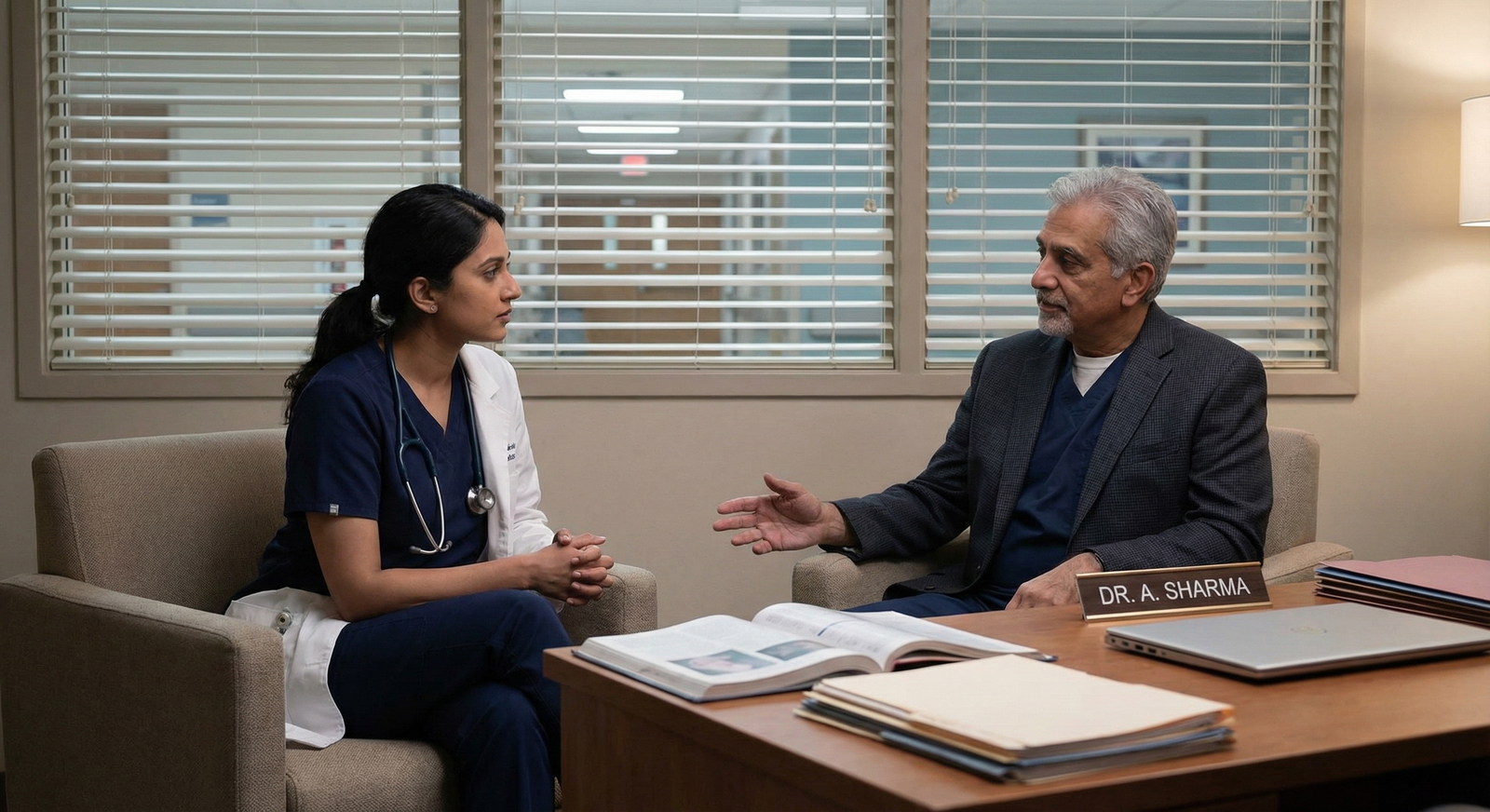
- Ask about their career path in family medicine.
- Stay after rounds once or twice to ask thoughtful questions.
- Express your interest in FM and request feedback on your performance.
One resident you can learn from
- Ask how they matched.
- Seek advice about programs that are IMG-friendly or have Caribbean medical school graduates.
- Observe their documentation style, patient communication, and time management.
Then, convert those interactions into a more formal networking relationship.
Example script:
“Dr. Patel, I’ve really appreciated your teaching during this rotation, especially about managing complex chronic disease in primary care. I’m an SGU student planning to apply to family medicine, and I’d value any advice you have about getting ready for residency and how I can strengthen my application as a Caribbean IMG.”
3. How to ask for mentorship without being awkward
Mentorship in medicine does not always start with “Will you be my mentor?” Instead, it grows from repeated, productive interactions.
Start with targeted questions:
- “Would you mind if I emailed you a few questions about family medicine applications?”
- “Could I schedule a 15-minute call to ask about your path into family medicine?”
If there is a good fit:
- After 2–3 positive interactions, you can say:
- “I’ve found your guidance very helpful as I prepare for the family medicine match. Would you be open to a more ongoing mentorship relationship as I navigate this process?”
- After 2–3 positive interactions, you can say:
Some mentors will have limited time; even brief, once-a-semester contact can be powerful.
4. Leveraging alumni from your Caribbean medical school
If you’re at a large Caribbean school like SGU, AUC, or Ross, you have a huge hidden advantage: alumni already in residency and practice, including many in family medicine.
Find them via:
- School alumni directories
- SGU residency match lists (or equivalent from your school)
- LinkedIn searches: “St. George’s University family medicine residency” or “Ross University family medicine”
- Program websites that list residents’ medical schools
Reach out respectfully:
- Subject: “SGU MS4 interested in Family Medicine – Seeking brief advice”
- Body:
- Introduce yourself (1–2 sentences).
- Express specific interest in their program or career path.
- Ask for a brief call or a few questions via email.
- Keep it short and easy to answer.
Example email:
Dear Dr. Lopez,
My name is [Name], and I’m a fourth-year SGU student applying to family medicine residency this cycle. I saw that you’re an SGU graduate currently at [Program Name], and I’m very interested in IMG-friendly community programs like yours.
If you have 10–15 minutes sometime this month, I’d be grateful for any advice you could share about how you approached the FM match as a Caribbean IMG and what qualities your program looks for.
Thank you for considering this,
[Name]
[LinkedIn link or CV attached]
Many alumni remember how challenging the Caribbean medical school residency journey was and are surprisingly willing to help.
Conference Networking and Organized Events: Turning Brief Meetings into Real Opportunities
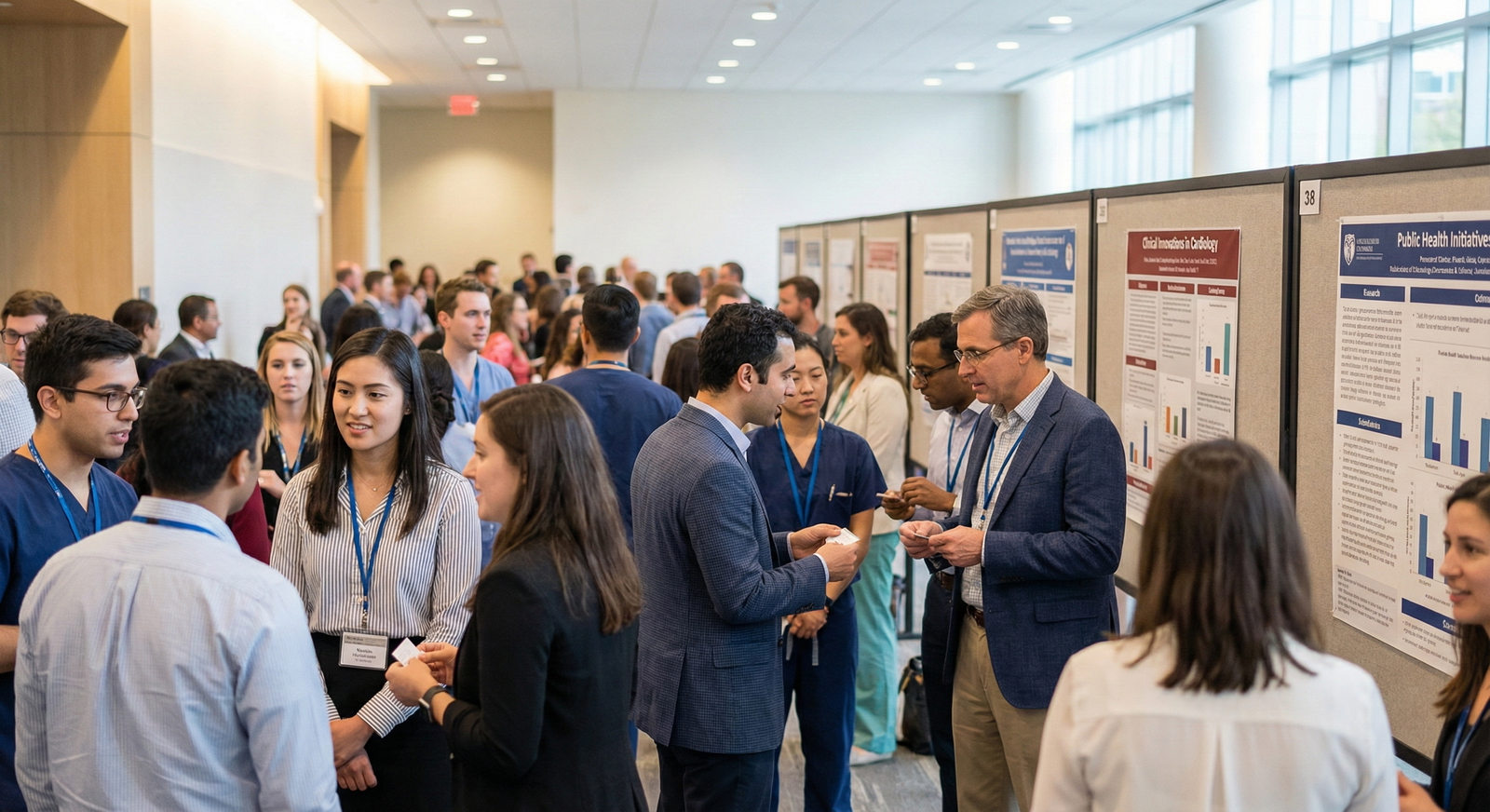
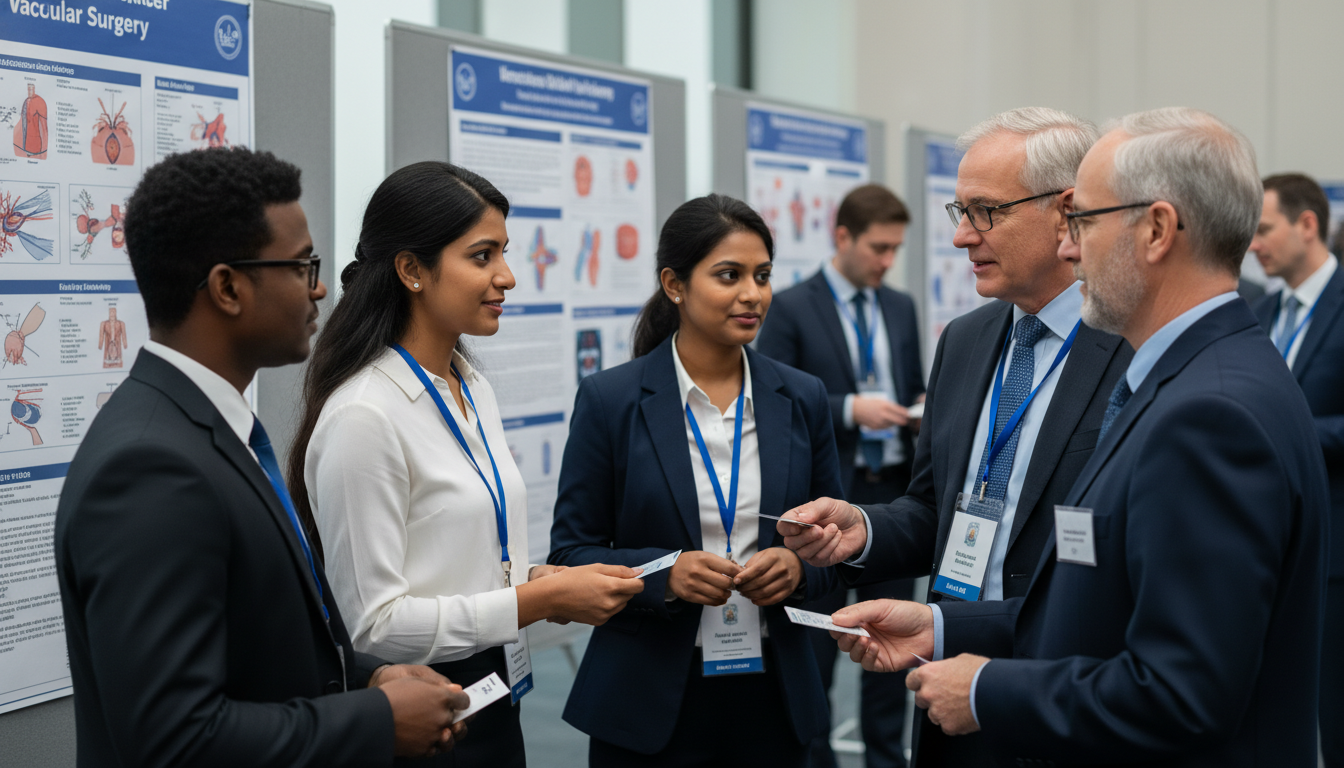
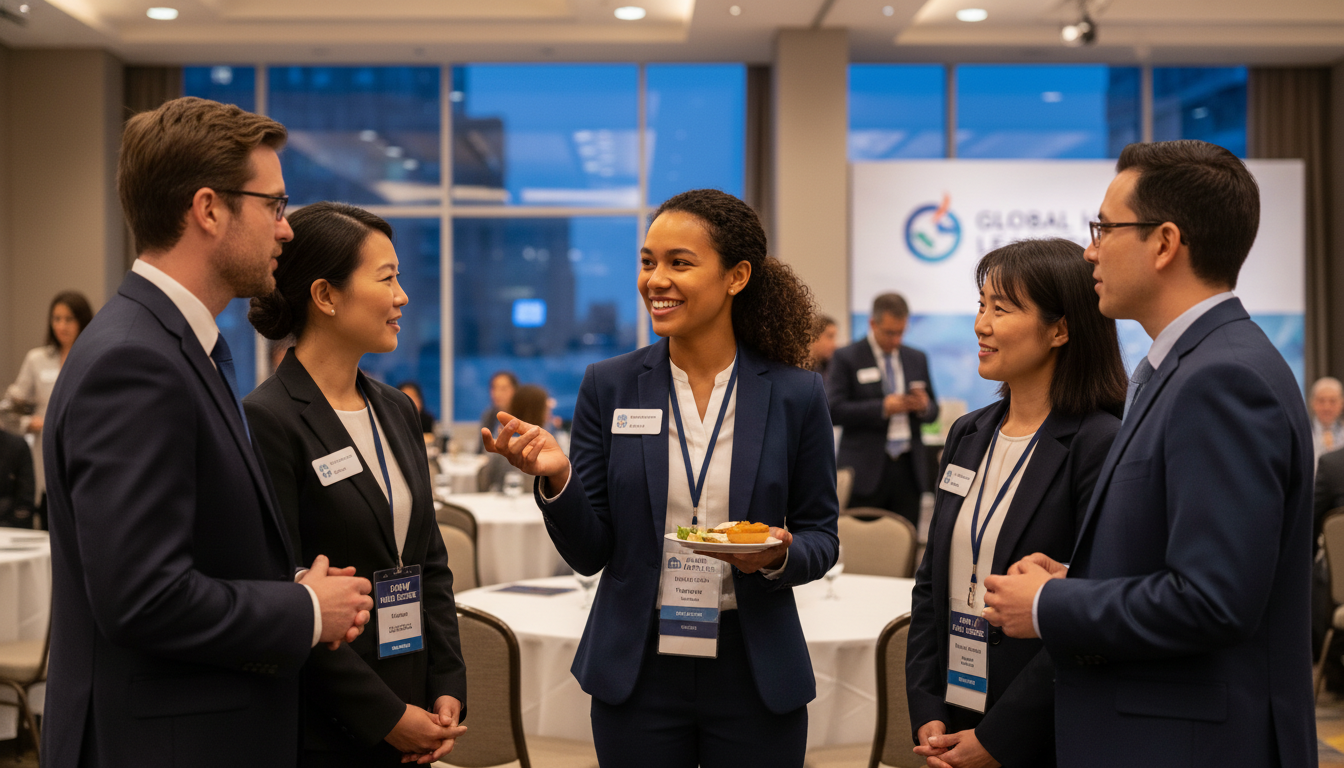
Conferences, local CME events, and specialty society meetings are high-yield for conference networking, especially if you prepare intentionally.
1. Choose conferences strategically
As a Caribbean IMG targeting family medicine, prioritize:
- AAFP National Conference of Family Medicine Residents and Students
- State AAFP chapter conferences (e.g., NYSAFP, CAFM conferences, etc.)
- Hospital or residency-sponsored student conferences and open houses
- SGU or Caribbean-school-hosted virtual networking sessions
These events often include:
- Residency program booths
- CV and personal statement workshops
- Mentorship sessions with faculty and residents
- Panels on the FM match and IMG experiences
2. Prepare before you arrive
Research programs attending the conference
- Identify FM programs that are IMG-friendly or have Caribbean medical school graduates.
- Note which you’d especially like to speak with.
Print business cards (simple, professional):
- Name, “Medical Student – [School]”
- Email, phone
- LinkedIn URL
Practice a 20–30 second introduction:
- Who you are (Caribbean IMG, school, level)
- Interest in family medicine (and specific aspects, like rural care, women’s health, or community medicine)
- What you’re hoping to learn
Example:
“Hi, I’m [Name], a fourth-year SGU student very interested in family medicine, especially longitudinal care for underserved communities. I’m learning about different community-based programs and would love to hear what makes your residency unique.”
3. At the conference: what to actually say
When speaking to a program representative (PD, APD, chief resident):
Show you’ve done your homework:
- “I saw that your program has a strong emphasis on continuity clinic and behavioral health integration. How involved are residents in managing comorbid mental health conditions in your primary care clinics?”
Ask questions that help your application strategy:
- “How does your program view Caribbean IMGs?”
- “What qualities in applicants make you think, ‘This person will thrive here’?”
- “Do your residents often pursue fellowships, or stay in primary care after graduation?”
Mention your strengths briefly:
- “I’ve done outpatient QI work related to diabetes control, and I’m hoping to continue that kind of project in residency.”
After a meaningful conversation, request permission to follow up:
“This has been very helpful. Would it be okay if I emailed you once I’m closer to submitting my ERAS application, in case I have additional questions about the program?”
Then, write down their name, role, and key points immediately after you leave the booth.
4. Post-conference follow-up that actually works
Within 3–5 days:
- Send a short thank-you email:
- Remind them where you met.
- Highlight 1–2 specifics you discussed.
- Reiterate your interest in family medicine and possibly in their program.
Example:
Dear Dr. Ahmed,
It was a pleasure speaking with you at the AAFP National Conference about [Program Name]. I especially appreciated hearing about your residents’ involvement in community health projects and your support for IMG trainees.
As a fourth-year SGU student applying to family medicine this cycle, I’m drawn to programs that combine strong outpatient training with opportunities to serve underserved populations. I’ll definitely be applying to [Program Name] and hope to learn more about your program as interview season approaches.
Thank you again for your time,
[Name]
Keep this concise and professional. You are not asking for a favor yet—you’re building recognition and rapport.

Online Networking, Mentorship, and Using Connections in the FM Match
Beyond face-to-face networking, there is powerful potential in online platforms, virtual mentorship, and structured alumni networks.
1. LinkedIn and professional social media strategy
Use LinkedIn and (if appropriate) X/Twitter to:
- Follow:
- Family medicine organizations (AAFP, state chapters)
- FM residency programs
- Caribbean medical school alumni in FM
- Share:
- Reflections on rotations (de-identified)
- Participation in community clinics, health fairs, or quality improvement projects
- Articles or guidelines relevant to primary care
Post with a professional tone: focus on learning, growth, and service. Over time, this builds a visible identity as an aspiring family physician.
2. Finding mentorship in medicine online
There are multiple routes to mentorship medicine for Caribbean IMGs:
Formal mentorship programs
- AAFP student & resident mentorship programs
- Caribbean medical school–sponsored mentorship initiatives
- IMG-specific mentorship organizations
Informal mentorship via outreach
- Message FM faculty or residents on LinkedIn:
- “I saw your post on X about continuity of care in family medicine. As a Caribbean IMG interested in family medicine, I’d love to ask you 2–3 quick questions about your path and what you’ve found rewarding about the specialty.”
- Message FM faculty or residents on LinkedIn:
Keep first messages brief. When someone responds, respect their time with focused questions, for example:
- “What do you wish you had known as a Caribbean IMG applying to family medicine?”
- “Are there particular conferences or experiences you’d recommend I prioritize?”
3. Using your network ethically in the FM match
When to leverage connections:
Before ERAS submission
- Ask mentors which programs fit your profile.
- Ask alumni about the culture and IMG-friendliness of specific programs.
- Request feedback on your personal statement and CV.
After submitting ERAS, before interviews
- If you have a strong relationship with an attending who knows a PD or APD well, they may be willing to email or call on your behalf.
- Alumni residents may tell their selection committee, “We have a strong SGU candidate who would fit in here.”
How to request advocacy appropriately:
“Dr. Chen, I’m planning to apply to [Program Name] this cycle and greatly appreciate the guidance you’ve given me. If you feel comfortable and think my performance on rotation was strong enough to merit it, would you be willing to let them know that you’d recommend me as an applicant?”
This gives them a clear option to decline without awkwardness.
During interview season
- Use mentors to help interpret confusing signals (long silence after interview, mixed feedback).
- Ask about second looks, follow-up emails, or how to express genuine interest without overstepping.
Ranking phase
- Mentors can help you balance location, training quality, and IMG-supportive culture.
- Alumni insights about “hidden curriculum” and real program culture are invaluable.
Common Pitfalls in Networking for Caribbean IMGs—and How to Avoid Them
Networking can feel uncomfortable, and missteps are common. Being aware of them helps you stay authentic and effective.
1. Being transactional
If every interaction feels like “Can you get me an interview?” people pull back.
Instead:
- Focus first on learning, connection, and value.
- Offer small value where you can:
- Volunteer to help with a QI project.
- Assist with a small research task.
- Participate reliably in clinic or teaching activities.
2. Over-emailing or lack of boundaries
Busy physicians may ignore follow-ups if they feel overwhelmed.
- Space follow-up emails 2–3 weeks apart unless time-sensitive.
- If someone doesn’t respond after 2 attempts, assume they’re unavailable and move on.
3. Being unprepared when opportunities appear
Common scenario: You meet a PD at a conference, they say, “Send me your CV,” and you panic.
Avoid this by:
- Keeping an updated 1-page CV ready.
- Practicing your personal statement pitch so you’re clear about why family medicine and what makes you unique as a Caribbean IMG.
4. Underestimating “peer networking”
Your classmates and co-rotators are future residents and attendings.
- Support each other.
- Share resources and insights about programs.
- Celebrate each other’s successes, even when you’re stressed about your own.
Many FM match doors open because “a friend of a friend” mentioned your name.
Putting It All Together: A Step-by-Step Networking Plan for Caribbean IMGs in FM
Here is a sample timeline and action plan you can adapt.
Preclinical / Early Clinical Years
- Join your school’s family medicine interest group or equivalent.
- Join AAFP as a student member.
- Create and polish LinkedIn.
- Attend at least one local or virtual FM conference.
- Identify one faculty mentor who supports your FM interest.
Core Clinical Rotations
- On each rotation, aim to build stronger relationships with:
- One attending
- One resident
- Collect contact information and ask permission to stay in touch.
- Start identifying family medicine programs where you’d be a good fit.
- Seek out FM-related research or QI projects.
FM Electives / Sub-internships
- Treat them as high-stakes audition rotations.
- Ask attendings and residents for specific feedback and incorporate it.
- If performance is strong, ask:
- For Letters of Recommendation.
- Whether they’d be willing to advocate for you at their program or others.
Pre-ERAS (Spring–Summer Before Match Year)
- Update CV and have a near-final personal statement draft.
- Attend a major FM or AAFP conference if possible.
- Reach out to Caribbean medical school alumni in FM.
- Discuss your program list with mentors to ensure it’s realistic and diverse.
ERAS Submission to Interview Season
- Notify key mentors when you’ve applied and to which programs.
- Ask select mentors (who know you well) if they feel comfortable reaching out to programs they’re connected to.
- Continue conference networking at virtual open houses and meet-and-greets.
Ranking and Beyond
- Use mentors to refine your rank list.
- Maintain relationships with mentors and alumni even after the match—they’re crucial for fellowship, job searches, and long-term career advice.
FAQs: Networking in Medicine for Caribbean IMGs in Family Medicine
1. As a Caribbean IMG, is it realistic to match into family medicine in the U.S.?
Yes. Many Caribbean graduates successfully match into family medicine each year. Programs value FM applicants who are hardworking, teachable, and committed to primary care. Strong USMLE scores, solid clinical performance, good letters, and strategic medical networking—especially through rotations and alumni like those in the SGU residency match lists—can make your application competitive.
2. I’m introverted and hate “networking.” How can I still build connections?
You don’t need to be extroverted. Focus on small, meaningful interactions: one-on-one conversations with attendings, short emails to alumni, or brief questions at the end of rounds. Think of networking as relationship-building through professionalism and curiosity, not as forced socializing. Consistency and authenticity matter more than being “charming.”
3. How many conferences should I attend to help my FM match chances?
Quality beats quantity. For most Caribbean IMGs, one major FM conference (like AAFP National Conference) plus a state-level or residency-sponsored event is enough. The key is preparing well, having focused conversations, and following up. A single strong connection from one conference can have more impact than attending five events without follow-through.
4. When is it appropriate to ask a mentor or attending to contact a program for me?
Only after:
- They’ve seen your work directly (rotation, project, or longitudinal mentoring).
- They’ve expressed confidence in you.
- You’ve built a genuine relationship over time.
Then, ask politely and give them an easy way to decline. For example:
“If you feel comfortable, would you be willing to let [Program Name] know that you’d recommend me as an applicant?”
Never pressure someone or assume they owe you advocacy—it must come from their genuine belief in you.
By approaching networking in medicine as authentic relationship-building, you can transform the challenges of being a Caribbean IMG into opportunities. For those pursuing the family medicine residency path, your story, resilience, and dedication to longitudinal patient care are powerful assets—networking simply ensures the right people get to see them.