
Waiting until residency to build your physician network is career malpractice. You start in premed, or you start behind.
Here is the reality: medicine is credential-heavy but relationship-driven. The students who “keep running into” opportunities, research, letters, and positions are not lucky. They built a network early, and they kept building it methodically.
You asked when to start. I am going to walk you from premed through PGY‑1 with a clear, chronological networking plan: what to do each phase, who to meet, what to say, and how often to follow up.
Phase 1: Early Premed (Freshman–Sophomore Year)
At this point you are not “too early.” You are anonymous. That is different.
Goals for this phase
- Learn how to talk to physicians like a future colleague, not a fan.
- Build 3–5 light‑touch physician connections through shadowing or volunteering.
- Start a simple tracking system (spreadsheet or note app).
Month‑by‑Month (Year 1–2)
Months 1–3 (first semester of college)
Focus: Exposure and basic comfort.
- Identify:
- 1–2 local hospitals
- Student premed club
- Any alumni physicians from your college
- Actions:
- Attend at least 1 premed club event per month and introduce yourself to the invited physician speaker.
- Email your college’s pre-health advising office to ask, very simply:
“Do you have a list of alumni physicians who take students for shadowing?”
- Tracking:
- Start a sheet with columns: Name, Role, Institution, How we met, Last contact date, Next step.
Months 4–8 (second semester → summer)
Focus: First real physician interactions.
- Secure:
- 1 shadowing physician for at least 8–10 total hours.
- 1 volunteering role in a clinical setting (front desk, patient transport, ED volunteer, etc.).
- At this point you should:
- Be able to send a short, targeted ask:
- “Dr. Smith, I really appreciated shadowing you in clinic last month. Would it be possible to come for two additional mornings this summer to see more of outpatient internal medicine?”
- Stay on a 3–4 month follow‑up cycle: a brief email update or thank‑you.
- Be able to send a short, targeted ask:
Months 9–24 (end of sophomore year)
Focus: Depth with a few people, not breadth with many.
Target outcome by end of Year 2:
- 2–3 physicians who:
- Recognize your name.
- Have seen you more than once.
- Could plausibly write a short note supporting you for a summer program.
What you do:
- Email or speak to them 3–4 times a year:
- Start/end of each semester.
- After any major milestone (first clinical volunteering, first poster, MCAT scheduled).
- Keep the format:
- Brief update (2–3 lines).
- One specific question or thank‑you.
- No vague “let me know if there’s anything I can do” nonsense.
Phase 2: Late Premed (Junior–Senior, MCAT, Application Year)
Now your network stops being a “nice idea” and starts affecting outcomes: letters, gap‑year jobs, research, and school lists.
Goals for this phase
- Have 3–4 physicians who can write strong letters.
- Gain at least 1 research or sustained clinical role through a physician connection.
- Get realistic specialty and career advice early.
Year 3: The Heavy Lift
Fall (Months 25–28)
At this point you should:
- Decide whether your existing physicians are “letter‑quality” or “polite acquaintance”.
- Letter‑quality = they know specific stories about your work and character.
- Actions:
- Schedule 1:1 conversations (short coffee, post‑clinic debrief, or Zoom) with 2–3 physicians you respect.
- Ask:
- “Can you tell me honestly what you think I should strengthen before I apply to medical school?”
- Listen. Do not argue. This is networking: trust, not flattery.
Winter–Spring (Months 29–32)
Networking becomes more deliberate.
- Use your contacts to:
- Identify 1–2 physicians who do research and are open to students.
- Confirm 2 letter writers by name:
- “Would you feel comfortable writing a strong letter of recommendation for my medical school applications next cycle?”
- You should:
- Send one substantial update email per physician contact this semester, especially:
- MCAT scheduled or taken.
- Major leadership roles.
- New research or community activities.
- Send one substantial update email per physician contact this semester, especially:
Summer–Application Season (Months 33–36)
This is when weak networks crack.
- Ask for letters early:
- 8–10 weeks before your target submission.
- Provide: CV, personal statement draft, bullet list of 4–5 things you hope they can highlight.
- Use physician mentors for:
- School list sanity checks.
- Mock interview practice.
- Honest discussion of red flags.
By the time you submit AMCAS or AACOMAS, you should:
- Have 2–3 attending physicians who:
- Know your story.
- Expect your application.
- Are invested in the outcome.
Phase 3: Pre‑Matriculation Gap Year(s) – Optional but Powerful
If you take a gap year, this is quietly one of your best networking windows.
Goals for this phase
- Become “part of the team” somewhere: a research group, clinic, or department.
- Gain 1–2 mentors who remember you years later.
Months 1–3 of Gap Year
- Choose deliberately:
- Clinical research coordinator
- Medical assistant / scribe
- Full‑time volunteer coordinator or similar role
- At this point you should:
- Learn names. Of everyone. Attendings, fellows, residents, admin.
- Show up to:
- Grand rounds.
- Journal clubs.
- Department social events if allowed.
Months 4–12 of Gap Year
This is where people decide if you are just passing through or future colleague material.
- Actions:
- Ask to present once:
- A short case at conference.
- A poster at a local meeting.
- Request a mid‑year feedback meeting:
- “I plan to start medical school next year. I would really value feedback on how I am doing and how I can grow into the kind of trainee you would want back.”
- Ask to present once:
- Outcome:
- 1–2 long‑term mentors anchored in a specialty you now know from the inside.
Phase 4: Medical School – Year‑by‑Year Networking Plan
Here is where most people get sloppy. They think “being in medical school” is networking. It is not. You need an explicit plan.
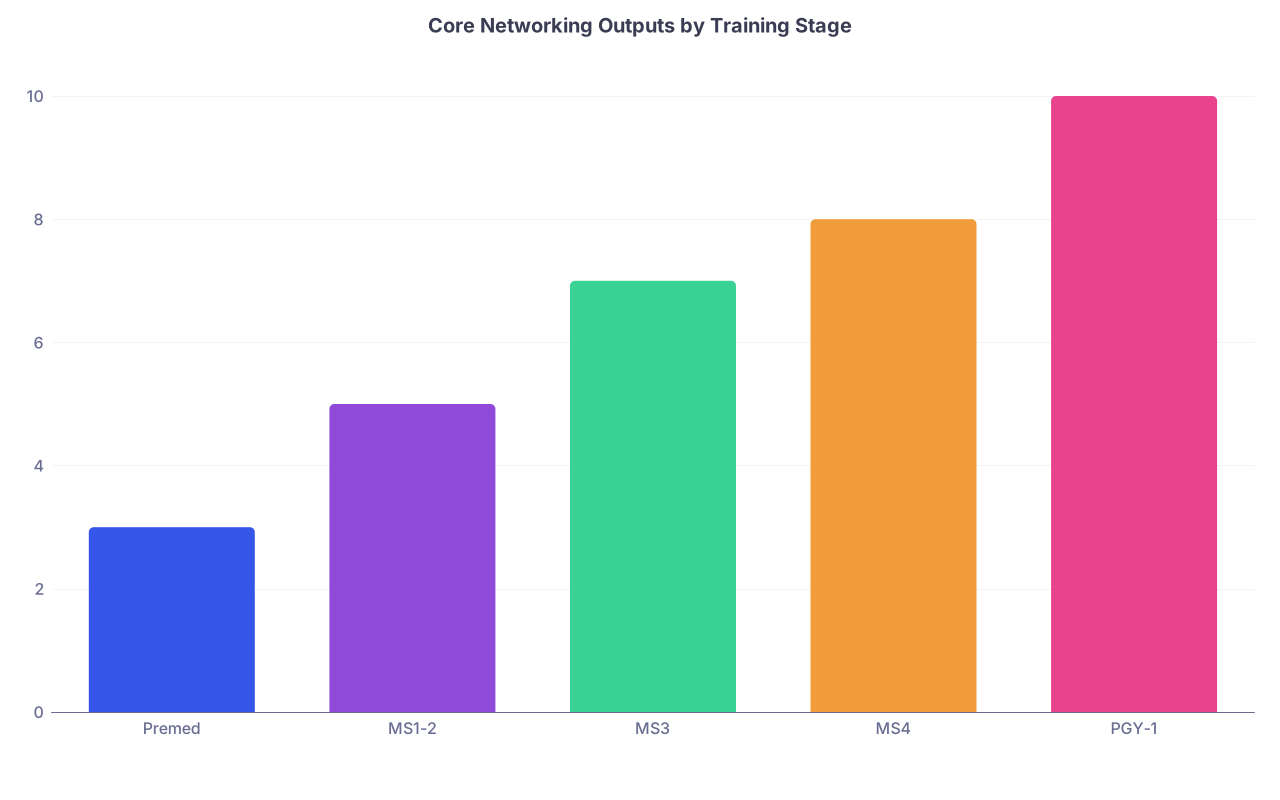
| Category | Value |
|---|---|
| Premed | 3 |
| MS1-2 | 5 |
| MS3 | 7 |
| MS4 | 8 |
| PGY-1 | 10 |
MS1: Foundation and Visibility
First 3 Months
At this point you should:
- Learn your school’s ecosystem:
- Which departments are research‑heavy?
- Who are the “student‑friendly” attendings?
- Actions:
- Join 1–2 interest groups maximum (EM, IM, surgery, etc.).
- Go to the first meeting, introduce yourself to the faculty advisor.
Months 4–12
- Start 1–2 concrete relationships:
- Research mentor.
- Longitudinal clinic preceptor.
- Monthly habit:
- One intentional networking action per month:
- Coffee with a faculty member.
- Email update to an existing mentor.
- Attending a department event and following up with 1 person.
- One intentional networking action per month:
By end of MS1 you want:
- 1 faculty member who can say, “I have known this student since first year.”
MS2: Sharpen and Align with Possible Specialty
Now USMLE/COMLEX pressure is high. But networking here is leverage, not distraction.
First Half of MS2
At this point you should:
- Narrow to 2–3 likely specialties (this can and will evolve).
- Identify:
- 1 faculty mentor in your tentative “Plan A” specialty.
- 1 mentor in a different area as a sanity check.
Networking actions:
- Ask each mentor for:
- Books or resources they recommend.
- Honest commentary on competitiveness for their field.
Late MS2 (Pre‑clinical → Clinical Transition)
- Meet with your main mentor to discuss:
- Clerkship strategy.
- How to stand out professionally on rotations.
- Ask directly:
- “If I do well clinically, what concrete steps should I take during third year to be a strong applicant for your field?”
Phase 5: Clinical Years (MS3–MS4) – Where Networking Decides Specialty
You will work with dozens of physicians. Most will forget you. A few will matter a lot. Your job is to identify and cultivate those few.
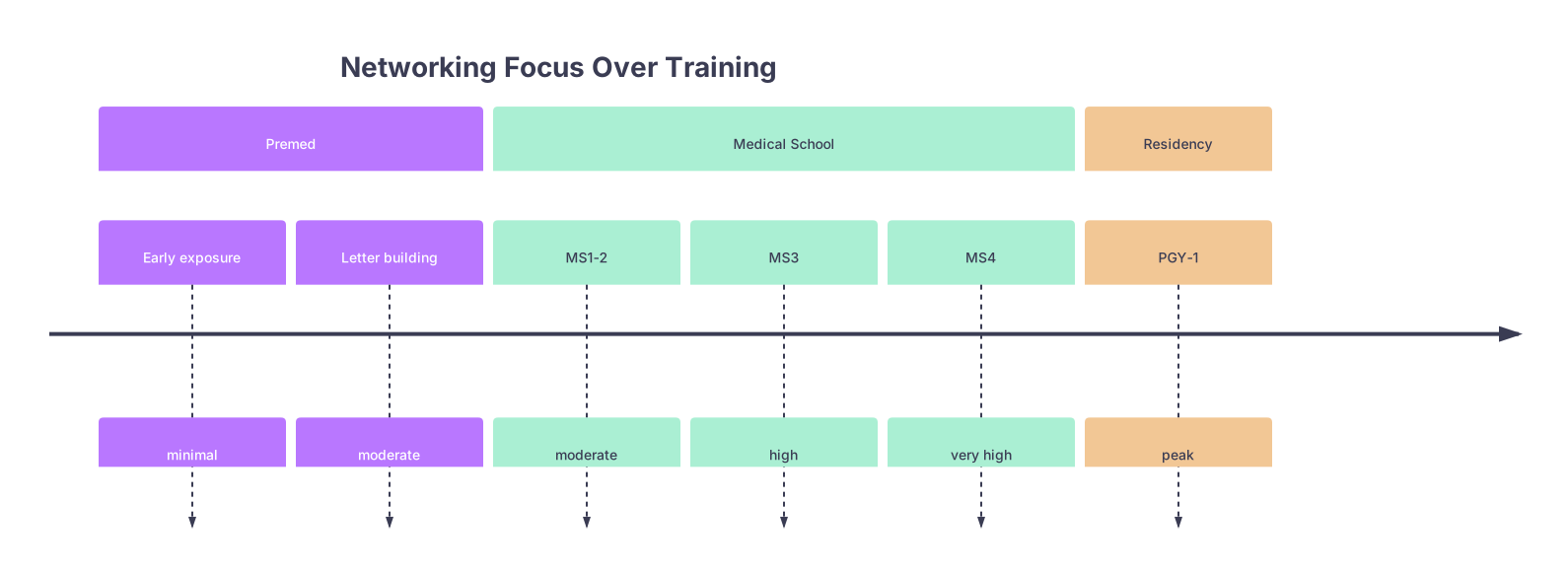
| Period | Event |
|---|---|
| Premed - Early exposure | minimal |
| Premed - Letter building | moderate |
| Medical School - MS1-2 | moderate |
| Medical School - MS3 | high |
| Medical School - MS4 | very high |
| Residency - PGY-1 | peak |
MS3: Rotation‑by‑Rotation Networking
At this point you should stop thinking in semesters. Think in rotations.
Week 1 of Every Rotation
- Identify:
- 1 attending and 1 resident who:
- Teach well.
- Interact respectfully with students.
- 1 attending and 1 resident who:
- Signals they might be good networking targets:
- They remember your name.
- They ask about your interests outside of medicine.
- Other residents speak well of them.
Weeks 2–3
Actions on the ground:
- Show them your work ethic first. Talking too early without performance to back it up is a classic mistake.
- Around mid‑rotation, ask for a short meeting or walking conversation:
- “I am exploring specialties and really value your perspective. Would you mind if I asked you a few questions about your career path sometime this week?”
Final Week of Rotation
Your script is straightforward:
- Thank them specifically for something they did.
- If you are considering their specialty:
- Ask whether they would be willing to stay in touch as you think about residency choices.
- If they were particularly impressed:
- Ask if they could provide feedback or, in some cases, be a future letter writer.
After the rotation:
- Send 1 thank‑you email same week.
- Add to your tracking sheet with:
- Comments about their specialty, research, personality.
- Whether you felt genuine rapport.
MS4: Application Year – High‑Stakes Networking
Now your network translates directly into residency interviews and rank outcomes.
Early MS4 (Before ERAS Submission)
At this point you should:
- Have 3–4 faculty who:
- Know you clinically.
- Can write detailed letters.
- Actions:
- Schedule 20–30 minute meetings with your top 2–3 mentors to:
- Review your CV.
- Discuss your target programs.
- Ask, bluntly: “Where do you think I am a realistic, strong candidate?”
- Schedule 20–30 minute meetings with your top 2–3 mentors to:
Sub‑internships / Acting Internships
Treat every sub‑I like a month‑long audition. Networking here is not small talk. It is performance plus follow‑up.
- Weeks 1–2:
- Establish reliability: early, prepared, responsive.
- Weeks 3–4:
- Ask for feedback from an attending you respect.
- If feedback is strong, ask if they can support you with:
- A letter.
- A quick email to a program director they know (yes, this happens; no, you will not see the email).
Interview Season
Networking now is subtle but real:
- Send short thank‑you emails to:
- Program directors.
- Standout faculty interviewers.
- If you have a strong prior connection (research or mentor), update them:
- “I interviewed at X, Y, and Z in your field; I especially liked X because of their emphasis on…”
This sometimes triggers quiet advocacy.
- “I interviewed at X, Y, and Z in your field; I especially liked X because of their emphasis on…”
Phase 6: PGY‑1 – Networking Becomes Your Daily Environment
You made it. Now the stakes go up. Your physician network is no longer about getting in. It is about where you will go next: fellowship, jobs, collaborations.

Goals for PGY‑1
- Build a trusted inner circle: 2–3 attendings and 2–3 senior residents.
- Become known for something: reliability, procedural skill, teaching.
- Position yourself early for fellowship or job opportunities.
First 3 Months of PGY‑1
At this point you should:
- Learn the map:
- Which attendings run fellowships.
- Which chiefs are plugged into jobs.
- Actions:
- Show up to departmental and divisional conferences, not just mandatory ones.
- After a few good interactions with an attending, say:
- “I am early in residency but very interested in [field / fellowship]. Could I set up 15 minutes to ask how people here usually build toward that?”
Networking in residency is performance‑driven. If you are late, disorganized, or unprofessional, no coffee chat will fix that. Do good work first.
Months 4–9 of PGY‑1
This is when you convert respect into mentorship.
- Choose 1–2 attendings to go deeper with, based on:
- Alignment with your career goals.
- Reputation as fair, supportive teachers.
- Concrete moves:
- Volunteer for a small project:
- Case report.
- Quality improvement task.
- Ask to be looped into division emails or reading groups.
- Volunteer for a small project:
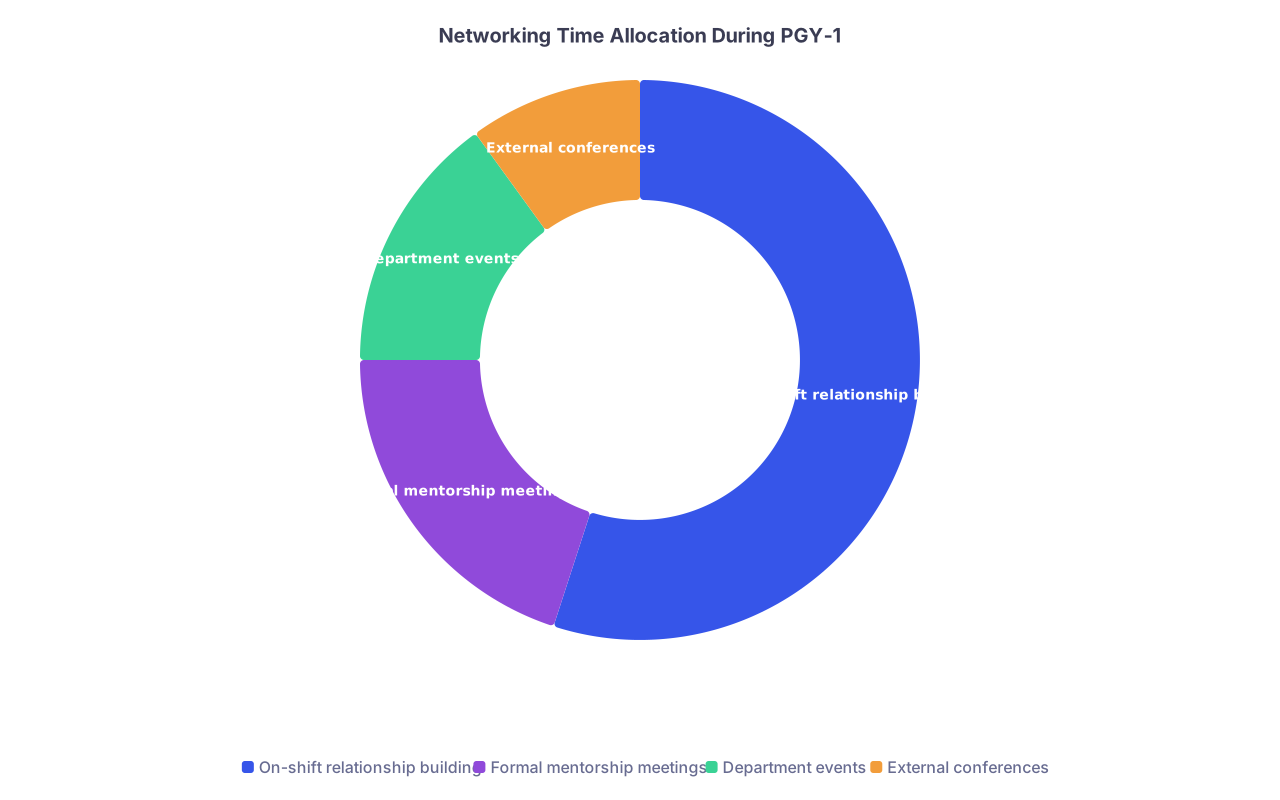
| Category | Value |
|---|---|
| On-shift relationship building | 55 |
| Formal mentorship meetings | 20 |
| Department events | 15 |
| External conferences | 10 |
You should aim each month for:
- 1 short mentor meeting (even 15 minutes).
- 1 departmental or educational event where you speak to at least one new attending or fellow.
- Ongoing micro‑interactions on rounds, in the workroom, at sign‑out.
Months 10–12 of PGY‑1
By the end of PGY‑1, if you have done this correctly, you will:
- Have at least:
- 2 attendings who would strongly support a fellowship application or job reference.
- 2–3 senior residents or fellows who know your work and can advocate informally.
- Know:
- Which programs or jobs are realistic next steps.
- Which conferences to attend in PGY‑2 and PGY‑3 to grow your external network.
This is the moment to ask mentors explicitly:
- “If I want to be competitive for [fellowship or job type], what should I be doing in PGY‑2?”
- Then actually do it. Following through is what turns a contact into a genuine advocate.
Simple Network Tracking Template
Stop trying to remember everything in your head. Use something like this from premed onward.
| Field | Example |
|---|---|
| Name | Dr. Amanda Lee |
| Role | Cardiology attending |
| Institution | City University Hospital |
| How we met | MS2 cardiology interest group |
| Last contact | 2026-03-15 |
| Next step | Email update after Step 2 score |
Update it once a month. Five minutes. No excuses.
Common Timing Mistakes (And What To Do Instead)

Starting in MS3 and calling that “networking.”
Fix: Start deliberate relationship‑building in late premed. At minimum, by MS1.Only networking “upward.”
Everyone chases attendings. Smart people also invest in:- Residents.
- Fellows.
- Slightly older students.
These are often the ones who pull you into projects and talk about you when decisions get made.
Ghosting between phases.
Premed mentors never hear from you after acceptance. Med school mentors never hear from you after graduation. Then you show up years later asking for help.
Fix: One update email per year is enough to keep a dormant connection alive.Being purely transactional.
If every interaction is “Can you write X / send Y / connect me to Z?” people notice.
Fix: Share genuine updates. Ask about their work. Show up to their talks. Offer small help when appropriate (e.g., student recruitment, survey distribution).
Quick Phase‑by‑Phase Checklist

Premed (All Years)
- 2–4 shadowing or clinical physicians who know your name
- 1–2 physicians who can write credible letters
- Yearly update emails to key mentors
Gap Year(s)
- Embedded in 1 clinical or research team
- 1–2 long‑term mentors from that environment
MS1–MS2
- Joined 1–2 interest groups and met the faculty leads
- Identified at least 1 research or longitudinal clinical mentor
- Met with a mentor each semester
MS3–MS4
- 1 attending and 1 resident identified per rotation for potential ongoing connection
- 3–4 strong letter writers by early MS4
- Mentors aware of your specialty choice and target programs
PGY‑1
- 2–3 trusted attendings who know your work in depth
- 2–3 senior residents or fellows who can vouch for you
- Clear plan for PGY‑2–3 career development based on mentor input