Why Networking Matters So Much for Non‑US Citizen IMGs
For a non-US citizen IMG aiming for an internal medicine residency in the United States, networking is not a “nice-to-have”—it is a strategic necessity.
Program directors consistently report that beyond USMLE scores and clinical performance, what often distinguishes successful applicants is:
- Trusted recommendations from known colleagues
- Prior personal interaction (at conferences, rotations, or online)
- A sense of professionalism and cultural fit
As a foreign national medical graduate, you face additional barriers:
- Fewer natural U.S. connections (no med school classmates in the system)
- Less familiarity with “hidden” expectations (email etiquette, follow-up, self-advocacy)
- Visa considerations and assumptions about your availability or long-term plans
Effective medical networking can help you:
- Secure stronger letters of recommendation from U.S.-based internists
- Learn which internal medicine residency programs are genuinely IMG- and visa-friendly
- Identify research or observership opportunities before they’re widely advertised
- Gain mentors who advocate for you during the IM match process
Networking is not about being pushy or fake. It is about building mutually respectful, long-term professional relationships grounded in value, reliability, and genuine interest in internal medicine.
The rest of this article focuses on practical, step-by-step strategies tailored specifically to the non-US citizen IMG interested in internal medicine.
Foundations of Effective Networking for IMGs
Before diving into conferences and LinkedIn, you need a strategic foundation: clear goals, a professional brand, and basic communication skills that align with U.S. expectations.
1. Define Your Networking Goals
Vague goals (“I want to know people in the U.S.”) lead to scattered efforts. Instead, clarify what you want in the next 6–24 months.
Typical goals for a foreign national medical graduate:
- Find U.S. clinical experience (observerships, externships, sub-internships)
- Identify potential mentors in internal medicine subspecialties (e.g., cardiology, hospital medicine, endocrinology)
- Secure research opportunities in internal medicine or quality improvement
- Target programs likely to sponsor visas and welcome IMGs
- Understand specific residency program cultures (academic vs community, heavy research vs clinical focus)
Turn these into focused targets:
- “Connect with at least 5 academic internists in the next 6 months.”
- “Get involved in at least 1 multi-month research or QI project with a U.S.-based mentor.”
- “Have an informational conversation with at least 10 current internal medicine residents about their programs before submitting ERAS.”
These concrete goals make your medical networking efforts purposeful and measurable.
2. Build a Strong Professional Story
When you meet someone (online or in person), you’ll usually have 20–60 seconds to introduce yourself. Prepare a concise, confident “professional story”:
Core elements:
- Who you are: “I’m a non-US citizen IMG from [Country], graduated from [Medical School] in [Year].”
- Current status: “I’m currently working as [role] at [institution/clinic] focusing on [area].”
- IM interest: “I’m particularly interested in internal medicine, especially [subspecialty or theme].”
- Goal: “I’m working toward applying to internal medicine residency in [Year] and seeking opportunities to [research/observe/learn].”
Example (in person at a conference):
“My name is Dr. Rao, and I’m a non-US citizen IMG from India. I completed medical school at XYZ University in 2021 and have been working in a general medicine unit with a strong focus on inpatient care. I’m particularly interested in hospital medicine and quality improvement. I’m planning to apply to internal medicine residency next year and I’m hoping to learn more about how academic programs structure their inpatient training and QI involvement.”
Have versions tailored for:
- Conference introductions
- Emails to potential mentors
- Short LinkedIn summaries
3. Polish Your Digital Presence
Before you network, assume that anyone you meet will look you up online.
A strong LinkedIn profile is a cornerstone of modern medical networking:
- Professional photo: Neutral background, business attire, good lighting
- Headline: “Non-US citizen IMG | Aspiring Internal Medicine Resident | Interested in [subspecialty/QI/research]”
- About section: 4–6 sentences summarizing your training, interests, and IM goals
- Experience: List clinical roles, internships, research, volunteering (use U.S.-style bullet points emphasizing what you did and achieved)
- Featured section: Add links to published abstracts, posters, or presentations, if any
Email Identity
- Use a professional email (e.g., firstname.lastname.md@gmail.com)
- Set a clear signature:
Name, Medical Degree (e.g., MBBS, MD)
Non-US Citizen IMG – Internal Medicine Residency Applicant (Target: 2027 Match)
Country/Current Institution
Email | Optional: LinkedIn link
CV and ERAS Alignment
Your CV should align with what you present online:
- No contradictions in dates or roles
- Highlight IM-relevant experiences (inpatient medicine, chronic disease, geriatrics, etc.)
- Emphasize any U.S. exposure or remote research with U.S. teams

Finding and Building Mentorship in Internal Medicine
Mentorship in medicine is one of the most powerful accelerators for non-US citizen IMGs. A good mentor can:
- Guide you on program selection and realistic match strategies
- Help you identify research or quality improvement projects
- Coach you on U.S. communication norms and interview expectations
- Advocate for you with colleagues and potentially within their program
1. Types of Mentors You Should Seek
For an IMG targeting internal medicine, aim for a small mentor “team” rather than relying on a single person:
Clinical mentor (Internal Medicine)
- Ideally a U.S.-based internist (academic or community)
- Can provide letters of recommendation, clinical feedback, and specialty insight
Research/QI mentor
- May be an internist or PhD researcher
- Helps you gain publications, abstracts, or posters in IM-related topics
Peer or near-peer mentor
- A current internal medicine resident (ideally also an IMG)
- Offers practical advice on applications, interviews, and daily residency life
Visa/IMG process mentor
- Someone who has navigated the visa and match system as a foreign national medical graduate
- Provides insight on J-1 vs H-1B considerations, waiver options, and program attitudes
You may find that one person covers more than one role—but be intentional about having coverage across these areas.
2. Where to Find Mentors
During U.S. Clinical Experience (In-Person)
If you are doing observerships, externships, or electives:
- Identify attendings or senior residents who are engaged teachers.
- Ask thoughtful clinical questions; show reliability and punctuality.
- Volunteer to help with small tasks (e.g., literature search for a patient, QI data collection).
After working together for a few weeks, you might say:
“I’ve really appreciated your teaching and perspective on internal medicine. As a non-US citizen IMG planning to apply for IM residency, I would value any advice you might have on my path. Would you be open to staying in touch as an informal mentor?”
Remotely, from Abroad
If you are not yet in the U.S.:
- Use LinkedIn to search: “Internal Medicine,” “Hospitalist,” “Program Director,” “Associate Program Director,” combined with “IMG” or your country name.
- Join professional groups:
- American College of Physicians (ACP) online forums
- National IM organizations and their IMG or trainee sections
- Regional or country-specific IMG groups on LinkedIn or Facebook
When sending a connection request:
- Personalize your message (2–3 sentences)
- Mention any shared background (country, med school, special interest)
- Be transparent that you are seeking guidance, not immediate favors
Sample LinkedIn connection note:
“Dear Dr. Smith,
I’m a non-US citizen IMG from Pakistan, very interested in internal medicine and hospital medicine. I see that you are an internist and also an IMG graduate. I’m planning to apply for internal medicine residency in the next 1–2 years and would be grateful for any advice on how best to prepare. I’d be honored to connect.”
3. Maintaining Mentoring Relationships
Once a mentor agrees (formally or informally), maintain the relationship by:
- Being prepared: Send your questions in advance of meetings
- Respecting time: Stick to scheduled time, end on time, and follow through on any tasks you promise
- Providing updates: Every 2–3 months, send a short update on exams, observerships, or research progress
- Sharing outcomes: Let them know when their advice helped you (e.g., “Following your suggestion, I reached out to Dr. X and joined a QI project.”)
Mentors are more likely to invest when they see you taking action and improving.
Conference and Event Networking: From Awkward to Strategic
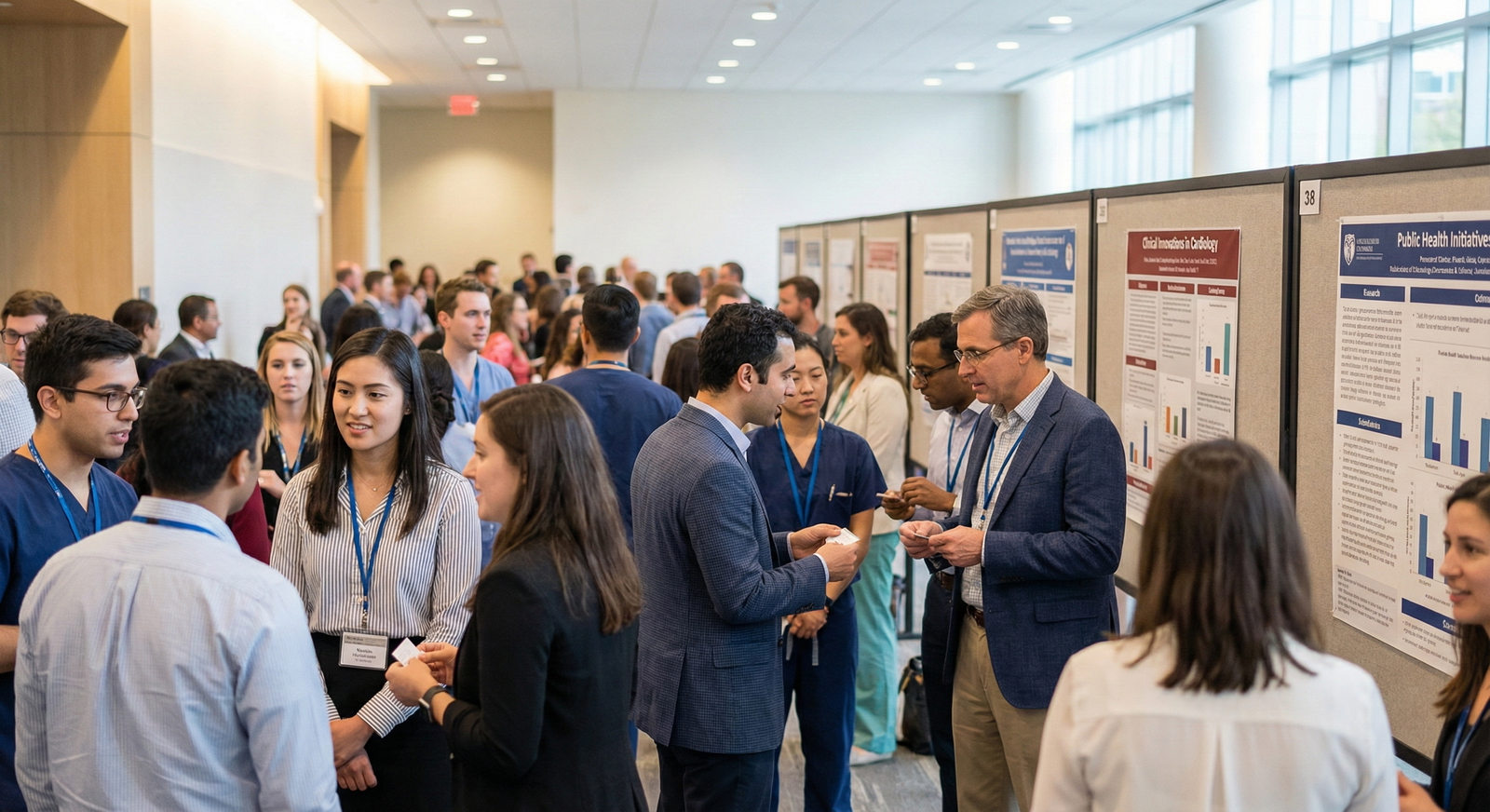
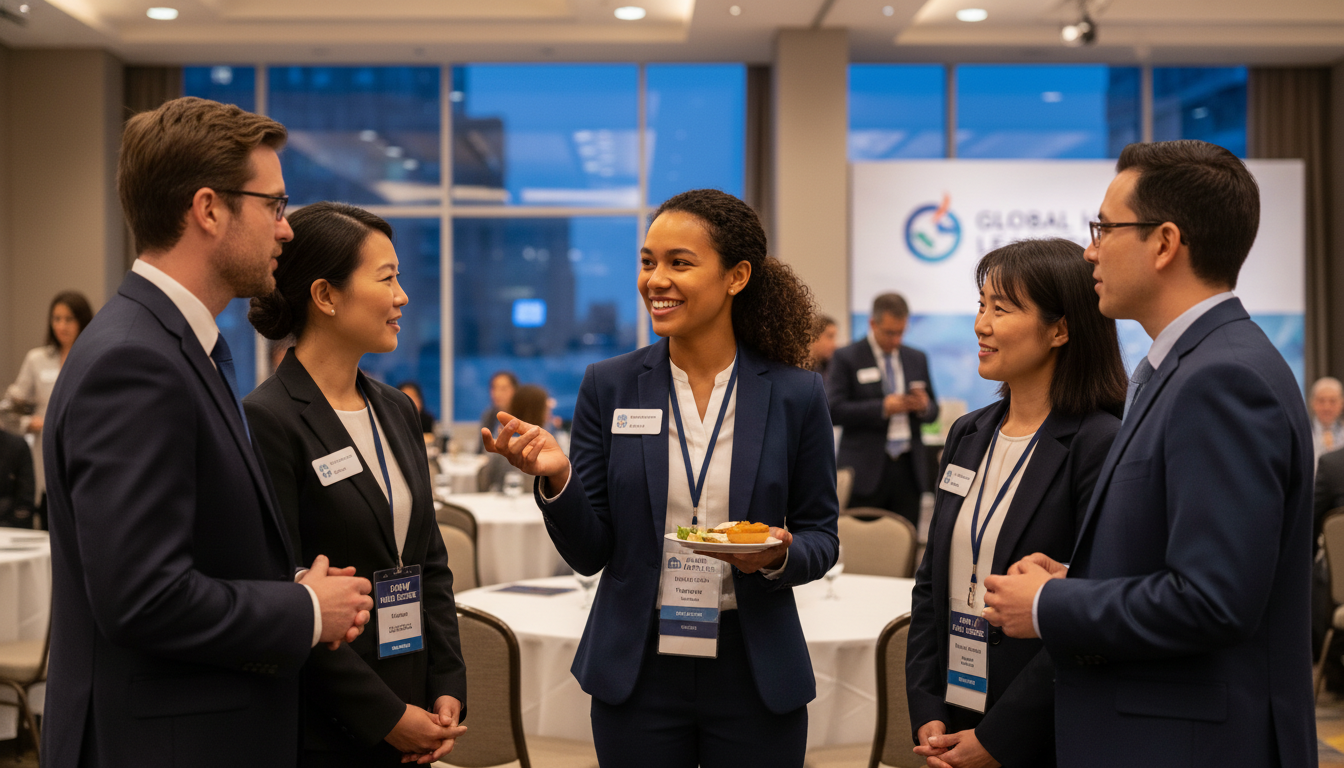
Conferences and meetings are high-yield environments for medical networking, especially in internal medicine.
1. Choose the Right Meetings
As a non-US citizen IMG, invest in events where internists gather and where trainees/IMGs are explicitly welcomed:
- American College of Physicians (ACP) Internal Medicine Meeting
- Regional ACP chapters or state-level internal medicine meetings
- Society of Hospital Medicine (SHM) conferences (if interested in hospital medicine)
- Subspecialty meetings (cardiology, pulmonary/critical care, endocrinology) if you have a focused interest
Check each conference for:
- Poster or abstract opportunities (IMGs can often submit remotely)
- Resident and student sections, networking receptions, or mentoring sessions
- Sessions targeted to IMGs or international attendees
2. Prepare Before You Go
Research who will be there:
- Look up faculty you’d like to meet (program directors, key researchers, internists known for education)
- Check the program agenda and star sessions where they are speaking or moderating
Prepare materials:
- Updated CV (digital version; carry a few printed copies if feasible)
- Business card or small contact card (name, email, LinkedIn, “Non-US citizen IMG – Internal Medicine”)
- Short list of talking points and questions for different types of people: faculty, residents, other IMGs
3. Conversation Starters and Scripts
Approaching someone can feel intimidating, especially in a new cultural environment. Use simple, respectful openers:
Approaching a speaker after a session:
“Dr. Johnson, thank you for your talk on managing sepsis in the inpatient setting. I’m a non-US citizen IMG from Egypt, very interested in internal medicine and hospital medicine. I found your points about early recognition really helpful. If it’s okay, I’d love to ask a quick question about how your institution involves residents in quality improvement around sepsis care.”
Approaching at a poster session:
“Hi, I’m [Name], a foreign national medical graduate very interested in internal medicine. Your poster on diabetes management in underserved populations caught my attention. Could you tell me a little more about how you collected your data?”
Closing the conversation:
“Thank you again for your time; this has been very helpful. Would it be alright if I connect with you on email or LinkedIn to ask an occasional question as I prepare for internal medicine residency applications?”
4. Follow-Up After Conferences
Within 3–7 days after the event:
- Send a short, personalized email:
Subject: Follow-up from ACP Internal Medicine Meeting
Dear Dr. Johnson,
It was a pleasure meeting you after your sepsis talk at the ACP meeting last week. I appreciated your insight into how residents participate in QI projects at your institution.As I mentioned, I am a non-US citizen IMG from Egypt preparing to apply to internal medicine residency in 2026, with a strong interest in hospital medicine and quality improvement. If you have any general advice on building a strong application as an IMG, I’d be very grateful.
Thank you again for your time and for the excellent session.
Sincerely,
[Name]
[Email] | [LinkedIn link]
- Connect on LinkedIn with a brief message referencing your conversation.
- Log your contacts, notes, and any follow-up tasks in a simple spreadsheet.

Online Networking: Leveraging Digital Platforms as a Foreign National Graduate
If you are abroad or have limited travel funds, online medical networking can be just as powerful when done strategically.
1. LinkedIn: Your Primary Professional Platform
Use LinkedIn actively, not passively.
Tactics:
Post every 1–2 weeks about:
- Cases you learned from (de-identified)
- Articles in internal medicine that interested you
- Progress on USMLEs, observerships, or research (without oversharing or bragging)
Comment on posts by internists, programs, or organizations:
- Add a short reflection or question
- This increases your visibility and shows engagement
Join and participate in groups:
- ACP groups, IMG networking groups, internal medicine education groups
Example comment:
“Thank you for sharing this article on heart failure management. As a non-US citizen IMG interested in internal medicine, I found the discussion on guideline-directed therapy very helpful. In my home country, we face significant resource limitations, so I’m curious how programs teach residents to adapt guidelines to varied practice settings.”
2. X (Twitter) and Other Social Platforms
Academic internal medicine has a large, active presence on X (formerly Twitter):
- Follow hashtags like #MedTwitter, #MedEd, #IMRes, #FOAMed
- Follow internal medicine departments, residency programs, and educators
- Engage respectfully in threads, sharing your perspective and questions
Remember: everything you post is public and part of your professional footprint.
3. Virtual Conferences and Webinars
Many organizations now offer virtual:
- Grand rounds
- Residency information sessions
- IMG-focused webinars
- Subspecialty interest sessions
Approach these like in-person events:
- Introduce yourself in chat (briefly)
- Ask concise, thoughtful questions
- Reach out to speakers or panelists afterward with a short email referencing the event
Turning Connections into Opportunities: Research, USCE, and the IM Match
Networking is only valuable if it leads to concrete progress in your internal medicine residency journey.
1. Finding Research and QI Projects
As a non-US citizen IMG, research with U.S.-based teams can significantly strengthen your IM match profile.
How networking helps:
- A faculty member you met at a conference may know of a remote data project or literature review need.
- A current internal medicine resident you connected with might invite you to collaborate on a retrospective chart review or poster.
How to ask appropriately:
“If your team ever needs help with literature reviews, data collection, or manuscript drafting for internal medicine or hospital medicine projects, I’d be very interested in contributing, even remotely. I understand that projects take time, and I’m ready to commit reliably.”
Be prepared to:
- Work across time zones
- Learn basic research tools (Excel, RedCap, reference managers)
- Meet deadlines and communicate clearly about progress
2. Securing U.S. Clinical Experience (USCE)
Networking often determines who hears about observerships and shadowing opportunities first.
Sources:
- Physicians from your home country now practicing in the U.S.
- Faculty you met at conferences who are open to hosting observers
- Community-based internists connected through alumni or professional networks
When reaching out:
- Be honest about your status and needs
- Offer flexibility in timing
- Emphasize your professionalism, reliability, and goals
Sample email approach:
Subject: Inquiry About Observership Opportunity in Internal Medicine
Dear Dr. [Name],
I hope this message finds you well. My name is [Name], and I am a non-US citizen IMG from [Country], currently preparing to apply for internal medicine residency in [Year].I am very interested in gaining U.S. clinical exposure in internal medicine, specifically in [inpatient/outpatient/hospital medicine]. I understand the demands on your time and clinic, but if there is any possibility of observing your practice or shadowing you for a short period, I would be extremely grateful.
I am committed to being professional, punctual, and respectful of patient privacy and institutional policies. I would be happy to provide my CV and any additional documentation if needed.
Thank you very much for considering my request.
Sincerely,
[Name]
3. Strategic Program Targeting Through Networking
Networking can give you inside information on:
- How programs truly treat IMGs (supportive vs token acceptance)
- Which programs reliably sponsor J-1 or H-1B visas
- Culture: workload, teaching quality, resident well-being
Use your contacts—especially current residents—to ask:
- “How IMG-friendly is your program in practice?”
- “How many non-US citizen IMGs are in each class?”
- “How supportive is the program with visa paperwork and timelines?”
- “What do you wish you had known as an IMG applicant?”
Document this intelligence and use it to:
- Build a realistic ERAS program list
- Prioritize programs to attend virtual or in-person open houses
- Decide where to invest time in personalized emails or signal interest
Common Mistakes Non-US Citizen IMGs Make in Networking
Avoid these frequent pitfalls:
Only contacting people to ask for favors
- Instead: build relationships early, show interest, and offer value (help with projects, share relevant resources).
Mass-sending generic emails or LinkedIn messages
- Instead: personalize each outreach; refer to a talk, paper, or shared background.
Not following up
- Instead: send a brief thank-you and periodic updates; many opportunities emerge during follow-up, not initial contact.
Underestimating cultural differences
- In U.S. settings, concise, direct, yet polite communication is valued. Overly formal or overly casual can both be misunderstood.
Failing to signal commitment and reliability
- If you commit to a meeting, project, or deadline, keep your word—or communicate early if something changes.
Minimizing your own value
- You bring international clinical experience, language skills, and diverse perspectives. Present yourself humbly but confidently.
FAQs: Networking in Medicine for Non-US Citizen IMGs in Internal Medicine
1. I’m still in my home country. Is it too early to start networking?
No. For a non-US citizen IMG, it is often essential to start early, even 1–3 years before your intended IM match year. You can:
- Connect with internists and residents on LinkedIn
- Attend virtual conferences and webinars
- Get involved in remote research or QI projects
- Learn about IMG-friendly internal medicine programs
Starting early means your relationships have time to deepen, making letters and recommendations more authentic and powerful.
2. How many mentors do I really need?
Quality is more important than quantity. For most IMGs, having:
- 1–2 clinical mentors in internal medicine
- 1 research/QI mentor
- 1–2 near-peer mentors (current IM residents or fellows)
is sufficient. You can have more casual connections, but focus your energy where the relationship is active, respectful, and mutually beneficial.
3. Is it appropriate to directly ask someone to help me get interviews?
You should not ask, “Can you get me an interview?” That often feels transactional and can damage relationships. Instead:
- Ask for advice on program selection or improving your application
- Ask if they’re comfortable giving feedback on your CV or personal statement
- If they know you well and feel positively, they may voluntarily choose to advocate for you with their program.
4. I’m shy and worry about my accent. Can I still be an effective networker?
Yes. Networking does not require being extroverted or having a perfect accent. Focus on:
- Being prepared (know what you want to say in advance)
- Speaking slowly and clearly
- Asking thoughtful questions rather than trying to talk the most
- Using email and LinkedIn, which allow more time to think and write
Many U.S. physicians are used to working with IMGs and will appreciate your effort and sincerity far more than perfect English.
By approaching medical networking as a deliberate, respectful, and ongoing process, you can transform your position as a foreign national medical graduate from a disadvantage into a distinctive asset. You will not only expand your opportunities for internal medicine residency, but also build a professional community that supports you throughout your entire career in medicine.