Educational disclaimer: This article is for medical education purposes only. Any discussion of compensation, income, or career-related financial implications is general and should not be taken as financial, legal, tax, or individualized career advice. Applicants should consult qualified advisors for guidance specific to their situation.
Here's the straight answer: yes, degree can affect how easily you get noticed on a surgery away rotation. But no, the story isn't as simple as "MD networks better" or "DO gets ignored." The real picture is messier. Access, familiarity, school reputation, home-program mentorship and institutional referral connections, board scores, and plain old bias all get mixed together.
That matters because surgery aways are not casual electives. They're month-long auditions. One good attending comment can help you land a strong letter. One resident who trusts you can mention your name in the rank meeting. One awkward first impression can follow you the whole block. I've seen students do excellent work clinically and still get a lukewarm outcome because they never became memorable to the right people. I've also seen students with average technical ability get a lot of traction because they were organized, steady, and easy to advocate for.
So when people ask about "MD vs DO networking" on surgery aways, they usually mean five things:
- Who gets welcomed faster
- Who gets introductions to faculty
- Who gets mentorship
- Who gets strong letters
- Who becomes visible enough to earn an interview
This article is about separating perception from evidence. The data can tell you some things. It cannot tell you everything. There is no clean national dataset measuring how warmly an attending greets a DO student in the OR hallway versus an MD student from a brand-name school. What we do have are indirect signals. Match data. Interview trends. Program histories. Applicant reports. That's enough to be useful, but not enough to be lazy with conclusions.
This article is for educational purposes only. It is not financial advice, not legal advice, and not tax advice. Figures vary by individual circumstances, consult a qualified professional before acting.
Why This Question Matters on Surgery Away Rotations
Surgery is one of the most reputation-driven corners of medical training. That's not always fair, but it's true. Away rotations compress a lot of judgment into a short period: work ethic, composure, teachability, social fit, and whether the team can picture you surviving residency there.
Networking on an away isn't fake schmoozing. Done right, it means:
- making yourself known for good reasons
- building trust with residents
- showing attendings you're worth teaching
- finding one or two advocates who will speak up when you're not in the room
That's why this question hits so hard for applicants, especially in surgery. If you're worried that your degree changes how easily those relationships form, you're asking a real question. Not vanity. Not paranoia. A practical concern.
And surgery aways are high stakes because small moments count more than applicants think:
- the intern who notices you always preround thoroughly
- the chief who sees you stay useful during turnover
- the attending who remembers that your presentation was clear and calm
- the coordinator who hears that everyone liked working with you
Those moments can turn into:
- a stronger letter
- an interview invitation
- a real rank-list discussion instead of a quick pass
The goal here is not to pretend bias doesn't exist. It does. The goal is also not to blame every disappointing outcome on degree bias. That's lazy and usually wrong. The useful question is: what does the evidence actually support, and what should you do with it?
What the Data Actually Shows About MD vs DO Access and Outcomes
Here's the blunt version: across several surgical specialties, DO applicants have historically faced tougher odds than MD applicants in interview access and categorical match outcomes. The gap is not universal, and it has changed over time, but it's real enough that you shouldn't ignore it.
What the evidence shows reasonably well:
- Match outcomes differ by applicant degree in some surgical fields.
- Program-level openness to DO applicants is uneven.
- Interview access often reflects more than raw applicant quality.
- A program's prior experience with osteopathic trainees matters a lot.
What the evidence does not show well:
- whether attendings "network" differently with MD versus DO students during away rotations
- whether DO students receive fewer strong away letters specifically because of networking behavior
- whether degree alone, separate from school resources and application profile, explains most of the gap
That distinction matters.
A lot of what applicants call "networking differences" is really a bundle of indirect forces:
Institutional familiarity
- Some academic departments simply know MD schools better.
- They've worked with their students before.
- They trust the grading culture and letter writers more.
Home program connections
- A student with a connected chair, PD, or subspecialty mentor starts with a huge advantage.
- That's networking before the away even begins.
School reputation
- Fair or not, famous schools open doors.
- Unknown schools require more proving.
Standardized metrics
- Board performance and clerkship performance still shape how people interpret you.
- Surgery departments may not say that out loud, but they're reading those signals.
Implicit or explicit degree bias
- This is the uncomfortable piece.
- Some programs remain more skeptical of DO applicants.
- Sometimes that skepticism is obvious. More often it's subtle: fewer warm introductions, less benefit of the doubt, less aggressive advocacy.
So where is the data strongest? In aggregate outcomes. National match reports and specialty-level summaries have repeatedly shown that applicant type, program selectivity, and specialty competitiveness influence match success. In surgery-related pathways, you also see differences in who lands categorical positions versus preliminary spots. That doesn't prove networking is the cause. It does tell you the landscape is not perfectly level.
Read that chart the right way: it's illustrative, not a claim of exact universal percentages. That's the honest way to present this topic because networking-specific national data is thin.
Here's my position. The observed gap is real, but it's heavily confounded. If you tell yourself, "DO students struggle on surgery aways because they don't network as well," that's nonsense. If you tell yourself, "Degree never matters once I'm there," that's also nonsense.
The cleaner interpretation is this:
- degree can shape first impressions and default assumptions
- first impressions can affect access to mentorship and advocacy
- actual rotation performance still has enormous power to change the story
And that last point matters. Away rotations are one of the few places where a student from a less familiar background can force a program to update its assumptions in real time. That's why aways matter so much for surgery applicants from schools without built-in prestige.
How Networking Differs on Away Rotations: What Applicants Experience in Practice
What does this look like on the ground?
Usually not dramatic discrimination. Usually something quieter.
An MD student from a well-known school arrives and people already have a framework. "Oh, we've had students from there." That student may get easier conversational openings, quicker trust, more direct faculty interest. Familiarity bias. It's common.
A DO student may arrive with more uncertainty around them. Not hostility. Just less built-in confidence from the team. That means the student may have to create clarity faster:
- show they know the service
- present cleanly
- move with purpose in the OR
- read the room well
- avoid looking rattled
I've seen this exact split in pre-rounding and OR flow. Two students show up equally smart. The one who seems immediately legible to the team gets folded in faster. The other has to prove themselves for a week before the same people relax. That delay matters on a four-week rotation.
Still, the behaviors that actually drive networking success are surprisingly old-school:
- Be prepared.
- Know your patients.
- Don't vanish when the work gets boring.
- Learn names fast.
- Respect scrub techs and nurses.
- Ask useful questions, not performative ones.
- Follow instructions the first time.
- Don't act entitled to a letter because you showed up.
That's what residents remember.
Away rotations are often your first real chance to turn a transcript into a person. That's huge. A degree label sits on paper. Your daily behavior lives in people's memory.
Confidence matters too. Not fake swagger. Real professional language:
- "I'm interested in colorectal surgery and I'd love feedback on how I can be more helpful this week."
- "Would it be alright if I followed this patient post-op and updated the team tomorrow?"
- "I'm applying in surgery and I've really appreciated working with this service."
That kind of language builds rapport because it's clear, respectful, and mature. Students who mumble around their goals make life harder for everyone. Say what you want. Calmly. Professionally.
Practical Strategy: How MD and DO Students Should Network on Surgery Aways
Here's the framework I recommend. Simple. Not glamorous. It works.
Before the rotation
Research the program
- Look at current residents.
- See whether they've taken DOs before.
- Check whether there's a teaching culture or just prestige theater.
Send a short pre-rotation email if appropriate
- To the coordinator or elective lead.
- Brief, polite, no life story.
Example:
"Hi, I'm [Name], a visiting fourth-year student rotating on the service in August. I'm applying in general surgery and looking forward to learning the workflow and contributing where I can. Please let me know if there's anything I should review or complete before the rotation begins."
- Know your story
- Why surgery?
- Why this program?
- What do you want out of the month?
- Have a clean answer ready.
On day one
Introduce yourself clearly
- Name, school, career interest.
- Don't apologize for existing.
Learn the hierarchy fast
- Who runs the list
- Who staffs cases
- Who actually influences student evaluations
Be useful immediately
- Carry the patient list.
- Learn where things are.
- Offer help after rounds.
Daily relationship-building
This is where letters are earned.
Your daily rules:
- Be early.
- Have your patients down cold.
- Present in a structured way.
- Stay engaged during downtime.
- Ask for one small piece of feedback every few days.
Use this script:
"Could I ask for quick feedback on how I'm doing and one thing I should improve this week?"
That question works because it's easy to answer. It also signals coachability, which surgery values more than students realize.
Finding a mentor on the service
By the end of week one or two, identify:
- one resident who seems invested in teaching
- one faculty member who has actually seen your work
Then lean in appropriately.
Script:
"I've really enjoyed working with you and I'm applying in surgery this cycle. If you have a few minutes sometime, I'd appreciate any advice on how to make the most of this rotation."
That opens the door without sounding transactional.
Asking about a letter
Don't ask too early. Don't ask vaguely. And don't ask someone who barely knows you. That's a rookie mistake.
Best version:
"I've really valued the chance to work with you this month. I'm applying in general surgery, and I wanted to ask whether you'd feel comfortable writing me a strong letter based on my performance."
Use the word strong. Always. If they hesitate, you just saved yourself from a weak letter.
Specific advice for DO students
Don't overexplain your degree. That usually backfires. You're not there to defend osteopathic medicine like it's a debate club event.
Do this instead:
- let your preparation do the talking
- mention relevant surgical experiences naturally
- project calm certainty
- make it easy for people to picture you as a resident
If there's uncertainty in the room, reduce it with competence.
Specific advice for MD students
Don't confuse access with advantage. I've watched MD students from respected schools waste away rotations because they assumed the badge carried them. It doesn't. Not for long.
You still need:
- trust
- consistency
- humility
- follow-through
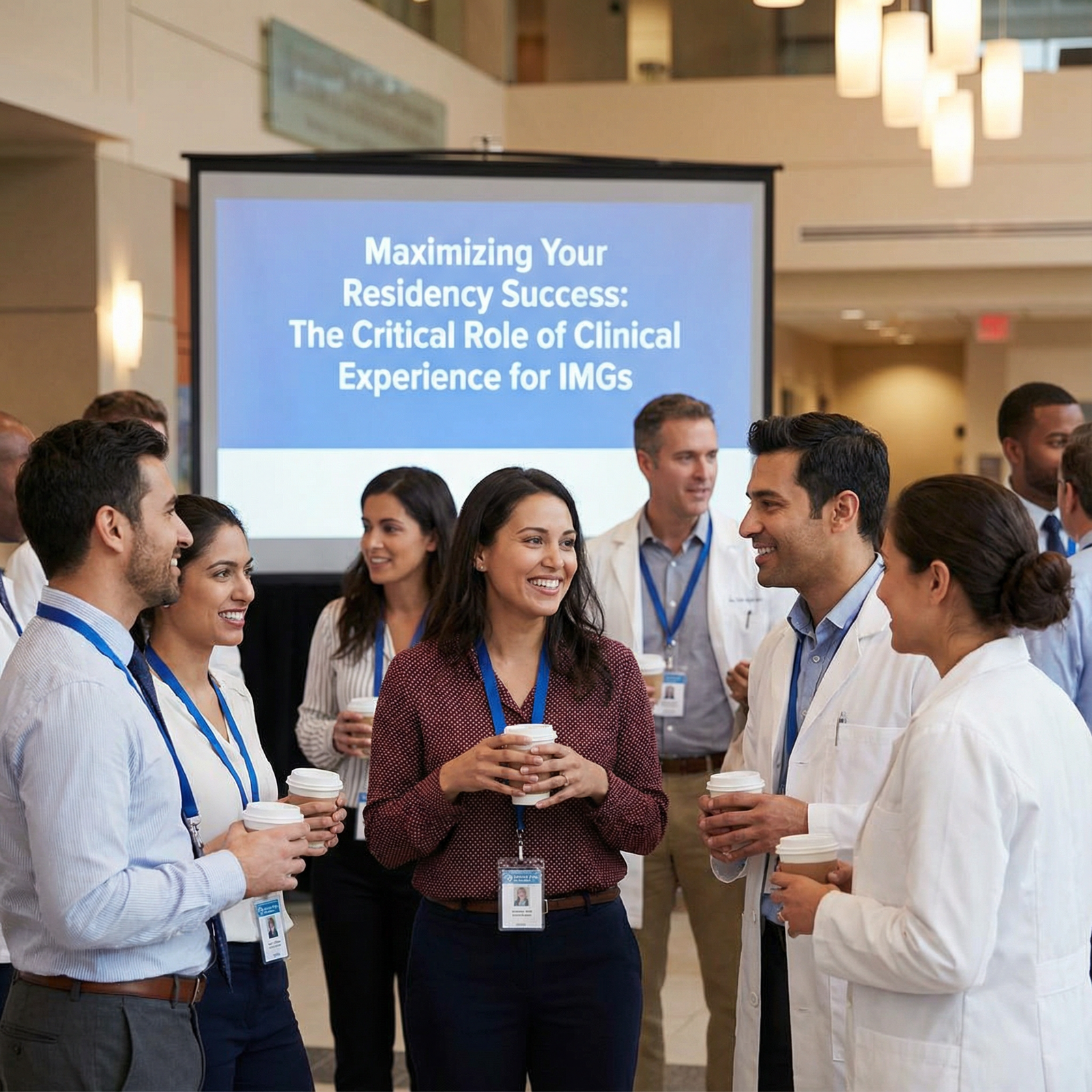
After the rotation
Send thank-you emails within a few days.
- short
- specific
- professional
Example:
"Thank you again for the opportunity to rotate with the service. I learned a great deal from working with your team, especially around perioperative decision-making and OR flow. I appreciated your teaching and guidance."
If someone offered continued support, follow up later with updates. That's networking. Not collecting business cards. Maintaining real professional relationships.
How to Read Bias Signals Without Overreacting
You do need to read the room. You do not need to spiral over every weird interaction.
Green flags that a program may be more open:
- current or recent DO residents
- faculty who know osteopathic schools and speak normally about them
- residents who engage you seriously from day one
- a culture that values work ethic and fit over pedigree performance
Red flags:
- no history of DO trainees in a long time
- vague or dismissive comments about applicant backgrounds
- repeated emphasis on "top-tier" school names
- your mentors quietly telling you this place doesn't really move for osteopathic applicants
One awkward attending isn't enough evidence. Surgeons can be abrupt with everyone. Don't mistake baseline surgical personality for degree bias every time. But patterns matter.
Use this decision framework:
Stay all-in if:
- you're getting teaching
- residents are advocating for you
- faculty know who you are
- the program has some track record of taking applicants like you
Seek additional advocates if:
- you're performing well but still invisible
- one faculty member seems receptive
- resident support is better than faculty exposure
Pivot mentally if:
- no one meaningful knows your name by mid-rotation
- the culture feels status-obsessed
- there's no sign the program seriously considers people from your background
Protect your morale by sticking to evidence. Not panic. Not fantasy. If the signs are consistently bad, that's not failure. That's information. Use it and move on.
Bottom Line for Applicants
Here's the answer you came for: the data does suggest differences in access and outcomes for MD and DO applicants in surgery. But direct evidence about networking itself during away rotations is weak and heavily confounded. Anyone claiming otherwise is overselling the science.
What actually matters most on aways:
- your preparation
- your reliability
- your clinical presence
- your follow-through
- whether someone influential wants to advocate for you
For DO applicants, a more deliberate networking plan is smart. Not because you're doomed. Because in some settings you'll need to reduce uncertainty faster and make your strengths obvious. For MD applicants, don't get lazy. Familiarity may open the door, but laziness closes it fast.
Pick away rotations strategically. Study the program's history. Show up ready. Build trust early. Ask for feedback. Find real mentors. Go where advocacy is possible, not where prestige looks good on Instagram.
That's the move. Do it on purpose.