
Here's the blunt truth: admissions committees do not reward suffering just because you suffered quickly.
That's the mistake a lot of premeds make. They think "accelerated" sounds impressive because it sounds hard. They think speed equals discipline, urgency, grit. Sometimes it does. Often, it reads very differently inside the committee room. I've sat in enough advising meetings and listened to enough faculty debriefs to tell you what really happens: people are not asking whether you were busy. They're asking whether you made good decisions.
And that's the whole game.
An 18-credit science semester on top of life obligations can look heroic from your side of the desk. From theirs, it can look reckless. A slower, part-time path can feel unimpressive to you. To them, it can look like adult judgment. Or laziness. Depends entirely on the evidence.
That's the part nobody says out loud. The transcript never speaks for itself. It gets interpreted. And adcoms interpret everything.
The Elephant in the Admissions Office: Why Speed Doesn't Equal Success
The word "accelerated" seduces applicants because it implies momentum. Medical schools are not nearly as dazzled as applicants think. In fact, one of the first reactions to a very compressed post-bacc is often concern, not admiration. Burnout concern. Retention concern. Judgment concern.
I'll tell you what faculty notice right away. If you stack biology, chemistry, organic chemistry, physics, biochem, maybe physiology, all into a compressed timeline, they don't automatically think, "Wow, this person is elite." They think, "Why did this person feel the need to sprint?" And if the answer appears to be panic, reinvention theater, or GPA repair by brute force, that's not a flattering read.
The trap is assuming that hard equals good. It doesn't. Sustainable equals good. Predictable equals good. Repeatable equals good. Medicine is not one dramatic semester. It's years of showing up while tired, stressed, emotionally stretched, and still functioning like a professional. Committees know that. Residency directors know that even more.
On the flip side, "part-time" can create its own suspicion if it looks aimless. If you take one class every now and then with no clinical exposure, no clear progression, and no serious explanation, yes, it can read as a lack of commitment. But if you're working, supporting family, paying your own bills, maybe volunteering on weekends, and still pulling strong grades in the sciences, that sends a very different signal. Maturity. Prioritization. Self-awareness.
And here's the quiet part: a 4.0 earned in a six-month blur can make adcoms uneasy in a way applicants never expect. Not because a 4.0 is bad. Because cramming often produces brittle knowledge. I've heard faculty say, almost word for word, "Will this person still know this material in a year?" A 3.8 over two years, with consistency and context, often inspires more trust.
That matters later too. Residency programs may never obsess over the exact pace of your prereqs, but the habits reflected in that pace absolutely follow you. Fast and flashy is cute until the person collapses under sustained pressure. Residency is not a sprint. It is managed exhaustion with patient safety attached. Programs want evidence that you can carry weight for a long time, not just perform under short-term adrenaline.
Accelerated Post-Bacc: The 'Fast Track' to Rejection?
Let me be sharper: accelerated post-baccs are not doomed, but a lot of applicants use them badly.
The fantasy is simple. Pack in the prereqs, crush the GPA, prove academic redemption, apply quickly, move on with life. Clean. Efficient. Impressive. The reality is uglier. The accelerated student often emerges with decent grades, thin clinical experience, generic reflections, and a rushed personal narrative that smells like desperation.
That smell matters.
One of the things faculty worry about is grade inflation by design. Not official grade inflation, necessarily. More like strategic transcript engineering. If a student suddenly produces stellar marks in a tightly managed, highly supported, accelerated environment, some reviewers assume the student selected the friendliest terrain possible just to manufacture a comeback. Fair or not, that inference happens. Especially if the original academic record was shaky and the new one is too neat, too compressed, too detached from the rest of real life.
Then there's the practical disaster accelerated programs create: time poverty. If you're in lecture, lab, studying, commuting, and barely sleeping for 40-plus hours a week, where exactly is the patient contact supposed to happen? Where is the longitudinal volunteering? Where is the shadowing that goes beyond two random Saturdays with a family friend? Where is the research commitment that lasts long enough for someone to write a believable letter?
It usually isn't there.
And admissions committees care. More than applicants want them to. I've seen applicants with great academic repair get stalled because the file lacked a real clinical spine. They could explain enzyme kinetics but had almost nothing thoughtful to say about being in patient spaces. That's deadly. Medical schools are not selecting future exam machines. They are selecting future clinicians. If you haven't spent enough time around sick, anxious, vulnerable people, your application feels unfinished no matter how shiny the GPA is.
The other problem is narrative. A lot of accelerated applicants cannot answer "Why now?" in a convincing way. They say things like, "I wanted to get to medical school as soon as possible," which is honest but weak. Everybody wants that. What adcoms want is evidence of deliberateness. Why this path? Why this pace? Why was compressing your education the right professional choice rather than a frantic attempt to erase the past?
If your file suggests you got scared by age, timelines, comparison, or social pressure, reviewers feel it immediately. They may not say "this applicant is panicking," but they'll say "I'm not sure this plan was well thought out." Same thing.
And the cognitive load issue is real. People love pretending they can deeply learn biochemistry and physiology at breakneck pace while simultaneously building a competitive application. Usually they can't. They memorize enough to pass, maybe even excel, but the knowledge isn't stable. Faculty know this because they've watched it happen repeatedly. The student who aces a compressed exam block and then can't integrate the concepts months later is not rare. That's practically a genre.
Now, to be fair, accelerated paths can work. But only under certain conditions. You already have strong study systems. Your prior academic issues were circumstantial, not foundational. You have built-in clinical experience already. You know exactly why you're choosing speed. And you are not sacrificing your humanity to shave off twelve months. If those pieces are missing, "accelerated" stops looking ambitious and starts looking sloppy.
That's the secret. The risk isn't that accelerated programs are inherently bad. The risk is that they magnify bad planning.
Part-Time Prereqs: The 'Maturity' Signal vs. The 'Lazy' Signal
Part-time science coursework is one of the most misunderstood moves in premed admissions.
Done right, it's a green flag. Done wrong, it's dead air.
If you're taking one or two classes at a time while holding a full-time job, caring for children, supporting parents, or rebuilding after earlier academic damage, faculty often read that as evidence of real-world capacity. Not performative hardship. Actual capacity. You are showing that you can live inside competing demands and still execute. That's not a small thing. That's medicine.
I've heard admissions people say they trust the steady student more than the dramatic student. They trust the person who earned A- and A grades over years while life kept happening. Why? Because that pattern feels believable. It feels reproducible. It suggests your success wasn't dependent on one artificial bubble of hyper-control. It suggests that when things get messy, and medicine always gets messy, you won't disintegrate.
Consistency is the whole story here. A 3.7 over three years of part-time science work tells committees something very powerful: this person can sustain effort. They don't need a motivational fireworks show. They just keep going. That is a physician trait. A 4.0 over six months can be excellent, yes, but it proves less than applicants think. It may show intelligence and discipline. It does not automatically show durability.
The hidden advantage of the part-time route is integration. While the accelerated student is buried, the part-time student often still has room to build the rest of the file. Not all at once. Gradually. Intelligently. You can work as an MA, scribe, EMT, CNA, research assistant. You can volunteer regularly enough that it becomes part of your identity instead of a box-checking stunt. You can shadow across specialties and actually notice the differences between outpatient continuity, inpatient acuity, and procedural culture. That kind of exposure sharpens your essays and interviews in ways students underestimate.
I can usually tell in ten minutes who's spent real time in clinical environments. Their language is different. Less romantic. More grounded. They don't talk about "combining science and helping people" like it's a Hallmark card. They talk about uncertainty, team dynamics, difficult families, repetitive tasks, emotional fatigue, small meaningful moments. That maturity often comes from having enough time to observe medicine as it is, not as they imagined it.
But let's not sugarcoat the downside. Part-time can absolutely look lazy if the timeline drifts. Three years of prerequisites needs a reason. A real one. Work, caregiving, finances, military service, recovery from prior academic failure, a strategic plan to preserve excellence while building clinical experience, those are reasons. "I didn't want to overdo it" is weak. "I'm easing into it" is weaker. The committee will hear fear. They'll wonder whether you're avoiding rigor rather than pacing yourself wisely.
That's why explanation matters so much. A part-time path needs visible structure. Semester by semester progression. Upward trend if there was damage before. Solid grades. Clinical activity that runs in parallel. Clear milestones for MCAT timing and application readiness. If the file looks organized, part-time becomes a strength. If it looks improvised, it becomes a liability.
There's another behind-the-scenes truth. Older applicants often underestimate how much committees appreciate evidence that someone understands tradeoffs. A 32-year-old taking two classes per term while working in healthcare can look more credible than a 22-year-old trying to speed-run adulthood through an intense academic makeover. Why? Because the older applicant often looks like they've counted the cost. They're not dabbling. They're deliberately rebuilding a life around medicine.
That seriousness lands.
So yes, part-time prerequisites can send the maturity signal. But only if your choices look disciplined rather than passive. The schedule itself doesn't impress anyone. The structure behind it does.
The Narrative Gap: How to Spin Your Path
Most applicants lose not on the path they chose, but on the story they told about it.
You do not need a perfect record. You need an interpretable record.
If you failed science courses in the past, the smartest narrative is usually not "I came back and crushed everything instantly." That sounds cinematic, but medicine doesn't trust cinema. A slower rebuild often tells a stronger truth: I learned why I failed, I changed my systems, I tested those systems under real conditions, and I proved consistency over time. That's resilience. Real resilience, not motivational-poster nonsense.
If you worked while taking classes, use it. Don't bury it like it's some side note. Say plainly that adulthood did not pause so you could cosplay as a full-time student. You managed bills, family, work expectations, and coursework simultaneously. That's not an excuse. That's evidence. It shows prioritization, endurance, and a realistic understanding of long-term pressure.
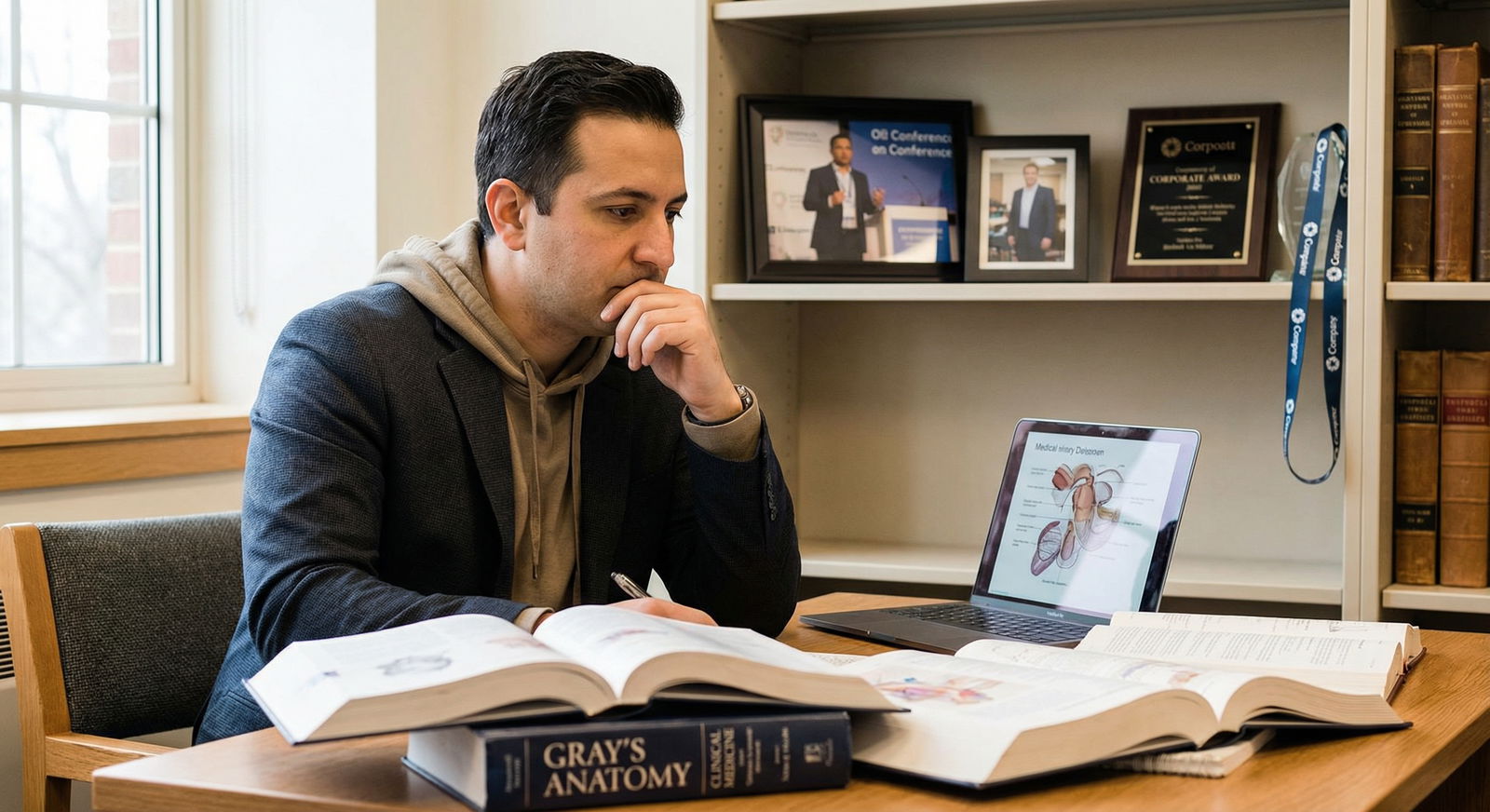
If you choose accelerated, then own the tradeoff intelligently. Don't pretend there was no cost. Explain why speed was strategically necessary and how you protected the rest of your candidacy despite the compressed schedule. Maybe you already had years of clinical experience. Maybe your financial reality made prolonged coursework impossible. Maybe you had the academic foundation and support structure to compress without sacrificing retention. Fine. Say that. Make it sound like a professional decision, not a panic move.
And never, ever let faculty conclude that your route was chosen out of fear. Fear of being older. Fear of hard classes over time. Fear of balancing multiple responsibilities. Fear of confronting your prior weaknesses honestly. Program directors are very good at smelling avoidance. They may call it "fit" or "readiness," but often they are reacting to whether your choices looked courageous and thoughtful or defensive and rushed.
Good narrative work isn't spin in the dishonest sense. It's interpretation with integrity. You are helping the committee see the logic of your decisions. If the logic is real, that helps. If the logic is fake, they'll feel that too. Fast.
The Final Verdict: What Adcoms Are Actually Thinking
Here's what they're actually trying to answer: will this person become a functioning doctor, or just an accomplished applicant?
That's the real standard. Not who gamed the prerequisites most efficiently. Not who made the prettiest comeback graph. Who looks durable, teachable, honest, and close enough to patient care to know what they're signing up for.
They do not want a pure test-taker. Every faculty member has seen students who can inhale 500 pages in a week and still struggle with uncertainty, feedback, teamwork, or emotional strain. Those students worry people. Medicine is full of brilliant flameouts. No committee wants to admit another one.
They also fear the crash. More than applicants realize. The student who goes all-out, wins the short race, and then falls apart under sustained pressure is not a hypothetical. I've seen it. They've seen it. So they look for signs of pacing, judgment, and stable motivation. They want the applicant who can keep functioning after the adrenaline fades.
And the tie-breaker, over and over, is clinical experience. If two applicants have strong academics and decent essays, the one who has spent meaningful time with patients almost always feels safer. More real. More informed. More credible. A high GPA without patient exposure is incomplete. Period.
So choose the path that lets you become the strongest overall candidate, not the one that sounds most intense at dinner parties. Then tell the truth about why you chose it. That honesty carries farther than applicants think.
And that's the reflection I'll leave you with: medicine is a long road full of people pretending there's one correct timeline. There isn't. There is only the path that proves you can do the work, survive the pressure, and stay human while doing it. Pick that path. The adults in the room can tell the difference.