Are you staring at your transcript, seeing that old grade and the retake beside it, and wondering if AMCAS just turned your worst semester into a permanent billboard?
Good. Start there. Because this is the reality: the retake is explainable. Very explainable, actually. I've seen plenty of applicants freeze up and write like they're confessing to a crime, when what they really need is a clean, credible explanation of what happened, what changed, and why the problem won't repeat. That's it.
You're not trying to erase the grade. You can't. You're trying to make the record understandable. Big difference.
If you're in this situation, the winning move is simple: frame the retake as a learning event with a plan forward. Not an excuse. Not a sob story. Not a rant about a brutal professor or a badly designed exam. Admissions readers have seen all of that before, and frankly, the dramatic versions usually land badly.
1) Start with the AMCAS reality: grade stays visible, so explain with intent
AMCAS doesn't make the original attempt disappear. The low grade stays visible. The retake stays visible too. That's the game board, whether you like it or not.
So stop writing as if your job is to convince someone the first grade doesn't count. It counts. The smarter move is to guide how it's interpreted.
Your explanation needs to answer three silent questions admissions readers will have:
- What happened?
- What changed?
- What does the new performance prove?
That shift matters. A weak explanation says, "I had a hard time." A strong explanation says, "I underperformed in Organic Chemistry I during a semester when I was overextended, recognized that my study system was failing, rebuilt it with tutoring and timed practice, and earned a stronger result that matched later science performance."
See the difference? One sounds passive. The other sounds like someone who can survive medical school.

If you're filling out AMCAS with repeat coursework on the record, your goal is not redemption theater. It's interpretation control. Calmly. Precisely. With evidence.
2) Decide the purpose of your explanation: context + mechanism + outcome
This is where applicants get sloppy. They either give too much personal detail or none at all. Both are bad.
Use this structure every time:
- Context: what was happening
- Mechanism: how that situation affected performance, and what you changed
- Outcome: what improved and what that improvement means
Context should be brief. If you were balancing work, had family responsibilities, dealt with a health issue, or simply had terrible study habits, say enough to make the drop in performance make sense. Not enough to make the reader feel trapped in your diary.
Mechanism is the heart of the explanation. This is the part too many people skip. Don't just say you "worked harder." That's empty. Show the actual correction:
- tutoring twice weekly
- reduced work hours
- switched from passive rereading to active recall
- built timed practice exams into the week
- met with disability services
- stopped taking two lab-heavy courses together
- used faculty office hours and feedback loops
Outcome is more than the new grade. Yes, the retake grade matters. But what really helps is proof that the improvement wasn't random. A stronger semester after the retake. Better upper-division science grades. Stable post-bacc performance. That's the good stuff.
If you're stuck, ask yourself: would a stranger reading this understand not just that you struggled, but why the same problem is less likely to happen again? If not, rewrite it.
3) Use the most appropriate AMCAS space: where your retake should live
Don't scatter this story all over your application like you're dropping breadcrumbs in a panic.
Your transcript and course entry sections are for the factual record. The explanation belongs in the part of the application designed for academic irregularities, adversity, disruptions, or additional context, depending on what the cycle and the schools actually allow. Then, if a secondary explicitly asks about academic challenges, you reinforce the same story there. Shorter or longer, depending on the prompt. Same core facts.
Here's the rule: put the explanation where admissions expects explanation. Don't invent your own placement strategy because you're nervous they'll "miss it." They won't.
What you absolutely don't want:
- one version in the primary
- a different reason in a secondary
- a fuzzier version in the interview
That's how you make a manageable retake look suspicious.
If you're not sure where to place it in a given cycle, default to restraint. Put the explanation once in the proper context space, then repeat only when prompted. Repetition without purpose just makes the grade feel larger than it is.
4) Write the narrative in 6 sentences (and stick to the word limits)
Here's the easiest way to stop overexplaining. Use six sentences. Seriously. It works.
Sentence 1: identify the course and the retake. Sentence 2: name the challenge. Sentence 3: explain how it affected performance. Sentence 4: describe the change you made. Sentence 5: state the outcome. Sentence 6: connect it to readiness for medical school.
Example:
"I retook General Chemistry II after earning a low initial grade during my first post-bacc term. At the time, I was working inconsistent evening shifts and had not yet built an effective system for managing high-volume science coursework. That combination led to missed review structure, weak exam preparation, and performance that did not reflect my actual potential. Before the retake, I reduced outside commitments, began weekly tutoring, and switched to a schedule built around active recall, spaced repetition, and timed practice sets. On the retake, I earned a significantly stronger grade, and that improvement continued in subsequent upper-level science coursework. The experience forced me to build a durable academic system, and the consistency of my later performance is a more accurate indicator of my readiness for medical training."
That's not fancy. That's why it works.

If you're in the "I have too much to say" camp, cut details from sentences 2 and 3 first. Keep the mechanics of improvement. That's the part readers care about.
5) Choose the right tone: accountable, calm, and medical-school oriented
Your tone matters almost as much as the facts.
The right tone says:
- I know what went wrong.
- I took responsibility.
- I corrected it in a concrete way.
- I have evidence the fix worked.
The wrong tone does one of three dumb things:
- Blame: "The professor was unfair." Maybe true. Still weak.
- Drama: three sentences of emotional backstory before you even name the course.
- Defensiveness: trying to argue that the low grade shouldn't matter.
It matters. Own it.
Use strong, boring verbs. That's not an insult. Boring is good here.
- identified
- restructured
- practiced
- monitored
- reduced
- completed
- improved
- maintained
This is one of those places where polished, restrained writing wins. Not because admissions is cold. Because medicine is full of people who have to handle setbacks without spiraling into self-justification. Your explanation should sound like someone who can do that.
6) Match your explanation to the grade pattern (single retake vs. multiple attempts)
Not all retakes need the same emphasis.
If you have one retake, keep it tight. A single rough course with a better later pattern usually doesn't need a memoir. Explain it and move on.
If you have multiple retakes or several weak science grades, you need a more visible remediation story. Not just "I improved." Show the plan:
- changed course load
- delayed applications
- entered a post-bacc with stronger structure
- used tutoring consistently
- tracked exam errors
- built a semester-by-semester recovery trend
If your retake grade still isn't great, don't insult the reader by pretending it's excellent. Say what it is. Then pivot hard to better evidence:
- upper-division A-range science work
- sustained GPA recovery
- strong MCAT science performance if applicable
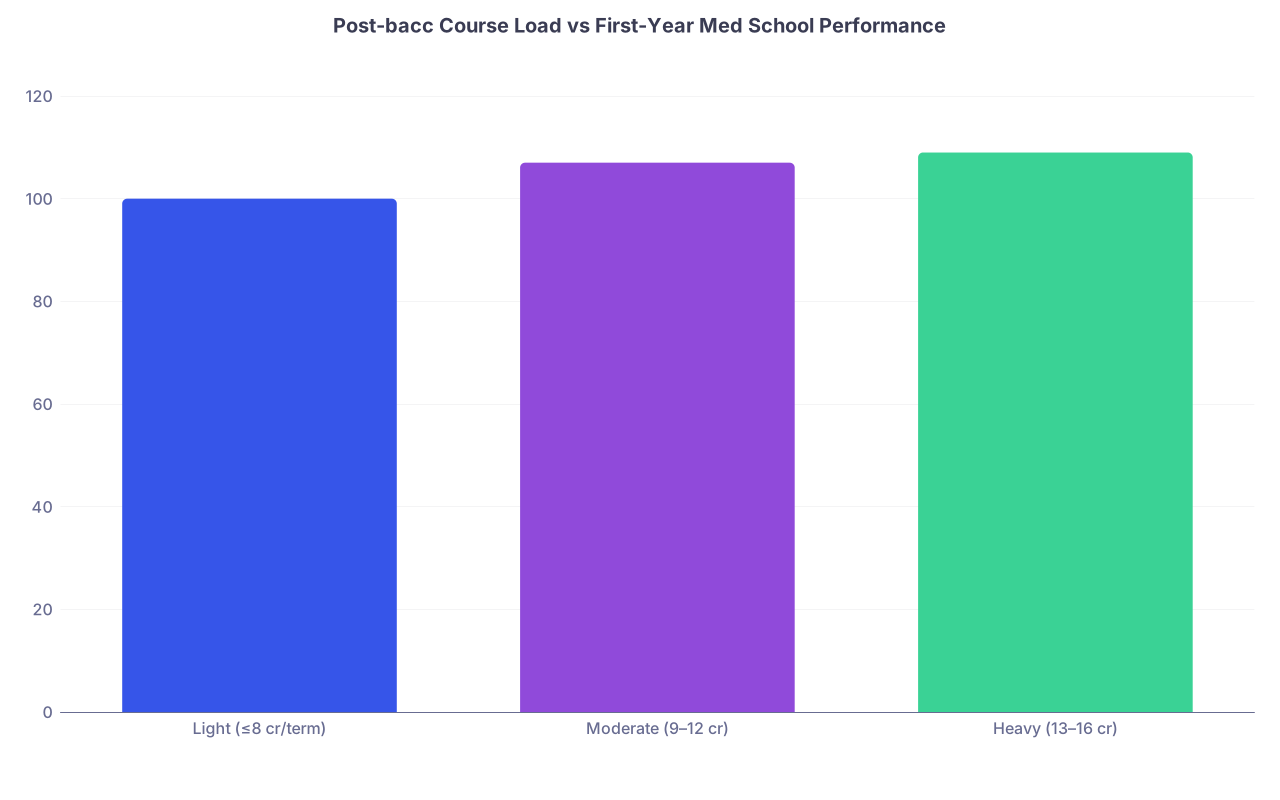
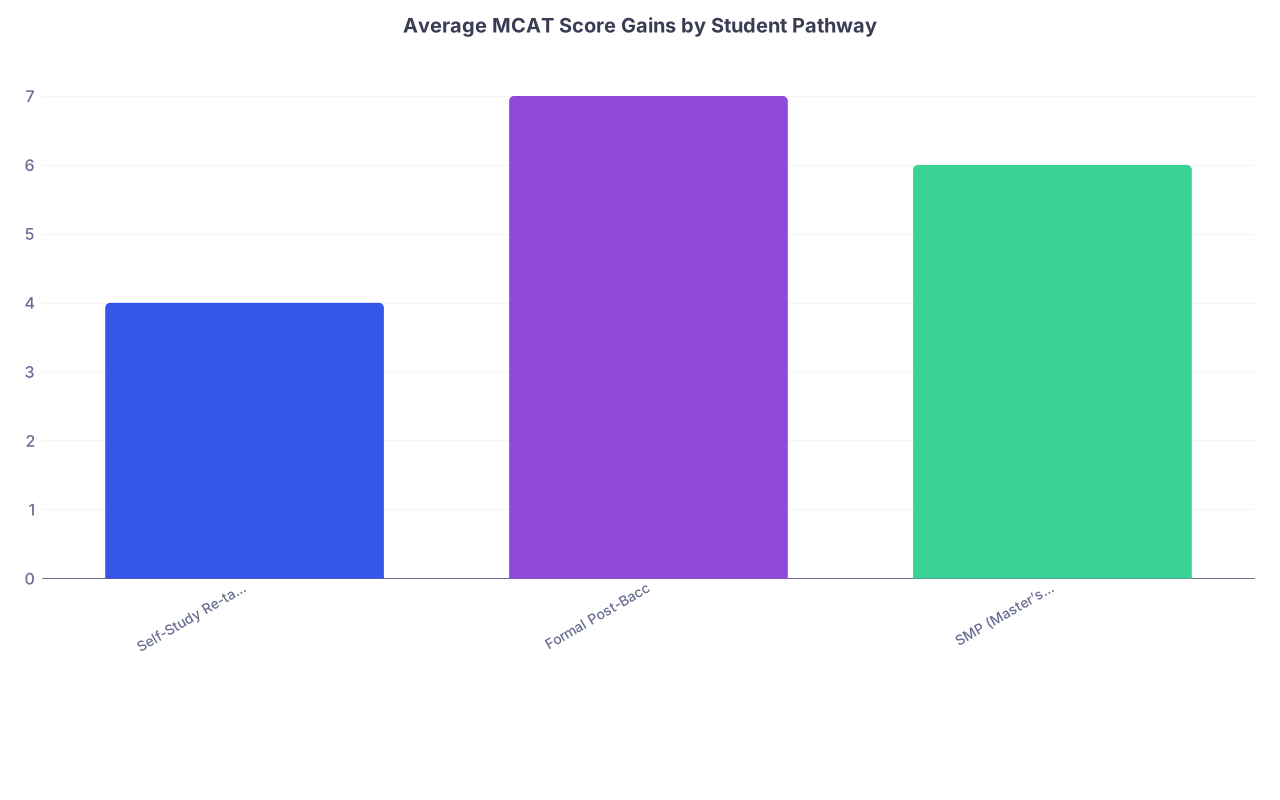
- success in a formal post-bacc or SMP-type environment
That's the move. Not spin. Proof.
I've seen applicants tank their own explanation by treating three repeated science courses like they were random accidents. No. At that point, admissions wants to see system-level repair. Show them that.
7) Provide proof that your retake was remediation, not just repetition
A retake by itself doesn't prove much. Plenty of people do better the second time because the material is familiar. Admissions knows that.
So show why this was true remediation.
Good proof includes:
- stronger grades in later related courses
- solid post-bacc GPA after the retake
- repeated success across multiple science terms
- better performance in prerequisites that build on the same concepts
- a clear study process you can describe specifically
Even one sentence of "before vs. after" can help:
- Before: reread notes and crammed before exams
- After: completed two timed practice blocks weekly, reviewed every missed question, and met with a tutor each Friday
That's real. That's usable. That's what people believe.
If you had accommodations, advising support, peer mentoring, or a formal learning specialist, you can mention that too if it's relevant. Briefly. The point isn't to prove you suffered. The point is to prove you changed the mechanism of failure.
8) Prepare for reviewer questions: what they'll wonder and how to pre-answer
Admissions readers are predictable here. They want to know three things.
1. What changed, and will it stick? Answer that directly. Not vaguely. Name the system. Study schedule. Practice exam method. Reduced overload. Support structure.
2. Are there ongoing issues? If the problem is resolved, say so through evidence, not declarations. A stable run of stronger coursework speaks louder than "I'm better now."
3. Is this a pattern? If it's not, say that the retake was isolated and point to the broader academic record. If it is a pattern, don't play games. Show the remediation timeline and the newer trajectory.
If you're writing this well, you're pre-answering the committee's doubts before they become doubts. That's the whole trick.
9) Keep your explanation consistent across secondaries and interviews
This is where people get weirdly careless.
They write one version in AMCAS, a more emotional version in a secondary, then a third version in an interview because they're nervous and trying to sound spontaneous. Suddenly dates shift. The reason changes. The timeline gets muddy. Bad look.
- challenge
- impact
- corrective action
- result
- sustained readiness
Then scale it:
- Primary: concise
- Secondary: prompt-specific
- Interview: natural spoken version, 30 to 60 seconds
Practice saying it out loud. Not like you're reciting a script. Like you're a mature applicant who has already made peace with the setback and can discuss it without flinching.
That matters more than people realize.
10) If the retakes feel unfair, respond like a professional, your future is the focus
Maybe the original class really was a mess. Maybe the exam style was terrible. Maybe your life blew up at exactly the wrong time.
You can acknowledge difficulty. But don't build your application around grievance. That's a losing posture.
Admissions isn't awarding moral points for unfairness. They're asking a narrower question: can this applicant handle medical school science reliably now?
So end your explanation by facing forward:
- how you monitor performance now
- how you structure your study weeks
- when you ask for help
- how you prevent overload
- what your recent performance already proves
That's the part that gives your story credibility.
And here's the truth a lot of applicants need to hear: a visible retake is not the end of anything. A fuzzy, defensive, poorly written explanation is much more dangerous than the retake itself.
Forward-looking close: treat the retake explanation like a training plan, not a confession
Your explanation should read like an academic recovery plan that worked. Clean. Accountable. Evidence-based.
That's the standard.
The grade stays visible, yes. But so does your response to it. And that's what can actually help you. If you explain the retake with context, mechanism, outcome, and a sustained plan, you're no longer asking admissions to ignore a problem. You're showing them you know how to fix one. That's a much more convincing story, and a much more medical-school-ready one.