A post-bacc can help after academic probation. It cannot make probation disappear. That is the truth applicants need to hear early, before they spend money on the wrong program and tell themselves a comforting story that admissions committees do not believe.
Here is the admissions lens. Probation is not just "a bad semester." It is an institutional signal that something went wrong badly enough for your school to formally act on it. Sometimes that is straightforward academic underperformance: low semester GPA, failed science courses, a collapse during orgo and physics, the usual premed wreckage. Sometimes it reflects interrupted academics tied to illness, family crisis, work burden, or untreated mental health issues. And sometimes it is worse: professionalism concerns, academic integrity problems, conduct violations, or a mixture of academic and behavioral trouble. Committees do not read those situations the same way. They should not.
If your probation came from weak grades alone, a strong post-bacc can directly address the core question: can you now handle hard science work consistently? If the record shows failed prerequisites, multiple repeats, and a string of withdrawals, the post-bacc has to do more heavy lifting. If the problem was non-academic conduct or academic dishonesty, a post-bacc by itself is a weak repair tool because good grades do not prove restored judgment. I have seen applicants misunderstand this constantly. They think a 4.0 after probation "cancels out" the red flag. It does not. It reframes it, if the rest of the file supports that reframing.
This is the distinction most applicants miss: academic repair and narrative repair are not the same job. Grades repair the transcript. Your written explanation, your timing, your letters, and your behavior across the entire application repair the story. You need both. If the grades rise but your explanation is evasive, defensive, or weirdly vague, committees assume the problem may recur. If the explanation is polished but the post-bacc is thin or easy, they assume you learned how to talk about failure but not how to outgrow it.
So yes, a post-bacc can absolutely improve your chances after probation. Sometimes dramatically. But only when it functions as sustained evidence of recovery, not as a cosmetic patch. That is the standard. Harsh, but fair.
This article is for educational purposes only. It is not financial advice, not legal advice, and not tax advice. Figures vary by individual circumstances, so consult a qualified professional before acting.
What Admissions Committees Actually Evaluate After Probation
Admissions committees are pattern-recognition machines. That is the simplest way to understand this. They do not just ask whether you improved. They ask how, for how long, under what level of difficulty, and whether the improvement looks sturdy enough to survive medical school.
Let me break down the actual framework.
1. Trend beats snapshot. A single strong semester is nice. It is not persuasive. Two to four consecutive terms of strong science work? That gets attention. Committees are trying to determine whether the probation semester was an event or a pattern. One rebound term can still be luck, lighter coursework, easier professors, or panic-fueled overperformance. A sustained trend is harder to fake.
2. Rigor matters. A 4.0 in lightweight classes does not repair a record damaged by failed biochemistry, physiology, and physics. If your original issue was inability to perform in demanding science coursework, then the recovery has to happen in demanding science coursework. Upper-division biology, physiology, cell biology, immunology, genetics, neuroscience. Hard classes. The kind that force repeated exam performance under pressure. That is what committees care about.
3. Science GPA often matters more than applicants think. Your cumulative GPA tells one story. Your science GPA tells the more relevant story for medical school. A post-bacc loaded with A-level science performance can matter more than old undergraduate damage because it is newer, more specific, and more predictive. I have seen applicants with ugly freshman and sophomore records become viable because the final 30 to 45 science credits looked rock solid. Not miraculous. Just consistently strong.
4. Time since probation changes the interpretation. Probation last semester? Risky. Probation three years ago followed by clean, excellent academics and mature work experience? Much better. Time is useful only if it contains evidence. Dead time does not help. "I took time off to reflect" is fluff unless the file shows what changed and how you tested that change.
5. Red flags are cumulative. Committees do not isolate one bad mark. They stack signals. Withdrawals. Repeats. Failed labs. Multiple C-minus grades in prerequisites. Up-down-up-down GPA swings. Academic integrity flags. Professionalism write-ups. A post-bacc has to overcome the entire pattern, not just the word "probation."
And yes, schools want external validation. A strong MCAT helps because it shows standardized performance under timed conditions. Strong letters help because someone credible is saying, "This student is not the same person from that probation period." Clinical work, service, and employment help because they demonstrate maturity, reliability, and follow-through outside the classroom. You need those corroborating signals. Otherwise the post-bacc can look like isolated academic damage control.
Which Post-Bacc Type Helps Most When You're Recovering From Probation?
Not all post-baccs are equally useful. This is where applicants waste time and money because they shop by branding rather than by repair function.
The main options are these:
- Formal post-bacc programs
- DIY post-baccs
- Academic enhancer post-baccs
- Special Master's Program-style graduate work
The best choice depends on what exactly broke in your record.
Formal post-bacc programs
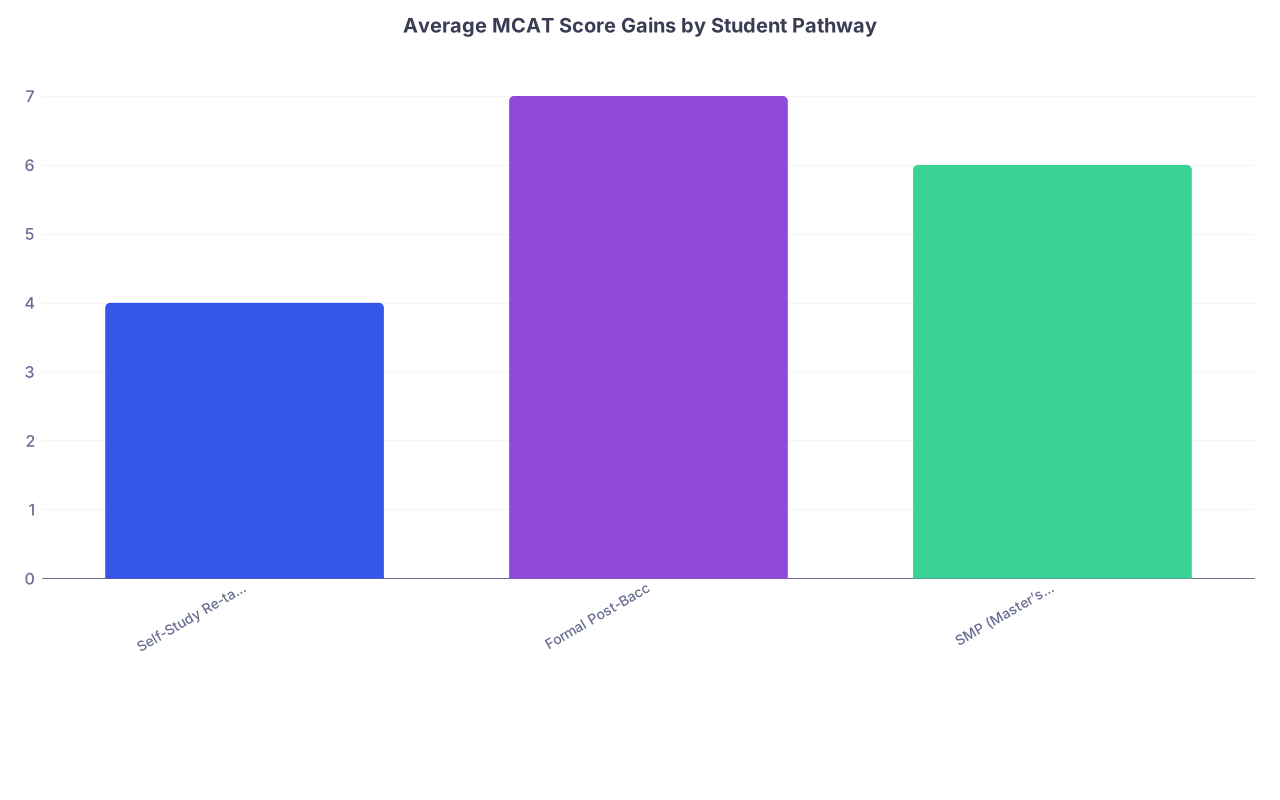
These are structured programs, often with advising, committee letters, and sometimes linkage relationships. They can be useful if you need organized support, a built-in curriculum, and institutional credibility. But applicants romanticize them. A formal post-bacc is not magic. If your probation history is unresolved and your record is still thin, the structure helps only if you actually perform. Linkage possibilities also become less relevant if your file still carries serious doubt. No school is eager to "link" an applicant whose rebound is still being tested.
Formal programs are often strongest for career changers or applicants who need prerequisites completed efficiently. They are less automatically ideal for transcript repair unless the program specifically emphasizes academic enhancement.
DIY post-baccs
A DIY post-bacc is exactly what it sounds like: you enroll as a non-degree student or second-degree student and select your own courses. Cheap relative to formal programs. Flexible. Potentially very effective. Also easy to do badly.
The risk is obvious. Applicants choose easy classes, scattershot schedules, or random institutions with no coherent plan. Then they wonder why committees are unimpressed. If you go DIY after probation, your course selection needs to look deliberate: upper-division biomedical sciences, full loads if possible, and consistent A-level execution. Done right, DIY repair can work very well. Done lazily, it looks like GPA cosmetics.
Academic enhancer post-baccs
For most applicants recovering from academic probation who already completed prerequisites, this is the most direct fix. Full stop.
An academic enhancer post-bacc is built to answer one question: can this student now succeed in rigorous science coursework? That is exactly the question your file is asking after probation. If you can produce 24, 30, or 40+ credits of difficult science with excellent grades, you are speaking directly to the weakness. Efficient. Relevant. Convincing.
This is the lane I usually favor for pure academic repair because it aligns the intervention with the accusation. Your transcript said: cannot sustain med-school-like science performance. Your enhancer record says: actually, now I can.
Special Master's Programs
SMP-style programs are higher-risk, higher-cost, and potentially high-signal. They are graduate-level and often modeled to mirror medical school intensity. If your undergraduate record is badly damaged and you need a bigger proving ground, an SMP can be powerful. It can also go very wrong. If you underperform in an SMP, you do not just fail to repair your record. You may confirm the committee's worst suspicion.
So I do not recommend SMPs casually. They are appropriate when undergraduate repair alone is not enough, when the applicant has truly changed study systems and life structure, and when there is reason to believe they can excel under very heavy academic load. Not "do okay." Excel.

What actually works best?
If your issue was weak prerequisite or upper-level science performance and you already took the required premed courses, an academic enhancer post-bacc is usually the smartest play. It is focused, interpretable, and admissions-friendly.
If you need structure because your prior failure was partly organizational, a formal enhancer-type program can be worth the cost.
If you only need a limited number of strong courses and you are disciplined enough to build a serious plan, DIY can work.
If your record is deeply compromised and undergraduate repair has plateaued, an SMP may be the next move, but only if you are genuinely ready. Not hopeful. Ready.
And one more thing. Avoid low-value grade padding. Medical terminology, nutrition survey courses, and random soft electives do not repair a science collapse. Admissions readers are not naive. They know the difference between rebuilding capacity and decorating a transcript.
How Much Improvement Is Enough? GPA Trends, Timing, and the Pattern Question
There is no universal "safe GPA" after probation. Anyone who gives you a neat cutoff is selling fantasy. Committees admit people, not spreadsheets. But there are patterns that matter a lot.
First, one semester is not enough. I will say that bluntly because applicants need to hear it. A rebound term with 15 credits of A work is encouraging. It is not durable evidence. What starts to shift the conversation is multiple semesters of strong performance, ideally in a heavy science load. Think in the range of 24 to 40+ credits of A-level or near-A-level post-bacc science work as a meaningful repair zone. If the original damage was severe, you may need more.
Second, committees think like exam writers. They are not just evaluating whether you can earn grades. They are evaluating whether you can survive repeated, timed, high-volume science testing. That is the hidden pattern question. Can you show semester after semester that you handle complexity, cumulative material, and pressure? Medical school is not impressed by one dramatic comeback montage. It wants repetition.
Timing matters too.
- Immediate recovery after probation can be very persuasive if it is strong and sustained. It suggests insight and rapid course correction.
- Gap years with excellent later work can also be persuasive, especially if the time was used to stabilize life circumstances and rebuild habits.
- Prolonged inconsistency is bad. If probation is followed by a B semester, then another crash, then a brief rebound, committees read volatility. Volatility scares them.
Here is the practical benchmark I use mentally:
- Mild prior damage: 20-30 strong science credits may materially improve viability.
- Moderate damage with failures/repeats: 30-45+ strong science credits are more convincing.
- Severe damage or multiple collapses: undergraduate repair may not be enough; graduate-level proof may be needed.
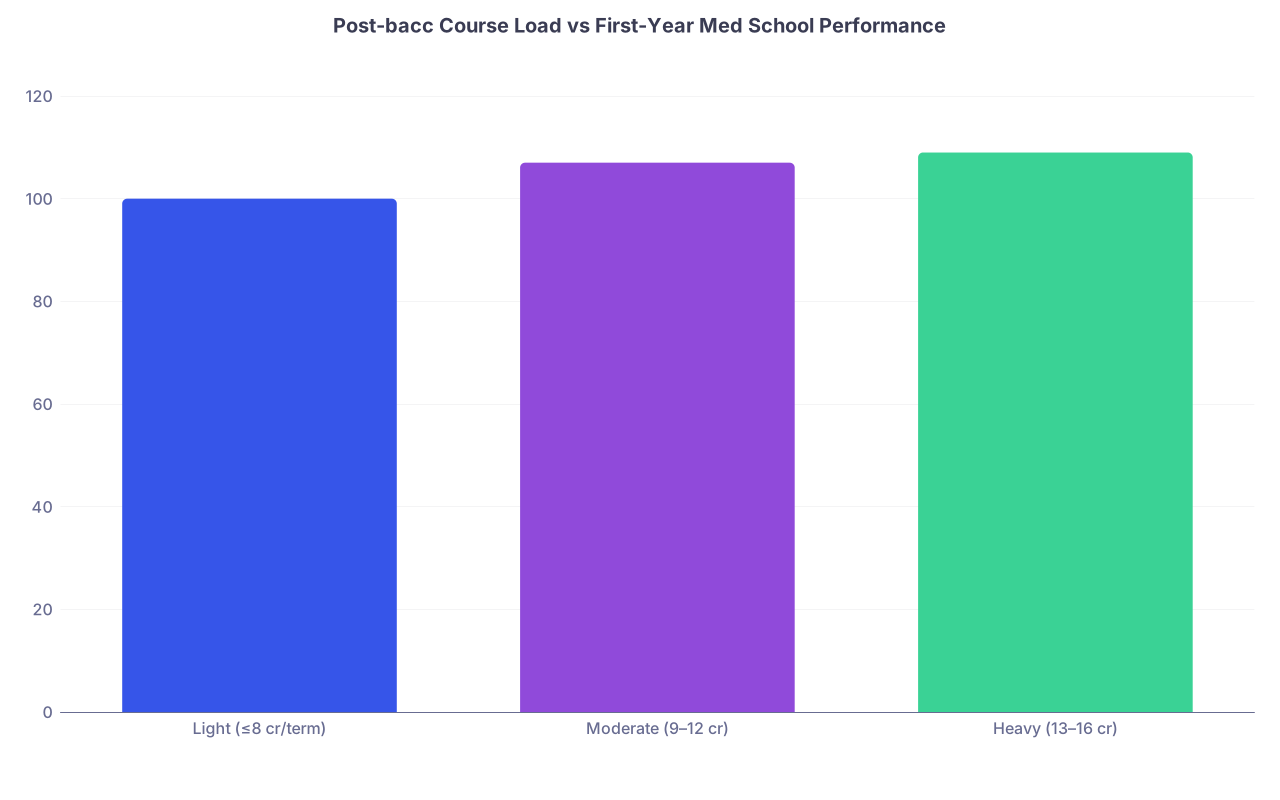
The chart is not a formula. It is a visual for how committees think. They trust sustained elevation, not survival-level improvement. Going from academic probation to a string of B-minus grades is better than failing, yes. But for medical school admissions, it often is not enough.
Building a Credible Redemption Narrative: The Application Strategy That Makes the Difference
Now we get to the part applicants either overdo or mishandle completely: explaining the probation.
You do not need a courtroom brief. You do not need a trauma memoir. You definitely do not need a self-pity essay. You need a clean, accountable narrative that answers three questions:
- What happened?
- What changed?
- Why should a committee trust that it will not happen again?
That explanation usually belongs in the additional information section unless the probation is central to your path and genuinely shaped your motivation for medicine. Even then, keep the personal statement from becoming a defensive monologue. The personal statement should still be about your development toward medicine, not just your academic damage report.
Here is what works:
- Name the issue clearly. Academic overcommitment. Undiagnosed health problem that is now treated. Family crisis during a defined period. Poor study systems and immaturity. Say it plainly.
- Own your part. If your choices worsened the problem, say so. Committees respect responsibility. They distrust polished evasiveness.
- Show operational change. New study structure, reduced work hours, treatment plan adherence, tutoring, disability support, schedule redesign, stepping back from too many extracurriculars. Concrete changes.
- Point to proof. The proof is not your promise. The proof is the subsequent record.
Here is what does not work:
- Blaming professors.
- Blaming "test anxiety" without showing treatment or adaptation.
- Writing five paragraphs about how unfair everything was.
- Giving just enough detail to sound suspicious but not enough to clarify.
- Pretending probation was meaningless.
I have read plenty of explanations that collapse because the applicant wants sympathy more than credibility. That is a bad instinct in this setting. Admissions committees are not evaluating whether your setback was emotionally understandable. They are evaluating risk.
Letters of recommendation are huge here. A strong science faculty letter saying you are now one of the best students in a rigorous post-bacc cohort carries real weight. A committee letter that specifically addresses maturity and resilience helps. Employer and supervisor letters can also reinforce that you are dependable, coachable, and stable under responsibility.
Your activities matter too. Longitudinal clinical work, service, and employment can quietly strengthen the redemption narrative because they show consistency over time. If your transcript says "used to be erratic" but your work history says "showed up every week for two years and earned more responsibility," that helps.
Then there is school strategy. Another place applicants get reckless.
If your rebound is solid but not elite, a mixed MD/DO list may be the right move. If your probation was academic and well repaired, many DO schools may be more open to the comeback story, though standards still vary. If your record is only partially repaired, applying broadly to MD schools because you "want to see what happens" is usually just expensive denial. Better to wait one more cycle and strengthen the file than to force a weak application into the system.
Selective application is not pessimism. It is professionalism. You are showing that you understand your own file.
When a Post-Bacc Is Not Enough: Hard Stops and Realistic Alternatives
Sometimes the answer is no. Not "not yet." Just no, at least for the current cycle.
A post-bacc alone is often not enough when:
- probation is very recent and the recovery record is too short
- there were repeated semesters of failure
- the file includes multiple prerequisite failures plus continued inconsistency
- there is an academic integrity violation
- there are professionalism or conduct issues that remain poorly explained
Integrity and professionalism problems are the hardest category. A string of A grades does not automatically restore trust. Medical schools are training future physicians, not just rewarding academic rebound.
In those cases, the alternatives are straightforward:
- take more time and build a longer post-bacc record
- earn a stronger MCAT score to add external validation
- pursue a graduate-level enhancer or SMP if undergraduate repair has maxed out
- strengthen clinical exposure and service while continuing academic recovery
- reassess school list competitiveness honestly
If you are deciding whether to apply now, ask yourself three blunt questions:
- Does my current record prove sustained academic recovery?
- Does my explanation sound accountable and calm?
- Would a skeptical committee member believe this problem is behind me?
If the answer to any of those is no, pause. Strengthen more. That is not failure. That is strategy.
Key Takeaways
A post-bacc can absolutely improve a medical school application after academic probation. But it works as evidence of sustained recovery, not as a reset button. That distinction matters.
Admissions committees care about the whole pattern: why the probation happened, whether the rebound is long and rigorous enough to be believable, and whether your current record reflects a genuinely different student. If the issue was academic and you build a strong multi-term science record, medical school can still be realistic. If the issue involved professionalism or integrity, the burden is much heavier and the repair usually has to go beyond coursework.
This is the cleanest way to think about it: your post-bacc must do more than raise numbers. It must change the committee's prediction about your future performance. If it does that, you have a shot. If it does not, you are just adding credits to a problem that remains unresolved.