Transform Your Future: The Unseen Advantages of Post-Baccalaureate Programs for Aspiring Physicians
The path to Medical School is rarely linear. Some students know they want to be physicians from day one of college; others discover their passion later, after majoring in a different field or working in another career. Still others face obstacles—lower GPAs, incomplete prerequisites, or life circumstances—that leave them feeling their dream might be out of reach.
Post-Baccalaureate Programs (“post-baccs”) exist precisely for these situations. When used strategically, they can transform an applicant’s profile, open new doors in medical education, and create a realistic, structured pathway to a career in medicine or other health professions.
This guide explores the unseen advantages of post-baccalaureate programs, with a focus on how they can help with GPA improvement, career change, and overall competitiveness for Medical School and related health careers.
Understanding Post-Baccalaureate Programs in Medical Education
Post-baccalaureate programs are designed for individuals who already hold a bachelor’s degree but need additional academic preparation, advising, or experiences to become competitive applicants for Medical School or other health professions programs.
The Two Main Types of Post-Bacc Students
Most Post-Baccalaureate Programs serve two broad groups:
Career Changers
- Have a bachelor’s degree in a non-science field (e.g., English, economics, engineering, music).
- Often took few or no pre-med science courses during undergrad.
- Need to complete core prerequisites such as biology, general and organic chemistry, physics, and biochemistry.
- Many are working professionals seeking a career change into medicine.
Academic Enhancers
- Already completed most or all required pre-med coursework.
- May have a lower overall or science GPA than is typically competitive for Medical School.
- Need GPA improvement, stronger recent academic performance, or advanced coursework to demonstrate readiness.
- May also need structured MCAT preparation or enhanced clinical and research experiences.
Types of Post-Baccalaureate Programs
Not all Post-Baccalaureate Programs look the same. Understanding the main categories helps you choose the right fit:
Career-Changer Certificate Programs
- Focus on foundational pre-med requirements.
- Often 12–24 months in length.
- Typically include general chemistry, organic chemistry, biology, physics, and sometimes biochemistry and statistics.
Academic-Enhancer Programs
- Emphasize upper-level science courses (e.g., physiology, microbiology, immunology, neuroscience).
- May include special master’s-level coursework or even a formal Master’s in Medical Sciences.
- Designed explicitly for GPA improvement and strengthening the academic narrative.
Formal vs. Informal Post-Baccs
- Formal programs: Structured curriculum, dedicated advising, often cohort-based with linkage agreements or strong institutional relationships with medical schools.
- Informal programs: Self-designed course sequences (often at a local university or extension program), more flexible but less structured support.
Understanding where you fall on this spectrum is the first step in deciding whether a post-bacc is right for your medical education journey.
Academic Advantages: GPA Improvement, Prerequisites, and MCAT Readiness
For most applicants, the most visible benefit of a Post-Baccalaureate Program is academic. Yet the advantages go beyond simply taking a few extra science classes.
Strengthening Your Academic Record
Whether you’re a career changer or an enhancer, structured coursework can dramatically elevate your readiness and competitiveness.
Career Changers gain:
- Completion of all Medical School prerequisites in a coherent, logically sequenced way.
- Exposure to laboratory work and scientific thinking.
- A transcript that shows sustained performance in rigorous science courses.
Academic Enhancers gain:
- GPA improvement via:
- Retaking key science courses (if allowed by the program and relevant to your situation).
- Adding upper-level coursework that demonstrates mastery and upward academic trends.
- A recent, strong science-heavy transcript that reassures admissions committees you can handle medical curricula.
How Post-Baccs Support GPA Improvement Strategically
Medical School admissions committees focus on patterns, not just a single number. A post-bacc can help reshape your academic story in several ways:
Upward Trend
If your early undergraduate years were weak, a year or two of A-/A-level coursework in a post-bacc can show maturity, resilience, and improved study strategies.Focused Science Performance
Even if your overall GPA remains modest, a strong science GPA during your post-bacc (e.g., 3.7–4.0 across 30+ science credits) can be particularly meaningful.Contextual Narrative
You can contextualize past challenges—family responsibilities, health issues, work demands—while showing how you overcame them with recent high-level performance.
Enhanced MCAT Preparation
Most successful Medical School applicants view the MCAT as a multi-month project. A solid post-bacc can:
- Sequence coursework so you learn MCAT-relevant content (e.g., biochemistry, psychology, sociology) before sitting for the exam.
- Provide access to MCAT prep workshops, practice exams, and group study.
- Give you a knowledge base that allows you to focus on test strategy rather than simply content catch-up.
Many programs even integrate MCAT preparation into the curriculum, helping you align your timeline efficiently: finish key courses → dedicated MCAT prep → apply.

Increased Medical School Competitiveness and Acceptance Rates
One of the most compelling but often underappreciated advantages of Post-Baccalaureate Programs is the impact on Medical School acceptance rates.
Targeted Preparation for Medical School Rigor
Post-bacc curricula are intentionally aligned with what Medical School demands:
- Challenging science courses mirror the pace and complexity of first-year medical studies.
- Mandatory lab components develop discipline, time management, and technical skills.
- Some programs offer graduate-level or medical school–style courses, such as:
- Human anatomy and physiology with cadaver labs.
- Medical biochemistry or pharmacology.
- Problem-based learning sessions mirroring actual medical curricula.
Admissions committees often recognize successful performance in these environments as a strong predictor of future success.
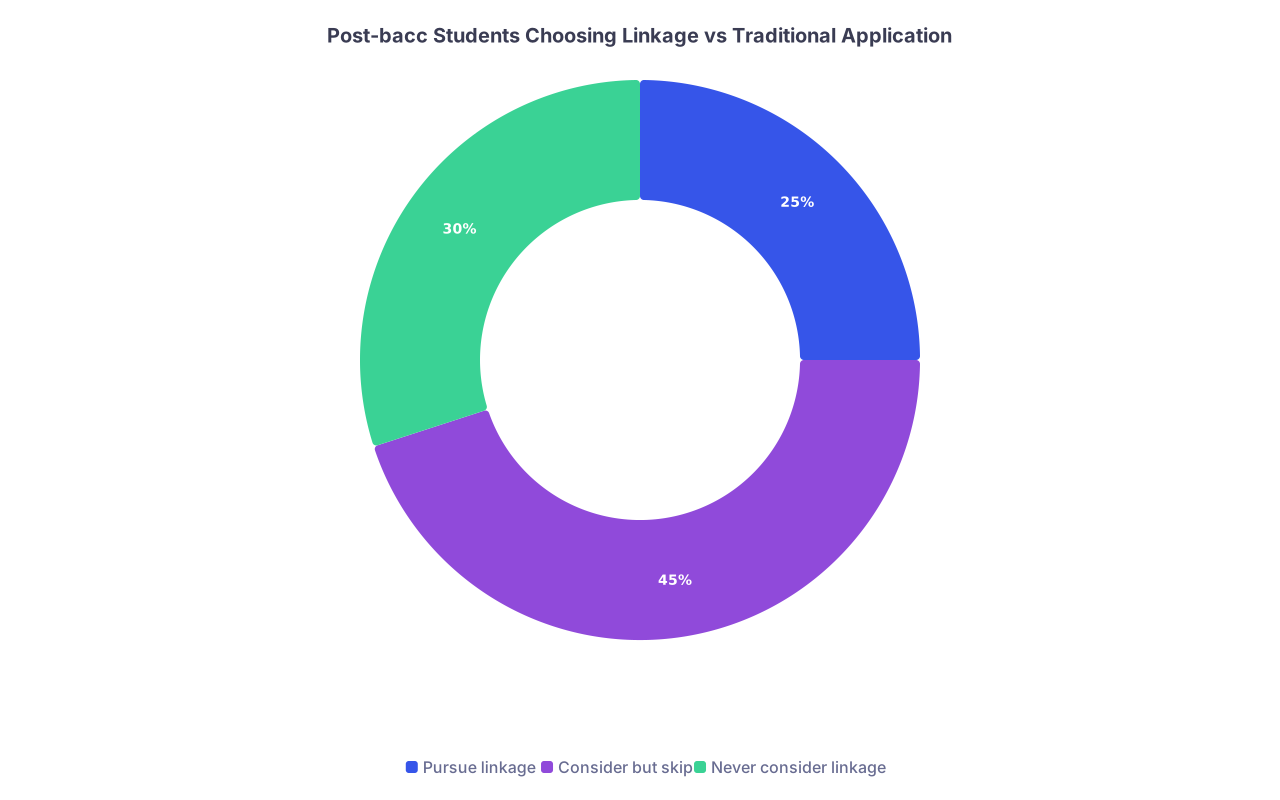
Linkage and Affiliation Agreements
Some formal Post-Baccalaureate Programs have direct relationships with Medical Schools:
- Linkage programs allow high-achieving students to:
- Apply early to a specific partner medical school.
- Potentially skip the gap year between completing the post-bacc and starting medical school.
- Occasionally be considered within a separate admissions pool.
While linkages are not guarantees, they can significantly streamline the path to matriculation for qualified students.
Letters of Recommendation and Institutional Advocacy
Faculty and advisors in Post-Baccalaureate Programs:
- Teach you in rigorous settings and can write detailed, credible letters describing your professionalism, work ethic, and potential.
- Often have deep familiarity with the expectations of admissions committees.
- May advocate on your behalf through:
- Committee letters or composite evaluations.
- Direct communication with admissions offices when appropriate.
In competitive admissions environments, strong institutional support can tip the scale in your favor.
Access to Resources, Advising, and Professional Networks
Post-bacc students often underestimate how much built-in support they gain through a structured program.
Dedicated Pre-Health Advising
Many Post-Baccalaureate Programs provide:
- Individualized advising plans based on your academic history, MCAT timeline, and target schools.
- Application strategy sessions covering:
- School list development (MD, DO, other health programs).
- Personal statement and activity descriptions.
- Secondary essay strategy.
- Interview preparation (traditional and MMI).
- Guidance on how to discuss GPA improvement or career change in a compelling, honest way.
This level of tailored guidance is difficult to recreate on your own.
Clinical, Volunteer, and Research Opportunities
Becoming a competitive Medical School applicant requires more than grades and MCAT scores. Many programs help you build this portfolio:
- Clinical exposure:
- Scribed roles.
- Hospital volunteering.
- Shadowing physicians or advanced practice providers.
- Community service:
- Health education outreach.
- Free clinics or mobile health units.
- Public health and advocacy initiatives.
- Research experiences:
- Lab-based translational or basic science research.
- Clinical research and quality improvement projects.
These experiences not only strengthen your application but also help you confirm that medicine is the right path for you.
Peer Community and Professional Network
Being surrounded by peers who are also investing in a rigorous post-bacc can:
- Provide accountability and support during demanding semesters.
- Offer a space to share resources, study strategies, and application tips.
- Lead to lifelong professional relationships—with future residents, attendings, researchers, and healthcare leaders.
In many ways, your post-bacc cohort becomes a launchpad for your professional network in medicine.
Developing Essential Soft Skills for Future Physicians
Medicine demands more than scientific knowledge; it requires strong interpersonal and professional skills. Well-designed Post-Baccalaureate Programs integrate these competencies into the educational experience.
Communication and Professionalism
You will have frequent opportunities to:
- Present case studies or scientific topics in seminars or small-group settings.
- Discuss complex concepts with peers from different academic and professional backgrounds.
- Write personal statements, reflections, and essays that demand clarity and self-awareness.
These experiences sharpen the skills needed for:
- Patient communication.
- Team-based care.
- Interviews and professional interactions across your career.
Teamwork and Leadership
In many programs, you’ll encounter:
- Group projects in labs and advanced courses.
- Student-led interest groups or outreach initiatives.
- Opportunities to tutor or mentor newer post-bacc or undergraduate premeds.
These roles help you demonstrate:
- Leadership in educational, clinical, or community settings.
- Ability to function effectively on a team—critical for multidisciplinary healthcare environments.
- Commitment to service and advocacy, which admissions committees value highly.
Flexible Program Formats and Expanded Career Options
Post-baccs offer flexibility not only in format but also in the careers they open.
Program Structure and Flexibility
Depending on your life situation, you can often choose among:
Full-time intensive programs
- Ideal for students able to commit their primary energy to coursework.
- Often completed in 1–2 years.
- Best if you want to move quickly into the application cycle.
Part-time or evening/weekend programs
- Designed for working professionals or those with caregiving responsibilities.
- Allow you to maintain employment while progressing toward medical or health professional school.
- May extend the total duration but can make the process more financially and personally sustainable.
Certificate vs. Master’s Programs
- Certificate programs: Typically focus on undergraduate-level prerequisites or targeted science coursework.
- Master’s programs in biomedical or medical sciences: Offer a graduate credential, sometimes with Medical School–analogous curricula and clear metrics (e.g., maintaining a certain GPA) tied to interviews or conditional consideration.
Choosing between these depends on your goals: pure prerequisite completion, GPA improvement, strengthening your academic brand with a graduate degree, or a combination of these.
Beyond Medical School: Other Health Career Pathways
Post-Baccalaureate Programs can also be an on-ramp to other health professions:
Physician Assistant (PA) Programs
- Often require many of the same core sciences as medicine.
- Heavily value direct patient care hours, which you can build during or after a post-bacc.
Dentistry, Pharmacy, and Optometry
- Post-bacc science coursework and advising can be adapted for these paths with slight modifications in prerequisites and experiences.
Public Health (MPH) and Health Policy
- Scientific grounding plus community or research experience can transition smoothly into public health graduate programs.
Biomedical and Clinical Research
- Post-baccs can open doors to research coordinator roles, lab positions, or even eventual PhD programs.
Thus, even if your path shifts over time, a strong post-bacc experience rarely goes to waste—it remains a valuable investment in your broader health-related career.
Financial Aid, Cost Considerations, and Return on Investment
Finances are a crucial part of deciding whether a Post-Baccalaureate Program is right for you.
Tuition, Fees, and Living Expenses
Costs vary widely:
- Public universities may offer more affordable tuition, especially for in-state students.
- Private institutions and highly structured post-baccs may be more expensive but can come with stronger advising and linkage opportunities.
- Don’t forget:
- Fees (lab fees, student services).
- MCAT prep and application costs.
- Relocation and housing, if necessary.
Financial Aid Options
Many Post-Baccalaureate Programs qualify for:
- Federal student loans (if the program is eligible).
- Institutional or external scholarships and grants targeted at:
- Non-traditional or returning students.
- Underrepresented in medicine (URM) applicants.
- Students pursuing health professions.
- Tuition assistance from employers, especially if you currently work in healthcare.
Always confirm with each program:
- Whether they are financial-aid eligible.
- What percentage of students receive aid.
- Average total cost of attendance.
Evaluating Return on Investment (ROI)
Consider the long-term picture:
- Post-bacc training can dramatically change your competitiveness and open the door to a meaningful and stable career in medicine or another health field.
- Weigh:
- Current salary vs. years spent in training.
- Potential future earnings as a physician or PA.
- Personal satisfaction and alignment with your values.
For many, a post-bacc represents not only a financial investment but also a strategic pivot toward a more fulfilling life’s work.
Real-World Success Stories: How Post-Baccs Transform Medical School Prospects
Stories can clarify what statistics cannot. Here are two examples that reflect common paths.
Case Study 1: Career Changer to Confident Applicant
Sarah, an English major, discovered her interest in medicine while volunteering at a hospital. With minimal science background and a solid but non-science GPA, she knew she wasn’t ready to apply directly to Medical School.
She enrolled in a career-changer Post-Baccalaureate Program that offered:
- A structured sequence of biology, chemistry, physics, and biochemistry.
- Built-in MCAT prep workshops.
- Physician shadowing and a hospital-based volunteering program.
Over 18 months, Sarah:
- Earned mostly A’s in her science courses, proving she could succeed in a demanding science curriculum.
- Developed strong relationships with faculty, who later wrote compelling letters describing her growth.
- Achieved a competitive MCAT score, helped by her recently acquired content knowledge and structured study support.
She applied to a mix of MD and DO programs and received several offers of admission. What began as a career change became a realistic and successful transition into medical education.
Case Study 2: GPA Enhancer Reframing His Academic Story
Mark majored in chemistry but struggled with family and financial pressures during undergrad, resulting in a science GPA that was below most Medical School cutoffs.
Determined not to let early struggles define him, he enrolled in an academic-enhancer Post-Baccalaureate Program that provided:
- Upper-level biology and physiology courses.
- Small-class settings and faculty mentoring.
- Personal and academic advising focused on resilience and time management.
During his post-bacc year:
- He earned a near-perfect GPA across 30+ science credits.
- Learned new study and test-taking strategies that he later applied to the MCAT.
- Gained clinical volunteering experience that helped him articulate why he wanted to become a physician.
By the time he applied, he could present a clear narrative: initial challenges, lessons learned, and a strong recent record that predicted success. He was ultimately accepted into a top-tier Medical School.
These examples highlight a key point: a thoughtful post-bacc can completely change the trajectory of your medical career.
FAQs About Post-Baccalaureate Programs for Medical School Preparation
1. How long do Post-Baccalaureate Programs usually take to complete?
Most Post-Baccalaureate Programs last 12–24 months, depending on:
- Whether you study full-time or part-time.
- How many prerequisites you still need.
- Whether the program includes a formal master’s degree.
Career-changer programs that start from minimal science background commonly take about two academic years, while focused GPA-improvement programs may be closer to one year.
2. Are Post-Baccalaureate Programs the same as graduate school?
Not exactly. Post-baccs are after-bachelor’s programs, but they can include:
- Undergraduate-level coursework (often for prerequisites).
- Graduate-level or master’s coursework (for some academic-enhancer programs).
They differ from traditional graduate programs in that they’re specifically designed to improve your candidacy for Medical School or related health professions rather than primarily pursuing research or an academic specialty.
3. Can I work while enrolled in a Post-Baccalaureate Program?
Many students do, especially in part-time or evening programs. However:
- The science coursework is demanding, and working full-time during a full-time, intensive post-bacc is challenging.
- If you must work, look for:
- Part-time or flexible formats.
- Programs with evening or online lecture options (labs usually remain in-person).
- Be realistic about your bandwidth; your priority is to perform well academically, especially if GPA improvement is your main goal.
4. How should I choose the right Post-Baccalaureate Program for me?
Consider these factors:
- Your primary goal: Career change vs. GPA improvement vs. both.
- Advising and support: Access to pre-health advisors, MCAT resources, committee letters.
- Linkage or affiliation options: Whether the program partners with specific medical schools.
- Location and flexibility: Full-time vs. part-time, evening vs. daytime classes.
- Cost and financial aid: Tuition, scholarships, and student loan eligibility.
- Outcomes data: Medical School acceptance rates, types of schools graduates attend.
Research program websites, attend information sessions, and talk with current or former students when possible.
5. Do Post-Baccalaureate Programs really improve my chances of getting into Medical School?
When used strategically and completed successfully, yes. Many programs report higher-than-average acceptance rates for their graduates compared with national averages. The benefits come from:
- Stronger, more recent academic performance and GPA improvement.
- Completed and well-sequenced prerequisites.
- Structured MCAT preparation.
- Rich clinical, volunteer, and research experiences.
- Tailored advising and letters of recommendation.
Of course, no program can guarantee admission, but a thoughtfully chosen and well-executed post-bacc can dramatically enhance your profile and confidence as an applicant.
Post-Baccalaureate Programs are more than just extra classes—they are a strategic bridge between where you are now and where you want to be in your medical education and career. Whether you’re switching careers, rebuilding an academic record, or seeking a clearer path into medicine, a post-bacc can provide the structure, support, and momentum you need to move forward.