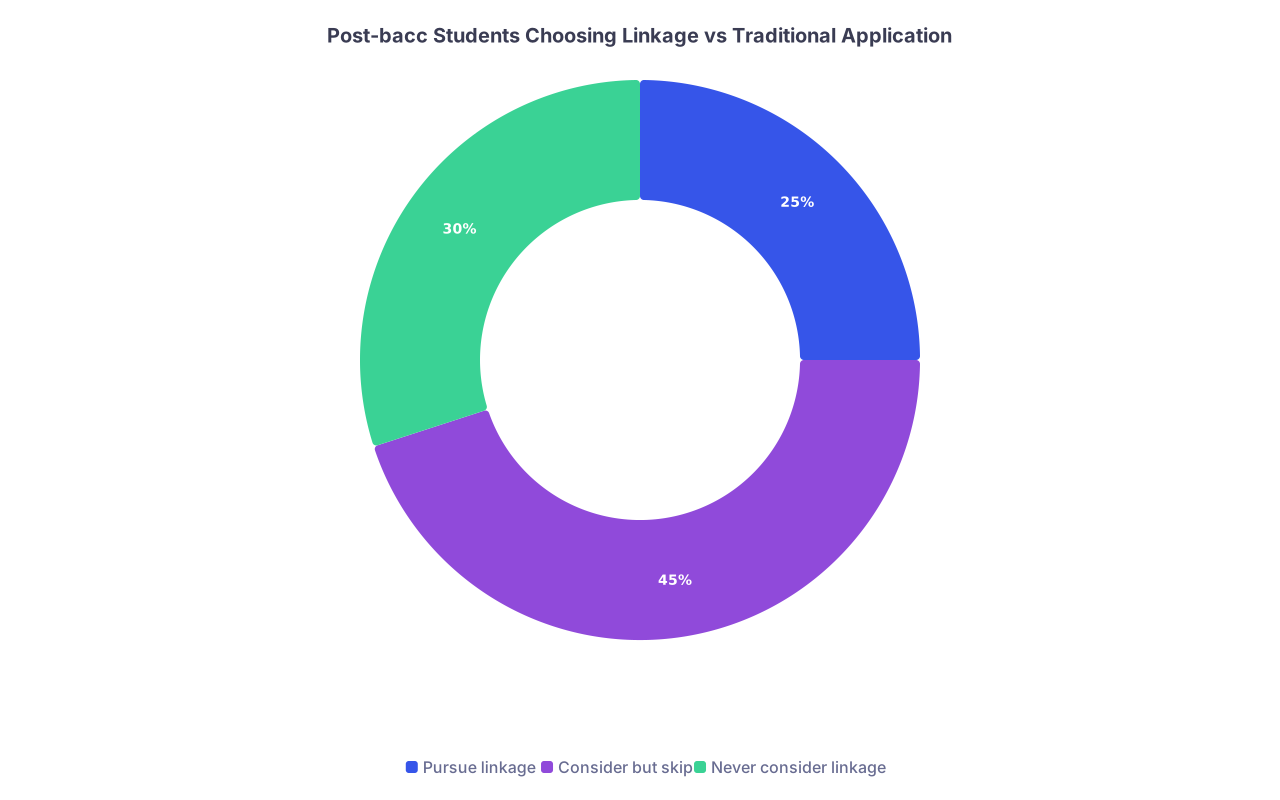
Most premeds underestimate how many post-bacc credits they actually need for schools to believe they’ve changed.
Let me be blunt: 8–12 “A” credits in a post-bacc isn’t an academic reinvention. It’s a good start. But it will not erase a 2.8 science GPA and years of shaky grades. Medical schools read trends, not isolated semesters.
You’re asking the right question: How many post‑bacc credits are enough to show real academic change? Here’s the real answer, not the wishful one.
The Short Answer: Real Ranges, Not Magical Numbers
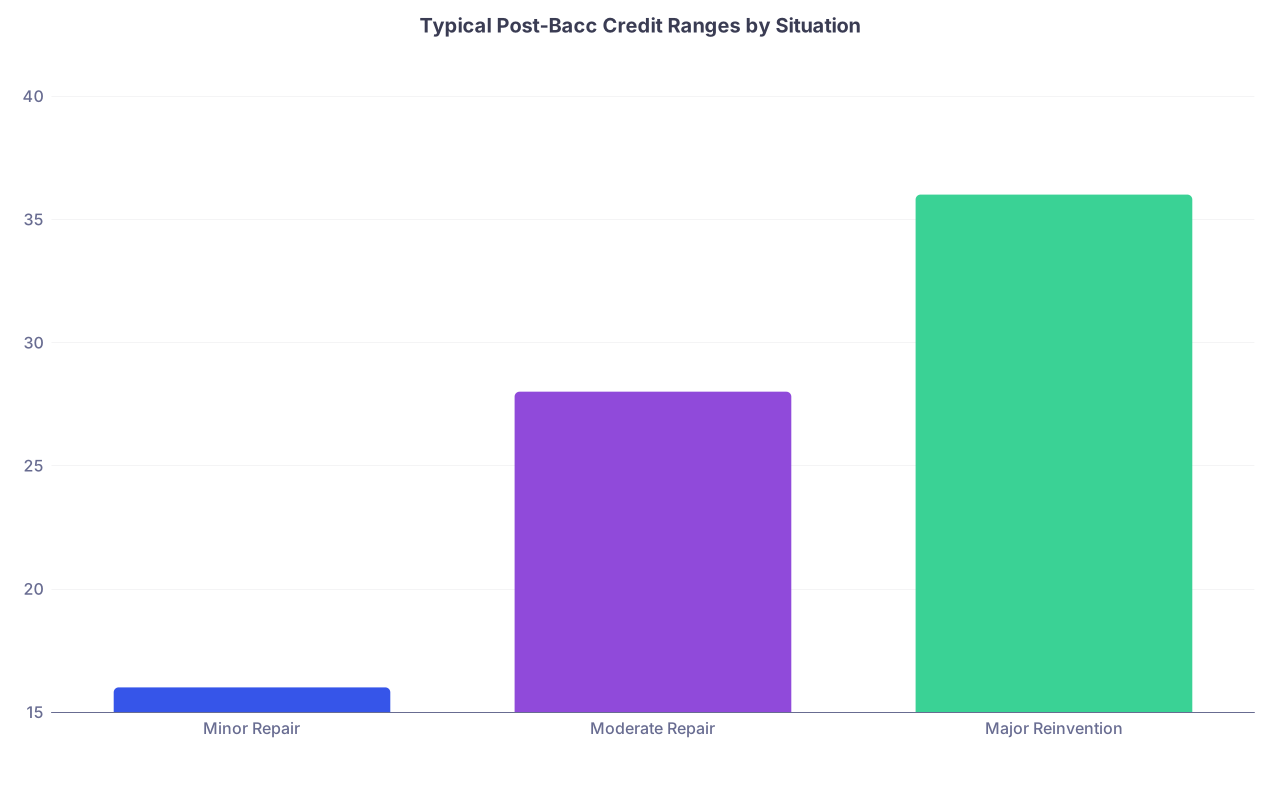
For most applicants, “enough” post-bacc credit falls in these rough lanes:
Minor repair (already ~3.4+ GPA, just need to prove recent readiness):
About 12–20 credits of solid, upper-level science with mostly A’s.Moderate repair (cGPA/sGPA in the 3.0–3.3 range):
About 24–32 credits of strong performance (A-/A), ideally over 2+ semesters.Major reinvention (cGPA or sGPA below ~3.0, big history of poor terms):
Often 30–40+ credits, sustained over 3+ semesters, with a clear, upward trend and almost all A’s.
Those are realistic, pattern-based ranges I’ve seen work. Not guarantees, but what actually moves the needle.
And no, there isn’t a universal magic number—because schools are not just counting credits. They’re asking three core questions:
- Did you fix the pattern of poor performance?
- Did you do it in real (upper-level, rigorous) science classes?
- Did you maintain that improvement long enough that it looks stable, not lucky?
If your post-bacc plan doesn’t clearly answer “yes” to all three, you are not done yet.
What Med Schools Actually Want to See from a Post‑Bacc
Here’s what admissions committees care about when they look at your post-bacc, more than just raw credit count:
- Trend – Is there a sustained upward path?
- Rigor – Were the courses genuinely challenging?
- Duration – Did you hold this improvement over time or just one shiny term?
- Context – Were you working, caregiving, or full-time in school?
Most people obsess over “How many credits?” and barely think about “What do those credits look like on paper?”
Let’s break down those pieces.
1. Trend: The Non-Negotiable
If you had multiple semesters of C’s and withdrawals, med schools want to see multiple semesters of A-level work. A single great summer of 8 credits is not enough to overwrite that story.
A convincing trend usually looks like:
- No recent C’s in science
- Mostly A’s, maybe an occasional B+, in upper-level biology/chem courses
- At least 2–3 consecutive terms of this level
This is why someone with 24 credits of A/A- over 3 semesters looks far stronger than someone with 24 credits crammed into 1 brutal, chaotic year with mixed results.
2. Rigor: The Classes Themselves Matter
If your GPA problem is in science, your fix must also be in science. “Easy A” electives are empty calories.
Stronger post-bacc course choices usually include things like:
- Physiology
- Cell Biology
- Biochemistry
- Microbiology
- Genetics
- Anatomy
- Immunology
- Neuroscience
Weaker choices: random non-science electives, low-level survey courses, repeated intro classes that were already B’s.
If you’re showing academic change, you need to show it in the same kind of courses you’ll see in med school.
| Category | Value |
|---|---|
| Minor Repair | 16 |
| Moderate Repair | 28 |
| Major Reinvention | 36 |
Different GPA Situations: How Many Credits Do You Probably Need?
Let’s walk through common scenarios and what “enough” usually looks like.
1. You Have a 3.4+ GPA, But It’s Old or Light on Science
Example: You graduated 5 years ago with a 3.5 in psychology, only took the basic prereqs, and haven’t been in school since.
What schools worry about: Rust. Can you still handle dense, high-level science?
A strong post-bacc pattern here:
- 12–20 credits of upper-level sciences
- Over 2 semesters (e.g., fall + spring)
- Mostly A’s
- Courses like biochem, physiology, cell bio
You’re not repairing so much as updating your academic record. You probably don’t need 40 credits. But you do need more than one random evening course.
2. You’re in the 3.0–3.3 cGPA/sGPA Range
This is the classic “borderline” group.
Example: Chemistry GPA is 2.9, bio is 3.0, you had a rough sophomore year, then improved, but the average still hurts you.
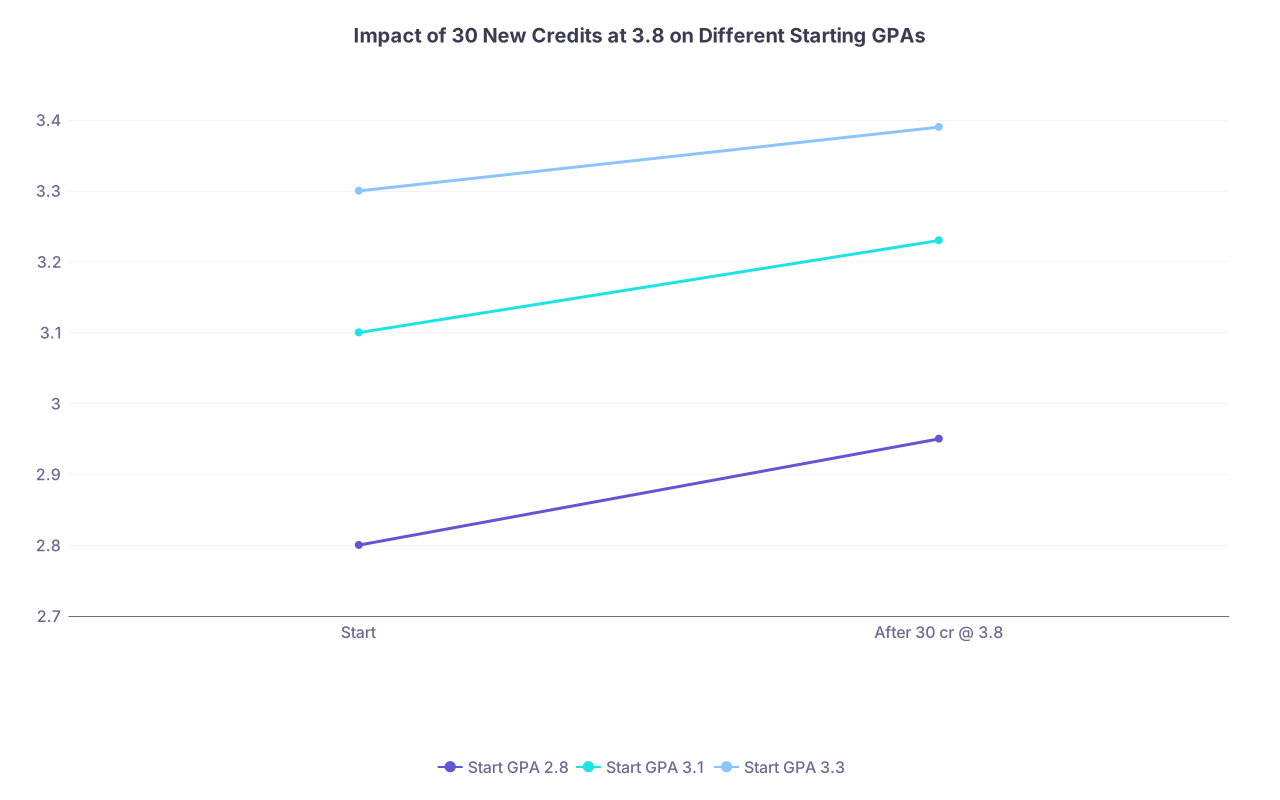
Reality check: An extra 12 credits at a 3.7 isn’t going to meaningfully move your cumulative science GPA. The power here is not in changing the number dramatically. It’s in changing the story.
What tends to work:
- 24–32 credits total
- At least 3 semesters (can be part-time if needed)
- A-/A grades in mostly upper-level science
- No withdrawals and no new C’s
Schools see that and think: “This applicant figured it out. Their new performance level is aligned with our curriculum demands.”
If you’re aiming MD vs DO, closer to 30+ credits of A/A- work is usually safer, especially if your original undergrad is heavy with C’s.
3. You’re Below 3.0 and Need True Reinvention
This is the tough, but very possible, group.
Example: 2.7 sGPA with multiple semesters under 3.0 due to immaturity, work stress, or life events. Now you’re older, more stable, and ready to fix it.
Here’s the uncomfortable truth: to convince med schools you’ve fully turned a corner, you’re likely looking at:
- 30–40+ credits of mostly A’s
- Over 2–3+ years (realistically)
- Heavy in upper-level biology/biochem-focused coursework
At this point, a formal Special Master’s Program (SMP) or structured academic-enhancer program may be smarter than endless undergrad-level post-bacc credits, especially for MD aspirations. But straight post-bacc can still work, particularly for DO, if your trend is rock solid.

| Step | Description |
|---|---|
| Step 1 | Current GPA & Record |
| Step 2 | 12-20 upper-level science credits |
| Step 3 | 24-32 credits over 2-3 terms |
| Step 4 | 30-40+ credits or SMP |
| Step 5 | Case-by-case evaluation |
| Step 6 | cGPA/sGPA >= 3.4? |
| Step 7 | cGPA/sGPA 3.0-3.3? |
| Step 8 | Below 3.0? |
Why 8–12 Credits Almost Never Cuts It (On Its Own)
Let’s talk about the classic move: doing one part-time semester of 8–12 credits, getting all A’s, and calling it a “reinvention.”
Here’s why committees don’t buy it:
- Anyone can have one good term, especially if life is calm and you cherry-pick classes.
- Med school is 4 full-time years of grind, not a 10-credit experiment.
- They want to know: “Is this sustainable?” One term doesn’t answer that.
Is 8–12 credits useless? No.
- It can be your first step.
- It can be your “proof-of-concept” that justifies entering a formal post-bacc or SMP.
- It’s a good move while you’re still testing whether medicine is actually for you.
But in terms of final product? For most people with GPA issues, you should mentally plan for at least 24+ credits if you want admissions to genuinely shift how they view you.
Full-Time vs Part-Time: Does It Change How Many Credits You Need?
Short version: schools care more about performance and pattern than whether you were full-time or part-time. But they absolutely interpret it differently.
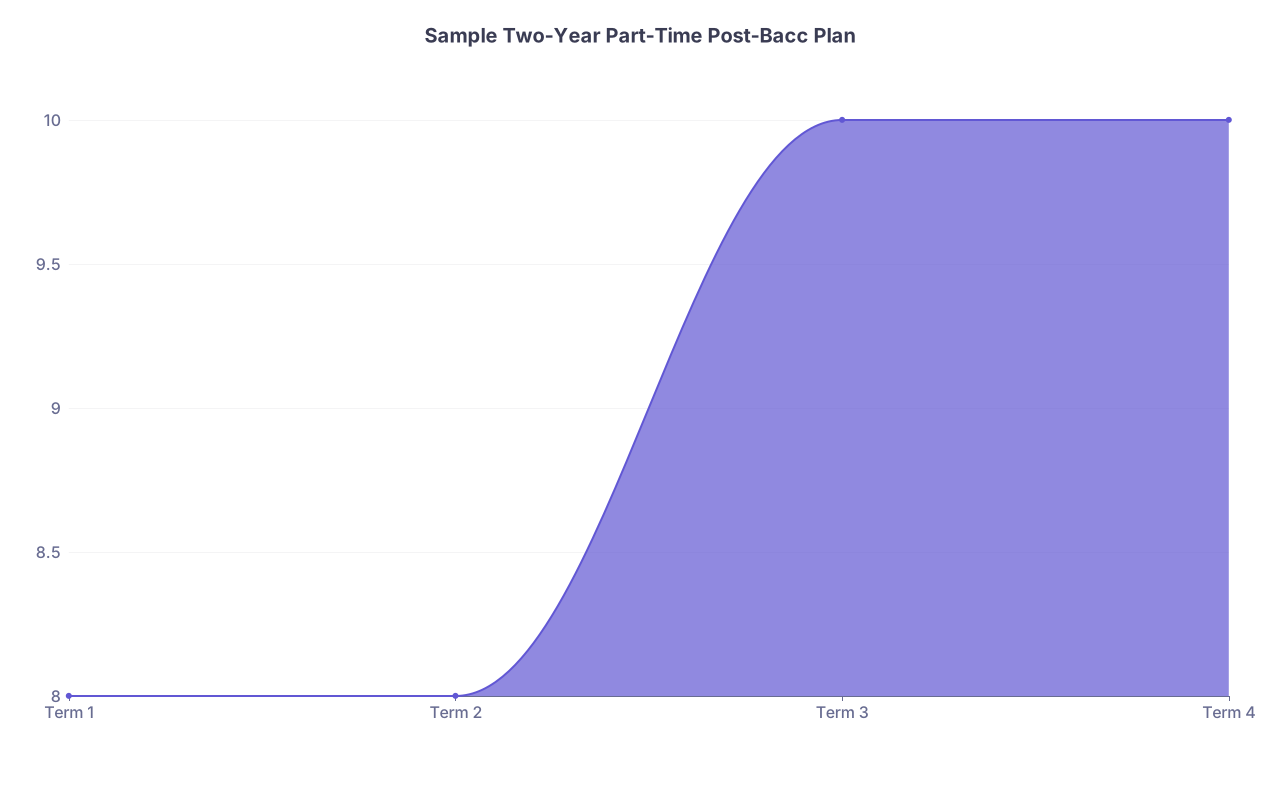
If you do part-time (while working):
- That can strengthen your story if you’re pulling A’s while working 20–40 hours/week.
- But you should still hit similar total credit ranges (e.g., 24–32 credits for moderate repair) — it just takes more calendar time.
If you do full-time (e.g., 12–15 credits/term):
- You demonstrate you can handle a heavier academic load, which looks closer to med school intensity.
- But if going full-time tanks your grades, that’s worse than taking fewer credits and acing them.
The deciding question is: “What’s the setup where you can reliably earn A’s in rigorous courses?” Then accumulate enough of those to show a durable trend.
| Category | Value |
|---|---|
| Term 1 | 8 |
| Term 2 | 8 |
| Term 3 | 10 |
| Term 4 | 10 |
How to Plan Your Own Target Number
You can roughly estimate what you need by looking at:
- Your current cGPA and sGPA
- How many total credits you already have
- Your target schools (MD vs DO, state vs private)
Here’s a quick way to think:
- If you’re already at ~3.4+ and just stale → Aim: 12–20 credits
- If your GPA is 3.0–3.3 → Aim: 24–32 credits
- If you’re under 3.0 and serious about MD → often SMP + 30+ credits of A-level graduate work or a long, heavy undergrad post-bacc
- Under 3.0 aiming DO → 30–40 credits of A/A- in recent upper-level science can create a viable path
And one more harsh point: if you already have 160–200+ undergrad credits, do not expect your cumulative GPA to skyrocket. The goal becomes to build a clearly separate, recent academic record that committees can point to and say, “This is the new baseline.”
| Category | Start GPA 2.8 | Start GPA 3.1 | Start GPA 3.3 |
|---|---|---|---|
| Start | 2.8 | 3.1 | 3.3 |
| After 30 cr @ 3.8 | 2.95 | 3.23 | 3.39 |
Common Mistakes That Waste Post-Bacc Credits
I’ve watched people burn years and thousands of dollars making these errors.
Taking random, low-rigor courses
“Health and Wellness,” “Intro to Nutrition,” and non-lab electives won’t fix a weak science record.Stopping too early
They take 12–16 credits, feel tired, and decide that has to be “enough.” It usually isn’t.Ignoring timing
If your strong post-bacc work is 6–7 years old by the time you apply, you’ve got another “recency” problem.Avoiding hard sciences out of fear
You cannot sidestep the exact type of coursework med school is built on and expect admissions to overlook that.Not aligning with GPA calculators/AMCAS
Remember: AMCAS and AACOMAS recalculate everything. No grade replacement for MD. Some for DO, but even that’s shifting. You have to think in their math, not what your university transcript shows.
Quick Reality Check: Are You Done or Not?
You’re probably NOT done with post-bacc academics if:
- You still have recent C’s in science.
- You only have 1 semester of good grades.
- You have fewer than ~20 credits of A-level upper-division sciences after your GPA crash.
- Your cGPA/sGPA is below 3.0 and you only did 12–15 credits so far.
You’re probably close or done if:
- You’ve done 24–40+ credits post-bacc depending on your starting GPA.
- They’re mostly A’s, maybe a couple B+’s, no new C’s.
- They’re in solid, med-relevant upper-level sciences.
- This is spread over multiple consecutive terms with consistent performance.
If your situation is unusual (multiple degrees, very high MCAT, big gap years, serious life events), your “enough” may skew up or down. But the framework stays the same: trend, rigor, duration.
FAQ: Post‑Bacc Credits and Academic Change
Can a single semester of 4.0 post-bacc grades be enough?
Occasionally, for someone with a decent existing GPA (3.4+), minimal red flags, and an otherwise strong profile. But if you have a history of multiple weak semesters, one 4.0 term is rarely enough. Schools want repeated proof, not a one-time spike.Do credits from a community college count the same as a 4-year university?
They count toward GPA, yes. But many admissions committees view upper-level science from a 4-year institution as stronger academic evidence. Community college can be fine for starting or repairing, but I’d anchor the bulk of your “proof” in a 4-year setting if possible, especially for MD.Is a formal post-bacc program better than piecing together classes on my own?
Not automatically. Formal programs can offer structure, advising, and committee letters, but they’re often more expensive and less flexible. What matters most: the rigor of the courses, your grades, and the total body of work. A DIY post-bacc done well can absolutely carry you.If I get a high MCAT, can I get away with fewer post-bacc credits?
A strong MCAT (515+ for MD, 505+ for DO) can offset some concerns, but it does not erase a weak academic trend. It proves you can test well and handle content, but adcoms still want to see sustained performance in structured courses. High MCAT + solid (not massive) post-bacc can work, but MCAT alone is not a magic eraser.Do I need both a post-bacc and an SMP if my GPA is low?
Not always. Many applicants do one or the other. If your GPA is extremely low (<2.8) and you have little recent coursework, a combination path can make sense: undergrad post-bacc to prove readiness, followed by an SMP to show med-school-level success. But that’s a long, expensive road. Many people succeed with just one well-executed step.Can I work full-time while doing my post-bacc? Will that hurt me?
You can, and for many non-traditional students, you have no choice. Adcoms understand that. If you maintain A-level work while handling serious responsibilities, that can actually help your narrative. Just do not overload yourself to the point your grades suffer; a slower, excellent post-bacc is better than a rushed, mediocre one.How do I know when to stop taking more classes and actually apply?
You stop when three things are true:- You’ve hit a reasonable total (based on your starting GPA: 12–20, 24–32, or 30–40+).
- Your last several terms show consistent A-/A work in real science.
- Your overall GPA and recent trend put you within striking distance of at least some realistic MD or DO schools. If you’re still apologizing for your GPA in every sentence, you probably need more time in the classroom.
The bottom line: there is no single magic credit number. But there is a clear pattern. Enough post-bacc credits means: rigorous science classes, mostly A’s, sustained over multiple consecutive terms, in a volume that logically outweighs your old mistakes. For most people with GPA problems, that looks a lot more like 24–40 credits than 8–12.