Is a Post-Baccalaureate Program Right for You? Essential Factors to Consider
In today’s competitive landscape of medical education, there is no single “traditional” path to medical school. Many successful physicians took a non-linear route—changing careers, rebuilding their academic record, or discovering a passion for medicine later in life. Post-Baccalaureate Programs (often called “post-baccs”) have emerged as a key academic pathway for these applicants.
Post-baccalaureate programs can be powerful tools for career development: they allow you to strengthen your academic profile, complete missing prerequisites, gain relevant clinical and research experience, and receive structured admissions advice and support. But they are also a major investment of time, money, and energy.
This guide will help you determine whether a post-baccalaureate program is the right step for you, and how to evaluate specific programs in a strategic, informed way.
Understanding Post-Baccalaureate Programs in Medical Education
What Is a Post-Baccalaureate Program?
A post-baccalaureate program is any structured course of study you pursue after completing a bachelor’s degree, but before entering a graduate or professional program such as medical school. In the context of premedical training, these programs are designed to:
- Build or strengthen your science foundation
- Improve your academic metrics (GPA, science GPA)
- Prepare you for the MCAT
- Enhance your overall medical school application through clinical, research, and service experiences
They serve as a bridge between your undergraduate work and medical school, especially when your original academic pathway was not perfectly aligned with medical school expectations.
Major Types of Post-Baccalaureate Programs
Understanding the main categories helps you match a program to your needs.
Academic Record Enhancer Programs
These programs focus on improving an existing academic record that may not be competitive for medical school. They are best suited for applicants who:- Completed premed prerequisites but earned a lower GPA than most admitted applicants (e.g., <3.3 overall or science)
- Need to demonstrate that they can now perform well in demanding science coursework
- May have a “reinvention” story—personal circumstances, late maturity, or learning challenges that impacted earlier performance
Record-enhancing programs often include:
- Upper-level biology, biochemistry, physiology, and related sciences
- Sometimes graduate-level or special master’s courses
- Close advising and sometimes a structured linkage or interview agreement with affiliated medical schools
Career Changer Programs
Career changer post-baccs are designed for students who did not major in the sciences and did not complete premed prerequisites during college. These programs are ideal if:- Your undergraduate major was in a non-science field (e.g., English, Economics, Art, Business)
- You are transitioning from another career (teaching, engineering, finance, military, etc.)
- You are discovering an interest in medicine later and need an efficient, organized path to complete required sciences
Career changer programs typically include all core premed prerequisites:
- General biology with lab
- General and organic chemistry with lab
- Physics with lab
- Biochemistry and sometimes statistics and psychology
Structured Pre-Medical or Pre-Health Programs
Many institutions now offer comprehensive pre-medical post-baccalaureate programs that combine features of both career changer and record-enhancer tracks. These may include:- Prerequisite completion (for non-science majors)
- Advanced science coursework (for academic enhancement)
- MCAT preparation support
- Clinical exposure, shadowing, and volunteering
- Formal advising and letters of recommendation through a committee
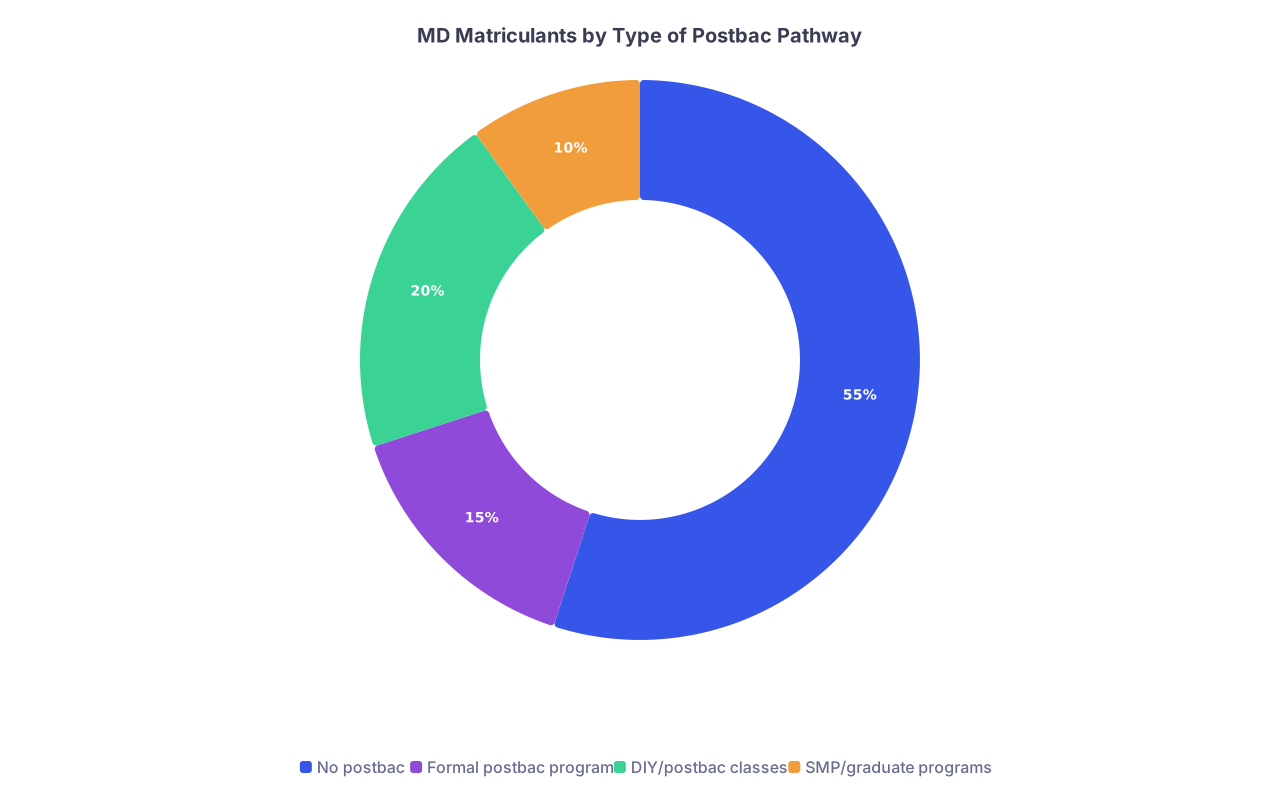
Some schools also offer Special Master’s Programs (SMPs) that are graduate-level and distinct from—but related to—post-baccs. SMPs often involve coursework alongside medical students and are primarily for academic record enhancement. When exploring Academic Pathways, you should compare SMPs and post-baccs to see which better aligns with your goals, risk tolerance, and timeline.
Key Factors to Consider Before Choosing a Post-Baccalaureate Program
1. Clarifying Your Career Goals in Medicine
Before committing to any post-baccalaureate path, you need to be honest and specific about your career goals.
Are You Fully Committed to Becoming a Physician?
A post-bacc program is worthwhile when you are clear that becoming a physician is your primary objective. Reflect on:
Depth of exposure to medicine
Have you shadowed physicians? Volunteered in clinical settings? Worked as an EMT, scribe, medical assistant, or in another patient-facing role?Long-term understanding of the profession
Are you aware of the demands of residency, the length of training, lifestyle considerations, and the realities of modern healthcare?
If your experience is limited, consider gaining more clinical exposure before applying to a post-bacc. This can prevent expensive missteps and clarify whether a medical degree—not another health profession—is the right fit.
Are You Open to Other Healthcare Careers?
Post-baccalaureate programs sometimes serve as a gateway to broader healthcare exploration. Many structured programs:
- Introduce students to PA, nursing, dentistry, pharmacy, and public health
- Offer career development workshops and sessions with professionals from various disciplines
If you are still deciding between multiple paths, look for programs that make space for this exploration rather than locking you into a single outcome.
Actionable Tip:
Write a one-page statement for yourself—not for admissions—about why you want to pursue medicine now, given your academic and life journey so far. If you struggle to articulate this clearly, you may want to focus first on further exploration and mentorship before committing to a post-bacc.
2. Evaluating Your Academic Background Realistically
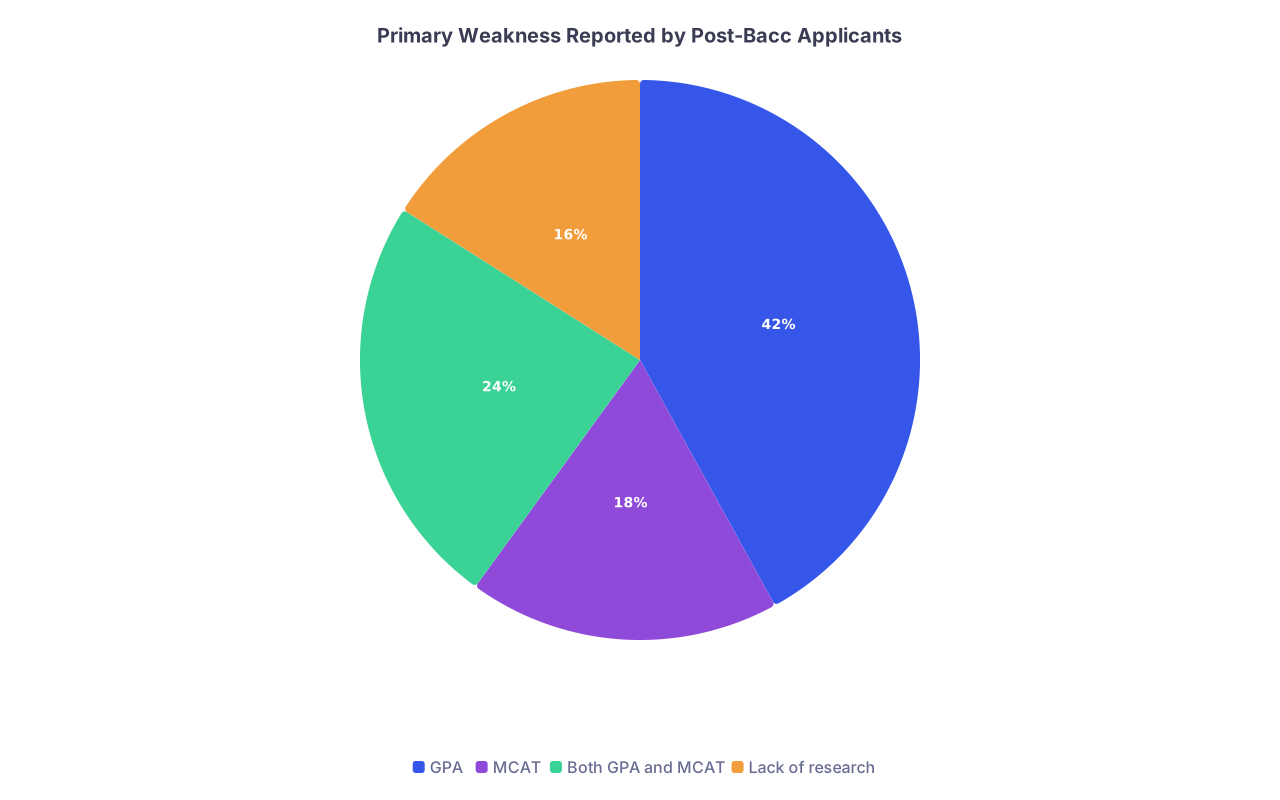
Your existing academic record is one of the strongest indicators of whether a post-baccalaureate program will significantly boost your competitiveness.
Reviewing Your GPA and Course History
Ask yourself:
What is my overall GPA and science (BCPM) GPA?
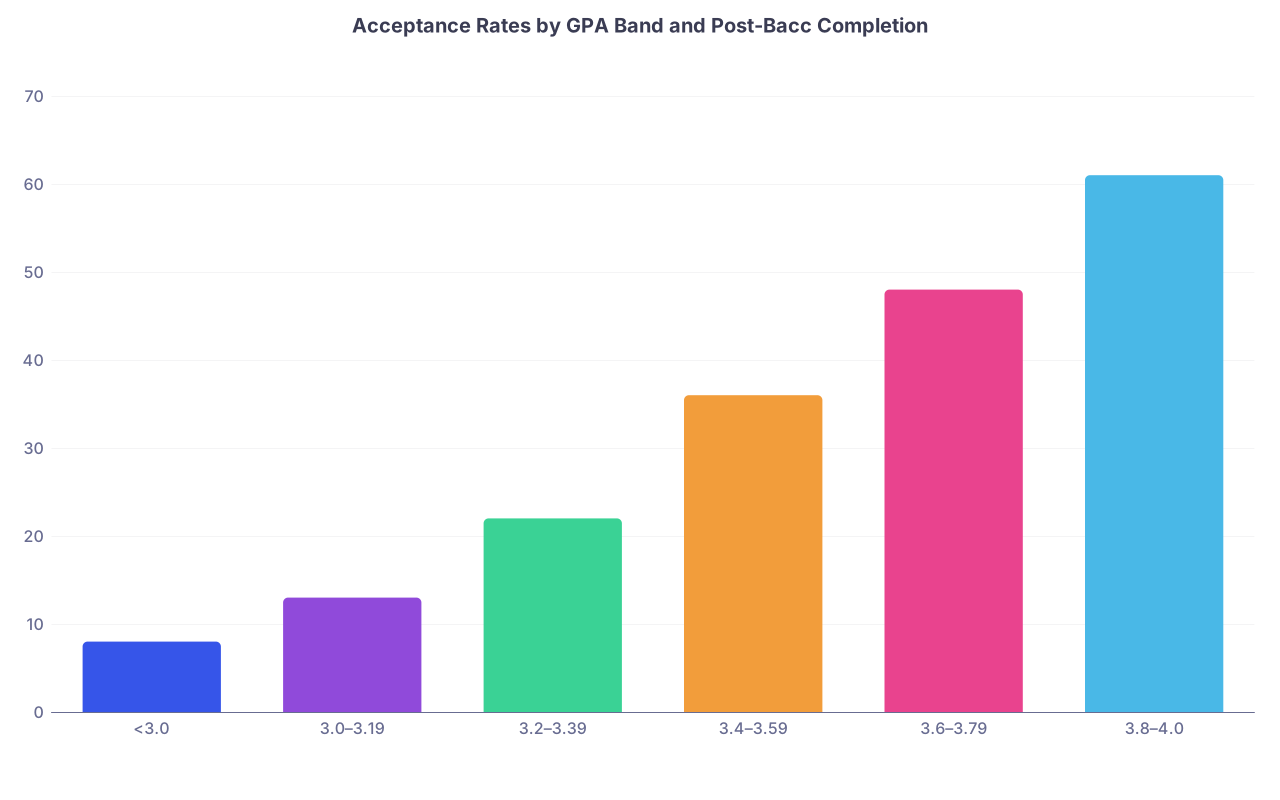
Compare them to average matriculant data for MD and DO programs (updated each year by AAMC and AACOM). If you are well below those benchmarks, an academic enhancer program could be crucial.How did my performance change over time?
An upward trajectory can be powerful—especially if you show several recent semesters of strong performance (3.6–4.0) in rigorous science courses.Have I completed all core prerequisites?
If not, a career changer or combined pre-medical post-bacc may be more appropriate.
Who Benefits Most from Academic Record Enhancer Programs?
These programs can be very valuable if:
- Your undergraduate performance was affected by health, family, or financial issues—and you can now demonstrate stability.
- You discovered your interest in medicine late and your earlier semesters don’t reflect your current abilities.
- You have already taken the MCAT but your academic record is still holding your application back.
However, if your GPA is extremely low (<2.5) and you have many recent low grades in science courses, you may need a longer-term plan (e.g., additional undergraduate coursework over several years) before or instead of a formal post-bacc.
Actionable Tip:
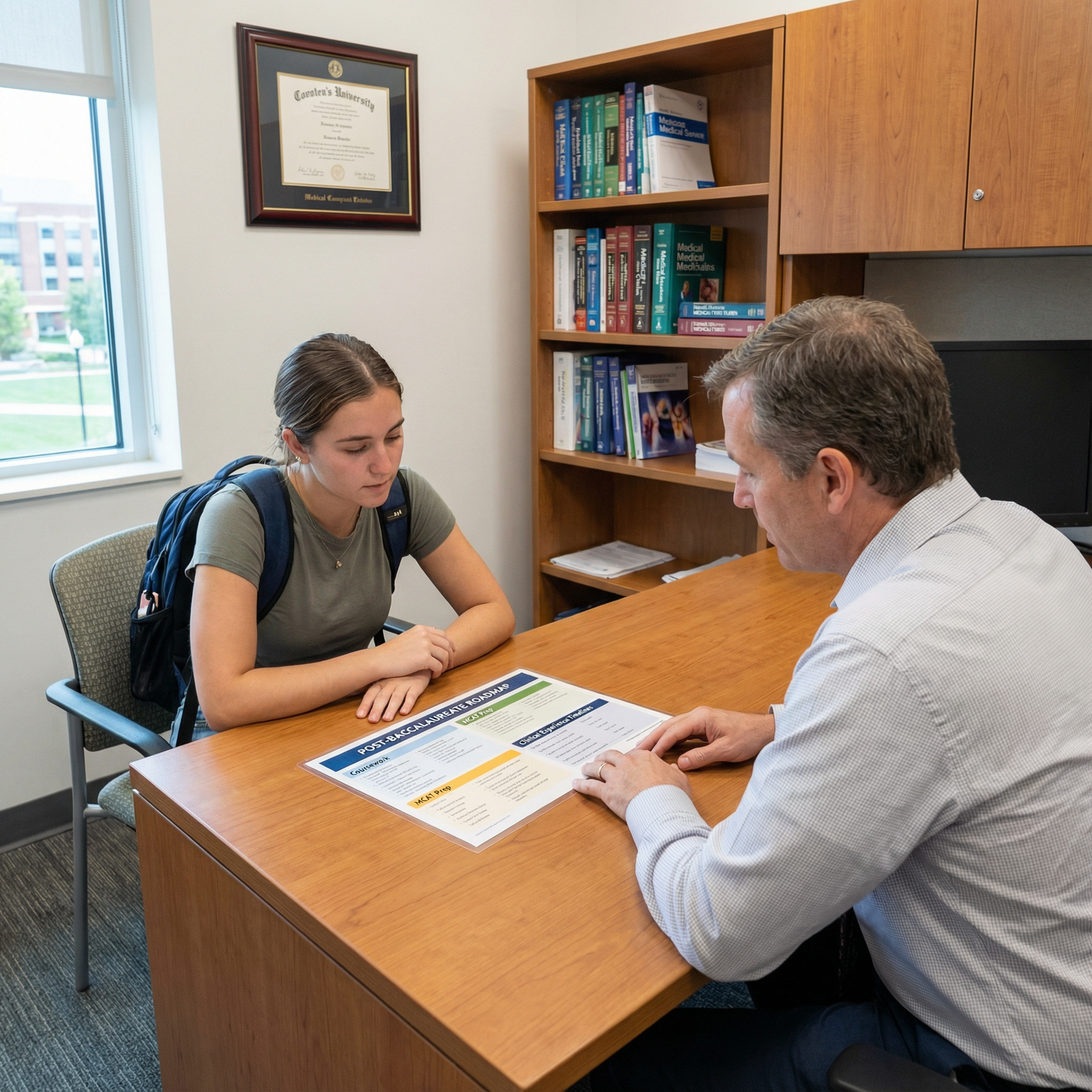
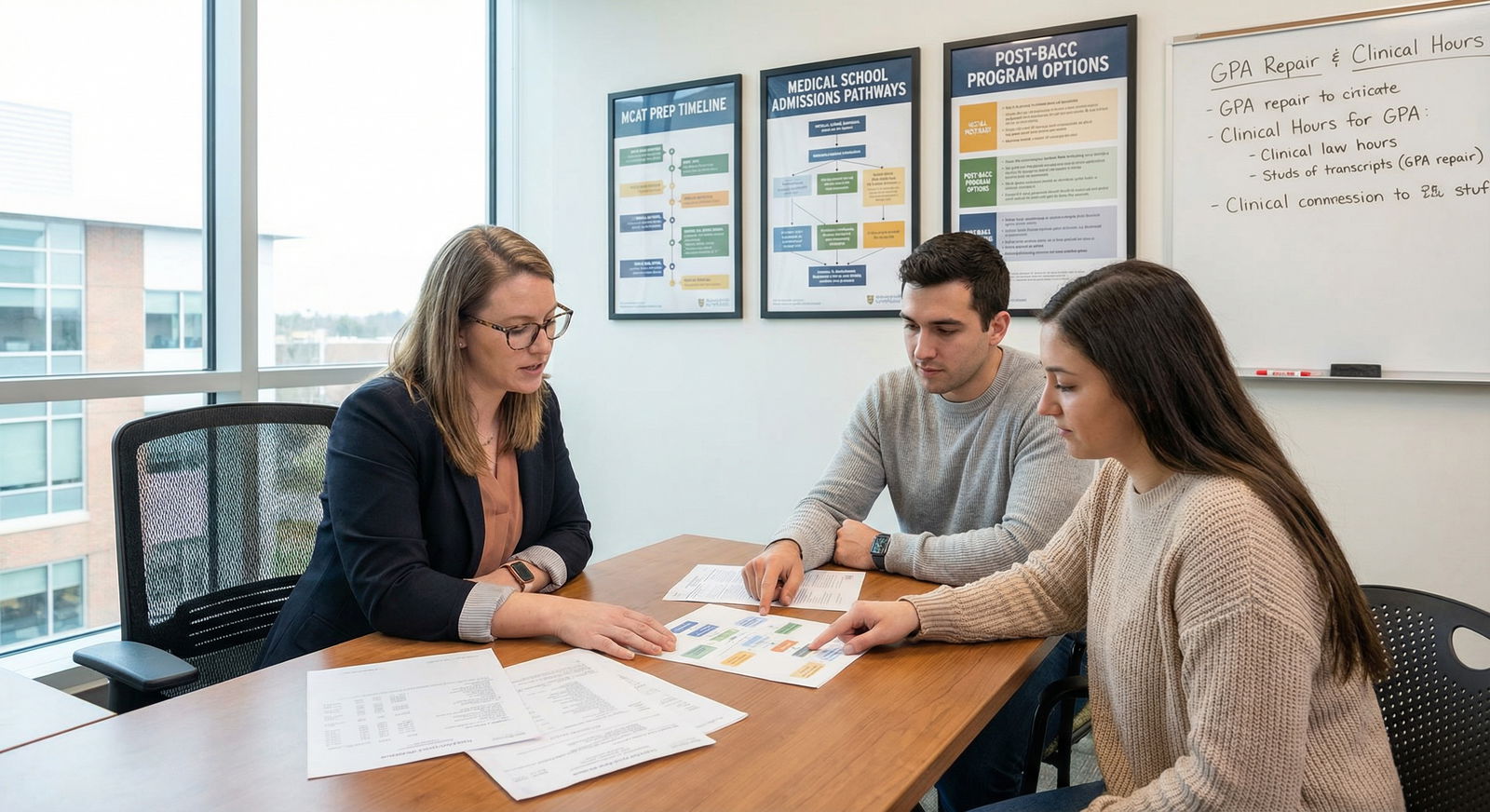
Request an appointment with a premed advisor (at your alma mater or through a premed advising service) to review your transcript in detail. Ask them to help you map how many credit hours of A-level work you would need to raise your GPA to a competitive range.
3. Financial Considerations: Cost, Debt, and Return on Investment
Post-baccalaureate programs can be expensive and generally do not qualify for the same level of financial aid as traditional undergraduate degrees.
Tuition and Living Costs
When comparing programs, look beyond just tuition:
- Per-credit or flat-rate tuition
- Required fees (lab fees, program fees, technology fees)
- Cost of living in the program’s city (housing, transportation, food)
- Costs for MCAT courses, exam fees, application fees (AMCAS/AACOMAS), secondary fees, interview travel (if not virtual), etc.
Financial Aid and Funding Options
Ask each program:
- Are federal loans available (often as non-degree seeking or second-degree undergraduate status)?
- Are there institutional scholarships or tuition discounts?
- Are there work-study positions, teaching assistantships, or research jobs for post-bacc students?
Be realistic about how much additional debt you are willing and able to take on before entering medical school, where further loans are likely.
Assessing Return on Investment (ROI)
Think of a post-bacc as an investment in your career development and academic pathway. To evaluate ROI:
- Look at the program’s medical school acceptance rates
- Examine where graduates matriculate (MD vs DO, in-state vs out-of-state, range of schools)
- Consider whether the program offers linkage agreements, guaranteed interviews, or conditional acceptance if certain metrics are met
Actionable Tip:
Create a simple spreadsheet comparing your top 5–10 programs: tuition, total estimated cost of attendance, average acceptance rates to medical schools, and typical outcomes. This visual comparison can clarify which options offer the best balance of cost and benefit.
4. Program Structure and Flexibility: Fitting School into Your Life
For many post-bacc students, life is already full—work, family, caregiving responsibilities, or geographic limitations. The format and flexibility of a program can make or break your success.
Full-Time vs Part-Time Options
Full-time programs
- Shorter duration (often 1–2 years)
- More immersive and cohesive cohort experience
- May be preferred for certain linkage agreements
- Demanding for students who must work significant hours
Part-time programs
- Allow you to continue working or supporting a family
- May extend the timeline to medical school
- Require strong time management and consistency over multiple years
Choose the structure that helps you perform your best, not the one that seems quickest on paper.
In-Person, Online, and Hybrid Formats
Many institutions now offer online or hybrid post-baccalaureate options. When considering them, confirm:
- Whether medical schools will accept key prerequisites completed online or via remote labs
- The level of interaction with faculty and classmates
- Availability of advising, tutoring, or office hours
In-person programs often provide stronger opportunities for:
- Hands-on lab work
- On-campus research
- Face-to-face mentorship
- Integrated clinical experiences
However, high-quality online programs can still be effective when combined with in-person clinical exposure you arrange locally.
5. Research, Clinical Exposure, and Mentorship Opportunities
Strong post-baccalaureate programs don’t just offer courses—they create an ecosystem of experiences that help you grow into a competitive and thoughtful applicant.
Research Opportunities
Research is not mandatory for all medical schools, but it is valuable, especially for applicants interested in academic medicine or MD-PhD programs. Look for programs that:
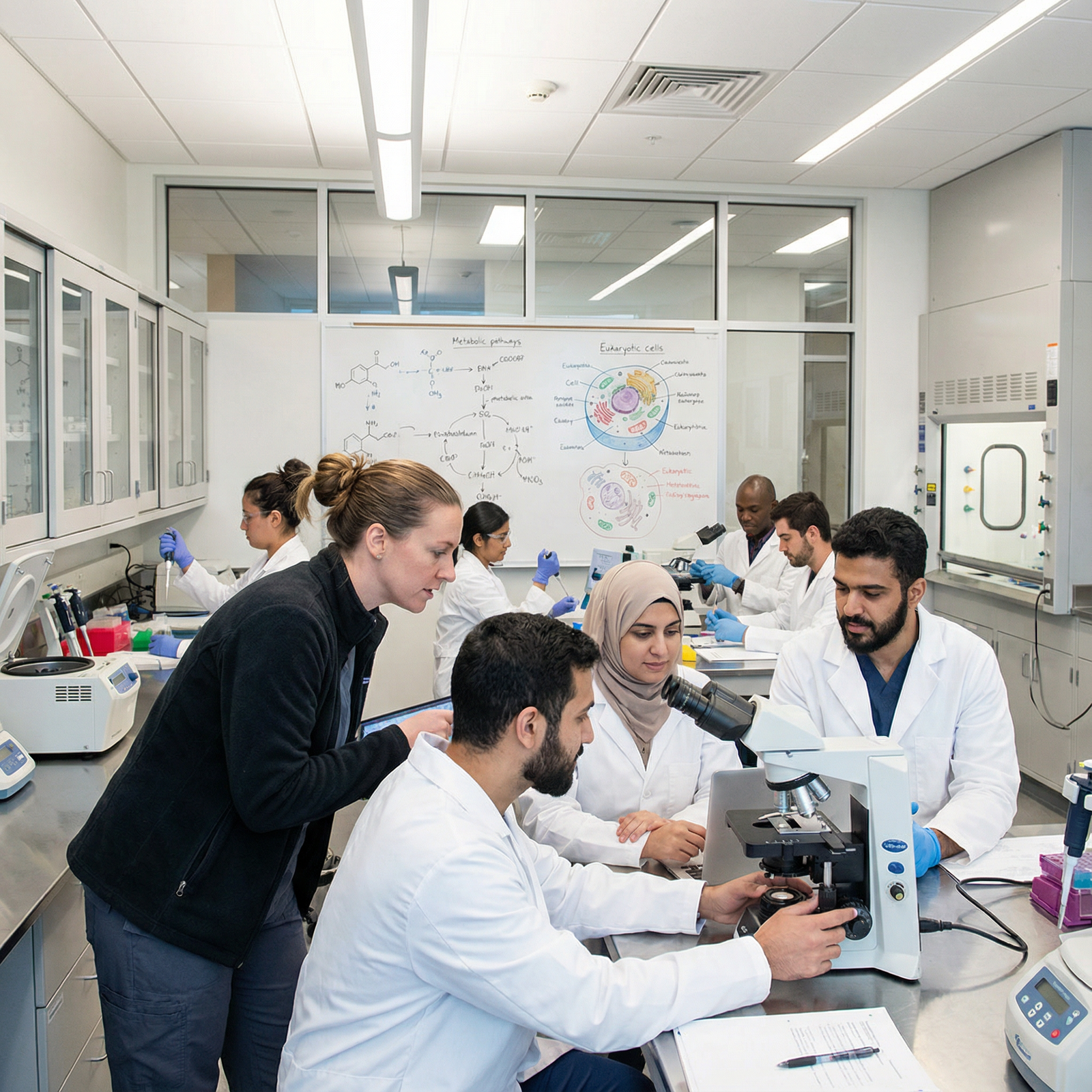
- Have built-in research placements or lab rotations
- Are affiliated with major research universities or medical centers
- Offer the chance to present posters or contribute to publications
Even a year of consistent research experience can strengthen your application and help you speak concretely about scientific inquiry during interviews.
Clinical Exposure and Volunteering
Ask programs:
- Do you help students find hospital volunteering, clinic roles, or shadowing opportunities?
- Are there structured partnerships with local health systems or free clinics?
- Does the program track and support students’ clinical hours?
You should aim to build meaningful, longitudinal clinical experiences, not just one-off shadowing days.
Mentorship and Letters of Recommendation
Strong mentorship can be one of the most valuable outcomes of a post-bacc:
- Will you have a dedicated premed advisor who knows your file and goals?
- Is there a committee letter or composite letter available through the program?
- Do faculty teaching your courses regularly write letters for post-bacc students?
Actionable Tip:
Before enrolling, ask to speak with a current student or recent graduate about how accessible faculty and advisors truly are. Their perspective often reveals more than the official brochure.
6. Admissions Requirements and Competitiveness of Programs
Not all post-baccalaureate programs are open-enrollment; many are competitive and require a thoughtful application.
Typical Admissions Components
Most structured programs require:
- Official transcripts from all prior colleges
- Minimum GPA (overall or science) thresholds
- Letters of recommendation (professors, supervisors)
- A personal statement explaining your interest in medicine and need for a post-bacc
- Sometimes: standardized test scores (SAT, ACT, GRE, or MCAT)
Study each program’s eligibility criteria carefully to ensure you’re a good match and to avoid wasting application fees.
Assessing Fit and Competitiveness
When looking at more competitive programs:
- Check the published average GPA of admitted post-bacc students
- Ask what percentage of applicants are accepted
- Understand whether the program primarily serves career changers or record enhancers, and where you fit
Actionable Tip:
When possible, attend virtual information sessions or open houses. These often provide application tips and allow you to ask targeted questions about what the program values in applicants.
7. Networking, Community, and Professional Identity Formation
A key—but often overlooked—benefit of post-baccalaureate programs is the peer and professional network you build.
Learning with Like-Minded Peers
Being surrounded by others who are similarly committed to medicine can:
- Provide emotional support during a demanding transition
- Offer study partners and accountability
- Expose you to a range of backgrounds and paths into medicine
Cohort-based programs sometimes foster long-term professional relationships that extend into residency and beyond.
Connections to Medical Schools and Admissions Advice
Some post-baccs are housed within or closely affiliated with medical schools. These programs may offer:
- Guest lectures by admissions committee members and faculty
- Application workshops and personal statement feedback
- Mock interviews (traditional and MMI-style)
- Direct linkages or guaranteed interviews for high-performing students
While no program can genuinely “guarantee” admission, structured advising and insight from admissions-connected faculty can sharpen your strategy.
8. Curriculum Design and Academic Rigor
A strong post-baccalaureate program will offer a well-designed curriculum that aligns with both MCAT content and the skills needed for success in medical school.
Course Offerings and Sequencing
Look closely at:
- Whether core prerequisites and advanced sciences are available on a timeline that fits your goals
- How the curriculum prepares you for the MCAT (biochemistry, psychology/sociology, statistics, critical reasoning)
- Whether there are electives in areas like public health, ethics, health policy, or humanities that can enrich your perspective
Emphasis on Skills Beyond Content Knowledge
Medical schools increasingly value competencies such as:
- Critical thinking and scientific reasoning
- Communication and teamwork
- Cultural humility and awareness of healthcare disparities
- Professionalism and reliability
Programs that integrate discussions of ethics, doctor–patient communication, and healthcare systems into their courses and seminars will better prepare you for both medical school and interviews.
9. Outcomes, Alumni Success, and Program Reputation
Before investing in any post-baccalaureate program, you should research outcomes and track record.
Key Metrics to Review
Ask programs for:
- Percentage of graduates accepted to medical schools (MD, DO, other health professions)
- Average time from program completion to matriculation
- Typical range of schools where alumni enroll
- Support provided for reapplicants if students aren’t accepted on the first cycle
Using Testimonials and Unfiltered Feedback
Seek:
- Testimonials from alumni on program websites
- Independent online forums or reviews (with caution and critical thinking)
- Conversations with recent graduates about their medical school admissions journey
Actionable Tip:
Ask a program: “If I complete this program with strong grades and an MCAT aligned with your averages, how confident are you that I will be a competitive medical school applicant? What additional steps would you recommend?”
Frequently Asked Questions About Post-Baccalaureate Programs
1. How long do post-baccalaureate premedical programs usually take?
Most structured post-baccalaureate programs take 12–24 months to complete:
- Career changer programs: Often 1.5–2 years, especially if you are completing all prerequisites from scratch.
- Academic record enhancer programs: Can sometimes be completed in 1 year full-time, though 1.5–2 years may allow for a stronger record and additional experiences.
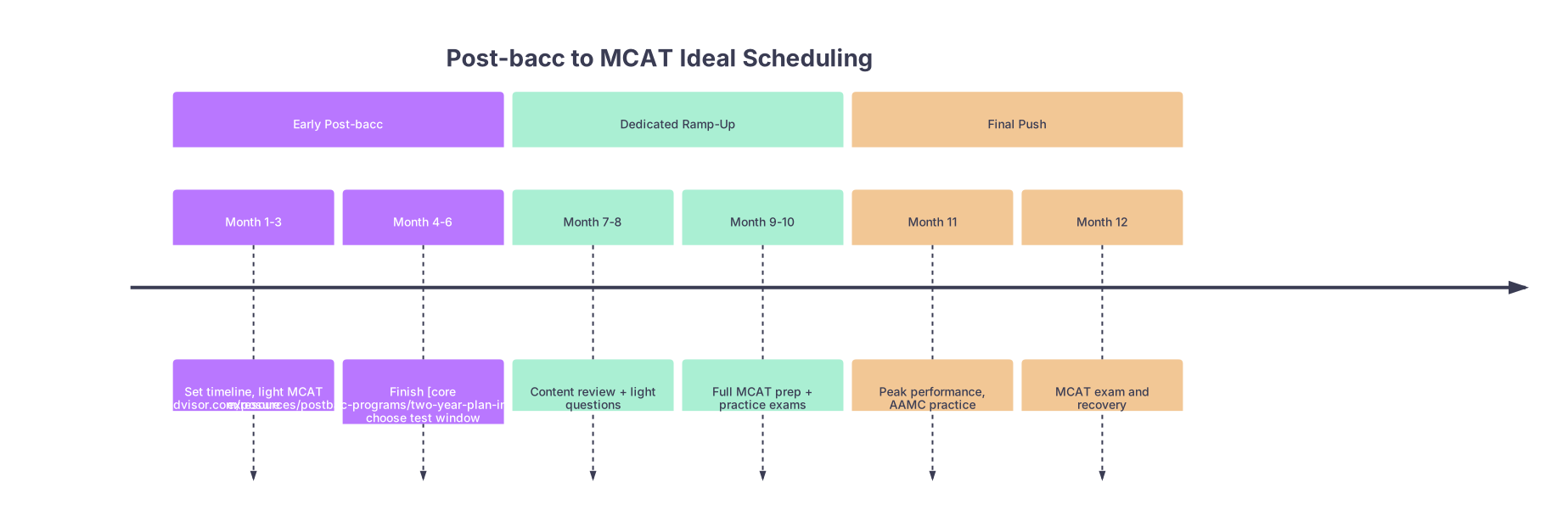
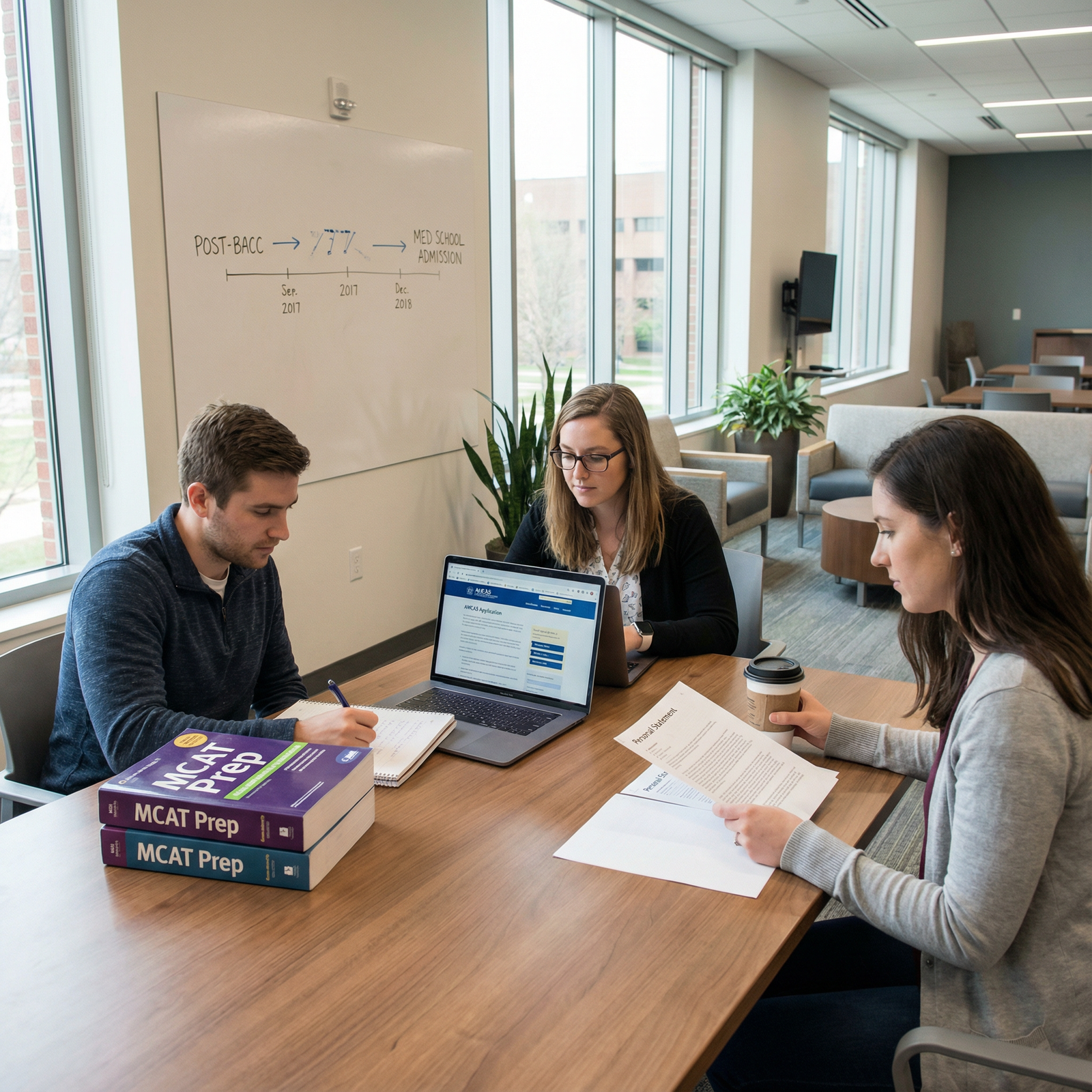
Remember to factor in the application timeline: you typically apply to medical school in late spring or early summer one year before you plan to start. That means your post-bacc coursework and MCAT should be strategically scheduled so your strongest work is reflected on your primary application.
2. Can I apply to medical school while I am still in a post-baccalaureate program?
Yes, many students apply during their post-bacc year, with the expectation that the program will be completed before matriculation. However, timing matters:
- If you are a career changer and just starting prerequisites, you’ll usually need to finish most core sciences and take the MCAT before applying.
- If you’re an academic enhancer, it can be beneficial to have at least one semester of strong post-bacc grades (and ideally your MCAT score) in hand when you apply.
Some applicants choose to wait and apply after completing the program so that all grades and experiences strengthen their application. This can improve competitiveness but adds a year to your timeline.
3. Do post-baccalaureate programs guarantee admission to medical school?
No legitimate program can guarantee admission to medical school. However, some offer:
- Linkage agreements that provide a conditional path to a specific medical school if you meet defined criteria (GPA, MCAT, professionalism).
- Guaranteed interviews at affiliated schools for students who meet performance thresholds.
Even with these advantages, you must still:
- Earn strong grades and MCAT scores
- Demonstrate professionalism and maturity
- Build robust clinical, service, and (where appropriate) research experiences
- Present a compelling narrative in your personal statement and interviews
Think of a post-bacc as a launch pad, not a guarantee.
4. Are online post-baccalaureate programs viewed differently by medical schools?
High-quality online coursework from accredited institutions can be acceptable, but policies vary by medical school, especially for:
- Laboratory courses completed remotely
- Upper-level science coursework delivered fully online
If you are considering an online-heavy program:
- Check individual medical schools’ policies on online prerequisites.
- Aim to supplement with in-person clinical experiences and, when possible, some in-person labs or coursework.
- Ensure that the program still offers robust advising, community, and opportunities for letters of recommendation.
5. How can I choose the right post-baccalaureate program for my specific situation?
To find the best-fit program:
- Clarify your primary need:
- Missing prerequisites → Career changer/combined program
- Low GPA but completed prerequisites → Academic enhancer
- Assess your constraints:
- Must stay in a particular region? Need part-time? Need online flexibility?
- Compare key features:
- Curriculum and schedule
- Linkages and medical school acceptance rates
- Cost and financial aid
- Clinical and research opportunities
- Advising and mentorship model
- Gather direct information:
- Attend info sessions
- Speak with current students and alumni
- Ask programs for detailed outcomes data
By aligning your academic background, financial situation, and career goals with a program’s strengths, you can choose a post-baccalaureate pathway that truly advances your journey in medicine.
A thoughtfully chosen post-baccalaureate program can transform your candidacy, sharpen your academic foundation, and give you clarity about your path in healthcare. If you approach this decision with honest self-assessment, strategic planning, and a commitment to growth, a post-bacc can be a powerful step toward medical school and a fulfilling career as a physician.