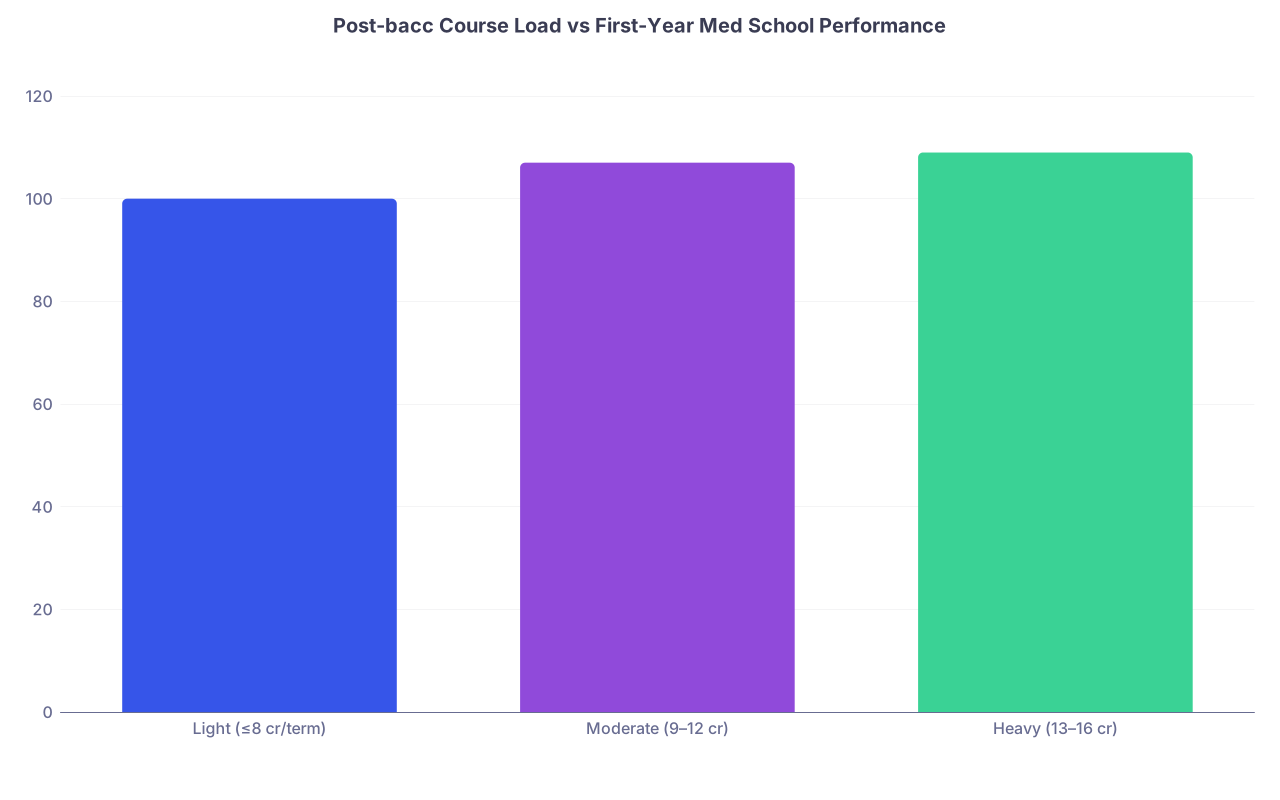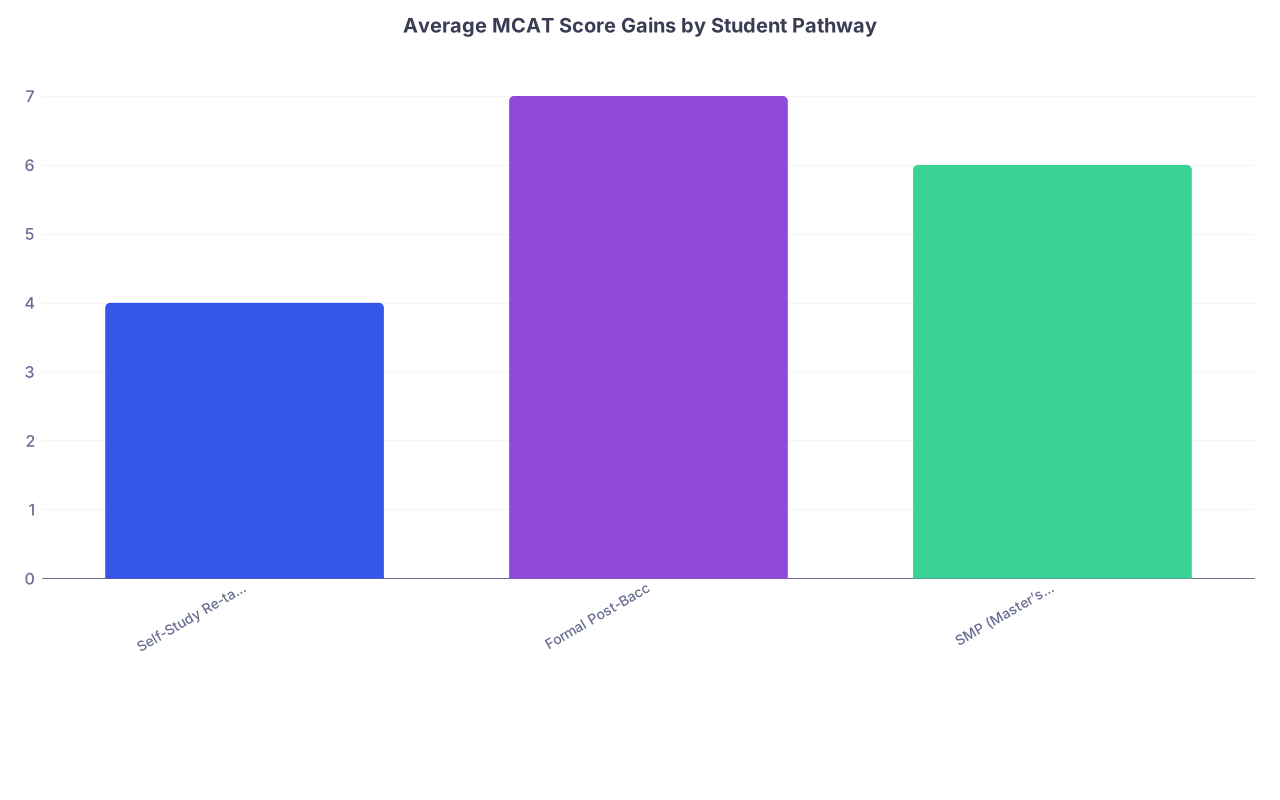
Here's what nobody tells you about summer post-bacc programs: most students who enroll in them are doing it wrong. They think they're being proactive. They think cramming 8 credits of biology into eight weeks of summer will make them look more competitive. Instead, they torpedo their own application cycle, lose a year, and wonder what went wrong.
I sat across from a program director last year who told me straight up: "Every July, I get applications from students who just finished a summer post-bacc, and I can smell the panic in their personal statement." That's the reality. A summer post-bacc is a scalpel, not a sledgehammer. Used correctly, it can vault you into medical school. Used the way most applicants use it, it buries you.
Let me show you how the people who actually get into med school do it.
This article is for educational purposes only. It is not financial advice, not legal advice, and not tax advice. Figures vary by individual circumstances, so consult a qualified professional before acting.
The Summer Post-Bacc Trap: Why Timing is Everything
The biggest misconception floating around premed forums is that a summer post-bacc is a "gap year filler." Wrong. A gap year filler is when you spend a year doing scribing, research, or traveling, hoping admissions committees will see your time as "meaningful." A summer post-bacc is something entirely different. It's a targeted academic intervention with a specific purpose: to demonstrate that you can handle upper-division science coursework at an accelerated pace.
Program directors view summer post-baccs as high-risk, high-reward. Why? Because the pace is brutal. You're compressing 16 weeks of material into 8. If you can survive that and earn an A in organic chemistry or biochemistry, you've just proven something powerful: you can handle the intensity of medical school coursework. That's the pitch. But here's the trap that snares thousands of applicants every year.
The harsh reality is rolling admissions. Medical school admissions don't work on a deadline. They work on a queue. The first batch of verified applications gets reviewed first. The first interviews go out in August and September. By October, most interview slots at your target schools are already filled. If you finish a summer post-bacc in August and submit your AMCAS primary in September, you're not applying to that cycle. You're applying to a cycle that has already started without you.
The insider move is this: frame the summer not as a delay, but as a pre-medical boot camp. You're not "filling time." You're proving academic stamina before the stakes get real. That framing matters, because it shapes how you write about it, how you letter of recommenders talk about it, and how admissions committees interpret it.
The Rolling Admissions Velocity: Why You Can't Wait
Let's talk about the AMCAS verification lag, because this is where most students' plans fall apart.
When you submit your AMCAS primary application, it doesn't go straight to medical schools. It goes into a verification queue. A real human being at AAMC sits down and manually checks every transcript, every grade, every course classification. This process takes 4 to 6 weeks. Sometimes longer during peak season.
Now, do the math. If you start your summer post-bacc in June and finish in late July or early August, when can you submit? August at the earliest. Then add 4 to 6 weeks for verification. Your file doesn't reach admissions committees until late September or October. By then, the early interview invites have already gone out. The data is clear on this: the majority of interview invites go out in June, July, and August. Submit in September, and you're already behind.
Here's the paradox that ruins summer post-bacc students every year: you're taking classes to boost your GPA, but by delaying your application, you make that GPA boost irrelevant for the current cycle. You're competing against applicants with lower GPAs who submitted in June. They get interviews. You wait.
The strategy is brutally simple. You must finish your post-bacc before you submit your primary application. That means either taking spring and early summer classes, or planning a schedule that ends in May. If your post-bacc runs June through August, you are not applying this cycle. You are applying next cycle. Make peace with it now, or change your plan.
Course Selection: The 'High-Yield' Secret
Now let's talk about what to actually take, because this is where premeds make another critical mistake.
Don't take bird courses. I cannot stress this enough. Admissions committees have been doing this for decades. They know which classes are GPA boosters. They know which science electives are easy A's. When they see "Intro to Forensic Science" or "Marine Biology for Non-Majors" on your transcript after a summer of "post-bacc work," they see a red flag. Not a green one.
You want to take the hard classes. The ones with grade deflation. The ones where 40% of the class gets a C or below. If you can earn an A in biochemistry at a school known for grade deflation, you have just sent a signal louder than any GPA number: you can handle the academic brutality of medical school.
Here's another insider truth: if you failed a class during your undergraduate career, retake it at a university with a reputation for academic rigor. Not your state school where the curve ends at a B+. Take it somewhere that actually grades hard. When admissions committees see you retook organic chemistry at a top-tier public university and earned an A, they're not just looking at the grade. They're validating your grade against the school's reputation. A retake at a rigorous school is worth more than a retake at your alma mater.
The "W" factor is real, and you need to understand it. If you're taking a summer class and you're tanking, withdraw. Don't fail. A W is neutral. An F is a disaster. An F in a summer post-bacc tells admissions committees you can't handle the pace, which is exactly the opposite of what you're trying to prove. Monitor your grades weekly. Talk to your professor. If you're below a C by week three, withdraw strategically. This isn't quitting. This is damage control.
If your GPA is low, focus on the specific science classes that dragged it down. Retake the C+ in genetics. Retake the B- in physics. Don't take random electives to "show breadth." Show depth. Show you conquered the classes that beat you.

The Narrative Pivot: Framing Your Timeline
Let's say you've done it right. You've taken your summer post-bacc classes, finished by May, submitted your AMCAS in early June, and you're verified by July. Now you have to write about it.
The personal statement question is coming: "Why did you take classes during the summer?" And here's where most students sabotage themselves with weak, defensive language. "I wanted to improve my GPA." "I had some free time." "I needed to strengthen my application." All of these are true. All of them are also flat, boring, and forgettable.
The pivot is this: don't talk about your GPA. Talk about your readiness. Frame the summer classes as proof that you understand the demands of medical school and chose to test yourself before applying. "I enrolled in a rigorous summer post-bacc because I wanted to demonstrate, before committing to the application cycle, that I could sustain upper-division science coursework at an accelerated pace. The eight-week format mirrored the intensity I'd face in medical school, and earning an A in biochemistry while working part-time confirmed that I had the academic discipline to succeed."
See the difference? You're not apologizing. You're not explaining away a weak spot. You're showcasing a strategic decision that demonstrates maturity and self-awareness.
If you have a gap in your resume because of the post-bacc, frame it as a period of focused, intentional academic remediation. "Gap year" sounds passive. "Strategic academic preparation" sounds purposeful. Same activity. Different narrative.
The 'Insider' Checklist for Success
Here's the operational checklist. The stuff program directors actually want to see.
The Submission Date Rule. Work backwards from June 1st. If you want to be verified by June 1st, you must submit your AMCAS by April 15th. That means your post-bacc grades need to be in by mid-April. That means your classes need to end by early May. Plan accordingly.
The Course Load Warning. Summer classes are accelerated. Two classes is manageable if you have a strong science background. Three classes is a suicide mission that will destroy your MCAT prep and your mental health. Do not do it. I have watched students load up on three summer classes, burn out by week four, withdraw from one, fail another, and end up delaying their application by a full year. Don't be that student.
The Letter of Rec Strategy. This is a mistake I see constantly. Students take summer classes, earn A's, and then ask for letters using the school's generic form. Don't do that. Sit in the front row. Go to office hours. Email questions. Make sure your professor knows you're a premed. You need a letter that says "this student is ready for medical school," not "this student attended my class and earned an A." The specificity matters. The relationship matters.
The Backup Plan. If you're taking summer classes, you're already behind the curve on timing. Do not apply to reach schools as your primary targets. Apply to your target schools and your safety schools. The GPA boost from the post-bacc will help you at schools where you're a borderline candidate. It won't save you at schools that demand a 3.9 and a 520.

The Bottom Line
A summer post-bacc is not a delay tactic. It's a strategic tool. But tools only work if you use them correctly. The students who get into medical school after a summer post-bacc are the ones who finish before they submit, take the hard classes, write the right narrative, and plan their timeline backwards from verification dates.
The students who don't are the ones treating it like a summer vacation with extra homework.
Pick which one you want to be.
Key Takeaways
- A summer post-bacc is a strategic tool, not a delay tactic. You must finish the coursework before you submit your primary application.
- Avoid bird courses; admissions committees want to see you handle upper-level science rigor to prove you can survive med school.
- The AMCAS verification process is the enemy of the summer post-bacc student. Plan your submission date backwards from your desired verification date.
- Frame your summer classes as a demonstration of academic stamina and maturity, not as a gap year filler.