Here's the blunt version nobody gives you at the info session: a pass/fail retake can help, but it can also become an expensive little theater production that changes your transcript more than it changes anyone's opinion of you.
That's the real question. Not "Can I retake this?" Of course you can. The question is whether the retake actually moves the needle with the people reviewing your file, or whether it just eats a semester, drains your confidence, and leaves you with the same underlying problem dressed up in cleaner packaging.
Let me tell you what really happens in committee conversations. Program directors, faculty reviewers, and admissions readers do not get dazzled by the mere existence of a retake. They're looking for something more primitive and more important: trajectory. Did you struggle once, diagnose the reason, fix it, and then perform better in a way that looks durable? Or did you simply circle back to patch a visible hole and hope the patch itself would count as growth?
That distinction matters. A lot.
I've watched files get discussed where the retake itself earned maybe fifteen seconds of attention, while the next two semesters earned five full minutes. Why? Because the retake changed the record, but the later work changed the story. And stories drive decisions.
So no, pass/fail retakes are not useless. That would be too simplistic. In the right scenario, they are absolutely worth doing, especially when they repair a prerequisite problem and are followed immediately by stronger science performance. But they are not magic. They do not automatically redeem a bad first attempt. They do not erase a pattern. And if you use them as a substitute for actual remediation, reviewers can smell that from across the room.
This article is for educational purposes only. It is not financial advice, not legal advice, and not tax advice. Figures vary by individual circumstances, consult a qualified professional before acting.
The Myth: "Retaking = Automatic Redemption"
The first myth is the dumbest one, and it's still everywhere: retaking a course automatically proves you can handle the material.
No. It proves you came back. That's not the same thing.
A retake only "proves" competence if the surrounding context supports that conclusion. If you failed general chemistry, retook it pass/fail, and then limped through organic chemistry and biochemistry afterward, nobody serious is calling that redemption. They're calling it partial recovery at best. Reviewers don't infer mastery from the act of repeating a course. They infer mastery from what happens after repetition. Can you sustain it? Can you build on it? Did the retake unlock stronger performance, or did it just stop the bleeding?
The second myth is that a later pass somehow erases the first attempt. Officially, maybe the record looks cleaner in a narrow administrative sense. Psychologically? Not even close. Faculty read patterns. A first failure still tells them something about time-to-competence, stress response, academic durability, and whether your study system was broken. A later pass may soften the concern, but it rarely deletes it.
This is where applicants get trapped by transcript logic. They think the file is being read like software: bad input replaced by better input, error resolved. Real reviewers don't read that way. They read like clinicians. Pattern recognition. Sequence. Response to adversity. Recovery speed. Consistency over time. If your first attempt was poor and your second attempt is merely "pass," what they often see is this: it took two tries to get to minimum acceptable completion. That's better than failing forever, obviously. But let's not pretend it sends a heroic signal.
The third myth is that pass/fail retakes are always neutral. They aren't. Quietly, there is bias.
Course coordinators remember students. Faculty talk. Post-bacc advisors definitely remember patterns. Even when the formal grade mode is pass/fail, people still know whether your path through that course looked smooth, shaky, or rescued at the last minute. And when the numerical data disappear, some reviewers become more charitable while others become more suspicious. If the score isn't visible, they'll lean harder on context. Sometimes that helps you. Sometimes it absolutely does not.

The Reality: What Retakes Actually Change (and What They Don't)
Here's the insider truth: pass/fail retakes can change the record, but they often do very little by themselves to change the narrative.
That distinction is everything.
A record change is administrative. It tells a program that you satisfied a requirement, remediated a failed prerequisite, or completed something you previously didn't. That matters. Sometimes it matters a lot. If a school or program simply needs a prerequisite closed out before you can advance, the retake has practical value. No drama there.
A narrative change is different. That's the part reviewers care about more than applicants realize. Narrative signals are things like reliability, work ethic, maturity, study strategy, judgment, and whether your improvement looks repeatable. A pass/fail retake, standing alone, is weak narrative evidence because it gives limited granularity. You passed. Fine. But how solidly? With what margin? Under what conditions? Did you actually master the material, or just get across the line the second time?
That's why program directors weigh retakes against the broader academic arc. They're looking at prerequisite sequencing. Science GPA stability. Whether your later coursework got stronger or flatter. Whether your upper-division sciences suggest true academic repair. A pass/fail retake in intro biology means more if it's followed by strong physiology, cell biology, or biochemistry. It means much less if the rest of the science record remains fragile.
In review meetings, I've seen this exact split. One file had a failed physics course, then a pass/fail retake, then A-level work in biomechanics and physiology. That file read as repaired. Another had a failed chemistry course, then a pass/fail retake, then a string of middling grades and withdrawals. Same retake category on paper. Completely different interpretation. One said, "I fixed the engine." The other said, "I got the car started once."
Faculty also have mixed feelings about pass/fail grading itself. On one hand, it can be merciful. It reduces the permanent penalty of an ugly semester caused by illness, family disruption, mental overload, or life circumstances that are real and not rare. Good reviewers understand that.
On the other hand, pass/fail removes data. And when data disappear, suspicion sometimes fills the gap. If you retake a core science pass/fail, some faculty will ask themselves whether a letter grade would have exposed continued weakness. They won't always say this out loud. But they think it.
That's why the best outcomes happen when the retake is not the final word. It needs a sequel. The retake should be followed by cleaner, stronger, harder evidence, upper-level science, stable term-by-term performance, better MCAT readiness, stronger lab execution, fewer stumbles. Then the pass/fail decision starts to make sense in context. It becomes one step in a visible recovery, not a suspicious standalone move.
The dirty little secret is that committees reward proof, not symbolism. A retake is symbolism until later performance turns it into proof.
When Retakes Help Most: High-Leverage Scenarios (Insider Criteria)
There are absolutely situations where a pass/fail retake is smart. High ROI. Worth the time. But only if you meet a tougher standard than most advisors tell you.
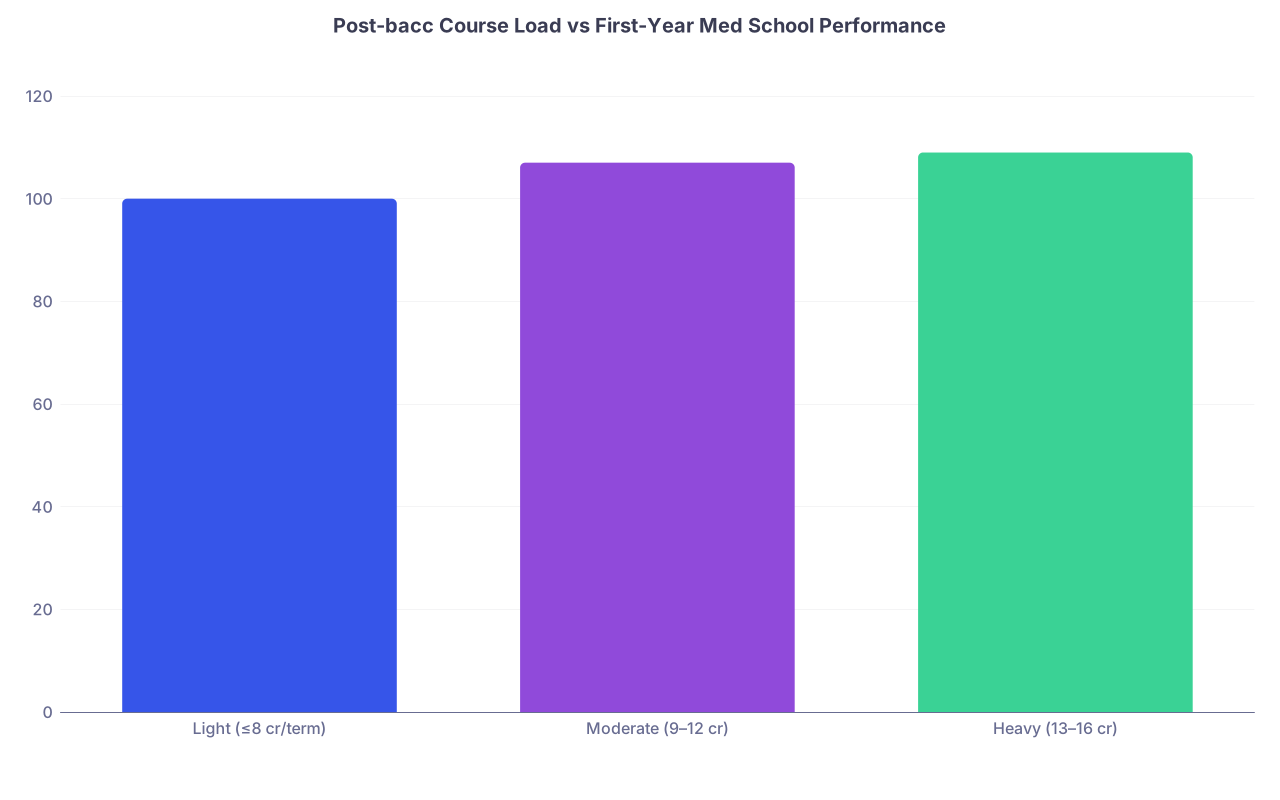
First: the original poor performance came from something specific and correctable. I'm talking about a documented illness, family crisis, schedule mismatch, untreated sleep issue, commute disaster, absurd work hours, or the classic post-bacc mistake, taking too many lab-heavy sciences at once while pretending grit would solve physics. That kind of failure is salvageable because the cause is legible. If you can show what went wrong and what changed, reviewers can believe the recovery.
Second: the retake sits right before stronger performance. This is the best-case setup. You retake foundational chemistry, then do well in biochemistry. You retake anatomy, then perform strongly in physiology or an upper-level lab. You retake statistics, then handle research methods competently. That sequencing matters because it shows skill acquisition, not just transcript cleanup. Reviewers love evidence that the repair generalized.
Third: the course really is strategically central. Some retakes are vanity projects. Others are load-bearing walls. If you're retaking an exact prerequisite that directly affects future coursework or a program requirement, the value is obvious. If you're retaking a peripheral course mostly because the old grade annoys you, that's a different story. Don't spend real money solving an emotional problem and call it strategy.
Fourth: you convert the retake into process evidence. This is what attendings and faculty quietly respect because it looks like professional behavior. You start using office hours consistently. You build a weekly study grid. You work with a tutor before, not after, you're drowning. You switch from passive rereading to active recall and question-based review. You track error patterns. You stop studying like a martyr and start studying like an adult with a system.
That's the part applicants skip in their storytelling, and it's exactly the part that makes the retake credible.
If you tell me, "I retook the class and passed," I shrug. If you tell me, "I realized my first attempt failed because I was memorizing without retrieval practice, missing office hours, and stacking too many high-volume commitments; I rebuilt my study schedule, met weekly with the instructor, and then earned strong grades in the next two science courses," now I'm listening. Not because the retake exists. Because the mechanism of change exists.
Here's how you know it's probably a waste: you can't explain why you struggled the first time, your study habits are basically unchanged, the retake won't be followed by stronger evidence, and you're mostly hoping the new line on the transcript will create a feeling of redemption. That's not planning. That's academic superstition.
The Hidden Costs: Money, Time, Confidence, and Reviewer Fatigue
Now for the part almost nobody says out loud: even a justified retake comes with costs, and those costs are not just tuition.
The first is reviewer fatigue. Committees are busy. File readers are tired. If your academic history requires extra decoding, that's a disadvantage unless the explanation is clean and convincing. A pass/fail retake adds ambiguity. Sometimes that ambiguity is manageable. Sometimes it turns your file into work. And you do not want to be the applicant whose academic section feels like homework.
Then there's the time cost. This one is brutal because it compounds quietly. A retake semester can delay upper-division science classes, research momentum, shadowing consistency, clinical hours, committee letter timing, even MCAT prep rhythm. You think you're spending one term fixing one course. In reality, you may be shifting your whole readiness timeline.
I've seen students lose more from the delay than they gained from the retake itself. They cleaned up an old grade issue, yes, but gave up the chance to build a stronger, broader, more current portfolio. That trade can be worth it. But often it isn't.
Confidence takes a hit too. Retaking a course without changing your system creates a psychological trap. You start to believe the answer to difficulty is repetition instead of adaptation. Bad move. If your first attempt exposed weak note processing, poor exam review, bad scheduling, or chronic overload, then repeating the course with the same habits is just self-sabotage with registration fees attached.
And the financial opportunity cost is real. Sometimes the money used for a retake would produce a better return if spent on targeted tutoring, lighter work hours for a semester, better advising, or a different course sequence that actually builds the missing skill. Not every problem requires repeating the exact place where you broke down.
There's also a reputational risk people pretend doesn't exist. Frequent retakes create a vibe. Not a good one. At some point reviewers stop seeing resilience and start seeing avoidance, fragility, or inefficient learning. Fair or unfair, that's what happens. If the transcript suggests repeated do-overs without convincing forward strength, the internal question becomes: is this student building competence, or just trying to sand down visible blemishes?

That's the kind of question you never want your file to provoke.
How to Tell the Story So It Doesn't Look Like a Shortcut
If you do retake, your explanation has to be disciplined. Not emotional. Not defensive. Definitely not drenched in excuses.
The winning structure is simple: what happened, what changed, what resulted, why that matters going forward.
Start with the first attempt context in one or two sentences. Keep it factual. "I took chemistry while managing X and using a study approach that was clearly inadequate for the pace of the course." Good. Clean. Adult. No melodrama.
Then get to the remediation actions fast. This is the heart of the story. "Before the retake, I cut back work hours, met weekly with the instructor, adopted active recall and timed problem sets, and used tutoring to correct specific weaknesses in stoichiometry and exam pacing." That sounds like someone who learned. Specificity creates credibility.
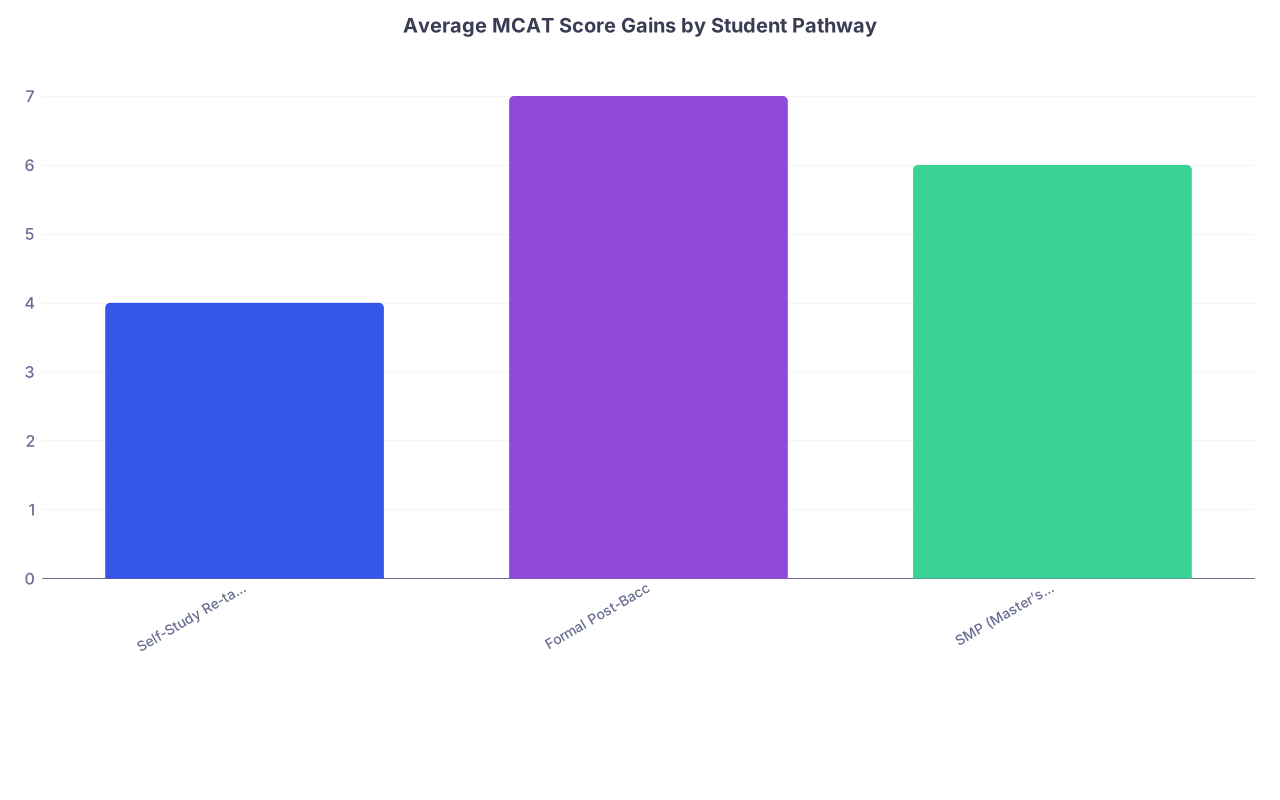
Then show results beyond the retake itself. This is where most applicants fumble. They stop at "I passed." Don't stop there. Tie the retake to stronger follow-on grades, a more stable science load, improved MCAT section performance, cleaner lab work, or some other visible proof that the repair held under pressure.
Finally, say what you learned for future coursework. Not something cheesy about perseverance. Something operational. "I learned that I cannot rely on passive review in dense science courses and that I perform best when I build weekly cumulative testing into my schedule." That's persuasive because it sounds transferable.
What you're doing, really, is showing the correction mechanism. The first grade was a warning. Fine. Warnings happen. What matters is whether you built a system that makes the warning less predictive going forward. That's when a pass/fail retake stops looking like a shortcut and starts looking like a controlled recovery.
Actionable Bottom Line: Should You Retake? A Risk-Adjusted Answer
Here's my position.
Retake a course pass/fail only if it closes a real prerequisite problem and you can create narrative proof afterward. Not vague hope. Proof. Stronger follow-on science work. Better sequence performance. A visible academic stabilizing trend.
Do not retake if you're likely to repeat the same study failure. That's the dumbest version of this whole process. If nothing has changed, schedule, habits, support, mental bandwidth, academic strategy, the retake is just a replay.
And don't retake simply because the old grade offends you. Ego is expensive.
Sometimes the smarter alternative is targeted tutoring plus stronger future coursework. Sometimes it's taking a related course that builds the missing foundation. Sometimes it's adjusting your load and proving consistency next semester instead of chasing transcript cosmetics this semester.
Real talk: the best move is often not the retake. It's the next semester done right. Cleaner. Stronger. More stable. That's what convinces people.
Reflection: The Real Metric Isn't the Pass, It's the Pattern
The pass is not the point. The pattern is.
That's what faculty see. That's what program directors talk about. Not whether you found a way to replace one ugly line with a more acceptable one, but whether your academic life now looks reliable, repeatable, and mature.
A pass/fail retake can be part of that pattern. It can absolutely help. But only when it sits inside a larger story of repair, better habits, better sequencing, stronger science performance, less chaos, more control.
So if you're deciding whether to retake, stop asking whether the transcript will look nicer. Ask whether the retake is part of a genuine correction. Ask whether it leads directly to stronger evidence. Ask whether you're fixing the root cause or just polishing the symptom.
That's the real metric.
If you retake, retake with a plan. If you don't, build the plan anyway. Because in the end, reviewers trust growth they can see. Not redemption you merely claim.