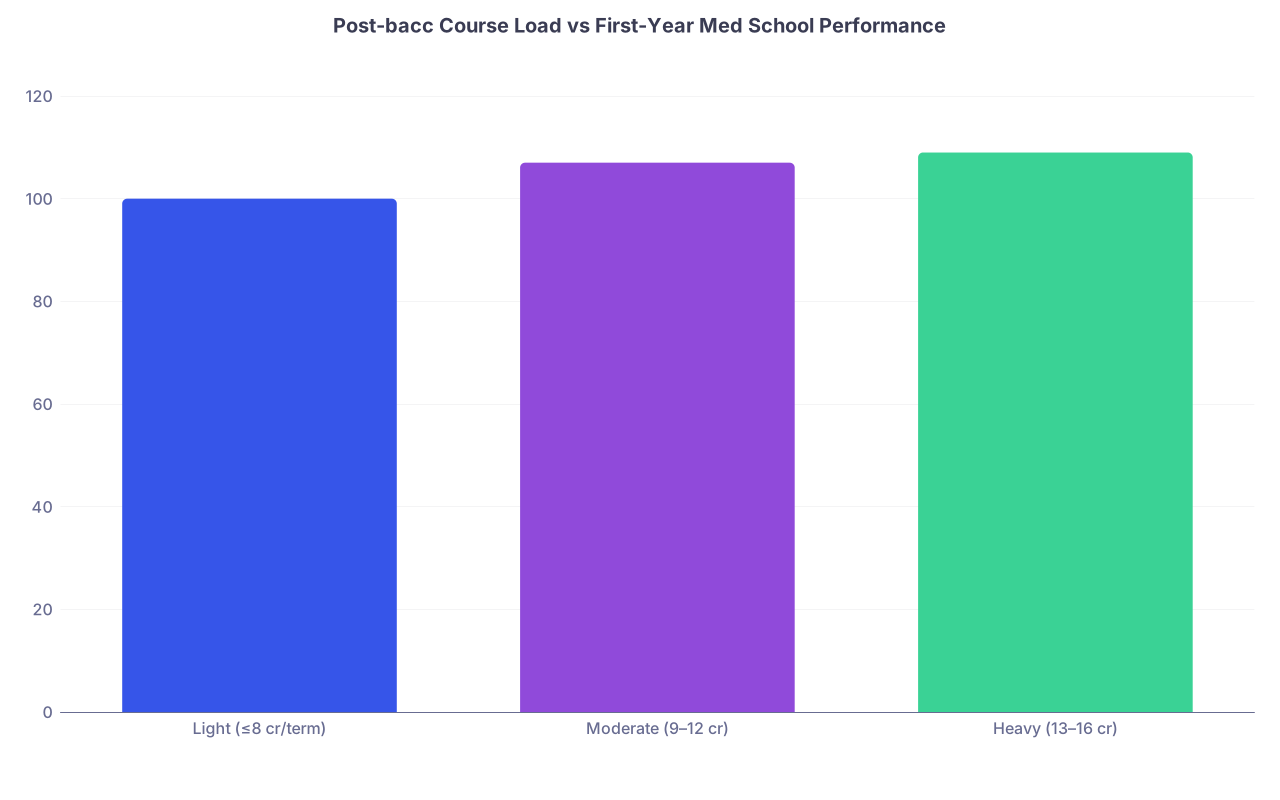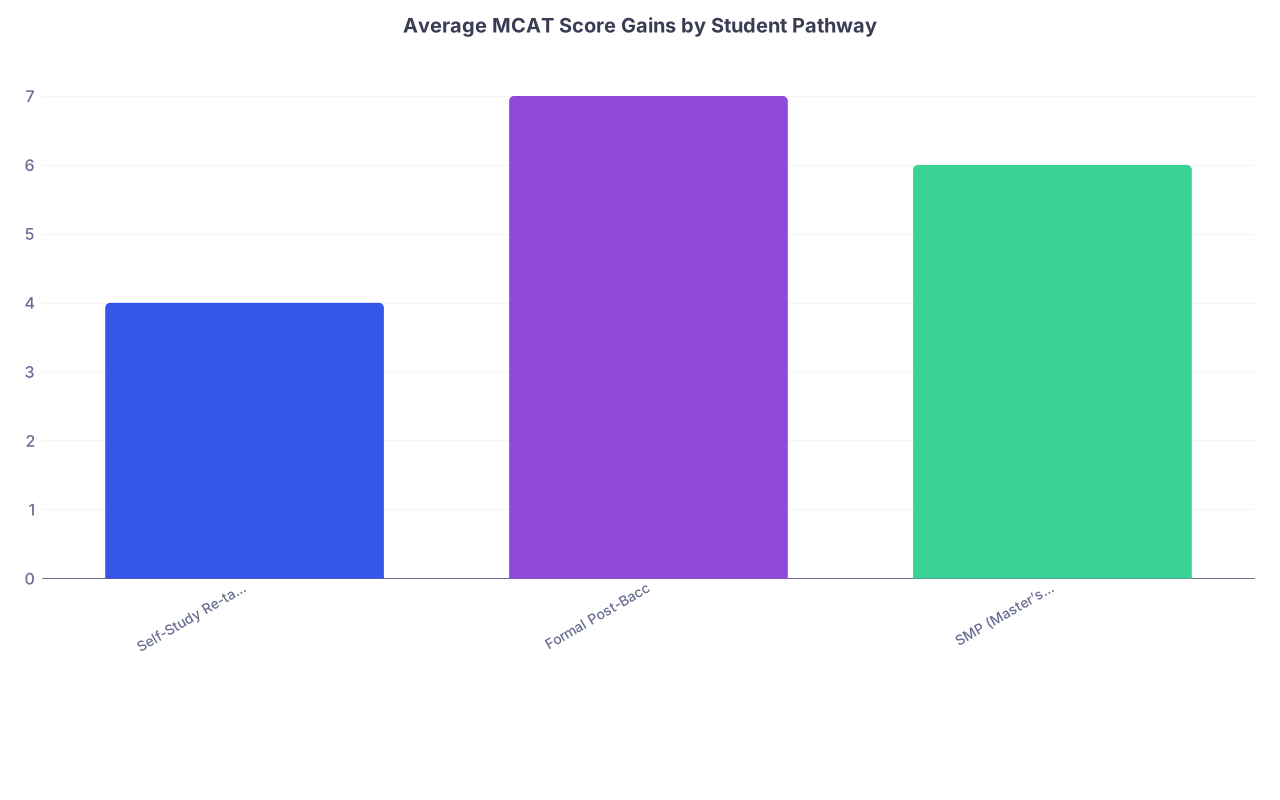
The MCAT is not a box you check midway through a post-bacc. It is the capstone of the story you are building for admissions committees. Time it wrong and you either force a gap year you did not plan or submit incomplete applications that sit in verification limbo while stronger candidates lock interview spots. Time it right and the score lands exactly when your primary application is ready to move.
Two routes dominate post-bacc life, and they dictate different testing windows. Career changers usually need full prerequisite sequences first; academic enhancers often already hold the core sciences and are polishing GPA. Either way, the golden rule stays the same: your coursework must finish far enough ahead of test day that the content has time to settle into long-term memory. Early planning is the only reliable way to avoid the "gap year penalty" that appears when scores come in lower than expected and you have already burned the current cycle.
What follows is the month-by-month map I give every post-bacc student who asks me when to sit the exam. Treat the dates as hard rails, not gentle suggestions.
The Strategic Foundation: Aligning MCAT Timing with Post-Bacc Goals
Career changers typically need 12-18 months of sequential science before they are ready. Academic enhancers can often compress that window. Both groups still obey the same sequence: finish the tested material, allow a short consolidation period, then test. Skip the consolidation and you will see it on CARS and the experimental passages.
I have watched students try to "just squeeze it in" during a brutal organic chemistry semester. The score almost always reflects the chaos. Plan the opposite. Your post-bacc transcript is the narrative; the MCAT is the final chapter that proves the plot holds. If that chapter is weak, you rewrite it, preferably before applications open, not after.
The timeline below assumes a traditional May-June AMCAS submission window. Texas TMDSAS applicants shift everything roughly one month later. Adjust only after you know which application service owns your primary list.
Months 1-4 (Jan-Apr): The Pre-Test Preparation Phase
At this point you should have finalized your spring course load and already audited every prerequisite. Gen Chem I/II, Orgo I/II, Bio I/II, Physics I/II, if any of those remain unfinished or graded lower than a B, the MCAT date moves. No debate.
Run a full diagnostic in early February if you are eyeing a June test. The number itself is less important than the pattern of misses. Content gaps that still exist after a year of post-bacc work are red flags; they mean the courses did not stick. Switch to intensive review of those weak systems immediately.
Build the study habits now that will carry you through the sprint later:
- Timed 95-minute blocks three times a week
- Active recall with Anki or equivalent spaced-repetition decks
- Weekly full-length practice only after content review is 70 % complete
Warning sign I see every spring: a student drowning in upper-level biochem while trying to start MCAT content review. Push the test date. Content mastery must solidify before the clock starts. Better a July exam with a clean score than a June disaster that forces a retake.
Months 5-7 (May-Jul): The Intensive Study Sprint
By mid-May you should have stopped adding new hard science courses if the target is late June or July. Light electives or research credits are fine; another heavy lab sequence is not. Your brain needs bandwidth for volume practice, not new lecture material.
Implement the full-length exam routine without mercy: one timed practice test every Saturday morning under exact conditions, no phone, same start time, same break structure. Score it the same day. Then spend Sunday night and Monday morning only on the incorrect answers. The value lives in the analysis, not the raw number. I have seen students raise 8-10 points simply by treating every miss as a mini-case study of why the logic failed.
Keep CARS and data-interpretation drills alive even on content-heavy weeks. Biological sciences knowledge without the ability to extract trends from a figure is useless on test day.
Burnout is the silent killer in this phase. Schedule mandatory rest days, full days, not "light review" days. Mental stamina is as trainable as intellectual stamina, and you will need both for the 7.5-hour exam. If your practice scores plateau for three consecutive weeks, cut volume by 20 % for seven days and reassess. Pushing harder rarely fixes a plateau; smarter recovery does.
The sweet spot sits between 25-30 focused hours per week. Beyond that, returns diminish and fatigue climbs. I have coached enough students through this window to know that "more hours" is usually a coping mechanism, not a strategy.
Months 8-10 (Aug-Oct): Test Date Execution & Immediate Next Steps
Take the official MCAT no later than mid-June if you are submitting AMCAS in early May or June. Score release takes 30-35 days. That window must close before secondaries flood your inbox. TMDSAS applicants can stretch to mid-July because their primary deadline sits later, but do not push past the first week of August.
Post-test protocol is non-negotiable: rest for 48-72 hours. Do not open the personal statement draft the evening you finish. Your brain is fried and the writing will show it. Use the score-release waiting period to polish activity descriptions and secure remaining letters. When the number finally arrives, you already have a clean application packet ready to transmit.
Decision node arrives the morning scores drop. If the total is within 2 points of your target school list median, proceed. If it is 4+ points below, decide that same day whether you have a realistic 8-10 week retake window or whether you will apply this cycle with the current score and a strong post-bacc GPA as counterweight. Indecision here is what creates the unplanned gap year.

The Year-Round Context: Managing Gaps and Retakes
One gap year is neutral, admissions committees see it constantly. Multiple unplanned gap years start to look like drift. If you must take one, fill it with the same activities that strengthen any application: longitudinal clinical hours, meaningful research, or a teaching role that demonstrates communication skill. Sitting at home "recovering" is the wrong move.
Strategic retaking requires a concrete reason. Schedule conflict, documented illness, or a clearly isolated skill gap (for example, CARS 123 while sciences sit at 128+) are valid. "I just feel I can do better" is not. Never retake without a written remediation plan and at least eight focused weeks.
When secondaries ask about multiple attempts, lead with growth language: what the first score revealed, the specific system you rebuilt, and the final mastery the later score proves. Adcoms respect the arc; they punish the excuse.
One alternative pathway I recommend for students whose undergraduate science GPA is already toxic: sit a baseline MCAT before the post-bacc even begins. Use that number as diagnostic only. It removes the pressure of treating the post-bacc score as both redemption and first attempt.
Key Timing Reminders
- Aim for late June testing if you are an AMCAS applicant so score reports are ready when primaries transmit.
- Finish the bulk of post-bacc science coursework several weeks before dedicated MCAT study begins; content needs integration time.
- One productive gap year is fine. Use the months after a sub-target score to stack clinical and research hours rather than idle.
You now have the full chronological map. The only remaining variable is execution. Mark the calendar, protect the study blocks, and treat every practice exam as dress rehearsal for the real performance. The students who follow this sequence walk into application season with a score that matches the transcript they just built. The ones who improvise usually explain gap years instead.