
This article is for educational purposes only. It is not financial advice, not legal advice, and not tax advice. Figures vary by individual circumstances, so consult a qualified professional before acting.
Direct Start: You're Preclinical (Research) but Admissions Wants a Clinical Narrative, So Build One
Here is the cold truth about residency selection committees: nobody cares that you optimized a Western blot protocol for sixteen weeks in a basement lab.
They don't care about your PCR yield, your mice breeding schedules, or the elegance of your Python script, unless you can explicitly connect that work to a living, breathing patient sitting on an exam table.
Residency screeners are looking for one thing: clinical readiness. They want to know if you can handle high-stakes uncertainty, communicate complex ideas to scared human beings, collaborate with nurses and attending physicians, and think like a doctor when a diagnosis goes off the rails.
When your entire research background is preclinical, bench science, animal models, structural biology, or pure bioinformatics, you face a distinct narrative mismatch. On paper, you look like a future PhD PI, not a PGY-1 who can manage a crashing patient at 2:00 AM on an inpatient ward.
Your job isn't to disown your lab time or pretend you were running a clinic while Pipetting buffer solutions. Your job is to reframe your research as clinical thinking in disguise.
Every wet lab experiment and computational model starts with an underlying human pathology. If you translate your methods, research questions, and failures into patient-oriented logic, you instantly flip a potential liability into a massive asset.
Here is your step-by-step blueprint:
- Pick 1-2 overarching clinical themes behind your lab work.
- Map your scientific steps onto a clear translational pathway.
- Package that work into two interview-ready stories that highlight clinical behavior over technical trivia.
Let's build it.
Step 1: Pick a Clinical Theme (Not a Lab Technique), Choose the "Patient Problem" Behind Your Study
Stop describing your research by your lab technique. When an interviewer asks, "Tell me about your research," and you answer, "I worked on mass spectrometry assays to quantify intracellular protein kinase concentrations," their eyes instantly glaze over. You sound like a technician, not a physician.
Instead, apply the Patient Problem Filter.
Ask yourself this question: If my research project disappeared from the earth tomorrow, what specific patient harm would go unchecked?
Are you trying to prevent surgical graft failure? Reduce antibiotic toxicity in pediatric kidneys? Shorten the time it takes to diagnose aggressive triple-negative breast cancer in rural EDs?
Once you isolate that core human problem, align your work with one of three safe clinical story angles:
- Diagnostics (Early Detection): Finding the signal in the noise before tissue damage becomes irreversible.
- Therapeutics (Targeted Interventions): Making treatments more precise, less toxic, or effective against drug-resistant disease.
- Systems & Implementation (Delivery of Care): Ensuring evidence-based biology actually survives contact with real-world clinical workflows.
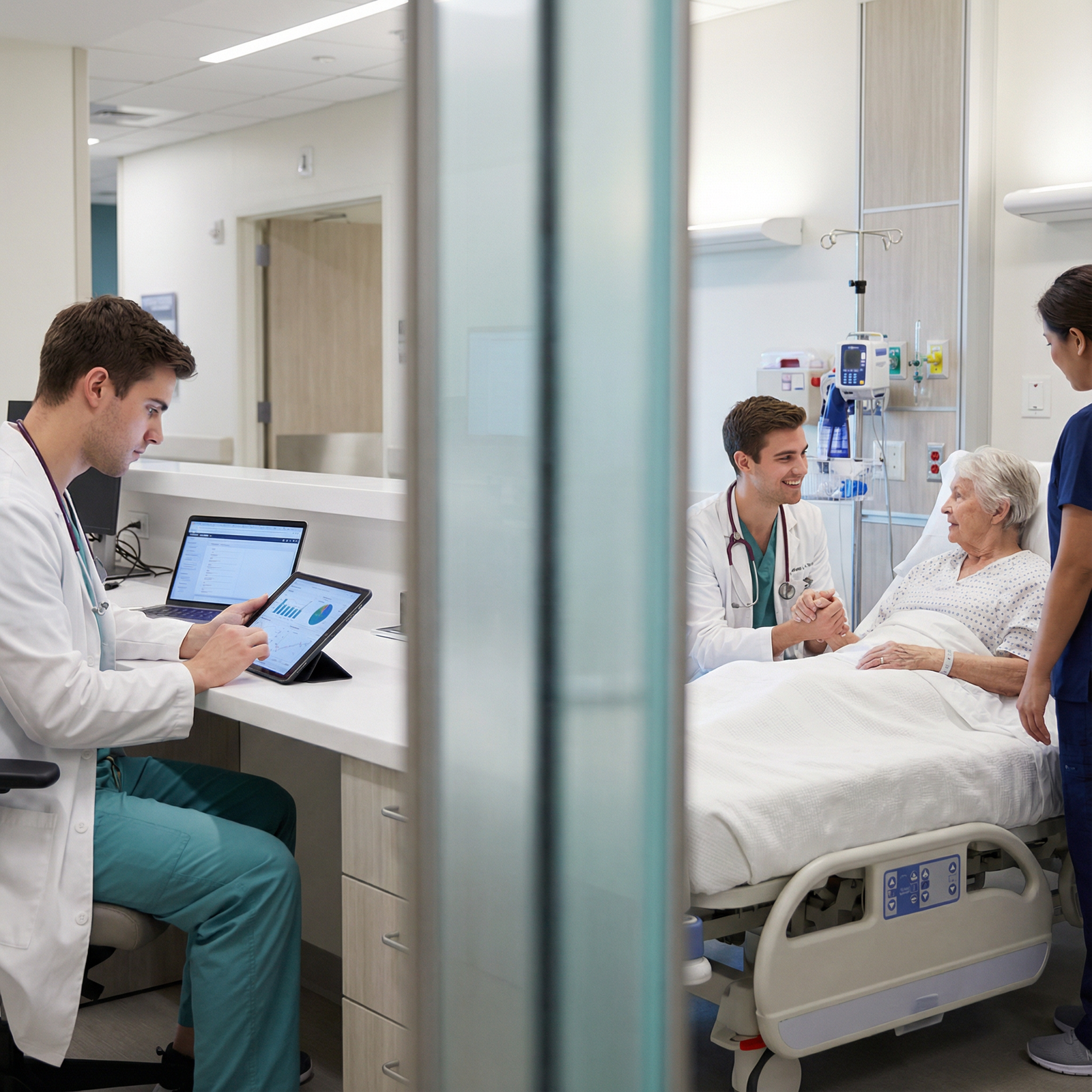
Now, condense this into a reusable 2-3 sentence Clinical Problem Statement that you will lean on across your personal statement, ERAS descriptions, and interview responses.
Formula: "In [Target Patient Group], we face a major clinical gap because [Specific Harm or Delay]. My research evaluated [Biological Mechanism/Model] to help clinicians better predict/treat [Clinical Outcome]."
Bad vs. Good Framing Examples:
- The Bench Trap (Bad): "I analyzed microRNA expression profiles in murine cardiovascular tissue following ischemic injury using quantitative RT-PCR."
- The Clinical Translator (Good): "Heart failure patients often suffer irreversible tissue scarring before standard blood markers pick up the damage. My research focused on identifying early microRNA signals in tissue models so we can eventually flag high-risk cardiac patients weeks before they present to the ED in fluid overload."
See the difference? The science is identical, but the second version shows you understand why the work matters to a medical residency program.
Step 2: Translate Methods Into Clinical Relevance (A→B→C, Not a Paper Summary)
When medical students talk about lab methods, they default to paper summaries: "First we did X assay, then we ran Y gel, and then we calculated Z p-value."
Residency committees don't need a materials and methods section. They need to see how you connect biological data to bedside decision-making.
To bridge this gap, abandon paper summaries and use a tight Translation Chain:
Structure your explanation around these five steps:
- The Biological Discovery: What molecular or cellular signal did you isolate?
- The Model Validation: What lab model (cell line, animal, computational cohort) did you use to test it, and why?
- The Measurable Clinical Proxy: What lab metric directly mimics a human clinical measurement (e.g., cell viability = tissue survival; biomarker surge = disease flare)?
- The Intervention Target: What drug target, diagnostic threshold, or treatment window did this reveal?
- The Bedside Horizon: What specific clinical trial, prospective cohort, or diagnostic tool does this justify next?
When talking about your results, use credible bridge language. Avoid overclaiming; nothing makes an attending physician roll their eyes faster than a third-year medical student claiming their cell culture experiment "cured Alzheimer's."
Use disciplined, precise phrases:
- "This mechanism suggests..."
- "Our data provides a biological rationale for..."
- "These metrics help inform future dosing strategies in..."
- "This model identifies potential biomarkers for early risk stratification..."
By anchoring your methods in clinical proxies and disciplined translational language, you prove that even when you're working with pipettes, you are thinking like a doctor.
Step 3: Use Real Clinical Behaviors to Fill the Narrative, Even Before Clerkships
Here is a secret from behind the admissions door: selection committees don't expect you to have mastered clinical medicine before your clinical rotations. What they are actually grading is your behavioral architecture.
They want evidence of core clinical habits:
- Scientific curiosity under pressure
- Methodological rigor (not cutting corners when nobody is looking)
- Clear communication with non-experts
- Intellectual humility when a hypothesis dies
- Absolute reliability in team settings
If you spent two years doing basic science before stepping foot on a hospital floor, you have already been practicing these exact behaviors, you just haven't labeled them correctly.
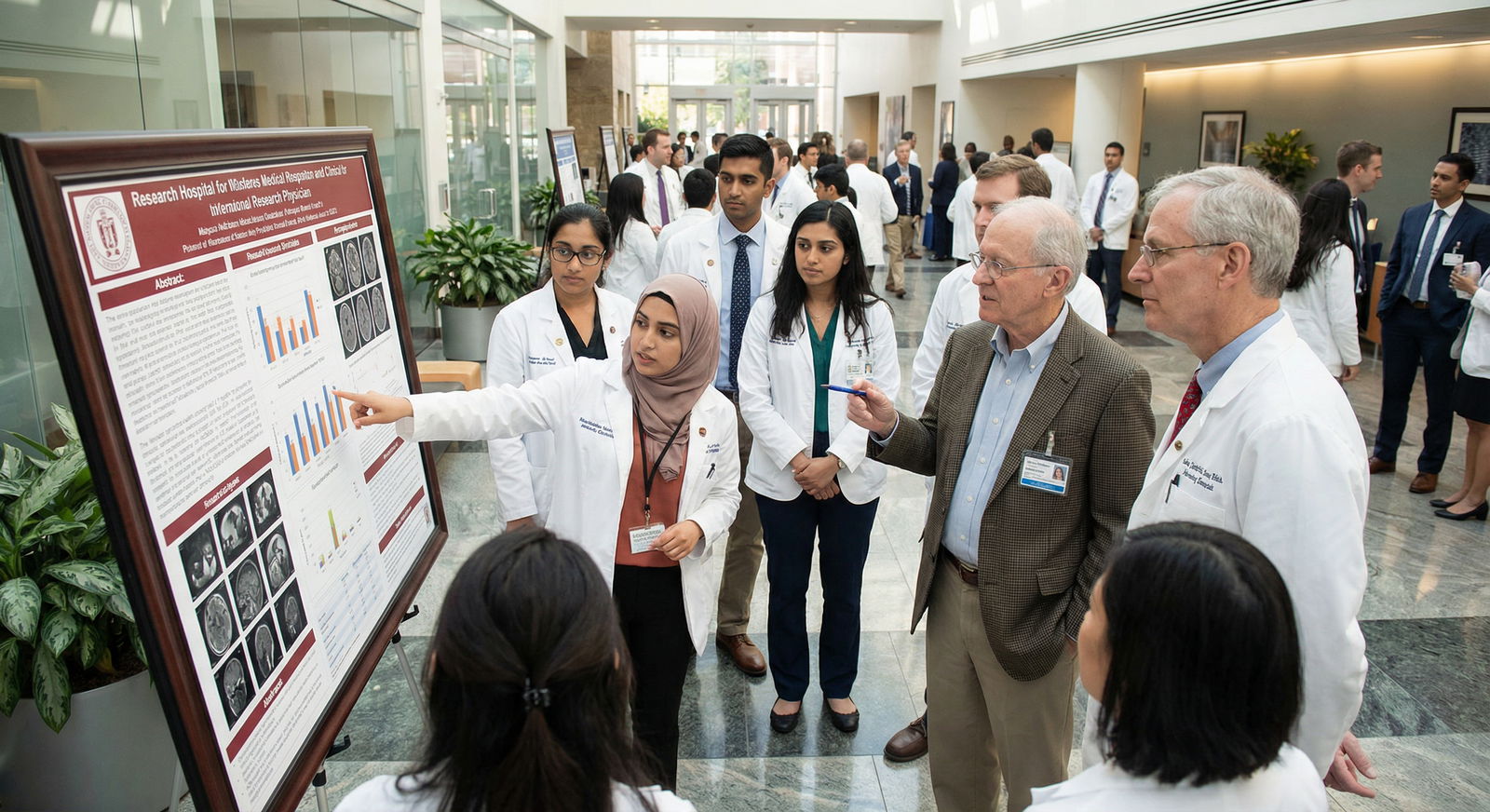
Take every piece of preclinical clinical exposure you have, shadowing, volunteering, standard-of-care workshops, scribing, multidisciplinary tumor boards, and weave it directly into your research narrative.
How to map lab behaviors to clinical habits:
| Lab Experience | Transferable Clinical Behavior | How to Frame It in Interviews |
|---|---|---|
| Explaining your bench project to a donor, undergrad, or non-scientist | Patient Education & Informed Consent | "Translating complex pathway genetics to lab rotators taught me how to break down intricate pathophysiology into plain language for patients." |
| Troubleshooting a ruined assay or unrepeatable gel run | Diagnostic Troubleshooting & Humility | "When our controls failed, I had to systematically audit our assumptions, consult teammates, and pivot, the exact same process required when a patient doesn't respond to first-line therapy." |
| Managing IRB documents, animal welfare protocols, or data integrity | Patient Safety & Medical Ethics | "Maintaining strict protocol fidelity in the lab built the foundation for how I handle patient safety, documentation, and regulatory compliance on the wards." |
| Presenting at lab meetings or cross-departmental journal clubs | Multidisciplinary Team Huddles | "Defending our preliminary data to clinicians and basic scientists taught me how to synthesize evidence quickly and take constructive feedback without getting defensive." |
If your clinical hours are genuinely low, double down on these transferable behaviors. Show them that you possess the mindset of a safe, coachable resident before you ever write a progress note.
Step 4: Build Two Clinical Stories (Interview-Ready) From One Research Project
Do not go into [residency interviews prepared to give a lecture on your research.](https://residencyadvisor.com/resources/research-residency-applications/how-to-align-your-research-story-across-eras-ps-and-interview-answers) Prepare stories.
A great interview story follows a precise structure: Context (What was at stake?) → Your Role (What did you own?) → Challenge (What went wrong?) → Turning Point (What insight or adjustment did you make?) → Outcome (What data/impact resulted?) → Reflection (What clinical habit did this lock in?).
You can extract two distinctly different 90-second interview stories from a single basic science research project.
Story #1: "Learning to Think Clinically" (Focus: Hypothesis Adaptation & Translation)
- Context: We were studying inflammatory cytokine spikes in an in vitro macrophage model to understand septic shock damage.
- Your Role: I was responsible for tracking expression profiles over a 48-hour exposure window.
- Challenge: Our drug candidate stopped suppressing cytokines after 12 hours. The basic science assumption was that the compound had degraded.
- Turning Point: Instead of just throwing out the batch, I looked at how septic patients present in the ICU, their immune response isn't static; it undergoes compensatory anti-inflammatory phases. I hypothesized the macrophages were upregulating an alternative pathway.
- Outcome: We altered our dosing protocol to target the secondary receptor, restoring therapeutic suppression out to 36 hours and saving four months of wasted animal modeling.
- Reflection: It taught me that in the lab, and at the bedside, when a treatment fails, you don't just push harder with the same plan. You re-evaluate the patient's underlying physiology.
Story #2: "Working Like a Clinician" (Focus: Quality Control, Teamwork, and Rigor)
- Context: Our lab was compiling a high-throughput dataset of drug toxicity screens across 500 patient-derived cell lines.
- Your Role: I managed the data validation pipeline before we sent our findings to our clinical oncology collaborators.
- Challenge: I caught a subtle batch-effect error in the automated plate reader that artificially inflated the apparent efficacy of two candidate compounds.
- Turning Point: Fixing it meant delaying our lab's manuscript submission by three weeks and telling my PI that our "breakthrough" compound was actually a false positive.
- Outcome: I led the re-validation audit, corrected the pipeline, and presented the clean dataset to our oncology partners. We avoided publishing a flawed target that might have wasted clinical trial resources down the road.
- Reflection: Clinical integrity means prioritizing accuracy over speed. Whether managing a lab dataset or verifying a patient's medication reconciliation in the chart, shortcuts put real people at risk.
Practice both stories in two formats: a 60-to-90-second version for quick prompts ("Tell me about a research challenge") and a 2-to-3-minute version for deep-dive questions ("Walk me through your most significant scholarly project").
Step 5: Handle Common Pitfalls (Overselling, Vague Impact, or Missing the Patient)
When applicants try to force a preclinical project into a clinical narrative, they usually make one of three fatal errors. Here is how to avoid them:
Pitfall 1: Premature Clinical Claims (Overselling)
If you claim that your bench study on mouse liver enzymes is "going to cure NASH in human patients within five years," interviewers will mark you down as naive or arrogant.
- The Fix: Always specify the exact translational stage of your work. State clearly: "We are at the target identification stage. This work doesn't change clinical practice today, but it validates the target so animal toxicity studies can safely begin."
Pitfall 2: Disappearing Behind the Science (Missing the Patient)
It's easy to get lost in complex pathways and forget that medicine is about human beings. If your entire essay or interview response focuses on molecular kinetics without mentioning clinical risk, feasibility, or patient burden, you've missed the mark.
- The Fix: Always connect your bench parameters to patient-centric outcomes. If you are reducing assay run-time, frame it as reducing patient anxiety while waiting for biopsy results. If you are improving drug specificity, frame it as keeping patients off toxic second-line agents that destroy their quality of life.
Pitfall 3: The "Pure Bioinformatic/Code" Trap
If your research involved analyzing massive genomic databases at a computer without touching a biological sample or patient chart, programs might worry you prefer algorithms to humans.
- The Fix: Frame your computational work around clinical decision pathways. You didn't just "train a random forest model"; you built a risk-prediction tool to help overworked ED triage nurses spot septic patients two hours faster. Focus on the end user (the clinician) and the end beneficiary (the patient).
Step 6: Add Minimum Viable Clinical Evidence (So You're Credible, Not Just Persuasive)
A brilliant translation narrative falls flat if your application shows zero recent contact with actual medicine. You need minimum viable clinical evidence to prove your story isn't just creative writing.
If your application is heavy on bench hours but thin on patient interactions, execute at least one low-barrier, high-yield clinical action before ERAS submission:
- Targeted Specialty Shadowing: Shadow physicians in the exact field your research touches. If you study renal fibrosis in mice, shadow an inpatient nephrologist for 15 hours. Ask them directly: "How does the mechanism I'm studying in the lab actually present when a patient's eGFR drops below 15?"
- High-Touch Patient Volunteering: Spend time in environments where social determinants of care are obvious, free clinics, hospice care, or rehabilitation units. This provides immediate proof that you understand the human side of medical care.
- Connect with a Clinical Mentor: Find a clinical faculty member (not just your PhD PI) to review your research narrative. Ask them to help you refine your "bedside translation" argument so it rings true to an attending physician.
Document every clinical interaction using this three-part entry format in your notes:
- Date & Hours: Keep accurate records.
- Patient-Centered Observation: What did you notice about communication, fear, or systemic barriers to care?
- The Research Bridge: How did seeing that patient change the way you think about your lab's research question?
Step 7: Packaging for Each Application Component (Personal Statement, Experiences, Interviews)
Once you have your clinical theme, translation chain, and core stories, deploy them systematically across your entire application.
       [ PERSONAL STATEMENT ]
  Lead with a Patient Problem / Clinical Gap
   -> Introduce Research as your Tool to Solve It
   -> Conclude with your Clinical Career Vision
                 |
                 v
       [ ERAS EXPERIENCES LIST ]
  Bullet 1: Clinical Relevance & Problem Statement
  Bullet 2: Technical Scope & Methodological Ownership
  Bullet 3: Quantifiable Output & Translation Next Steps
                 |
                 v
       [ RESIDENCY INTERVIEWS ]
  Use your "Translation One-Liner"
   -> Deploy Story #1 (Clinical Mindset)
   -> Deploy Story #2 (Rigor & Teamwork)
1. The Personal Statement
- Opening: Start with a clinical problem or patient interaction that sparked a question.
- Body: Introduce your preclinical research not as a separate academic phase, but as the systematic tool you used to search for answers.
- Conclusion: Tie what the lab taught you about persistence, uncertainty, and science back to the kind of resident physician you intend to become on the wards.
2. ERAS Activities & Experiences List
Don't write a passive description of lab duties. Structure every research bullet using a clinical-first impact model:
- Bullet 1 (Clinical Relevance): "Investigated therapeutic targets for chemotherapy-induced cardiotoxicity to help identify markers for early intervention."
- Bullet 2 (Technical Ownership & Scale): "Engineered and optimized high-throughput fluorescent assays across 120 tissue samples, reducing data collection time by 30%."
- Bullet 3 (Outputs & Translation): "Co-authored 1 manuscript in Journal of Biological Chemistry; findings provided baseline rationale for an upcoming Phase I animal trial."
3. Residency Interviews
Keep a sharp Translation One-Liner pinned to your desk during virtual interview season:
"My research focuses on identifying early biomarkers for pediatric renal scarring; I validated an in vitro signaling proxy, and the next step is translating that target into prospective patient urine screens."
When an interviewer says, "Your background looks very basic-science heavy, why clinical residency now?" you hit them with your prepared response:
"The lab taught me how to ask deep biological questions and handle complex data, but I realized I am most energized when those questions directly serve a patient sitting in front of me. Basic science gave me the intellectual rigor; clinical training is where I apply it where it matters most."
Summary: Your Goal Isn't to Pretend You're Clinical, It's to Show Clinical Mindset
Residency selection committees aren't asking you to fake clinical experience you don't have. They want to see that your brain naturally moves toward the patient, regardless of where you are standing, whether that's beside a hospital bed or in front of a biosafety cabinet.
If you translate your methods, focus on the underlying human problem, and demonstrate core clinical behaviors like rigor, teamwork, and humility, your preclinical research stops being a narrative hurdle. It becomes proof that you think deeper, analyze clearer, and bring a sophisticated scientific perspective to patient care.
Your Action Item Today: Sit down with a blank piece of paper. Write your 3-sentence Clinical Problem Statement and outline your two 90-second clinical stories. Then call a clinician friend or mentor, pitch it to them out loud, and ask them one question: "Does this sound like a doctor talking about science, or a scientist talking about a lab?" Refine it until there is zero doubt.