
Building a strong research profile can be the single most powerful lever for an International Medical Graduate (IMG) aiming for a competitive nuclear medicine residency in the United States, Canada, or other highly regulated systems. Beyond board scores and clinical performance, your scholarly track record is concrete evidence that you understand evidence-based medicine, can think critically, and will contribute to the academic growth of a nuclear medicine department.
This IMG residency guide will walk you step-by-step through how to strategically plan, execute, and showcase research for residency in nuclear medicine—whether you’re still abroad, in a transitional year, or already in the U.S. on a visa.
Understanding the Role of Research in Nuclear Medicine Residency for IMGs
Nuclear medicine is inherently research-driven. The field evolves through:
- New radiotracers and radiopharmaceuticals
- Novel PET/CT and SPECT/CT applications
- Theranostics (e.g., Lu-177, I-131, PRRT)
- Quantitative imaging techniques
- AI and machine learning in image analysis
Program directors in nuclear medicine expect applicants—especially IMGs—to demonstrate at least some exposure to research, and strong candidates often show a pattern of sustained scholarly activity.
Why research matters even more for IMGs
For an international medical graduate, a structured research profile can:
- Compensate for imperfect exam scores or gaps in training
- Demonstrate familiarity with the U.S. academic environment
- Provide strong letters of recommendation from U.S.-based faculty
- Show evidence of commitment specifically to nuclear medicine (not just “anything in radiology”)
- Help you stand out in the nuclear medicine match, where programs value academic contribution and long-term potential
If you trained in a system where formal research was not emphasized, you can still build a competitive profile by strategically choosing projects, mentors, and roles that highlight your growth.
What “counts” as research for the match?
Residency programs look at research in broad categories:
- Original research articles (retrospective, prospective, clinical, translational, imaging-based)
- Case reports and case series (especially with novel imaging findings or theranostics)
- Review articles and book chapters
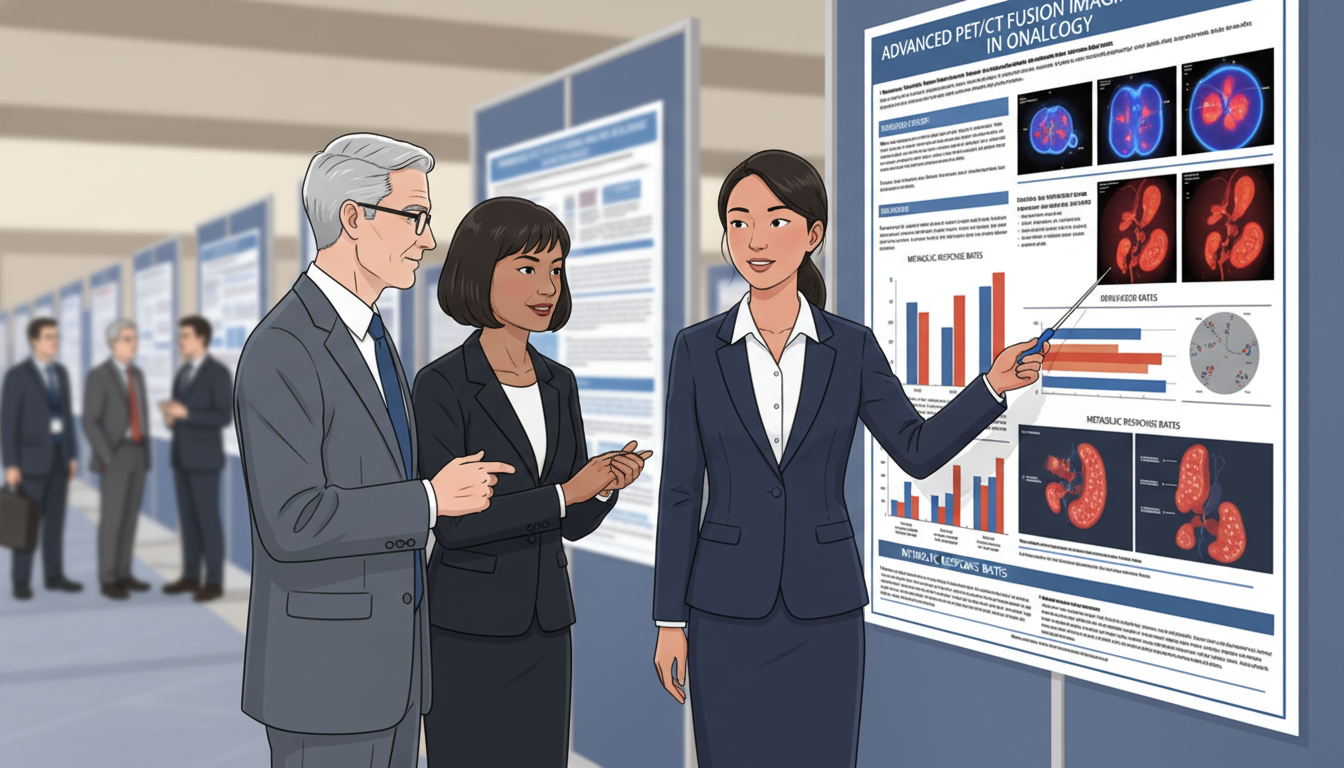
- Conference abstracts, posters, and oral presentations
- Quality improvement (QI) projects with clear methodology and measurable outcomes
- Methodology-focused work (e.g., dosimetry methods, image reconstruction techniques, radiotracer kinetics)
The key is not only the type of research but also your degree of involvement and how clearly it connects to nuclear medicine.
How Many Publications Are Needed for a Strong Nuclear Medicine Application?
There is no magic number, but there are realistic ranges and patterns that program directors quietly look for.
Interpreting “how many publications needed” in context
The question “how many publications needed” for a competitive nuclear medicine residency depends on:
- Your exam scores (USMLE/COMLEX or equivalents)
- Your clinical experience and nuclear medicine exposure
- The competitiveness of the programs you’re targeting (academic vs community, big-name vs smaller)
- Whether you’re coming directly from abroad or have U.S. clinical/research experience
However, some rough benchmarks can help.
Benchmark ranges for IMGs in nuclear medicine
Think in terms of tiers of strength, not strict cutoffs:
Foundational profile (minimum)
- 1–2 case reports or case series (preferably nuclear medicine–related)
- 1–2 conference abstracts/posters
- Strong description of your role in each project
- This can be enough for less-competitive programs if other parts of your application are excellent.
Solid and realistic target for many IMGs
- 2–5 peer-reviewed publications (they don’t all need to be first-author)
- At least 1–2 clearly nuclear medicine–focused (PET/CT, SPECT, theranostics, dosimetry, etc.)
- Several conference abstracts/posters from recognized meetings (SNMMI, EANM, RSNA, or regional)
- Clear progression from simpler to more complex projects over time
Highly competitive academic profile
- 6+ publications, with at least 2–3 first-author works
- Strong presence in nuclear medicine journals or imaging-heavy radiology journals
- Oral presentations or highlighted abstracts at major conferences
- Ideally, at least one significant project where you clearly drove the process
Quality matters more than just total count. A few strong, relevant papers and thoughtful presentations can outweigh a long list of marginal or unrelated publications.
How much is “enough” versus “optimal”?
Aim for “enough” to not be a weakness and “optimal” if time and circumstances permit:
- Enough: A clear demonstration that you understand research fundamentals, can follow through to completion, and have applied this specifically to nuclear medicine topics.
- Optimal: Evidence that you think like a future academic nuclear medicine physician—able to ask meaningful questions, use imaging data, and disseminate results.
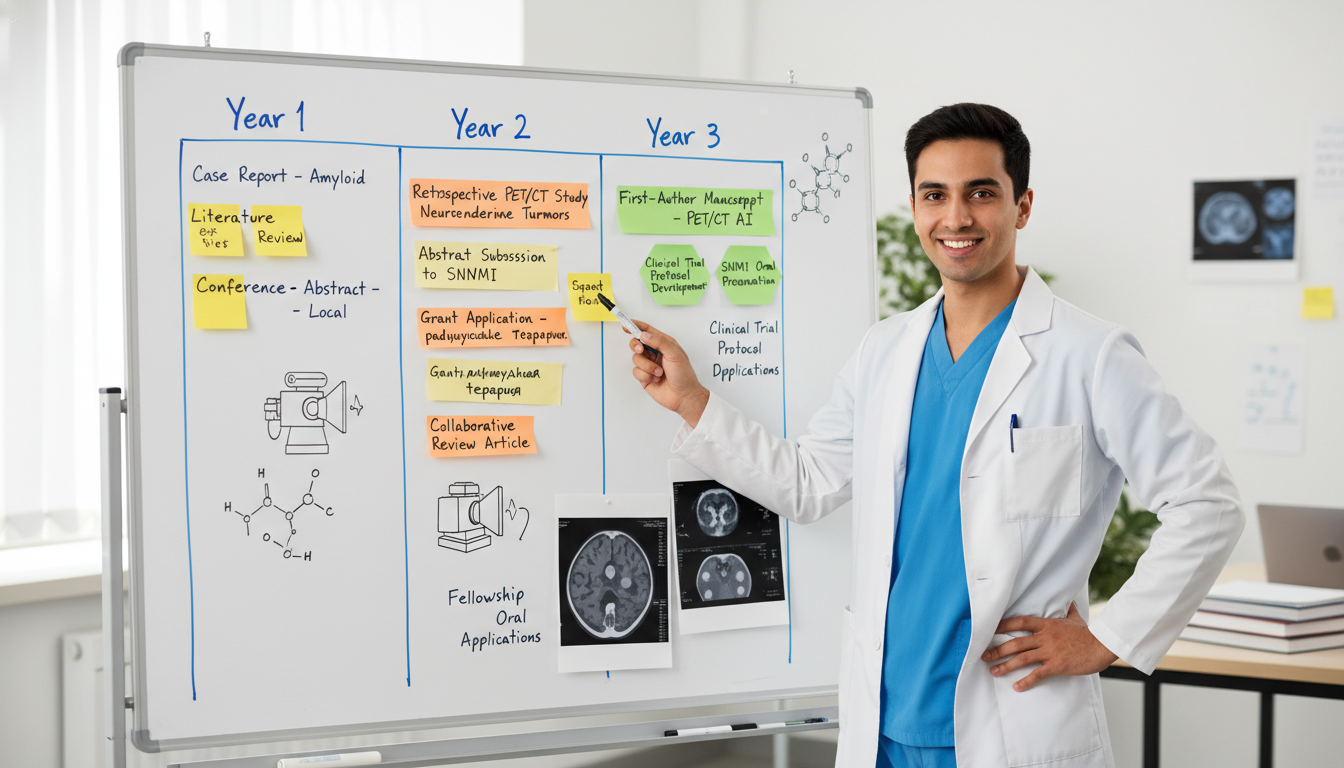
If you’re early in your journey, build a 2–3 year roadmap and accept that your research portfolio will grow stepwise. The key is visible progression.
Types of Research That Are Most Valuable in Nuclear Medicine
Not all research is equal for a nuclear medicine residency. You want projects that build skills, credibility, and relevance.
1. Imaging-focused clinical research
These projects use existing imaging data (often retrospective) to answer clinical questions, for example:
- Comparing diagnostic performance of PET/CT vs CT alone in staging lymphoma
- Evaluating the prognostic value of FDG-PET parameters (e.g., SUVmax, metabolic tumor volume)
- Assessing outcomes of Lu-177 therapies in neuroendocrine tumors or prostate cancer
- Investigating SPECT/CT utility in bone metastasis detection
Why it’s powerful:
- Directly showcases your ability to handle imaging data, work with PACS, and understand nuclear medicine workflows.
- Feasible even for IMGs if you join ongoing projects in an academic imaging or nuclear medicine department.
2. Theranostics and dosimetry projects
Theranostics is a growth area with high academic interest. Relevant projects include:
- Dosimetry modeling for radionuclide therapies
- Response assessment criteria after radionuclide therapy
- Safety and toxicity profiles of I-131, Lu-177, Y-90, etc.
- Population-based or institutional outcomes of treated patients
Such work can make your application especially appealing to programs with theranostic services.
3. Case reports and small case series
These are more accessible and can be completed in shorter timeframes:
- Rare tumors with characteristic PET/CT or SPECT findings
- Unusual radiotracer uptake patterns mimicking malignancy
- Complications of radionuclide therapies visible on imaging
- Integration of multi-modality imaging (PET/MR, PET/CT) in complex diagnostic scenarios
Case reports can be a practical starting point, especially during observerships or short clinical experiences.
4. Quality improvement (QI) and workflow projects
QI projects can be framed as research when they have:
- A clearly defined problem
- Measurable outcomes (e.g., reduction in scan wait time, improved reporting turnaround, reduced radiation exposure)
- A structured plan–do–study–act (PDSA) cycle
Examples:
- Reducing repeat scans due to poor patient preparation
- Standardizing PET/CT reporting templates for oncology
- Optimizing scheduling for radionuclide therapies
These projects show that you understand practical aspects of nuclear imaging services, an attractive trait for both academic and community programs.
5. Basic science and translational research
If you have access to strong research infrastructure:
- Radiotracer development and preclinical imaging
- Animal imaging studies (PET, SPECT, optical, etc.)
- Radiochemistry optimization projects
- AI/ML applications in tracer uptake prediction or lesion segmentation
These can be high-impact but also more complex and time-consuming. For many IMGs, they are excellent if you can secure a dedicated 1–2 year research position.
Step-by-Step Strategy to Build a Nuclear Medicine Research Profile as an IMG
The process for an international medical graduate is often non-linear, constrained by visa status, funding, and geography. However, you can still follow a strategic framework.
Step 1: Clarify your timeline and constraints
Ask yourself:
- When do you plan to enter the nuclear medicine match? (e.g., in 2 years, 3 years)
- Are you currently abroad or already in the U.S./Canada?
- What visa will you be/are you on (J-1, F-1, H-1B, etc.)?
- Can you commit to a full-time research position, or only part-time alongside clinical duties?
This determines whether you pursue:
- Full-time research positions (research fellow, postdoc, clinical research assistant)
- Part-time projects integrated with observerships, externships, or clinical rotations
- Remote collaborations with teams who need help with data analysis, writing, or literature reviews
Step 2: Target institutions and mentors strategically
Look for departments that:
- Have dedicated nuclear medicine divisions or strong molecular imaging groups
- Publish regularly in nuclear medicine journals (e.g., JNM, EJNMMI, Clinical Nuclear Medicine)
- Participate in major meetings (SNMMI, EANM, RSNA, ASCO with imaging components)
When identifying mentors:
- Prioritize faculty who are active in nuclear medicine research and occasionally mention IMGs on their teams in their bios, talks, or LinkedIn profiles.
- Review their recent publications—if you find recurrent themes, tailor your outreach accordingly.
Step 3: Craft effective cold emails for research positions
An impactful cold email should:
- Be brief, specific, and customized for that faculty member
- Emphasize your background, interests in nuclear medicine, and willingness to work hard—even on basic tasks initially
- Highlight any prior research, even if not in imaging
Key components:
- A concise subject line (e.g., “IMG interested in nuclear medicine research – potential volunteer collaboration”)
- 1–2 short paragraphs on your background and goals
- 1 paragraph on why you are specifically interested in their work
- A clear, modest ask (e.g., “Would you be open to a brief call to discuss potential ways I could assist with ongoing projects?”)
- CV attached, properly formatted, emphasizing research-related skills
Expect to send many emails and get few responses. Persistence and professionalism are critical.
Step 4: Start with accessible projects and build responsibility
Once you join a research group, you will likely begin with simpler tasks:
- Literature searches and reference organization
- Data entry into spreadsheets or REDCap
- Chart review and extraction of clinical/imaging parameters
- Measuring regions of interest on imaging under supervision
Over time, aim to progress to:
- Drafting sections of the manuscript (methods, results, discussion)
- Designing figures and tables, especially imaging figures
- Helping with IRB submissions or protocol updates
- Taking on first-author roles for smaller projects (e.g., case reports, short retrospective studies)
This progression shows growth and leadership when you describe your experiences in your application and interviews.
Step 5: Align your projects with the application calendar
Plan backward from your intended match year:
24–36 months before match:
- Secure a research position or at least a research mentor.
- Start with case reports and small retrospective analyses; aim for early abstracts.
18–24 months before match:
- Push initial projects toward manuscript submission.
- Take on at least one project where you can realistically be first author.
- Submit abstracts to upcoming nuclear medicine conferences.
12 months before match:
- Ensure some works are accepted or in press.
- Ask for letters of recommendation from your primary research mentor and co-authors.
- Clearly describe ongoing projects in your personal statement and CV.
6–9 months before interviews:
- Focus on getting work accepted or presented.
- Be prepared to discuss all projects in depth during interviews, including limitations and next steps.
Maximizing the Impact of Your Research on Your Application
Producing research is only half the battle. You must also present it convincingly.
Writing your CV and ERAS application
For each research entry:
- Clearly indicate your role (e.g., designed study, collected data, performed imaging analysis, drafted manuscript).
- List peer-reviewed publications separately from abstracts/posters and non-peer-reviewed works.
- Use consistent citation format, including PMID or DOI where available.
- Highlight nuclear medicine relevance in the title or description when not obvious.
Don’t inflate your contributions; seasoned interviewers will quickly pick up inconsistencies.
Using your personal statement strategically
For an IMG residency guide focused on nuclear medicine, your personal statement should:
- Explain how you discovered nuclear medicine and why you chose it over other specialties.
- Highlight 1–2 key research projects and what they taught you (e.g., understanding SUV variability, learning about dosimetry, working with multidisciplinary teams).
- Reflect on how your research experience changed your approach to patient care or clinical reasoning.
Avoid simply listing publications; instead, show how research shaped your professional identity.
Letters of recommendation from research mentors
A strong letter from a nuclear medicine researcher or imaging faculty member can be hugely influential, especially for an IMG. Your research mentor can:
- Speak to your persistence, reliability, and ability to handle complex tasks.
- Comment on your intellectual curiosity and capacity for independent thought.
- Highlight your communication skills, both written and oral.
- Explicitly state that you are ready for residency-level responsibilities.
To support them:
- Provide an updated CV and a short summary of your projects and contributions.
- Gently remind them of specific strengths or milestones they might mention.
Presenting your work during interviews
Expect questions like:
- “Tell me about your most meaningful research project.”
- “What challenges did you face, and how did you overcome them?”
- “What was your specific role?”
- “If you could redo the study, what would you change?”
Be honest about limitations (small sample size, retrospective design, single-center data) and emphasize what you learned about research methodology, imaging interpretation, and multidisciplinary care.
This is where quality over quantity becomes most obvious. If you can speak deeply and clearly about a few solid projects, programs will trust your academic potential.
Common Pitfalls and How IMGs Can Avoid Them
Even strong candidates make avoidable mistakes when building a research profile. Be proactive in sidestepping these.
Pitfall 1: Doing research unrelated to your target specialty
For an applicant to nuclear medicine, an extensive portfolio in dermatology or psychiatry research appears unfocused. Some non-imaging work is acceptable—especially if early in your career—but you should show clear progression toward imaging or nuclear topics.
Solution:
Gradually pivot your research toward:
- Cancer imaging
- Oncology outcomes with imaging predictors
- Radiation safety, dosimetry, or procedural workflows
- Imaging biomarkers or AI in imaging
Even if the first few projects aren’t purely nuclear medicine, move steadily closer.
Pitfall 2: Quantity over integrity
Listing manuscripts as “submitted” or “in preparation” that have not progressed—or inflating your role—can backfire if programs verify with your mentor or look up your name in databases.
Solution:
Be conservative and transparent:
- Only list “submitted” if the manuscript is truly with a journal.
- Avoid listing “planned” papers in official applications; you can discuss them verbally.
- Never claim first authorship or major roles you did not hold.
Pitfall 3: Poor time management
Trying to start too many projects simultaneously can leave you with many unfinished manuscripts and few completed outputs at application time.
Solution:
Prioritize:
- 1–2 high-yield, feasible projects as your main focus.
- Smaller side projects like case reports only if they won’t derail major work.
- Regular check-ins with your mentor to review progress and adjust timelines.
Pitfall 4: Underutilizing your research for networking
Research isn’t just about publications for match; it’s also about relationships.
Solution:
Use research to:
- Build long-term mentorship relationships with faculty in nuclear medicine.
- Meet collaborators from other institutions at conferences.
- Gain introductions to program directors or fellowship coordinators.
Many successful IMG applicants report that a single committed research mentor opened doors to interview opportunities and long-term career pathways.
FAQs: Research Profile Building for IMGs in Nuclear Medicine
1. As an IMG with no prior research, where should I start?
Begin with exposure. Reach out to nuclear medicine or radiology departments for volunteer or observer roles, and indicate your interest in helping with research. Case reports and small retrospective studies are often the most accessible starting points. Learn the basics of literature search, reference management, data entry, and simple statistics. Over time, seek increasing responsibility and at least one project where you can be first or second author.
2. Is a dedicated 1–2 year research fellowship necessary for nuclear medicine residency?
Not strictly, but it can be extremely helpful for IMGs, especially if you are coming directly from abroad or have non-U.S. clinical experience. A research fellowship in nuclear medicine or imaging provides time to build several publications, generate U.S. letters of recommendation, understand local systems (IRB, HIPAA, PACS), and show programs your commitment. If a full-time fellowship is not possible, consistent part-time involvement over a longer period can still create a credible research profile.
3. Do all my publications need to be in nuclear medicine journals?
No. It is ideal to have at least some work directly tied to nuclear medicine or imaging, but high-quality publications in general radiology, oncology, internal medicine, or other fields still demonstrate research capability. The key is to show a trajectory: earlier work may be broader, but more recent projects should be clearly relevant to nuclear medicine or imaging-based oncology.
4. How important are conference presentations compared to published papers?
Both matter, but in different ways. Peer-reviewed journal publications carry more long-term academic weight, while conference abstracts and presentations show active engagement with the research community and allow networking. For the nuclear medicine match, a combination is best: at least a couple of solid papers plus several abstracts/posters at reputable meetings (SNMMI, EANM, RSNA, ARRS, or institutional conferences).
A well-planned research profile can transform your candidacy as an international medical graduate pursuing nuclear medicine residency. Focus on relevance, quality, and progression; build strong relationships with mentors; and use every project as an opportunity to grow your skills and demonstrate that you are ready to contribute meaningfully to this rapidly evolving specialty.