
Understanding Why Research Matters So Much in ENT for IMGs
Otolaryngology (ENT) is one of the most competitive specialties in the residency match. For an international medical graduate, a strong research profile is often the single most powerful way to close the gap with U.S. graduates and signal serious commitment to the field.
Programs use research as a proxy for multiple attributes:
- Intellectual curiosity and academic potential
- Ability to work in a team and complete long-term projects
- Familiarity with the U.S. academic system
- Commitment specifically to otolaryngology, not just “any specialty”
For IMGs, research can:
- Compensate for older year of graduation (YOG) or gaps in clinical work
- Strengthen an application if USMLE scores are modest or pass/fail
- Help you build U.S. letters of recommendation from ENT faculty
- Provide a rationale for visa sponsorship, showing you are an academic value-add
In other words, research for residency in ENT is not just about numbers of publications. It is an integrated story: what topics you studied, with whom, how you contributed, and what you learned.
This IMG residency guide will show you how to build that story, step-by-step, even if you are starting from zero.
How Strong Does an ENT Research Profile Need to Be?
Before you start planning, you need a realistic benchmark of what is expected in the otolaryngology match, especially for an international medical graduate.
The “Typical” ENT Applicant vs. IMG Reality
Among U.S. seniors, competitive ENT applicants often have:
- Multiple ENT-related abstracts, posters, or publications
- At least one sustained research experience (a year, a summer, or a longitudinal project)
- Experiences that clearly connect to otology, rhinology, head and neck, pediatric ENT, or related areas
For IMGs, program directors know:
- You often had fewer research opportunities in medical school
- You may be unfamiliar with U.S. research culture (IRB, HIPAA, statistics, etc.)
But they also expect:
- Demonstrated effort to overcome these disadvantages
- Clear ENT-related engagement: otology, laryngology, sinus surgery, head & neck oncology, sleep, facial plastics, audiology, or airway research
How Many Publications Are “Enough”?
There is no universal cutoff. Program directors rarely think, “We only interview applicants with X publications.” They look at pattern, quality, and relevance.
That said, here is a realistic range for IMGs targeting ENT:
- Competitive for interviews at some programs (especially mid-tier, community-affiliated):
- 3–5 total scholarly products (abstracts, posters, case reports, or papers)
- At least 2 directly ENT-related
- More competitive, especially for academic/mid-to-upper tier programs:
- 5–10+ scholarly products
- Mix of:
- Original research or systematic reviews
- Case reports or technical notes
- Posters/oral presentations at ENT meetings
- Highly academic profile:
- 10+ products, with:
- Several first-author works
- One or more projects in high-impact ENT journals
- Strong letters from recognized ENT researchers
- 10+ products, with:
The crucial point about “how many publications needed” is this:
A focused, coherent ENT research narrative with 4–6 solid products can be far more persuasive than 15 unrelated, low-quality publications.
Choosing the Right ENT Research Path as an IMG
You will not be able to do everything, especially if you are time- or visa-limited. Your strategy must match your starting position.

Step 1: Self-Assessment – Where Are You Now?
Ask yourself:
- Current location
- In the U.S. (on a visa or green card)
- Outside the U.S., planning to apply or move
- Time flexibility
- Can you dedicate a full-time research year?
- Or only part-time evenings/weekends?
- Prior experience
- Any research during medical school (even if non-ENT)?
- Any skills: statistics, coding (R, Python), Excel, data management, literature review?
- Timeline to application
- Are you 2–3 years away? You can aim for a stronger research year.
- Applying in the next cycle? Focus on achievable short-term outputs.
Your answers will help you choose between:
- Full-time dedicated research (1–2 years)
- Part-time / remote projects
- Home-country ENT research with strategic U.S. collaboration
Step 2: Selecting ENT Subtopics Strategically
Not all ENT research is equally accessible for IMGs. Some projects require surgical data, OR video, or complex equipment. Others can be done with laptop-only tools.
Consider these IMG-friendly ENT niches:
Head and Neck Oncology
- Retrospective chart reviews
- Outcomes of different treatments (radiation vs surgery)
- Quality-of-life studies after laryngectomy, neck dissection, etc.
Sinonasal and Skull Base
- Sinusitis treatment outcomes
- Endoscopic skull base complication rates
- Radiology-based projects (CT, MRI measurements)
Otology and Audiology
- Hearing loss prevalence in specific populations
- Outcomes after cochlear implantation
- Quality-of-life after ear surgery
Sleep & Airway
- Obstructive sleep apnea (OSA) outcomes with surgery or CPAP
- Pediatric airway disorders, tracheostomy outcomes
Medical Education in ENT
- ENT teaching for medical students
- Simulation training, ultrasound in ENT, etc.
If you are abroad with limited access to large datasets, focus on:
- Systematic reviews / meta-analyses
- Case reports/series
- Survey-based education or patient-experience studies
Finding and Securing ENT Research Opportunities (Especially in the U.S.)
For an international medical graduate, the hardest step is often getting your foot in the door. Here is a structured approach.
1. Target the Right Institutions and Mentors
Focus on:
- Academic centers with ENT residency programs
- Departments that visibly list:
- Research interests by faculty
- Recent publications
- Research fellows (especially IMGs)
Look for keywords:
- “Research fellow,” “postdoctoral fellow,” “clinical research coordinator,” “visiting scholar,” or “observership with research component.”
Common U.S. ENT-heavy institutions include:
- Large university hospitals
- Cancer centers with head & neck oncology programs
- Children’s hospitals with pediatric ENT divisions
2. Craft a High-Yield Cold Email Strategy
Cold emailing still works if done well. Avoid generic “Dear Sir, I want to do research” messages.
Essential elements of your email:
- Clear subject line:
- “IMG interested in otology research – experience with systematic reviews”
- “Prospective ENT applicant seeking research opportunity (Experience in head & neck oncology)”
- Brief intro (2–3 lines):
- Name, medical school, country, current location
- Statement of interest in ENT and research
- Evidence of value:
- Prior research or any technical skill (statistics, data cleaning, survey building, Python/R, REDCap, etc.)
- Language proficiency if relevant
- Specific ask:
- “I am seeking a 1-year full-time research position starting in July 202X”
- Or “I am available to collaborate remotely on literature reviews/data extraction”
Attach:
- 1-page CV (research-focused; highlight publications for match)
- Unofficial transcript if strong
- If you have: USMLE scores (optional but can help)
Send targeted emails to:
- 10–20 ENT faculty in your top 3–5 institutions
- Include both senior and junior faculty; junior attendings or fellows may be more open
Follow up once after 10–14 days, politely.
3. Consider Formal Research Programs and Fellowships
Some departments offer structured research positions for IMGs:
- ENT research fellowship (1–2 years, sometimes paid)
- Postdoctoral research fellow roles in head & neck oncology or basic science labs
- Clinical research coordinator positions in ENT clinics
Monitor:
- Department websites
- University HR job portals
- ENT societies (e.g., AAO-HNS) career pages
4. Remote and Hybrid Possibilities
If you cannot relocate immediately:
- Offer to join ongoing meta-analyses, database projects, or survey studies
- Help with:
- Literature search and screening
- Data extraction
- Manuscript drafting
Many ENT researchers appreciate extra hands, especially for systematic reviews.
Types of ENT Research You Can Realistically Do as an IMG
Now that you understand where to look, let’s focus on the actual research products you can build. These are the building blocks of your research profile.
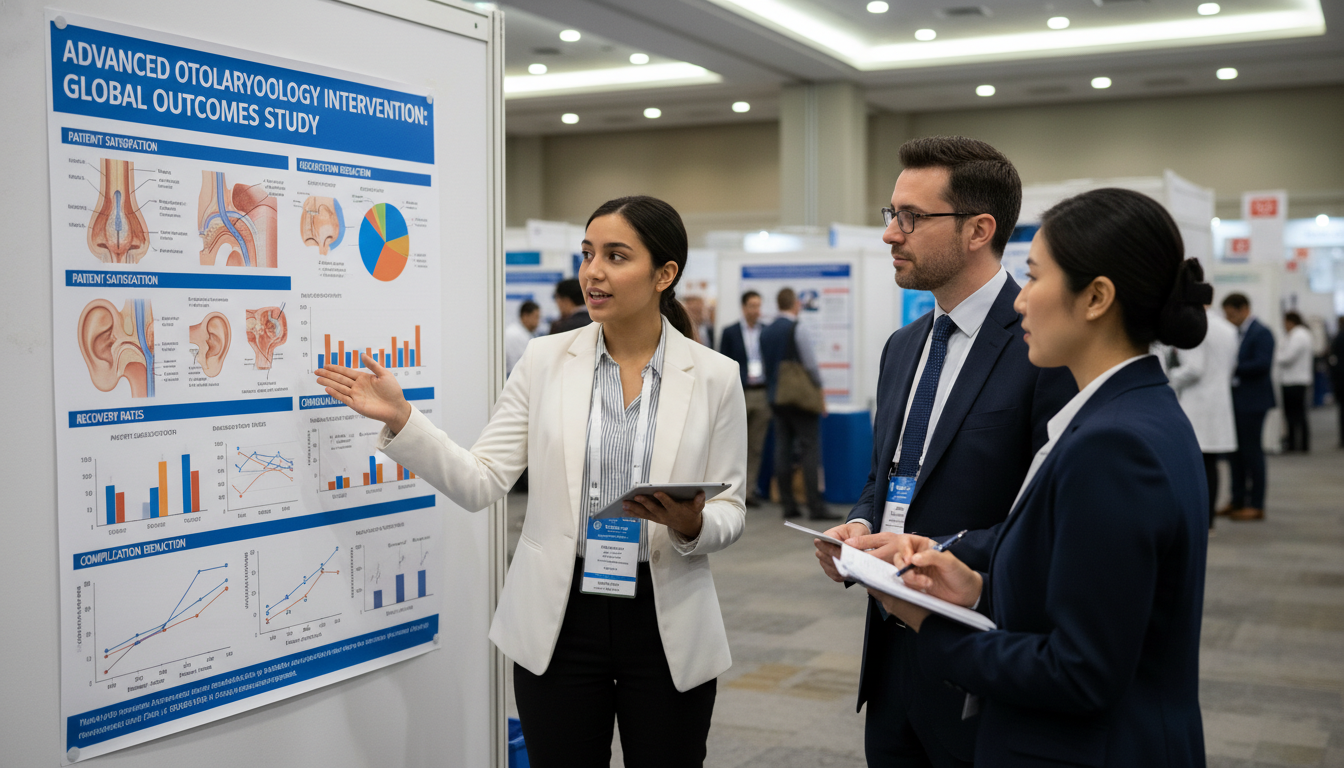
1. Retrospective Clinical Studies
What it is:
Reviewing existing patient records to answer a question (e.g., “What factors predict readmission after thyroidectomy?”).
Why it’s good for IMGs in ENT:
- High potential for publications and abstracts
- Teaches you IRB process, data handling, and statistics
Typical workflow:
- Identify a focused question with your mentor
- Get IRB approval (your mentor usually leads this)
- Use the hospital’s EMR to collect data
- Analyze using Excel, SPSS, R, or Python
- Write out background, methods, results, and discussion
Actionable tip:
Volunteer to be the data manager for an ENT group—this makes you indispensable and leads to multiple papers.
2. Case Reports and Case Series
What it is:
Detailed description of unusual or illustrative cases (e.g., rare skull base tumor, unusual airway complication, innovative surgical solution).
Pros for IMGs:
- Short timeline from idea to submission
- Good way to learn ENT pathology and imaging
- Frequently accepted at specialty-specific journals or meetings
How to generate them:
- Ask ENT residents/faculty if they have interesting cases without time to write them up
- Take responsibility for literature review and drafting
3. Systematic Reviews and Meta-Analyses
What it is:
Systematically collecting and synthesizing all relevant studies on a specific question (e.g., “Surgical versus medical treatment for chronic rhinosinusitis in children”).
Ideal for IMGs because:
- Can be done remotely with proper supervision
- Requires discipline and structure but minimal physical presence
- Highly cited if done well
Minimal requirements:
- Access to databases (PubMed, Scopus, etc.)
- Clear protocol and inclusion criteria
- Team to perform duplicate screening/extraction
Be careful:
Avoid “salami slicing” many low-quality reviews on trivial topics. Aim for:
- Clinically important questions
- Clear ENT relevance
- Involvement of a known ENT investigator if possible
4. Prospective Studies and Clinical Trials
These are usually led by faculty but you can contribute by:
- Screening and enrolling patients
- Collecting outcomes data
- Maintaining study logs
Even if you are not first author, adding your name to well-designed prospective ENT work strengthens your academic credibility.
5. Basic Science and Translational ENT Research
Examples:
- Molecular markers in head & neck squamous cell carcinoma
- Tissue engineering for tympanic membrane repair
- Animal models of airway stenosis
This pathway can lead to high-impact publications but:
- Requires lab access and often a longer time frame (1–3 years)
- More complex for visa and position funding
If you have a strong basic science background, it can significantly differentiate you—but make sure you can explain clinical relevance to ENT during interviews.
Turning Activity into Output: Publications, Presentations, and a Coherent Story
Doing research is not enough; you must convert your work into visible scholarly products.
1. Targeted Output Goals
For a 1-year dedicated ENT research fellowship, a realistic goal might be:
- 1–2 first-author retrospective studies (submitted or accepted)
- 2–3 co-authored retrospective studies or prospective projects
- 1–3 case reports
- 1 systematic review/meta-analysis
- 2–4 conference abstracts/posters (AAO-HNS and regional meetings)
For part-time/remote engagement over 1–2 years:
- 1–2 systematic reviews or meta-analyses
- 1–3 case reports
- 1–2 co-authored clinical projects
2. Choosing the Right Journals and Meetings
Aim for ENT-focused journals and societies whenever possible:
Journals:
- Otolaryngology–Head and Neck Surgery
- Laryngoscope
- American Journal of Otolaryngology
- Head & Neck
- International Journal of Pediatric Otorhinolaryngology
Conferences:
- AAO-HNSF Annual Meeting
- Triological Society meetings
- Subspecialty meetings (AHNS, ALA, etc.)
Publications and presentations at recognized ENT venues show specialty commitment, not generic research activity.
3. Building a Coherent Research Narrative for the Otolaryngology Match
During interviews, you will need to answer:
- “Tell me about your research experience.”
- “Which project are you most proud of?”
- “How has research shaped your interest in ENT?”
Prepare to:
- Summarize your main 1–2 projects in 1–2 minutes each
- Clinical question
- Methods (in simple language)
- Key results
- Why it matters for patient care
- Highlight your role:
- “I designed the data collection instrument, abstracted data, and performed the initial analysis.”
- Link to ENT:
- “This project deepened my interest in head & neck oncology because I saw how complex surgical decisions affect long-term functional outcomes.”
Your goal: make it easy for programs to see you not just as someone with “publications for match,” but as a future academic otolaryngologist who will contribute to their department.
Practical Timeline: Building an ENT Research Profile Over 2–3 Years
Here is a realistic IMG residency guide-style timeline for those planning ahead.
Year 1 (Early Planning / Remote Foundation)
- Learn basics:
- Research methods, statistics, and critical appraisal (online courses, Coursera, edX, etc.)
- Read ENT journals monthly to understand common topics
- Secure small projects:
- Case reports with local ENT mentors or through remote collaboration
- One or two systematic reviews/meta-analyses
- Start cold-emailing to explore full-time research positions for the next year
Year 2 (Full-Time Dedicated Research Year, Ideally in the U.S.)
- Join an ENT research team as a:
- Research fellow
- Clinical research coordinator
- Visiting scholar/postdoc
- Focus on:
- 1–2 large clinical projects where you are first or second author
- Multiple smaller co-authored projects
- Submissions to ENT conferences
- Build relationships:
- Earn strong letters from at least 2 ENT faculty
- Attend academic meetings, network, present posters
Year 3 (Application Year)
- Finalize manuscripts:
- Submit remaining projects as early as possible
- Even “submitted” or “under review” papers count on ERAS
- Prepare your ERAS:
- Clearly list all research, separating ENT from non-ENT
- Write a personal statement that integrates your research story
- Interview preparation:
- Practice explaining your research to non-experts
- Anticipate ethical/statistical questions about your methods
- Maintain research momentum:
- Stay involved remotely even after leaving the research position
Common Pitfalls IMGs Should Avoid in ENT Research
Quantity over quality
- 15 low-impact, poorly designed studies can look worse than 5 solid ones.
Predatory journals
- Avoid paying large “publication fees” to obscure journals with no real peer-review.
- Program directors recognize reputable ENT journals; use them as your target.
Unclear authorship roles
- Clarify expectations with your mentor early: what will earn you first authorship? co-authorship?
- Contribute meaningfully; do not just add your name.
Ethical shortcuts
- Never manipulate data, reuse data without permission, or plagiarize text.
- Academic dishonesty is career-ending; program directors talk to each other.
No ENT focus
- Having 10 cardiology papers but no ENT work may raise doubts about your true commitment.
- Try to shift your research portfolio toward ENT as early as possible.
Final Thoughts: Your Research as Proof of Your Future in ENT
For an international medical graduate, a strong research profile is more than a checkbox in the otolaryngology match. It is how you show that you can:
- Learn quickly in a new academic system
- Contribute to scientific progress in ENT
- Collaborate in a multidisciplinary team
- Think critically about patient care and outcomes
If you approach research strategically—with clear ENT focus, good mentorship, and consistent output—you transform yourself from “another IMG applicant” into a future colleague in academic otolaryngology.
Frequently Asked Questions (FAQ)
1. As an IMG, do I absolutely need a dedicated ENT research year to match?
Not absolutely—but for many IMGs, especially those without strong U.S. clinical experience or top scores, a dedicated research year significantly improves competitiveness. If you cannot do a full-time year, aim for:
- At least a few strong ENT-related projects
- Clear involvement (first or second authorship)
- Visible engagement with ENT faculty who can write letters
2. How many publications are needed to be “competitive” for ENT as an IMG?
There is no fixed number, but a reasonable target is:
- 3–5 total scholarly works as a minimum (with ≥2 in ENT), and
- 5–10+ for those aiming at more academic or competitive programs.
More important than raw count is:
- ENT relevance
- Your role and impact
- Quality of journals/meetings
3. Do non-ENT research and basic science help, or should I only do ENT?
Non-ENT research still adds value, especially if:
- It shows strong methodology, statistics, or lab skills
- You can explain how it shaped your approach to evidence-based medicine
However, you should gradually shift your portfolio toward otolaryngology. By the time you apply, programs should clearly see:
- A consistent interest in ENT
- At least several ENT-focused projects
4. Will remote research from my home country be taken seriously by U.S. ENT programs?
Yes—if:
- You work with reputable collaborators
- You produce credible, peer-reviewed output (systematic reviews, meta-analyses, case reports, or clinical analyses)
- You can clearly explain your contribution
Remote work is especially effective when it leads to:
- Publications in recognized ENT journals
- Presentations at international ENT meetings
- Ongoing collaboration with ENT faculty who may later support you with letters or observership opportunities
By combining strategic remote work with any possible U.S.-based research or observerships, you can build a robust research profile that stands out in the otolaryngology match.