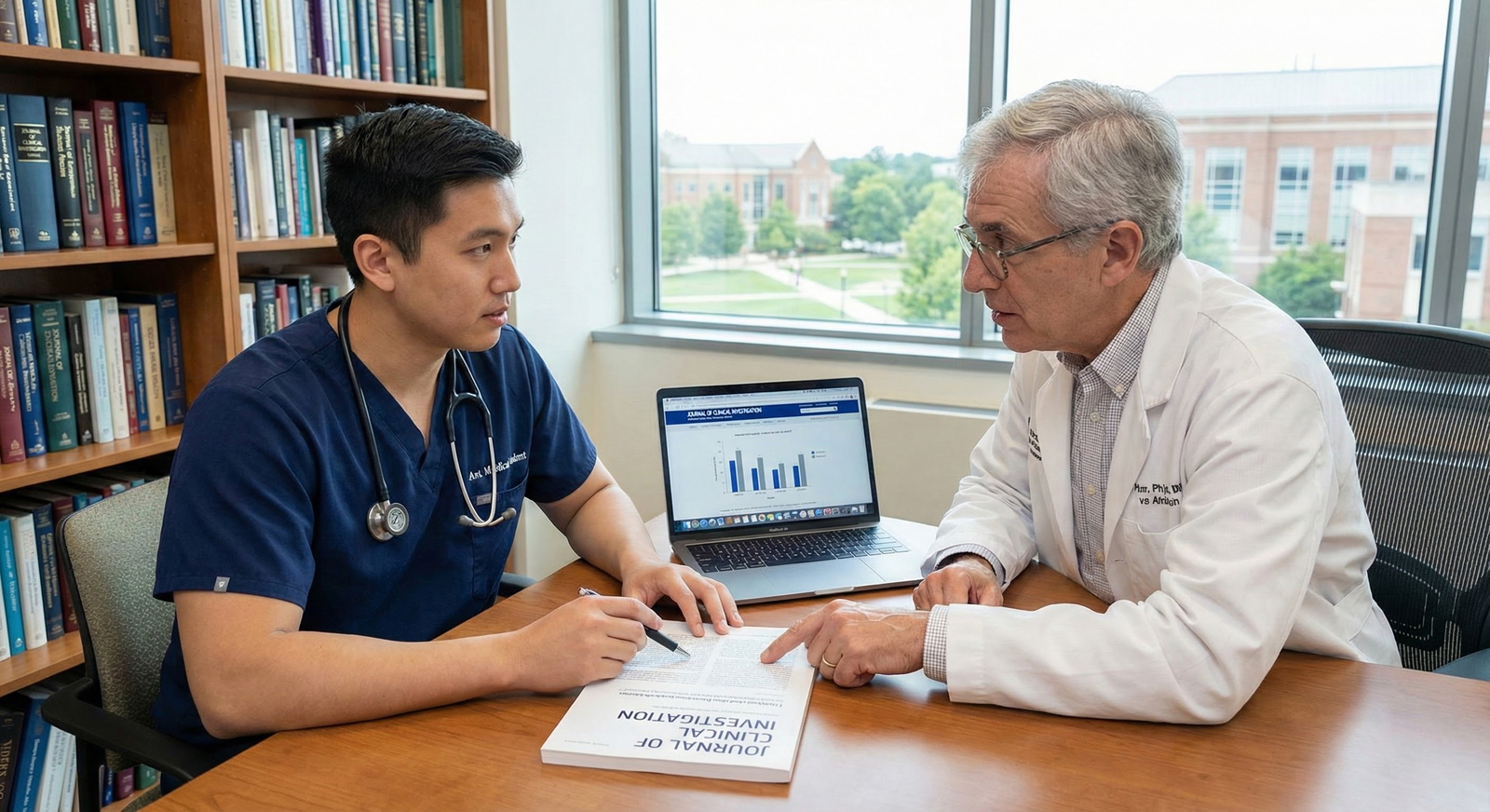
Understanding the Role of Research in General Surgery Residency
For an MD graduate targeting a general surgery residency, a strong research profile is often the difference between a solid application and a standout one. General surgery is one of the more competitive fields in the allopathic medical school match, and programs increasingly value applicants who can think critically, interpret evidence, and contribute to surgical innovation.
Why research matters specifically in general surgery:
- Evidence-based practice is central – Surgeons constantly adopt new techniques, devices, and perioperative pathways. Programs want residents who can understand and appraise the evidence behind these changes.
- High academic expectations – Many general surgery residency programs are housed in research-intensive academic centers with NIH-funded faculty and expectations for resident scholarly activity.
- Fellowship planning – If you’re considering competitive fellowships (surgical oncology, vascular surgery, minimally invasive surgery, trauma/critical care, pediatric surgery), a strong research background during residency is almost mandatory.
- Signals of key traits – Research in surgery residency applications signals perseverance, curiosity, teamwork, time management, and the ability to move a long-term project to completion.
This doesn’t mean you must be a PhD-level scientist to match. You do, however, need to be strategic and intentional in building a research profile that aligns with your goals as an MD graduate pursuing general surgery.
How Programs Evaluate Your Research Profile
Before you can build your profile, you need to understand how program directors think about research in the context of the surgery residency match.
1. What “Counts” as Research?
Across the spectrum of general surgery residency programs, the following are commonly valued:
- Peer-reviewed original research (clinical, translational, basic science)
- Systematic reviews and meta-analyses
- Case reports and case series
- Quality improvement (QI) projects with data and outcomes
- Educational research in surgery
- Conference presentations (oral or poster, local/regional/national/international)
- Book chapters and review articles
- Abstracts and published conference proceedings
Programs look at both productivity and trajectory:
- Are you engaging with research consistently over time?
- Do your projects show increasing depth or responsibility?
- Is there a coherent theme (e.g., trauma, colorectal, surgical education), or at least a clear surgical interest?
2. How Many Publications Are “Enough”?
One of the most common questions is: how many publications needed to be competitive for a general surgery residency?
There is no magic number, but you can think in tiers:
Solid foundation (typical applicant to mid-tier programs)
- 1–3 peer-reviewed papers (not all must be first-author)
- A few posters/abstracts; some may be in-progress or under review
Competitive academic profile (for university/academic-heavy programs)
- 3–6 peer-reviewed publications (aim for at least one first-author)
- Multiple presentations (regional or national surgical meetings)
- At least one project clearly aligned with general surgery (e.g., trauma outcomes, colorectal surgery, bariatric surgery)
Research-heavy / PSTP / academic career trajectory
- 6+ publications
- Mix of first-author and co-author work
- Evidence of more complex projects: clinical trials, multi-institution collaborations, or advanced statistical methods
- Potential research year(s) or dedicated time off during med school
Remember: quality and your role matter as much as raw numbers. A single first-author study with solid methodology in a reputable journal often carries more weight than a long list of minor co-authorships where your contribution is unclear.
3. What Aspects of Research Do PDs Actually Notice?
Program directors and interviewers tend to focus on:
- First-author vs co-author: First-authorship signals intellectual ownership and leadership.
- Relevance to surgery: Research in general surgery, surgical subspecialties, or perioperative medicine is most impactful.
- Publication venues: Well-recognized journals or respected specialty journals carry more weight than predatory or obscure outlets.
- Project completion: Starting many projects but not finishing any can be a red flag; completed, published work is attractive.
- Ability to discuss your work: Can you clearly and confidently explain your hypothesis, methods, limitations, and implications?

Step-by-Step Strategy to Build a Strong Surgical Research Profile
This section lays out a practical roadmap for an MD graduate: what to do in each phase to maximize your chances in the allopathic medical school match for general surgery.
Step 1: Clarify Your Research Goals and Constraints
Before you say yes to projects, define:
Your target program types
- Community vs academic vs hybrid
- Research-heavy vs clinically focused
Your realistic time availability
- Are you full-time clinical? In a research gap year? In a flexible transitional phase?
- How many hours/week can you dedicate consistently?
Your skill set
- Comfortable with literature reviews, data entry, basic stats?
- Any prior research training or coursework?
Your timeline to the surgery residency match
- More than 2 years: you can aim for more substantial projects (prospective studies, complex datasets).
- 1–2 years: prioritize retrospective chart reviews, systematic reviews, QI projects that can feasibly be finished.
- <1 year: emphasize writing-up completed work, case reports, smaller projects, and rapid-turnaround abstracts.
Step 2: Find Surgical Research Mentors and Projects
Mentorship is critical. You want faculty who are:
- Actively engaged in general surgery or surgical subspecialty research
- Have prior success publishing or presenting
- Are known to be supportive of trainees
How to find mentors as an MD graduate:
Your home institution
- Check department of surgery websites: look for faculty with recent publications.
- Attend surgery grand rounds; introduce yourself after talks.
- Ask the residency program director, “Which faculty are most engaged in resident or student research?”
If you lack a strong home department
- Seek visiting research positions at larger centers.
- Reach out via email to surgeons at nearby academic hospitals.
- Leverage alumni networks from your allopathic medical school.
- Use national organizations: ACS, SAGES, EAST, trauma societies, etc.
Sample outreach email (brief and effective):
Subject: MD Graduate Seeking General Surgery Research Opportunities
Dear Dr. [Name],
I am an MD graduate with a strong interest in general surgery and plan to apply for surgery residency in the upcoming match cycle. I am particularly interested in [trauma/colorectal/surgical oncology/etc.]. I have [briefly mention prior experience, if any], and I am eager to contribute to ongoing projects or assist with data analysis, manuscript writing, or literature reviews.
I can commit approximately [X hours/week] and would be grateful for the opportunity to meet briefly to discuss potential involvement in your research.
Thank you for your time and consideration.
Sincerely,
[Your Name], MD
Step 3: Choose the Right Types of Projects
To build a balanced and efficient research portfolio for general surgery, consider combining:
1. “Quick-Win” Projects
These help you add entries to your CV in a relatively short timeline:
- Case reports of unusual or particularly instructive surgical cases
- Case series of specific surgical techniques or complications
- Narrative reviews or invited review articles
- Short communications or letters to the editor
- Small QI projects with pre/post outcomes (e.g., improving pre-op antibiotic timing)
Timeline: weeks to a few months.
2. Medium-Term Retrospective Studies
These are highly common in surgery and feasible for an MD graduate:
- Retrospective chart reviews using existing institutional datasets
- Database studies using NSQIP, NIS, SEER, or trauma registries (with mentor guidance)
- Projects examining:
- Complication rates
- Length of stay and readmissions
- Outcomes of new protocols or surgical techniques
- Predictors of morbidity/mortality in specific surgical populations
Timeline: several months to a year from inception to publication, but abstracts may be ready earlier.
3. Long-Term or High-Impact Projects
If your timeline allows (e.g., research year or gap), you can consider:
- Prospective cohort studies
- Clinical trials or pilot studies
- Translational or basic science projects related to surgical disease (oncology, wound healing, biomaterials)
- Multi-center collaborations
These are less about boosting “numbers now” and more about building depth, reputation, and strong letters of recommendation.
Step 4: Be Clear About Your Roles and Expectations
To avoid misunderstandings and to ensure your work converts into tangible outputs:
Discuss at project start:
- Your expected contribution (data collection, writing sections, statistics, IRB drafting)
- Authorship order (esp. first or second author possibilities)
- Target journal or meeting
- Rough timeline and milestones
Confirm in writing (a brief follow-up email) what was agreed upon; this is professional and helps keep everyone aligned.
Developing Core Research Skills as an MD Graduate
You don’t need to be a statistician, but you do need to be competent and reliable in core research skills that are valued in a general surgery residency.
1. Literature Searching and Critical Appraisal
For a strong research profile:
- Learn to use PubMed, Embase, and Google Scholar effectively.
- Practice:
- Identifying key trials and guidelines in your area (e.g., trauma, hepatobiliary, colorectal).
- Summarizing the evidence: What is known, what gaps exist, and what your study adds.
Actionable steps:
- Take a short online course in evidence-based medicine (many are free).
- Join or form a journal club with surgical focus; present papers and receive feedback.
2. Study Design and Methods Basics
You should be comfortable distinguishing:
- Observational vs interventional studies
- Retrospective vs prospective designs
- Common biases (selection bias, confounding, information bias)
- Basic outcomes: odds ratios, relative risk, hazard ratios, confidence intervals, p-values
Actionable steps:
- Read a methods guide targeted at clinicians (e.g., JAMA Users’ Guides to the Medical Literature).
- Ask mentors if you can help draft the methods and discussion sections of manuscripts—this is where conceptual understanding deepens.
3. Data Handling and Simple Statistics
For many surgical clinical projects, being able to:
- Use Excel or Google Sheets for preliminary data organization
- Perform basic analyses in SPSS, R, or Stata (with guidance):
- Descriptive statistics
- t-tests, chi-square tests, basic regression models
Actionable steps:
- Take an introductory biostatistics course or MOOC.
- Ask your mentor or a biostatistician to walk you through code/output so you understand what you’re reporting.
4. Scientific Writing and Presentation Skills
You’ll need to:
- Draft structured abstracts and manuscript sections
- Follow journal formatting guidelines
- Craft clear figures and tables
- Present posters or oral presentations at meetings (ACS, local surgical societies, subspecialty conferences)
Actionable steps:
- Save good published papers in your topic area and model your writing style after them.
- Practice giving 5–10 minute summary presentations of your projects to peers or mentors.
- Ask for feedback specifically on clarity, structure, and logic.

Strategically Showcasing Your Research in the Surgery Residency Match
Once you’ve built your research foundation, you need to present it effectively in your general surgery residency application.
1. Organizing Your CV and ERAS Application
For an MD graduate applying to general surgery:
- Separate “Publications” from “Presentations” and “Research Experience” sections.
- Within publications, categorize:
- Peer-reviewed original articles
- Review articles
- Case reports
- Book chapters
- Abstracts and conference proceedings
- Clearly mark:
- Published, In Press, Accepted, Submitted, or In Preparation
- List all authors in order and highlight your role (first author, etc.).
Be honest: do not inflate your role or status. Program directors can easily verify publications, and inconsistencies raise serious concerns.
2. Writing the Personal Statement with Research in Mind
Your personal statement should:
- Reflect a coherent narrative linking:
- Your clinical interests in general surgery
- Your research experiences
- Your long-term goals (clinical academic surgeon, community surgeon with QI interest, etc.)
- Highlight one or two key projects:
- What question you addressed
- What you learned (about the disease, statistics, teamwork, perseverance)
- How it influenced your decision to pursue general surgery
Avoid turning it into a publication list. Focus on insight and reflection rather than repetition.
3. Preparing to Discuss Your Research at Interviews
You should be ready to explain each project on your CV in 2–3 minutes, including:
- The core research question and hypothesis
- Study design and key methods
- Main findings
- Limitations
- How this work fits into the broader literature or practice
Common interview questions include:
- “Tell me about your most meaningful research project.”
- “What did you do specifically on this study?”
- “What challenges did you face and how did you overcome them?”
- “How do you see research fitting into your career as a surgeon?”
Practice out loud—your ability to succinctly articulate your work signals maturity and authenticity to interviewers.
4. Leveraging Research for Strong Letters of Recommendation
Research mentors can be powerful advocates in the surgery residency match.
To foster strong letters:
- Be consistent, reliable, and proactive on projects.
- Ask for feedback and accept it constructively.
- Give your mentor plenty of time to write, and offer:
- Your updated CV
- A brief summary of your projects together
- Your personal statement or a one-page “career goals” summary
A strong research letter often includes:
- Specific details about your intellectual contributions
- Comments on work ethic, independence, problem-solving
- Comparison to other trainees the mentor has worked with
- Affirmation that you are well-suited for a general surgery residency
Balancing Research with Clinical and Exam Demands
As an MD graduate, you may be juggling ongoing clinical work, board exams, or other obligations while building a research profile.
Prioritization Principles
- Never sacrifice licensure or core exam performance purely for more research. Boards and basic academic metrics are still primary filters.
- Use research to complement, not compete with, your clinical exposure:
- Trauma call + trauma outcomes research
- Colorectal rotation + colorectal cancer QI project
Time-Management Tactics
Block consistent weekly time for research (e.g., two 2-hour sessions).
Break large tasks into smaller, actionable steps:
- Week 1: define research question and do preliminary search.
- Week 2: finalize protocol and data collection plan.
- Week 3–4: data collection.
- Week 5–6: basic analysis and drafting abstract.
Use simple project management tools:
- Shared Google docs for manuscript drafts.
- Trello/Notion/Excel lists for task tracking and deadlines.
Navigating Gaps or Non-traditional Paths
If you’re an MD graduate who:
- Took a research year
- Had a gap due to life circumstances
- Are applying after time in another field
Then:
- Use research to show you remained academically engaged.
- Be ready to explain the narrative: how your path led you to general surgery, and how your research experiences confirm your current direction.
Programs respect thoughtful, intentional transitions, especially when backed by clear scholarly and clinical engagement.
Frequently Asked Questions (FAQ)
1. As an MD graduate, can I still build a competitive research profile if I had limited research in medical school?
Yes. Many applicants to general surgery residency develop most of their research experience after graduation. Focus on:
- Identifying one or two strong mentors in surgery or related fields.
- Starting with feasible, completion-oriented projects (retrospective studies, case reports, QI).
- Demonstrating a clear upward trajectory: even a year of well-organized effort can produce multiple abstracts and at least one or two manuscripts.
What programs want to see isn’t perfection; it’s growth, follow-through, and genuine interest.
2. Does all my research need to be in general surgery?
Not necessarily, but surgery-relevant work has the highest yield. Research in:
- Surgical subspecialties (trauma, vascular, colorectal, breast, surgical oncology, HPB, MIS)
- Anesthesiology or critical care with perioperative focus
- Emergency medicine trauma research
is all viewed favorably.
If you have older research in another specialty (e.g., cardiology, psychiatry), keep it on your CV. It still shows scholarly skills. Over time, try to shift your newer projects toward a surgical or perioperative focus.
3. How many publications do I realistically need to match into general surgery?
For the average MD graduate targeting a range of general surgery programs:
- Having at least 1–3 peer-reviewed publications plus a few presentations is a strong baseline.
- For research-heavy academic programs, aim for 3–6 publications, including at least one first-author paper.
- Remember that in-progress and submitted work counts on ERAS if you label it accurately.
However, there is no rigid threshold. A candidate with fewer, but highly relevant and well-executed projects—plus strong letters and solid clinical metrics—can be more competitive than someone with numerous but superficial or poorly understood publications.
4. I’m short on time before the upcoming surgery residency match. What should I prioritize?
If you are within a year of applying:
- Finish and submit existing projects – converting them into abstracts, posters, or manuscripts yields the quickest gains.
- Case reports and brief reviews – relatively quick turnaround and good for demonstrating initiative.
- Presentations at local or regional surgical meetings – often faster to schedule than high-impact journal publications.
- Preparing to talk about your work – even a small number of well-understood projects, discussed confidently, can strongly impress interviewers.
Align your efforts with your immediate timeline: prioritize tasks that will result in concrete, listable outputs by the time ERAS opens.
By understanding how general surgery programs evaluate research, choosing the right projects and mentors, and strategically presenting your work, you can construct a research portfolio that significantly strengthens your MD graduate residency application. Research doesn’t have to be your entire identity as a future surgeon—but building a thoughtful, coherent scholarly profile can open doors, enhance your training, and set the foundation for a career that blends operative excellence with lifelong academic curiosity.