Why Research Matters So Much for US Citizen IMGs in Anesthesiology
If you are a US citizen IMG or an American studying abroad aiming for anesthesiology residency, your research profile can significantly influence how programs view your application.
Anesthesiology has become moderately competitive, and program directors often see research as:
- Evidence of your academic curiosity and discipline
- A proxy for how well you will perform on quality improvement (QI), scholarly projects, and fellowship pursuits
- A way to offset IMG-related concerns (unknown school, variable clinical exposure, visa confusion even for US citizens abroad)
- A chance to show early interest in anesthesiology specifically
For a US citizen IMG, research is not optional “window dressing”—it is one of the most powerful levers you control to distinguish yourself from the large US MD/DO applicant pool.
Common questions you might have:
- How much research do I realistically need for an anesthesia match?
- Does it have to be in anesthesiology?
- What if I’m already late in the game?
- I’m abroad—how do I even find projects or mentors?
This guide walks you step-by-step through building a strong, credible research profile tailored to anesthesiology and optimized for the anesthesia match as a US citizen IMG.
Understanding Research Expectations in the Anesthesia Match
What Program Directors Actually Look For
Program directors rarely expect every applicant to have R01-level bench science. Instead, they ask:
- Did this applicant go beyond the minimum?
- Did they follow through and complete something publishable or presentable?
- Is there a coherent story tying their research to anesthesiology, perioperative medicine, or patient safety?
For a US citizen IMG, having a strong research profile sends a clear message:
“I can compete and contribute academically at the same level as US graduates.”
How Many Publications Are “Enough”?
There is no hard cutoff, and the answer to “how many publications needed” depends on quality, role, and coherence with your application. That said:
Highly competitive profile:
- 3–5+ total scholarly items (not all need to be full PubMed papers)
- At least 1–2 directly related to anesthesiology, perioperative medicine, pain, or critical care
- Mix of abstracts, posters, and at least one paper/letter/case report
Solid, realistic profile for many US citizen IMGs:
- 1–3 publications/presentations
- Clear, describable role (not just a name on a list)
- At least one anesthesia or perioperative-themed project if possible
Minimum to be taken seriously as “research-active”:
- 1 completed project with something tangible: poster, abstract, letter, or manuscript
- Ability to discuss it fluently at interviews (design, results, limitations)
Programs would rather see fewer, real contributions than a long list where you can’t clearly explain your role.
Types of Research That “Count”
For anesthesiology residency applications, the following are valuable:
- Original research (clinical or translational) – highest impact
- Quality improvement (QI) projects – especially if related to OR safety, pain control, ERAS, airway protocols
- Case reports and case series – particularly interesting or rare anesthetic management issues
- Review articles, narrative reviews, book chapters – useful for showing scholarly engagement
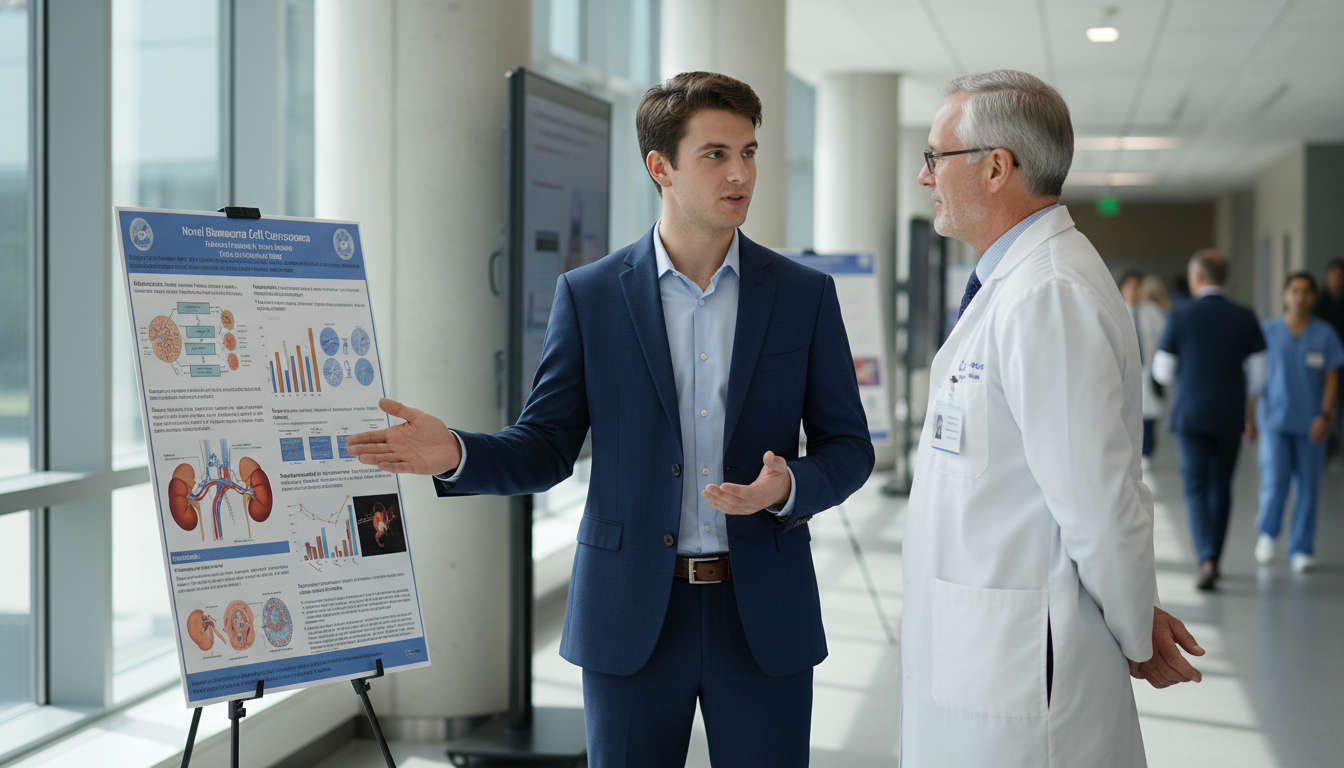
- Conference abstracts and posters – visible and very achievable for IMGs
- Letters to the editor / brief reports – quick wins that still count as publications
All of these can be built into an application that shows you understand how research for residency strengthens your candidacy.
Step 1: Assess Your Starting Point (And Timeline)
Clarify Where You Are in the Process
Your research strategy depends heavily on your stage:
- Pre-clinical years abroad (M1–M2 equivalent)
- Best time to build foundational skills and longitudinal projects
- Clinical years abroad (M3–M4 equivalent)
- Focus on efficient, short-to-medium-term projects (case reports, retrospective chart reviews, QI)
- Graduated or nearing graduation with a gap before applying
- Ideal time for a dedicated research year or high-intensity remote involvement
If you’re close to applying (within 6–12 months), prioritize projects with short timelines that can yield at least an abstract, case report, or conference poster before September ERAS submission.
Conduct a Personal Research Inventory
Write down:
- Any prior research (even from undergrad or non-medical fields)
- Skills: statistics, coding, literature review, writing
- Available time weekly (be realistic: 5–10 hours/week vs. full-time)
- Geographic options: can you travel or relocate for a research position in the US?
This inventory will guide you toward feasible project types and your degree of involvement.
Step 2: Finding Research Opportunities as a US Citizen IMG

1. Leverage Your “US Citizen” Advantage
Unlike non-citizen IMGs, you:
- Do not need a visa for a US research position
- Are more attractive to departments that worry about sponsorship costs or administrative complexity
- Can often start positions quickly if you can secure housing and logistics
Make this clear in your outreach emails:
“I am a US citizen currently studying medicine abroad, planning to apply to anesthesiology residency in [year], and I am eligible to work without visa sponsorship.”
2. Target Academic Anesthesiology Departments
Look up:
- University hospitals with anesthesiology departments
- Faculty profiles for “research interests,” “publications,” and “lab sites”
- Separate pages for pain medicine, critical care, and perioperative medicine – all relevant to anesthesiology residency
Focus on faculty with:
- Clinical research (more IMG-accessible)
- Outcomes research, QI, or retrospective chart reviews
- Ongoing projects that regularly generate abstracts and case reports
3. Writing Effective Cold Emails
Structure:
Subject line:
- “US citizen IMG interested in anesthesiology research – seeking remote/project involvement”
- “US citizen medical student (IMG) – available for dedicated anesthesiology research year”
Opening:
- State that you are a US citizen IMG/American studying abroad with a strong interest in anesthesiology.
Brief background:
- School, year, exam status (Step 1/2 if taken), timeline for application.
Why them (personalized):
- Reference 1–2 of their recent publications and how they align with your interests.
Offer:
- Emphasize willingness to do data collection, chart review, literature review, manuscript drafting.
Close clearly:
- “I would be grateful for any opportunity, including remote involvement, and am happy to start with smaller tasks such as data entry or literature searches.”
Send 20–30 well-crafted messages, not just 3–4. Response rates from cold emails are typically low, but a single good match can transform your profile.
4. Use Formal Research Programs and Research Years
Search for:
- “Anesthesiology research fellowship” for medical students or graduates
- Institutional research associate programs (often in emergency medicine or critical care but still relevant)
- Postgraduate research assistant roles in anesthesiology, pain, or perioperative services
A dedicated research year in the US, especially with anesthesiology faculty, can yield:
- Several abstracts/posters
- 1–2 manuscripts
- Strong US-based letters of recommendation that directly mention your research performance
5. Remote and Hybrid Options
If you can’t be physically present:
- Ask specifically for remote-friendly tasks:
- Systematic or narrative reviews
- Data cleaning and database building
- Manuscript editing
- Basic stats under supervision
Use tools like:
- REDCap for data management
- Zoom/Teams for weekly meetings
- Google Docs/Overleaf for collaborative writing
Remote involvement is highly acceptable as long as your role is real and you understand the methods well.
Step 3: Choosing the Right Projects for Anesthesiology
Prioritize Anesthesiology-Relevant Topics
While any research is better than none, aligning your work with anesthesiology strengthens your narrative and signals commitment. Consider:
- Perioperative outcomes – e.g., complications after surgery, readmissions, delirium, pain scores
- Airway management – video laryngoscopy vs. direct, difficult airways, education in airway skills
- Anesthesia techniques – neuraxial vs. general anesthesia outcomes, regional anesthesia protocols
- Pain management – perioperative pain control, opioid-sparing strategies, ERAS protocols
- Critical care – ventilator strategies, sepsis management, hemodynamics
- Patient safety & QI – handoff protocols, time-out adherence, OR workflow efficiency
If you cannot secure anesthesiology projects, perioperative medicine, critical care, or pain medicine are all acceptable adjacent fields.
Balancing Ambition and Timelines
Use a portfolio approach:
1–2 quick-win projects (3–6 months)
- Case reports, small retrospective studies, brief reviews
- Aim for conference abstract and/or journal submission
1 longer-term project (6–12+ months)
- More robust retrospective study or prospective QI initiative
- Aim for full manuscript
This way, you have something tangible to list in ERAS (even “submitted” or “in preparation”) while also building toward more impressive publications.
Example Project Pathway for a US Citizen IMG
Imagine you secure mentorship with an academic anesthesiologist:
Month 1–2:
- Help with a case report of a rare reaction to neuromuscular blockers
- Perform literature search and draft introduction/discussion
Month 2–5:
- Join a retrospective chart review on postoperative nausea and vomiting (PONV) in a bariatric surgery cohort
- Extract data from EMR, help create tables, participate in abstract writing
Month 5–12:
- Get involved in a QI project improving PACU pain control documentation
- Assist with protocol design, pre-post data collection, and poster preparation
By ERAS season, you could have:
- 1 case report submitted/accepted
- 1 conference abstract and poster
- 1 in-progress or submitted QI manuscript
That is a very credible research portfolio for anesthesiology residency, especially for a US citizen IMG.
Step 4: Building Core Research Skills (Even From Abroad)

Essential Skill Set for an Anesthesia-Focused Researcher
You don’t need to be a statistician, but you should master:
Literature search and appraisal
- Using PubMed effectively
- Identifying good evidence vs. weak studies
- Summarizing key findings
Basic statistics literacy
- Understanding p-values, confidence intervals, common tests
- Knowing when to ask a biostatistician for help
Data management
- Clean, well-labeled spreadsheets
- Respect for patient privacy and HIPAA rules
Scientific writing
- Clear structure: background, methods, results, discussion
- Proper citation management (EndNote, Mendeley, Zotero)
Free and Low-Cost Learning Resources
You can strengthen your profile by adding research training certifications to your ERAS under “certifications” or “additional education”:
- Online courses in clinical research methods (Coursera, edX, etc.)
- Free NIH Protecting Human Research Participants or CITI Program training (if your institution provides access)
- Basic biostatistics MOOC
- Workshops from your medical school or affiliated teaching hospitals
Having formal training boxes checked reassures programs that you understand research ethics and methodology.
Step 5: Turning Work Into Tangible Outputs
Where IMGs Often Fall Short
Many IMGs assist with data collection but never get their name on a paper because:
- Projects stall before submission
- They don’t advocate for authorship early
- They underestimate the time from data to publication
You must explicitly ask early on:
“If I contribute to data collection, analysis, and drafting, would I be able to be an author on the abstract or manuscript?”
This is a professional and reasonable question.
Targeting Conferences and Journals
For anesthesiology-specific work:
Major conferences:
- American Society of Anesthesiologists (ASA)
- Society of Cardiovascular Anesthesiologists (SCA)
- American Society of Regional Anesthesia and Pain Medicine (ASRA)
- Society of Critical Care Medicine (SCCM)
Journals:
- Anesthesiology
- Anesthesia & Analgesia
- Regional Anesthesia & Pain Medicine
- Journal-specific case report or brief report sections
- Specialty or regional anesthesia/pain/critical care journals
Even if your work is not accepted in top-tier journals, tier-2 or specialty journals still demonstrate solid scholarly activity.
Documenting Your Contributions for ERAS
For each research item, be ready to state:
- Title, mentor, and institution
- Your exact role (10–20 seconds summary)
- What you learned and how it influenced your interest in anesthesiology
In ERAS, you can list:
- Published and accepted items clearly
- Submitted or in preparation with honest status (programs know not everything will be published, but they value transparency)
Step 6: Integrating Research Into Your Anesthesiology Story
Aligning With Your Personal Statement and CV
Use your research experiences to reinforce a coherent narrative:
- If your research is in perioperative outcomes, emphasize your fascination with optimizing patients around the time of surgery.
- If your work is in pain or regional anesthesia, connect it to your interest in multimodal analgesia and opioid stewardship.
- If your experience is critical care or hemodynamics, focus on your drive to master physiology and complex decision-making in unstable patients.
Programs should look at your CV and personal statement and think:
“This applicant is serious about anesthesiology and has already started contributing to the field.”
Using Research in Interviews
During interviews, you will almost always be asked:
- “Tell me about your research.”
- “What was your role in that project?”
- “What did you learn from that experience?”
- “If you had to design a follow-up study, what would you change?”
Prepare:
- A 2–3 minute “research elevator pitch” for your most important project
- One challenge or failure story (e.g., IRB delays, negative results) and what you learned
- One future interest in anesthesiology research (e.g., patient safety, simulation, perioperative outcomes)
Your goal is to show not only that you have done research for residency, but that you can think critically and communicate clearly about science.
Common Pitfalls and How to Avoid Them
Pitfall 1: Chasing Quantity Over Quality
Adding your name to minor projects you barely understand can backfire during interviews. Focus on:
- Clear roles
- Projects you can confidently explain
- Tangible outputs rather than a scattered list of half-finished ideas
Pitfall 2: Waiting Too Long to Start
If you are within one year of your intended anesthesia match, time is critical. Prioritize:
- Shorter, well-defined projects
- Joining already active studies rather than starting brand new ones
- Getting at least one case report, poster, or abstract done before ERAS submission
Pitfall 3: Keeping Your IMG Status Hidden
Being a US citizen IMG is actually a competitive advantage over non-citizen IMGs. Mention:
- Your citizenship in initial outreach to ease concerns about hiring/logistics
- Your familiarity with the US healthcare system if you have previous work or education there
- Your long-term intent to build a career in the US
Pitfall 4: Not Asking Mentors for Letters
Research mentors can provide powerful letters of recommendation, especially if they:
- Supervised you directly for months
- Saw your work ethic and reliability
- Are anesthesiologists or perioperative specialists
Ask them 2–3 months before ERAS opens and provide:
- Your CV
- Personal statement draft
- A brief reminder of your projects and contributions
Putting It All Together: A Sample 12–18 Month Plan
Month 1–3
- Email 20–30 anesthesiology or perioperative faculty at multiple institutions
- Secure at least 1 mentor and 1–2 potential projects
- Complete CITI or equivalent research ethics training
- Start work on a quick-win project (case report, small review)
Month 3–6
- Deepen involvement in 1–2 ongoing studies
- Start data collection or literature review
- Aim to submit at least one conference abstract or brief manuscript
Month 6–12
- Continue to build on first project(s)
- Pursue a moderate-size retrospective or QI study
- Prepare for conference presentations, if accepted
- Start drafting anesthesiology-focused personal statement that weaves in your research
Month 12–18 (ERAS season & beyond)
- Finalize submitted and accepted items in your ERAS application
- Practice explaining your projects for interviews
- Request letters from your research mentors
- Use interviews to highlight how your research prepared you for anesthesiology residency
By the time you apply, your research profile will be:
- Credible
- Focused on anesthesiology themes
- Clearly tied to your identity as a US citizen IMG ready to contribute academically
FAQs: Research Profile Building for US Citizen IMGs in Anesthesiology
1. Do I absolutely need anesthesiology-specific research to match anesthesiology residency?
No, but it helps significantly. Programs value any solid research experience because it shows discipline and academic ability. However, for an American studying abroad aiming for anesthesiology, even one project clearly connected to anesthesia, perioperative medicine, pain, or critical care can strongly reinforce your commitment to the specialty and give you more to talk about during interviews.
2. As a US citizen IMG, how many publications do I need to be competitive?
There is no fixed number, but for many US citizen IMG applicants:
- Having 1–3 meaningful publications or presentations is a strong baseline.
- At least one project with a clear anesthesiology or perioperative focus is ideal.
- More important than raw count is your ability to explain your role and what you learned. A smaller number of substantial contributions can be better than a long list of minor mentions you can’t discuss in detail.
3. Is a dedicated research year worth it for an anesthesia match?
For many US citizen IMGs, a dedicated research year in the US can be extremely valuable, especially if:
- Your school has limited research infrastructure
- You need stronger US clinical and academic connections
- You aim for more academic or competitive anesthesiology programs
A well-used research year can produce multiple abstracts, at least 1–2 manuscripts, and strong letters. It is particularly helpful if your test scores or school reputation may not stand out on their own.
4. What if I start late and only have 6–9 months before ERAS?
Focus tightly on shorter, high-yield projects:
- Case reports in anesthesiology or perioperative care
- Small retrospective studies using existing databases
- QI projects with clearly defined pre–post endpoints
- Conference abstracts that can be submitted quickly
Even one or two well-executed, discussable projects can improve your application and give you meaningful experiences to highlight at interviews. Be honest about timelines with your mentor and prioritize projects that can realistically produce at least an abstract, poster, or submitted manuscript before application season.
By intentionally planning your research pathway and leveraging your unique status as a US citizen IMG, you can build a research portfolio that not only strengthens your anesthesiology residency application but also sets the foundation for an academic or fellowship-focused career in the specialty.