A strong research profile is one of the most powerful ways a US citizen IMG can stand out in the urology match. As an American studying abroad, you are competing in one of the most competitive specialties, with fewer built‑in research opportunities and less name recognition than many US MD students. That combination makes your research strategy not optional—it’s essential.
This article breaks down, in practical terms, how to build a competitive research portfolio in urology from outside the US, even if you’re starting late, have limited resources, or attend a school with little research infrastructure.
Understanding the Role of Research in the Urology Match
Urology is among the most research‑heavy specialties. Program directors expect applicants—especially IMGs—to demonstrate genuine academic engagement and productivity.
Why research matters more for a US citizen IMG
For a US citizen IMG (American studying abroad), research accomplishes several things at once:
- Signals academic seriousness: Shows that you can think critically, write scientifically, and complete long‑term projects—skills valued in an academic and surgical field like urology.
- Offsets educational “distance”: You may come from a lesser‑known school. Research with US‑based mentors or institutions helps normalize you in the eyes of PDs.
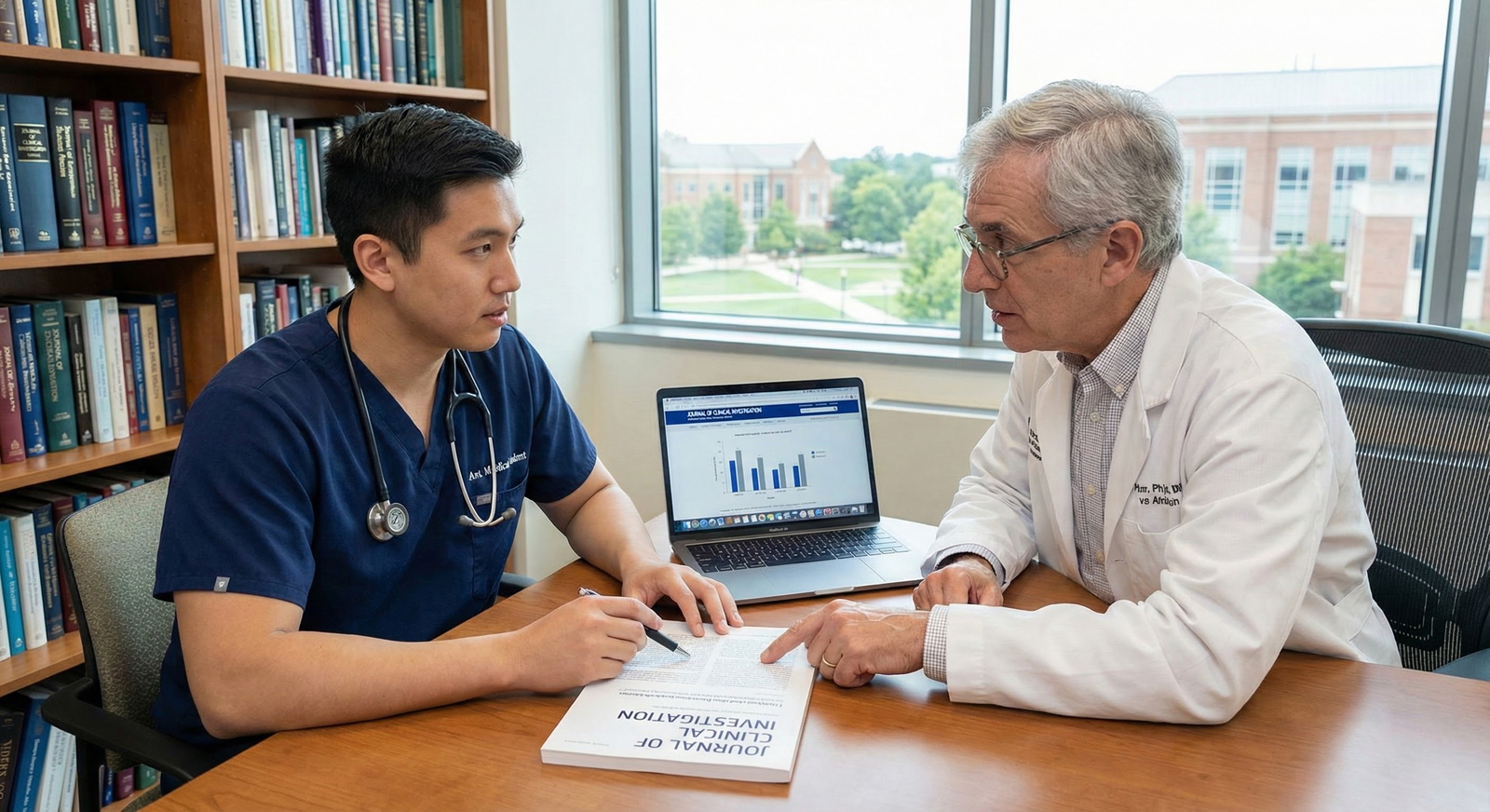
- Provides letters of recommendation (LORs): Research mentors often write some of your strongest, most detailed letters.
- Creates talking points: Your projects become natural topics for interviews and away rotations.
- Builds a track record of commitment to urology: Especially important when you don’t have extensive US clinical urology experiences early on.
How competitive applicants look on paper
From NRMP, AUA, and program‑reported data, successful US applicants in urology often have:
- Multiple urology‑related research experiences
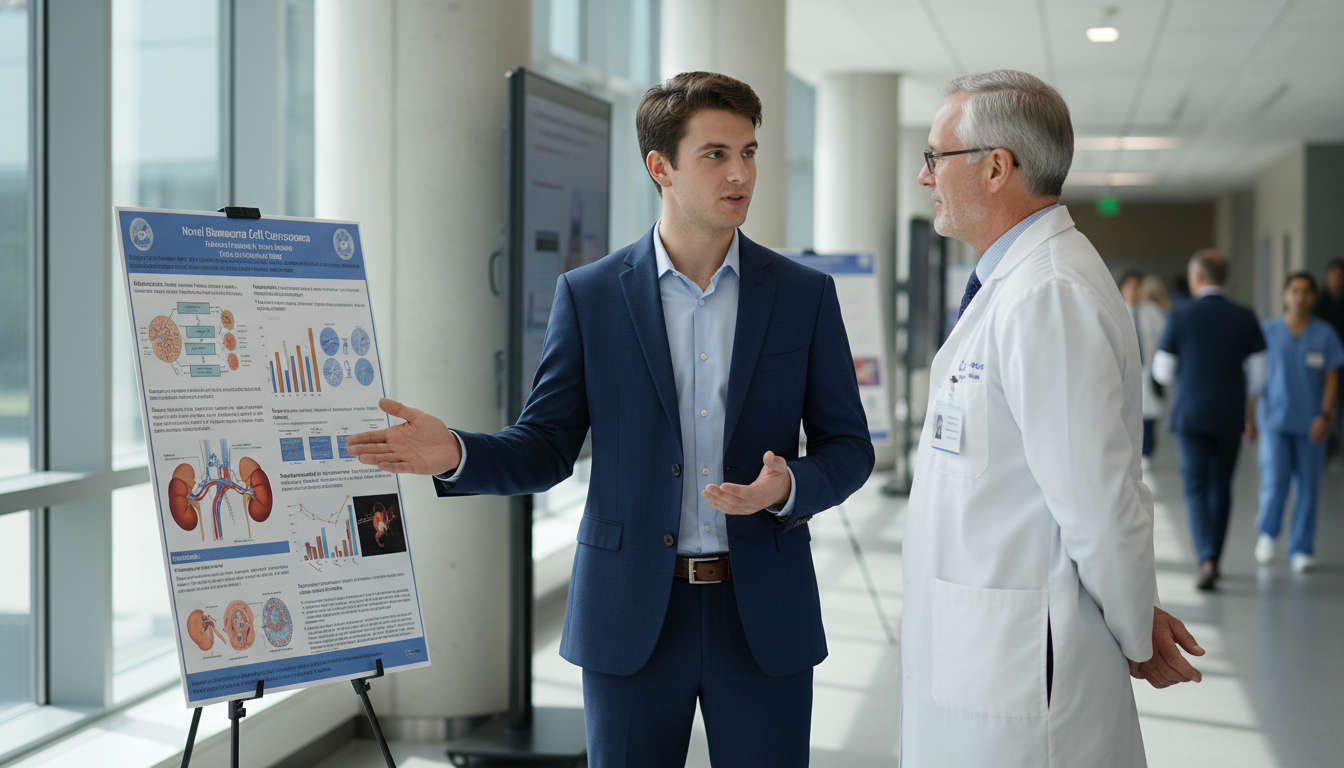
- Several abstracts, posters, or oral presentations
- At least a few peer‑reviewed publications
US citizen IMG applicants usually need to be at or above this standard in research to offset other disadvantages (school name, fewer home rotations, visa noise—even if you don’t need a visa, many PDs lump IMGs together).
“How many publications needed” for urology?
There is no magic number, but some practical benchmarks:
- Competitive IMG target (ideal, not mandatory):
- 1–3 urology‑focused peer‑reviewed publications (can include case reports and review articles)
- 3–6 total publications across all topics
- 4–10 abstracts/posters/presentations (local, national, or international)
- Minimum to aim for if you’re late to start:
- At least 1–2 urology‑related publications or accepted abstracts
- Demonstrated consistent involvement in one or two longitudinal projects
- A clear story of research interest and impact, even if output is smaller
Programs won’t reject you just because you didn’t hit a certain number. They will, however, notice if you have no meaningful urology engagement. The key is coherence and momentum: your research should tell a story that aligns with your goal of becoming a urologist.
Mapping Out a Strategic Research Plan as a US Citizen IMG
You have two overlapping challenges: finding research and translating it into meaningful output. You need a deliberate, staged plan.
Stage 1: Clarify your constraints and timeline
Ask yourself:
- Where are you in school?
- Pre‑clinical (years 1–2)
- Clinical (years 3–4)
- Final year / applying soon
- What is your calendar for the urology match?
- Urology uses an early match—you must be ahead of the standard ERAS timeline.
- How much time per week can you devote?
- 5–10 hours/week is realistic for many busy students and enough for sustained involvement.
Then set research goals that match your timeframe:
- If you’re 2–3 years from applying:
- Aim for multiple projects: at least one with strong publication potential, another generating posters/abstracts.
- Experiment across different methodologies (chart review, QI, basic science if available).
- If you’re 12–18 months from applying:
- Prioritize projects that can realistically produce accepted abstracts or manuscripts before ERAS opens.
- If you’re <12 months from applying:
- Focus on quick‑turnover projects: case reports, narrative reviews, systematic reviews, smaller retrospective studies, survey studies.
Stage 2: Decide on a urology “niche” (but stay flexible)
Picking a loose “niche” doesn’t lock you in but helps you build a coherent profile. Possible areas:
- Oncologic urology: prostate, bladder, kidney cancers
- Endourology: kidney stones, minimally invasive procedures
- Male infertility / andrology
- Female pelvic medicine and reconstructive surgery
- Pediatric urology
- Health services / outcomes research in urology (e.g., disparities, costs, access)
For example, you might choose “uro-oncology and health disparities.” That gives you opportunities for:
- Chart reviews on prostate cancer outcomes
- Database work (e.g., SEER, NSQIP) if you join a US‑based group
- Quality improvement projects around screening and follow‑up
Stage 3: Choose research types that fit an IMG reality
Some research formats are far more accessible when you’re international:
- Retrospective chart reviews: Moderate to high yield, doable from abroad through secure remote access at some institutions (if arranged).
- Systematic reviews / meta‑analyses: High publication potential; can often be done entirely remotely.
- Narrative reviews / mini‑reviews: Good for building foundational knowledge; easier to complete.
- Case reports / case series: Faster projects; useful for early momentum.
- Survey studies (online): Feasible internationally with the right IRB and collaborator.
- Multi‑institutional collaborations: Shared databases among urology departments—high output if you get in.
Basic science/wet lab work is possible but usually harder to maintain at a distance and may yield fewer outputs per year for the time investment. Favor clinical and outcomes research unless you have strong lab access and mentorship.

Finding and Securing Urology Research Opportunities from Abroad
This is often the hardest step for a US citizen IMG. You may not have a home urology department—so you must be proactive, systematic, and resilient.
Step 1: Audit what exists at your current school
Even if you think “there’s nothing,” double‑check:
- Is there:
- A urologist (even one) on staff?
- A surgery department with subspecialty exposure to urology?
- Faculty publishing in oncology, nephrology, radiology, or public health who might partner on urology‑related topics?
Actions:
- Search your school website and PubMed:
"[Your School Name]" urology"[Your School Name]" + prostate/bladder/kidney + author
- Email potential supervisors:
- Highlight that you are a US citizen IMG interested in urology and willing to do heavy lifting.
- Offer to help with data collection, literature searches, drafting manuscripts.
Even one local mentor who is research‑active can give you structure and first papers, then help you connect to broader urology networks.
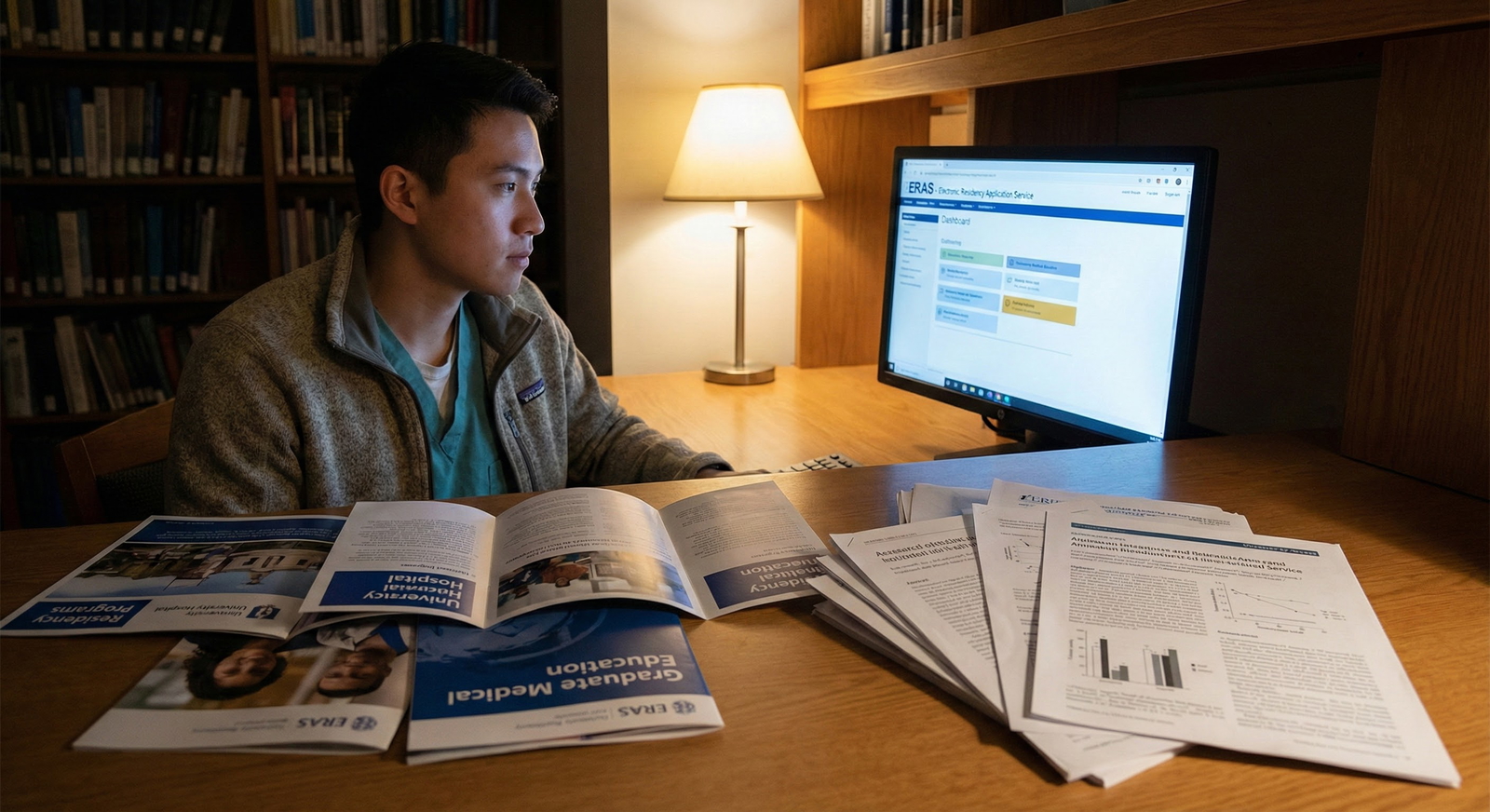
Step 2: Cold email US‑based urology researchers strategically
American studying abroad applicants often succeed by intentionally reaching out to US faculty.
How to do it well:
Target wisely:
- Mid‑level faculty and assistant professors are more likely to be building their research teams and needing help.
- Focus on departments that:
- Have a history of working with IMGs
- Publish frequently (scan PubMed for multiple papers/year)
- Are in regions where you might rotate later
Send concise, personalized emails:
- Subject example:
- “US citizen IMG interested in urology outcomes research – offering remote assistance”
- In 3–4 short paragraphs:
- Who you are (US citizen IMG at X school; year in training)
- Clear interest in urology residency
- Evidence of reliability (grades, previous research or coursework, brief mention of skills: SPSS, R, Excel, systematic reviews)
- Specific ask:
- “Do you have any ongoing urology research projects where a motivated student could contribute remotely?”
- Subject example:
Attach a 1‑page CV tailored for research:
- Highlight:
- Any prior research (even non‑urology)
- Presentations, QI, teaching
- Relevant skills (stats, coding, languages)
- Highlight:
Follow‑up plan:
- If no response in 10–14 days, send one brief, polite follow‑up.
- Move on after a second no‑response; don’t take it personally.
A 5–10% positive response rate is realistic. That means sending 20–40 high‑quality emails may yield 1–3 solid opportunities.
Step 3: Use structured remote research programs and networks
Leverage organized platforms where students and mentors intentionally connect:
- Institution‑based remote projects:
- Some US urology departments offer remote research positions, particularly in outcomes research and database analysis.
- Check departmental websites and contact research coordinators.
- National societies and working groups:
- American Urological Association (AUA) sections
- Society of Urologic Oncology (SUO)
- Specialty groups in pediatric urology, reconstructive urology, etc.
- Many have ongoing multi‑institutional projects that use student collaborators for data entry and systematic reviews.
As a US citizen IMG, mention clearly that you intend to apply to urology residency in the US; mentors often prefer to invest in someone likely to enter their field.
Step 4: Combine research with visiting rotations (when possible)
In the year before you apply, away rotations at US institutions are hugely valuable for:
- Hands‑on urology exposure
- US letters of recommendation
- Expanding research ties
Before your rotation:
- Contact faculty or residents in that department:
- Express your existing research interest.
- Ask if you might join one of their projects during or just before the rotation.
- Show up already having:
- Read several of the department’s recent publications.
- Identified at least one or two areas where you could help (literature review, data entry, drafting background sections).
Often, a well‑performed rotation turns into 1–2 projects plus strong letters.
Turning Projects into High-Yield Output: Publications, Abstracts, and Visibility
Simply “doing research” isn’t enough. For the urology match, you need visible products: publications, abstracts, presentations.
Prioritize high‑yield projects
Rank projects by:
- Likelihood of leading to a publication or abstract
- Time to completion
- Relevance to urology and your narrative
Example project priority list:
- Retrospective chart review on stone disease outcomes (team has published similar papers before) → high likelihood of paper within 6–12 months.
- Systematic review on PSA screening controversies in a specific population → likely publication if well conducted.
- Case report of rare urologic malignancy from your school → quicker turnaround; target urology case report journals.
- Lab project requiring complex experiments and long time frames → lower immediate yield unless you start very early.
Practical steps to increase your chance of publication
- Clarify authorship expectations early:
- Ask: “If I contribute to data collection, analysis, and drafting, would I be considered for co‑authorship?”
- Ensure your effort matches your expected role.
- Take on unglamorous tasks reliably:
- Data extraction
- Reference management
- Proofreading and formatting to journal guidelines
- Become the “closer”:
- Many projects die at the manuscript stage.
- Offer to take a nearly finished draft to submission:
- Update literature
- Polish writing
- Align with journal format
- Handle submission and responses to reviewers under guidance
Types of outputs you should aim for
Peer‑reviewed articles
- Original research (highest impact)
- Systematic or scoping reviews
- Narrative reviews (still useful, especially early)
- Case reports/series
Conference abstracts and presentations
- AUA national meeting
- Sectional / regional urology meetings
- General surgery or oncology conferences if urology‑focused work fits
Posters and oral presentations (local/institutional)
- Institutional research days, student conferences
- Even if small, these signal engagement and offer something to list on ERAS.
Other scholarly activities (lower yield but additive)
- Book chapters in urology or surgery
- Online professional blog posts or commentaries (only list credible venues)
- Educational projects (creating curricula or digital modules) backed by data
Documenting and presenting your research story
On ERAS and in interviews, you need a cohesive story:
- Cluster your work by theme:
- “Most of my research centers around endourology and kidney stone outcomes.”
- Highlight your role explicitly:
- “I led data collection and was first author on X…”
- “I managed the literature search and co‑wrote the methods and discussion for Y…”
- Prepare concise explanations:
- A 60–90 second summary of each major project:
- Question, methods, key findings, what it means for patient care.
- A 60–90 second summary of each major project:
This demonstrates not only involvement but intellectual ownership.
Balancing Research with Scores, Rotations, and Life as an American Studying Abroad
Research matters, but it’s not the only piece of your urology application. As a US citizen IMG, you must balance:
- Strong USMLE scores (Step 2 now carries more weight with Step 1 pass/fail)
- US clinical experience, especially in surgery/urology
- Letters of recommendation from US urologists
- A convincing personal statement and interview performance
Protecting your foundation first
Before overcommitting to research, ask:
- Are your scores competitive or can you realistically improve them?
- Can you maintain decent class performance while doing research?
- Do you have time and finances to pursue US rotations, which also are vital?
If you must choose, prioritize:
- Improving Step 2 score and clinical performance
- One or two high‑impact urology research projects over numerous low‑value scattered efforts
Time-management structure for busy IMG students
A practical weekly framework:
- 5–10 hours/week dedicated research time:
- 2–3 sessions of 2–3 hours each, scheduled like a formal class.
- Define “micro‑tasks”:
- Break work into:
- “Find 10 articles on X and log them”
- “Extract data on 30 patients”
- “Draft 1–2 paragraphs of discussion”
- Break work into:
- Use shared tools with your mentor/team:
- Google Docs or Overleaf for collaborative writing
- Reference managers (Zotero, Mendeley, EndNote)
- Task trackers (Trello, Notion, Asana) if your group uses them
This structure helps you consistently contribute, even from abroad, without letting research overwhelm everything else.
Building relationships, not just bullet points
The most valuable outcome of research isn’t only the publication count—it’s people who know your work:
- Aim for at least one mentor who:
- Knows you well enough to write a detailed, supportive letter.
- Can advocate for you to program directors or share your CV.
- Maintain communication:
- Send periodic updates on your progress and plans.
- Inform them when you schedule away rotations or apply to their colleagues’ programs.
- Ask directly (when appropriate):
- “Do you think I’m a realistic candidate for urology in the US?”
- “Are there specific programs or mentors you recommend I reach out to?”
For a US citizen IMG, these relationships can be the bridge between “unknown international student” and “trusted colleague with strong endorsements.”
FAQs: Research Profile Building for US Citizen IMG in Urology
1. As a US citizen IMG, do I absolutely need urology-specific research to match?
Strictly speaking, no—but practically, urology‑focused research is strongly preferred. General surgery or internal medicine research is better than nothing, but programs want evidence that you care specifically about urology. At minimum, aim for:
- At least one or two urology‑related projects (even if small)
- Ability to talk intelligently about urologic topics and literature
If you’re late to the process, try to pivot at least part of your existing research toward a urology‑relevant angle (e.g., oncology, imaging, outcomes) while starting a focused urology project.
2. How many publications do I really need for a urology residency as an IMG?
There is no strict cutoff, but for a competitive US citizen IMG, a good benchmark is:
- Ideal range:
- 3–6 total publications
- At least 1–3 clearly related to urology
- Several abstracts and presentations
If you cannot reach that, aim for:
- Minimum viable profile:
- 1–2 urology‑related papers or accepted abstracts
- Clear evidence of consistent research engagement (ongoing projects, quality LORs from research mentors)
- Strong narrative about your contributions and what you learned
Quality, relevance, and your demonstrated role often matter more than hitting a specific number.
3. I’m starting research late (1 year before applying). What should I prioritize?
With <12 months, focus on speed and visibility:
- High‑yield formats:
- Case reports and small case series
- Narrative or systematic reviews (if you can commit to fast turnaround)
- Retrospective studies where data are already collected and need analysis and writing
- Quick wins:
- Helping senior residents or fellows finish nearly completed manuscripts in exchange for co‑authorship
- Joining projects already in progress
Make sure at least some of these are urology‑related, and be upfront with mentors about your timeline so they can choose appropriate tasks for you.
4. Does research outside of urology (e.g., cardiology or public health) still help my urology application?
Yes, particularly if:
- It shows:
- Solid academic skills (study design, stats, writing)
- Commitment and follow‑through (multi‑year engagement, leadership roles)
- It is framed correctly:
- Emphasize transferable skills:
- “In my cardiology outcomes research, I learned to use large databases and regression models, which I now apply to urology topics such as prostate cancer outcomes.”
- Emphasize transferable skills:
However, for the urology match, you should try to add at least some urology‑specific projects before applying, even if your earlier work is in other fields. This hybrid profile is common and acceptable if you show a clear trajectory into urology.
By approaching research strategically—focusing on accessible project types, actively seeking mentorship, and targeting visible outputs—you can build a compelling research profile as a US citizen IMG in urology. Your goal is not just a certain number of lines on your CV, but a coherent story of curiosity, perseverance, and genuine commitment to the specialty that program directors can recognize and trust.