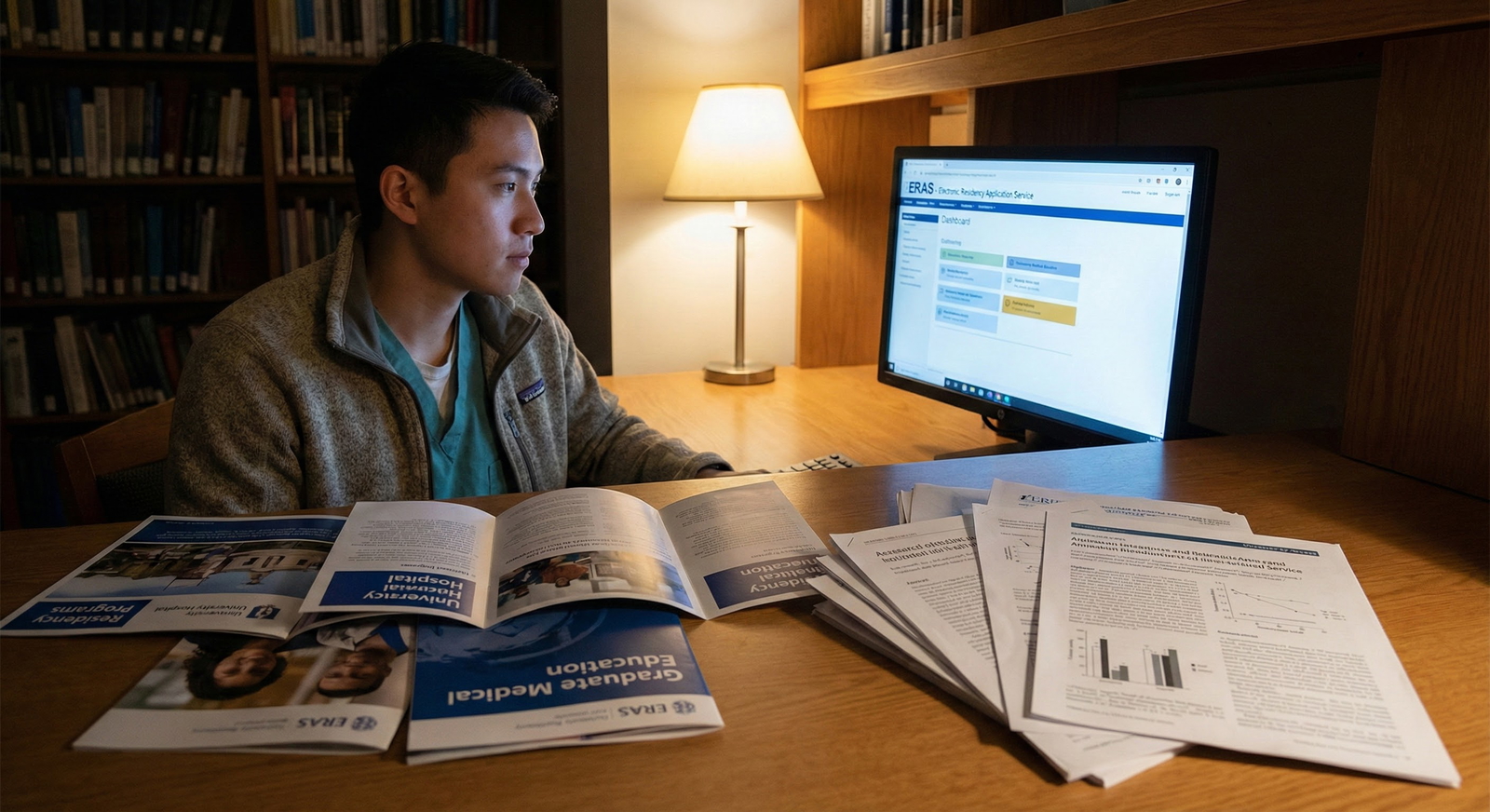
Why Research Matters in Pediatrics Residency Applications
Research is increasingly important in the pediatrics residency match. While pediatrics is not as research-heavy as some other specialties (like dermatology or radiation oncology), program directors still use research productivity to distinguish between strong applicants—especially at competitive academic programs and for physician-scientist tracks.
Here’s why your research profile matters in the peds match:
- Signal of curiosity and critical thinking: Research shows you can ask good questions, work through uncertainty, and interpret evidence—core skills for a pediatrician practicing evidence-based medicine.
- Differentiator in competitive environments: At large academic children’s hospitals, applicants often look similar in grades and scores. Research for residency helps you stand out.
- Foundation for future academic or subspecialty careers: If you’re considering pediatric subspecialties (e.g., pediatric cardiology, heme/onc, NICU), early research experience is a major plus.
- Shows long-term interest in pediatrics: Pediatrics-focused projects or child-health-related work help program directors trust that you’re genuinely committed to the field.
How much does research actually matter in pediatrics?
Based on recent NRMP Program Director Surveys and trends:
- Research is not usually the top screening criterion (clinical performance, letters, and fit often rank higher), but it is:
- Frequently cited as an important factor for ranking applicants.
- Particularly important at university-based and children’s hospital programs.
- Community-based programs may be more flexible, but still appreciate applicants who understand research methodology and evidence.
In other words, you do not need a PhD-level portfolio to match pediatrics—but having a thoughtful, well-constructed research profile can open doors, especially at your dream programs.
Understanding “Research” for the Pediatrics Match
Before you start building your research profile, it helps to understand what “counts” and how selection committees view different activities.
What counts as “research” on ERAS?
On your ERAS application, you can list:
- Basic science research – bench/lab projects, translational work.
- Clinical research – chart reviews, observational studies, interventional trials.
- Quality improvement (QI) – standardized projects using methodologies like PDSA cycles.
- Education research – curriculum evaluation, teaching interventions.
- Public health and health disparities research – community or population-level studies.
- Systematic reviews and meta-analyses.
- Case reports and case series.
- Conference abstracts, posters, and oral presentations.
- Publications – peer-reviewed articles, review papers, letters, book chapters.
All of these contribute to your research profile—especially if you can clearly articulate your role, what you learned, and how it relates to pediatrics.
How many publications are “enough” for pediatrics?
Applicants often ask: how many publications are needed to match pediatrics?
There’s no magic number, but some practical benchmarks:
- Competitive community or mid-tier academic programs
- Many successful applicants have 0–3 publications or posters.
- Strong clinical performance, letters, and a coherent story can easily compensate for fewer publications.
- Top-tier academic children’s hospitals and research-heavy programs
- Successful applicants often have 3–10+ scholarly products, which may include:
- 1–3 peer-reviewed publications
- Several posters or oral presentations
- Case reports, QI projects, or education-related abstracts
- Successful applicants often have 3–10+ scholarly products, which may include:
- Physician-scientist tracks or research pathways
- Often expect significant, sustained research engagement:
- Multiple first-author or co-author publications
- Continuous involvement over several years
- Clear career goal as a clinician-investigator
- Often expect significant, sustained research engagement:
Remember: quality, consistency, and ownership are more important than raw count. A single project where you had a major role and can discuss it deeply will help you more than 10 minor name-only co-authorships you can’t explain.

Building a Strong Pediatrics-Focused Research Portfolio
Think of your research profile as a portfolio rather than a list. Programs are looking for:
- Evidence of sustained effort over time
- A coherent narrative that makes sense with your interest in pediatrics
- Increasing responsibility and independence as you progress
- Some form of tangible output (abstracts, posters, manuscripts)
Step 1: Clarify your research goals in pediatrics
Ask yourself:
- Do you see yourself in academic pediatrics, a subspecialty, or community pediatrics?
- Are you drawn to:
- Direct clinical questions? (e.g., asthma management, NICU outcomes)
- Systems and QI? (e.g., vaccine uptake, clinic workflows)
- Education? (e.g., teaching parents medication safety, trainee curricula)
- Public health? (e.g., social determinants of health in children)
Your answer doesn’t lock you in for life, but it helps you choose projects that form a theme. When you interview, you’ll appear focused and intentional.
Example thematic arcs:
- “I’ve always been interested in childhood chronic disease and transition to adult care, so my projects have focused on type 1 diabetes self-management and adolescent adherence.”
- “I care deeply about health equity, so I worked on pediatric asthma outcomes in underserved communities and a QI project on interpreter use in the ED.”
Step 2: Find the right mentors in pediatrics
A good mentor is often more important than the exact topic.
Look for:
- Pediatrics faculty with an active research agenda in your area of interest.
- People with a track record of publishing with students or residents.
- Mentors who are:
- Accessible
- Clear communicators
- Supportive of your career goals
- Realistic about timelines (especially around ERAS deadlines)
Where to find them:
- Department of Pediatrics website – faculty profiles with research interests.
- Children’s hospital research institute pages.
- Ask:
- Clerkship directors
- Residents on your pediatrics rotation
- Student affairs or research office
- Attend pediatrics grand rounds and ask speakers about opportunities.
Red flags:
- Faculty who are chronically “too busy” to meet or reply.
- Projects with no defined plan for a poster or publication.
- Mentors who seem unclear about your role or expectations.
Step 3: Balance pediatrics-specific vs. general research
Ideally, for a pediatrics residency, you want:
- At least one or two projects clearly tied to children’s health, OR
- A coherent explanation of how general research experience translates to pediatrics.
If your early work was in another field (e.g., adult cardiology, oncology, basic science), that’s fine—just:
- Emphasize the methods and skills you learned (statistics, IRB, data collection).
- Connect them clearly:
“My work in adult oncology outcomes taught me survival analysis and database management, which I then applied to pediatric oncology and survivorship projects.”
Step 4: Choose project types strategically
You likely have limited time before the peds match. Here’s how to be strategic:
High-yield projects for near-term output
These are great when you’re 6–18 months from application:
- Case reports or small case series
- Good for students on pediatrics rotations or sub-internships.
- Faster turnaround; suitable for posters or brief publications.
- Retrospective chart reviews
- Moderate scope, feasible with a clear dataset and experienced mentor.
- Can yield conference abstracts and potential manuscripts.
- Quality improvement projects
- Often required in pediatrics training anyway.
- Align perfectly with pediatrics culture (safety, vaccination, chronic disease management).
- Education or curriculum projects
- Particularly helpful if you’re interested in academic pediatrics or med ed.
Longer-term, higher-impact projects
If you’re 2–3+ years from applying:
- Prospective clinical studies
- Longitudinal cohort projects
- Multi-site research networks (e.g., pediatric ICU, rheumatology, diabetes registries)
- Systematic reviews and meta-analyses with a clear plan for publication
These can yield more substantial publications for the match and beyond, but require sustained effort.
Making Your Research Count: From Participation to Publication
Simply “helping with a project” is not enough. For the pediatrics residency application, program directors look closely at outputs and your level of involvement.
Moving along the research pipeline
Think of your work in stages:
- Idea / question formulation
- Protocol development & IRB submission
- Data collection
- Data analysis
- Abstract/poster creation
- Manuscript writing
- Publication & dissemination
You don’t need to do all seven for every project, but trying to move at least a few projects as far along as possible is key.
Aim for:
- At least one project where you were deeply involved in multiple phases.
- Several projects that reached the abstract/poster stage.
- One or more that reached manuscript submission or publication.
First author vs co-author: what matters in pediatrics?
For the peds match:
- First-authored work (especially posters or manuscripts) is a strong signal of leadership and ownership.
- Co-authorships on multiple projects also help, especially if they show:
- Collaboration
- Consistent productivity
- Exposure to different topics or methods
You don’t need to be first author on everything. A mix is healthy:
- 1–2 first-authored posters and/or manuscripts
- Several co-authored abstracts or papers
Turning work into publications for the match
If you’re asking “how many publications are needed to be competitive?”, the real question is: how can I turn my work into as many legitimate, meaningful outputs as possible before ERAS?
Practical strategies:
- Start with the end product in mind
When launching a project, ask:- What is the target conference or journal?
- What timeline do we need to hit to be on ERAS?
- Use conferences as stepping stones
- Submit abstracts to local/regional pediatric meetings (e.g., state AAP chapters), then national ones (PAS, AAP).
- After presenting, turn the poster into a manuscript while the work is “fresh.”
- Stack outputs from the same dataset
- One project might produce:
- A local QI poster
- A national conference abstract
- A journal article
- A brief educational innovation report
- One project might produce:
- Be proactive in manuscript drafting
- Offer to write the first draft (intro, methods, results, or discussion).
- Use your mentor’s prior papers as a template.
Documenting your contributions clearly
When you list research experiences on ERAS:
- Specify:
- Your role (e.g., data collection, analysis, drafting manuscript).
- The skills you used (e.g., REDCap, R, SPSS, survey design).
- Outcome: poster, oral presentation, submitted/in-press article, etc.
- Avoid vague descriptions like “assisted with research.” Be concrete:
- “Performed data extraction for 200 NICU admissions and conducted preliminary statistical analysis in SPSS, leading to a poster at the regional pediatrics meeting.”

Timeline & Strategy: Planning Your Research Around the Peds Match
Your optimal strategy depends heavily on where you are in your training and how far you are from applying.
Preclinical (M1–M2) or early in training
Focus on:
- Learning basic research skills:
- Study design
- IRB processes
- Data collection tools
- Basic stats
- Exploring different areas in pediatrics:
- Shadow pediatric research teams
- Join one or two projects where you can see the full lifecycle
- Building relationships with potential long-term mentors
Ideal activities:
- Summer research programs in pediatrics.
- Longitudinal involvement with a pediatric lab or clinical research team.
- Helping residents or fellows with their projects (often faster-paced and more defined).
Outcome goals by end of preclinical phase:
- At least 1–2 abstracts or posters submitted or presented.
- Significant contribution to at least one project moving toward manuscript submission.
Clinical years (M3–M4) or equivalent stage
Your time is tighter, and the ERAS timeline matters.
Focus on:
- Joining projects with realistic timelines:
- Case reports from your peds rotation.
- Retrospective chart reviews with existing IRB approval.
- QI projects that are already underway.
- Prioritizing projects that can lead to outputs within 6–12 months.
If you are 12–18 months from ERAS
- You still have time for:
- Well-focused chart reviews
- QI projects
- Systematic reviews
- Meet with mentors to:
- Map specific deadlines for abstracts (AAP, PAS, specialty meetings).
- Identify what is realistically publishable before applications.
If you are 6–12 months from ERAS
At this point, prioritize near-term outputs:
- Write up:
- Any completed projects into abstracts or manuscripts.
- Case reports based on interesting patients you’ve encountered.
- Submit to:
- Rapid-review journals (but avoid predatory journals).
- Regional meetings with shorter review cycles.
- Be sure to list “submitted” or “provisionally accepted” works accurately on ERAS.
If you are less than 6 months from ERAS
At this stage, it’s about maximizing and framing what you already have:
- Cleanly document all ongoing projects.
- Convert any internal presentations or QI data into abstracts if deadlines allow.
- Prepare to discuss your research thoughtfully in your personal statement and interviews.
Presenting Your Research Story: ERAS, Personal Statement, and Interviews
A strong research portfolio helps only if you tell a coherent story that connects your work to your interest in pediatrics.
Integrating research into your personal statement
You don’t need to write a “research statement,” but:
- Use 1–2 short, specific examples of research for residency to:
- Illustrate how you developed critical thinking or problem-solving skills.
- Show your curiosity about pediatric disease, development, or health systems.
- Avoid overly technical jargon; emphasize:
- What question you cared about
- What you actually did
- What you learned about caring for children and families
Example framing:
“During my third year, I joined a project on reducing missed well-child visits in a community clinic. Analyzing why families were unable to attend highlighted barriers like transportation, work schedules, and language. Designing and implementing reminder systems, and then seeing our no-show rate fall, taught me how data-driven interventions can concretely improve children’s access to care. This experience solidified my interest in pediatrics as a field that blends individual care with population-level impact.”
Highlighting research on ERAS
Use your ERAS sections strategically:
- Experience section:
- List major research roles with 2–3 bullet points describing specific tasks and skills.
- Publications & presentations:
- Ensure formatting is clean and standard.
- Include all accepted, in-press, and published works.
- Be honest and precise about statuses (submitted, under review, accepted).
Discussing research in interviews
Program directors often ask:
- “Tell me about your research.”
- “What did you learn from your project on X?”
- “How do you see research fitting into your career in pediatrics?”
Prepare by:
- Choosing 1–2 “anchor” projects you know inside out.
- Being able to explain:
- The clinical question in simple terms.
- The study design (prospective vs retrospective, etc.).
- Your specific role.
- A key result.
- One thing that changed how you think about pediatrics.
- Reflecting on future direction:
- Even if you’re not planning a research career, be able to say how you’d like to remain engaged (QI, evidence-based practice, occasional projects).
FAQs: Research Profile Building in Pediatrics
1. Do I need publications to match into pediatrics?
Not strictly—but they help, especially at academic or highly competitive pediatrics residency programs. Many applicants match with no publications but some research exposure, particularly at community or less research-intensive programs. However:
- Having at least one abstract/poster or publication strengthens your application.
- For top-tier children’s hospitals or research tracks, publications are strongly preferred.
Focus on:
- Getting involved early.
- Moving at least one project to a tangible product (poster, manuscript).
2. How many publications are needed to be competitive for pediatrics?
There is no fixed number, but as a general guide:
- Solid, competitive applicant for many programs:
- 0–3 scholarly outputs (abstracts/posters/case reports/manuscripts)
- Strong candidate for research-oriented, academic programs:
- 3–6+ outputs, including at least one publication or first-authored poster
- Research-track or physician-scientist pathway:
- Often 5–10+ outputs, with multiple first-author works and clear long-term research goals
Remember, depth and ownership outweigh raw quantity. One meaningful, well-discussed project can be more impactful than many superficial lines on your CV.
3. Does it hurt if most of my research is not in pediatrics?
Not necessarily. Program directors value transferable skills:
- Study design, data analysis, understanding IRB processes.
- Writing abstracts and manuscripts.
- Presenting and defending your work.
To make it work for the peds match:
- Clearly connect your prior work to pediatrics:
- Shared methods (e.g., outcomes research, QI).
- Overlapping themes (e.g., health disparities, chronic disease management).
- Aim to add at least one pediatrics-focused project before you apply if possible.
4. What if I’m a nontraditional or international applicant with limited research?
You can still build a competitive profile by being strategic and focused:
- Seek short-term, high-yield projects:
- Case reports from clinical experiences.
- QI or retrospective projects with existing data.
- Collaborate with:
- Pediatrics faculty interested in global health, community pediatrics, or education.
- Highlight:
- Any prior scholarly work, even if not formal “research” (e.g., guidelines, audits, quality projects in your home system).
- Emphasize how your research or project work:
- Improved care for children and families.
- Prepared you to engage in scholarly work during residency.
Building a strong research profile for pediatrics residency is less about chasing a specific publication number and more about demonstrating curiosity, follow-through, and genuine engagement with children’s health questions. If you choose mentors wisely, select projects that match your timeline, and translate your work into tangible outputs, your research portfolio will become a powerful part of your peds match story—and a foundation for a fulfilling career in pediatrics.