Building a competitive research profile as a Caribbean IMG aiming for vascular surgery residency is challenging—but absolutely achievable with the right strategy, timing, and consistency. This guide focuses on how to design, build, and present a research portfolio that directly supports a vascular surgery application in the U.S., with special attention to the unique position of Caribbean medical school graduates.
Why Research Matters So Much for Caribbean IMGs in Vascular Surgery
Vascular surgery—especially the integrated vascular program (0+5 track)—is one of the more competitive surgical subspecialties. As a Caribbean IMG, you face additional hurdles: program bias, visa issues, and limited home-institution research infrastructure. A strong research portfolio is one of the clearest ways to reduce these barriers.
How Research Strengthens Your Application
Signals academic potential and persistence
Programs expect future vascular surgeons to be comfortable with evidence-based practice and innovation. A strong research record shows:- You can ask meaningful clinical questions
- You understand methodology and statistics at a basic or intermediate level
- You can follow through on projects over months to years
Offsets geographic and institutional bias
Caribbean medical school residency applicants often lack the name recognition of large U.S. schools. High-quality research—especially with U.S.-based mentors, vascular surgery faculty, or major centers—helps bridge that gap.Shows targeted interest in vascular surgery
Vascular is a small, relationship-driven field. When vascular surgery programs see:- Publications in vascular journals
- Presentations at vascular meetings (e.g., SVS, regional societies)
- Case reports on peripheral arterial disease, aneurysms, carotid disease, dialysis access
…they interpret that as genuine, long-standing interest.
Provides talking points and depth for interviews
Interviewers frequently ask:- “Tell me about your favorite research project.”
- “What did you learn from your research?” Strong projects give you structured, meaningful stories that demonstrate maturity, critical thinking, and resilience.
Realistic Expectations: How Many Publications Do You Need?
A common anxiety for Caribbean IMGs is: “How many publications are needed?” There’s no magic number, but there are realistic ranges and priorities.
Think “Portfolio,” Not Just “Publications”
Programs evaluate a research portfolio, not just raw counts. They look at:
- Peer-reviewed publications (original research, systematic reviews, case reports)
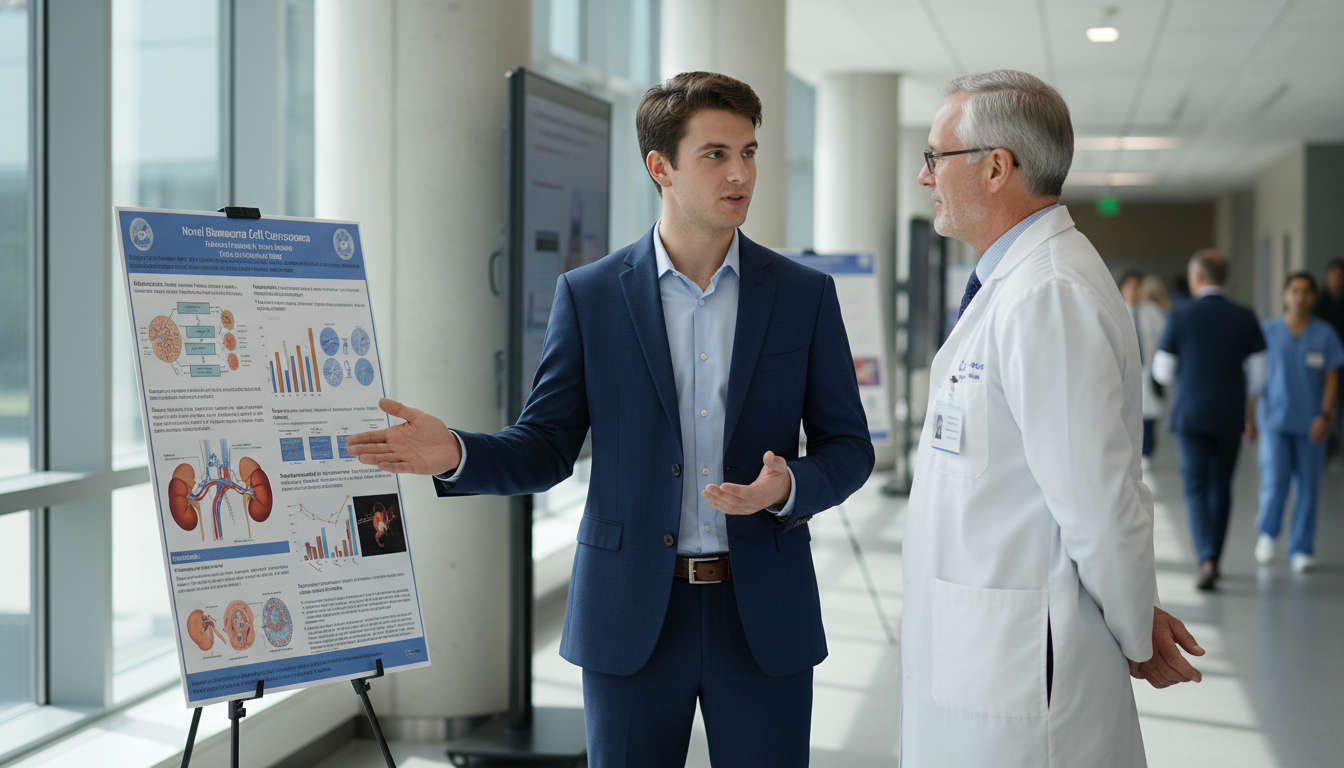
- Abstracts and posters at conferences
- Oral presentations
- Quality of journals or meetings (field-relevant? reputable?)
- Role in the project (first author vs middle author vs data collector)
- Coherence of your academic narrative (is it clearly aligned with vascular surgery residency?)
General Benchmarks for Competitive Vascular Surgery Applicants
For integrated vascular surgery residency applicants, especially those from non-U.S. schools:
Highly competitive profile (aspiring top-tier programs):
- 5–10+ total scholarly products
- At least 2–3 first-author works
- Several vascular surgery–relevant pieces (manuscripts, abstracts, or case reports)
Solid competitive profile (many programs):
- 3–6 total scholarly products
- 1–2 first-author items
- Some content clearly related to vascular (or at least surgery/medicine with vascular overlap)
Developing profile (still workable, especially with strong scores and letters):
- 1–3 scholarly products
- At least one vascular/surgical topic
- Evidence of involvement beyond “name-only” authorship
For a Caribbean medical school residency applicant to vascular surgery specifically, leaning toward the upper end of these ranges is advantageous, particularly if you’re aiming for an integrated vascular program.
Types of Output: What “Counts” Toward Your Research Profile?
All of the following are valuable, especially early on:
- Peer-reviewed articles (original research, reviews, meta-analyses)
- Case reports/series in legitimate journals
- Conference abstracts/posters at vascular or surgical meetings
- Oral presentations at local, regional, national, or international meetings
- Quality improvement (QI) projects with measurable outcomes
- Book chapters or textbook contributions (lower impact than papers but still helpful)
Your goal is a balanced mix, with at least a few items clearly and directly connected to vascular surgery.
Strategic Roadmap: Building Research from M1 to Application Year
The timeline below assumes a Caribbean IMG in a typical 4-year curriculum, but you can adapt it if your structure differs.

Preclinical Years (M1–M2): Laying Foundations
Primary goals: exposure, basic skills, and early productivity.
Learn the fundamentals of research design
- Take online courses or institutional workshops:
- Coursera/edX courses in biostatistics, clinical research methods
- Your school’s research office tutorials
- Understand:
- Study types (retrospective vs prospective, RCT vs cohort vs case-control)
- Bias and confounders
- Basic statistics (p-values, CIs, odds ratios, risk ratios)
- Take online courses or institutional workshops:
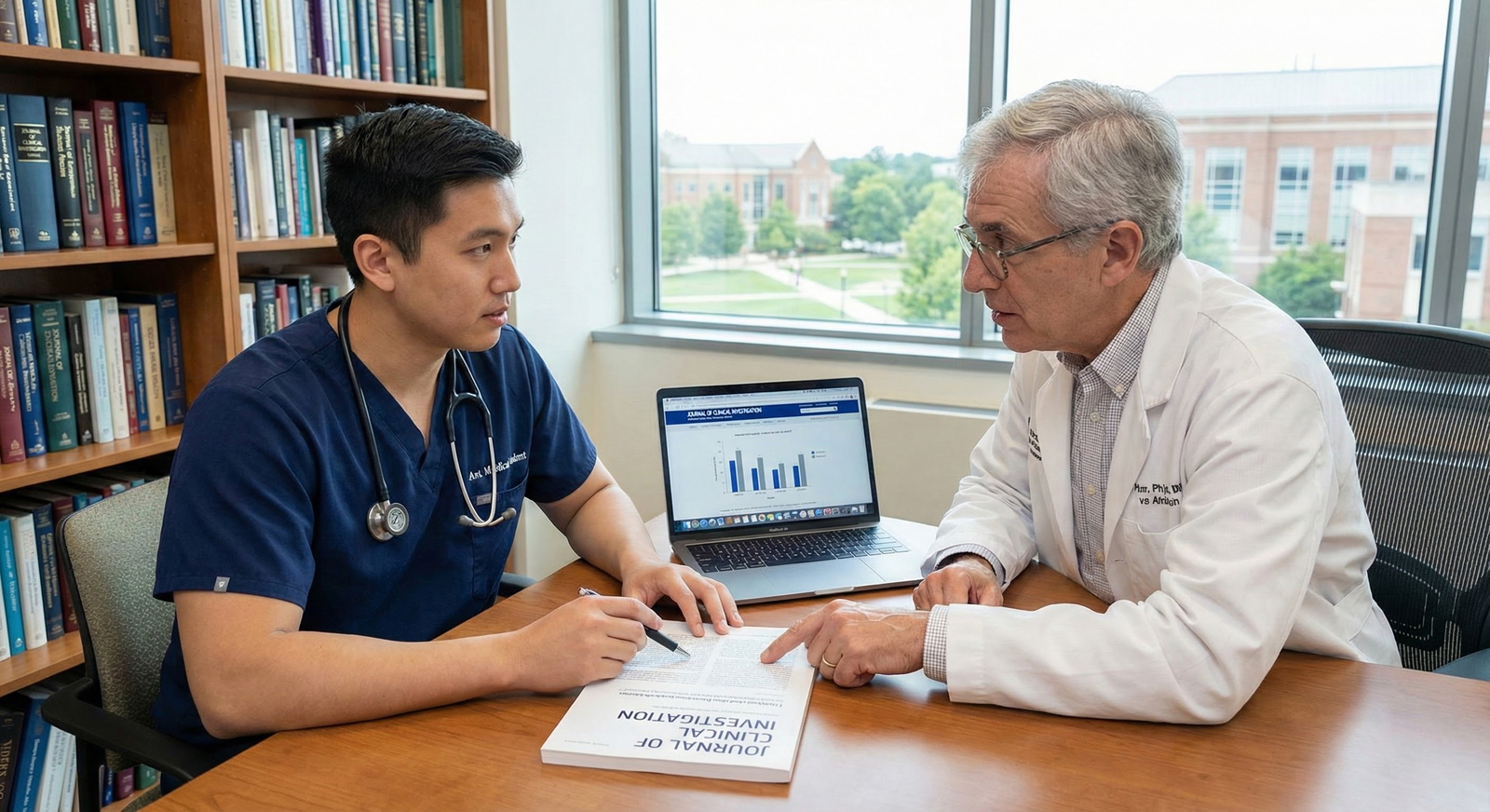
Identify vascular or surgery-oriented mentors early
- Reach out to:
- Alumni from your Caribbean school in vascular surgery or general surgery in the U.S.
- Faculty with vascular or critical care interest at your school
- Researchers at nearby U.S. or Canadian institutions during breaks
- Use cold-email strategies:
- Short, specific subject line: “Caribbean IMG student interested in vascular research”
- Attach a 1-page CV
- Propose small, manageable ways you could help (chart review, data entry, literature review)
- Reach out to:
Start small: case reports and retrospective projects
- When on or near clinical sites, ask:
- “Are there any interesting vascular or surgical cases I can help write up?”
- Common vascular topics ideal for case reports:
- Unusual peripheral aneurysms
- Complex aortic pathology
- Rare complications after EVAR/TEVAR
- Challenging dialysis access cases
- Case reports are often the fastest path to your first publication and an excellent early “win.”
- When on or near clinical sites, ask:
Build a tracking system
- Use a spreadsheet or project management tool (Notion, Trello) to track:
- Project title
- Mentor
- Your role
- Status (idea, data collection, analysis, draft, submitted, in revision, accepted)
- This prevents project loss and demonstrates professionalism to mentors.
- Use a spreadsheet or project management tool (Notion, Trello) to track:
Clinical Years (M3–M4): Deepening and Targeting Toward Vascular Surgery
Primary goals: vascular focus, productivity, and networking.
Align your research with vascular surgery content
- On internal medicine, surgery, ICU, or radiology rotations, keep an eye out for:
- Peripheral arterial disease management
- Diabetic limb salvage
- Aortic dissection and aneurysmal disease
- Carotid disease and stroke prevention
- Venous thromboembolism, chronic venous disease
- Hemodialysis access complications
- Turn interesting patients into:
- Case reports
- Case series
- Retrospective cohort projects (e.g., outcomes after bypass vs endovascular procedures)
- On internal medicine, surgery, ICU, or radiology rotations, keep an eye out for:
Join or initiate a larger vascular research project
- Retrospective chart reviews:
- “Outcomes of carotid intervention in high-risk patients at our center”
- “Limb salvage rates in patients with chronic limb-threatening ischemia”
- QI projects:
- Improving pre-op optimization for vascular procedures
- Standardizing post-EVAR follow-up imaging
- Collaborate with:
- Vascular surgery fellows or residents
- Research coordinators
- Radiology or cardiology teams (CT angiography, endovascular procedures)
- Retrospective chart reviews:
Use elective time strategically
- Consider a dedicated research elective at:
- A U.S. center with an integrated vascular program
- An institution known to take Caribbean IMGs
- Objectives:
- Intensively work on 1–2 major projects
- Build strong letters of recommendation
- Get your name on multi-author vascular studies
- Consider a dedicated research elective at:
Abstracts and Conferences
- Aim to submit at least:
- 1–2 vascular-related abstracts by end of M3 or early M4
- Target meetings like:
- Society for Vascular Surgery (SVS)
- Regional vascular societies
- American College of Surgeons Clinical Congress
- Presentations—even posters—carry significant weight, especially for Caribbean medical school residency applicants in competitive fields.
- Aim to submit at least:
Consider a Research Year (Optional but Beneficial)
- For highly competitive vascular or integrated vascular program paths, a dedicated research year in the U.S. can be game-changing:
- 1–2 years at a major vascular center
- Multiple publications and abstracts
- Deep networking and mentorship
- Particularly recommended if:
- Scores are modest
- Current research output is low
- You lack U.S. letters from vascular surgeons
- For highly competitive vascular or integrated vascular program paths, a dedicated research year in the U.S. can be game-changing:
Getting Opportunities as a Caribbean IMG: Practical Tactics
1. Master the “Cold Email” for Research
As a Caribbean IMG, you may not have an immediate institutional network. Proactive outreach is essential.
Key elements of an effective research outreach email:
Clear subject line:
“Caribbean medical student interested in vascular surgery research – willing to help with ongoing projects”3–4 short paragraphs:
- Who you are (Caribbean school, year, interest in vascular)
- Any previous research or relevant skills
- Specific offer:
- “I can assist with chart reviews, data extraction, or literature reviews remotely.”
- Attach CV; express flexible availability
Keep it concise, professional, and humble—but confident.
Send to:
- Vascular surgery faculty at U.S. academic centers
- Alumni or contacts from SGU residency match lists or other Caribbean schools who are now in vascular/general surgery
- Faculty whose work you’ve actually read (mention a specific paper)
2. Leverage Caribbean School Infrastructure
Some Caribbean schools—such as SGU and others—have:
- Research offices or coordinators
- Faculty actively collaborating with U.S. institutions
- Established pipelines to certain hospitals where SGU residency match alumni are active
Ask specifically:
- “Which attending physicians or alumni are open to working with Caribbean students on research?”
- “Are there ongoing vascular or surgery-related projects I can plug into?”
Your goal is to transform existing institutional pathways (like the SGU residency match network) into concrete research opportunities.
3. Remote-Friendly Research Projects
Due to geography and visa limitations, prioritize projects you can do remotely:
- Systematic reviews and meta-analyses
- Narrative reviews on vascular topics
- Database research (if you can gain access via a mentor: NSQIP, NRD, NIS, Vascular Quality Initiative)
- Survey-based research (attitudes of surgeons, practice patterns)
These often require:
- Strong literature review skills
- Familiarity with reference managers (EndNote, Zotero, Mendeley)
- Basic statistics (or partnership with a statistician)
Designing Vascular-Focused Research Projects That Stand Out

Ideal Characteristics of a Strong Vascular Project
Clinically relevant question
- Example: “Are limb salvage outcomes different when patients are referred earlier to vascular surgery versus late?”
- Example: “What factors predict 30-day readmission after endovascular aneurysm repair?”
Feasible scope for a student
- Avoid overly ambitious prospective RCT designs.
- Focus on retrospective chart reviews, database studies, or well-contained QI projects.
Clear, defined endpoints
- Mortality, limb loss, reintervention, length of stay, wound healing, patency rates, readmissions.
Measurable timeline
- 3–6 months to abstract/data collection
- 1–2 months to manuscript draft
- Submission within 9–12 months of project start
Common Vascular Research Formats for Students
Case Reports / Case Series
- Fastest route to publication
- Ideal for learning structure of manuscripts and submission process
- Good early exposure to vascular pathology and decision-making
Retrospective Cohort Studies
- Example:
- “Outcomes of endovascular vs open repair for popliteal aneurysms at our institution”
- “Predictors of amputation in diabetic patients with chronic limb-threatening ischemia”
- Higher impact than case reports but more work
- Example:
Systematic Reviews / Meta-analyses
- Example:
- “Outcomes of early vs delayed intervention in acute limb ischemia”
- Useful if you lack direct access to patient data
- Requires discipline and adherence to PRISMA guidelines
- Example:
Quality Improvement Projects
- Example:
- “Implementing a standardized PAD clinic to reduce ER visits and amputations”
- Can lead to abstract, poster, and eventual manuscript
- Example:
Presenting and Framing Your Research for Maximum Impact
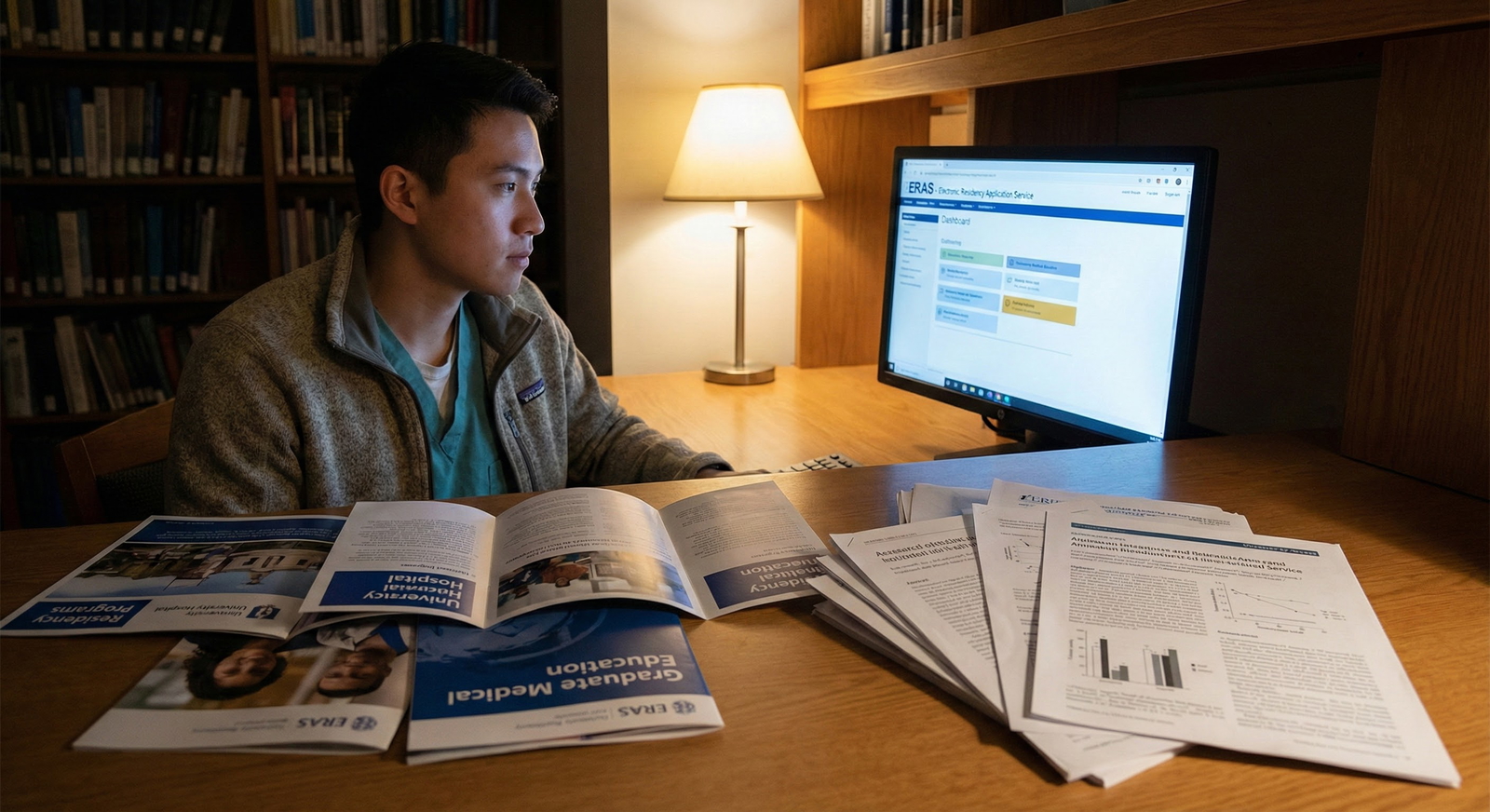
Research alone is not enough; you must present it effectively in ERAS and during interviews.
How to List Research on Your Application
In your ERAS (or similar application), for each item:
- Include:
- Full citation if published
- Journal or conference name
- Your role (first author, co-author, data collector)
- Status (submitted, under review, accepted, in press)
- Be honest about status; misrepresentation is a major red flag.
Prioritize:
- Vascular surgery–related items at the top
- Clearly label vascular topics in titles or descriptions so programs immediately recognize the relevance
Discussing Your Research in Interviews
Be ready to:
- Explain:
- Why you chose the question
- Your specific responsibilities
- The main findings
- Limitations of the study
- How it impacts patient care or your understanding of vascular surgery
- Prepare 2–3 “go-to” research stories:
- One about your most meaningful project
- One about a project that failed or stalled and what you learned
- One that shows long-term commitment to vascular surgery
Programs are often less interested in the exact number of publications and more interested in whether you truly understand what you did and why it matters.
Integrating Research into Your Personal Statement
For an integrated vascular program or vascular fellowship, your personal statement should:
- Trace a coherent story:
- Early clinical / personal exposure → curiosity → specific vascular research experience → desire to contribute to the field long-term
- Mention 1–2 key projects:
- Focus on what they taught you about vascular disease, multidisciplinary care, and patient outcomes
- Avoid turning your statement into a CV; instead, highlight how research shaped your identity as a future vascular surgeon.
Frequently Asked Questions (FAQ)
1. As a Caribbean IMG, is research absolutely required for vascular surgery residency?
For vascular surgery—especially for an integrated vascular program—research is functionally expected, not optional, particularly for Caribbean medical school residency applicants. You may occasionally see exceptions in smaller community-based programs or for fellowship after general surgery, but realistically:
- At least some vascular or surgery-focused scholarly activity is needed to be taken seriously.
- The more competitive the program, the more essential your research profile becomes.
2. How many publications are needed to be competitive?
There is no fixed number, but:
- For a strongly competitive vascular surgery applicant from a Caribbean school, aim for:
- ~5–10+ total scholarly products
- At least a few clearly vascular-related
- For a viable application, especially if other parts of your application are strong:
- 3–6 solid items (papers, posters, abstracts), including vascular or surgery-focused work
More important than the raw number is that your portfolio shows:
- 3–6 solid items (papers, posters, abstracts), including vascular or surgery-focused work
- Real involvement
- Longitudinal commitment
- Alignment with vascular surgery
3. I don’t have a home vascular surgery department. How can I find mentors?
You can:
- Use alumni networks (SGU residency match lists or your school’s alumni) to locate vascular or general surgeons in the U.S.
- Cold-email vascular surgery faculty at academic centers, offering to help with ongoing projects (data collection, literature reviews).
- Attend online vascular conferences or webinars; follow up with speakers whose work resonates with you.
- Ask your surgery or internal medicine attendings if they have contacts in vascular surgery willing to take on a motivated student remotely.
Remote-friendly projects—systematic reviews, retrospective chart reviews with remote access, survey studies—are often most feasible for Caribbean IMGs.
4. I did research in another field (e.g., cardiology, neurology). Does it still help?
Yes—especially if it:
- Involves cardiovascular or cerebrovascular disease (e.g., stroke, coronary artery disease, diabetes complications)
- Shows methodologic rigor and publication success
You should still try to add some vascular-specific projects before applying. Frame your prior non-vascular work as:
- An introduction to clinical investigation and data interpretation
- A foundation that led you to focus more specifically on vascular disease
A strong research profile is one of the most powerful tools a Caribbean IMG has to stand out in vascular surgery. With early planning, smart project selection, and strategic mentorship—whether at your Caribbean school or through external connections—you can build a compelling academic story that aligns with a future in vascular surgery and makes you a credible, competitive applicant to both integrated and fellowship pathways.