
Opening: The Weight of Losing Patients
Let's not pretend this is a minor part of training. You will lose patients in residency. Some deaths will be expected. Some will be brutal. Some will happen at the end of a long ICU stay, and some will happen twenty minutes after a patient was talking to you. A few will follow you home, sit beside you while you eat takeout at 10 p.m., and show up again when you try to sleep.
That's normal.
What's not normal is the garbage message a lot of residents absorb early: if a patient's death hits you hard, you're too sensitive, too weak, too inexperienced, too something. That idea is wrong. Flat-out wrong. Grief is not evidence that you're unfit for medicine. Usually it's evidence that you still care, which is exactly what patients need from you.
I've seen interns try to bulldoze past a death because the list is still long, the pager is still going off, and rounds start in six hours. They tell themselves they'll deal with it later. Later becomes never. Then three months pass, and suddenly every code feels personal, every family meeting feels draining, and they're snapping at nurses, avoiding dying patients, or feeling weirdly numb. That's how unchecked grief turns into burnout. Not all at once. Quietly. Efficiently. Like everything else in residency.
You do not need a perfect wellness routine. You do not need to become zen in the call room. You need practical ways to process loss without letting it hollow you out.
Here's what actually helps: debriefing with your team, building tiny self-care routines that fit real resident life, letting yourself feel grief without drowning in it, setting boundaries around emotional labor, making meaning out of the loss, getting professional help when things are sliding, and resetting your expectations about what your role really is.
Not every tool will fit every week. Fine. You don't need all seven by Monday. You need a few solid moves you can reach for when a death hits hard.
Way 1: Debrief with Your Team After Critical Events
The worst version of patient death is isolated patient death. You carry it alone, replay it alone, and judge yourself alone. That's a fast track to emotional distortion.
Debriefing fixes that.
A good debrief does two things at once: it processes the medicine and it processes the people involved. That matters. You need both. If the conversation is only "Could compressions have started faster?" and never "That was hard," the team misses half the point.
If your program already does structured debriefs after codes, deaths, or traumatic events, show up. Even if you feel too busy. Especially then. If it doesn't, ask for one. Keep it simple:
- "Can we take 10 minutes to debrief that case?"
- "I think the team would benefit from a quick check-in after that death."
- "Can we review what happened and how everyone's doing?"
That's not being dramatic. That's being functional.
Frameworks help. PEARLS is useful for simulation and real clinical debriefing because it blends reactions, analysis, and takeaways. SPIKES is better known for breaking bad news, but parts of its structure can help teams think clearly about communication around dying patients and families. You do not need to name-drop the model in the room like a seminar leader. Just use the bones of it: what happened, what went well, what was hard, what we'd do differently, how people are feeling now.
And here's the hidden benefit: peer validation cuts through self-blame. Sometimes you need a senior to say, "No, this outcome was not because you missed one line in the note," or a co-resident to admit, "Yeah, that one got to me too."
That moment matters more than people admit.
Way 2: Build Intentional Self-Care Routines That Actually Stick
Most self-care advice given to residents is useless. "Take a weekend away." Great. From what weekend? "Do yoga every morning." Sure, between my 5 a.m. pre-rounding and my 28-hour call.
What works in residency is not grand self-reinvention. It's micro-self-care. Small, repeatable things that still happen when your schedule is ugly.
Think in 5- to 15-minute units:
- a real meal before sign-out instead of stale crackers
- one lap around the hospital after a bad family meeting
- a 4-minute breathing exercise in the stairwell
- stretching while your note batch loads
- going straight to sleep post-call instead of doom-scrolling yourself into a headache
Boring? Yes. Effective? Also yes.
Your body keeps score faster than your mind does. If you're grieving and also dehydrated, sleep-deprived, underfed, and motionless for 14 hours, everything hits harder. The death feels heavier. Your patience gets shorter. Your coping gets worse.
So make a few things non-negotiable:
- Eat once per shift like you're a mammal, not a machine.
- Protect post-call sleep aggressively.
- Move your body daily, even briefly.
- Stop volunteering your only recovery hour to extra nonsense if you're running on fumes.
Don't build a wellness fantasy. Build a floor. The minimum set of habits that keeps you from physically unraveling. That's the goal.
Way 3: Allow Yourself to Feel, Then Release
A lot of junior residents make the same mistake: they think the only options are either shut down or fall apart. Those aren't the only options.
You can feel the loss fully without letting it take over your whole day.
That starts with naming what's actually happening. Not just "I'm fine" or "That sucked." Get more specific:
- I feel guilty.
- I feel helpless.
- I feel angry this patient was so young.
- I feel relieved the suffering is over, and weirdly ashamed about that relief.
Naming the emotion takes some of the chaos out of it. Vague distress is harder to carry than identified grief.
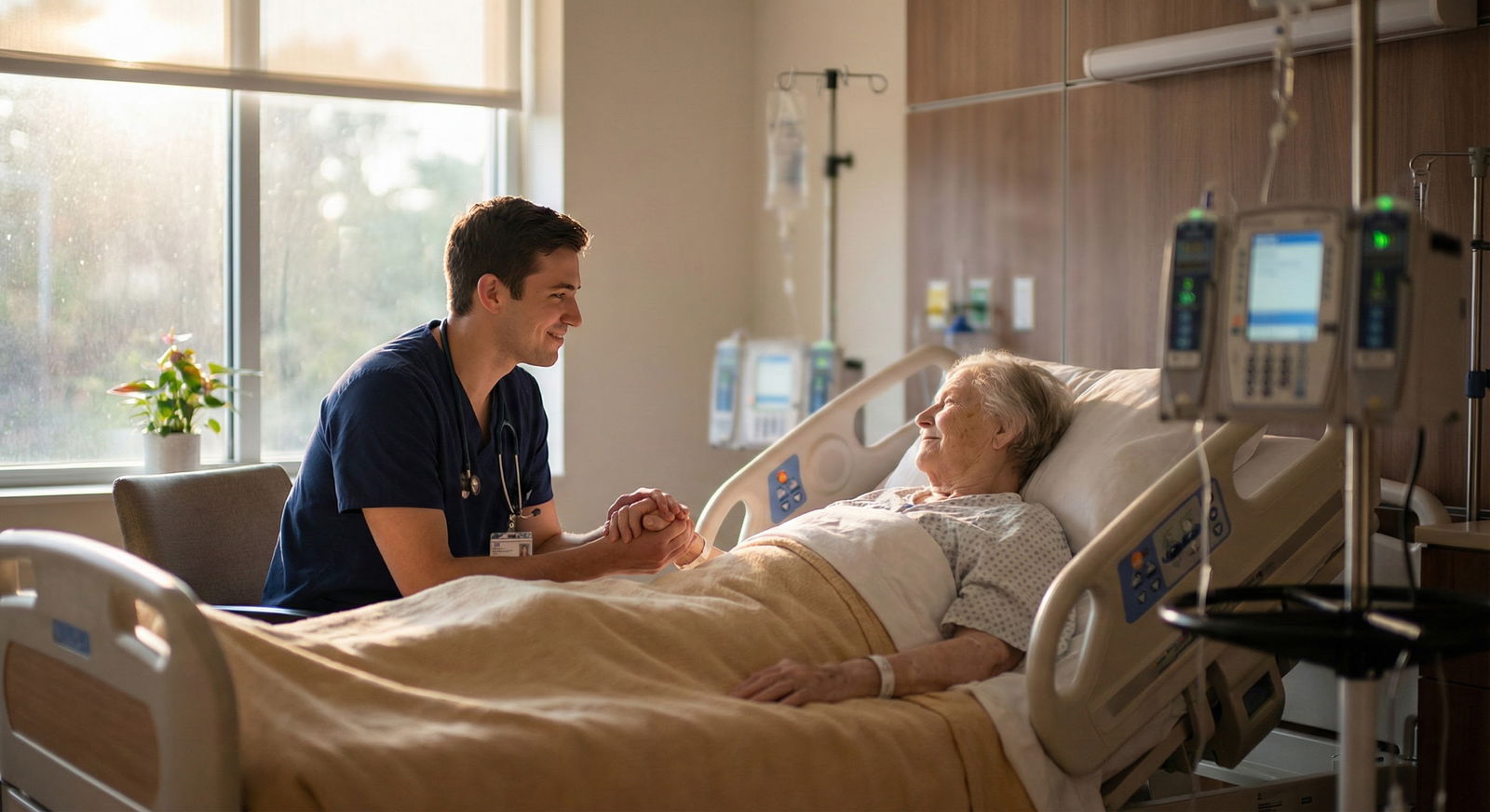
One technique I like for residents is the 15-minute grief rule. After a hard death, give yourself 15 deliberate minutes sometime that day. In the call room. In your car. Walking home. No phone. No charting. Just let yourself think about the patient, feel what you feel, maybe write a few lines if that helps. Then stop. Return to the day.
This works because it gives grief a container. Otherwise it leaks everywhere.
And no, healthy processing is not the same as rumination. Processing sounds like:
- "That was painful, and I'm upset."
- "I wish it had gone differently."
- "I need to talk to someone about this."
Rumination sounds like:
- "If I had said one different sentence, they'd still be alive."
- "This proves I'm not cut out for medicine."
- replaying the exact final moments fifty times with zero new insight
One of those helps. One of those burns you out.
Way 4: Set Boundaries Around Emotional Labor
You are not required to absorb every ounce of grief in the building to prove you care.
This one matters because junior residents often become emotional sponges. The family is grieving. The nurse is upset. Your co-intern is rattled. Your senior is trying to hold it together. And somehow you end up carrying all of it on top of your own reaction. That's not empathy. That's overexposure.
Learn the difference:
- Empathy: "I can sit with this family, listen, and be present."
- Emotional absorption: "I now feel personally responsible for managing everyone's grief."
That second one will eat you alive.
Use practical boundaries with colleagues:
- "I want to support you, but I need 10 minutes before I can talk."
- "I can help with the medical wrap-up, but I'm not the best person to lead this family conversation alone right now."
- "I'm at capacity. Can we loop in senior support?"
That's not cold. That's mature.
Also protect your off-hours. If you notice you're replaying a death every night in bed, create a shutdown ritual. End-of-day note. Short voice memo. Quick prayer. Walk around the block. Something that tells your brain: shift over. Otherwise the hospital follows you home and starts renting space in your head for free.
Way 5: Find Meaning in the Experience
Not every patient death has a neat lesson. Don't force one. That can get fake fast, and fake meaning is useless.
But many losses do teach you something, and if you ignore that, you lose twice.
Maybe the patient taught you how important earlier goals-of-care conversations are. Maybe you learned how much a calm bedside manner matters in the final hour. Maybe you saw a family fracture under stress and realized communication has to start earlier, not when things are already crashing.
That matters. Write it down.
I've seen residents keep a private "what this patient taught me" note on their phone or in a notebook. Not names. Not details that violate privacy. Just lessons. Tiny legacies:
- Always call the daughter early if she's the actual decision-maker.
- Don't avoid palliative care consults out of pride.
- A peaceful death is still good medicine.
- Families remember tone more than perfect wording.
That kind of meaning-making protects you because it turns helplessness into growth. It reminds you that medicine is not only about preventing death. It's also about reducing suffering, telling the truth clearly, and showing up well when cure is gone.
That's real doctoring. Arguably the realest kind.
Way 6: Know When to Seek Professional Support
Sometimes your usual coping tools aren't enough. That's not failure. That's the moment to escalate.
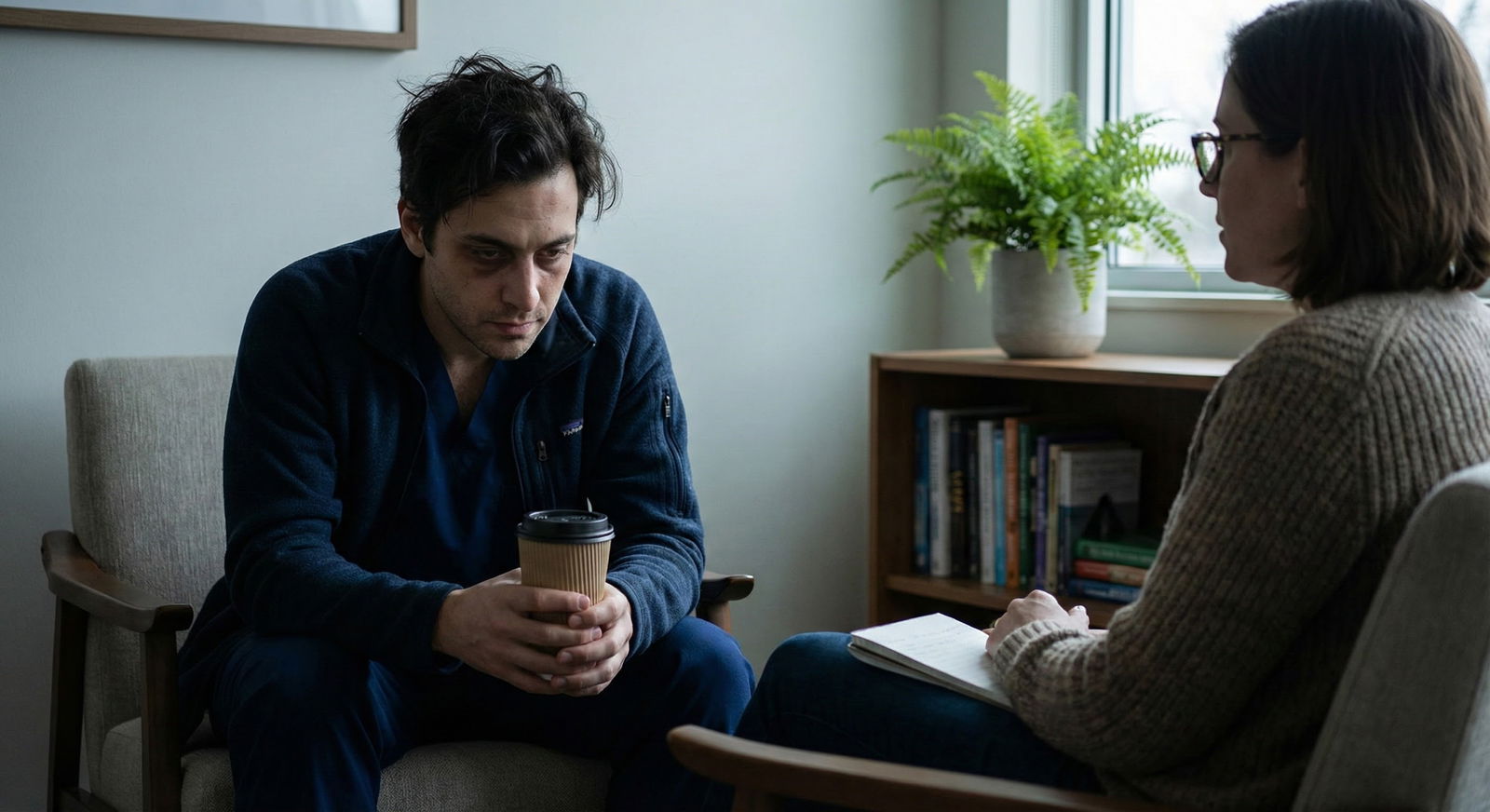
Here are red flags that grief is sliding into something more serious:
- you dread going to work because every sick patient feels unbearable
- you feel numb most of the time, not just after one hard case
- you can't sleep because you're replaying deaths constantly
- you're using alcohol, food, isolation, or anger to blunt what you feel
- you're having intrusive memories, panic, or persistent guilt
- people close to you are noticing you're not yourself
If that's you, use the resources. Therapy. Employee assistance. Resident wellness office. Confidential counseling through your GME office. Primary care. Psychiatry if needed.
And let's be honest: the "strong physician" stigma is tired and stupid. White-knuckling your way through unresolved grief is not strength. It's just untreated distress wearing a professionalism costume.
Plenty of excellent doctors have therapists. Probably more than you think. For good reason.
Way 7: Reframe Your Role and Expectations
This one takes time, but it changes everything: not every death means you failed.
Junior residents often carry wildly unrealistic expectations. If the patient died, you must have missed something. If the family is devastated, you should've communicated better. If the code ended badly, you should've somehow done more.
No. Sometimes the disease wins. Sometimes the injury was unsurvivable. Sometimes medicine reaches its limit no matter how hard the team works.
Your job as a junior resident is not to control every outcome. Your job is to show up, think carefully, ask for help early, communicate honestly, and keep learning. That's it. That's already a lot.
Separate self-worth from outcome. A good doctor can lose patients. A caring doctor can still feel relief when suffering ends. A competent intern can still be shaken by a death. These things can all be true at once.
And yes, this gets easier. Not because you stop caring, but because you build perspective. The PGY-3 version of you will look back at the PGY-1 version with a little tenderness. You'll realize you were trying to hold yourself responsible for things no intern could control. That's common. It's also unfair.
So drop the fantasy that you can save everyone if you just work hard enough. You can't. No one can.
Closing: Your Patients Deserve a Resilient You
Here's the toolkit: debrief with your team, build tiny self-care habits, feel the grief and give it a boundary, stop absorbing everyone else's emotions, make meaning when meaning is there, get professional help when needed, and remember that patient outcomes are not a referendum on your worth.
You do not need to use every strategy every time. This isn't a wellness scavenger hunt. It's a set of tools. Use the one that fits the day.
This week, pick one. Just one.
Ask for a debrief after a hard case. Block 15 minutes to process a death instead of pretending you're untouched. Eat before sign-out. Message counseling services. Write down one thing a patient taught you. Small counts.
Because the goal is not to become unaffected. That would make you worse, not better. The goal is to stay human without burning out. And with practice, you can.