

The way you use the EMR will burn you out faster than the night float schedule.
Not the pager. Not the hours. The invisible, “just click this” workflow that looks harmless and feels mandatory. That is the trap.
This is the part of residency almost no one trains you for: how to protect your brain from the EMR. I have watched excellent residents slowly unravel not because they were clinically weak, but because their documentation and order workflows were a chaotic, soul-sucking mess.
Let me walk you through the mistakes that quietly push you toward burnout, and how to stop making them before you are the one charting at 11:47 p.m. on a “light” day.
1. The Silent Killer: Letting EMR Work Expand To Fill All Available Time
The EMR is designed to be bottomless. If you do not put hard walls around it, it will eat your entire day.
Here is the typical mistake pattern I see in interns:
- Start-of-day: open all charts “to get oriented”
- Bounce between 10–16 open tabs
- Half-write three H&Ps while checking labs, imaging, and responding to messages
- Tuck in a few orders “so they’re in”
- End up with 6 unfinished notes by noon, 10 by late afternoon
- Stay late “catching up” while the next day’s work accumulates
You feel like you worked non-stop. Yet you never feel done. That constant partial-completion state is cognitively brutal.
The correct move is ruthless time-boxing of EMR tasks, even if no one explicitly teaches you this.
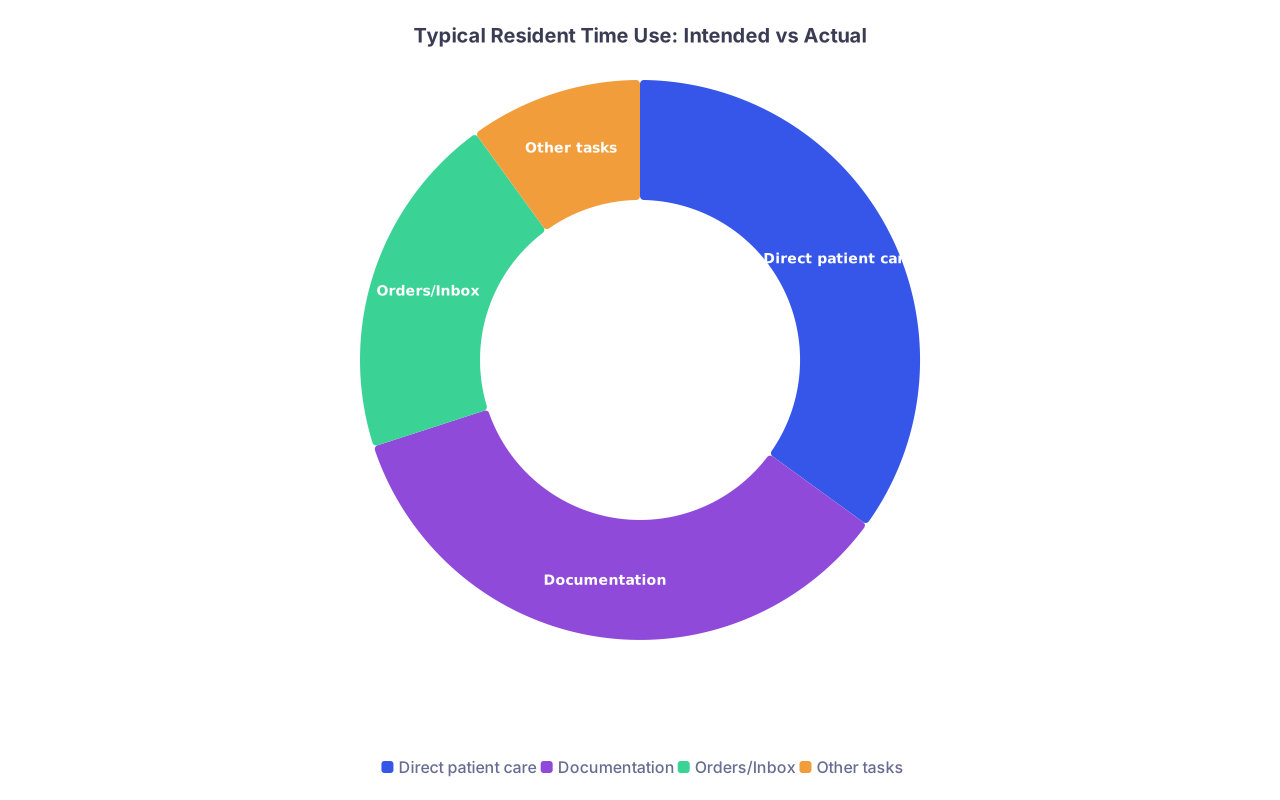
| Category | Value |
|---|---|
| Direct patient care | 35 |
| Documentation | 35 |
| Orders/Inbox | 20 |
| Other tasks | 10 |
In a “good” day, you imagine half your time is with patients. In reality, documentation and EMR admin quietly expand. The key errors:
- Starting note-writing before you have a coherent plan for each patient
- Constantly task-switching between patients in the EMR
- Leaving “just one thing” unfinished in multiple charts
What to do instead:
- Round first, document second. Very short pre-chart, then talk to patients, then sit and crank through notes in a focused block.
- One patient at a time. Open one chart. Finish that note to the point it is at least billable and medically safe. Then move on.
- Hard EMR shutdown points. Example: “By 5 p.m., all progress notes are done except actively crashing patients.” Protect that like an OR case.
Do not let attending perfectionism override this. A slightly imperfect note done on time is infinitely better for your sanity than a “beautiful” note finished at 9:30 p.m.
2. Copy-Paste: The “Time Saver” That Quietly Destroys You
Yes, everyone uses copy-forward. Attending, fellow, senior. You will too. The mistake is using it the lazy way instead of the protective way.
Dangerous copy-paste behaviors I keep seeing:
- Copying yesterday’s full note, changing 3–4 lines, and leaving outdated vitals, meds, or plans
- Carrying forward a problem list that is 80% irrelevant
- Letting your assessment and plan bloat into 2–3 pages with contradictory statements
This does three things to you over time:
- Increases error risk (which increases anxiety every time you sign)
- Makes your notes harder to skim, so you waste more time re-reading your own work
- Teaches your brain that documentation is fake, performative clutter, not a clinical tool
That last one is the real burnout accelerant. When you stop believing your notes matter, the whole job starts to feel like pointless clicking.

Safer copy-forward rules that protect you:
- Copy only the problem structure, not the entire narrative. Bring over headings (Neuro, CV, Pulm) with brief bullets, then force yourself to rewrite the assessment in your own words.
- Hard rule: you must change every single problem’s text every day. Even if it is one line: “No change from yesterday; continue same plan.”
- Delete aggressively. If a problem is no longer active, remove it. If your plan is 10 bullets long, trim it to the 3 that actually matter today.
If you are copying a note and then spending 5–10 minutes “fixing” it, you are not saving time. You are doubling cognitive load. Write a lean note instead.
3. Template Addiction: When SmartPhrases Make You Dumb (And Tired)
Templates are like opioids. Life-saving when used correctly, career-destroying when overused.
The toxic pattern:
- You borrow a “super thorough” template from a PGY-3
- It has 18 review of systems lines, 12 exam systems, 20 auto-populated labs
- You use it for everything: the 21-year-old with appendicitis and the 86-year-old with septic shock
- Every note turns into a monster of irrelevant text you do not read
By month four, your brain associates EMR work with slogging through walls of nonsense. That feeling is burnout fuel.
You need templates that are protective, not impressive.
| Template Type | Effect on Burnout | Risk Level |
|---|---|---|
| Lean, problem-based | Low | Safer |
| Specialty-specific | Moderate | Manageable |
| Global mega-template | High | Dangerous |
| Auto-import-everything | Very High | Extreme |
Protective template rules:
- One core template per rotation, not per attending. Internal medicine, surgery, peds, ICU, ED. That is plenty.
- Start small. A few headings you always want (Subjective, Objective, A/P with major problems). Add only what you repeatedly need.
- Keep anything that auto-imports data (vitals, labs, imaging) extremely lean. Pull in the last 24 hours’ key labs, not the last 7 days of everything.
The biggest mistake: thinking templates must show how much you know. They should show how much you value your future self at 6:30 p.m. trying to finish sign-out.
If a template makes it harder to see what actually changed, it is not “thorough.” It is a liability.
4. Inbox, Tasks, and Results: Death by 1,000 Clicks
The EMR inbox looks tiny. A few pink messages, some results, some patient portal stuff. “I’ll just clear these quickly.”
That thought has you in the hospital 45 minutes later.
The mistake pattern:
- You check the inbox every time you return to the workstation
- You respond immediately to non-urgent FYIs
- You sign every result and document every trivial communication as if it were high-risk
What this creates: permanent low-grade vigilance. You never get deep work on notes or orders. Your brain is always half-watching for that red number in the corner. Chronic, pointless stress.
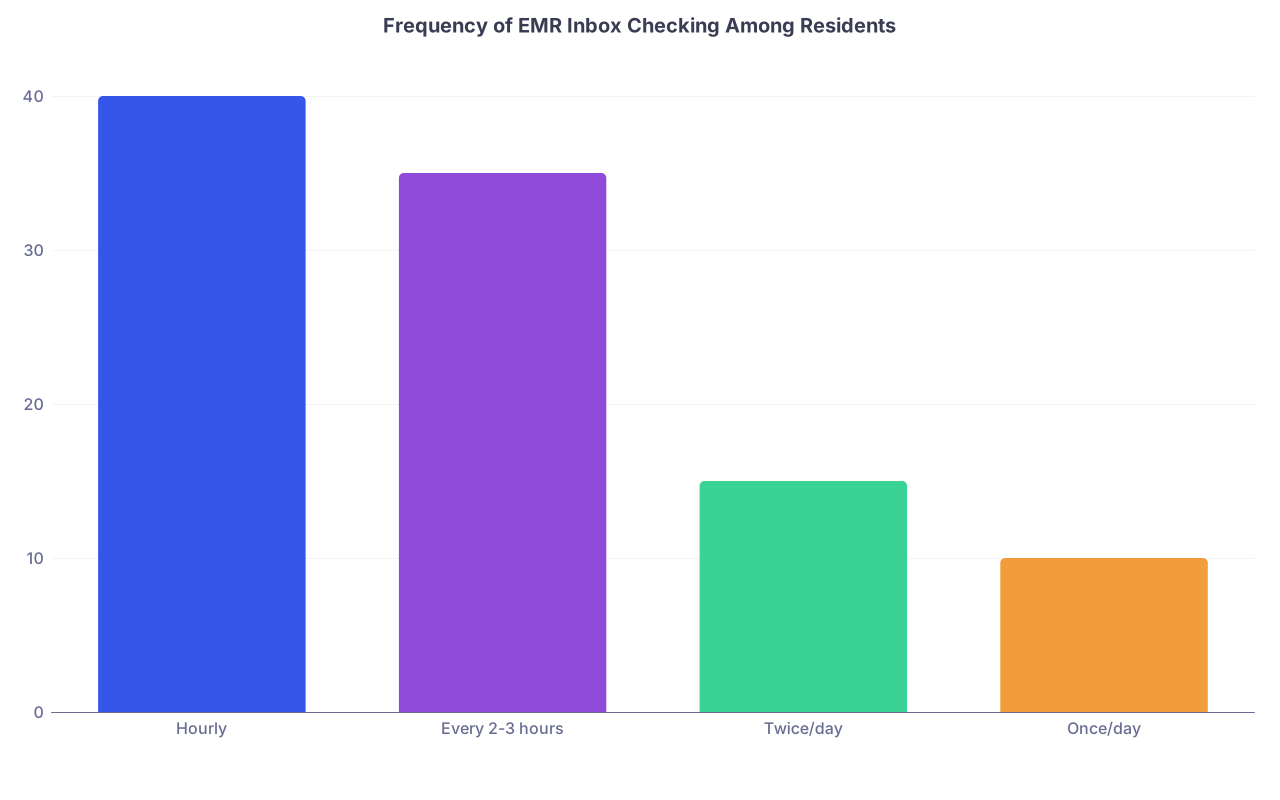
| Category | Value |
|---|---|
| Hourly | 40 |
| Every 2-3 hours | 35 |
| Twice/day | 15 |
| Once/day | 10 |
Better approach:
- Designate inbox windows. For example: post-pre-rounds, mid-afternoon, pre-sign-out. Outside those windows, you do not open it unless something is clearly urgent.
- Triage by actual risk, not by politeness. Quick mental rule: “Does this need my brain right now to avert harm?” If not, it waits for the next inbox window.
- Use smart phrases for common replies. One-line results notifications, follow-up instructions, and low-risk clarifications should not require original prose.
And be very clear with attendings and nurses about response expectations. If you let everyone train you as “the resident who always replies immediately,” you will pay for that with exhaustion by month six.
5. Orders and Handoffs: When “Just Get The Orders In” Backfires
Another burnout trap: letting orders and notes fight each other all day.
You know this day:
- Pre-rounds: you start dozens of orders piecemeal
- Mid-rounds: attending changes half of them
- Afternoon: you are cleaning up conflicting med lists and duplicate labs while still trying to write notes
- 5 p.m.: your cross-cover list is out of sync with your documentation and orders
The cognitive dissonance of “What did we actually decide?” wears you down.
The mistake is skipping any structured workflow for orders and handoffs. You rely on memory and informal notes. That works on light days. It will break you on heavy ones.

More protective pattern:
- During rounds: write the plan, not the orders. Scribble or type live bullets for each patient.
- After rounds: enter orders in a focused block, going down your team list. One patient at a time, with your written plan actually visible.
- Then notes. Orders first, notes second, inbox later. That order prevents the “note says one plan, orders show another” chaos that makes sign-out miserable.
For handoff lists, the mistake is letting them become a separate, shadow EMR. If your sign-out requires 10–15 unique, manually updated fields, you are guaranteeing outdated and conflicting information.
Lean sign-out is protective sign-out:
- One brief “active problems” line that mirrors your note
- One “if/then” line (If X, do Y) for true overnight issues
- No long copy-pasted labs or full micro histories
The more your handoff list duplicates your notes, the more tired and error-prone you become.
6. Perfectionism: The Hidden EMR Multiplier of Burnout
The single most dangerous documentation habit is resident perfectionism masquerading as “thoroughness.”
I have watched interns rewrite entire H&Ps because an attending made a minor comment. Spend 15 minutes fixing formatting on a note that no one will ever read. Obsess over the exact phrasing of “goals of care” paragraphs to impress palliative care.
This does not make you better. It makes you slower, more anxious, and more likely to resent the entire job.
Here is the blunt truth: most notes are skimmed for 10–20 seconds by overworked clinicians who want the current story, the active problems, and what you are doing about them. That is it.

Ask yourself:
- Is this change clinically meaningful for future care?
- Is this change required for billing or compliance?
- Will this change significantly clarify what happened today?
If the answer is no to all three, you are polishing for ego or fear, not for patient care. That is a burnout accelerant.
Set explicit “good enough” criteria:
- H&P: history accurate, exam supports decisions, differential and plan clear. Not poetry.
- Progress note: key overnight events, today’s status, active problems with a clear “this is the new plan today.”
- Discharge summary: why they came, what changed, what they are going home on, what must be followed. Do not write a novel.
Do not let your self-worth ride on how “beautiful” your notes are. Let it ride on whether your patients are informed, safe, and progressing. The EMR is a tool, not your portfolio.
7. Ignoring EMR Training and Shortcuts: Voluntary Suffering
A lot of residents scoff at EMR training. “I will pick it up on the job.” That is bravado. And it is a mistake.
I have personally seen residents spend:
- 90 seconds finding a lab they could have found in 10
- 2–3 minutes manually typing med lists they could import
- 20 seconds per order clicking through default options they could set once
Multiply that by 100–150 actions per day. You are bleeding time.
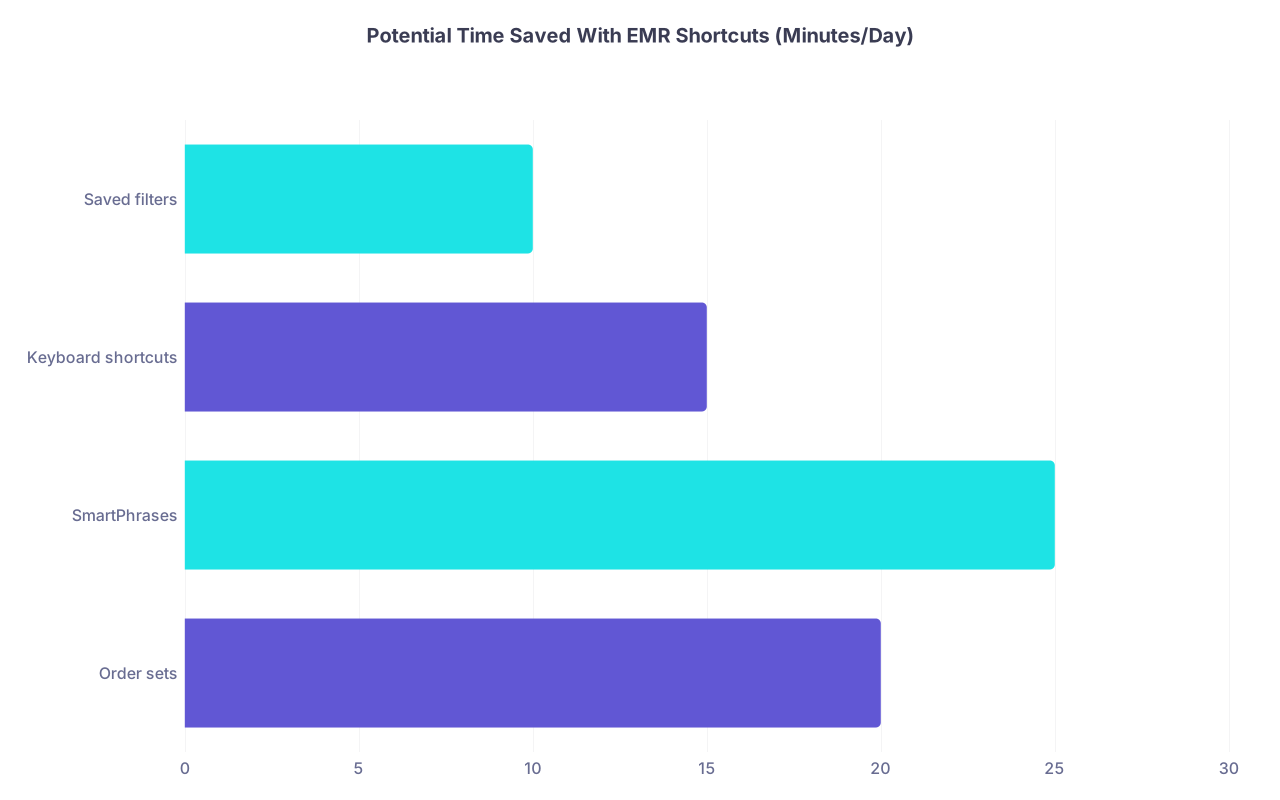
| Category | Value |
|---|---|
| Order sets | 20 |
| SmartPhrases | 25 |
| Keyboard shortcuts | 15 |
| Saved filters | 10 |
If you refuse to learn shortcuts and customization, you are choosing extra fatigue.
Protective moves:
- Spend one protected afternoon early in each rotation with a power-user co-resident or super-user nurse. Ask only one question: “What do you do in the EMR that saves you the most time?” Then copy that.
- Learn keyboard shortcuts for: new note, sign, order entry, search, last chart, and result review. Those alone pay back the time investment in under a week.
- Build a tiny library of SmartPhrases you actually use: common admission instructions, standard discharge language, frequent problem templates.
The mistake is thinking this is “extra work.” It is not. It is shaving 30–60 minutes of drag off your every day for the rest of residency. That is the kind of ROI that keeps people in medicine.
8. Letting EMR Work Follow You Home (Physically Or Mentally)
The last and most corrosive mistake: allowing the EMR to live in your head after you leave the hospital.
The obvious version: remote logins from home to “finish just two notes.” That quickly becomes 30–60 minutes of unpaid, unbounded work, with no colleagues around and no real stopping point. It also quietly tells your brain: “You are never off.”
The subtler version: replaying charting tasks in your mind at midnight. “Did I close that loop? Did I send that result? Did I document that conversation?” EMR rumination is vicious.
You will never have zero loose ends. Residencies are not designed that way. You need a shutdown routine that contains the chaos.
Before you leave:
- Quick mental or written checklist: notes done for today, critical orders placed, key results addressed or signed out, high-risk follow-ups clearly handed off.
- If something truly must be done by you tomorrow, write it as a task for your future self (sticky note, protected part of your list). Do not try to remember it with your brain alone.
Then walk out. Do not open the EMR at home unless it is a rare, explicitly agreed-on exception (like a massive code you could not finish documenting).
If your program normalizes constant off-site charting, that is a system problem. But you can still set personal boundaries and push back. The residents who survive with their sanity intact are the ones who do not treat EMR access as a 24/7 leash.
FAQ (Exactly 3 Questions)
1. My attendings expect super detailed notes. How do I protect myself without getting in trouble?
Aim for structure and clarity, not length. Ask attendings directly: “For you, what absolutely must be in the note for this service?” Then give them that, but in a lean way. Use problem-based assessments, keep fluff out, and show that your thinking is solid. If someone demands “more detail,” add it where it matters (assessment and plan), not in boilerplate ROS or full system exams.
2. Is it ever acceptable to finish notes after going home?
Occasionally, yes. Constantly, no. If you are regularly finishing more than 1–2 notes at home, that is a red flag. First, fix your daytime workflow: fewer interruptions, time-boxed note blocks, smaller templates. If the workload is objectively impossible, document that pattern and bring it to your chief or program leadership with specific examples. Chronic off-site charting is a setup for burnout and errors.
3. How do I know if my EMR habits are pushing me toward burnout already?
Watch for these signs: you dread opening the EMR more than seeing patients; you stay 45–90 minutes late most days just to “catch up on notes”; you find yourself re-reading your own long notes because you cannot find the plan; your brain keeps replaying unfinished chart tasks at night. If any of that sounds familiar, your workflows are costing you too much. Start with one protective change: smaller templates, strict note time blocks, or reduced inbox checking. Then build from there.
Key points:
- Sloppy EMR workflows quietly multiply your mental load and are a major, underappreciated driver of resident burnout.
- Lean, structured, time-boxed documentation and order practices protect both your patients and your sanity.
- You are allowed to defend your brain from the EMR; if you do not, no one will do it for you.


