The Role of Peer Support in Preventing Burnout During Residency
Medical residency is often described as a marathon run at sprinting speed. Long shifts, life‑or‑death decisions, emotional encounters with patients and families, and constant evaluation can wear down even the most resilient trainees. Against this backdrop, Peer Support has emerged as one of the most powerful and practical tools for Burnout Prevention and protecting Mental Health during Medical Residency.
This article explores why peer relationships matter so much, how they build Emotional Resilience, what the evidence shows, and—most importantly—specific strategies you can use to create and sustain peer support in your own training environment.
Understanding Burnout in Medical Residency
What Is Burnout and How Does It Show Up in Residents?
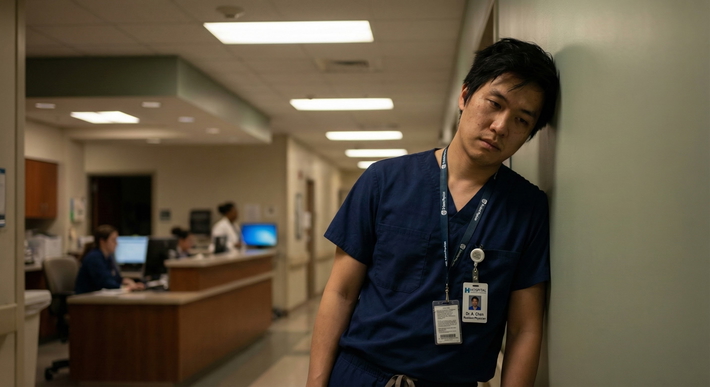
In residency, burnout is not simply “being tired” or “having a bad rotation.” Burnout is a chronic state of emotional, physical, and mental exhaustion resulting from prolonged job-related stress that has not been successfully managed. It classically includes three components:
- Emotional exhaustion – Feeling drained, overwhelmed, or “used up,” often dreading another shift.
- Depersonalization (cynicism) – Developing a detached, cynical, or dehumanized attitude toward patients, colleagues, or the work itself (“just another admit,” “I don’t care anymore”).
- Reduced sense of personal accomplishment – Feeling ineffective, inadequate, or like nothing you do makes a difference, even when your objective performance is strong.
Multiple studies in journals such as JAMA, Academic Medicine, and others show that a substantial proportion of residents experience symptoms of burnout at some point in training. Burnout does not only affect your own well‑being; it is associated with:
- Increased medical errors
- Impaired empathy and communication
- Higher risk of depression and suicidal ideation
- Relationship strain and social withdrawal
- Decreased long‑term retention in medicine
Recognizing these signs early—and having peers who can help you notice them—is a crucial first step in prevention.
Key Drivers of Burnout During Residency
Burnout in residency typically arises from a combination of workload, workplace culture, and personal factors. Common contributors include:
Excessive hours and workload
- 24‑hour calls, night floats, >60–80 hour weeks (even post‑duty hour reforms)
- High patient volume and administrative burden (notes, prior authorizations, EMR tasks)
High‑stress, high‑stakes environment
- Frequent exposure to critical illness, codes, trauma, and death
- Responsibility without always having full autonomy
Limited control and autonomy
- Rigid schedules and rotations
- Little say in patient assignments or workflow
- Feeling “trapped” in a system you cannot change
Hidden curriculum and culture
- Stigma around asking for help or showing vulnerability
- “Tough it out” mentality; equating suffering with dedication
- Normalization of overwork and under‑sleeping
Personal factors
- Perfectionism and imposter syndrome
- Lack of work‑life integration (family, hobbies, rest)
- Ineffective or absent coping mechanisms
Understanding this landscape helps clarify why peer support is not just “nice to have” but a structural buffer that can protect residents from sliding into burnout.
Peer Support in Residency: What It Is and Why It Matters
Defining Peer Support in a Medical Training Context
Peer Support refers to supportive relationships between individuals who share a similar role and lived experience. In the context of Medical Residency, this typically means relationships among:
- Co‑interns
- Residents across PGY levels
- Fellows and senior residents with similar training histories
Peer support can be:
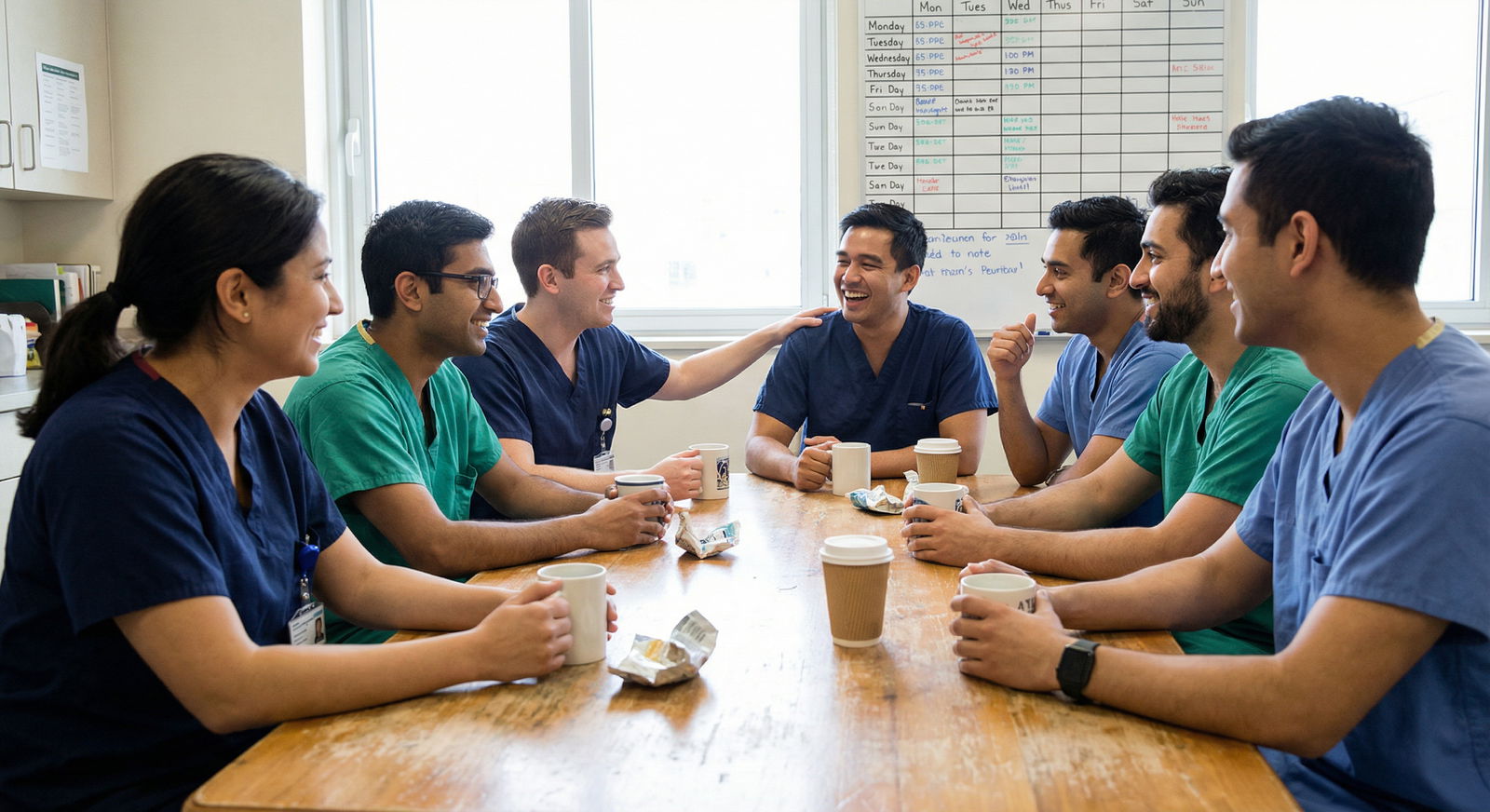
- Informal – Conversations in the call room, venting with a co‑resident after a difficult case, checking in with a colleague who seems “off.”
- Semi‑formal – Regular small‑group debriefs, resident‑only check‑ins, group chats or messaging channels.
- Formal – Structured peer support programs, peer mentoring, Balint groups, or resident‑led wellness initiatives endorsed by the program.
What makes peer support unique is its foundation in shared experience. Your peers understand:
- The specific pressures of call nights on your service
- The unspoken expectations of your attendings
- The emotional toll of particular diagnoses or situations
- The fear of making mistakes while being evaluated
This shared context makes peer conversations particularly validating and powerful.
How Peer Support Protects Against Burnout
Peer support plays a central role in Burnout Prevention and building Emotional Resilience in residency by:
1. Reducing Isolation and Normalizing Struggle
Residency can be surprisingly isolating, even when you are constantly surrounded by people. You may feel like you are the only one:
- Struggling with time management
- Missing diagnoses in hindsight
- Crying on the drive home
- Questioning your choice of specialty
When peers share similar experiences, you realize, “It’s not just me.” This normalization:
- Decreases shame and self‑criticism
- Encourages earlier help‑seeking
- Reduces the risk of internalizing struggle as personal failure
2. Enhancing Emotional Resilience
Emotional Resilience—the capacity to recover from setbacks and adapt to stress—does not develop in isolation. It grows through:
- Story sharing: Discussing difficult cases, errors, or ethical dilemmas
- Collective sense‑making: Deconstructing what happened and what can be learned
- Mutual reassurance: Hearing “I’ve been there and got through it”
Over time, residents who regularly engage in peer support often:
- Bounce back faster from challenging events
- Develop a broader perspective on failures and successes
- Feel less overwhelmed by transient setbacks
3. Encouraging Open, Stigma‑Free Conversation about Mental Health
A strong peer support culture provides psychologically safe spaces to talk about:
- Anxiety, depression, and burnout
- Sleep issues and chronic fatigue
- Moral injury and ethical distress
- Thoughts of leaving medicine—or worse
Such spaces are pivotal in suicide prevention and early intervention. When residents can say to each other, “I’m not okay,” and be met with support rather than judgment, they are more likely to seek professional help when needed.
4. Facilitating Practical Problem‑Solving
Peer groups are an underutilized source of practical wisdom:
- How to efficiently preround and chart
- Tips for running a code or leading a rapid response
- Strategies for negotiating cross‑cover requests
- Approaches to difficult attendings or challenging team dynamics
Peer advice can transform daily frustrations into manageable tasks, reducing the sense of helplessness that fuels burnout.
5. Building Long‑Term Connection and Community
Finally, residency peers often become lifelong colleagues and friends. These relationships:
- Provide ongoing professional support after training
- Expand your network for job opportunities, collaboration, and research
- Serve as a buffer during future stress (e.g., early attending years, fellowship challenges)
The social connection itself is a protective factor for long‑term mental health and career sustainability.

Evidence: What Research Tells Us About Peer Support and Burnout
While many residents intuitively feel the value of talking with colleagues, research increasingly backs up the impact of peer support on Burnout Prevention and Mental Health.
Structured Peer Support and Burnout Reduction
Peer‑led support groups in Academic Medicine
- Studies in Academic Medicine and similar journals have found that residents who participate in peer‑facilitated support or discussion groups report:
- Lower levels of emotional exhaustion
- Higher job satisfaction
- Improved sense of belonging within their program
- These groups often include case‑based discussion, reflection on difficult encounters, and shared coping strategies—not just venting.
- Studies in Academic Medicine and similar journals have found that residents who participate in peer‑facilitated support or discussion groups report:
Interventions from wellness and burnout coalitions
- Reports from physician wellness organizations and burnout coalitions highlight that structured peer initiatives (e.g., regular check‑ins, reflective rounds, peer mentoring) are associated with:
- Lower reported burnout scores
- Increased perceived support and morale
- More positive attitudes toward seeking mental health care
- Reports from physician wellness organizations and burnout coalitions highlight that structured peer initiatives (e.g., regular check‑ins, reflective rounds, peer mentoring) are associated with:
National and Institutional Initiatives
Many medical schools and residency programs have implemented formal programs that integrate peer support as a core component of wellness:
Resident‑to‑resident mentoring
- PGY‑3s paired with interns for longitudinal mentorship
- Near‑peer coaching on both clinical skills and adjustment to residency life
Balint groups and reflective practice sessions
- Guided peer groups focusing on the doctor–patient relationship and emotional responses
- Shown to improve empathy and reduce depersonalization
Peer navigator or buddy systems
- Residents assigned a “buddy” for check‑ins during high‑stress rotations (e.g., ICU, night float)
- Simple but effective in catching distress early
While program designs vary, the consistent pattern is clear: when peer support is structured, valued, and protected, it significantly contributes to Emotional Resilience and reduced burnout among residents.
Practical Strategies to Build and Sustain Peer Support in Residency
You do not have to wait for a perfect institutional initiative to benefit from peer support. There are multiple layers of action—from individual to program‑level—that can strengthen your peer network.
1. Create or Enhance Peer Mentorship Programs
Within your program:
- Advocate for vertical mentorship (PGY‑1 paired with PGY‑2 or PGY‑3):
- Set expectations for regular check‑ins (e.g., monthly coffee or lunch)
- Focus on both clinical and non‑clinical topics (time management, finances, family balance, research)
- Consider interest‑based pairing:
- Match by specialty interests, career plans (academic vs. community), or shared identities (e.g., first‑generation physicians, IMG residents)
Tips for making mentorship meaningful:
- Come prepared with 1–2 concrete topics or questions
- Normalize talking about challenges—not just achievements
- Periodically revisit goals and what support you need
2. Establish Regular Resident‑Only Check‑Ins
Residency schedules are brutal, which makes planned, recurring spaces for connection even more essential.
Monthly or bi‑weekly support huddles
- Short (30‑45 minutes), resident‑only sessions
- Ground rules: confidentiality, no judgment, equal opportunity to speak
- Possible structure:
- “Rose and thorn” (one positive, one challenge)
- Brief debrief of recent tough cases
- Sharing one practical tip that helped recently
Post‑call or end‑of‑week debriefs
- Informal discussions in the call room or break area
- Ask, “What was the hardest moment this week?” and “What helped you get through it?”
These recurring rituals allow stress to be processed in smaller doses rather than accumulating unchecked.
3. Use Technology to Stay Connected
Digital tools can make Peer Support more accessible, especially in large or busy programs.
Group chats or messaging apps
- Create rotation‑specific or class‑wide groups for:
- Quick questions (“Has anyone managed this consult scenario before?”)
- Emotional check‑ins (“Rough shift—anyone else having a hard time?”)
- Sharing resources (podcasts, articles, wellness tips)
- Set norms to keep chats supportive and not overwhelming (e.g., avoid shaming, limit off‑hour paging‑style demands).
- Create rotation‑specific or class‑wide groups for:
Virtual peer hangouts or reflection sessions
- Online meetups (15–30 minutes) for those on different rotations or at satellite sites
- Helpful for residents with caregiving responsibilities or limited physical overlap
4. Incorporate Wellness and Social Connection into Program Culture
Peer Support is strengthened when programs take social connection seriously—not as an afterthought.
Wellness workshops with a peer focus
- Invite residents to share real strategies that worked for them on:
- Sleep hygiene on night float
- Managing conflict with staff or consultants
- Decompressing after codes or patient deaths
- Invite residents to share real strategies that worked for them on:
Low‑pressure social events
- Potlucks, board game nights, outdoor walks, or coffee runs
- “Resident interest groups” (running, cooking, book clubs) to foster connection outside medicine
- Efforts to include residents’ partners/families can broaden support networks
Protected time for connection
- Ask leadership to designate certain noon conferences or academic half‑days for peer‑led wellness and reflection, not just didactic lectures.
5. Build Skills That Make Peer Support More Effective
Even well‑intentioned peers can accidentally invalidate or shut down meaningful conversation. Training in basic support skills amplifies the impact of Peer Support.
Key skills include:
Active listening
- Maintain eye contact, avoid interrupting
- Reflect back key phrases (“It sounds like you felt…”) to show understanding
Validating emotions
- Avoid minimizing (“Everyone goes through that,” “It’s not so bad”)
- Use validating phrases: “That sounds really hard,” “It makes sense you feel that way.”
Asking, not assuming
- “Do you want advice right now, or do you mostly want to vent?”
- “How can I best support you with this?”
Knowing when to escalate
- Recognize red flags: hopelessness, talk of self‑harm, severe withdrawal, impaired functioning
- Encourage professional help (GME counseling, employee assistance programs, primary care)
- Offer to accompany them to seek help if appropriate
Some institutions offer formal workshops on peer support or “gatekeeper training” for recognizing and responding to distress. If your program does not, consider proposing one.
Common Barriers to Peer Support—and How to Overcome Them
Despite the clear benefits, meaningful peer support can be difficult to sustain. Recognizing and addressing barriers proactively is key.
Cultural and Personal Barriers
Fear of being judged or seen as weak
- Many residents worry that admitting struggle will affect evaluations or reputation.
- Counterstrategy:
- Senior residents and faculty can model vulnerability (“When I was an intern, I really struggled with…”).
- Programs can explicitly affirm that seeking help is a professional strength, not a weakness.
Competition and comparison
- Residency can foster unhealthy comparison (procedures logged, research output, feedback).
- Counterstrategy:
- Emphasize collaborative success (team metrics, patient outcomes).
- Create spaces where evaluations and scores stay outside the room and only shared experiences enter.
Perfectionism and imposter syndrome
- Feeling like “everyone else is managing fine” even when they are not.
- Counterstrategy:
- Normalize common struggles at orientation and throughout the year.
- Encourage honest storytelling from upper levels about mistakes and near‑misses (with psychological safety).
Structural and Logistical Barriers
Lack of time
- Heavy workloads can make organized support activities feel impossible.
- Counterstrategy:
- Integrate peer check‑ins into existing structures (pre‑round huddles, sign‑out, noon conference).
- Keep some support rituals short but regular (5–10 minute end‑of‑shift check‑ins).
Fragmented schedules
- Rotations at different sites, night vs. day schedules, and electives limit overlap.
- Counterstrategy:
- Use digital connections to bridge gaps.
- Plan occasional all‑class or all‑program gatherings when schedules allow.
Inconsistent institutional support
- Some programs may talk about wellness but not back it with time or resources.
- Counterstrategy:
- Collect basic data (anonymous surveys, feedback) to demonstrate resident need and interest.
- Propose small, feasible pilots (e.g., quarterly peer debrief) and expand if successful.

Integrating Peer Support into a Sustainable Career in Medicine
Peer Support during Medical Residency is more than a short‑term coping tool; it is practice for the kind of professional community you will need across your career.
When you invest in peer relationships now, you are:
- Building a network that can help you navigate early attending challenges, job transitions, or fellowship
- Learning to talk openly about Mental Health and Emotional Resilience in a profession that historically discouraged it
- Participating in cultural change—toward a model of medicine where clinicians support each other as human beings, not just as cogs in a system
Burnout Prevention is never accomplished by one intervention alone. Duty‑hour management, staffing, institutional resources, and access to mental health care all matter. But peer support is unique in that:
- It is always available in some form.
- It costs little to initiate.
- It empowers residents to help one another rather than suffer in silence.
Cultivating peer support is not just an optional “extra” in residency; it is an essential component of a humane, sustainable training environment and, ultimately, better patient care.
FAQs: Peer Support and Burnout Prevention in Residency
Q1: How can I find or start a peer support group in my residency program?
Most programs already have informal peer connections, even if no formal group exists. To start:
- Ask your chief residents or program director if any wellness or support initiatives are active.
- Propose a simple resident‑only check‑in group (monthly or bi‑monthly) and request brief protected time.
- Start small with 3–6 colleagues and clear ground rules (confidentiality, respect, no evaluations).
- Consider co‑leading with a co‑resident to share responsibility and improve continuity.
If your program is hesitant, frame the group as a patient‑safety and performance booster through improved resident well‑being.
Q2: What should I do if my current peer support network feels negative or unhelpful?
Sometimes peer spaces can devolve into chronic complaining without forward movement, which may worsen burnout. To recalibrate:
- Gently suggest a more balanced structure (e.g., each person shares one challenge and one thing that went well).
- Introduce problem‑solving: “What helped you cope?” or “What could we try differently next time?”
- Set boundaries if conversations become toxic, excessively cynical, or personally attacking.
- It is okay to seek out or create an alternative group that aligns better with your goals for resilience and growth.
Q3: Are peer support interventions a substitute for professional mental health care?
No. Peer Support is a powerful complement but not a replacement for professional care when needed.
Seek formal help if you experience:
- Persistent sadness, anxiety, or hopelessness
- Thoughts of self‑harm or feeling that others would be “better off without you”
- Severe sleep disturbance, impaired functioning, or substance misuse
- Inability to find joy in any area of life for weeks or months
Most institutions offer confidential counseling through Graduate Medical Education (GME), employee assistance programs, or community providers. Peers can help you recognize when it’s time to reach out and can support you in doing so.
Q4: What if I’m uncomfortable sharing personal struggles with peers?
Discomfort is common, especially in competitive and evaluative environments. Consider:
- Starting with less vulnerable topics (e.g., time management challenges, difficult conversations with patients) before sharing deeper emotional content.
- Observing a group first; you may feel safer once you see how others share and respond.
- Remembering that you control what and how much you share. You can benefit from listening and offering support, even if you share minimally at first.
- If peer sharing still feels too risky, consider one‑on‑one mentoring or professional counseling as a starting point.
Q5: How can senior residents and fellows support a healthier peer culture for juniors?
Senior trainees play a crucial role in shaping the culture of Peer Support and Burnout Prevention:
- Model vulnerability by sharing realistic stories about your own struggles and growth.
- Regularly check in with interns and juniors, especially on high‑stress rotations.
- Normalize asking for help and using wellness or counseling resources.
- Intervene gently if you observe bullying, shaming, or dismissive behavior.
- Advocate with leadership for protected time and resources for resident support initiatives.
Your example can make it safer for everyone around you to ask for and offer help.
Peer support will not eliminate the inherent challenges of Medical Residency, but it can transform how you experience and manage them. By investing in one another, residents can foster Emotional Resilience, protect Mental Health, and build a culture where physicians do not have to choose between excellent patient care and their own well‑being.