Introduction: Mindfulness as a Practical Tool for Residency Burnout Prevention
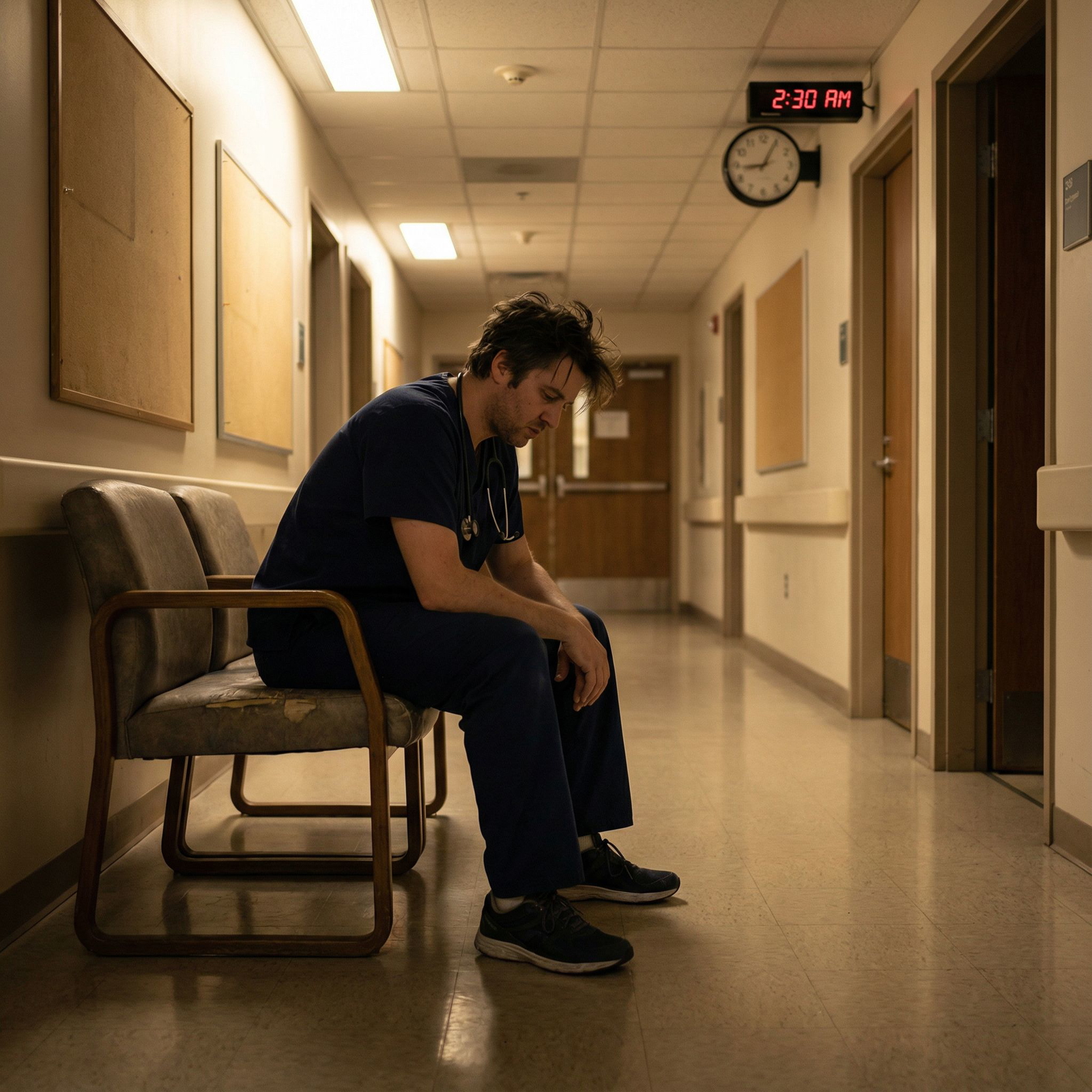
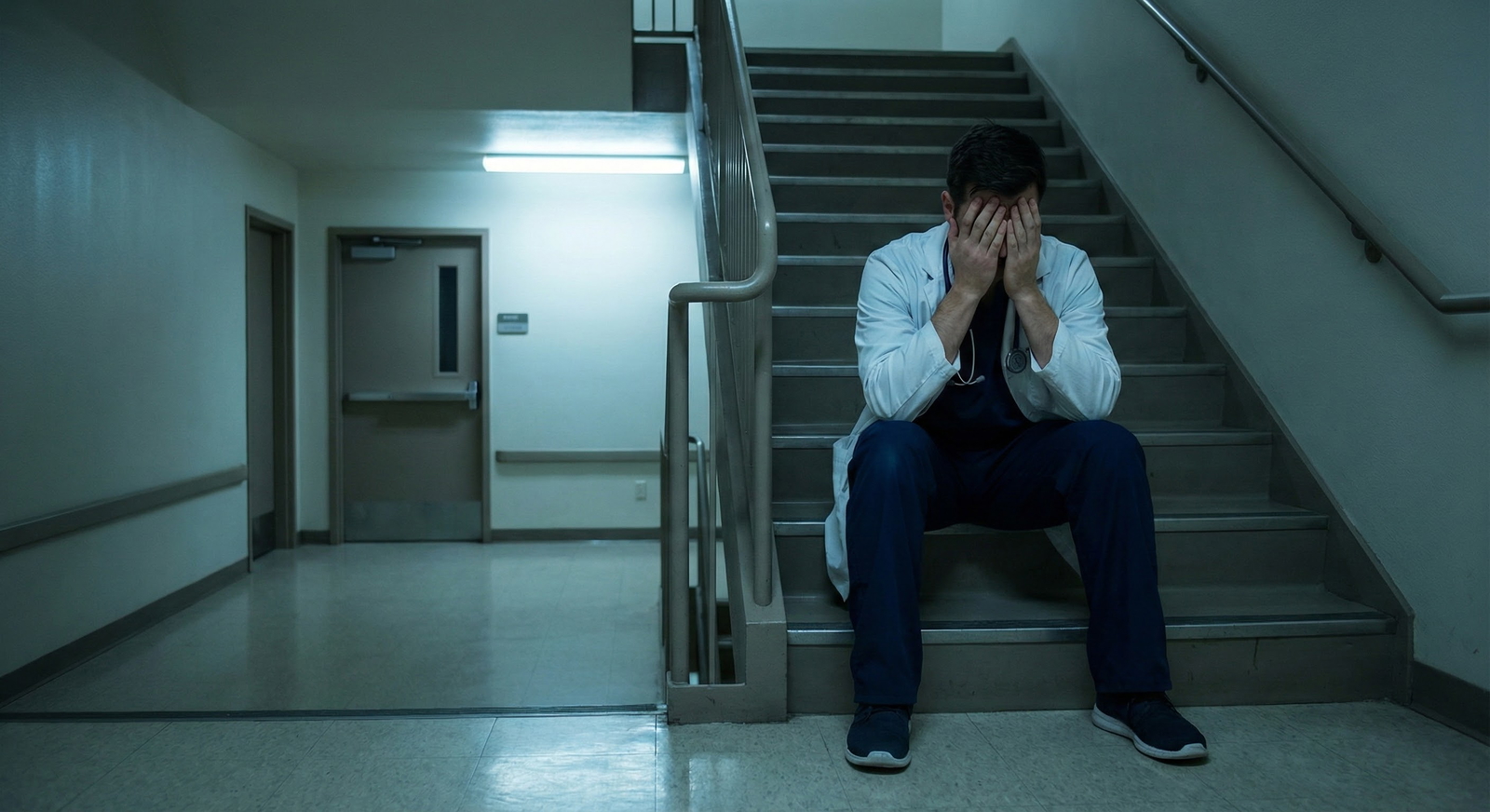
Medical residency is one of the most demanding phases of a physician’s career. Long shifts, overnight calls, emotionally intense patient encounters, and constant evaluation all converge to create a perfect storm for stress and exhaustion. It’s no surprise that burnout—characterized by emotional exhaustion, depersonalization, and a diminished sense of personal accomplishment—is highly prevalent in this stage of training.
Recent literature continues to show that a substantial proportion of residents report symptoms of burnout, depression, or significant distress. Burnout does not just impact productivity or “morale”—it affects diagnostic accuracy, communication, empathy, professionalism, and patient safety. It also increases the risk of anxiety, depression, substance misuse, and attrition from medicine altogether.
Within this reality, Mindfulness is not a luxury or a fad; it is a set of evidence-informed, trainable skills that can support burnout prevention, stress relief, and long-term mental health for residents. Mindfulness practices can be integrated into even the busiest call schedule, often in micro-moments of 30–120 seconds.
This enhanced guide will:
- Clarify what burnout looks like in residency and why it persists
- Define mindfulness in clear, practical terms
- Present high-yield, time-efficient mindfulness techniques tailored to residency life
- Offer strategies to integrate these tools into your actual day (including during codes, pagers, and cross-cover)
- Address common questions and misconceptions in an expanded FAQ section
The goal is not to “fix” systemic problems with individual coping alone, but to give you concrete tools to protect your well-being while also advocating for healthier training environments.
Understanding Burnout in Medical Residency
Residency burnout is not a sign of weakness or poor coping; it is often a predictable response to chronic stress in a high-stakes environment.
Core Components of Burnout
Burnout typically includes three interrelated components:
Emotional Exhaustion
- Feeling drained, depleted, or unable to “refuel” between shifts
- Dreading work or feeling like you have nothing left to give
- Sleep does not fully restore your energy
Depersonalization (Cynicism)
- Becoming detached, numb, or cynical toward patients or colleagues
- Feeling like you’re functioning on autopilot rather than engaging as a caring physician
- Using dark humor or sarcasm as your main emotional outlet
Reduced Sense of Personal Accomplishment
- Feeling ineffective despite working extremely hard
- Minimizing your contributions and successes (“Anyone could have done this”)
- Questioning if you chose the right specialty or even the right career
These dimensions can fluctuate. Some days, you may feel capable but emotionally dulled; other days, fully exhausted and self-critical.
Why Burnout Is So Common in Residency
Several systemic factors contribute to residency burnout:
- High workload and limited control: Long hours, intense patient loads, and little say in scheduling.
- Constant evaluation and perfectionism: A culture where mistakes feel catastrophic and vulnerability is stigmatized.
- Emotional burden of patient care: Exposure to suffering, death, ethical dilemmas, and moral distress.
- Fragmented sleep and circadian disruption: Night float, 24–28-hour calls, and rotating shifts impair cognitive function and stress tolerance.
- Hidden curriculum: An implicit expectation to “power through” and ignore your own mental health.
In this context, Mindfulness-based strategies are not about pretending things are fine. Instead, they help you:
- Notice stress reactions earlier, before they spiral
- Regulate your nervous system in real time
- Reconnect with meaning and purpose in your work
- Interrupt automatic negative thinking patterns
- Respond more skillfully to unchangeable stressors
What Is Mindfulness and Why It Matters in Residency
Mindfulness is the intentional practice of paying attention to the present moment with curiosity and without judgment. It involves:
- Awareness of thoughts, emotions, physical sensations, and surroundings
- Acceptance of internal experiences as they are, rather than immediately resisting or reacting
- Choosing your response instead of running on autopilot
How Mindfulness Supports Mental Health and Burnout Prevention
For residents, mindfulness is not about emptying your mind or sitting on a cushion for an hour. It’s about developing a mental stance and practical tools that can be used in seconds:
Stress Relief and Physiologic Regulation
- Mindfulness-based practices can decrease activation of the sympathetic “fight or flight” system.
- Techniques like mindful breathing trigger the parasympathetic nervous system, slowing heart rate and reducing perceived stress.
Improved Focus and Cognitive Performance
- Mindfulness trains attention: sustaining focus, noticing distraction earlier, and gently reorienting.
- Even brief practices can improve working memory and reduce error-prone multitasking—critical in high-acuity settings.
Emotional Resilience and Regulation
- Instead of being fused with intense emotions (fear before a code, shame after an error), you learn to observe them and respond skillfully.
- This can decrease emotional volatility, rumination, and maladaptive coping (e.g., withdrawal, irritability).
Enhanced Self-Awareness and Self-Care
- Mindfulness increases awareness of early warning signs: tension, irritability, sleep disturbance, hopeless thoughts.
- This awareness supports earlier course-correction and seeking help—key for long-term mental health.
Better Communication and Relationships
- Being present with patients, families, and colleagues improves listening, empathy, and conflict resolution.
- This can strengthen team cohesion and reduce the sense of isolation that often accompanies burnout.
Mindfulness is a skill set; like any other clinical skill, it improves with consistent practice.

High-Yield Mindfulness Techniques for Busy Residents
The following techniques are adapted specifically for medical residency. Each can be scaled to the time and setting you have available—whether that’s a two-minute pause before sign-out or 10 minutes before bed.
1. Mindful Breathing: Your On-Demand Reset Button
Mindful breathing is one of the fastest and most portable tools for stress relief.
How to Practice Mindful Breathing (2–5 Minutes)
Assume a stable posture
- Sitting at a computer, standing in a hallway, or even at the sink scrubbing in.
- Feel your feet on the floor and your body supported.
Soften your gaze or close your eyes
- If closing your eyes isn’t practical, simply lower your gaze and reduce visual input.
Anchor on the breath
- Inhale through your nose for a count of 4.
- Gently hold for a count of 4.
- Exhale slowly through your mouth for a count of 6.
- Repeat at a relaxed pace.
Notice and redirect
- When your mind wanders (it will), briefly note “thinking” or “planning,” then gently return attention to the feeling of the breath.
End with intention
- After 2–5 minutes, take one deeper breath and mentally set an intention:
- “I will bring steadiness into the next patient encounter.”
- “I choose to respond, not react.”
- After 2–5 minutes, take one deeper breath and mentally set an intention:
Micro-Application in Residency
- Before delivering serious news to a patient or family.
- After a difficult interaction with a consultant or attending.
- In the elevator or bathroom between back-to-back admissions.
Even three slow, intentional breaths can downshift your nervous system and help interrupt stress cascades.
2. Body Scan Meditation: Reconnecting With Your Body
Residents often live from the neck up, ignoring physical signals until they become severe. A brief body scan improves interoceptive awareness and releases stored tension.
Short Body Scan (3–10 Minutes)
Position
- Sit in a chair, lean against a wall, or lie down (if off-duty or in a call room).
Start at the feet
- Bring attention to your toes and the soles of your feet.
- Notice temperature, pressure, tingling—no need to change anything.
Move slowly upward
- Ankles → calves → knees → thighs
- Pelvis → abdomen → lower back
- Chest → upper back → shoulders
- Arms → hands → fingers
- Neck → jaw → face → scalp
Breathe into tension
- If you encounter tightness (common in shoulders, jaw, low back), imagine sending the breath into that area.
- On the exhale, allow a 5–10% softening of the tension.
Close with a check-in
- Ask: “What does my body need in the next hour?” (water, food, stretch, restroom, 30 seconds of breathing).
- Act on at least one need if at all possible.
When to Use It
- Before sleep after a night shift to help transition off “hyper-alert” mode.
- During a short break on a long call night.
- After a code or emotionally draining event to release residual arousal.
3. Mindful Walking: Turning Transitions Into Stress Relief
Residents walk constantly—between wards, clinics, ORs, and the ED. Turning even a minute of that walking into practice offers built-in Stress Relief without needing extra time.
How to Practice Mindful Walking
Pick a short route
- A hallway, stairwell, or path between units.
Slow your pace slightly (if safe)
- You don’t have to stroll; just reduce “rushing” energy if urgency is not required.
Focus on physical sensations
- The contact of your feet with the floor.
- The shifting of weight with each step.
- The swing of your arms or the feel of your shoes.
Engage the senses
- Notice the air temperature, ambient sounds, or light through windows.
- Let these sensory anchors keep you in the present moment.
Pair with intentional breathing
- For example: inhale for two steps, exhale for four steps.
This is especially useful when you feel mentally flooded. It offers a reset without needing to leave your environment.
4. Guided Imagery: A Brief Mental Escape
Guided imagery uses your imagination to access a calm, safe state—helpful when you can’t physically leave the hospital but need mental distance.
A Simple Guided Imagery Exercise (5–10 Minutes)
Find a quieter space
- Call room, staff lounge, private bathroom, or an empty conference room.
Settle your body
- Sit or lie down comfortably; soften your shoulders and jaw.
Choose a scene
- A beach you love, a mountain trail, your childhood backyard, or any place you associate with peace and safety.
Engage all senses
- Sight: Colors, light, horizon.
- Sound: Waves, birds, wind, distant voices.
- Smell: Salt air, pine, coffee, rain.
- Touch: Sand under your feet, breeze on your skin, warmth of sunlight.
- Taste (optional): A hot drink, fresh fruit, cool water.
Stay with the experience
- Spend a few minutes immersed in this scene, noticing how your body feels in this safe place.
Return gently
- After 5–10 minutes, take a deeper breath, open your eyes, and orient to the room.
- Notice any shift in tension or mood.
You can use audio apps with short guided imagery tracks or simply recreate a favorite place from memory.
5. Mindful Journaling: Processing the Emotional Weight of Residency
Residency is emotionally dense: triumphs, errors, near-misses, grief, and joy often stack on top of each other without time to process. Mindful journaling helps metabolize these experiences instead of storing them as unresolved stress.
How to Practice Mindful Journaling (10–15 Minutes)
Set a realistic schedule
- 2–3 times per week may be more sustainable than daily.
- Choose a time you can usually protect (post-call, before bed, or weekend mornings).
Write freely and without judgment
- Don’t worry about grammar or style.
- The goal is awareness and reflection, not a polished product.
Prompts for residents
- “The moment that stayed with me most from today was…”
- “I felt most overwhelmed when…”
- “I felt most connected to why I chose medicine when…”
- “One thing I learned about myself today is…”
Include a brief gratitude practice
- End with 3 things you’re grateful for: can be small (hot coffee, a colleague’s help, a patient’s ‘thank you’).
- Gratitude builds a counterweight to negativity bias and can protect mental health.
Reflect, don’t ruminate
- If you notice spiraling into self-criticism, gently shift to a more compassionate lens:
- “What would I say to a co-resident in this same situation?”
Mindful journaling transforms your narrative from “I’m barely surviving” to “I am learning, growing, and adapting in a challenging environment.”
6. Mindful Eating: Turning Meals Into Micro-Recovery
Meals during residency are often rushed, interrupted, or skipped altogether. Mindful eating helps you reconnect with basic self-care and can subtly reduce stress.
How to Practice Mindful Eating, Even at Work
Reduce distractions, if possible
- Put your phone face-down.
- Step away from the workstation, even for 5 minutes.
Start with one mindful bite
- Look at your food for a moment—its colors, textures.
- Take a smaller first bite and chew slowly, noticing flavor and texture.
Check in with your body mid-meal
- Ask, “How hungry am I now?”
- “What does my body need—more food, water, a pause?”
Respect fullness and hunger cues
- Try to stop at “comfortably satisfied,” not “stuffed,” when circumstances allow.
Integrate gratitude
- Briefly acknowledge: “I am fueling my body to care for others.”
Even making one meal per day more mindful can nurture your mental health and sense of agency.
Integrating Mindfulness Into Real Residency Life
Mindfulness is most effective when woven into your existing routines rather than added as another “task.”
Practical Integration Strategies
Anchor practices to existing habits
- 3 mindful breaths every time you sanitize your hands or log into the EMR.
- 1-minute body scan before you open your first patient chart of the day.
Use transition points
- Before walking into morning report, clinic, OR, or a family meeting, pause for 30–60 seconds of mindful breathing.
- After sign-out, do a brief check-in: “What am I carrying home from this shift?”
Start small and specific
- Commit to one technique (e.g., 3 mindful breaths with each handwash) for two weeks.
- Once it becomes automatic, add another.
Leverage technology wisely
- Use short guided meditations (3–10 minutes) on apps specifically designed for healthcare or high-stress professionals.
- Set a subtle daily reminder for a 2-minute practice.
Involve your team when appropriate
- Suggest a 30-second “collective breath” before starting rounds or a challenging family meeting.
- Share techniques informally with co-residents—normalizing mental health practices reduces stigma.
Mindfulness will not fix systemic issues such as understaffing or unsafe workloads, but it can strengthen your capacity to manage stress, advocate effectively, and sustain your sense of purpose.

Expanded FAQ: Mindfulness, Burnout Prevention, and Residency Mental Health
1. How often should I practice mindfulness to see benefits?
For meaningful impact on Burnout Prevention and mental health:
- Aim for 5–20 minutes of formal practice most days (e.g., breathing, body scan, guided meditation).
- Combine this with multiple micro-practices (30–90 seconds) throughout your shift.
Evidence suggests that even brief, consistent practice over 6–8 weeks can:
- Reduce perceived stress and burnout
- Improve emotional regulation
- Enhance attention and working memory
Consistency is more important than duration. It’s better to practice 5–10 minutes daily than 45 minutes once a week.
2. Can mindfulness really help with residency burnout, or is it just a trend?
Mindfulness is supported by a growing body of research:
- Mindfulness-Based Stress Reduction (MBSR) and similar programs have shown significant reductions in burnout, anxiety, and depression among physicians and trainees.
- Studies in residents demonstrate improvements in:
- Emotional exhaustion
- Empathy and patient-centered communication
- Sleep and overall well-being
However:
- Mindfulness is not a cure-all and should not replace systemic changes (e.g., reasonable hours, psychological support, fair workloads).
- It is best used as one component of a comprehensive burnout prevention strategy, which might also include:
- Adequate sleep and nutrition
- Mentorship and supportive supervision
- Professional mental health care when indicated
- Institutional policies that prioritize resident wellness
3. What if I feel like I don’t have time for mindfulness in residency?
This is one of the most common barriers—and precisely why micro-practices are valuable.
Try:
- 30 seconds of slow breathing at the sink, in the supply room, or in the elevator.
- 1–2 minutes of mindful walking between patient rooms.
- 3 breaths before answering a page or phone call.
You do not need long, uninterrupted periods to benefit. Start with what’s realistically possible and expand only if it feels sustainable.
If you notice the thought, “I don’t have time for this,” reframe it as:
- “I am choosing to take 30 seconds now to be more focused and effective for the next several hours.”
4. What if my mind keeps wandering or I feel like I’m ‘bad’ at mindfulness?
A wandering mind is normal and expected. The goal is not perfect focus. The core of mindfulness practice is:
- Noticing that your mind has wandered
- Gently returning attention to your chosen anchor (breath, body, sounds)
- Doing this without harsh self-judgment
Every time you notice and return, you are literally training your attention and emotional regulation—similar to strengthening a muscle through repeated reps.
If you feel frustrated:
- Shorten the practice (e.g., just 2–3 minutes).
- Use guided recordings to give your mind structure.
- Remind yourself: “The practice is in the returning, not in staying perfectly focused.”
5. Can I practice mindfulness with others, or is it strictly individual?
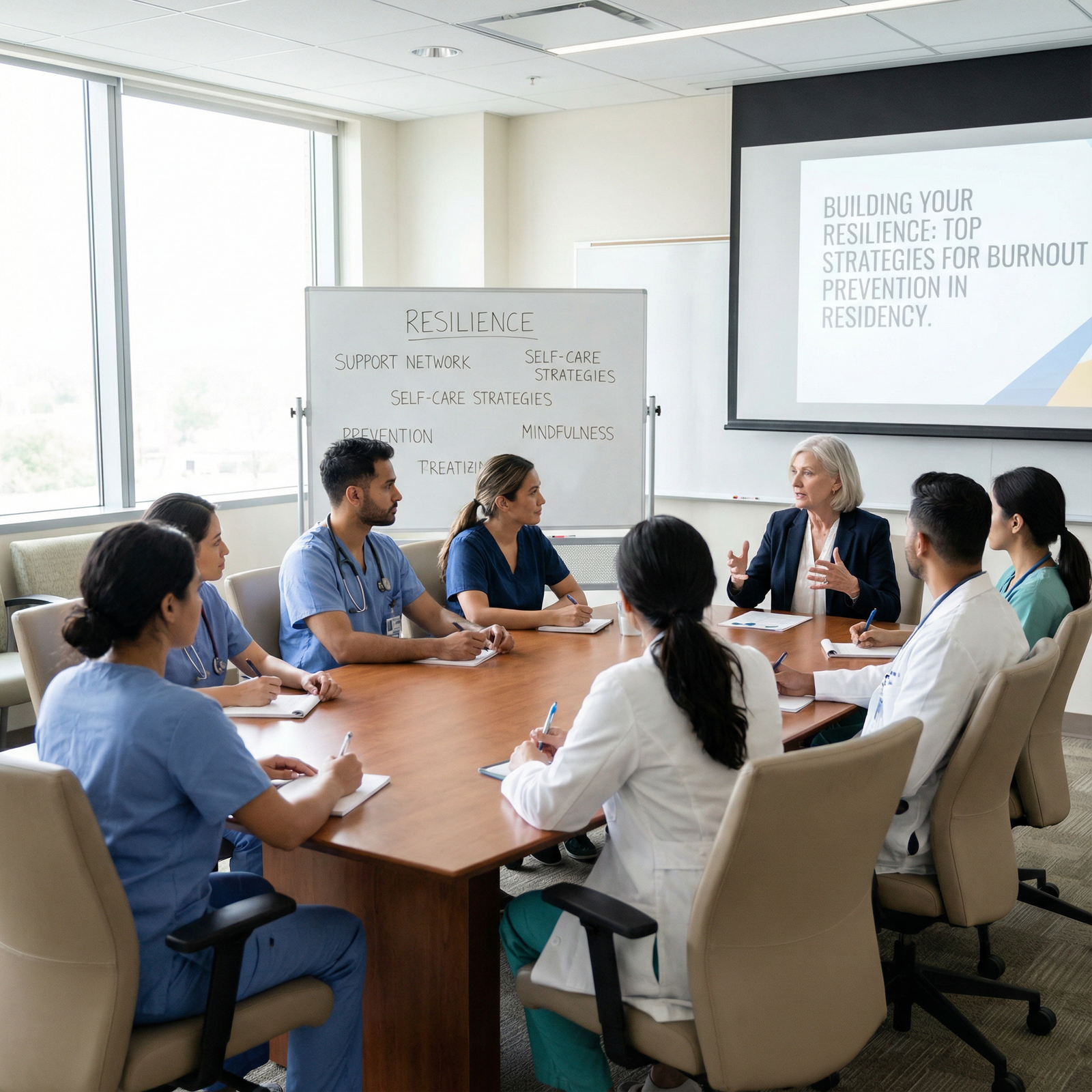
Mindfulness can absolutely be practiced in groups, and many residents find this more sustainable and less isolating.
Options include:
- Joining or starting a resident wellness or mindfulness group within your program
- Participating in workshops, retreats, or MBSR courses (some are designed specifically for healthcare professionals)
- Doing a short 2–3 minute breathing exercise as a team before morning report, sign-out, or debriefing sessions
Group practice:
- Normalizes conversations about Mental Health and stress relief
- Builds a sense of community and mutual support
- Helps integrate mindfulness into the culture of the training environment
By thoughtfully incorporating Mindfulness into your residency—through brief, realistic practices tailored to your workflow—you can build resilience, support your mental health, and make meaningful progress toward Burnout Prevention. These techniques will continue to serve you far beyond residency, into fellowship and attending life, as enduring tools for stress relief, presence, and compassionate care.