

Entering residency is both exhilarating and overwhelming. You are finally practicing medicine with real responsibility—but the combination of long hours, intense cognitive load, overnight calls, and emotional weight can quickly erode your energy and enthusiasm. Without intentional planning, even the most motivated resident can slide into burnout.
A sustainable, realistic daily routine is one of the most powerful tools for Burnout Prevention during residency. It won’t eliminate stress or long shifts, but it can help you maintain energy, protect your Mental Health, and support consistent, high-quality patient care.
This guide walks through practical, evidence-informed strategies to design a Daily Routine that you can actually follow in the real world of call schedules, rotations, and unpredictable workloads.
Understanding Burnout in Residency: Why Routine Matters
What Is Burnout in the Residency Context?
Burnout is more than feeling “tired” or “stressed.” It’s a chronic occupational condition characterized by three main dimensions:
- Emotional exhaustion – feeling drained, depleted, or unable to give more of yourself.
- Depersonalization – developing a detached, cynical, or callous attitude toward patients or colleagues.
- Reduced sense of personal accomplishment – feeling ineffective, inadequate, or like your work doesn’t matter.
Residents are especially vulnerable because they work within high-stakes clinical environments with limited control over schedules, unpredictable workloads, and frequent exposure to suffering and death.
A well-structured Daily Routine cannot remove systemic stressors, but it can:
- Stabilize your basic physiological needs (sleep, nutrition, movement)
- Create predictable pockets of recovery
- Support ongoing Self-Care Strategies
- Make stressful days more manageable rather than overwhelming
Early Signs of Burnout You Should Not Ignore
Early recognition is key to Burnout Prevention. Signs often emerge gradually and may be easy to dismiss as “just residency.”
Common red flags include:
Emotional and physical exhaustion
- Dreading every shift
- Feeling drained even after a day off
- Frequent headaches, GI discomfort, or tension
Cognitive changes
- Difficulty concentrating or remembering details
- Slower clinical reasoning than usual
- Increased errors or close calls
Emotional detachment and cynicism
- Feeling numb with patients’ stories
- Viewing patients as tasks or diagnoses rather than people
- Increasing irritability with nursing staff, co-residents, or family
Loss of meaning or motivation
- Questioning your decision to go into medicine
- Feeling that nothing you do makes a difference
- Losing interest in learning or professional growth
If you notice these patterns persisting for weeks, it’s a strong signal to pause, reassess your routine, and consider reaching out for support.
Designing a Sustainable Daily Routine in Residency
A sustainable routine in residency is not a rigid schedule that falls apart the moment a code is called. It is a flexible framework built around non-negotiable priorities: sleep, nutrition, physical movement, downtime, and emotional processing.
Think of it as a core structure that you adapt to each rotation:
- ICU vs ambulatory clinic
- Night float vs day shifts
- Inpatient wards vs elective
Below are the core building blocks, with concrete Residency Tips and examples.

1. Protecting Sleep: The Foundation of Burnout Prevention
Why Sleep Is Non-Negotiable
Sleep is the single most powerful determinant of your cognitive performance, emotional regulation, and physical health. Chronic sleep deprivation:
- Impairs decision-making, memory, and attention
- Increases risk of mood disorders and anxiety
- Heightens perception of stress
- Increases risk of medical errors and accidents
You cannot “push through” sleep loss indefinitely without consequences—for you and your patients.
Practical Sleep Strategies for Residents
Because residency schedules are irregular, perfection is unrealistic. Aim for “best possible sleep” under the circumstances, not an idealized 8-hour block every night.
Core strategies:
Create a consistent pre-sleep ritual
- Even 10–15 minutes helps signal your body it’s time to wind down.
- Examples:
- Warm shower, wash face, brush teeth, then light stretching
- Journaling 5 minutes about the day to “park” intrusive thoughts
- Listening to a short guided meditation
Optimize your sleep environment
- Use blackout curtains or a sleep mask—essential for post-call or night shift sleep.
- Use earplugs or white-noise apps to block daytime or corridor noise.
- Keep your room cool (around 65–70°F / 18–21°C if possible).
Be strategic with caffeine
- Use caffeine early in the shift, tapering off 6–8 hours before planned sleep.
- Avoid “rescue” caffeine at the end of call if you need to sleep soon after.
Use short naps wisely
- 15–25-minute power naps can dramatically increase alertness.
- Ideal times:
- Before an overnight call (prophylactic nap)
- Early in a long call shift if there is a safe opportunity
Rotate-friendly routines
- On night float:
- Keep the same sleep window on off days as much as possible.
- Use bright light exposure near the beginning of your shift.
- On day clinic/wards:
- Aim for a stable bedtime and wake time, even on weekends.
- On night float:
Sample approach:
On a wards rotation with 6 a.m. prerounds:
- 9:30–10:00 p.m.: Devices off or on blue-light filter, brief stretching
- 10:00–10:15 p.m.: 5–10 minutes journaling + breathing practice
- 10:15–10:30 p.m.: Lights out
Your exact times may differ, but having a predictable pre-sleep sequence matters more than the specifics.
2. Building Sustainable Nutrition Habits on a Resident Schedule
Why Nutrition Is Central to Mental Health and Performance
Under-fueling or relying on sugar and caffeine creates energy crashes, irritability, and difficulty concentrating. Consistent, balanced nutrition helps:
- Stabilize energy across long shifts
- Support mood regulation
- Improve immune function and reduce illness days
Realistic Nutrition Strategies for Busy Residents
Forget complex recipes. Focus on simple, repeatable systems.
1. Meal prep in “minimum viable” form
- Pick 1–2 days per week (often your golden post-call day or weekend morning).
- Prepare:
- A large batch of a lean protein (chicken, tofu, lentils)
- A whole grain (brown rice, quinoa, farro)
- A large tray of roasted or steamed vegetables
- Use reusable containers to assemble modular meals you can grab quickly.
2. Pack “survival snacks” every shift Think of these as burnout prevention tools, not just food:
- Nuts or trail mix
- Greek yogurt or cottage cheese (if refrigeration available)
- Fruit (bananas, apples, clementines)
- Whole-grain crackers or granola bars with protein
- Single-serve nut butters
Having snacks on hand prevents you from going 8–10 hours without eating or resorting solely to vending machines.
3. Hydration as part of your Daily Routine
- Start your day with a full glass of water.
- Keep a refillable water bottle with you; choose one that fits in your white coat pocket or bag.
- Pair hydration with existing habits (e.g., drink water each time you sit down to chart).
4. Make the best choice available When stuck with cafeteria or takeout:
- Prioritize:
- Protein + fiber (e.g., grilled chicken, beans, salads with legumes)
- Avoid only fried or sugary options if possible
- If sleep-deprived or stressed, decide before walking in what you’ll order to avoid impulse choices.
3. Incorporating Physical Activity: Movement as Medicine
Exercise as a Core Self-Care Strategy
Exercise is one of the most evidence-based Self-Care Strategies for:
- Reducing anxiety and depressive symptoms
- Improving sleep quality
- Enhancing cognitive function
- Buffering stress and emotional fatigue
The key: something is always better than nothing. You do not need a 60-minute gym session every day to see an effect.
Realistic Exercise Options for Residents
1. Aim for consistency, not intensity
- Target: 90–150 minutes of moderate activity per week, broken into manageable chunks.
- Examples:
- 3 × 30-minute sessions
- 10–15 minutes of brisk walking before or after shifts, plus weekend sessions
2. Micro-movements during the day Even on high-acuity rotations:
- Take stairs instead of elevators when time allows.
- Do 2–3 minutes of stretching during charting or sign-out delays.
- Walk a quick loop around the unit while waiting for pages or orders.
3. Choose activities that fit your reality
- Short home workouts with resistance bands or bodyweight
- Yoga or mobility sessions using free apps
- Quick runs around the block after work
- Walking meetings with co-residents during conference breaks
4. Habit stacking Tie exercise to existing routines:
- Walk for 10 minutes after morning sign-out before you drive home.
- Do a 7–10 minute bodyweight workout every time you come back from call (after a nap and food, if needed).
Small, regular movement acts as an anchor in your Daily Routine and significantly strengthens your resilience.
4. Scheduling Downtime and Recovery: Protecting Your Non-Work Life
Downtime Is Not a Luxury—It’s a Requirement
Residency can swallow all available time if you let it. Intentionally scheduling non-clinical time protects your identity outside of medicine and is essential for long-term Burnout Prevention.
Structured Downtime Strategies
1. Plan “non-negotiable” recovery blocks On your weekly calendar, before adding extra shifts or research:
- Reserve:
- One longer block (2–4 hours) for rest and something enjoyable
- Short daily “micro-rest” (10–20 minutes) for decompression
Treat these like professional commitments. You may need to flex them, but don’t delete them lightly.
2. Maintain at least one hobby It can be simple:
- Reading fiction
- Music (listening or playing)
- Art or crafts
- Cooking, gardening (if you have space)
- Short creative writing or photography
The specific activity matters less than it being:
- Enjoyable
- Non-evaluative (no grades, no performance review)
- Not directly tied to medicine
3. Nurture relationships Social connection is a major protective factor for Mental Health:
- Schedule regular check-ins with family or friends (even 10 minutes).
- Use video calls during commutes (if not driving) or while walking.
- Participate in resident wellness or social events when possible.
4. Use off days deliberately Instead of letting a day off disappear into phone scrolling:
- Decide ahead: “This is a rest day” or “This is an errands day” or “This is a connection day.”
- For rest days: light structure (one fun activity + one self-care task like laundry or meal prep).
5. Mindfulness, Reflection, and Emotional Self-Care
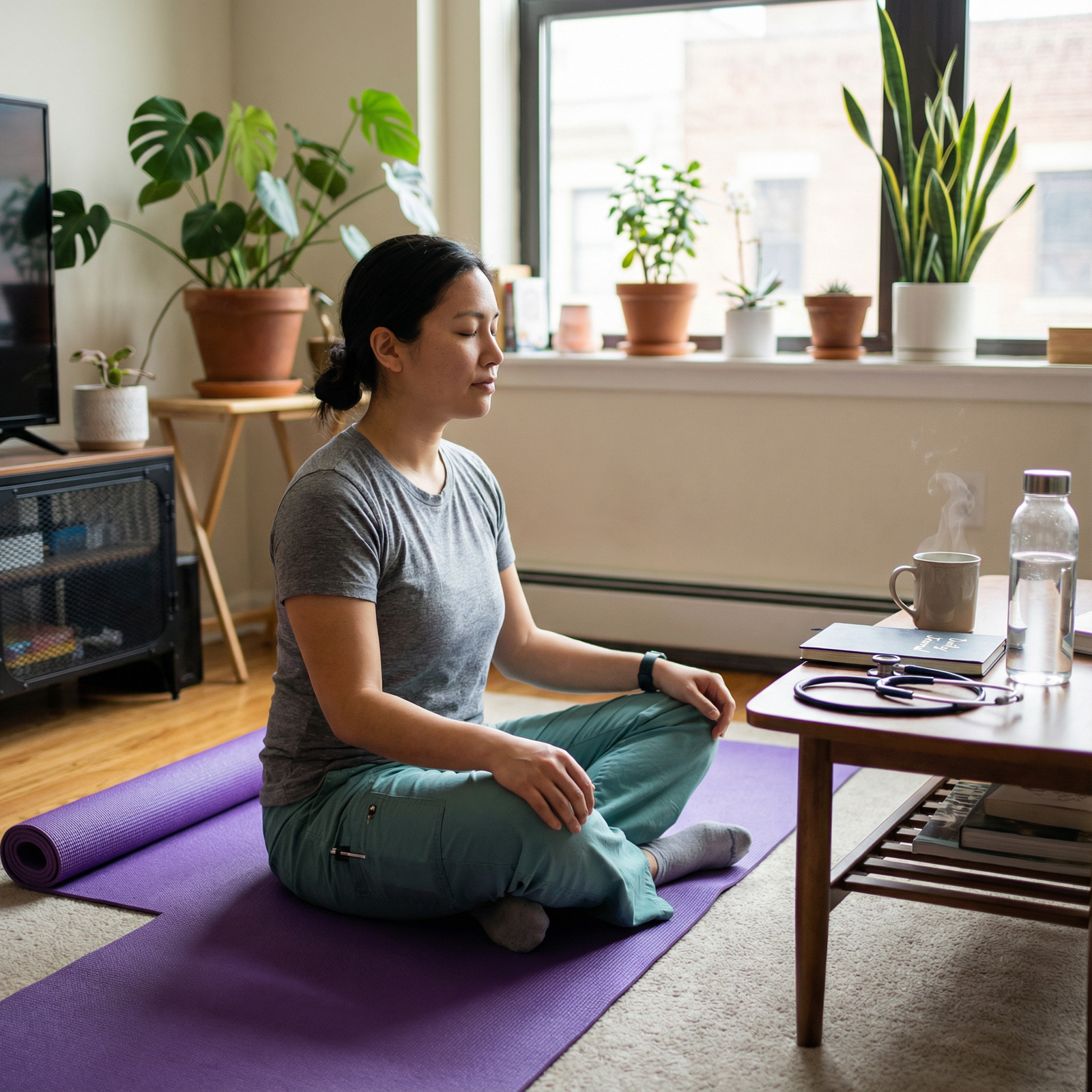
Why Mindfulness Matters in Residency
Mindfulness and reflection help you:
- Process intense clinical experiences
- Reduce rumination and anxiety
- Increase focus during complex tasks
- Reconnect with your sense of purpose
You don’t need an hour-long daily practice. Even 3–5 minutes, consistently, can shift your stress response over time.
Simple Mindfulness Practices for Residents
1. One-breath reset during shifts
- Before entering a patient’s room, take a single slow, deliberate breath.
- Mentally note: “Arriving,” and give yourself permission to focus on that patient.
2. 3–5-minute guided practices
- Use free apps or short hospital wellness recordings.
- Ideal times:
- On the bus/train to work (if not driving)
- Before bed
- During a quiet moment in the call room
3. Journaling for emotional processing
- 5-minute “brain dump” at the end of the day:
- Write down key events.
- Note what you’re proud of, what was hard, and what you learned.
- This decreases mental overload and helps you track patterns in mood or stress.
4. Personal rituals as grounding tools Establish small rituals that mark transitions:
- Post-call ritual:
- Shower, hydrate, light snack, then brief reflection before sleep.
- Pre-shift ritual:
- Coffee/tea + reviewing your to-do list or setting a simple intention: “Be kind,” “Be curious,” “Be thorough.”
These Self-Care Strategies help you maintain a coherent sense of self despite rotating services and constantly changing demands.
6. Setting Realistic Goals and Expectations in Residency
The Danger of Perfectionism
Many residents are high-achievers used to excelling academically. Residency, however, introduces:
- Uncontrollable workloads
- Frequent interruptions
- Limited time per patient
- Emotional and procedural challenges
Trying to meet perfectionistic standards under these conditions is a direct pathway to burnout.
Goal-Setting Strategies That Support, Not Sabotage, You
1. Use “good enough” standards wisely
- Ask: “What is safe, ethical, and thorough for this situation?”
Aim for high standards, but accept that perfection is neither realistic nor required.
2. Break tasks into manageable units Instead of “finish all notes,” try:
- “Finish 2 notes before noon.”
- “Call 3 families during the next hour.”
Micro-goals reduce overwhelm and create frequent moments of accomplishment.
3. Daily and weekly planning
- At the start of each day, identify:
- 1–2 must-do clinical tasks
- 1 necessary personal task (e.g., laundry, call a parent, schedule appointment)
- At the start of each week, outline:
- Key learning goals (e.g., “Review sepsis guidelines”)
- Wellness goals (e.g., “Exercise 3 times,” “Sleep ≥ 7 hours on 4 nights”)
4. Practice self-compassion When things don’t go as planned:
- Replace “I failed” with “Today was more than I expected—what can I adjust?”
- Talk to yourself as you would to a co-resident you respect and care about.
7. Building and Using Support Systems
You Are Not Meant to Do Residency Alone
Support is essential for both Burnout Prevention and early intervention when stress becomes unmanageable.
Layers of Support You Can Use
1. Peer support
- Debrief difficult cases with co-residents.
- Normalize sharing struggles: “This rotation has been rough—how are you managing it?”
- Participate in informal or formal peer support groups if available.
2. Mentorship
- Identify at least one faculty member or senior resident you trust.
- Use them for:
- Career advice
- Navigating conflicts or systemic issues
- Honest feedback and encouragement
3. Program and institutional resources Most programs now offer:
- Confidential counseling services or Employee Assistance Programs (EAP)
- Wellness committees and workshops
- Support after adverse events or patient deaths
Know how to access these before you are in crisis:
- Save contact numbers in your phone.
- Bookmark relevant websites or portals.
4. Professional mental health support Reach out to a mental health professional if you experience:
- Persistent sadness, hopelessness, or loss of interest
- Thoughts of self-harm or feeling that others are better off without you
- Severe anxiety, panic attacks, or inability to function at work or home
Seeking help is a sign of insight and professionalism, not weakness.
Putting It All Together: A Sample Sustainable Daily Routine
Every program and rotation is different, but here is a sample weekday framework on a typical wards rotation:
- 05:15–05:45 – Wake up, hydrate, light snack; 5-minute stretch
- 05:45–06:00 – Commute or walk to hospital; brief mental review of the day
- 06:00–07:30 – Pre-rounds and chart review
- Morning – Rounds; aim for:
- 1–2 short hydration breaks
- A brief 1-minute breathing break at least twice
- Midday – Quick lunch (pre-packed if possible) + 5-minute walk
- Afternoon – Notes, follow-ups, calls; micro-goals: “Finish 3 notes before 3 p.m.”
- Sign-out – Clear communication to on-call team
- After work (time varies):
- 15–20 minutes of movement (walk/jog or short workout)
- Dinner (prepped or simple)
- 10–15 minutes of low-effort leisure (music, reading, show)
- 5-minute journal + plan for tomorrow
- Bedtime ritual – Consistent wind-down, lights out at your target time
On heavier call days, you might only maintain:
- Sleep ritual
- Hydration
- One small act of movement
- One short emotional check-in or text to a friend
That is still a successful, sustainable Daily Routine for that kind of day.
Frequently Asked Questions About Burnout Prevention and Daily Routines in Residency
How do I know if I’m just stressed or actually experiencing burnout?
Stress is often short-term and situation-specific—you feel pressured but can see an endpoint (end of a rotation, exam, or call block). Burnout is more chronic and pervasive, with:
- Ongoing emotional exhaustion
- Cynicism or detachment from patients and colleagues
- A sense of inefficacy (“I’m not good at this,” “Nothing I do matters”)
If these feelings persist for weeks and don’t improve with rest or days off, it’s time to:
- Reassess your routine
- Talk to a trusted mentor or peer
- Consider accessing mental health support through your institution or externally
How can I maintain a healthy work-life balance when my schedule is so unpredictable?
True “balance” in residency is more like dynamic rebalancing than a perfect 50/50 split. Strategies include:
- Anchoring your week with non-negotiable basics: minimum sleep target, 2–3 exercise sessions, 1–2 social contacts
- Planning your days off in advance (some for errands, others for rest and enjoyment)
- Practicing “strategic yes and no”—saying yes to opportunities that match your goals, and no to extras (research, committees, shifts) that push you into unsustainable territory
You can’t control your entire schedule, but you can control how you structure your remaining time.
What are the most effective daily Self-Care Strategies for residents with very little time?
For time-strapped residents, the highest-yield strategies are:
- Consistent sleep ritual (even 10–15 minutes)
- Hydration and simple nutrition systems (pre-packed snacks, water bottle)
- Micro-movement (stairs, short walks, stretching)
- Brief mindfulness practices (1–5 minutes of breathing or grounding)
- Scheduled connection (one meaningful text or call per day)
Think “small but consistent” rather than “perfect and elaborate.”
When should I seek professional help for my Mental Health during residency?
Reach out for professional support if you:
- Feel persistently hopeless, numb, or detached
- Notice constant anxiety, panic, or dread about work
- Experience thoughts of self-harm, escape, or death (even fleeting)
- Are unable to function at work, maintain relationships, or care for yourself
Use your program’s counseling services, Employee Assistance Program, or external mental health providers. If you feel unsafe, use emergency services or crisis hotlines immediately.
What resources can I ask my residency program for to support Burnout Prevention?
Consider advocating for or using:
- Confidential access to counseling and peer support
- Protected wellness time or wellness curricula
- Sleep-friendly call rooms and nap policies
- Access to healthy food options during nights and weekends
- Mentorship programs paired by interest or level
- Workshops on time management, resilience, and financial stress
Programs often want to help but may not know what residents most need unless you and your peers speak up.
By intentionally designing a flexible, sustainable Daily Routine that prioritizes sleep, nutrition, movement, downtime, and emotional health, you create a powerful buffer against burnout. The demands of residency will not disappear—but with the right Self-Care Strategies, support systems, and mindset, you can protect your well-being and grow into the physician you set out to become.


