Emotional Intelligence: Your Secret Weapon Against Residency Burnout
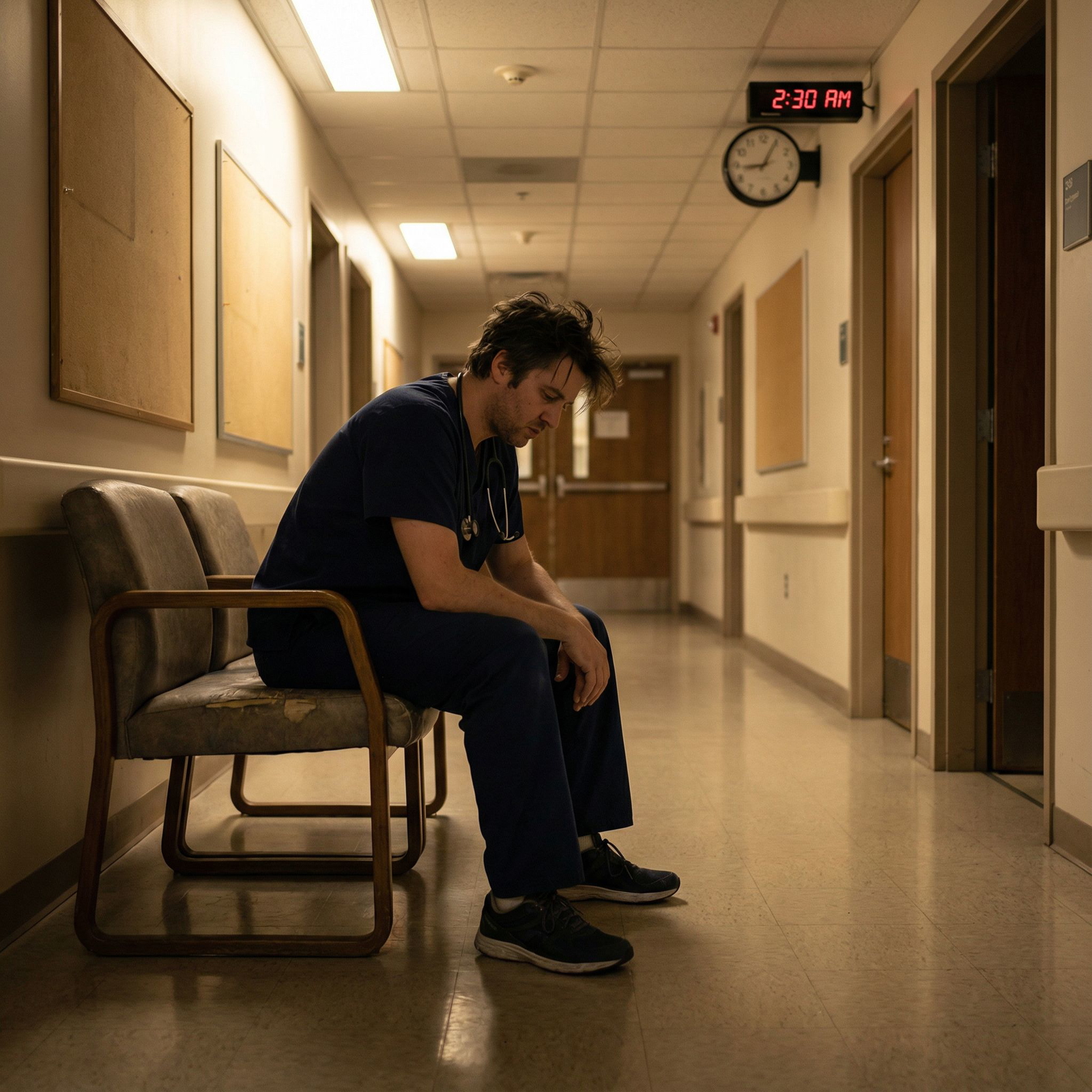
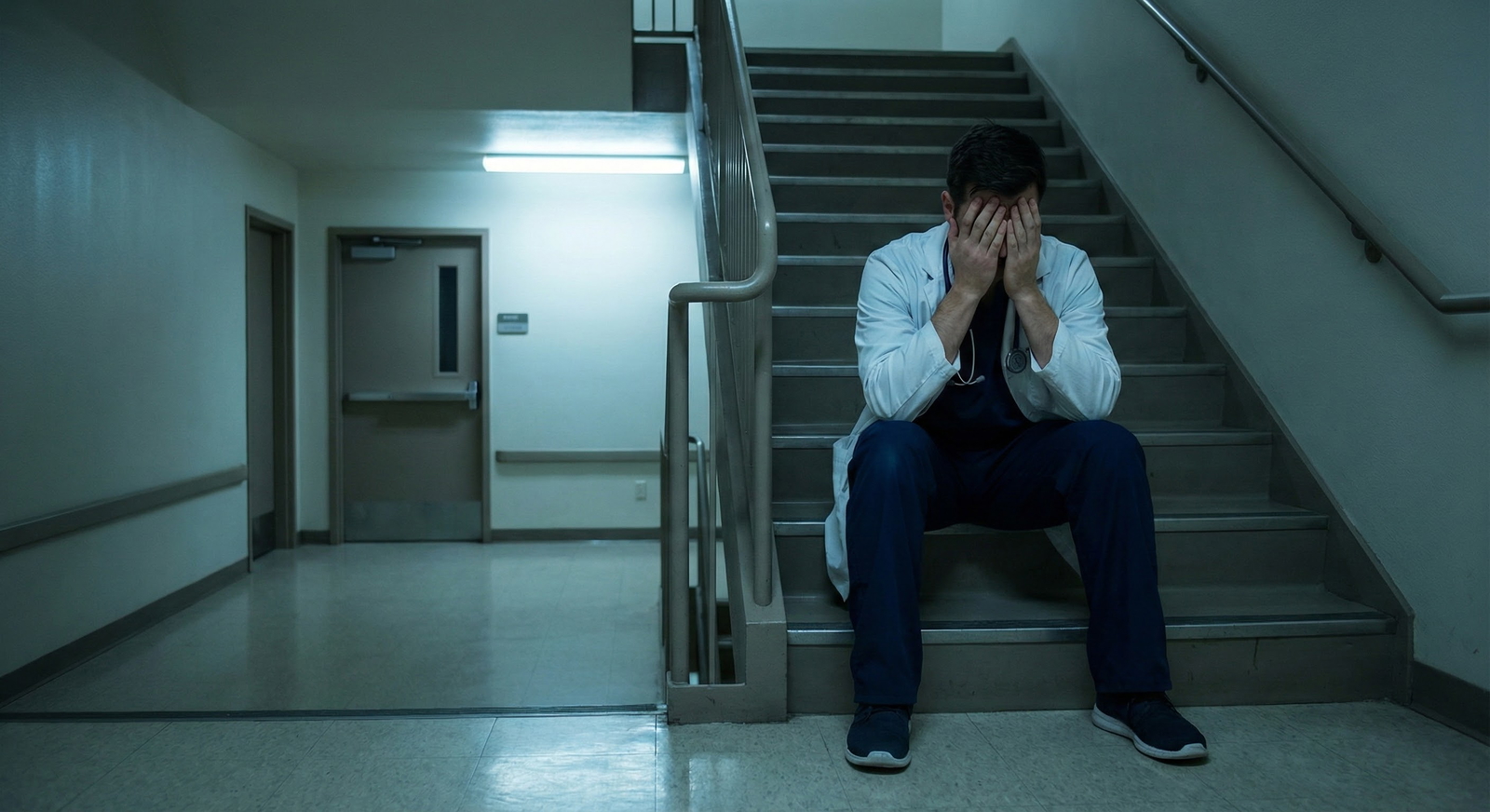
Residency is one of the most intense phases of medical training. The combination of long hours, steep learning curves, constant evaluation, and exposure to human suffering creates a perfect storm for Residency Burnout. While schedule changes and institutional wellness initiatives matter, there is a powerful, personal skill set that often gets overlooked in discussions about Physician Well-being: Emotional Intelligence (EI).
Developing Emotional Intelligence is not “soft” or optional—it is a practical, evidence-based strategy that can:
- Protect your Mental Health
- Reduce your risk of Residency Burnout
- Improve clinical performance and patient outcomes
- Strengthen your relationships with colleagues, staff, and patients
This guide explores how Emotional Intelligence can become your most effective tool for navigating Medical Training and building a sustainable, meaningful career in medicine.
What Is Emotional Intelligence in the Context of Medical Training?
Emotional Intelligence is the ability to recognize, understand, and manage emotions—both your own and those of others—and to use that awareness to guide behavior and relationships effectively.
Daniel Goleman’s influential model breaks Emotional Intelligence into five core components, all highly relevant to residency:
Self-awareness
Recognizing your own emotions, triggers, strengths, limitations, values, and goals in real time.- Example in residency: Noticing, “I’m getting irritable and mentally checked out midway through this call shift,” instead of only realizing it after a conflict or mistake.
Self-regulation
Managing your emotional reactions, impulses, and behaviors, especially under stress or fatigue.- Example: Staying measured and professional with a demanding attending or difficult family member instead of snapping or shutting down.
Motivation
Sustaining your inner drive to learn, grow, and care for patients, even when external rewards (praise, grades, duty hours) feel inadequate.- Example: Continuing to refine your clinical skills because you care about being a better physician—not just to impress evaluators.
Empathy
Accurately recognizing and understanding the emotions, perspectives, and needs of others—patients, families, nurses, and colleagues.- Example: Realizing a nurse’s “sharp tone” might be from being overwhelmed, not personal hostility, and responding with curiosity instead of defensiveness.
Social skills
Building and maintaining healthy, effective relationships and teams; communicating clearly; resolving conflict constructively.- Example: Leading a brief but effective huddle after a difficult resuscitation, acknowledging emotions while keeping the team focused.
These competencies are not just “nice to have.” They directly affect how you experience residency, the quality of your decision-making under pressure, and your vulnerability to burnout.
How Emotional Intelligence Protects Against Residency Burnout
Burnout is characterized by three main components:
- Emotional exhaustion – feeling drained and depleted
- Depersonalization – developing a cynical or detached attitude toward patients and work
- Reduced sense of personal accomplishment – feeling ineffective or like nothing you do matters
Residency Burnout is driven by structural factors (workload, staffing, documentation burden, systemic inequities) and personal vulnerabilities. Emotional Intelligence does not “fix” broken systems—but it can significantly impact how you cope, adapt, advocate, and recover.
Self-Awareness: Catching the Early Warning Signs
Residents often normalize high stress and chronic exhaustion as “just part of training,” which can delay recognizing burnout until it is severe.
Self-awareness helps you:
- Notice emotional red flags early: irritability, numbness, dread before shifts, trouble sleeping, loss of joy outside work
- Recognize physical signals: headaches, GI issues, chronic fatigue, palpitations
- Track patterns: “I always feel worse after certain rotations, teams, or types of cases”
Clinical example:
You’re on your third consecutive week of nights. You notice you’re getting impatient with patients, skipping explanations, and feeling detached during family conversations. Instead of ignoring it, you pause and think:
- “This is not my usual self.”
- “These changes might be early signs of burnout.”
- “I need to adjust something before this escalates.”
That moment of recognition is the doorway to intervention—adjusting sleep, asking for help, talking to a mentor, or seeing mental health support—before you hit crisis level.

Self-Regulation: Responding Instead of Reacting
Self-regulation does not mean suppressing emotions—it means choosing how to express them constructively. This protects you from emotional whiplash and relationship damage that can worsen stress.
In residency, self-regulation can look like:
- Taking two slow breaths before answering an attending’s aggressive question
- Saying, “I’m feeling overwhelmed, can we prioritize these tasks?” instead of silently panicking
- Choosing not to carry a heated interaction with a consultant into your next patient encounter
Emergency department scenario:
A trauma case goes poorly. Family members are distraught. A senior physician questions your decisions in front of the team. You feel shame, anger, and fear.
Self-regulation in this moment might involve:
- Pausing for 10–20 seconds and taking a long exhale before responding
- Saying, “I’d like to debrief this case later—I want to learn from it,” instead of arguing
- Seeking a private space afterward to decompress, rather than bottling it up and snapping at the next patient
Over time, this skill reduces the emotional “wear and tear” of constant high-stakes situations, directly protecting your Mental Health.
Motivation: Reconnecting With Your “Why”
Training can grind down the idealism you had entering medical school. When your daily experience is dominated by notes, pages, and administrative tasks, it’s easy to lose sight of your purpose.
High Emotional Intelligence helps you maintain internal motivation, which buffers against burnout:
- You remember why you chose your specialty and what kind of physician you want to be
- You set personal learning goals that matter to you, not just to satisfy evaluation forms
- You find meaning in seemingly small wins: a patient’s trust, a family’s gratitude, a skill you’ve improved
Case example:
A PGY-2 in internal medicine is overwhelmed: 80+ inbox messages a day, constant admissions, and sick patients. They start questioning their career choice.
A mentor helps them reconnect with their core motivation: “I went into medicine to guide patients through complex, chronic illnesses with compassion.” They start:
- Tracking one meaningful clinical interaction per day in a brief note on their phone
- Choosing a small learning goal each week tied to that purpose (e.g., discussing goals of care more confidently)
This reframing doesn’t erase the systemic problems—but it restores a sense of agency and meaning, which research shows is protective against burnout.
Empathy: Connection as an Antidote to Depersonalization
One hallmark of burnout is depersonalization—seeing patients as problems, room numbers, or “the train wreck in 16” instead of as human beings. It’s a defense mechanism against emotional overload, but it ultimately worsens cynicism and disconnection.
Empathy offers a healthier alternative:
- You recognize the human story behind the diagnosis
- You allow enough emotional connection to maintain compassion, without being consumed by every case
- You extend empathy to colleagues and to yourself
Example:
A frequent-flyer patient with alcohol use disorder is back for the fourth time this month. The team is rolling their eyes.
An empathetic resident silently thinks, “This is probably the only place they feel somewhat safe or cared for,” and chooses to sit for 60 seconds, ask, “What’s been hardest for you since we last saw you?” and really listen.
This doesn’t mean rescuing everyone or absorbing all their pain—it means staying human, which helps protect you from becoming numb or bitter over time.
Empathy also improves the work environment: when you understand the stressors facing nurses, RTs, social workers, and co-residents, you are more likely to collaborate and less likely to escalate conflicts that drain emotional energy.
Social Skills: Building the Support Systems You Need
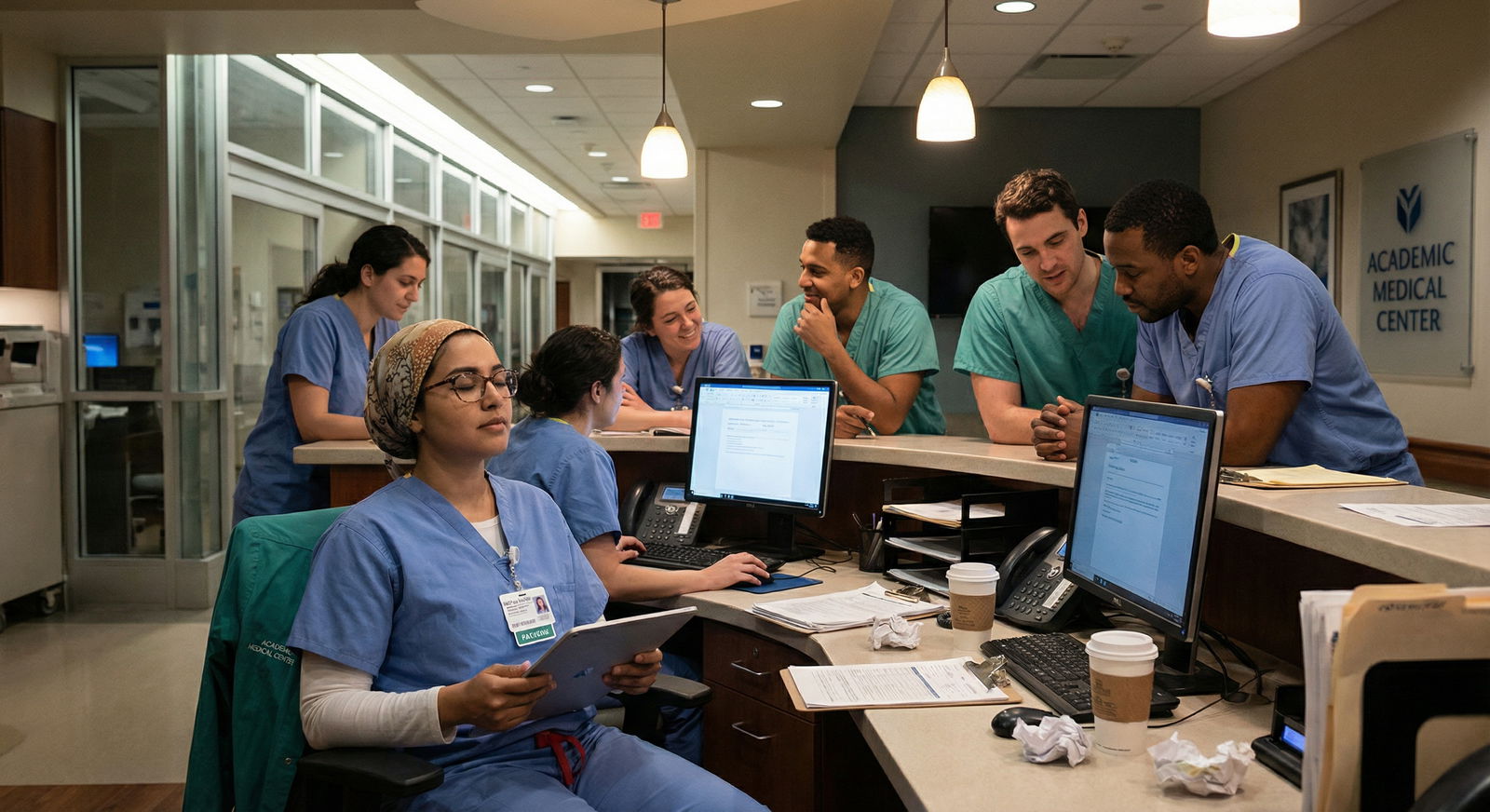
Residency can feel isolating, even in a bustling hospital. High social intelligence helps you build intentional support networks that buffer against burnout.
Social skills in residency include:
- Communicating clearly and respectfully under pressure
- Asking for help without feeling weak
- Giving and receiving feedback constructively
- Addressing conflict early and professionally
- Cultivating mentors and peer support
Real-world applications:
- After a code, you say: “That was intense—does anyone need a quick debrief?” Creating psychological safety benefits everyone, including you.
- You start an informal “coffee check-in” with two co-residents weekly, where clinical talk is allowed but not the only focus.
- You proactively seek out a faculty mentor and are honest about burnout concerns instead of waiting for someone to notice you’re struggling.
These relationships provide advice, validation, practical help, and a space to share the emotional load—one of the strongest known protective factors against Residency Burnout.
Practical Strategies to Build Emotional Intelligence During Residency
Emotional Intelligence is a trainable skill set. The challenge in medical training is time—so the strategies that work best are brief, integrated, and realistic for your life on call.
1. Micro Self-Reflection Practices You Can Actually Maintain
You do not need hour-long journaling sessions to benefit from reflection.
Consider:
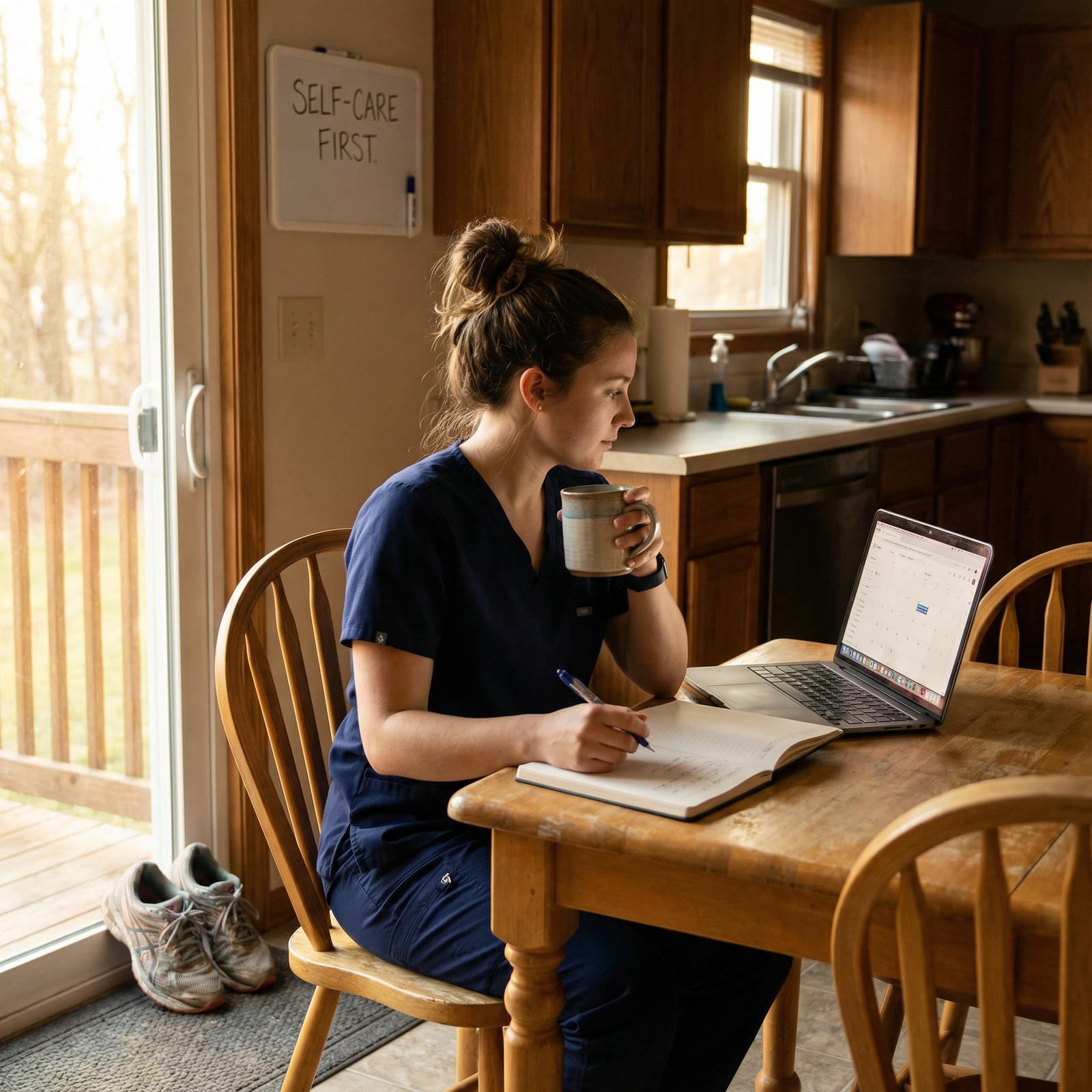
2-minute end-of-shift check-in
Ask yourself:- What emotion is most present for me right now? (e.g., frustrated, proud, drained, grateful)
- What drained me the most today?
- What gave me energy or meaning today?
3-sentence journal
On your phone or small notebook, write:- One challenging moment and how you felt
- One meaningful or positive moment
- One thing you’d like to do differently next time
Over time, these micro-reflections sharpen your self-awareness and help you see patterns that contribute to stress or resilience.
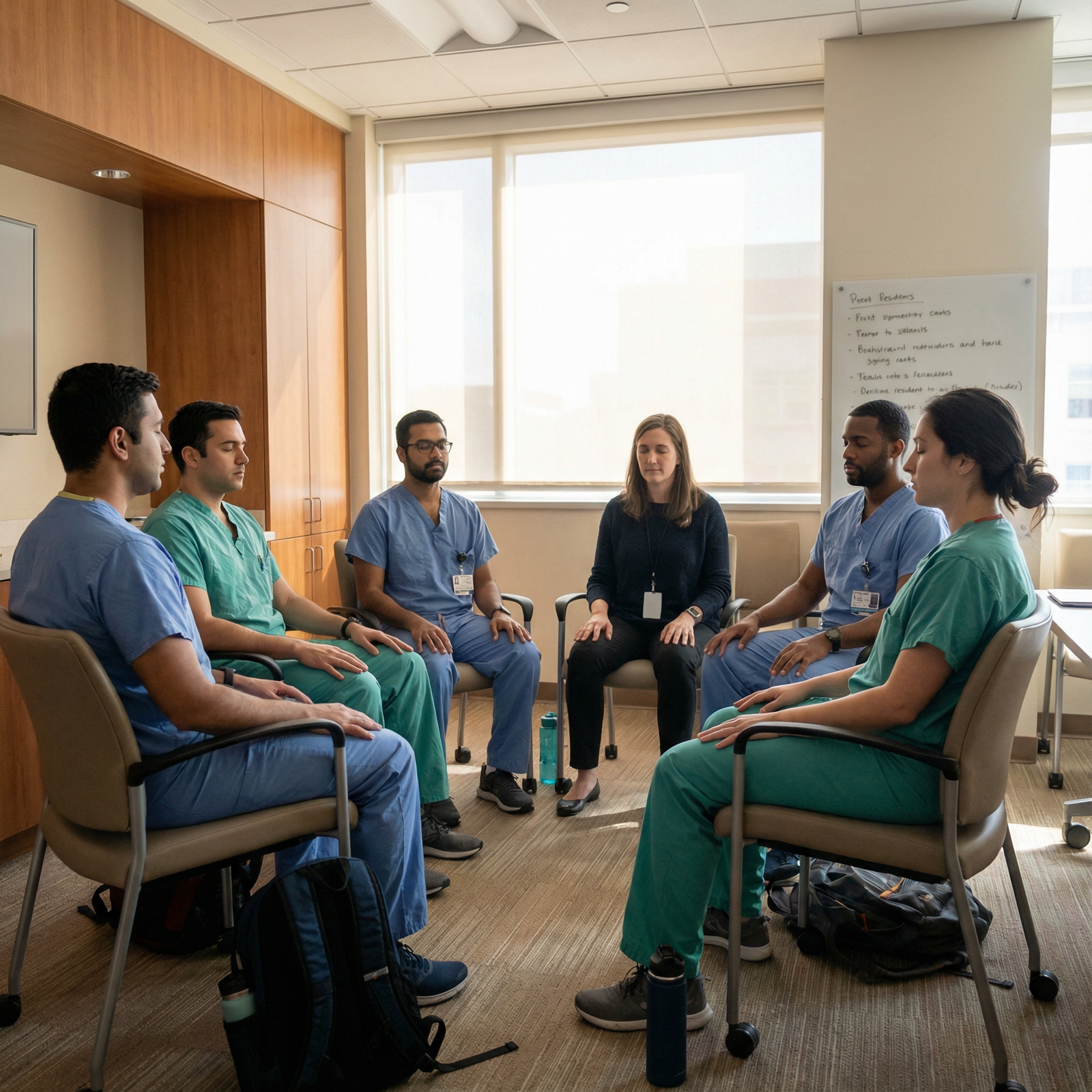
2. Mindfulness and Grounding Techniques for Real-World Shifts
Mindfulness is not about being calm all the time—it’s about noticing your state without judgment and returning your attention intentionally.
Try quick techniques:
- 30-second breathing reset before entering a room: inhale for 4 seconds, hold for 4, exhale for 6–8
- Grounding during chaos: silently name 3 things you see, 2 things you hear, 1 thing you physically feel
- Mindful first sip of coffee or water at the start of your shift—deliberately slow down that one moment to anchor yourself
These small practices improve your capacity for self-regulation and reduce emotional reactivity.
3. Proactively Seeking Feedback on Emotional and Social Skills
Instead of waiting for end-of-rotation evaluations, ask targeted, EI-focused questions like:
- “In stressful situations, how do I come across to the team?”
- “Have you noticed anything about how I interact with patients that I could improve?”
- “When I’m under pressure, do you see patterns in my communication style?”
You can ask attendings, senior residents, nurses, or even trusted peers. Treat feedback as data, not a verdict on your worth.
4. Learning EI Like Any Other Clinical Skill
Treat Emotional Intelligence as part of your core curriculum:
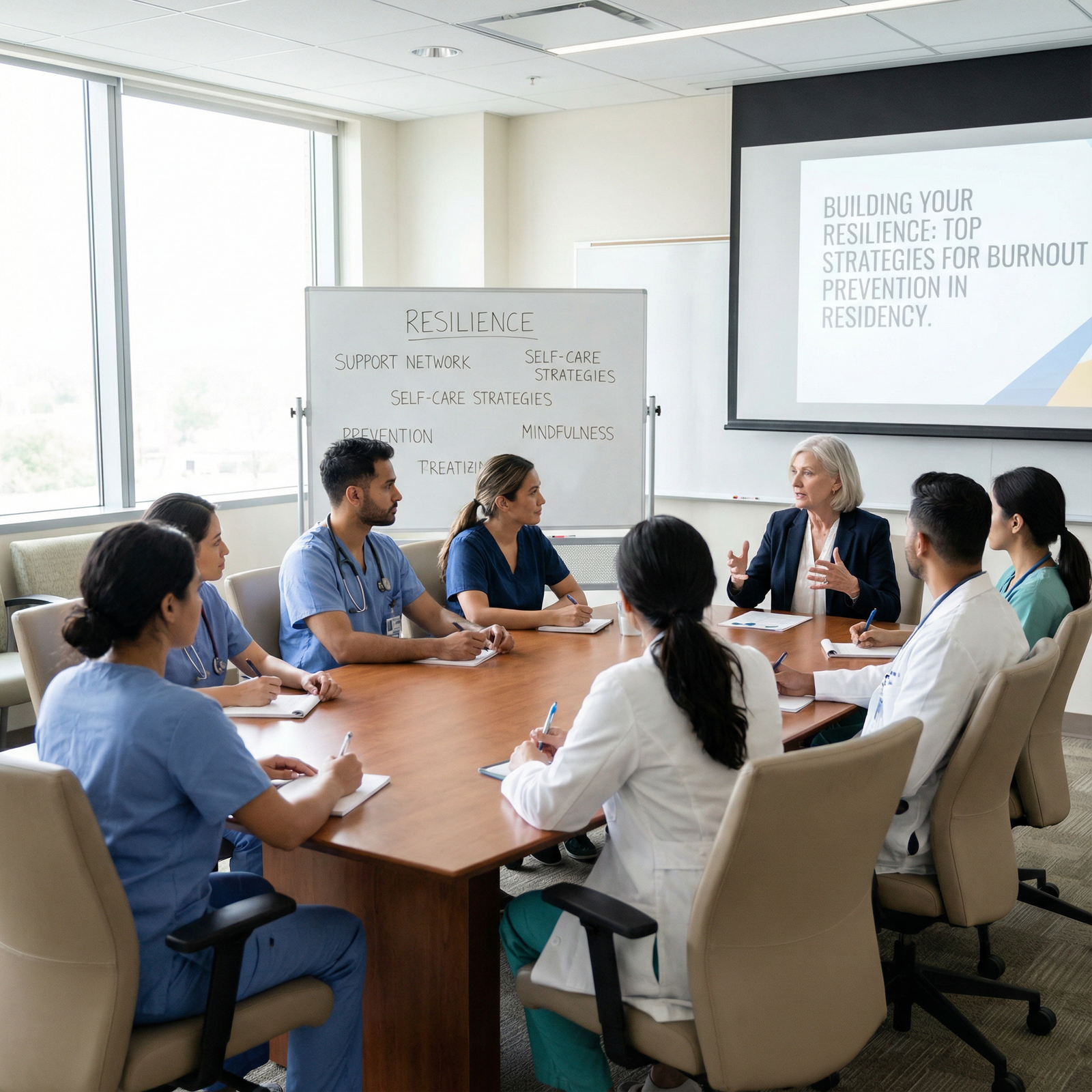
- Attend your institution’s wellness or communication workshops when possible
- Read accessible EI-related books (e.g., on physician resilience, communication in healthcare, or motivational interviewing)
- Listen to short podcasts on physician well-being or Emotional Intelligence during commutes
- If available, participate in Balint groups, narrative medicine sessions, or reflective practice groups
Just as you study medical content, you can study the science and skills of emotional competence.
5. Building and Using Healthy Support Networks
Support is not a luxury; it is a necessity in high-stress Medical Training.
Consider:
Peer support groups:
- Informal dinners or walks with co-residents
- Group chats that are not just for venting but also sharing wins and resources
Vertical mentorship:
- One senior resident you can text when you’re overwhelmed on nights
- A faculty mentor who knows your long-term goals and checks in about more than your CV
Professional support:
- Using institutional counseling/therapy services early, not only in crisis
- Being open (within your comfort level) about burnout concerns with trusted mentors
Healthy networks improve Social Skills, normalize struggle, and reduce shame—key elements in protecting Mental Health and Physician Well-being.
6. Practicing Team-Based Emotional Intelligence
Residency is a team sport. You can enhance EI at the team level by:
- Opening some handoffs or rounds with brief emotional check-ins: “How is everyone doing today?”
- Acknowledging others’ efforts specifically: “Thank you for staying late to help with that admission—it made a huge difference.”
- Debriefing tough cases explicitly: “That was hard. How is everyone feeling?”
These behaviors build psychological safety, reduce isolation, and foster a culture that counters burnout.

Integrating Emotional Intelligence Into Your Daily Residency Routine
To make Emotional Intelligence sustainable, integrate it into things you already do:
Before shift:
- Set one intention: “Today I want to practice staying present with each patient for at least 30 seconds before I look at the computer.”
- Quick emotional scan: “What am I bringing into this shift?” (tired, anxious, hopeful)
During shift:
- Use transitions (elevator rides, walking between rooms, waiting for labs to load) for brief grounding breaths
- Notice and name your emotional state once or twice per shift (e.g., “I’m feeling rushed and tense”)
- Communicate needs early: “I’m getting behind. Can we redistribute a couple of tasks?”
After shift:
- Ask: “What’s one thing I’m proud of today?” and “What’s one thing I want to improve?”
- Do one small act of self-care that is realistic for that day: a proper meal, 10-minute walk, short call with a friend, or a tech-free shower
Over months, these micro-practices compound into stronger Emotional Intelligence, more resilience, and a greater sense of control in the midst of demanding Medical Training.
FAQs: Emotional Intelligence, Residency Burnout, and Physician Well-being
1. What is Emotional Intelligence in practical terms for residents?
Emotional Intelligence is your ability to understand what you and others are feeling, and to use that understanding to guide your behavior, communication, and decisions. In residency, this might mean:
- Recognizing when you’re nearing emotional exhaustion and adjusting your expectations
- Staying calm enough in a code to think clearly
- Reading a patient’s fear and adjusting your explanation accordingly
- Navigating disagreements with consultants without escalating tension
It is not about being emotionless—it is about using emotions as information, not as the driver of impulsive behavior.
2. How does Emotional Intelligence actually help prevent Residency Burnout?
Emotional Intelligence protects against burnout in several ways:
- Early detection: Self-awareness helps you notice burnout signs before they become severe.
- Healthier coping: Self-regulation offers better ways to handle stress than denial, anger, or withdrawal.
- More meaning: Motivation and empathy keep you connected to purpose and people, reducing depersonalization.
- Stronger support: Social skills help you build networks that provide practical and emotional support.
While it does not replace the need for systemic reform (work hours, staffing, documentation burden), it significantly influences how you survive—and grow—within the existing system.
3. Can Emotional Intelligence really be learned during such a busy time as residency?
Yes. Emotional Intelligence is not fixed. You don’t need long retreats to improve it; you can build it through small, consistent practices:
- Brief reflection at the end of shifts
- One or two mindful breaths before critical conversations
- Intentional feedback-seeking about your communication and teamwork
- Noticing and naming your emotions during high-stress moments
Think of it as “micro-training”: frequent, brief repetitions embedded into your real-world routine.
4. What are some quick, practical ways to develop Emotional Intelligence during rotations?
A few resident-friendly strategies:
- Use your pager/phone as a cue: Every time it goes off, take one slow breath before responding.
- Ask one EI-focused question weekly: e.g., “How did I handle that family meeting? Anything I could have done better emotionally?”
- End-of-day ‘1-1-1’ exercise: Name 1 hard moment, 1 meaningful moment, and 1 thing you did well.
- Practice one empathy skill per day: Sit down when talking to one patient and ask, “What’s your biggest concern right now?”
These can be done in under a minute and still have a cumulative impact on your Emotional Intelligence and well-being.
5. When should I consider getting professional help instead of just relying on Emotional Intelligence skills?
If you notice any of the following, professional support is recommended:
- Persistent sadness, anxiety, or emotional numbness
- Thoughts of self-harm or that others would be better off without you
- Inability to function at work or at home
- Loss of interest in almost all activities, not just medicine
- Using substances heavily to cope with stress or sleep
Emotional Intelligence is a powerful tool, but it is not a substitute for mental health care. Seeking help—from your program’s confidential counseling service, an external therapist, or your physician—is a sign of insight and professionalism, not weakness.
By intentionally developing Emotional Intelligence during residency, you are not just surviving training—you are building the internal toolkit you will rely on for the rest of your career. In a profession where burnout is common, Emotional Intelligence can truly become your secret weapon: protecting your Mental Health, enhancing Physician Well-being, and allowing you to care for patients with both clinical skill and sustainable compassion.