

It’s 2:47 a.m. You’re on call, triple-paged, staring at an order set you’ve put in a thousand times—and you can’t remember if you already dosed the heparin or just thought about ordering it. You rub your eyes, hope muscle memory saves you, and hit “sign.”
What you do not see is the attending who quietly checks the MAR an hour later to confirm every order. Or the one who tells the charge nurse, “Do not let them take that cross-cover alone again tonight; they’re fried.”
You think burnout is about how you feel. Attendings are thinking about something else: “At what point does this resident’s burnout turn into a real, quantifiable patient safety risk—and what do I do about it without blowing up the schedule or their career?”
Let me walk you through what actually happens on the other side of the workroom door, when your exhaustion stops being “normal residency misery” and starts looking dangerous.
The Dirty Truth: Attendings Assume You’re Tired
First reality: almost every attending assumes residents are tired. Baseline.
Nobody is alarmed because your eyes are red, you needed a second coffee at 10 a.m., or you groaned when another admission hit the list. That’s the background noise of residency.
What gets attendings’ attention is when the pattern shifts. When your tired stops looking like “pushed but functioning” and starts looking like “this person can’t reliably execute the basics.”
Here’s what they’re really tracking—whether they say it out loud or not.
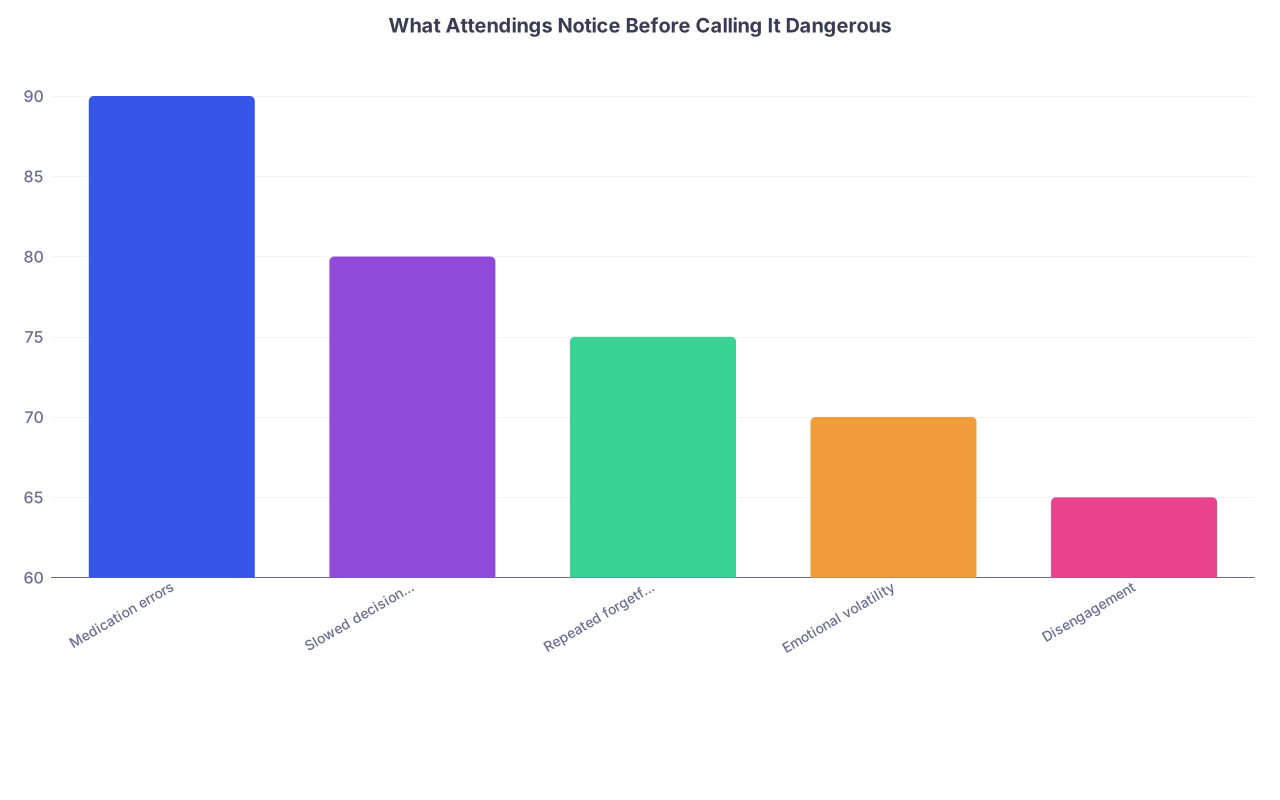
| Category | Value |
|---|---|
| Medication errors | 90 |
| Slowed decision making | 80 |
| Repeated forgetfulness | 75 |
| Emotional volatility | 70 |
| Disengagement | 65 |
Those percentages? Roughly how often attendings I’ve talked to mention each as their first red flag on burnout crossing into risk territory.
They all know you’re working at your cognitive redline most days. But they start getting uncomfortable when they see consistent problems in three domains: cognition, reliability, and behavior.
The Cognitive Line: When Your Brain Stops Being Safe
Here’s where the rubber hits the road. Your brain is the main safety device in the room. When an attending decides burnout is now a patient risk, it’s usually because your cognition is slipping in predictable, scary ways.
1. Repetition of the Same Mistakes
Everyone makes isolated mistakes. A one-off missed lab, a forgotten PRN order—that’s not triggering a crisis meeting.
What makes attendings sit up is pattern.
I watched one resident on nights in IM at a big-name program (think large urban academic center) who kept doing the same thing: signing orders without fully reading the pop-up warnings. Two near-miss dosing errors in 36 hours—both caught by pharmacy.
The attending’s comment on the phone later:
“Once is tired. Twice is system stress. Third time is unsafe. We’re not getting to the third time.”
That’s how they actually think. They count repeats. They watch for the same cognitive miss appearing across different patients.
2. Slowed Processing in High-Stakes Moments
You know this scene. Rapid response. Attending shows up. They look at you and say, “What’s going on?”
If your response is a clean, structured summary—even if your voice shakes—that’s fine. That’s stress, not danger.
What makes attendings uneasy is when you freeze. Or when you give a long, wandering story with no clear vitals, no main problem, no plan. They see a resident who cannot triage, cannot prioritize, cannot pull the relevant data forward.
One SICU attending put it bluntly in a faculty meeting:
“If a resident cannot give me three coherent sentences in a rapid, I don’t care why—sleep, anxiety, burnout—I can’t trust them with that level of responsibility tonight.”
That’s where they draw lines internally. Can you organize thought under pressure? If the answer is “not consistently,” they begin mentally shifting work away from you.
3. Losing the “Internal Alarm”
Good residents have an internal alarm system: something feels off, and they go look again.
When you’re seriously burned out, that system dulls. You stop double-checking. You stop worrying that you might be missing something. You chart “NAD” because you’re on autopilot.
Attendings absolutely feel this in you.
They hear it in your presentations. The absence of phrases like, “I was worried about X, so I checked Y.” Instead: “No complaints” and a generic “plan to monitor.”
When that curiosity dies, attendings start thinking, “They’re not just tired. They’re flat. That’s when we miss sepsis.”
The Reliability Line: When They Stop Trusting Your Follow-Through
Burnout doesn’t just slow thinking. It screws your reliability. That’s what freaks attendings out the most—because reliability is how they sleep at night.
1. The Forgotten Tasks That Matter
Everyone forgets to sign a discharge med rec once. Whatever.
The shift happens when you start forgetting mission-critical stuff. Blood cultures not ordered. Consult never called. Insulin not given because the order never made it in.
Attendings pick up these patterns faster than you think, often from nursing.
Charge nurses are brutal truth-tellers. They’ll say, quietly, “Dr. X is behind. I don’t think they’re keeping up.” Or worse: “We’ve had to remind them three times about critical labs.”
That’s when the attending will start spot-auditing your work, even if they don’t tell you.
I’ve seen attendings open every chart on your list at 10 p.m. and scan: vitals trend, labs, orders, notes. If they see loose ends on more than one patient, you’re now in the “risk” category in their mind.
2. The Disappearing Resident
Another hard truth: if you start avoiding the unit, sitting in call rooms longer, delaying pages, attendings notice.
Not because they’re tracking your movements like security. But because when they walk to see a sick patient and you’re never there, they begin to doubt your presence in real time.
This usually comes out as a comment to another faculty member first:
“Where were they during that rapid? I didn’t see them until we were ten minutes in.”
Or to the senior: “How often have you had to chase them down tonight?”
Avoidance is a classic burnout move. It’s also how attendings decide, “We cannot leave this person alone overnight on that unit.”
3. Documentation That Looks Like It Was Written by a Ghost
Attendings read your notes more than you think.
When your documentation goes from detailed and thoughtful to five-copy-pasted lines with no patient-specific content, they draw conclusions. Not about your intelligence. About your engagement.
One cards attending said it perfectly:
“When I see a resident documenting like they’re filling out a DMV form, I know they’re beyond tired. They’re detached. And detached residents miss stuff.”
The Behavioral Line: The Emotional Shift Attendings Watch For
Here’s the part people don’t like to say out loud: your behavior is often what pushes attendings from “concerned” to “I need to intervene for patient safety.”
And no, it’s not about you being “nice.” It’s about whether your emotional state is degrading team function.

1. Snapping at Nurses and Staff
A one-time sharp comment? Everyone gets it. Nurses will even defend you: “They’re just tired.”
But when you become consistently short, dismissive, or hostile, attendings pay attention because nurse-resident communication is how errors are caught.
Nurses will not always escalate formally. They will do it informally:
“Dr. Y doesn’t listen when we call.”
or
“They get annoyed every time we ask about vitals.”
Attendings hear that and immediately think, “We’re losing our safety net. If the nurses hesitate to call, we are exposed.”
2. Flattened Affect and Emotional Withdrawal
On the other end of the spectrum: the resident who goes quiet. Very quiet.
They stop contributing on rounds. They don’t advocate for patients. They accept every attending plan without question, even when something doesn’t add up.
Burned-out residents often think this is safer: “I’ll just do what I’m told.”
Attendings see the opposite: loss of clinical engagement. And behind closed doors, they say out loud what you probably suspect:
“I don’t mind tired. I mind checked-out.”
When you’re emotionally gone, they don’t trust that you’ll see early deterioration or push back when something seems wrong.
3. Emotional Lability and Unstable Reactions
The meltdown in the workroom, the tears in the call room that spill into the hallway, the loud argument with a consultant—these things stick in attendings’ minds.
Not because they think you’re weak. But because unpredictable emotional responses in crisis situations scare them.
I remember a senior telling me after a traumatic code, “I can’t put them in front on the next one. They crumble. I’ll put them beside me, but not in the lead.”
That’s what happens. They quietly downgrade your role. For “patient safety.”
The Quiet Threshold: When Attendings Decide “This Is Unsafe”
The decision point is rarely dramatic. No red button. No formal algorithm.
It’s usually a moment like this: an attending sitting at a computer at 11:30 p.m., browsing through your list after seeing you stumble three times during evening rounds, and thinking, “I wouldn’t want my family admitted under this team tonight with this resident in charge.”
That’s the internal standard. “Would I trust this person with my own family right now?”
When the honest answer is “no,” things start happening behind the scenes.
Let me unpack how that actually looks.
Step 1: Increased Supervision… Without Telling You Why
First level is subtle. They start asking you to run things by them more.
“Let me know before you discharge anyone today.”
“Page me when you admit anything from the ED tonight.”
“I want to see all the sick patients with you.”
You might think this is just their style. Often, it isn’t. It’s a contained safety measure.
They’re buying time. Watching whether this is a bad week… or a dangerous trajectory.
Step 2: Conversations with Seniors and Chiefs
If they’re still worried, they talk to your senior or the chief resident. Always off-stage first.
“Are you seeing what I’m seeing?”
“How are they handling the rest of their responsibilities?”
“Is this new, or has this been going on?”
If both faculty and seniors align that you’re slipping, the label switches from “rough patch” to “problem we must act on.”
Notice the line: it’s not about your feelings. It’s about the consistency of decline and the scope of impact.
Step 3: Acute Safety Moves
If there’s a near miss or a serious event connected to your burnout—missed critical lab, wrong dose, dangerous delay—attendings may act quickly.
That can mean:
- Pulling you from nights
- Moving you off the sickest unit
- Having a second resident or fellow co-cover your patients
- Reassigning admissions away from you during that shift
Sometimes they tell you directly:
“I’m worried you’re too tired to safely take more tonight. I’m shifting new admits to X.”
Sometimes they sugarcoat it:
“Let’s have Y handle the new ones so you can catch up on your list.”
Either way, internally that’s them saying: “Line crossed. I’m not gambling on this.”
The Politics: Why Attendings Don’t Always Call It “Burnout”
Here’s one of those truths nobody prints in wellness pamphlets: Attendings are often more comfortable talking about your performance than your burnout.
Why? Because performance is actionable. Burnout is messy, systemic, and politically loaded.
So you hear things like:
“You need to be more thorough in pre-rounding.”
“Your organization is slipping.”
“I’m seeing some lapses in follow-through.”
Underneath, what they often mean is: “You look cooked, and I don’t trust your current bandwidth.”
Some are better at being direct:
“I’m worried about you. This doesn’t look like your baseline. We need to reset before someone gets hurt.”
But plenty will avoid the B-word entirely. They don’t want to trigger formal documentation, mental health reporting questions, or a bigger fight with the program about call schedules.
So they work around it. Informal guardrails. Quiet schedule tweaks. “Random” reassignments.
You feel crazy because you’re exhausted and your workload changed but nobody used the actual word. You sense something is off, but no one connects it explicitly.
You’re not imagining it. This is exactly how many programs operate.
What You Can Do Before They Decide For You
Here’s the part you control: whether you speak up when you notice you’re sliding from “miserable but functional” into “I am not safe to practice like this.”
And yes, people do that. Quietly. Intentionally.

The attendings I trust the most all say some version of this:
“If a resident comes to me and says, ‘I’m worried I’m not safe right now,’ I will move mountains to protect them and the patients. I might be frustrated with the system, but I will never punish someone for that level of insight.”
Let me spell out how to do this without tanking your reputation.
1. Use Safety Language, Not Vague Wellness Language
Do not walk in and say, “I’m burned out.”
Say: “I’m worried my fatigue is starting to affect my judgment. I caught myself almost missing X. I do not feel safe taking more overnight cross-cover like this.”
There’s a difference. One sounds like a wellness complaint. The other sounds like a safety report. Attendings respond much faster to the latter.
2. Offer a Concrete Adjustment, Not a Total Collapse
You’re not asking to disappear. You’re asking to be redeployed wisely.
Examples that go over better:
- “Can we redistribute the sickest two patients to the senior tonight? I’m nervous I’m going to miss something on them.”
- “Is there a way for me to stay on days and avoid nights for a bit while I get back to baseline?”
- “Could I step out of cross-cover and focus on my primary patients this week while we figure this out?”
You’re signaling insight and responsibility, not fragility.
3. Document Your Own Near Misses (Quietly, For Yourself)
Keep a private log. Nothing that lives on a hospital server.
“Almost missed lactate on septic patient.”
“Delayed calling rapid because I was on three other pages and forgot.”
“Entered wrong mg dose, caught on review.”
Patterns over weeks tell you the truth faster than vibes. If that list is growing, that’s your sign—not their judgment.
How Programs Actually Adjust Things (When They Want To)
Sometimes the changes are small. Sometimes they’re big. But there’s a pattern to what’s realistically on the table.
| Adjustment Type | What It Looks Like |
|---|---|
| Increased supervision | More attending or fellow presence on rounds |
| Duty shift change | Off nights, moved to lighter rotation |
| Patient load tweak | Fewer admissions, redistribute sickest patients |
| Formal eval | Meeting with PD, wellness or mental health ref |
| Emergency pull | Immediate removal from high-risk scenario |
None of these are charity. They’re risk management. For patients first. For the institution second. For you third.
If you understand that, you can work with that logic instead of being blindsided by it.
The Line You Should Be Watching For Yourself
You don’t have time to read burnout papers. Fine. Watch these three thresholds in yourself. When you cross them, stop pretending it’s “just residency.”
- You’re having repeated near misses that you only catch by luck or someone else catching them.
- You find yourself not caring when someone’s vitals look worse—because you’re just too numb to react.
- You dread calls from certain nurses or services not because they’re difficult, but because you know you don’t have the mental energy to think through what they’re asking.
Once you’re there, you’re not just burnt out. You’re in the territory attendings whisper about in hallways: “This is not safe anymore.”
Beat them to that conclusion. Say it first. You’ll actually earn respect from the right people.
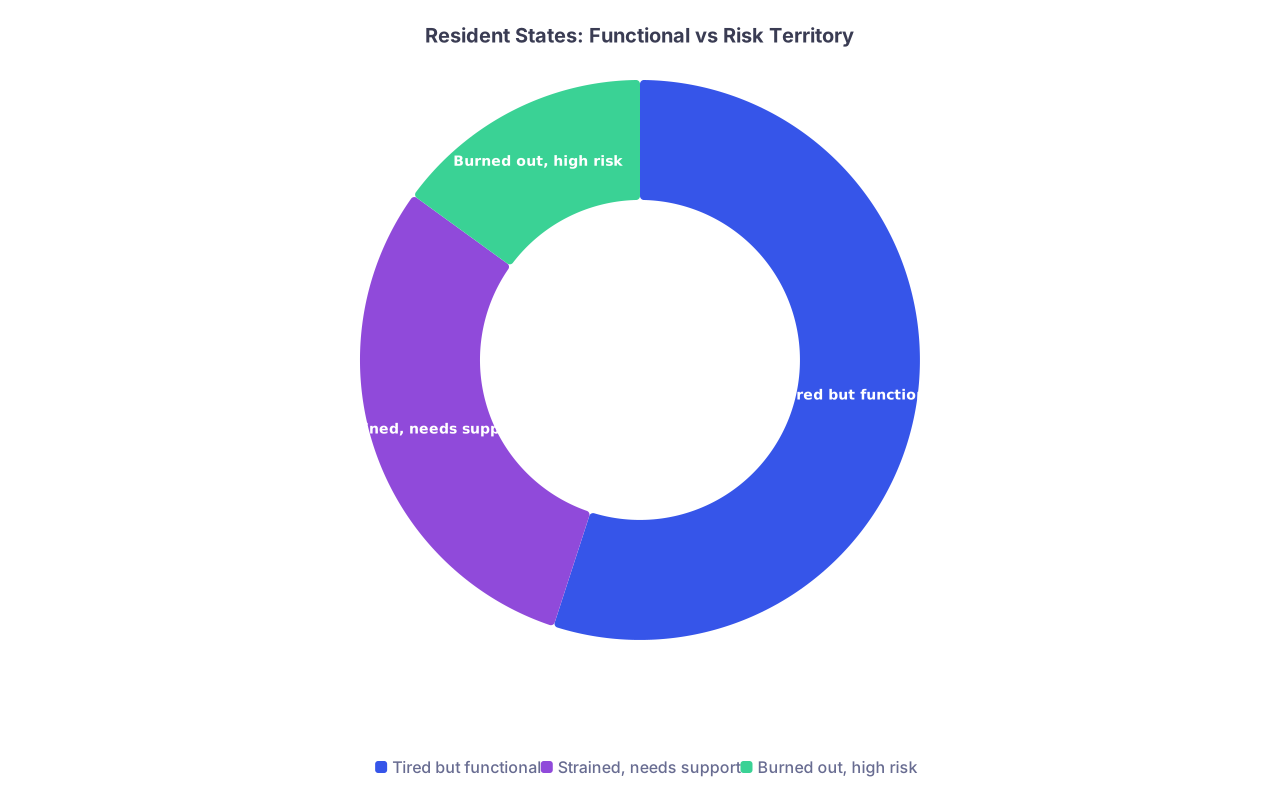
| Category | Value |
|---|---|
| Tired but functional | 55 |
| Strained, needs support | 30 |
| Burned out, high risk | 15 |
Those aren’t precise numbers, obviously. But the proportions feel right from what I’ve seen across programs: most are just tired, a good chunk are strained, and a nontrivial group are truly in the danger zone.
Where you land on that circle matters more than whatever inspirational quote the GME office sends this month.
FAQs
1. Will telling my attending I’m unsafe ruin my reputation?
If you tell them once, clearly, with concrete examples and a clear ask, no—at good programs it usually does the opposite. What hurts your reputation more is repeatedly functioning unsafely while pretending you’re fine and forcing attendings to discover it through near misses or staff complaints. That said, choose your audience wisely: a trusted attending, chief, or PD who has shown they actually care about patient safety, not just optics.
2. What if my program culture is “suck it up” and nobody takes burnout seriously?
Plenty are. In those environments, skip the emotional framing and lean hard on patient safety. Phrase things in risk language: “I’ve had three near misses in 10 days; I’m worried about patient safety if I keep this load.” Document your concerns in email if needed. That creates a record that you tried to address a safety risk. They may still be dismissive, but you’ve protected your patients and yourself better than staying silent.
3. How do I tell if it’s me (burnout) or just that I’m not good enough for this specialty?
I’ve watched countless residents ask that in their heads and almost never out loud. Here’s the honest split: if you were functioning well before and now you’re slipping across the board—attention, memory, emotional bandwidth—it’s almost always burnout and workload, not some sudden revelation that you’re inherently incompetent. True mismatch with a specialty shows up as chronic struggle with the content and pace, even when you’re rested. Burnout shows up as you being a shadow of the version of yourself you already know exists when you’re not being crushed.
Key Takeaways
First: Attendings quietly draw a line when your burnout starts to produce repeated cognitive errors, unreliable follow-through, and behavioral changes that disrupt team safety.
Second: They often act before telling you—by increasing supervision, changing your duties, or pushing for schedule adjustments—because they’re thinking about risk, not your feelings.
Third: Your best move is to recognize when you’ve crossed into unsafe territory and say it out loud in safety language, with specific examples. If you wait for them to decide you’re a problem, you lose control of the narrative.


