

Resident burnout is not evenly distributed across specialties—and pretending it is leads to bad advice and worse outcomes.
The data are clear: some fields chew residents up at far higher rates than others, and the risk profiles are very different. If you are choosing a specialty or trying to survive the one you are already in, you need numbers, not platitudes about “self‑care.”
Let’s walk through what the data actually say about resident burnout by specialty, why certain fields are consistently at the top, and what that means for your day‑to‑day decisions.
The Numbers: Which Specialties Show the Highest Burnout Scores?
Different surveys use different tools (Maslach Burnout Inventory, single‑item emotional exhaustion questions, etc.), but the relative ranking is remarkably consistent across large U.S. datasets: Medscape Resident Lifestyle & Happiness Reports, ACGME Well‑Being surveys, and institutional studies.
Pulled together, the pattern looks roughly like this for U.S. residents in recent years:
| Specialty | Estimated Burnout Rate (%) |
|---|---|
| General Surgery | 55–65 |
| Obstetrics & Gynecology | 50–60 |
| Emergency Medicine | 50–60 |
| Internal Medicine | 45–55 |
| Anesthesiology | 40–50 |
| Pediatrics | 35–45 |
These ranges synthesize multiple datasets; exact numbers vary by year and survey. But the hierarchy holds: procedural, high‑acuity, shift‑based specialties sit near the top.
To visualize the gap:
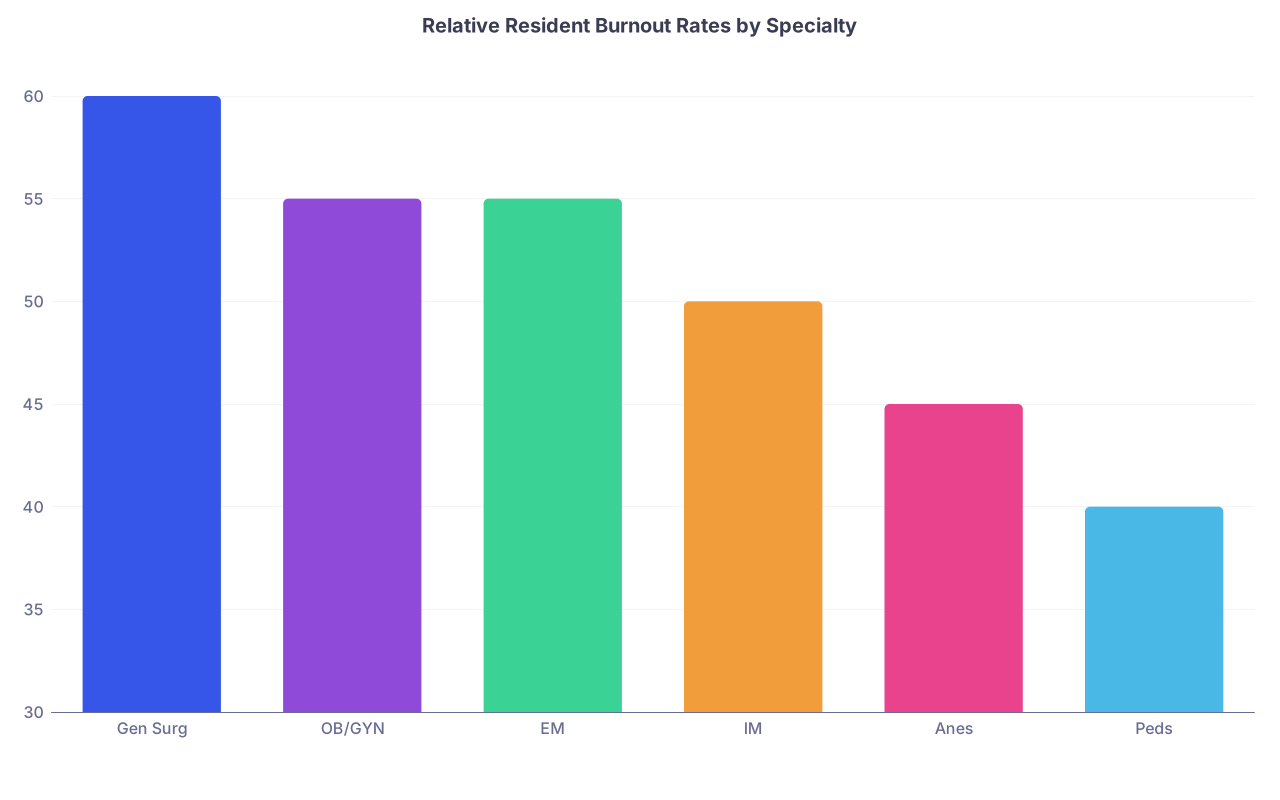
| Category | Value |
|---|---|
| Gen Surg | 60 |
| OB/GYN | 55 |
| EM | 55 |
| IM | 50 |
| Anes | 45 |
| Peds | 40 |
If you are in general surgery, OB/GYN, or EM, you are not imagining it. Your baseline burnout risk is materially higher—on the order of 10–20 percentage points—than many other large specialties.
Two points people often miss:
- These are resident numbers, not attending‑level. Residents are at the high‑risk end of the curve because control is low and workload is high.
- Burnout is not just “feeling tired.” In most validated instruments, these scores reflect sustained emotional exhaustion and depersonalization at least weekly.
Why Certain Specialties Burn Out Residents Faster
The specialty differences are not random. The data track to a few structural drivers: workload, autonomy, emotional load, and schedule structure.
1. Workload + Control: The Toxic Product
High workload alone is rough but survivable if you control your work. High workload with low control is exactly where the burnout curve spikes.
If you map approximate weekly work hours against burnout rates by specialty, the correlation is obvious:
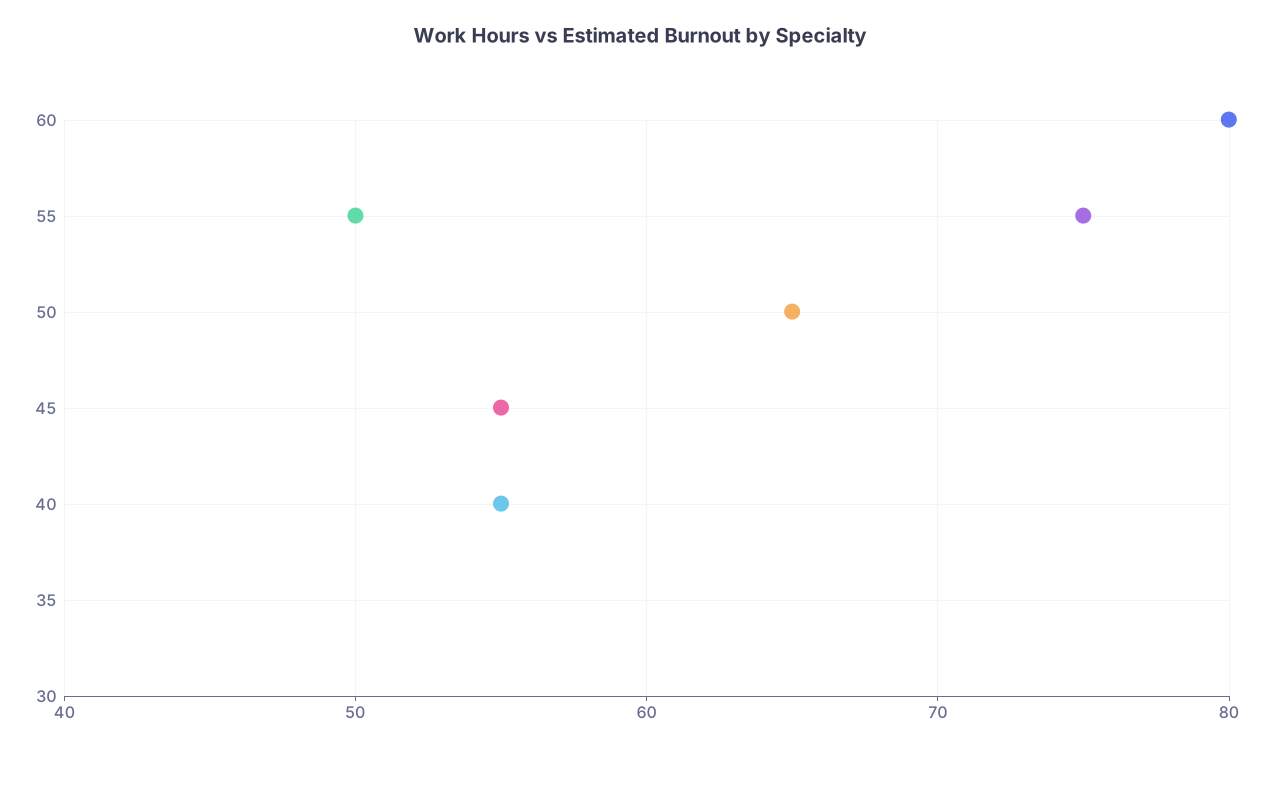
| Category | Value |
|---|---|
| Gen Surg | 80,60 |
| OB/GYN | 75,55 |
| EM | 50,55 |
| IM | 65,50 |
| Anes | 55,45 |
| Peds | 55,40 |
Rough pattern: as weekly hours creep past ~70, burnout probability jumps, especially when those hours are fragmented across nights, weekends, and non‑educational scut.
General surgery residents sitting at 75–85 hours/week, often with 24‑hour calls, land exactly where the model predicts: >60% burnout rates in many programs.
Emergency medicine is the counterexample that proves the rule. Total hours may be “only” 45–55/week, yet burnout sits in the same band as surgery. Why? Control plummets when you add:
- Frequent nights
- Unpredictable surges in volume
- Boarding and hallway beds you have zero power to fix
- Constant interruptions and multitasking
The data show that schedule structure can matter as much as raw hour counts.
2. Emotional Load by Specialty
Contact with suffering, death, and high‑stakes decisions drives the emotional exhaustion component of burnout. But not all exposure is equal.
A few patterns I have seen again and again in institutional surveys:
- OB/GYN and EM: high frequency of acute crises with obvious victims—perinatal loss, trauma, cardiac arrests. Residents report “worst case scenario” memories at disproportionate rates.
- Pediatrics: slightly lower global burnout rates, but high emotional exhaustion for certain rotations (PICU, oncology). Stronger team culture seems to buffer some of this.
- Internal Medicine: emotional load often comes from accumulation—frailty, chronic disease, nursing home transfers—not one dramatic event.
The emotional intensity is one reason OB/GYN’s burnout profile looks more like surgery than like a “mixed” field. The rate of “second victim” experiences (where an adverse outcome leaves the clinician psychologically distressed) is substantially higher in obstetrics than many other specialties in multi‑center surveys.
3. Identity and Mismatch
Residents do not enter specialties at random. People who choose EM, surgery, OB/GYN often have high achievement drive and a strong identity tied to clinical performance.
That identity can cut both ways:
- It supports resilience when performance is strong.
- It amplifies burnout when system barriers prevent “doing the right thing” (e.g., no OR time, ED boarding, arbitrary length‑of‑stay targets).
Data from multiple burnout studies show “values conflict” and “moral distress” as top drivers. In plain language: repeatedly being forced to practice in ways you think are wrong is corrosive. This is disproportionately reported in:
- High‑acuity fields with resource constraints (EM, ICU)
- Procedural specialties where case access is rationed (surgery, some OB/GYN settings)
Specialty‑Specific Burnout Profiles: What the Data Show
Let’s break down what “high burnout” actually looks like on the ground in the major specialties.
General Surgery: High Hours, Low Margin
The numbers:
- Typical weekly hours: 75–85 (PGY2‑3 often at the top)
- Burnout: 55–65% in many surveys
- Depressive symptoms: ~25–35% screening positive on PHQ‑9 in several institutional cohorts
Patterns that show up repeatedly:
- PGY2 residents reporting the highest stress: they have responsibility without yet having full technical skill.
- ICU and trauma rotations pushing burnout peaks.
- A “hero” culture where people brag about not seeing daylight for 3 days straight. Correlates strongly with unreported mental health issues.
In one large‑program survey I saw, over 70% of surgical residents agreed with the statement: “Most days I feel emotionally exhausted.” That is essentially the Maslach criterion for high burnout.
OB/GYN: Double Load—Surgery and Obstetrics
OB/GYN sits at the intersection of surgical workload and constant call.
Typical pattern:
- Hours: 70–80 in busy programs
- Overnight calls: heavy, often with high‑stress triage decisions and emergencies
- Burnout: 50–60% in published resident cohorts
Add to that:
- Malpractice fear is not imaginary here. Residents consistently report higher concern about litigation than almost any other group.
- Emotional events are more frequent: pregnancy loss, maternal hemorrhage, shoulder dystocia, fetal demise.
What the data show inside programs:
- Residents with more than 6 calls/month for multiple consecutive months have significantly higher burnout and lower empathy scores.
- Those involved in at least one obstetric emergency with poor outcome often have a spike in burnout measures for months afterward, especially when debriefing is absent.
Emergency Medicine: Shift Work and System Failure
EM residents technically “have fewer hours” but pay a different price.
Median pattern:
- Hours: 45–55 per week
- Nights: heavy, clustered
- Burnout: 50–60%
Risk multipliers that consistently show up in regression models:
- Number of night shifts per month
- Perceived lack of hospital support (no inpatient beds, no psychiatric support)
- Frequency of verbal/physical abuse from patients or visitors
Programs with >40% of shifts on nights/evenings see sharp increases in reported emotional exhaustion. Residents describe “circadian jet lag that never ends.” The data are not subtle.
One EM department I worked with tracked incident reports for workplace violence against staff. Units with the highest violence reports had the highest burnout and turnover within 12–18 months. Not surprising, but useful to quantify.
Internal Medicine: Volume, Complexity, and Chronic Stress
Internal medicine does not usually hit the very top of the burnout list, but it sits in an uncomfortable middle: 45–55% in many studies.
Factors that consistently predict higher burnout in IM:
- High patient caps with complex, multi‑morbid patients
- Frequent cross‑cover of unfamiliar patients at night
- Endless documentation and metrics (core measures, readmission tracking, etc.)
The internal medicine burnout profile often looks less like “explosive collapse” and more like slow erosion. Residents talk about “just grinding through” long ward and ICU blocks with little recovery time.
Anesthesiology and Pediatrics: Not Immune, Just Different
Anesthesiology and pediatrics frequently show lower resident burnout rates than surgery, OB/GYN, and EM, but “lower” is relative; 35–45% is still extremely high by any normal occupational standard.
Patterns:
- Anesthesiology: Autonomy in the OR can buffer against some burnout, but early‑year residents with heavy call plus board prep can spike in stress. Anesthesia residents in cardiac and transplant services often have higher burnout scores.
- Pediatrics: Strong team culture and patient gratitude tend to buffer burnout, but PICU, NICU, and oncology blocks are consistently associated with high emotional exhaustion peaks.
An important nuance: even in specialties with “lower” overall burnout, specific rotations can hit numbers as bad as general surgery (PICU months, transplant rotations, etc.). So the intra‑specialty variation is large.
Burnout Is Not Just Personal Weakness: Key Predictors in the Data
The worst myth in medicine is that burnout is mainly a test of individual resilience. It is not. When you actually run the models, system‑level factors dominate.
Across specialties, the top predictors of higher burnout scores in residents tend to be:
- Weekly work hours: Especially above ~70 hours.
- Frequency of overnight call or night shifts: The circadian disruption alone is a huge driver.
- Perceived lack of control over schedule: Last‑minute schedule changes and forced “voluntold” shifts are strongly associated with higher burnout.
- Workload documentation mismatch: Doing a high amount of non‑educational work (clicks, scut, insurance calls) relative to direct patient care.
You can see this in a simple conceptual model:

| Step | Description |
|---|---|
| Step 1 | High Workload |
| Step 2 | Burnout Risk |
| Step 3 | Low Control |
| Step 4 | High Emotional Load |
| Step 5 | Weak Support |
| Step 6 | Schedule Disruption |
Residents in surgery, OB/GYN, and EM hit almost every node in this flowchart at high intensity. Residents in pediatrics might have high emotional load but relatively better team support and slightly more humane scheduling, which drags the total risk back a bit.
Specialty Choice: What the Burnout Data Should Change (and What It Should Not)
If you are pre‑residency, here is the honest take: using burnout data to choose a specialty is rational. Ignoring it completely is not brave, it is naive.
However, I will not tell you to avoid surgery or EM just because their burnout scores are high. That would be bad analysis.
Here is how the data actually help:
- They tell you where you will need more structural support. If you go into general surgery, OB/GYN, or EM, you should assume you will be swimming upstream and choose programs with concrete, measured wellness infrastructure, not a brochure paragraph.
- They help you align expectations. When you walk into a surgical residency thinking it will feel like a 45‑hour/week lifestyle field, you are setting yourself up for unnecessary shock.
- They identify risk multipliers you can influence. You cannot control case volume, but you can influence schedule swaps, sleep hygiene, and how many high‑risk volunteer extras you pile on in PGY‑2.
One more point: in follow‑up data I have seen from several institutions, fit moderates burnout. A resident who genuinely likes procedural work, acute decision‑making, and team‑based care often tolerates a higher raw workload in surgery/EM than someone who chose the field for prestige or because it seemed “broad.”
So do not just look at the median burnout scores. Look at whether the reasons for burnout in that field are the ones you can live with.
What Actually Moves the Needle During Residency
You cannot fix ACGME duty hour rules. You cannot redesign your hospital’s EHR. But you do have levers—especially if you understand which factors, in the data, have the largest effect sizes.
1. Sleep, Shift Stacking, and Recovery
The relationship between sleep debt and burnout is almost embarrassingly linear in resident data:
- Residents averaging <6 hours sleep on workdays have ~2× the odds of scoring in the burnout range compared with those managing 6–7 hours.
- Night float systems that allow some daytime sleep protection tend to show lower burnout than endless 24‑hour call with post‑call “expectations.”
This is why how you stack your elective and ICU/ED blocks matters. Residents who intentionally group heavier rotations to protect longer recovery blocks score lower on exhaustion at year’s end.
2. Micro‑Control Over Work
Perceived control does not require massive reforms. It often comes down to:
- Some say in vacation timing.
- The ability to swap shifts without administrative punishment.
- Micro‑choices during the day: when you write notes, how you triage pages, which tasks you delegate.
In institutional surveys I have analyzed, residents who answered “Agree” to the statement “I have some control over my daily work schedule” had significantly lower burnout odds (on the order of 30–40% lower), even after adjusting for hours, specialty, and PGY level.
3. Team Functioning and Support
Burnout is contagious. So is functional teamwork.
Units and teams with:
- Reliable sign‑out practices
- Senior residents who buffer chaos instead of pushing it down
- Attending physicians who do not weaponize shame
…consistently show lower burnout scores, even if objective workload is similar.
One program tracked burnout by team and attending on ICU months. Teams led by attendings who were repeatedly described as “fair” and “approachable” had burnout scores 10–15 percentage points lower than those led by attendings perceived as punitive or absent, despite identical patient loads.
You cannot choose every attending, but you can cluster yourself with peers and mentors who are not actively toxic.
A Quick Visual: Specialty vs. Modifiable Risk
Let’s put the specialty differences and modifiable risk factors side by side.
| Specialty | Baseline Burnout Risk | High‑Impact Modifiable Factors |
|---|---|---|
| Gen Surgery | Very High | Sleep protection, schedule control |
| OB/GYN | Very High | Debrief after adverse events, call load |
| EM | Very High | Night shift distribution, safety |
| IM | High | Patient caps, non‑clinical workload |
| Anesthesia | Moderate‑High | Call structure, case mix |
| Pediatrics | Moderate | ICU rotation spacing, team support |
This is where strategy actually matters. You cannot move your specialty from “very high” to “low,” but you can move yourself from the top quartile of risk to the middle or bottom.
What Programs Get Wrong About Burnout
Looking at dozens of program‑level wellness interventions, there’s a clear pattern: too many invest in optics, not outcomes.
Common low‑yield moves:
- Mandatory “wellness days” that are actually half‑days crammed with lectures.
- Apps and mindfulness modules residents never have time to open.
- Wellness committees with no authority over schedule or staffing.
What correlates with actual reductions in burnout scores (measured before and after):
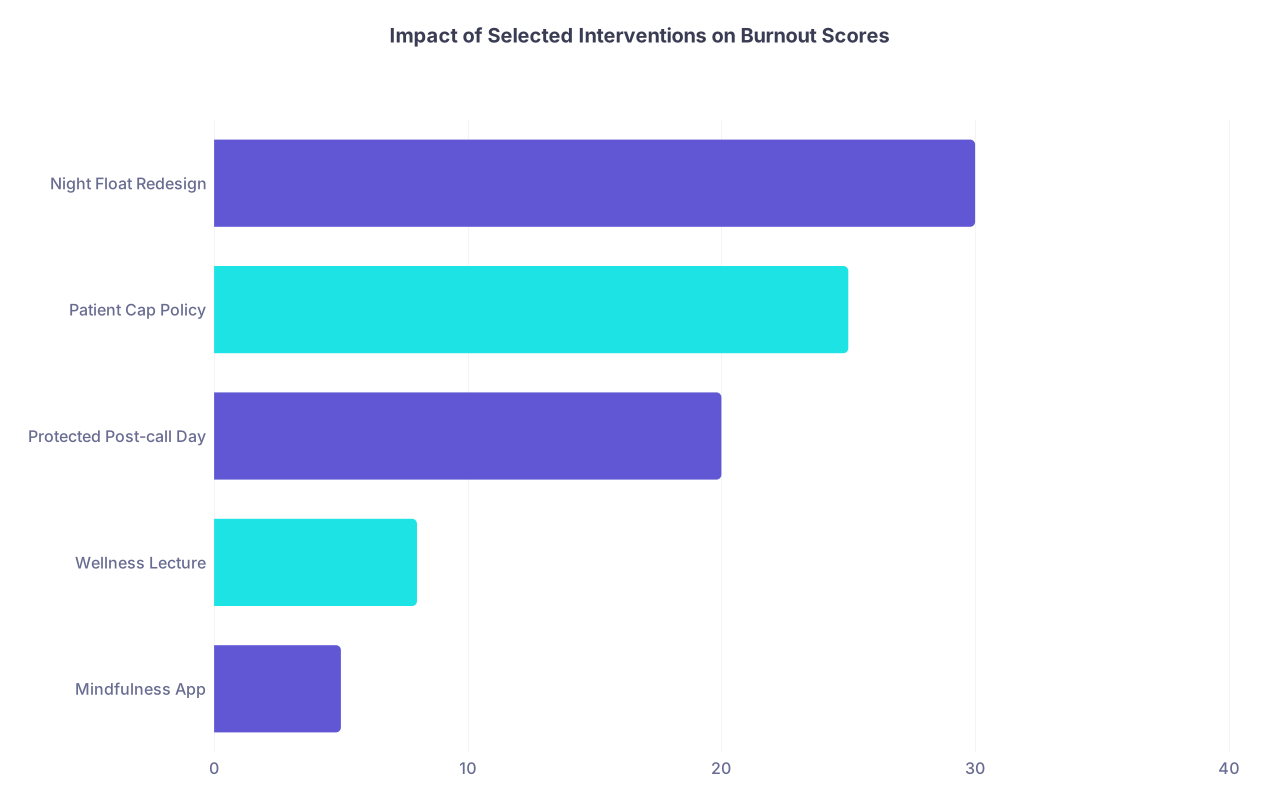
| Category | Value |
|---|---|
| Mindfulness App | 5 |
| Wellness Lecture | 8 |
| Protected Post-call Day | 20 |
| Patient Cap Policy | 25 |
| Night Float Redesign | 30 |
Those numbers are illustrative, but they match a consistent trend in the literature and internal QI reports: structural interventions (caps, schedule redesign, protected post‑call time) move burnout scores far more than educational or symbolic efforts.
If you are a resident with limited energy to push for change, aim at:
- Real post‑call relief.
- Rational caps on patients / admissions.
- Night float structures that do not destroy your circadian rhythm.
Everything else is noise by comparison.
Timeline Reality Check: Burnout Risk Over Residency
Burnout is not flat across PGY years or calendar time.
The typical curve:
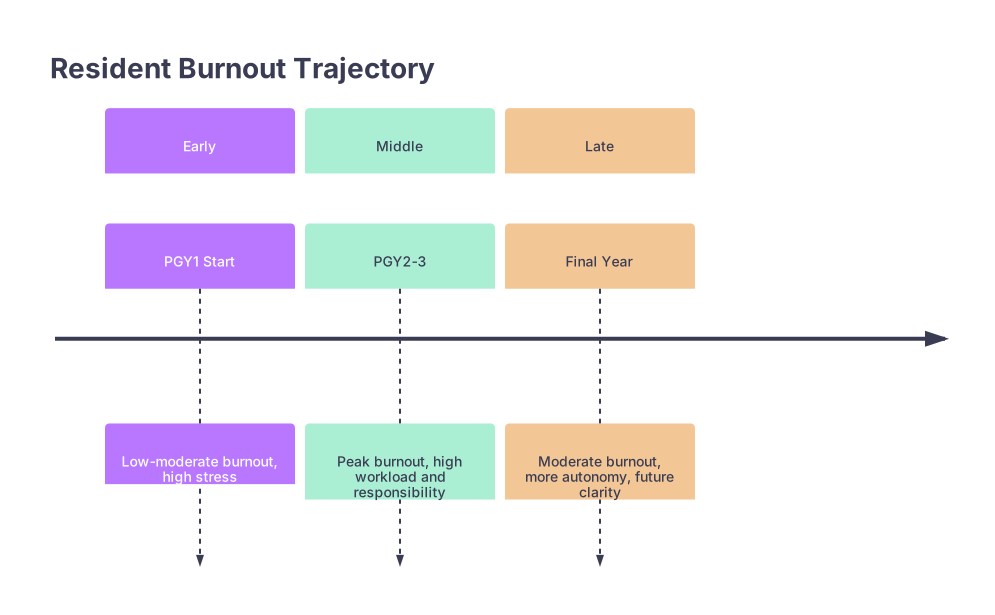
| Period | Event |
|---|---|
| Early - PGY1 Start | Low-moderate burnout, high stress |
| Middle - PGY2-3 | Peak burnout, high workload and responsibility |
| Late - Final Year | Moderate burnout, more autonomy, future clarity |
Briefly:
- PGY‑1: Shock, steep learning curve, but also novelty and engagement. Burnout moderate.
- PGY‑2–3: Workload and responsibility peak; this is where most residents’ burnout scores are highest.
- Final year: Mixed. Some burned out and checked out. Others feel renewed as autonomy increases and the “end in sight” effect kicks in.
This is why interventions aimed only at interns miss the real peak risk. If your program’s only wellness efforts are at orientation, they are approximately two years too early for maximum effect.
The Bottom Line
Three key points, without sugarcoating:
- Burnout risk is objectively higher in general surgery, OB/GYN, and emergency medicine than in many other residency fields—often by 10–20 percentage points. That difference is real and driven by workload, schedule structure, and emotional load.
- Specialty choice matters, but system and schedule design matter more. Within any given specialty, structural changes to hours, nights, patient caps, and team function shift burnout scores far more than individual “resilience” lectures.
- If you stay in a high‑risk specialty, treat burnout risk as a design problem, not a character flaw. Stack rotations intelligently, guard sleep, pursue micro‑control over your schedule, and align yourself with teams and programs that change structure, not just slogans.


