

You are walking out of a 14‑hour hospital day. Your phone says 8:37 p.m. Your brain is mush, your stomach is a black hole, and you still have a 35‑minute drive, a half‑empty fridge, and yesterday’s unfinished notes waiting in Epic.
This is how burnout creeps in. Not just from patient load or call schedules, but from the dozens of small, badly designed parts of your day: the commute that drains you, the “meals” that are really just random carbs, and the charting that follows you home like a curse.
You cannot fix your program’s staffing. You cannot fix the call schedule. But you can absolutely redesign your commute, meals, and charting so they stop bleeding you dry.
Here is exactly how.
Step 1: Redesign Your Commute So It Restores You, Not Drains You
Most residents treat the commute as dead time or doom‑scroll time. That is a mistake. Your commute is your warm‑up and cool‑down. If you get this wrong, you show up behind and you leave even more depleted.
We’ll build you a commute protocol that works whether you walk, drive, bus, train, or bike.
A. Decide the “Job” of Each Direction
Morning and evening commutes should have different purposes:
- Morning: activate and focus without frying your brain.
- Evening: discharge stress and downshift your nervous system.
If both ends of your commute are just podcasts and Instagram, your brain never transitions out of “on-call” mode.

| Step | Description |
|---|---|
| Step 1 | Morning commute |
| Step 2 | Light activation |
| Step 3 | Planning |
| Step 4 | Evening commute |
| Step 5 | Stress discharge |
| Step 6 | Boundary setting |
B. Morning Commute: Tight, Intentional, Boring (On Purpose)
You want calm focus, not adrenaline.
If you drive:
Pick one “morning playlist” and never think about it again.
- 20–30 minutes. Instrumental, lo‑fi, classical, or calm acoustic.
Decision fatigue before 7 a.m. is expensive.
- 20–30 minutes. Instrumental, lo‑fi, classical, or calm acoustic.
Add a “3‑minute arrival ritual” at the parking lot:
- Turn off engine.
- Two slow breaths: inhale 4 sec, hold 2, exhale 6. Twice.
- Say out loud (yes, out loud):
- “I will not finish everything.”
- “I will focus on what actually matters for safety and learning.”
Zero work calls/messages on the drive in.
If your senior attending is texting you sign‑out updates on your commute, read them after you park. You are not on the clock yet.
If you use train/bus:
You have gold here: protected time.
- Split your ride into three chunks:
- 5–10 minutes: stare out the window. No phone. Let your brain idle.
- 10–20 minutes: one focused task:
- Skim patient list and mark only:
- “Must see first”
- “Likely to crash”
- Or scan guidelines for one topic you keep missing (DKA, COPD, etc.).
- Skim patient list and mark only:
- Last 3–5 minutes: power down:
- Close charts.
- Put phone away.
- Two slow breaths.
- Mentally rehearse first 10 minutes on the floor: “I’ll drop my bag, print list, see X, then Y.”
If you walk/bike:
- Use a “no headphones first half” rule:
- Let your senses turn on.
- Notice 5 specific things: temperature, smells, sounds, etc.
- Second half: either silence or very calm audio. No news, no intense podcasts.
C. Evening Commute: Dump, Then Disconnect
Evening is where most residents sabotage themselves: vent + doom‑scroll + caffeine → arrive home wired and empty.
Your new rule: Two‑phase commute. No exceptions.
Phase 1 (first half): Discharge.
- Talk it out (voice notes to yourself, or debrief with co‑resident).
- Or use “thinking time”:
- Ask your brain: “What actually bothered me today?”
Don’t fix, just name.
- Ask your brain: “What actually bothered me today?”
- If you must call family, put a time cap:
“I have 10 minutes while I drive; then I need silence.”
Phase 2 (second half): Downshift.
Non‑negotiable: no medicine.Options:
- Fiction audiobook (short, light, not trauma porn).
- Comedy podcast.
- Music you loved before med school.
- Or silence. Yes, actual silence.
At the last 2 minutes before home:
- Say out loud:
- “Work is over for today.”
- “Future me will handle what is left.”
- Physically do something that marks the line:
- Put your hospital badge in the glove compartment.
- Close work apps on your phone.
D. Fix the Worst Parts with Tiny Tweaks
Identify the single worst aspect of your commute:
- Traffic rage?
- Constant pages?
- Fighting sleep?
- Feeling like a zombie when you get home?
Now match it with a concrete fix:
| Problem | Specific Fix |
|---|---|
| Falling asleep driving | Cold water + windows down + phone call |
| Rage in traffic | No talk radio; only calming playlist |
| Pages all commute | 10-min buffer after sign-out before leave |
| Arriving home wired | Last 10 min no screens, only calm audio |
| Ruminating about mistakes | Dictate 2-min “lessons” voice note, stop |
Pick one fix and implement it for a week. Then add another.
Step 2: Redesign Meals So You Stop Running on Glucose and Guilt
You are not burned out solely because of workload. You are also burned out because you are semi‑malnourished, dehydrated, and constantly spiking and crashing your blood sugar.
You do not need perfect nutrition. You need friction‑less, predictable calories that do not destroy your energy.
A. The Minimum Effective Meal Plan for Residents
Think of your food like a code status: full gourmet is not realistic. You need a “Do Not Crash” plan.
Design around three anchors:
- Anchor 1: Breakfast you can eat in 3 minutes.
- Anchor 2: Packable lunch that survives 5 hours untouched.
- Anchor 3: Emergency stash that lives at the hospital.
Forget the rest for now.
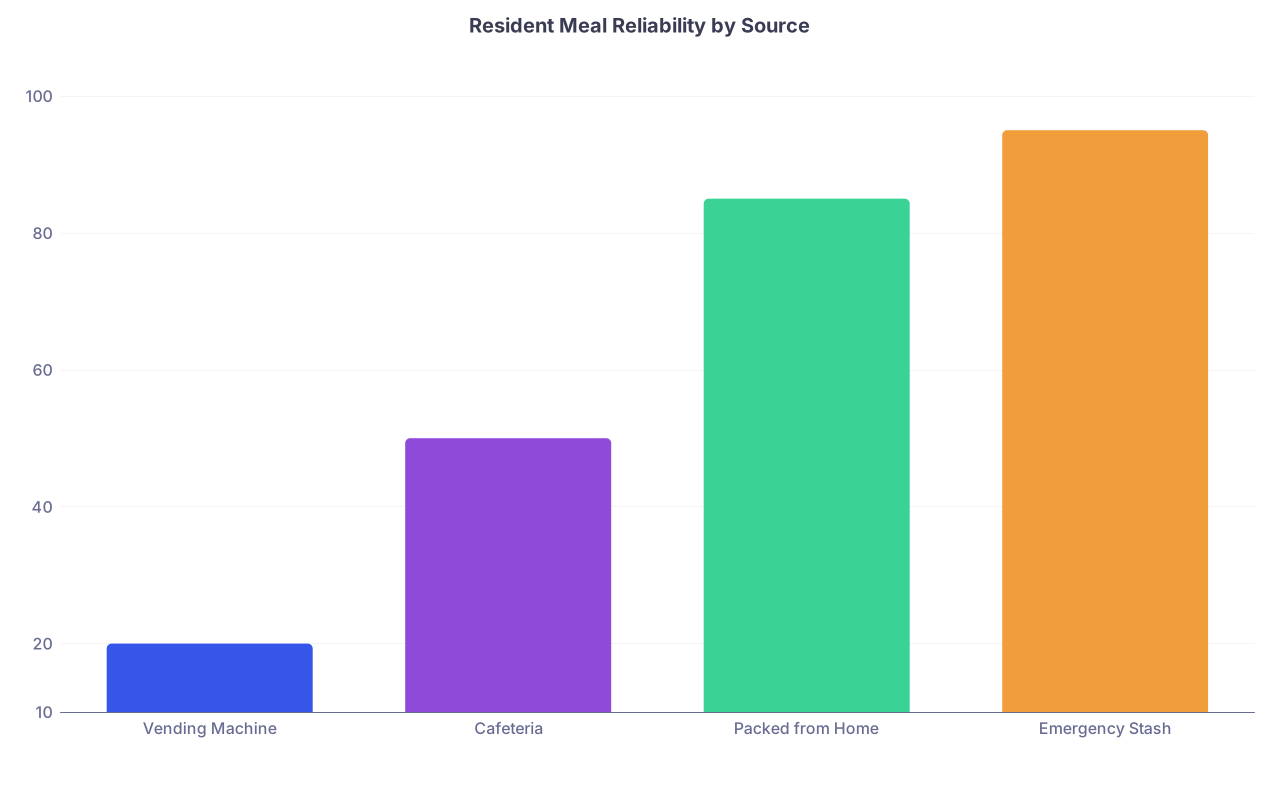
| Category | Value |
|---|---|
| Vending Machine | 20 |
| Cafeteria | 50 |
| Packed from Home | 85 |
| Emergency Stash | 95 |
B. Breakfast: “Grab and Go, No Decisions”
You do not have bandwidth to cook or think. So you script it.
Pick one weekday breakfast and eat the same thing every workday for 3 months. Variety is a luxury you can revisit later.
Criteria:
- 20+ grams protein.
- You can eat it in 3–5 minutes or in the car.
- Shelf‑stable or 5‑minute prep.
Examples:
- Greek yogurt + pre‑portioned nuts + banana.
- Protein shake + apple.
- Two hard‑boiled eggs (made Sunday) + granola bar.
System:
- Sunday night: assemble 5 “breakfast kits” in the fridge.
- Each workday morning: grab one. No decisions, no searching.
If you keep skipping breakfast, put backup:
- Protein bars in your work bag.
- Shelf‑stable shakes in your locker.
C. Lunch: Build a Repeating “Clinic Menu”
You are not going to cook elaborate lunches. You need a 3‑meal rotation that you can almost assemble blindfolded.
Rules:
- 20–30g protein.
- Can be eaten cold or room temperature.
- Survives delayed lunch without becoming disgusting.
Examples of a realistic 3‑day rotation:
- Day A:
- Pre‑washed salad mix + rotisserie chicken + olive oil vinaigrette + nuts.
- Day B:
- Pre‑made sandwich (turkey, cheese) + baby carrots + hummus.
- Day C:
- Microwave rice pouch + canned beans + salsa + shredded cheese.
You buy the same things every week. Decision‑free.
If you cannot cook at all, use:
- Pre‑made grocery store meals (many have decent protein).
- Frozen burritos, frozen bowls, etc.
D. The Non‑Negotiable Emergency Stash
You will get stuck in a code at 14:00.
You will miss lunch for a stat consult at 16:30.
The difference between “ok” and “I hate my life” is often 200–300 calories at the right time.
Create an ED‑style emergency cart for yourself:
Where: locker, call room drawer, or office cabinet.
What to stock:
- High‑protein:
- Protein bars.
- Nut butter packets.
- Jerky.
- Quick carbs:
- Trail mix.
- Granola bars.
- Single‑serve crackers.
- Caffeine:
- Instant coffee sticks or tea bags (optional, not mandatory).
System:
- Once per month, on a set day (e.g., first Sunday), restock to a fixed number:
- 8 bars, 6 nut butter packets, 2 trail mix bags, etc.
- When you drop below 2 items of any kind → you restock that week.
This is not about “healthy perfection.” This is about not making stupid decisions at 4 p.m. because you are starving.
E. Hydration Without Drama
Dehydrated residents think they are more burned out than they are.
Do not complicate this:
- One large bottle (24–32 oz) that:
- Lives in your work bag or on your workstation.
- You refill every time you go to the bathroom.
- Add electrolytes for long call days if you are pounding coffee.
Set one rule:
- You do not start your first coffee until your first bottle is gone.
It will feel annoying for 3 days. Then automatic.
Step 3: Redesign Charting So It Stops Following You Home
This is the one that breaks people. Not the patients. Not the procedures. The never‑ending charting that bleeds into nights and weekends.
You are not going to eliminate charting. But you can absolutely make it smaller, tighter, and mostly done before you leave.
A. Understand the Three Enemies of Efficient Charting
You are wasting time on charts because of:
- Fragmentation – charting in tiny pieces between interruptions.
- Perfectionism – writing notes like you are submitting a JAMA paper.
- Lack of templates and phrases – reinventing the wheel daily.
We will attack each one.
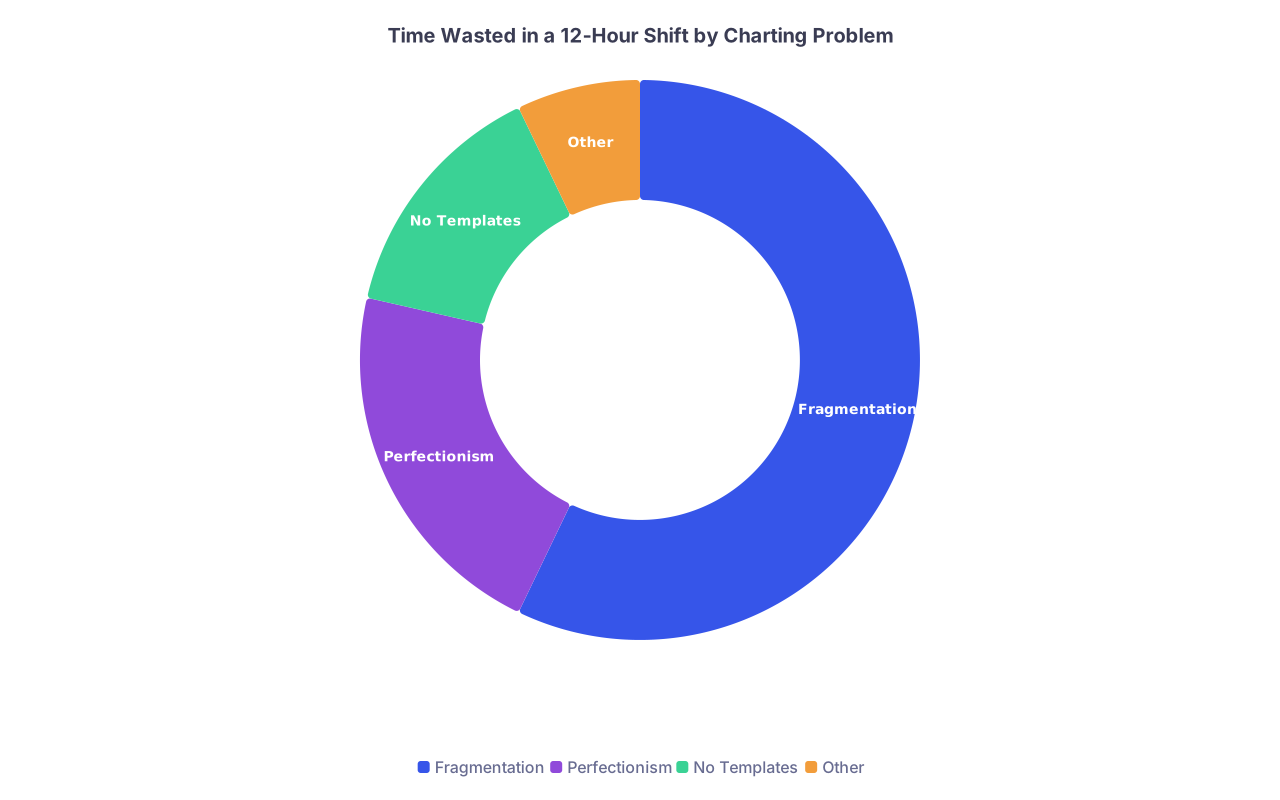
| Category | Value |
|---|---|
| Fragmentation | 120 |
| Perfectionism | 45 |
| No Templates | 30 |
| Other | 15 |
(Yes, 120+ minutes lost to fragmentation is very real. I have watched interns do it.)
B. Build “Charting Blocks” Into Your Day
If you try to chart only “whenever you have a second,” you never finish. You need intentional charting sprints.
For inpatient days, use something like this:
Pre‑rounding block (15–20 min):
- After seeing 3–4 patients, sit and immediately:
- Enter vitals, labs, and one‑line assessment for each.
- Your goal: skeleton notes done by rounds.
- After seeing 3–4 patients, sit and immediately:
Mid‑morning block (15–20 min after rounds):
- Flesh out the top priority 3–4 notes while the plan is fresh.
- Avoid phone, avoid hallway chatter.
Afternoon block (20–30 min):
- After tasks and pages slow down (often 15:00–16:00), sit and finish:
- All but 1–2 complex notes.
- Set a clear list: “These 6 notes must be signed before 17:30.”
- After tasks and pages slow down (often 15:00–16:00), sit and finish:
Pre‑departure block (10–15 min):
- Last pass for orders, sign remaining notes, clean up.
Your worst enemy here is “I will just do that later tonight.”
Translate: “I will wreck my evening and still be behind tomorrow.”
C. Ruthless Note Simplification
Residents routinely write notes that are 3x longer than needed. Attending skims three lines and moves on. Your extra 20 minutes per note buys you nothing.
Here is what actually matters:
- Clear, up‑to‑date assessment and plan.
- Key data changes.
- Safety items: code status, allergies, abnormal vitals, major overnight events.
You can safely shrink:
- Long cut‑and‑paste ROS.
- Re‑stating normal labs.
- Giant copy‑forward histories that never change.
Behavioral rule:
- If you are typing something that does not affect:
- Today’s decisions
- Billing
- Medico‑legal safety
Then you should be asking: “Why am I writing this?”
Use simple structure for daily progress notes:
- One‑line summary.
- Overnight events.
- Today’s problems by system:
- Neuro
- CV
- Pulm
- GI
- Renal
- ID
- Heme/Onc
- Endo
- Disposition plan.
If your note is longer than your attending’s and you are not on heme/onc or ICU, you are probably wasting time.
D. Templates and SmartPhrases: Stop Writing from Scratch
Most residents nap on this. That is a mistake.
Spend one focused hour building:
- Admission H&P template
- Daily progress note template
- Post‑op note template (if surgical)
- Discharge summary template
Plus 10–20 smart phrases for:
- Common diagnoses (CHF, COPD, DKA, sepsis).
- Common counseling (smoking cessation, diabetes education).
- Standard discharge instructions.
Then you refine them weekly based on attendings’ feedback.
Here is what this does:
- First draft of note appears with 1–2 keystrokes.
- You only edit specifics.
- You drastically cut typing time.
E. One-Patient‑At‑a‑Time Rule for Chart Completion
Fragmentation kills you. Seeing all patients first and “charting later” sounds efficient but produces terrible notes and long evenings.
Use this basic rule on non‑crazy days:
- See patient → place urgent orders at bedside → walk to computer →
Put in:- Today’s vitals/labs.
- 2–3 key events.
- Updated one‑line assessment.
That way, your afternoon is “fill in and sign,” not “rebuild the day from memory.”
On truly chaotic days, at least:
- Enter bullets in each chart:
- “AKI improving, decrease fluids.”
- “New afib, start anticoag.”
Then you do not rely on post‑call brain to remember.
F. Set an Actual Charting “Alarm” to Leave
If you never define “I am done enough to go home,” you will let charting expand to fill all available time.
New rule:
- Pick a hard stop time for weekdays (e.g., 18:30).
- 30 minutes before that, your screen should show only charts.
- Anything that is not:
- Active order
- Sign‑off‑required note
- Time‑sensitive message
gets delayed to tomorrow.
Yes, there will be days you stay late for service needs. But most residents can cut 30–60 minutes of nonsense charting simply by defining a stop line.
Step 4: Stitch It Together into a Practical Daily Protocol
These changes only work if they run together as a system. So let us assemble a basic “day design” that reshapes commute, meals, and charting all at once.
A. Sample Weekday Structure
This is a generic ward day. Adjust the times, keep the structure.
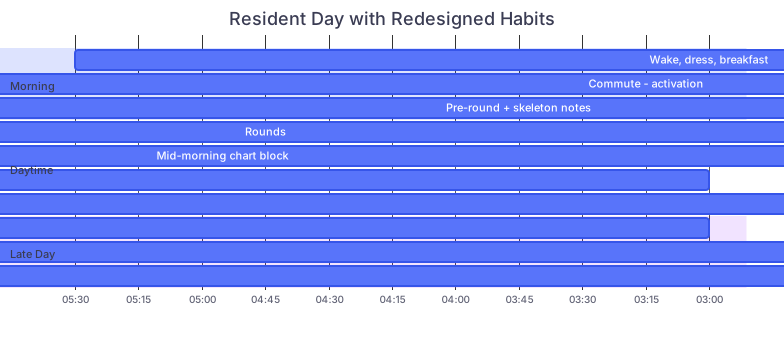
| Task | Details |
|---|---|
| dateFormat HH | mm |
| axisFormat %H | %M |
| Morning: Wake, dress, breakfast | a1, 05:30, 00:30 |
| Morning: Commute - activation | a2, 06:00, 00:30 |
| Morning: Pre-round + skeleton notes | a3, 06:30, 01:00 |
| Daytime: Rounds | b1, 07:30, 02:00 |
| Daytime: Mid-morning chart block | b2, 09:30, 00:20 |
| Daytime: Tasks, consults, calls | b3, 09:50, 03:00 |
| Daytime: Afternoon chart block | b4, 12:50, 00:30 |
| Late Day: Tasks, family updates | c1, 13:20, 03:00 |
| Late Day: Pre-departure chart block | c2, 16:20, 00:20 |
| Late Day: Commute - downshift | c3, 16:40, 00:30 |
Now overlay the three redesigns:
- Commute: scripted audio and boundaries.
- Meals: preset breakfast, packed lunch, emergency stash.
- Charting: 3–4 defined sprints, not constant leakage.
B. Before‑and‑After Snapshot
| Domain | Before Redesign | After Redesign |
|---|---|---|
| Commute | Doom-scroll, calls, arrive wired | Clear warm-up / cool-down, mental boundaries |
| Breakfast | Coffee only or nothing | 5 pre-built grab-and-go options in fridge |
| Lunch | Random cafeteria or skipped | 3 rotating packed meals |
| Snacking | Vending machine at 4 pm | Emergency stash in locker |
| Charting | Scattered all day, done at home | Defined blocks, templates, hard stop time |
| Evenings | Charting + ruminating | Mostly free, actual off time |
This is how you take the exact same call schedule and make it 20–30% less toxic.
Step 5: Implementation: 7‑Day Rollout Plan
Trying to fix everything at once will fail. You are already overloaded. Instead, install changes like patches: small, focused, one at a time.
Here is a simple 7‑day rollout that I have watched residents actually complete.
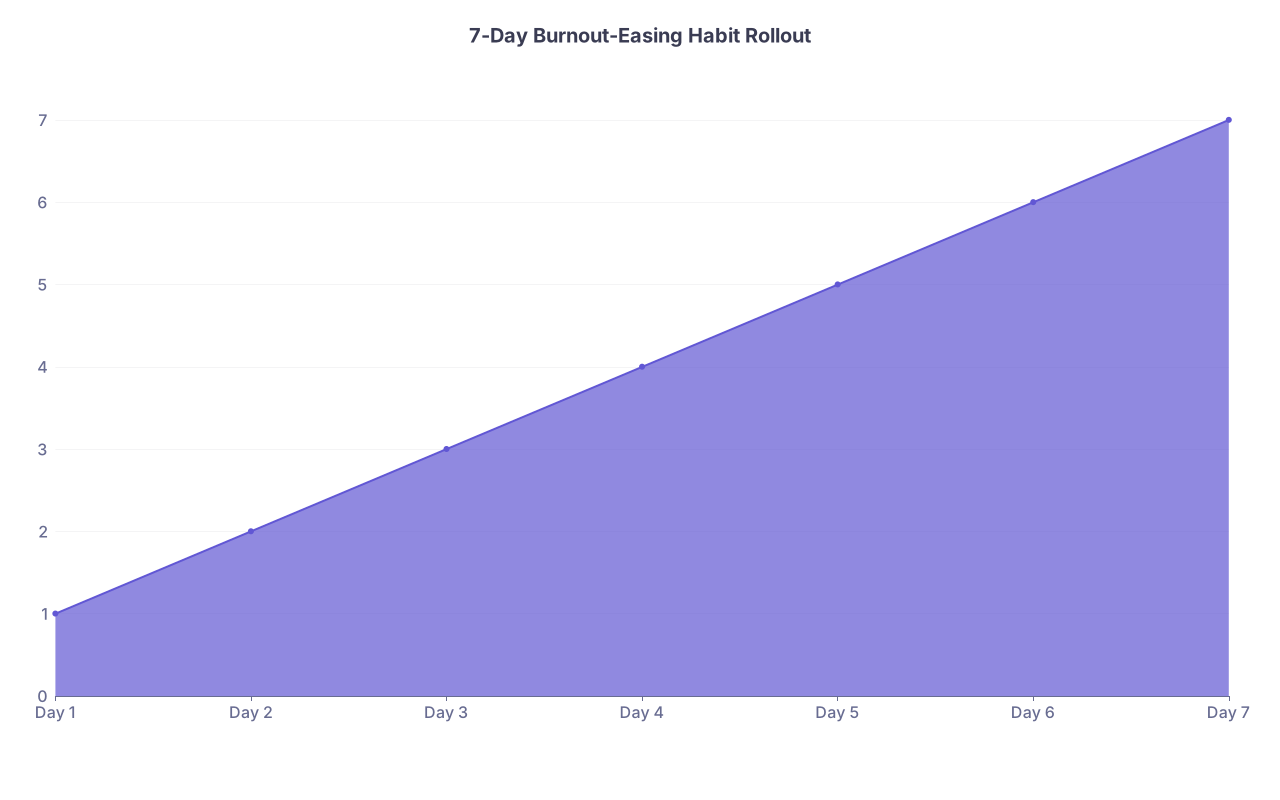
| Category | Value |
|---|---|
| Day 1 | 1 |
| Day 2 | 2 |
| Day 3 | 3 |
| Day 4 | 4 |
| Day 5 | 5 |
| Day 6 | 6 |
| Day 7 | 7 |
Day 1–2: Commute Only
- Script morning and evening commute as described.
- No food or charting changes yet.
- Goal: arrive slightly less frantic, leave slightly less wired.
Day 3–4: Add Breakfast + Emergency Stash
- Sunday night (or next day off): set up 5 breakfast kits.
- Stock emergency drawer/locker with at least:
- 6 protein bars
- 4 nut butter packets
- 2 trail mix bags
Nothing complicated. You now guarantee fuel.
Day 5: Introduce One Charting Block
- Pick a single 20‑minute block (post‑rounds or 3 p.m.).
- During that block: charts only. No pages unless critical.
- Protect it as if it is a mini‑procedure.
Day 6–7: Expand Charting + Packable Lunch
- Add pre‑departure 10–15 minute chart block.
- Choose 2 simple lunches and buy enough for the week.
After seven days, you will not be fully transformed. But you will feel the edges softening. Less “I am drowning,” more “This is brutal but I have handles.”
FAQs
1. What if my schedule is so unpredictable that I cannot stick to any blocks or routines?
Then you design for probabilities, not perfection. Identify the most predictable 20–30 minutes of your day (for many residents, that is the 30–60 minutes after rounds) and hard‑wire your charting block or quick meal into that window. On call or in the ICU, your only realistic goal might be: one breakfast item prepped, one emergency stash, and one 10‑minute charting sprint mid‑shift. That still beats chaos.
2. My attendings expect extremely detailed notes. How do I chart faster without getting in trouble?
You adjust the depth, not the structure. Use templates that contain all required elements and medicolegal language, then be very concise in your narrative sections. Ask one trusted attending, “What parts of my notes are too long or unnecessary?” and adjust your templates once based on that feedback. The goal is not “short” notes; the goal is “no wasted sentences.”
3. I live far away and have a 60–90 minute commute. Is there any way to make that not soul‑destroying?
Yes, but you must treat it as a deliberate third space, not just dead time. Break it into clear segments: 20–30 minutes of quiet decompression, 20–30 minutes of something that genuinely interests you (fiction, language learning, non‑medical podcast), and the last 10 minutes as a transition (no audio, set work/home boundaries). If you are able, consider one day per week staying near the hospital (friend’s place, cheap hotel, call room post‑call) to cut down round trips on the worst rotations.
4. How do I start this if I am already severely burned out and can barely keep up as it is?
Start with the lowest energy wins:
- Put 5–6 protein bars and a big water bottle in your bag.
- Script your evening commute to be 10 minutes of discharge (venting or voice note) + rest silence or calming audio.
- Choose one 10‑minute charting block per day where you do nothing but close charts.
Do these three for two weeks before you touch anything else. When you feel even slightly less wrecked, add breakfast kits and templates. You are building margin first, optimization later.
Now, one concrete next step: Tonight, before you crash, pick ONE domain—commute, meals, or charting—and set up exactly ONE change from this guide to start tomorrow. Write it on a sticky note and put it on your bag or steering wheel. Treat that single change like you would a critical order: not optional.


