

The usual advice for surviving 28‑hour call is garbage. “Stay hydrated, bring snacks, sleep when you can.” That is not a strategy. That is a wish.
You need a micro-rest system you can run on autopilot at 3:37 a.m. when you have not eaten, the ED is paging nonstop, and you are about to write for the wrong patient. This is how you protect yourself and your patients when the system will not.
I am going to give you a practical, step‑by‑step micro-rest protocol you can use on every long call. Not theory. Actual scripts, timing, and what to do minute by minute.
1. The Core Reality: You Will Not “Tough It Out” Through 28 Hours
Let me be blunt.
If your plan for a 28‑hour call is “I’ll just power through,” you are already unsafe by hour 18.
Here is what actually happens on these calls:
- Reaction time slows like you are mildly drunk
- You reread orders three times and still miss the error
- You get snappy with nurses and then feel guilty
- You make “small” mistakes that could have been big
You cannot out‑motivate physiology. But you can hack the schedule in small, high-yield ways.
A micro-rest strategy accepts three ugly facts:
- You will not get a solid 6‑hour block. Some nights you might not get 2.
- You have more control over how you use your small pockets of time than you think.
- The difference between zero plan and a 10‑minute micro‑plan is the difference between falling apart and staying barely functional.
Your goal is not to feel good. Your goal is:
- Stay safe
- Make fewer errors
- Get to post‑call without wrecking your next 3 days
2. The 28‑Hour Micro-Rest Framework
Let us structure the beast. Assume something like:
- Start: 7:00
- Overnight: brutal, variable, often chaos
- End: 11:00 (or similar)
You build your micro-rest strategy in four layers:
- Baseline protection (things you do before call starts)
- Pre‑midnight strategy (protect your overnight capacity)
- Overnight micro‑rests (what to do when you are slammed)
- Morning salvage (finish safely and get out alive)
I will walk you through each, then give you scripts and specific time blocks.
3. Layer 1: Baseline Protection Before Call Starts
You cannot fix a wrecked day with clever breathing exercises at 3 a.m. You need a pre‑call protocol you repeat every time. Same moves, no decisions.
3.1 The 60‑Minute Pre‑Call Protocol
Run this protocol starting about an hour before your call shift.
(1) Lock in your sleep minimum the night before
You need at least 6 hours the night before call. Non‑negotiable.
If that means:
- Saying no to a social thing
- Skipping that extra hour of studying
- Logging off from charting
You do it. Chronic partial sleep deprivation + 28‑hour call is how people crash cars post‑call.
(2) Front‑load calories and hydration
This is not diet culture time. This is survival.
In the last 2 hours before call:
- Eat one real meal with:
- Complex carbs (rice, quinoa, pasta, potatoes)
- Protein (chicken, tofu, fish, beans)
- Some fat (olive oil, nuts, avocado)
- Pre‑hydrate with:
- 500–750 mL water or electrolyte drink
The goal: slow energy release through the first 6–8 hours.
(3) Set up your “micro‑rest kit”
You want a small, ready‑to‑grab kit:
- Eye mask
- Ear plugs or noise-canceling earbuds
- Light jacket or hoodie
- Small snack: nuts + bar
- 1–2 instant coffee/tea packets (if you tolerate caffeine)
- Phone with 3 alarms pre‑set:
- 10 minutes
- 20 minutes
- 40 minutes
You do not want to be hunting for this at 2:12 a.m. when someone finally says, “You have 15 minutes if you want to close your eyes.”
(4) Clarify roles and expected chaos
Before call:
- Ask seniors: “What tends to blow up on this call? When are the usual quiet windows?”
- Ask nurses or unit clerks (quietly, in passing): “When are the usual surge times on this floor?”
This matters. You want to predict your windows for micro‑rest.
4. Layer 2: Pre‑Midnight Strategy — Protecting the Back Half
The worst mistake: sprinting through the first 12 hours as if you have a normal day, then hitting midnight already cooked.
From 7:00 to midnight, your job is:
- Clear as much cognitive-heavy work early
- Avoid caffeine too late
- Create “future you” shortcuts for 2–5 a.m.
4.1 The First 3 Hours: Front‑Load Cognitive Work
From 7:00 to 10:00:
- See and stabilize new admits early
- Pre‑write or template progress notes and orders when you can
- Pre‑think difficult plans while your brain is still sharp
Anything that requires:
- Deep thinking
- Complex orders
- Detailed conversations with families
You do before 22:00 whenever possible.
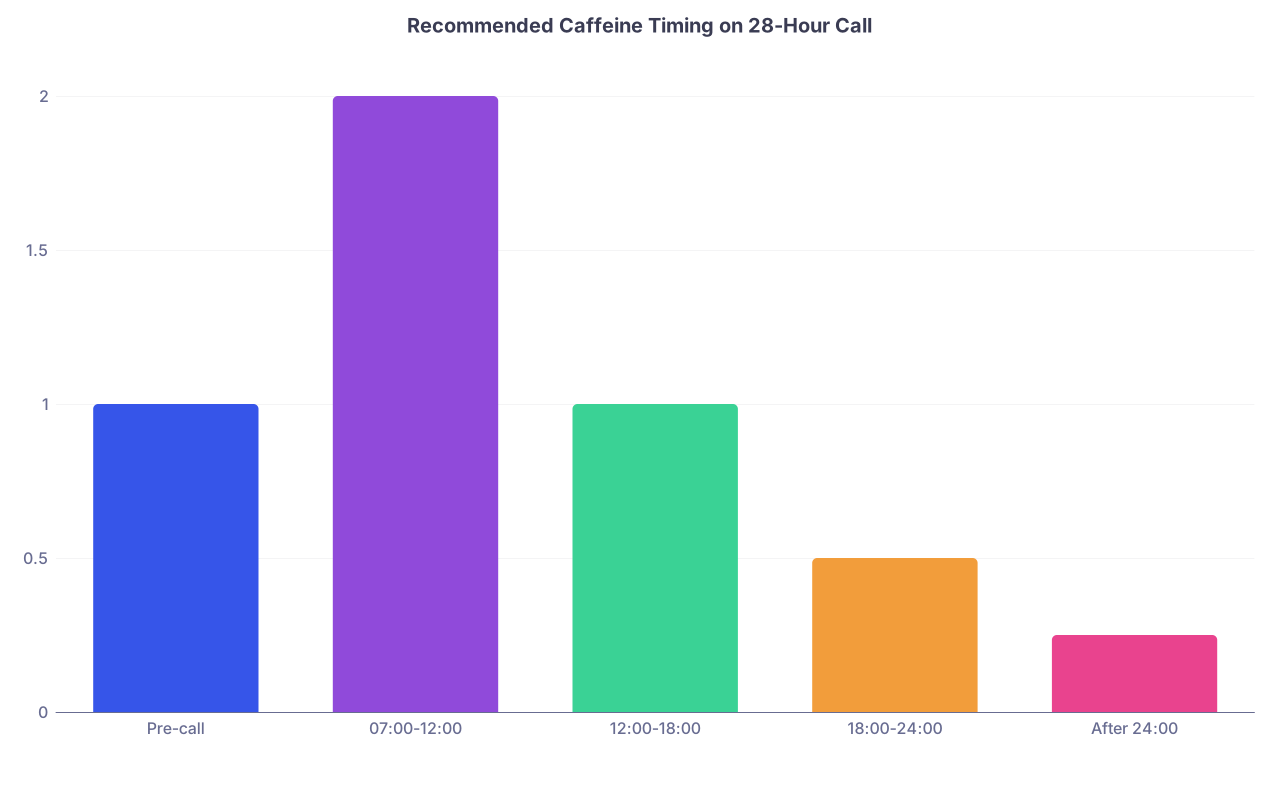
4.2 Caffeine: Use Smart Timing, Not Panic Dosing
Most residents mess this up. They slam caffeine at 21:30 “to get through the night” and then cannot nap during their only quiet window at 2:30 a.m.
Use this rule:
- Last big caffeine (coffee, energy drink): no later than 17:00–18:00
- After 18:00: if you really need it, small dose (half cup coffee or tea) and not within 60–90 minutes of a possible nap window
You want to preserve the ability to take 10–20 minute naps later. That is your best performance booster.
| Category | Value |
|---|---|
| Pre-call | 1 |
| 07:00-12:00 | 2 |
| 12:00-18:00 | 1 |
| 18:00-24:00 | 0.5 |
| After 24:00 | 0.25 |
Values roughly represent relative caffeine doses; the point is tapering, not maximizing.
4.3 Set Up “Night Mode” Systems Before Midnight
Before things get wild:
- Template your notes: Have boilerplate text ready for common admits and cross-cover issues.
- Batch tasks: If you know 4 patients need med rec, do them together.
- Align with your team: Ask seniors, “When do you usually try to get a nap?” So your timing does not compete.
You are stacking the deck. Getting small, annoying tasks off your plate so that when a 15‑minute window opens, you are not stuck correcting typos.
5. Layer 3: Overnight Micro-Rests That Actually Work
This is where most people improvise badly. They say, “If it gets quiet, I’ll rest.” Then they:
- Doom scroll
- Answer non-urgent emails
- Start some long charting project
- Waste 20 minutes and still feel awful
You need preset micro-rest modes for specific time windows, and you snap into them automatically.
5.1 Your Three Micro-Rest Modes
You will run one of these depending on how much time you have.
- Mode A – 2–5 minutes: On-the-move reset
- Mode B – 10–15 minutes: Restoration burst
- Mode C – 20–40 minutes: Strategic nap
I will lay out all three. You should memorize the sequence.
Mode A: 2–5 Minute On-the-Move Reset
You use this when:
- You are waiting for a consult to call back
- Marinating in the hallway between rooms
- You have 3 minutes between pages
This is your bare-minimum survival drill:
- Physical reset (1–2 minutes)
- Leave the room or desk if safe
- Stand tall, roll shoulders back
- Inhale through your nose for 4 seconds, exhale for 6 seconds
- Do 10–20 seconds of:
- Calf raises
- Wall push‑ups
- Squats (if you’re not in a crowded hallway)
Goal: get blood flowing, break the posture of exhaustion.
Visual reset (30–60 seconds)
- Look at a far point (end of hallway, out a window) for 30+ seconds
- No screens
- No EMR
Mental reset (60–90 seconds) Silently run this script:
- “What are my top 3 priorities for the next hour?”
- Name them in your head.
- Let everything else be “later.”
You just gave your nervous system a mini-reset and your brain a to‑do list. Takes under 5 minutes. Powerful.
Mode B: 10–15 Minute Restoration Burst
You use this when:
- Your senior or attending says, “You have a few minutes.”
- The ED lull hits briefly.
- Cross-cover is quiet between pages.
Do not scroll. Do not “just finish one more note.” Go into this mode.
Signal the team clearly (10–20 seconds)
Script:
“I’m going to lie down for 10 minutes. Page me if something urgent comes up; I’ll have the pager on loud.”Environment triage (60 seconds)
- Go to a call room, empty exam room, or quiet corner
- Eye mask on
- Ear plugs or low white noise
- Lie flat if possible, or at least recline with neck support
Body drop (1–2 minutes)
- Set a 10- or 12-minute alarm (not 30)
- Close eyes
- Do this:
- Inhale 4 seconds
- Hold 2 seconds
- Exhale 6 seconds
- Repeat slowly 8–10 breaths
Do not care if you fall asleep or not The point is down‑regulation, not “real sleep.” People get hung up on “I can’t nap.” You do not need to. Just stay horizontal, eyes closed.
Waking protocol (2 minutes) When the alarm goes:
- Sit up slowly
- Drink a few sips of water
- Stand, stretch arms overhead, small back bend
- Ask: “Top 3 priorities now?” and step back in.
Ten to fifteen minutes of this is shockingly effective. Residents who actually do it perform better than those who “just keep working.”
Mode C: 20–40 Minute Strategic Nap
This is your rare but critical big gun. You use it:
- When there is a sustained quiet window, and
- You are past midnight, and
- Someone else is clearly covering immediate fires
The structure:
Negotiate coverage explicitly (30–60 seconds)
To senior:
“If things are stable with admissions, is it okay if I try to crash for 30 minutes? I’ll keep my phone on loud; you can wake me if it picks up.”Set alarms properly
- Option 1: 25‑minute nap (minimize sleep inertia)
- Option 2: 35–40 minutes if you are completely destroyed and can tolerate grogginess on waking
Set two alarms:
- Primary at 25 or 35 minutes
- Backup 2–3 minutes later
Environment and posture
- Dark, cool room if possible
- Eye mask and earplugs
- Lie flat, legs slightly elevated if your feet are swollen from standing all day
On waking
- Sit up slowly; do not jump to standing
- Drink some water
- If needed, take a small caffeine bump (half cup coffee or tea), not a full load
- Give yourself 2–3 minutes before opening the EMR
This 20–40 minute nap between 1–4 a.m. often determines whether you are dangerous at 9 a.m. rounds.
6. Layer 4: A Simple Overnight Decision Tree
When your brain is fried, you need rules, not nuanced thinking.
Use this:

| Step | Description |
|---|---|
| Step 1 | Current time and workload |
| Step 2 | Mode A 2-5 min reset |
| Step 3 | Mode B 10-15 min rest |
| Step 4 | Mode C 20-40 min nap |
| Step 5 | Overnight admits active |
| Step 6 | Waiting > 2 minutes? |
| Step 7 | Next expected task < 10 minutes? |
| Step 8 | Senior says ok to rest? |
You do not debate with yourself. You look at the situation and plug into the flow.
7. Morning Salvage: 6–11 a.m. Without Melting Down
The last 4–6 hours of a 28‑hour call are underrated hell. You are:
- Sleep deprived
- Hungry
- Irritable
- Under scrutiny on rounds
Your goal for this block: safe, efficient, and out the door on time.
7.1 The 06:00–08:00 Checkpoint
Do this quick reality check at ~6:00:
- Have I eaten in the last 4–5 hours?
- If no: grab anything with protein + carbs (yogurt, peanut butter crackers, nuts).
- Do I need 2–3 minutes of Mode A reset before I see patients?
- Are there any tasks I left hanging that will explode during rounds?
- Clean up critical orders and documentation now.
7.2 Protecting Your Brain on Rounds
During rounds:
- Write down tasks immediately. Do not trust memory.
- If you feel your brain blanking, it is better to say:
- “I do not recall that lab off the top of my head; let me pull it up,”
than to BS an answer and make a bad recommedation.
- “I do not recall that lab off the top of my head; let me pull it up,”
- If you feel yourself getting snappy:
- 2–3 slow nasal breaths before speaking
- Default to: “Let me think that through” instead of reacting
7.3 The Post‑Call Landing Checklist
Set a hard time you will walk out. Do not keep “just one more note”‑ing your way to staying until 15:00 post‑call.
Your post‑call checklist:
- Finish non‑deferrable orders and handoffs
- Document anything with legal or safety implications
- Hand off all remaining clean‑up tasks explicitly to day team
Then leave.
Once home:
- Eat a real meal within 60–90 minutes
- Dark, cool room
- 3–5 hour core sleep
- Wake at a reasonable time (do not sleep to 19:00 and wreck your next day)
8. Micro-Rest and Patient Safety: Why This Is Not “Weakness”
Some attendings still carry the toxic “real doctors do not sleep” mentality. Ignore it. The data is brutal:
- Sleep deprivation impairs performance similar to legal intoxication.
- Error rate skyrockets past 16–18 hours awake.
- Judgment, impulse control, and attention all fall off a cliff.
You have two options:
- Pretend you are fine and hide your fatigue.
- Admit you are human and use a structured micro-rest strategy to limit risk.
Option 1 feels heroic and looks acceptable. Until something bad happens.
Option 2 is what a responsible professional does.
If you ever need language to justify a micro-rest to a skeptical senior, try:
- “I am hitting a wall and do not want to miss something important. If things are stable for the next 15 minutes, can I quickly lie down and then come back sharper?”
- “We have some breathing room right now. If I take 20 minutes to close my eyes, I can be more useful for the rest of the morning.”
You are not asking for a spa break. You are managing your performance.
9. Put It All Together: A Sample 28‑Hour Call Day
Let me walk through a realistic version of this strategy.
| Time Block | Focus |
|---|---|
| 06:00–07:00 | Wake, light breakfast, commute |
| 07:00–10:00 | Front-load admits, hard tasks |
| 10:00–14:00 | Routine work, small Mode A resets |
| 14:00–17:00 | Stabilize, one Mode B (10–15 min) if window |
| 17:00–20:00 | Early evening admits, last full caffeine dose |
| 20:00–00:00 | Clear tasks, plan overnight, Mode A as needed |
| 00:00–04:00 | Mix of chaos and quiet, aim for Mode C (20–40 min) once |
| 04:00–06:00 | Catch up on notes, labs, brief Mode B if possible |
| 06:00–11:00 | Rounds, finish orders, out on time, home to sleep |
You will not hit this perfectly. Nobody does. But even one 10‑minute and one 25‑minute rest block can transform how you feel and function.
10. Advanced Moves: Making the System Work For You
Once you have the basics down, you can start quietly upgrading your environment.
10.1 Pre‑Negotiated Rest Expectations With Your Team
On day 1 of a rotation:
Ask your senior:
“When it is possible, when do you usually try to carve out rest on call?”
Follow‑up:
“I try to take one 20–30 minute nap overnight if things are stable to keep my brain working. Are you okay if I check in with you before I do that?”
Now rest is part of the plan, not a secret.
10.2 Use the EMR Against Itself
You know how the EMR is full of pointless clicks? You can also use it to protect your attention.
- Create smart phrases for your common cross‑cover notes.
- Use flagging or task lists to avoid mentally tracking 20 to‑dos while you are exhausted.
- Batch similar EMR work into 15–20 minute chunks instead of doing 1 order every 3 minutes all night.
| Category | No Micro-Rest | With Micro-Rest |
|---|---|---|
| Start | 2 | 2 |
| Midday | 5 | 4 |
| Midnight | 7 | 6 |
| 06:00 | 9 | 7 |
| End | 10 | 8 |
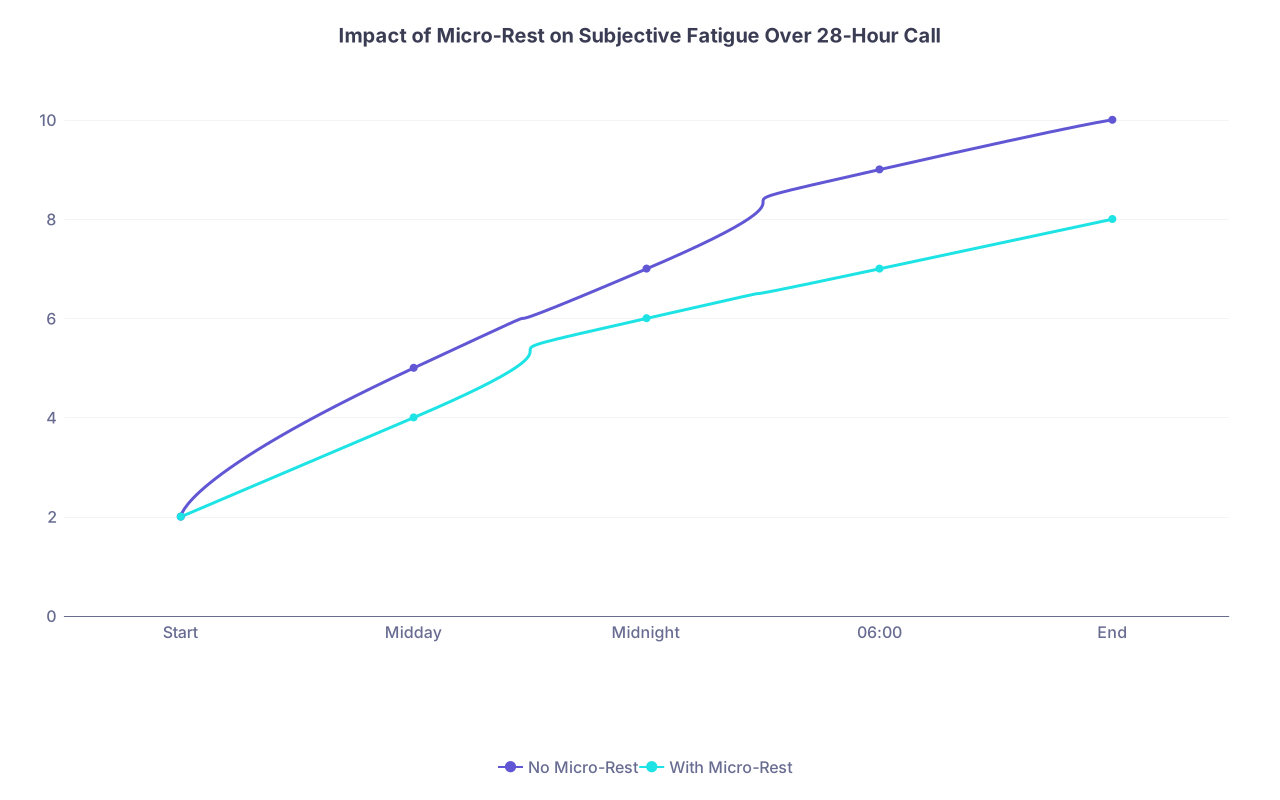
(Scale 1–10: higher = more fatigue. You cannot erase fatigue. You blunt it.)
10.3 Micro-Boundaries That Protect Your Energy
Some quick rules I have seen work well:
- No non‑urgent emails after midnight on call.
- No social media scrolling during potential rest windows. Either work or rest, not “fake rest.”
- During true quiet: prioritize rest first, then notes. You can always chart later at a basic level; you cannot power-nap later in the middle of a code.
11. What You Should Actually Implement This Week
Do not turn this into a big “self-optimize” project. Pick three concrete things to implement on your next 28‑hour call.
If I were you, I would start with:
A written pre‑call checklist
On a sticky note or in your phone:- Sleep 6+ hours night before
- Real meal 1–2 hours before
- Micro‑rest kit packed
- Ask seniors when they usually rest on call
One committed 10–15 minute Mode B rest
Non‑negotiable. At some point before 4 a.m., if humanly possible, you lie down for 10–15 minutes.A single 2–5 minute Mode A reset every 2–3 hours
Especially during the overnight. Even if it is just hallway breathing and a stretch.
Do those three things repeatedly. Once they feel automatic, you can add the bigger 20–40 minute Mode C nap when the situation allows.
12. The Bottom Line
You are not weak for needing micro‑rest on a 28‑hour call. You are human, and human brains fail predictably under sleep deprivation.
Three key points:
- Stop improvising. Use a structured micro-rest plan with Mode A (2–5 min), Mode B (10–15 min), and Mode C (20–40 min) as your default options.
- Front‑load your work and protect the overnight window. Smart caffeine timing, pre‑planning, and early cognitive work buy you capacity later.
- Treat rest as a performance tool, not a luxury. Use clear scripts with your team, take short, deliberate breaks, and leave post‑call on time whenever safely possible.
You cannot fix the system tonight. But you can stop letting it chew you up for free.


