

Common Coping Habits That Secretly Accelerate Resident Burnout
What do you do at 1:30 a.m. post-call when you are wired, angry, and hungry—scroll, snack, or “just finish a few notes”? That answer is the difference between surviving residency and quietly burning out by PGY-2.
This is the trap: most residents are coping. They absolutely are. They just picked coping habits that feel necessary in the moment and are disastrous over months. And because everyone around them seems to be doing the same thing, it looks normal.
Let’s walk through the most common “normal” habits that are not coping at all—they are accelerants. You keep them, you will pay for them.
1. “Just Powering Through” Instead of Resting
You already know the heroic line: “I’ll rest when this rotation ends.” That is how residents end up wrecked by November.
The first and worst habit: treating fatigue as a moral failing instead of a physiological limit.
How this looks in real life
- Staying after 27-hour call to “help the team” and “just finish a few more notes.”
- Volunteering to cross-cover “because I am already here.”
- Refusing to call the night float or upper level when you are clearly drowning.
- Taking pride in saying, “Yeah, I’ve been up for like 30 hours.”
You think you are being a good resident. You are actually teaching your brain and body that your limits do not matter.
Why “pushing through” accelerates burnout
Sleep debt does not reset because your block ended. It compounds.
Chronic sleep loss:
- Impairs emotional regulation → you snap at nurses, patients, co-residents.
- Increases risk of depression and suicidal ideation.
- Makes minor annoyances feel intolerable (which is basically residency).
You start to associate medicine with constant exhaustion. That quietly kills any sense of meaning.
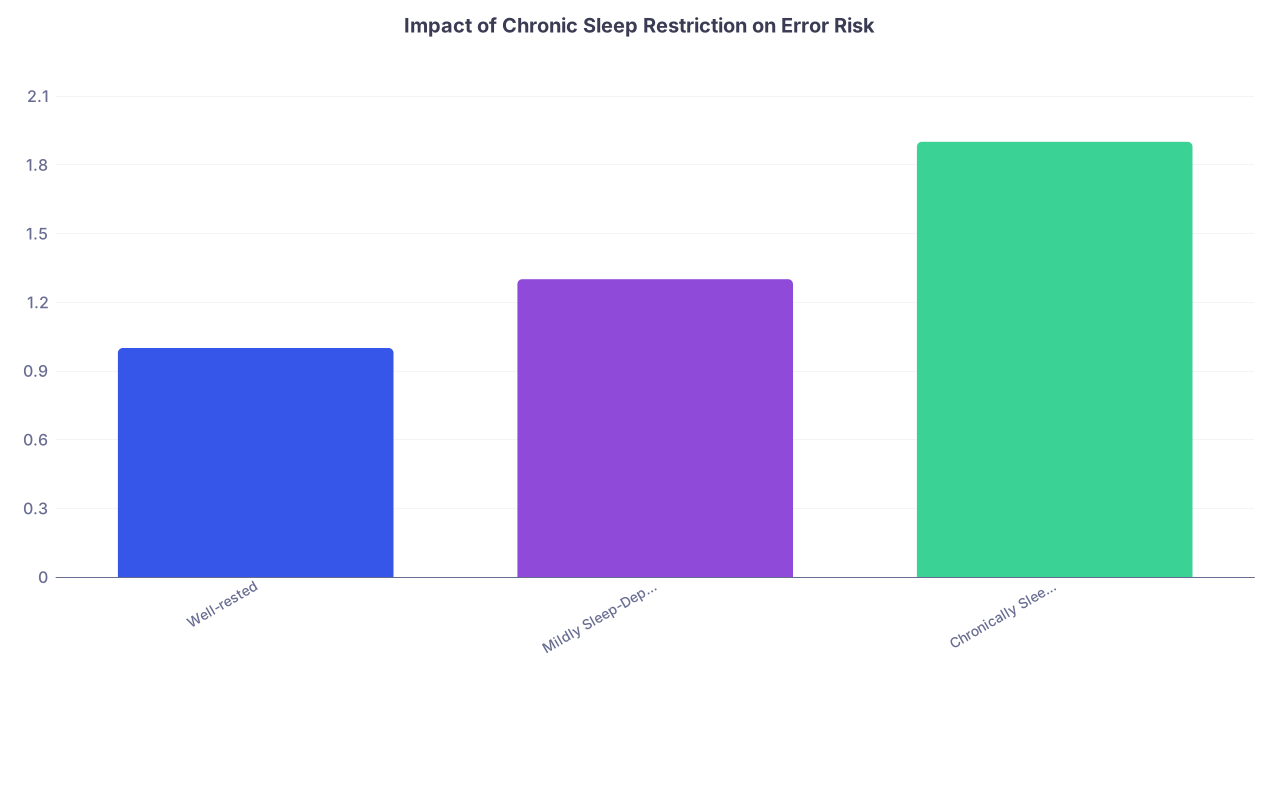
| Category | Value |
|---|---|
| Well-rested | 1 |
| Mildly Sleep-Deprived | 1.3 |
| Chronically Sleep-Deprived | 1.9 |
Mistakes to avoid
- Do not brag about how long you have been awake. The culture is sick enough already.
- Do not routinely stay 1–3 hours after your shift “to be thorough.” Once in a while, fine. Habitual? No.
- Do not assume your future self will magically recover on your golden weekend. You cannot “binge sleep” your way out of chronic deprivation.
Healthier, boring alternative
- Set a hard-out time for yourself unless a patient is actively unstable.
- Ask “What absolutely must be done by me before I leave?” and leave the rest.
- Use call rooms. Lying down for 20 minutes is better than nothing, even if you do not fully sleep.
You are not a better doctor when you are wrecked. You are just a more dangerous one.
2. Emotional Numbing: “I’m Fine, It’s Whatever”
The second hidden accelerant: trying to cope by feeling less.
You see a horrific trauma, a failed code, a devastated family. The internal monologue: “If I let this in, I will break. So I just will not.”
How emotional numbing shows up
- Joking about dead patients within minutes of pronouncing them, beyond dark humor and into coldness.
- Saying “I do not care anymore” about everything: patients, evaluations, your own life.
- Watching endless TV or YouTube post-call, not because you enjoy it, but because it shuts your brain off.
- Feeling nothing at events that should move you—births, good news calls, thank-you cards.
There is a sharp line between adaptive compartmentalization and full-on shutdown. Cross it enough and you become someone you do not recognize.
Why numbing yourself backfires
- Emotions do not disappear; they get stored. They will come out eventually—insomnia, panic, irritability, or sudden tears over something trivial.
- You lose your internal early-warning system. Burnout does not announce itself; it whispers. If you have numbed everything, you do not hear the whisper.
- Patients feel it. They know when you are phoning it in. That disconnect can make you hate the job more.

Mistakes to avoid
- Do not mock yourself or others for having feelings. “You’re too sensitive” is often said by people already burned out.
- Do not treat every difficult emotion as a problem to be fixed. Many of them just need to be felt and processed.
- Do not only talk about cases in technical terms. If something shook you, say so to someone safe.
Safer ways to process instead of numb
- Debrief with one trusted person (co-resident, friend, partner): “Today was bad. A kid died. I am not okay with it.”
- Brief journaling after tough shifts: even 5 minutes, bullet points, just to move the experience from your amygdala to words.
- Know ahead of time which cases hit you hardest (children, maternal deaths, certain cancers) and give yourself extra space afterward.
Feeling is not the enemy. Getting stuck because you refused to feel is.
3. Solving Everything With Food, Caffeine, and Alcohol
You are exhausted, your cortisol is a mess, your schedule is chaos. Your brain will chase the quickest dopamine hits it can find. Most residents reach for three: sugar, caffeine, and alcohol.
The “normal” pattern
- Morning: coffee. Then another. Then “just one more” around 4 p.m.
- Night float: energy drinks and vending machine dinners.
- Post-call: junk food, delivery, “I deserve this” meal.
- Days off: a few drinks “to unwind,” which gradually becomes your default.
Individually, none of these will break you. As your primary coping strategy? They will.
Why this combo accelerates burnout
- Caffeine:
- Worsens anxiety and palpitations when used past early afternoon.
- Fractures already-fragile sleep. You fall asleep slower and wake up less rested.
- Constant sugar / junk:
- Leads to blood sugar spikes and crashes → mood swings and brain fog.
- Contributes to weight changes you will not have energy to reverse.
- Alcohol:
- Worsens sleep quality even if it helps you fall asleep faster.
- Increases depression and anxiety over time.
- Quietly becomes a dependency (“I cannot relax without it”).
You end up in a vicious cycle: exhausted → use stimulants and junk → sleep worse → feel worse → self-medicate harder.
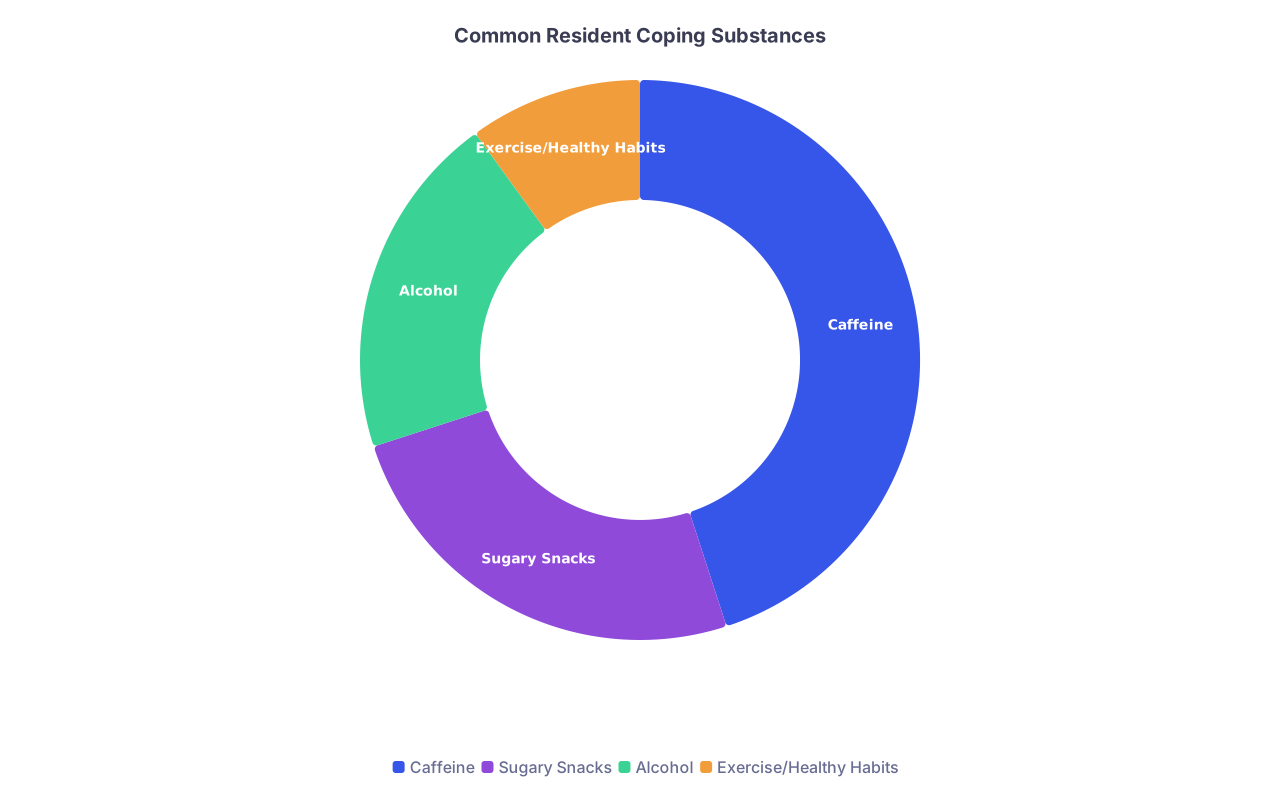
| Category | Value |
|---|---|
| Caffeine | 45 |
| Sugary Snacks | 25 |
| Alcohol | 20 |
| Exercise/Healthy Habits | 10 |
Mistakes to avoid
- Do not joke away concerning patterns: “Haha, I only function on 6 cups of coffee” is not a personality trait.
- Do not drink “just to fall asleep” on a regular basis. That is how functional dependence starts.
- Do not build your entire day around food rewards to survive each block.
More sustainable swaps (still realistic for residents)
- Cap caffeine after ~2 p.m. (11 a.m. if nights).
- Pack something with protein for long shifts: nuts, yogurt, string cheese, leftover chicken. It does not need to be Instagram-worthy meal prep.
- On post-call days, default to water first, then decide if you still want alcohol later. Many do not after they rehydrate and eat decently.
You are not expected to eat perfectly. Just avoid letting substances become your only coping mechanism.
4. Doom-Scrolling and Digital Escape After Every Shift
You get home post-call. You are fried. You drop on the couch, “just check Instagram/TikTok/Twitter for a bit,” and suddenly it is 2 hours later, you feel worse, and you still have not showered or slept.
This is the silent time thief of residency.
How it shows up
- Lying in bed at midnight, phone in your face, reading threads about residency toxicity, bad attendings, disastrous cases.
- Watching one "light" episode of a show that turns into three.
- Checking your email and work chats compulsively on days off “just in case.”
You think you are decompressing. You are actually revving your nervous system back up.

How digital escape accelerates burnout
- Cuts into sleep time. Every 30 minutes you give to scrolling is 30 minutes you stole from your own recovery.
- Feeds comparison and resentment:
- Friends outside medicine posting normal lives.
- Other residents who “look fine” in your program.
- Overexposes you to negativity. Constant stories of abuse, lawsuits, moral injury. Helpful in moderation, crushing in volume.
You end up more tired, more cynical, and more hopeless. Not exactly protective.
Mistakes to avoid
- Do not keep your phone within arm’s reach when you are trying to fall asleep. You will touch it. You know you will.
- Do not follow only accounts that complain about medicine. Some reality is good. A constant firehose of misery is corrosive.
- Do not answer non-urgent work messages on your day off as if you are on call.
Healthier digital boundaries that are actually doable
- Post-call “landing routine”: 10–15 minutes max of screen time, then shower, food, sleep. Non-negotiable.
- Charge your phone away from the bed. Use a $10 alarm clock like it is 2005.
- Curate your feed: mute or unfollow accounts that spike anxiety or anger every time.
You are not weak for liking your phone. You are just in a job where rest is already scarce. Do not donate more of it.
5. Isolation Disguised as Independence
“I do not want to bother anyone. Everyone else is busy. They probably have it worse.” This is how residents quietly disappear into their own heads.
What this looks like
- Saying “I’m fine” automatically whenever someone asks, even when you are not.
- Skipping social events entirely, then feeling resentful that you “have no support.”
- Never telling your program director or chief that you are struggling until you are on the edge.
You tell yourself you are being strong and self-sufficient. In reality, you are cutting your lifelines.
Why isolation speeds up burnout
- Your brain loses calibration. Without hearing what others experience, you cannot tell if your situation is normal-hard or dangerously-toxic.
- Shame thrives in silence. “I am the only one struggling” is a lie that gets louder when you do not talk to anyone.
- Problems go unsolved. Schedules can sometimes be adjusted. Rotations can be changed. But no one can help if you have sworn yourself to secrecy.
| Pattern | Isolation Version | Healthier Version |
|---|---|---|
| After bad shift | Go home, say nothing, zone out | Text co-resident, brief vent |
| Struggling rotation | Suffer quietly | Email chief, ask for meeting |
| Days off | Sleep and scroll alone | One low-effort plan with a friend |
Mistakes to avoid
- Do not assume “no news” from a resident means they are okay. Check on each other.
- Do not only talk to colleagues about work. That locks your whole life into the hospital.
- Do not wait until you are actively thinking about quitting medicine to speak up. That is late.
Better habits
- Have at least one “uncensored” friend in medicine you can be honest with.
- On your worst days, tell at least one person: “Today is not a good day. I am hitting a wall.”
- If you feel persistently hopeless, or you are having thoughts about ending your life, that is not “just burnout.” That is an emergency. Use your employee assistance program, mental health services, or crisis lines. Immediately.
You are not a burden for needing help. You are a human doing inhuman work.
6. Over-Identifying With Evaluations and External Validation
Another coping “strategy” that quietly shreds you: building your entire sense of worth on feedback, evals, and attendings’ moods.
How this plays out
- A single lukewarm comment in an evaluation ruins your week.
- You obsess over being the “favorite” on every team.
- You chase ever-more responsibilities to prove you are competent, even when exhausted.
The internal rule becomes: “If they are happy, I am okay. If they are not, I am trash.”
Why this is lethal for resilience
- Residency is full of opaque, inconsistent feedback. You will drive yourself insane trying to engineer everyone’s opinion.
- You will say “yes” to everything:
- Extra clinics.
- Extra research.
- Extra QI projects.
- Extra lectures.
- Your own needs never make it onto your own list.
Over time, resentment builds. Not just toward the system. Toward yourself, for always folding.
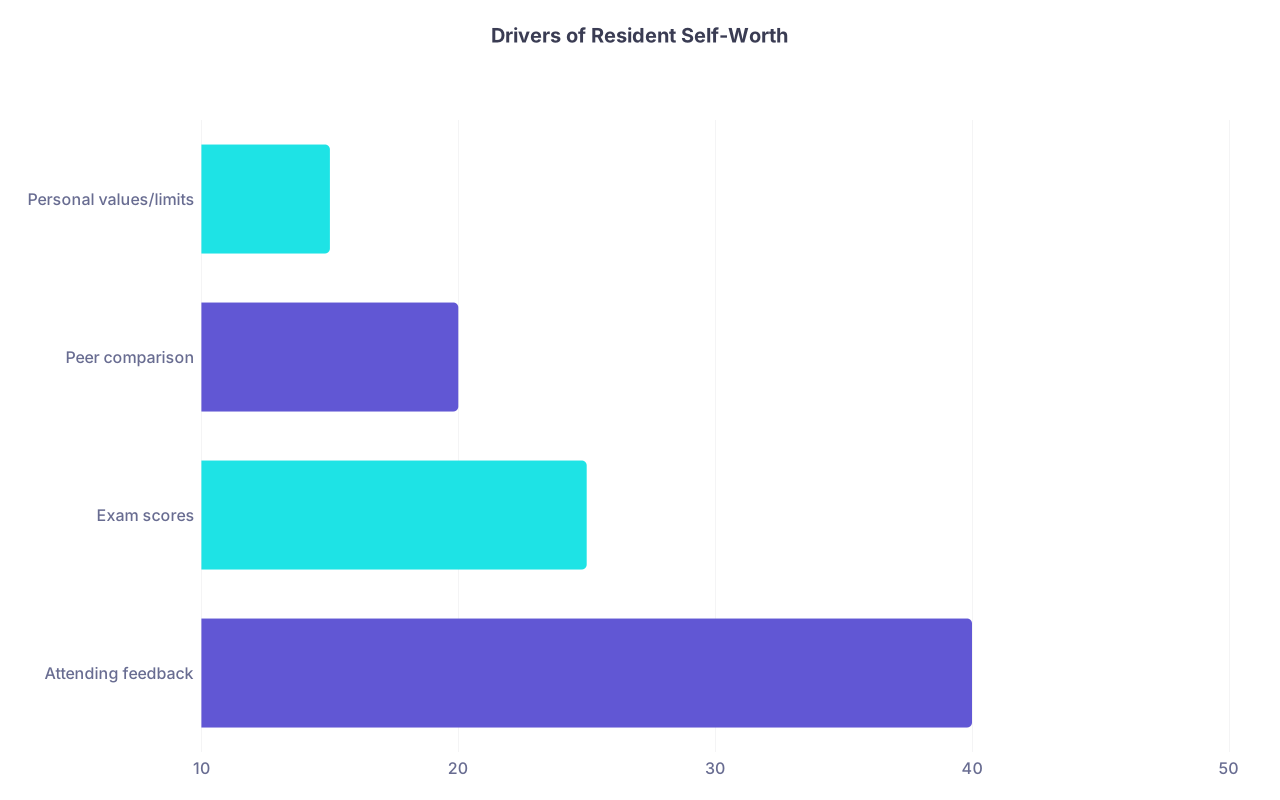
| Category | Value |
|---|---|
| Attending feedback | 40 |
| Exam scores | 25 |
| Peer comparison | 20 |
| Personal values/limits | 15 |
Mistakes to avoid
- Do not read every evaluation like a verdict on your character. Treat it like data, not scripture.
- Do not equate being liked with being good. Some very unhealthy departments “like” residents who sacrifice themselves.
- Do not say yes instantly to every “opportunity”—teach yourself to pause.
More sustainable mindset
- Before agreeing to anything new, ask: “What will this cost me and what will it protect?”
- Track your own internal metrics: Did I act ethically? Did I treat people decently? Did I protect at least some of my needs?
- Seek feedback to grow skills, not to secure your worth.
You are not your evals. Or your Step scores. Or your fellowship match. If you forget that, burnout is guaranteed.
7. Ignoring Early Warning Signs Because “Everyone Is Tired”
By the time you think, “I might actually be burned out,” you are usually pretty far down the slope.
Most residents dismiss the early signs because they look too minor. Or because they see the same signs in everyone around them and assume it is fine.
Subtle red flags you should not ignore
- You dread specific rotations months before they start, with a sense of doom, not just “this will be hard.”
- You feel nothing after major wins: good outcomes, thank-you notes, strong evals.
- You think often, “If I got hit by a bus and did not have to come in, that would not be so bad.” (If that sounds familiar, pay attention.)
- You find yourself caring less about safety details. That is dangerous.

| Step | Description |
|---|---|
| Step 1 | High engagement |
| Step 2 | Chronic stress |
| Step 3 | Sleep and mood changes |
| Step 4 | Cynicism and detachment |
| Step 5 | Errors and conflict |
| Step 6 | Hopelessness and escape fantasies |
Mistakes to avoid
- Do not write off every symptom as “just residency.” Residency is hard, yes. But there is a line.
- Do not wait for a catastrophe (near miss, breakdown, relationship collapse) to take this seriously.
- Do not let other burned-out people convince you this is the only way to practice medicine.
Intervening early
- If you notice 2–3 of those red flags lasting several weeks:
- Speak to someone outside your immediate team—chief resident, mentor, therapist.
- Adjust something concrete: sleep, schedule, therapy, meds if needed.
- Use your institution’s resources, even if the culture pretends they are for other people.
Burnout is much easier to prevent than to reverse. Do not wait to be a cautionary story.
FAQs
1. How do I know if my coping habits are actually harmful and not just “normal residency stuff”?
Ask two questions:
- Does this habit leave me more restored or more depleted an hour later?
- Has this habit become the only way I feel okay?
If the answer is “depleted” or “only way” for things like alcohol, doom-scrolling, staying late, or numbing out emotionally, you are in dangerous territory—even if “everyone else” is doing it.
2. What is one small change that makes the biggest difference for burnout risk?
Protecting sleep time ruthlessly. Not perfectly, but deliberately:
- Hard-out after shift unless a patient is unstable.
- No late-day caffeine.
- Phone out of the bed. Everything else—mood, patience, clinical performance—follows sleep. Most residents burn out faster from unrelenting sleep debt than from any single bad rotation.
3. When should I consider getting professional mental health help instead of just changing habits?
You should not wait until you are non-functional. Get help if:
- You feel persistently hopeless or empty for more than 2 weeks.
- You have frequent thoughts like “Everyone would be better off if I disappeared.”
- You are using alcohol or substances regularly to sleep, relax, or feel anything.
- You are making uncharacteristic errors because you just cannot focus or care.
Those are not “normal residency.” Those are flashing red lights. Treat them like that.
Key points:
- Many common “coping” habits—overworking, numbing, substances, isolation, and digital escape—feel necessary short term but quietly erode your resilience.
- Small, realistic boundaries around sleep, emotional processing, and connection are not luxuries; they are survival tools in residency.


