

It’s Sunday night. Again.
You’re still in the call room, scrolling through your phone with one eye and signing notes with the other. The roommate group chat has 96 unread messages about brunch and hiking plans you didn’t even open. DoorDash bags in the trash. You haven’t gone outside in daylight since Friday.
If this feels uncomfortably familiar, you’re not just “tired from a busy week.” You’re rehearsing burnout on repeat.
Burnout in residency rarely shows up suddenly. It creeps in through patterns. And the biggest red flags often live in your weekends—how you spend the tiny slivers of unstructured time you actually control.
Let me be blunt: if you wait until you feel burned out to change these patterns, you’re already late. The goal is to catch the warning signs early, when course correction is still cheap.
Below are the weekend habits I’ve seen over and over in residents who crash hard in PGY-2, PGY-3, or fellowship. If you recognize yourself, take it seriously. This is preventable—if you don’t ignore the signals.
1. The “Collapse and Numb” Weekend
This is the classic one.
You get off a brutal Friday shift. Your brain is fried. You tell yourself: “I’ll just rest this weekend.” That sounds healthy. Rest is good. But here’s how it actually plays out:
Friday night: DoorDash, YouTube/Netflix until 1–2 AM.
Saturday: Sleep till 11, scroll on your phone in bed, maybe move to the couch. No real meals, just snacks. Suddenly it’s dark again.
Sunday: Panic laundry, half‑hearted chart review, vague dread, insomnia.
You go back Monday technically “rested,” but not restored. Your body was horizontal, but your brain never really shut off. Worse, you didn’t do anything that reinforces your sense of self outside medicine.
This is how you end up feeling like an empty shell by the middle of PGY-2.
Why this pattern is dangerous
Because it creates three long-term problems:
- You start to equate “free time” with “dead time.”
- You lose contact with anything that reminds you you’re a human being, not a documentation machine.
- You forget what actually helps you feel better—because numbing is easier than restoration.
Over time, your weekends stop being fuel and become a vague recovery zone where nothing improves and nothing gets addressed.
Do not confuse “not moving” with actual recovery. They’re not the same.
Red flags you’re in this pattern
- You wake up Monday more emotionally flat than Friday.
- You struggle to remember anything you did over the weekend.
- You tell yourself “next weekend I’ll do something fun,” and then repeat the same collapse.
How to interrupt it (without magical thinking)
I’m not going to tell you to go rock climbing at 6 AM post-night float. That’s delusional. But you do need one small, intentional anchor each weekend that is not passive, not medical, and not a screen.
Examples that I’ve actually seen work:
- 20–30 minute walk outside with a podcast—before you touch your phone for social media.
- Quick coffee with one trusted person (partner, co-resident, friend) on Saturday morning.
- 15 minutes of a hobby you used to like: guitar, sketching, language app, literally anything.
If you can’t manage 20 minutes for something non-medical once per weekend, that is not “being busy.” That’s a trajectory problem.
2. The “Catch-Up Resident” Who Treats Weekends Like Overtime
Another sneaky trap: you’re not collapsing on the couch—you’re doing “the right thing” on your days off.
Or so you think.
You spend Saturday and Sunday catching up on:
- Notes you didn’t finish.
- Articles you “should” read.
- Research you’re behind on.
- Updating your CV or fellowship spreadsheet.
- Studying for boards because “everyone else is further ahead.”
You tell yourself you’re just “using the time productively.” But if every weekend becomes unpaid overtime, you’re building a life where you never mentally clock out.
This is a straight road to emotional exhaustion.
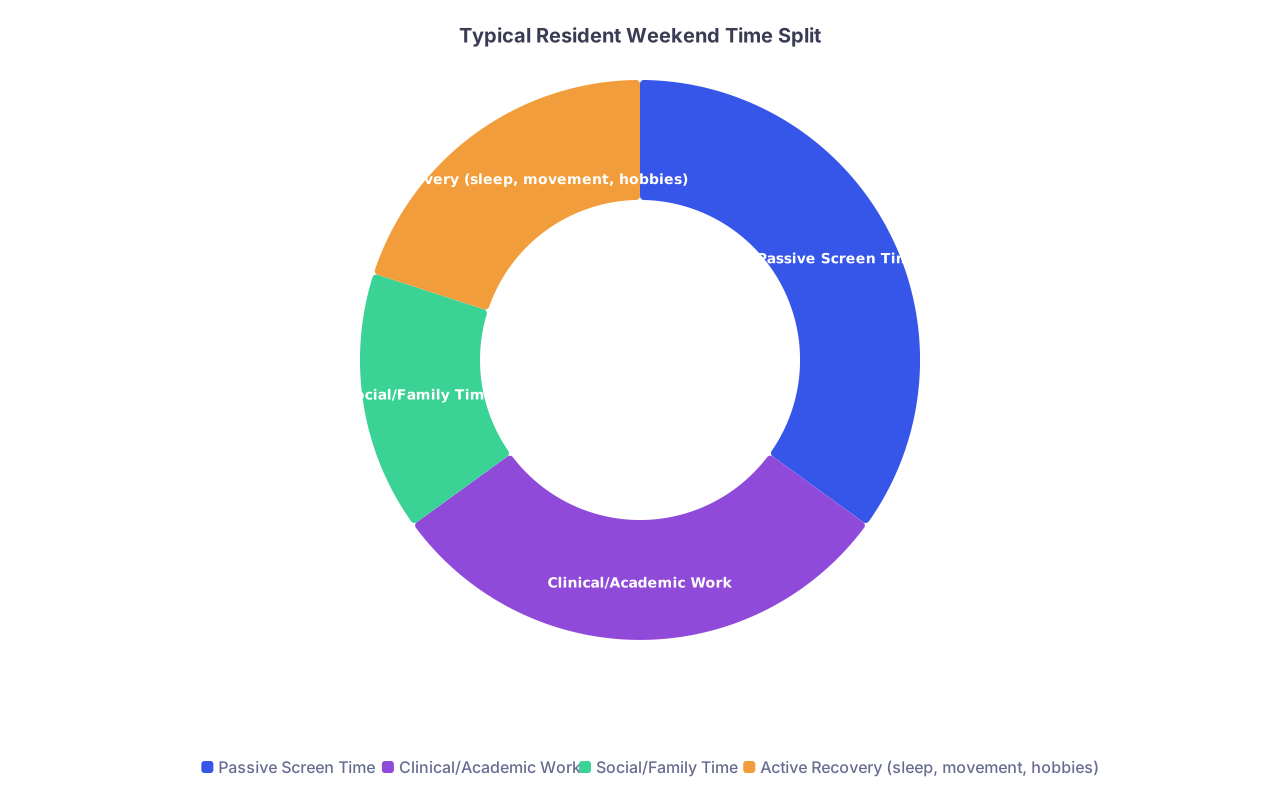
| Category | Value |
|---|---|
| Passive Screen Time | 35 |
| Clinical/Academic Work | 30 |
| Social/Family Time | 15 |
| Active Recovery (sleep, movement, hobbies) | 20 |
Why this predicts burnout
Residency is already structured to take more than it gives. If you donate your remaining bandwidth to work, you remove the last buffer between “hard training” and “chronic depletion.”
I’ve seen residents like this pride themselves on “grind culture” PGY-1:
- Reading UpToDate articles every Sunday “to stay ahead”
- Volunteering for extra research on their one golden weekend
- Studying 3–4 hours every weekend “just in case”
By PGY-3, they’re cynical, detached, and often talking about “leaving medicine” altogether.
Because here’s the truth: there’s no medal for sacrificing all your off-days. Academics will always ask for more. Medicine will always offer another QI project, another committee, another chart review. If you don’t cap it yourself, no one else will.
Warning signs you’re here
- You feel guilty whenever you’re not doing something “productive.”
- You can’t remember the last weekend where you did zero work-related tasks.
- You tell yourself, “Once I get through this month/rotation/project, I’ll relax,” and that window keeps moving.
How to stop making this particular mistake
You need hard boundaries. Not vibes.
Create a weekend rule such as:
- “Max 2 hours of academic/work stuff on any weekend day, and it must be in one defined block.”
- “No EMR login on days off, period, unless patient safety is involved.”
- “I choose one: study OR research OR charts. Never all three on the same weekend.”
You don’t need 48 hours of fun and leisure. You just need to stop letting medicine quietly annex every available hour.
3. The Social Void: When Every Weekend Is Isolated
Sometimes the problem isn’t overwork or mindless numbing. It’s isolation.
You tell yourself your schedule is too unpredictable. You can’t commit to anything. You don’t want to be the flaky friend who cancels.
So you stop making plans.
Weekends become:
- Sporadic video calls with your parents if they catch you at the right time.
- “Liking” friends’ Instagram posts instead of actually talking to them.
- Group chats where you read but rarely engage.
And then you wonder why you feel disconnected, resentful, and weirdly empty even on decent rotations.
This is not a personality trait. It’s a risk factor.
Why isolation on weekends is so corrosive
Because residency already makes you feel replaceable. When your off-time doesn’t include real human connection, you start internalizing that story: “I’m basically just a set of hands that knows how to write orders.”
I watched one internal medicine resident go three straight months without seeing a single non-medical friend in person. Her explanation: “Our schedules never line up and I’m too tired.” By the time she tried to re-engage, people had stopped inviting her. Not maliciously—just assuming she was always busy.
Her burnout wasn’t about hours. It was about losing her place in her own life.

Red flags in this domain
- You often think, “If I left this city today, I don’t know who would actually miss me.”
- Your main emotional outlet is venting to co-residents who are just as burnt as you are.
- Every time you do see friends or family, you realize how much better you feel—and then you don’t see them again for weeks.
Damage control before it becomes permanent
No, you can’t have a perfectly regular social life. You can, however, stop letting “perfect scheduling” be the excuse.
Some realistic anti-isolation moves:
- Standing monthly brunch/coffee with one local friend—reschedulable, but never canceled entirely.
- 15–20 minute video call with someone who knew you before medicine, at least every other weekend.
- If you’re in a new city, one low‑effort recurring thing: a running club, church/temple/mosque, board game meetup, climbing gym. Somewhere people might notice if you disappear.
You don’t need 10 new best friends. You need 1–2 consistent humans who know you as more than “the resident on nights.”
4. The Self-Neglect Trifecta: Sleep, Food, Movement
If your weekend pattern is basically: stay up late, eat like a raccoon, and barely move… you are digging a physiological hole that mindset alone can’t climb out of.
You’re not “weak” for struggling. You’re under-fueled, under-slept, and over-stressed. Burnout loves that combo.
| Habit Pattern | Short-Term Impact | Long-Term Burnout Risk |
|---|---|---|
| Irregular sleep (4–12 hrs) | Brain fog, irritability | Emotional exhaustion |
| Heavy takeout every meal | Energy crashes | Chronic fatigue |
| 0–10 minutes of movement | Stiffness, low mood | Depressed affect |
| Screen till 2 AM | Poor sleep quality | Cognitive dulling |
| No time outside | Blunted mood | Detachment, apathy |
Sleep: the lie you’re telling yourself
“I’ll catch up this weekend.”
No. You will not fully “catch up” from chronic sleep deprivation with two days of chaos sleep. Oversleeping until noon, then insomnia Sunday night, is not recovery. It’s jet lag without travel.
Sleep patterns I see in residents who burn out early:
- Wild swing: 4–5 hours on weekdays, 10–12 on weekends.
- Inconsistent sleep/wake times—drifting by 2–4 hours each day.
- Heavy evening screens and caffeine late in the day.
Your brain needs something resembling a pattern. Even in residency, you can do:
- A range for wake time (e.g., 7–9 AM on off days, not 11–2).
- No caffeine after a certain hour.
- Screen curfew 30–60 minutes before bed on weekends (I know, but try it once).
You won’t make it through four years on raw willpower if your brain never gets predictable rest.
Food: “I’ll eat better once residency ends”
No, you won’t. Habits ossify. And your brain runs on this mess right now.
Weekend red flags:
- 2–3 huge, late meals instead of regular eating.
- Nothing but takeout, energy drinks, and sugar.
- Going through the whole weekend without a single vegetable outside pizza toppings.
You’re not training for a bodybuilding show. You just need “good enough”:
- One semi-healthy grocery run per week with 3–4 easy things you’ll actually eat.
- Some form of breakfast/lunch that doesn’t come from an app.
- Hydration that isn’t just coffee and diet soda.
Movement: you don’t need a gym obsession
The mistake is all-or-nothing thinking.
Residents tell me, “I don’t have time to work out properly, so I just don’t.” Or, “If I can’t do a full 45-minute session, what’s the point?”
The point is that your nervous system needs signals you’re not trapped in a fluorescent-lit box all week.
Give yourself:
- 10–20 minutes, once or twice each weekend, of walking, stretching, bodyweight stuff.
- If you used to be athletic, yeah, cut the ego. 15 minutes is better than your fantasy of “once I’m done with residency I’ll train again.”
This isn’t about aesthetics. It’s basic neurobiology. Sedentary, sleep-deprived, junk-fueled brains burn out faster. Period.
5. The “No Weekend Rituals” Problem
Here’s one that sounds minor but isn’t: having no recurring weekend ritual whatsoever.
Your weekends are just a blur of “whatever is left”: random errands, random TV, random emails.
Nothing to mark that time as yours.
People underestimate how much tiny rituals anchor you. A specific coffee mug. A Saturday morning playlist on your commute. A Sunday 10-minute “reset” where you clear your bag and pockets of crushed granola bars and random papers.
When you have zero rituals:
- Time feels interchangeable.
- Days blur together.
- You lose the sense that your life has seasons, not just shifts.
I remember one surgery resident who had a “Friday post-call croissant” ritual at a bakery two blocks from the hospital. She went alone, no phone, same table by the window. Ten minutes. That was it.
She swore it kept her sane.
Signs you need a ritual
- You can’t distinguish last weekend from the one before.
- The thought “I have nothing that’s mine” keeps popping up.
- You dread weekends almost as much as weekdays because they’re just default catch-up time.
Start tiny:
- Same simple breakfast on your first day off.
- Same short walk route you take when you’re off.
- A 5-minute Sunday “reset”: clean white coat pockets, refill pens, throw away old lists.
Rituals are how you tell your brain, “This is my life, not just my job.”
6. The Pre-Monday Dread Spiral
Pay attention to your Sunday pattern. It’s one of the clearest early indicators of future burnout.
Here’s the classic spiral:
- 3 PM: You start thinking about Monday’s list.
- 5 PM: You open the EMR “just to check tomorrow” and get sucked into chart review.
- 7 PM: You’ve done an hour of unpaid planning and now feel more anxious.
- 10 PM: You’re doom-scrolling, can’t sleep, mentally scripting worst-case scenarios (“What if that patient crashes?” “What if I look stupid on rounds?”).
- 1 AM: Still awake. Monday is already ruined.
You just sacrificed half your weekend to anticipatory stress. Zero actual benefit.

| Step | Description |
|---|---|
| Step 1 | Think about Monday |
| Step 2 | Open EMR on Sunday |
| Step 3 | See more tasks and problems |
| Step 4 | Feel anxious and behind |
| Step 5 | Scroll and avoid |
| Step 6 | Sleep late and poorly |
| Step 7 | Arrive Monday exhausted |
| Step 8 | Week feels worse |
Why this matters more than you think
You’re training your nervous system to associate “time off” with “time to worry about work.” Over months, your body stops relaxing at all on weekends, because it anticipates the dread spike.
This is how people end up feeling tired even after vacation. The dread has colonized every space.
Two concrete rules to break this
No EMR after a set time on Friday or Saturday.
If your program doesn’t require weekend logins, stop giving them free work. If something is truly urgent, they will call you.Have a Sunday “container” for work thoughts.
Example: 20–30 minutes between 4–5 PM to glance at your schedule, jot a simple to-do list, and then shut it down. No ongoing “checking” into the evening.
Give your brain a clear signal: this is when we think about work, and this is when we stop.
FAQ (4 Questions)
1. What if my schedule is so bad that I genuinely can’t control my weekends?
Some rotations are chaos. ICU months, trauma nights, q4 call—yes, your control shrinks. But patterns are built across months, not one rotation. Even if all you can manage is one 15-minute non-medical activity or one short walk on a post-call day, that still counts. Stop aiming for the perfect weekend. Aim for any small, consistent act that says, “I exist outside this hospital.”
2. How do I know if what I’m feeling is normal residency stress or actual burnout?
Red flag combo to watch for: persistent emotional exhaustion + cynicism (“I don’t care anymore”) + feeling ineffective, especially when weekends don’t help at all. If no amount of time off shifts your baseline even a little, you’re sliding from “tired” into burnout territory. Your weekends should at least partially refill the tank; if they don’t, that’s your sign.
3. My co-residents all grind on weekends. Won’t I fall behind if I protect my time?
Short answer: not if you’re smart about it. The residents who impress attendings and get good positions aren’t the ones grinding mindlessly 7 days a week—they’re the ones who perform consistently well over years. Burning out in PGY-2 and mentally checking out will hurt you more than skipping one extra Sunday of board review. Do targeted work in time-boxed blocks and protect the rest. That’s how you outlast them.
4. What’s one change I can make this weekend that will have the biggest impact?
Pick one of these and actually do it:
- A 20–30 minute walk outside with your phone on do-not-disturb.
- A defined 60–90 minute maximum of work/study on any one weekend day, then you’re done.
- A 10-minute Sunday reset ritual (tidy your bag, clothes for Monday, simple plan) and no EMR after that.
Then repeat it next weekend. Burnout prevention isn’t a grand gesture. It’s boring, repeatable patterns that slowly tilt your life back toward being livable.
Key things to remember:
- Your weekend habits are not trivial—they’re early diagnostics for your future burnout risk.
- You don’t need perfect weekends; you need small, consistent anchors: one human connection, one non-medical activity, one boundary around work.
- If your weekends never actually restore you, don’t wait until you “break” to change them. That’s the most preventable mistake residents keep making.


