

The way most residents use social media is not “stress relief.” It’s slow, invisible self-sabotage that pushes you toward burnout while you tell yourself you’re just “checking out for a second.”
Let me be blunt: social media is engineered to hijack your brain at the exact time in your life when your brain is most vulnerable—sleep-deprived, stressed, lonely, and constantly comparing yourself to others. If you don’t treat it like a risk factor, it will quietly eat your attention, your confidence, and your recovery time.
You don’t need to quit social media entirely. But you absolutely must stop using it on “resident mode”—mindless, reactive, unbounded. That pattern is what burns you out.
Let’s walk through the specific habits that are draining you, why they’re so dangerous in residency, and what to do instead before they cost you your empathy, your focus, and your joy in medicine.
Habit #1: Doom-Scrolling After Call Instead of Actually Recovering
You know this one. You drag yourself home post-call, intending to “unwind for 5 minutes” with Instagram, TikTok, or Reddit before showering and crashing.
Forty-five minutes later, you’re still on the couch. Your scrubs are still on. You’re too wired to sleep, but too tired to do anything else. So you keep scrolling.
This is not harmless.
Here’s the mistake: treating social media as rest.
It’s not rest. It’s stimulation. Bright light, rapid-fire content, constant novelty, emotional triggers. You’re feeding a brain that desperately needs quiet.
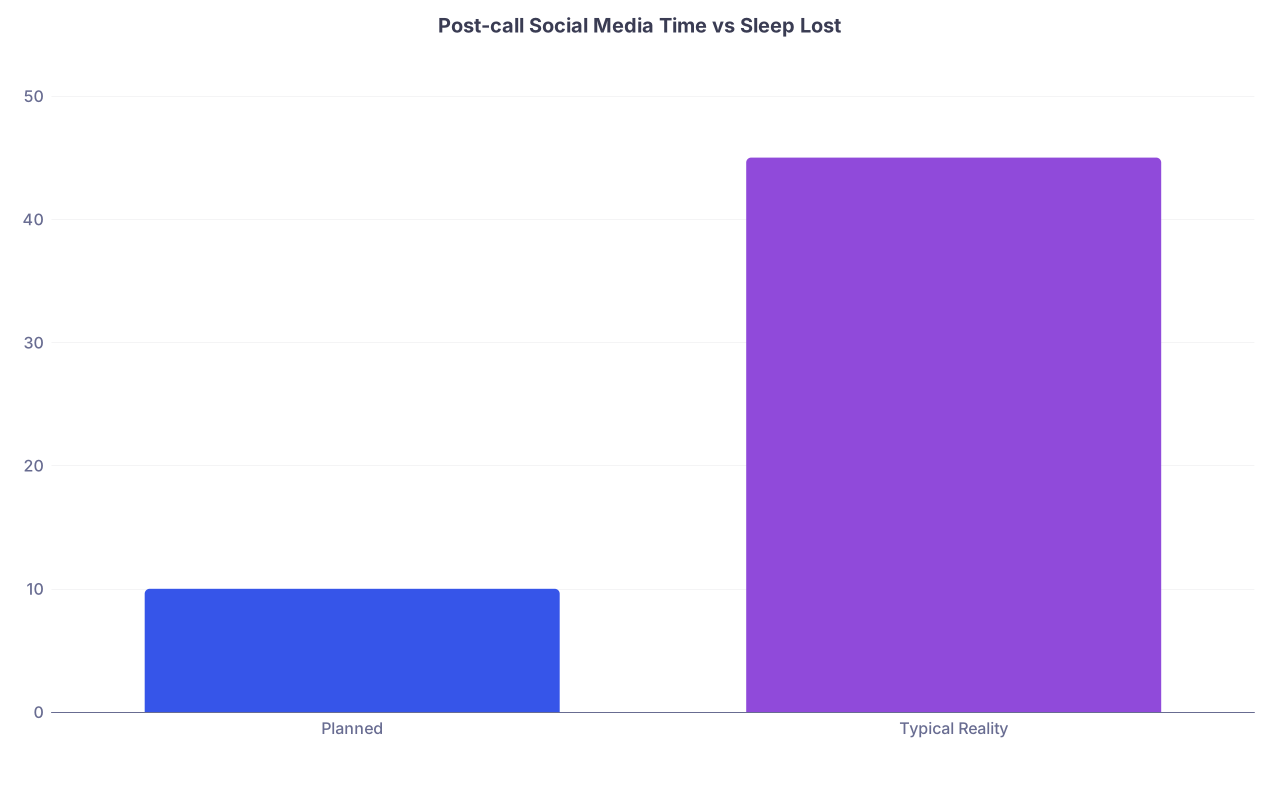
| Category | Value |
|---|---|
| Planned | 10 |
| Typical Reality | 45 |
What this habit actually does:
- Delays your sleep onset by 30–90 minutes
- Increases your exposure to blue light when your circadian system is screaming for darkness
- Keeps your stress hormones elevated because you’re consuming emotionally charged content (politics, tragedies, outrage, comparison)
In residency, you rarely get true recovery windows. Post-call is one of the few. If you hand half of it to TikTok, you’re choosing to be more depleted on your next shift.
The red flags:
- You tell yourself “just one more video” and suddenly it’s an hour later
- You routinely sleep 1–2 hours less after call than you could have
- You wake up groggy, annoyed at yourself, promising “I won’t do that next time” (then you do)
What to do instead (without going monk-mode):
- Put a hard boundary: no social media between getting home and getting into bed. Shower, small snack, blackout curtains, then if you must, 10–15 minutes in bed with a firm cutoff.
- Use tech against itself: app timers set to 10–15 minutes max post-call. When it’s done, it’s done.
- Create an actual “unwind” ritual: dim lights, warm shower, one real-world sensory thing (tea, stretching, petting your dog), zero screens for 20 minutes.
The mistake to avoid is not “using social media.” It’s using it in your most biologically fragile windows and calling it rest.
Habit #2: Constant Micro-Checking Between Patients
This is the resident sitting at the nurses’ station, phone face-up, notifications on, checking Instagram between every note, every call, every order.
“I’m just taking a quick mental break.”
No. You’re training your brain to be incapable of sustained focus.
Resident life already destroys your attention span: pagers, nurses, attendings, EMR alerts. That’s plenty of fragmentation. Layering social media on top is like poking extra holes in a sinking boat.
Here’s what actually happens every time you “just quickly check”:
- You trigger a dopamine hit from novelty
- You pull your mind out of the clinical context—away from your patient, differential, priority list
- You create a mini cliff: coming back to the note or plan now feels effortful and unpleasant, so you’re more likely to procrastinate or half-focus
One or two checks won’t kill you. But 30–60 micro-checks across a shift? That’s death by a thousand swipes.

You’ll notice:
- Your notes take longer
- You feel “busy” all day but don’t actually finish tasks
- Your mental fatigue by 4 p.m. is significantly worse
- You’re more irritable with nurses and co-residents because you’re constantly yanked out of thinking mode
And let’s say the quiet part: this is how mistakes happen. Not because you’re careless, but because you never let your working memory fully load the patient data before you fragment it again.
Mistake to avoid: making social media your default micro-break during clinical work.
Better options:
- If you need 60 seconds between patients: stand up, deep breath, look down the hall, stretch your shoulders. Boring, yes. But truly restorative.
- Put your phone physically away while you’re in note-writing or order-entering mode. Even in a bag or pocket is far better than face-up.
- Batch your social media checks: once mid-morning, once around lunch, once at the end of the shift. Hard caps. That’s it.
Stop pretending you can multitask your way through residency. You can’t. And social media is not neutral here—it’s actively eroding your ability to think like a clinician.
Habit #3: Comparing Your Real-Life Struggle to Everyone Else’s Curated “Perfect Residency”
This one is brutal because it feels so justified.
You’re at home after a malignant call month on surgery, scrolling through:
- Co-residents posting pictures of “the amazing team brunch” you missed because you were stuck in the OR
- Former classmates on derm and ophtho casually sharing 7 a.m. yoga and latte photos
- Instagram medfluencers talking about “balanced wellness” in full makeup and perfect lighting between their “light clinic day” and “content creation”
If you’re not careful, your brain writes one very toxic story:
“I’m failing at this. Everyone else is handling residency better than I am.”
That story is garbage. But social media is exquisitely designed to make it feel true.
Here’s the trap: you’re comparing your internal experience (exhaustion, self-doubt, imposter syndrome) to other people’s external highlight reel. Every like, every filter, every caption is stage-managed. Nobody is posting the 2 a.m. breakdown in the bathroom after a bad outcome.
| Aspect | Real Residency Life | Social Media Version |
|---|---|---|
| Work hours | 60–80/week, variable | Select “chill” days only |
| Emotions | Doubt, fatigue, anxiety | Confident, upbeat, “grind” |
| Mistakes | Frequent, painful | Rarely mentioned |
| Free time | Inconsistent, fragmented | Looks abundant and curated |
| Wellness | Hard work, imperfect | Smooth routines, aesthetic |
You don’t need an academic paper to see what this does:
- Increases feelings of inadequacy and imposter syndrome
- Makes you resent your specialty, program, or co-residents
- Fuels hopelessness: “If I can’t even handle this, I’ll never be like them”
The dangerous mistake here is believing the feed represents reality and using it as your reference point for success.
Practical corrections:
- Curate aggressively. Mute or unfollow accounts that reliably trigger comparison, even if they’re “inspiring” or “educational.” If your nervous system hates them, they’re not helping you.
- When you see a post that stings, deliberately remind yourself: “This is 3% of their life, staged and filtered. I’m seeing none of the other 97% right now.”
- Anchor your sense of progress in your metrics: your growth, your feedback from attendings, your increasing comfort with patients—not in who matched into what or who seems happiest online.
You are not behind. You’re just seeing everyone else’s best 10 seconds over and over again.
Habit #4: Turning Social Media Into Your Primary Emotional Support System
Another quiet trap: using social media as your main place to vent, feel seen, and get validation.
At first it feels great. You post a meme about being dead inside after nights, and a hundred other residents like it. You tweet about a rough shift and strangers reply, “Same, you’re not alone.” It’s comforting.
But there’s a cost.
You start to:
- Default to posting instead of actually processing with someone who knows you
- Chase reactions online instead of building real, local relationships
- Blur professional boundaries and confidentiality (this is where people get in serious trouble—screenshots live forever)
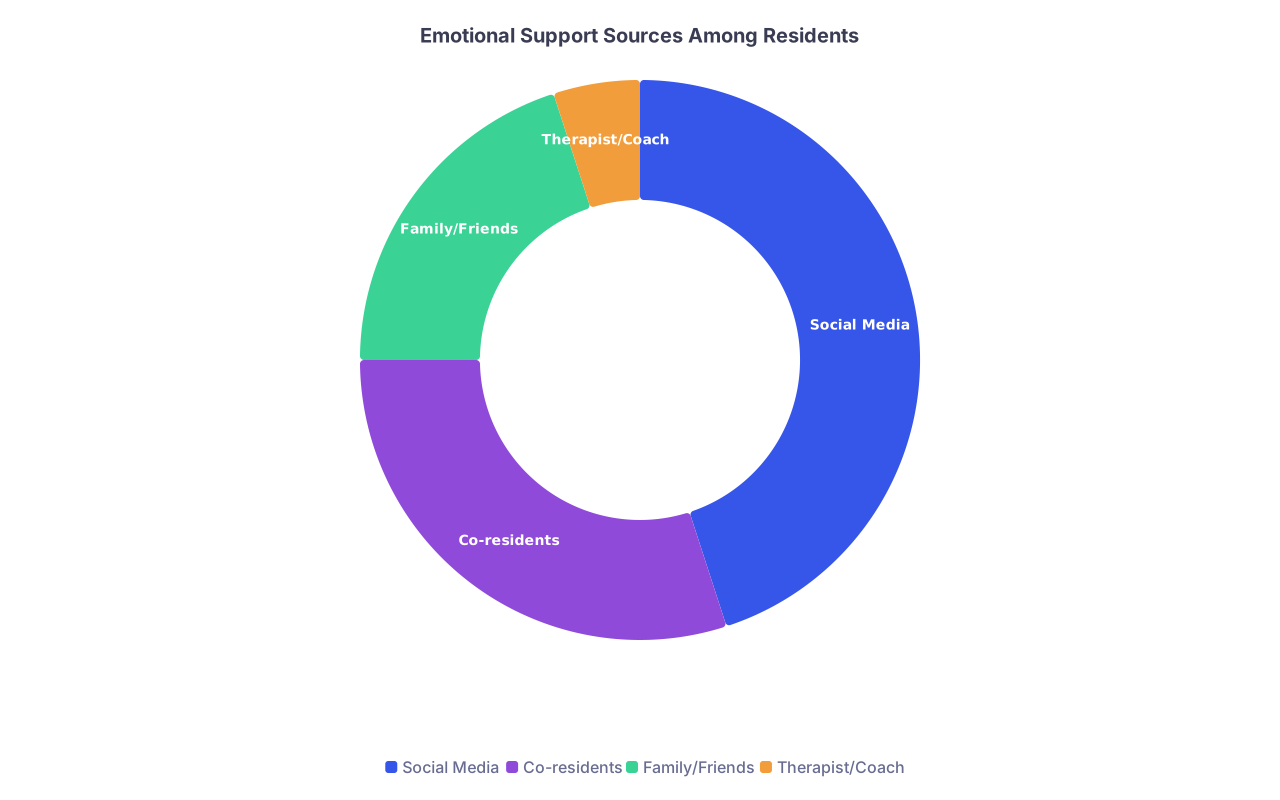
| Category | Value |
|---|---|
| Social Media | 45 |
| Co-residents | 30 |
| Family/Friends | 20 |
| Therapist/Coach | 5 |
Here’s what I’ve seen happen:
A resident posts detailed, emotionally charged rants in private Facebook or Reddit groups about specific cases, attendings, or nurses. It feels safe because “everyone here gets it.” Eventually:
- Someone shares a screenshot outside the group
- Or leadership discovers the account
- Or the resident realizes they’ve built a habit of amplifying their worst days publicly and reliving them through comments
Even when there’s no “professionalism” fallout, there’s a psychological one. When all your processing happens through posts, you subtly train yourself to:
- Rehearse your identity as “the burned-out one”
- Stay in outrage/bitterness loops (“we’re all screwed, medicine is broken”)
- Measure your pain in likes and comments
The mistake: confusing “people online who understand” with actual support that changes your life.
What to do differently:
- Use online spaces as supplemental, not primary. Helpful? Maybe. Foundational? No.
- Prioritize 1–3 real people you can text or call after bad shifts—co-resident, friend, partner, therapist. Short, honest, two-way.
- Before you post a vent, ask: “Will saying this publicly help me recover, or just help me feel temporarily validated while keeping the wound open?”
Your mental health is too important to outsource to an algorithm.
Habit #5: Trying to Be a Medfluencer While You’re Drowning
This one will trigger some people, but it needs to be said.
If you are already struggling with sleep, charting, and basic life maintenance, adding “build a brand on social media” is like deciding to train for an Ironman during your ICU month.
Yes, some residents pull it off. Yes, they get freebies, followers, side income, speaking gigs. No, that doesn’t mean you should copy them.
Here’s the problem: content creation flips social media from a leisure activity into a second job. One that is:
- Algorithm-driven
- Rewarding constant posting and engagement
- Punishing rest with reach drops and follower loss
I’ve watched residents go from “I’ll just share a few tips” to:
- Filming on-call nights, then editing reels at 1 a.m.
- Checking engagement between patients
- Stressing about brand deals and growth on top of board exams
- Feeling guilty when they’re too tired to post—on their one post-call day off
Residency already gives you continuous performance evaluation: attendings, patients, program leadership. When you add likes, views, and follower counts to that, you’ve built yourself a 24/7 scoreboard.
That is a direct pipeline to burnout.

The mistake to avoid is not “ever posting.” It’s turning residency—already one of the most demanding periods of your life—into raw material for a side hustle when you don’t have the bandwidth.
If you still feel a strong pull to create:
- Put strict constraints: e.g., one short post per week, filmed on days off only, no editing or engagement during work hours.
- Decide in advance what you will not share: details about cases, colleagues, patients, or your program that could backfire.
- Be willing to let your account stagnate during heavy rotations. If the algorithm punishes you, so be it. Your brain doesn’t care about engagement rates. It cares about sleep.
You have 30+ years of career ahead to build a platform. You only get one shot at going through residency without breaking yourself.
Habit #6: Checking Social Media as the Last Thing Before Sleep and First Thing Upon Waking
If you bookend your days with social media, you are letting total strangers—and corporations—set your emotional tone and cognitive state.
Terrible deal.
At night, you:
- Flood your brain with stimulation right when it should be winding down
- Risk seeing upsetting content (news, conflict, tragic stories) that will loop in your head
- Train your brain to associate bed with scrolling, not sleeping
In the morning, you:
- Hand your attention to everyone else’s priorities before your own
- Start the day already behind, already comparing, already reactive
- Eat up the most precious 10–20 minutes of your willpower and clarity
During residency, both of those windows matter even more because:
- Your sleep is already fragile
- Your time is already fragmented
- Your emotional resilience is already stretched
I’ve seen residents sabotage their only decent 6-hour sleep block because some comment thread or upsetting reel wouldn’t leave their mind.
The mistake: acting like those last and first 10–15 minutes of your day are expendable. They’re not. They anchor the whole day.
Better alternatives:
Night:
- Hard stop: phone out of hand 15–20 minutes before you intend to sleep.
- If you must use it (podcast, white noise), set up the app, then place the phone out of reach. No visuals.
Morning:
- Give yourself 5–10 minutes before opening any apps. Get out of bed, pee, glass of water, maybe one slow breath, then if you want, you can look.
- Or flip the order: text your partner/friend a “good morning,” look at your schedule, and only then open social media.
Tiny shifts. Huge compounding effect over months of residency.
Habit #7: Letting “Medical Social Media” Creep Into Every Free Second
Residents love to justify their feeds: “It’s mostly educational—FOAMed, EM cases, derm pictures, cardiology pearls.”
Nice try.
Educational content is great. But if:
- You’re consuming it when your brain is fried
- You feel guilty for not keeping up with every thread
- You feel more overwhelmed, not more confident, after scrolling
…then it’s not helping you. It’s just anxiety with better branding.
There’s also a subtle ego trap here: “I’m being productive by scrolling medical content.” No, you’re not. You’re passively consuming micro-snippets that rarely stick and frequently make you feel behind.
Residency already floods you with information. You don’t need to turn your rare off-hours into an endless, low-yield CME course.
To avoid this trap:
- Set clear boundaries: during off time, your brain is allowed to not think about medicine. Radical concept, I know.
- If you want educational content, treat it like studying: dedicated 20–30 minutes with saved posts, notes, deliberate practice—not random grazing.
- Delete or mute accounts that constantly leave you feeling like an underachiever: daily board questions, “must know” lists, flex posts about research output.
Your brain learns better from real cases, actual reading, and rest than from constant jittery snippets of medical trivia.
Habit #8: Letting Algorithms Decide What You See When You’re Vulnerable
This last one is quieter but important.
You’re exhausted, maybe after a bad outcome or a humiliating attending interaction, and you open social media to “numb out.” The algorithm, trained on your past behavior and engagement, has zero interest in your wellbeing. It has one job: keep you there.
So what does it serve you when you’re low?
- Outrage content that spikes your emotions
- Polarizing hot takes about medicine being broken
- Extreme stories that keep you scrolling (“look how bad this is!”)
- Comparison bait (“here’s someone thriving while you’re clearly not”)
In your most vulnerable mental states, you’re handing control to a system optimized for engagement, not recovery.
That’s a nasty mistake.
You need to assume that when you’re tired, emotional, or on edge, social media will amplify whatever you’re feeling, not soothe it. Sad becomes despair. Frustrated becomes furious. Numb becomes even more disconnected.
This is where you draw a line:
- Create a personal rule: “I don’t open social media in the 30 minutes after a major emotional hit.” Code blue, bad feedback, patient death, serious conflict—phone stays off the feed.
- Have a pre-decided alternative: short walk, text a trusted person, sit somewhere quiet, scribble your thoughts in a notes app or physical notebook. Anything that doesn’t involve an algorithm.
- Recognize the pattern: if you catch yourself thinking “I just need to zone out,” that’s your cue to avoid anything with an infinite scroll.
You can’t make residency painless. You can stop amplifying the pain with tools that don’t care if you burn out.
The Bottom Line: Protect Your Bandwidth Like It’s a Limited Drug Supply
Residency burns through attention, sleep, and emotional bandwidth at a terrifying rate. You can’t afford to pour that fuel into systems designed to drain you.
If you remember nothing else, keep these three points:
- Social media is not rest. Using it in your most fragile windows—post-call, pre-bed, between patients—quietly destroys your recovery and focus.
- Comparison and performance online are poison during residency. Curate ruthlessly, avoid medfluencer hustle if you’re already strained, and stop measuring your worth by a feed that isn’t real.
- Algorithms do not care about your mental health. In your lowest moments, default to real humans, simple rituals, or quiet—not the scroll.
You don’t need to delete everything and move to a cabin. But you do need to stop pretending your current habits are harmless.
They’re not. And if you’re smart enough to survive residency, you’re smart enough to change them.


