

Your call schedule is not the main problem. Your call habits are. And you can rewrite them in four weeks.
Most residents blame burnout on “too many calls” or “terrible schedules.” I have seen people on brutal Q3 call who are tired but functioning, and I have seen interns on night float two weeks a year who are wrecked. The difference is not the calendar. It is the system they run for themselves around call.
You are not going to fix ACGME rules, staffing shortages, or your program director’s philosophy in the next month. But you can completely overhaul how you plan, work, recover, and protect your brain around call in four weeks.
This is a 4‑week protocol. Not vibes. Not “try to sleep more.” A specific, stepwise reset of your call schedule habits that actually lowers burnout.
The Core Framework: 4 Levers You Can Actually Control
Forget the wellness posters. You control four things:
- Pre‑call setup – how you arrive to call (sleep, food, info, logistics).
- In‑call behavior – how you pace, prioritize, and protect your brain during the shift.
- Post‑call recovery – how you exit call and reset your nervous system.
- Schedule architecture – how you cluster, trade, and plan your call blocks over a month.
We are going to attack each of these, one week at a time, while keeping the earlier changes in place. By week four, you are running a very different operating system.
Here is the basic 4‑week structure:
| Week | Primary Focus | Secondary Focus |
|---|---|---|
| 1 | Pre-call setup | Basic recovery rules |
| 2 | In-call habits | Upgrade recovery |
| 3 | Post-call systems | Protect off-days |
| 4 | Schedule architecture | Automate & refine |
Week 1: Fix Pre‑Call Setup (How You Show Up)
If you show up to call already depleted, everything else is damage control. Week 1 is about making sure you never walk into call in a hole.
Step 1: Non‑Negotiable Pre‑Call Sleep Rule
Residents consistently underestimate how much pre‑call sleep matters. The research term is “sleep debt.” You know the real term: feeling stupid at 4 a.m.
For the next four weeks, you use this rule:
If you are on call tonight, you must get a protected 90‑minute sleep block sometime in the 10 hours before sign‑in.
- Day call: nap between 11 a.m.–2 p.m. if you are post‑night float or post‑late shift.
- Night call: nap 3–5 p.m. before a 7 p.m. or 8 p.m. start.
If you live 30–40 minutes from the hospital and “don’t have time,” then you are paying for that commute with your brain. For this month, adjust:
- Keep a travel pillow and eye mask in your call room or resident lounge.
- Use a darkened room on site for your nap if going home is impossible.
You are not trying to feel amazing. You are just reducing your cognitive crash.
Step 2: Standardize Pre‑Call Fuel
“Sometimes I eat. Sometimes I forget. Sometimes I crush a pizza at 11 p.m. and feel like garbage.” I have heard this exact line from more than one PGY‑2.
You are going to pre‑decide your call nutrition so your future self has no decisions to make when they are already fried.
For the next month:
Pre‑call meal (about 60–90 minutes before shift):
- Protein: ~20–30 g (eggs, Greek yogurt, chicken, tofu).
- Slow carbs: oatmeal, brown rice, quinoa, whole grain wrap.
- Fat: a small amount (nuts, avocado, olive oil).
- Avoid: huge greasy meals, massive sugar spikes, and chugging energy drinks before you even start.
In‑call food kit (you bring this; do not rely on the cafeteria):
- 2–3 portable proteins (string cheese, Greek yogurt, jerky, protein bar).
- 2 fruits (banana, apple, berries pack).
- 1 salty snack (nuts, trail mix, popcorn) to avoid vending machines at 3 a.m.
- 1 backup shelf‑stable item (tuna pack, nut butter).
Pack it the night before. You will not do it if you leave it for morning.
Step 3: Decide Your Caffeine Strategy Ahead of Time
Random caffeine is how residents wreck their sleep cycles.
During this 4‑week reset, run this simple protocol (you can tweak later):
- Day call:
- 1–2 cups coffee or equivalent, done by 2 p.m.
- Absolutely no energy drinks after 4 p.m.
- Night call:
- 1 caffeinated drink at start of shift (7–9 p.m.).
- 1 small dose between midnight–1 a.m. if needed.
- Nothing caffeinated after 2 a.m. so you can sleep post‑call.
You are trading “peak alertness for 30 minutes” for “slightly less dead for 24 hours.” It is a good trade.
Step 4: Pre‑Call Mental Setup: The 5‑Minute Run‑Through
Most call anxiety is uncertainty. Cure: a five‑minute checklist before each call:
- Open your patient list(s) and ask:
- Who is likely to decompensate?
- Who has critical labs or imaging pending?
- Who has a disposition decision coming overnight?
- Review:
- Code status for your highest‑risk patients.
- Any weird consults that may hit you again overnight.
- Decide:
- The first three tasks you will do after sign‑out.
Write those three tasks down on a sticky note or notepad you carry. When the pager explodes at 5:10 p.m., you are not starting from zero.
Week 2: Rewrite Your In‑Call Habits (How You Survive the Shift)
Now that you are showing up less wrecked, Week 2 is about how you actually run the shift.

Step 5: Pager Triage Script (Stop Letting the Pager Own You)
Most burnout during call is not from work volume alone. It is from chaotic, reactive switching. You need a simple triage script.
When the pager goes off:
Glance → Categorize in 3 seconds:
- Category A – “Go now” (chest pain, SOB, hypotension, acute neuro change, active bleed).
- Category B – “Within 15–30 minutes” (pain uncontrolled, abnormal but stable lab, new fever in stable patient).
- Category C – “Bundle” (constipation, sleep meds, diet changes, home med reconciliation for stable patient).
Respond accordingly:
- For A: Stop what you are doing (unless in another A), go.
- For B: Acknowledge call, give approximate time frame (“I will be there in 20–30 minutes.”) Document quick plan.
- For C: Acknowledge and bundle into a block. “I will put that in my list and get it done with my next med order block.”
You are creating lanes in your brain instead of letting everything feel urgent.
Step 6: Work in 25–30 Minute Blocks
You cannot do complex notes, new admissions, and a constant stream of C‑category pages without falling apart. Use a soft version of the Pomodoro method.
- Pick a single focus for the next 25–30 minutes:
- Notes.
- Orders and C‑category pages.
- Call‑backs and family updates.
- Set a subtle timer on your watch or phone (no loud alarms).
- During that block:
- Only break it for Category A or high Category B issues.
- Everything else goes on a simple running list.
At the end of the block, clear 1–2 quick pages or tasks, then set the next focus block.
You are not going to run this perfectly. That is fine. The goal is 60–70% compliance. Already a massive improvement.
Step 7: Micro‑Breaks That Actually Work
The “no breaks during call” culture is macho nonsense. You can squeeze functional micro‑recovery into brutal nights.
Minimum standard during call:
- Every 90–120 minutes:
- 2 minutes in a chair with eyes closed (yes, literally two).
- 4–5 slow nasal breaths (inhale 4 seconds, exhale 6 seconds).
- 1–2 big sips of water.
This is not wellness fluff. This drops sympathetic overdrive and improves decision‑making. I have watched residents become noticeably less snappy and more effective after committing to these two‑minute resets.
Put this on auto‑pilot:
- Tie it to something you already do. Example: every time you print orders, every time you sit down to start a note, you do a 2‑minute micro‑break first.
Step 8: Night Shift Light Management
Your circadian rhythm is not optional. You can work with it or against it.
For night calls:
- During the shift:
- Use bright light in your main workspace for the first half of the night (7 p.m.–1 a.m.).
- Avoid sitting in dark corners staring at a bright screen; use overhead lights if possible.
- End of the shift:
- Last 1–2 hours, dim it down a bit if you can. No extra coffee. No bright phone in your face.
- Put on sunglasses when leaving the hospital into bright daylight. It sounds ridiculous. It works.
You are signaling your brain clearly: “Stay awake now; sleep later.”
Week 3: Build a Ruthless Post‑Call and Off‑Day System
This is where most residents sabotage themselves. They treat post‑call like a random “whatever happens” zone. That randomness guarantees chronic burnout.
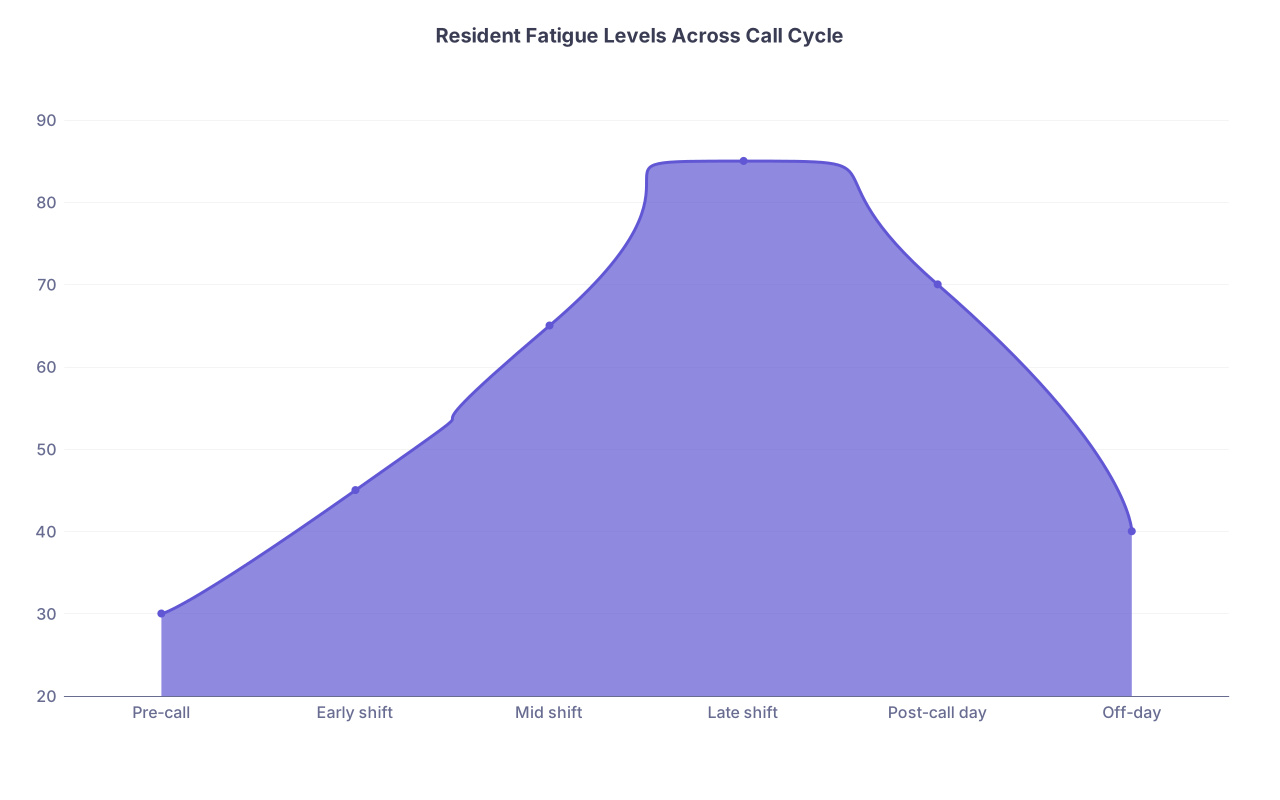
| Category | Value |
|---|---|
| Pre-call | 30 |
| Early shift | 45 |
| Mid shift | 65 |
| Late shift | 85 |
| Post-call day | 70 |
| Off-day | 40 |
Step 9: Post‑Call Sleep Rules (No More Netflix Zombies)
You need one clear rule set for post‑call sleep. Use this template and modify slightly later if needed:
If night call ends between 7–9 a.m.:
- Be in bed within 60–90 minutes of leaving the hospital.
- Sleep 3–5 hours. Set an alarm. Do not sleep 8 hours straight.
- Get up by 2 p.m. latest.
- No caffeine after 4 p.m.
- Target normal bedtime (10 p.m.–midnight).
If day call ends late (e.g., 10 p.m.–1 a.m.):
- Minimal screen time when you get home (20–30 minutes, max).
- Light snack if needed, then straight to bed.
- Do not “decompress” for two hours. That is code for “sacrifice tomorrow.”
The enemy here is just going with how you feel. You will always feel like scrolling or zoning out. That is not recovery. That is anesthetic.
Step 10: 30‑Minute Post‑Call “Reset Block”
Once you wake up from your post‑call sleep (not right after finishing the shift), you do one short, pre‑planned reset ritual:
- 5–10 minutes: Light movement (walk, stretch).
- 5 minutes: Shower (even if you took one after call).
- 5 minutes: Quick room or workspace reset (clear your desk, lay out clothes for tomorrow, pack your bag).
- 10 minutes: Non‑medical activity you actually like (music, short podcast, sit outside).
You are sending your brain a clear signal: “Call is over. Different mode now.”
Without this reset, you carry the hospital into your only recovery window and waste half of it in this vague, agitated fog.
Step 11: Protect One Anchor on Every Off‑Day
You will not control your whole off‑day. People will text you; someone will ask you to cover; chart completion may invade. Fine.
But you must protect one anchor block on each off‑day (post‑call or true off):
- Choose: Morning (2–3 hours), afternoon (2–3 hours), or evening (2–3 hours).
- Declare that block protected:
- No charting.
- No work e‑mail.
- No hospital‑related texts unless someone is actually dying.
Use this block for energy‑positive things:
- Sleep.
- Exercise.
- Seeing someone who does not work in your hospital.
- A hobby that has nothing to do with medicine.
If you do not pre‑protect one block, residency will happily dissolve your entire day into crumbs.
Week 4: Redesign Your Schedule Architecture and Automate
By week 4, your individual habits are in place. Now you need to zoom out and shape your month so you are not constantly in damage control.

| Step | Description |
|---|---|
| Step 1 | Week 1 Pre-call setup |
| Step 2 | Week 2 In-call habits |
| Step 3 | Week 3 Post-call recovery |
| Step 4 | Week 4 Schedule architecture |
| Step 5 | Lower burnout baseline |
Step 12: Map Your Next 4–6 Weeks on One Page
Take the actual call schedule and put it into a simple one‑page map:
- Mark:
- All call days.
- All post‑call days.
- All true off‑days.
- Use colors or symbols you like. This is not art class. It is strategic planning.
Then ask three questions:
- Where are the danger clusters? (e.g., 2 calls in 4 days, or a 7‑day stretch with no true off).
- Where are the natural recovery windows? (e.g., post‑call followed by off‑day).
- Where do major life obligations land? (family events, exams, partner’s schedule).
You want your recovery habits heaviest around the danger clusters and your “life stuff” slotted into the safer valleys.
Step 13: Make Smart Trades, Not Emotional Ones
Most residents trade call shifts emotionally:
- “I hate Saturdays, I will take a Tuesday instead.”
- “I really want that concert; I will swap into a death stretch.”
Stop that. Use three trade rules:
- Do not create a run of more than 6 days with no true off‑day, if you can help it.
- Avoid stacking 2 heavy calls inside 3 days unless you get a clear recovery window after.
- Protect at least one full off‑weekend (Sat/Sun) per month when possible. If you give it up, trade for an equivalent 2‑day block.
If your program is rigid, you may not be able to move much. Fine. You still get value from anticipating the heavy stretches and front‑loading recovery before and after.
Step 14: Automate Your Habits with Simple Triggers
At this point you know the habits; the problem is remembering them when you are tired and flooded.
Create three automation layers:
Visual cues:
- Sticky note on your workstation: “25‑min blocks / 2‑min reset / A–B–C pager.”
- Note on your door at home: “Post‑call = bed in 60 minutes. Set alarm.”
Calendar blocks:
- Pre‑call nap: recurring calendar entry with reminder.
- Post‑call reset block: 30‑minute recurring event after your typical sleep window.
- Off‑day anchor: 2–3 hour recurring “busy” slot.
Micro‑scripts:
- For saying no to boundary violations:
- “I am just coming off a 28‑hour call. I can help after I sleep, but I cannot do this today.”
- “I already committed to coverage that weekend. I can trade X or Y, but not that block.”
- For nursing/consults when you are bundling tasks:
- “I have an unstable patient right now; I will address those non‑urgent orders in about 30 minutes.”
- For saying no to boundary violations:
These sound silly written out, but having the words ready keeps you from folding in the moment.
Step 15: Weekly 10‑Minute Debrief
Once a week (same day each week), you spend 10 minutes asking:
- What worked this week around call?
- What blew up?
- Where did I ignore my own rules?
- What is one small tweak for next week?
Write this down. One page per week. Over a month, you see clear patterns:
- Maybe you always blow off your pre‑call nap on clinic days.
- Maybe your caffeine is creeping later.
- Maybe your post‑call Netflix bender is the real villain.
You are not chasing perfection. You are tightening the system.
Pulling It Together: What Changes After 4 Weeks
If you actually run this protocol—not perfectly, but honestly—for four weeks, here is what you will probably notice:
- You will still be tired. This is residency, not a spa.
- But:
- Your worst days will feel less catastrophic.
- You will make fewer dumb mistakes at 3 a.m.
- You will snap at people less.
- You will start to feel like you have some leverage over your life again.
One internal medicine resident I worked with went from “I am done; I might quit” during a heavy ICU month to “This still sucks, but I am not drowning anymore” just by:
- Enforcing pre‑call naps.
- Using 25‑minute work blocks with micro‑breaks.
- Protecting one 3‑hour off‑day block per week.
Nothing about her call schedule changed. Her habits did.

Quick Reference: The 4‑Week Call Habit Reset
| Phase | Key Habits |
|---|---|
| Pre-call | 90-min nap, planned meal, caffeine rules |
| In-call | A/B/C pager triage, 25-min blocks, micro-breaks |
| Post-call | Controlled sleep, 30-min reset, off-day anchor |
| Architecture | Map month, smart trades, automation, weekly review |
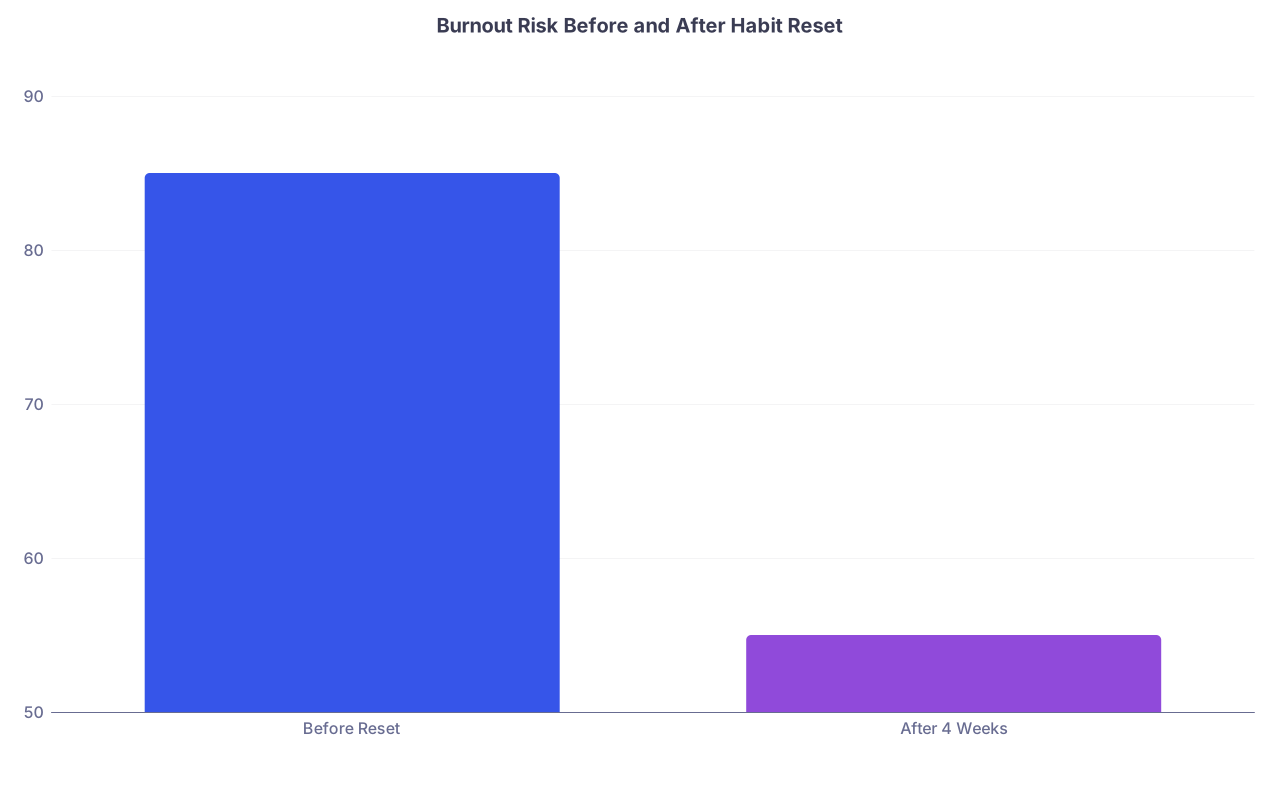
| Category | Value |
|---|---|
| Before Reset | 85 |
| After 4 Weeks | 55 |
FAQ (Exactly 3 Questions)
1. What if my program’s culture makes it hard to take breaks or nap?
You probably cannot announce, “I am doing a wellness protocol now.” Do this instead:
- Make your “breaks” frictionless and invisible—2 minutes in a chair while labs print, 90‑minute nap in the call room before night float, eating while you pre‑chart.
- Frame it as performance: “I think better if I grab 5 minutes to reset before I call the family back.” Most attendings respect that.
- If someone pushes back, anchor it to patient care: “I want to be sharp for the next admission; give me 5 and I’ll be right back.”
You are not asking for spa time. You are buying cognitive capacity with small, defensible rituals.
2. What if my calls are so unpredictable the 25‑minute blocks feel impossible?
Then shrink the block. The principle is focus, not the exact number.
- Try 10–15 minute “micro‑blocks” with the same rules: one focus, only break for true emergencies.
- When the pager chaos settles for even a few minutes, you immediately re‑enter a block instead of drifting.
- The win is moving from pure reactivity to any amount of structured attention. Even 50% implementation lowers mental friction.
3. I am already burned out. Is this too little, too late?
No. But you need to be honest about your baseline.
- If you are in full collapse (crying daily, intrusive thoughts, serious errors, no joy anywhere), you need help beyond habit work: talk to your PD, GME office, a therapist, maybe occupational health. This is non‑negotiable.
- If you are in the “gray zone” (exhausted, cynical, but still functioning), this 4‑week reset can move you back from the edge.
- Start with the smallest levers: pre‑call sleep, one micro‑break per shift, one protected off‑day block per week. Once those stick, layer on the rest.
Remember:
- You cannot fix residency. You can absolutely fix how you operate inside it.
- Burnout is not only about hours. It is about running a 24/7 emergency brain on a garbage system.
- Four focused weeks of better call habits will not make call easy. But they will make it survivable—and that is the difference between “I am done” and “I can keep going.”


