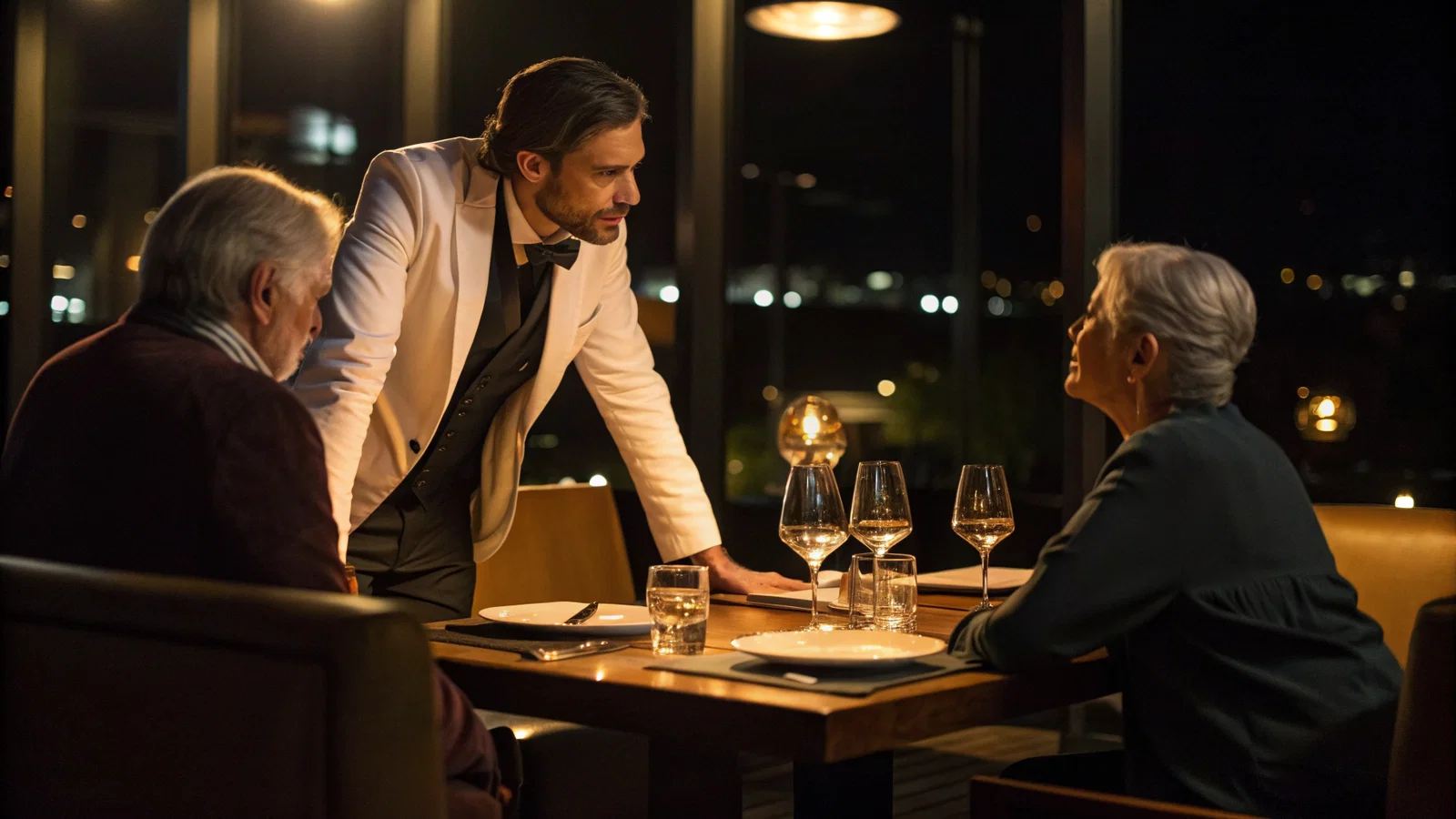
I've watched too many promising candidates torch their rank list placement over a bread basket and a glass of sparkling water. The second-look dinner isn't a victory lap or a closing argument. It's a trap dressed up as hospitality. And the candidates who don't understand that are the ones who never match where they want.
Let me be blunt: if you walk into that restaurant still trying to prove you belong, you've already lost. Program Directors (PDs) invited you because they're interested. The dinner is where they find out whether you're someone they can stand working with for eighty hours a week. Oversell, and you're signaling the exact opposite of what you think.
The 'Desperate' Aura: Why Overselling Your Second-Look Visit Backfires
A second-look dinner is still an interview. It just doesn't feel like one because there's pasta. That's the danger. The formality drops, the PD loosens their tie, the residents start joking around, and you think, "Finally, I can show them the real me." So you start talking. And talking. And talking.
Here's what's actually happening on the other side of the table: they're evaluating whether you have social calibration. Can you read a room? Do you know when to stop? Are you self-aware enough to realize you've been speaking for four uninterrupted minutes about your research gap year?
PDs are trained observers. They've sat through hundreds of these dinners. They can spot desperation in the first ten minutes, the candidate who laughs too loud, who pivots every conversation back to their accomplishments, who treats a casual question about hobbies as an invitation to recite their CV.
When you talk at them instead of with them, you're broadcasting a cultural misfit. Residency is grueling teamwork. Nobody wants a co-resident who dominates rounds, can't listen, and centers themselves in every interaction. The dinner is a microcosm of that fear.
My core principle as someone who's seen this go wrong repeatedly: silence is a tool. Listening is active. The candidate who asks one sharp question and then actually absorbs the answer outperforms the candidate who fills every quiet moment with another selling point. Pauses aren't awkward. They're confident.
The Anatomy of Over-Enthusiasm: Specific Behaviors That Signal Weakness
Let's break down the specific behaviors I see trip people up year after year. These aren't abstract risks. They're patterns. Recognize them in yourself before a PD recognizes them in you.
Behavior 1: The Monologue. You get asked a simple question, "What drew you to this program?", and you respond with a seven-minute treatise covering your medical school journey, your research interests, your grandmother's illness, and your vision for the future of academic medicine. The PD's eyes glaze. They take a slow sip of water just to have something to do. You didn't answer their question. You performed at them.
Behavior 2: The Resume Rehash. Your CV is already in their hands. They've read it. Reciting it back in conversational form doesn't add value, it signals you have nothing beyond what's on paper. When you say "As I mentioned in my application..." or "Like it says on my CV...", you're wasting their time and yours. They want to meet the person behind the bullet points.
Behavior 3: Ignoring Social Cues. This is the most damaging one. The PD checks their watch. The resident next to you shifts toward a different conversation. The server interrupts to take orders and you bulldoze through the pause to finish your point. You're so locked into your narrative that you've stopped reading the humans in front of you. That's not enthusiasm. That's poor social cognition, and it's a red flag for patient care.
Behavior 4: Over-Celebration. The waiter brings extra bread and you act like the program just handed you a Nobel Prize. "Oh wow, this is incredible, you guys really treat your guests so well!" That's not gratitude. That's performative fawning. It dilutes any genuine enthusiasm you show later. If everything is amazing, nothing is.
The takeaway: authenticity beats intensity every single time. Nervous energy is real and understandable. Manage it internally. Don't discharge it into the conversation like a pressure valve.
How PDs Evaluate Cultural Fit During Dinners: The Silent Rubric
Here's what most applicants misunderstand about the dinner: the unstructured nature is a feature, not a bug. PDs want the conversation to wander. They want to see what you're like when the script runs out. The lack of formal questions scares you because you lose control. It excites them because they finally get signal.
What are they actually scoring?
They're watching for three things:
Can this person relax? Not collapse into casualness, but release the interview tension enough to be a normal human. The candidate who can't drop their guard even at dinner is the resident who'll burn out by November.
Do they respect others' time and space? Do they let the resident finish their story? Do they engage the quietest person at the table? Do they thank the server? Micro-behaviors reveal macro-character.
Are they easy to be around? This is subjective but devastatingly accurate. After two hours, does the PD feel energized or drained? Would they want this person in their clinic? On their call team? In their car at 3 AM driving to a code?
There's a spectrum I think about: Charm vs. Cringe. Charm is confident brevity, a well-timed story, a genuine laugh, a question that shows you listened. Cringe is performative enthusiasm, the forced compliment, the obvious name-drop, the rehearsed anecdote that sounds suspiciously perfect.
I remember two candidates from a recent cycle. Candidate A spent the dinner asking residents about their worst call nights, what they wished they'd known before starting, how the program supported them during a family emergency. Candidate B spent the same dinner ensuring everyone at the table knew about their first-author publication, their board scores, and the letter of recommendation they received from a famous department chair.
Candidate A matched. Candidate B didn't. The PD told me later: "I already knew Candidate B's stats. I didn't know if Candidate B could hold a conversation that wasn't about themselves."
One more warning: excessive flattery backfires. "This program is truly the best I've seen" and "I've never met such an incredible team" might feel like relationship-building. To a PD, it reads as insincerity at best, manipulation at worst. They've heard it before. They don't believe it. And it makes them wonder what you're compensating for.
The Strategic Pivot: How to Show Interest Without Screaming It

You can show genuine interest without crossing into desperation. Here's how to pivot your approach.
Strategy 1: The Mirror Technique. Match the PD's energy. If they're low-key and reflective, drop your volume. If they're animated and funny, let yourself laugh. Don't force your own tone onto the table. Adapt. This alone separates socially aware candidates from tone-deaf ones.
Strategy 2: Curiosity-Driven Questions. Ask about the things that aren't on the website. What's the hardest part of the culture here? How do residents handle conflict with attendings? What does a failed month look like in this program? These questions show you're thinking critically about fit, not just performing enthusiasm for prestige.
Strategy 3: Vulnerable Confidence. If you're nervous, own it lightly. "I'll admit, I was a little nervous about tonight, but this has been really enjoyable." That's human. It's relatable. It's far better than pretending you're not shaking inside while your voice cracks. Hiding nerves is suspicious. Naming them casually is charismatic.
Actionable preparation: Write down three deep-dive questions before the dinner. Keep them in your back pocket. But don't force them into the conversation. Let the dialogue flow naturally and use your questions when the moment organically fits. If you only get to one, that's fine. Quality over quantity.
And here's the mindset shift that changes everything: you are evaluating them too. This isn't just them choosing you. You're choosing a place where you'll spend three to seven years. Reframe the dinner as mutual exploration, and the pressure evaporates. You stop selling. You start assessing. And ironically, that's when you become most attractive as a candidate.
Post-Dinner Etiquette: Where Most Candidates Make Their Final Mistake
The dinner ends. You exhale. You think the hard part is over.
It's not. This is where the final mistakes happen.
The Follow-Up Email Trap. Sending a generic, overly effusive thank-you note within an hour of leaving the restaurant signals anxiety. "Dear Dr. Smith, I cannot express how incredible this evening was and how honored I am to have been considered for your prestigious program..." Delete. Rewrite. Or don't write at all, because a bad thank-you is worse than none.
Best practice: Send a concise, specific thank-you within 24 hours. Under 200 words. Reference one unique moment from the dinner, something only you and they would remember. "I really appreciated your story about the resident who switched tracks, it made me think about how this program supports growth." That's it. Specific, brief, professional.
Common error: Don't ask another question in the thank-you note. "I forgot to ask about the research curriculum..." No. The dinner is over. The evaluation is closed. You don't get to reopen the interview by email. It reads as needy.
Final warning: Do not text, DM, or connect with PDs on personal social media. Ever. LinkedIn is acceptable if you already have a professional relationship. Instagram is not. Facebook is not. Keep every channel professional or you'll undo everything the dinner accomplished.
Let the dinner end where it begins. Trust the interaction you had. If it went well, your name is already in the conversation. If it didn't, no email will fix it.
Key Takeaways:
- Less is more. Over-communicating signals insecurity and poor social awareness to PDs who are actively looking for both.
- Mirroring is key. Read the room. Match the energy. Don't impose your own agenda onto the table.
- Authenticity over performance. Genuine curiosity about the program and its people resonates far more than rehearsed praise.
- The dinner is part of the interview. Relaxing into natural conversation demonstrates you'll thrive in residency culture, and that's what they're really testing.