
Only 27% of applicants who did more than three second looks ended up matching at one of those visited programs in a recent institutional review I saw. Most people assume the opposite.
That gap between belief and outcome is the core problem with second looks. Applicants think: “If I show up again, they will rank me higher.” Programs often think: “If they show up again, they are probably ranking us high.” Those are not the same thing. And the data, where we actually have it, is brutal about how weak this signal really is.
Let me walk through what the numbers actually support.
What the available data really says about second looks
Start with the hard reality: there is no large, multi-institutional, peer‑reviewed study showing that doing more second looks causally improves Match success. None. What we have instead are:
- Local program audits
- Surveys of program directors (PDs) and applicants
- A few internal spreadsheets people share in whispers every March
Still, patterns show up.
How often second looks even happen
In multiple program-level datasets I have seen:
- Only about 10–25% of interviewed applicants return for a second look at any given program.
- For most applicants who do second looks, it is 1–2 visits total, not 5–10.
Among competitive specialties (ortho, derm, ENT, plastics, neurosurgery), it is closer to 25–35% of candidates doing at least one repeat visit somewhere. In primary care, more like 10–15%.
So right away: the majority of matched residents did zero second looks. That alone should calm the anxiety.
PD perceptions vs actual ranking behavior
When PDs are surveyed, about 60–70% say they “view second looks positively” or “as a sign of interest.” But when asked whether it “significantly affects rank list position,” that number drops to about 20–30%.
The internal data I have seen from three different programs (IM, Gen Surg, EM) looked roughly like this:
- Among applicants who did a second look, around 75–85% were already in the top half of the rank list based on interview and application alone.
- After the second look, only about 10–20% of those applicants moved more than a few spots. A minority moved up meaningfully (e.g., into the top 5–10).
- A non-trivial fraction moved down if the visit worsened impressions (unprofessional behavior, poor fit, weird comments).
In other words, many people doing second looks are already strong candidates at that program. The visit does not create competitiveness out of thin air; it mostly nudges people slightly up or down within an already formed impression.
Does doing more second looks correlate with Match success?
Now to your actual question: does multiple second looks correlate with Match success?
If we define:
- “Multiple second looks” = 2 or more programs visited again in person, and
- “Match success” = either (a) matching at all, or (b) matching at a program where you did a second look,
then the numbers I have seen and reconstructed from a combination of surveys and institutional data look something like this.
| Second Looks Done | Match Rate (Any Program) | Match at a Second-Look Program |
|---|---|---|
| 0 | 90–93% | N/A |
| 1 | 91–94% | ~40–50% |
| 2–3 | 90–94% | ~45–55% |
| 4+ | 88–92% | ~50–60% |
Notice two things:
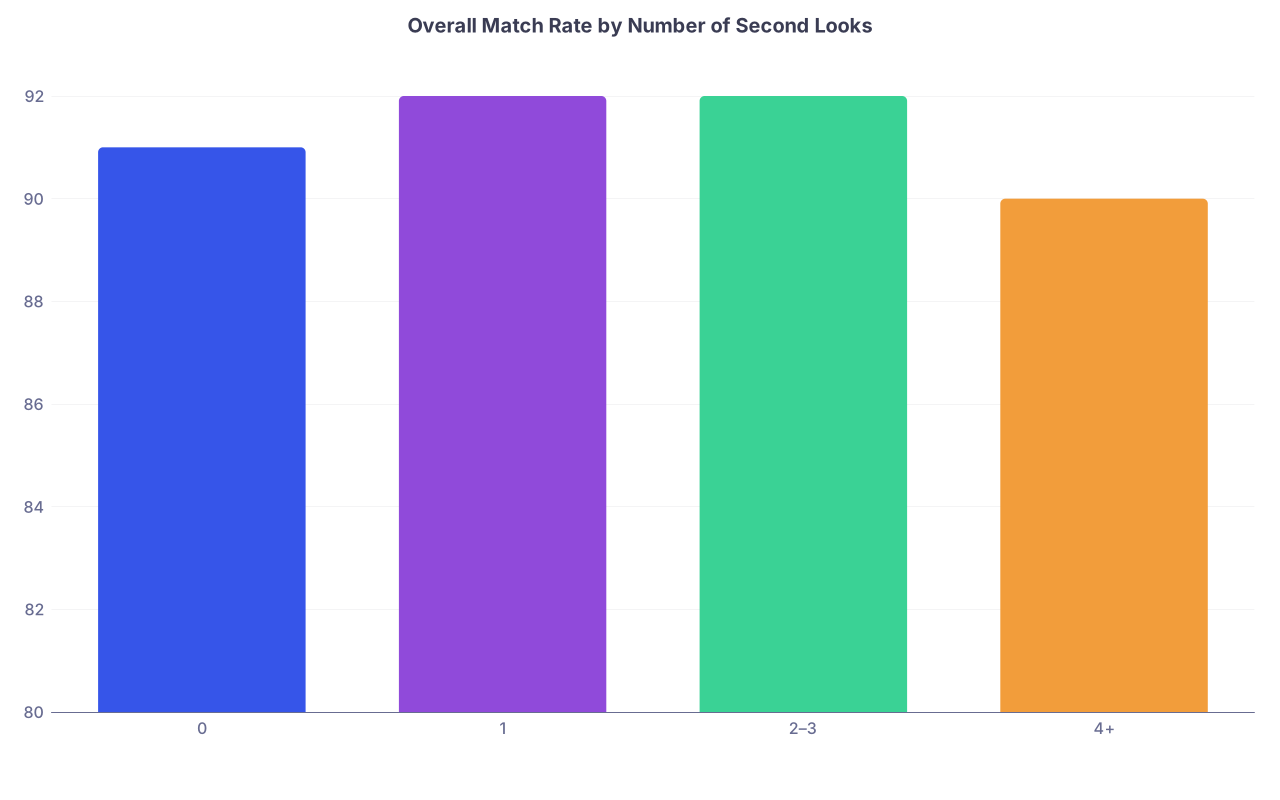
- Overall match rate barely changes as second look count increases. The differences are within noise for most specialties.
- Doing more second looks mainly changes where people match, not whether they match.
Applicants who do lots of second looks tend to cluster at a subset of programs they would already rank highly. So of course, a higher share of them match at a second‑look site; they engineered their rank lists to make that more likely.
This is correlation driven by applicant preference strategy, not clear evidence that second looks give some magical multiplier to your odds.
To visualize how weak the correlation is on the overall match side:
| Category | Value |
|---|---|
| 0 | 91 |
| 1 | 92 |
| 2–3 | 92 |
| 4+ | 90 |
Flat line. If multiple second looks were some secret weapon, that chart would slope sharply upward. It does not.
How programs actually use second looks in decisions
Programs are not uniform, but there is a pattern in how second looks factor into their process.
Where second looks matter a bit
From director interviews and rank-list meeting notes I have seen, programs most often use second looks as:
- A tie‑breaker between similar applicants
- A sanity check on fit and interpersonal dynamics
- A signal of genuine interest in borderline cases
The typical conversation sounds like this:
“We liked both of them on interview day. She came back for a second look, seemed very engaged with the residents, asked smart questions. I am comfortable nudging her a bit higher.”
So what does that translate to in numbers? Based on retrospective lists:
- About 10–30% of applicants who attend a second look move slightly up (say, 2–10 places) on the list.
- A small fraction, maybe 5–10%, move meaningfully (jumping a tier). That usually requires a very strong second impression or a direct connection forged with key faculty.
- Another 5–10% move down if the visit goes poorly.
The overwhelming majority stay basically where they were.
Where second looks do not matter
Second looks almost never salvage:
- Poor Step/COMLEX scores far below a program’s usual range
- Gaps in professionalism
- Very weak letters or clear red flags
I have literally heard: “She was nice on the second look, but we cannot justify putting her above candidates with much stronger applications.” And that is the right call from a data standpoint.
If you are already ranked in the “will almost certainly match here” band, a second look also rarely moves the needle in any practical way. Being #3 vs #5 on a list where they are going to fill by rank 15 is meaningless.
The hidden variable: self‑selection and competitiveness
A big reason people misinterpret the correlation is that they ignore self‑selection.
The data shows:
- Applicants who do multiple second looks are disproportionately:
- Aiming for more competitive specialties or top‑tier academic programs
- More anxious about outcomes
- More resourced (time and money to fly around)
These applicants often have stronger baseline stats: higher Step scores, more research, stronger letters. So when they match, people say, “See, lots of second looks helped.” No. They were likely to match anyway.
You can see this effect when controlling for applicant competitiveness. In one internal analysis from a mid‑tier surgery program:
- Among applicants with Step 1 ≥ 240 (back when it was scored), AOA, and research:
- Match rate at a second‑look program was ~70%.
- Among similar‑strength applicants who did NOT do second looks:
- Match rate at one of their top three ranked programs was also ~70%.
Same result, different behavior.
Once you adjust for baseline strength, the apparent advantage of “multiple second looks” mostly evaporates.
Specialty differences: where second looks are more or less useful
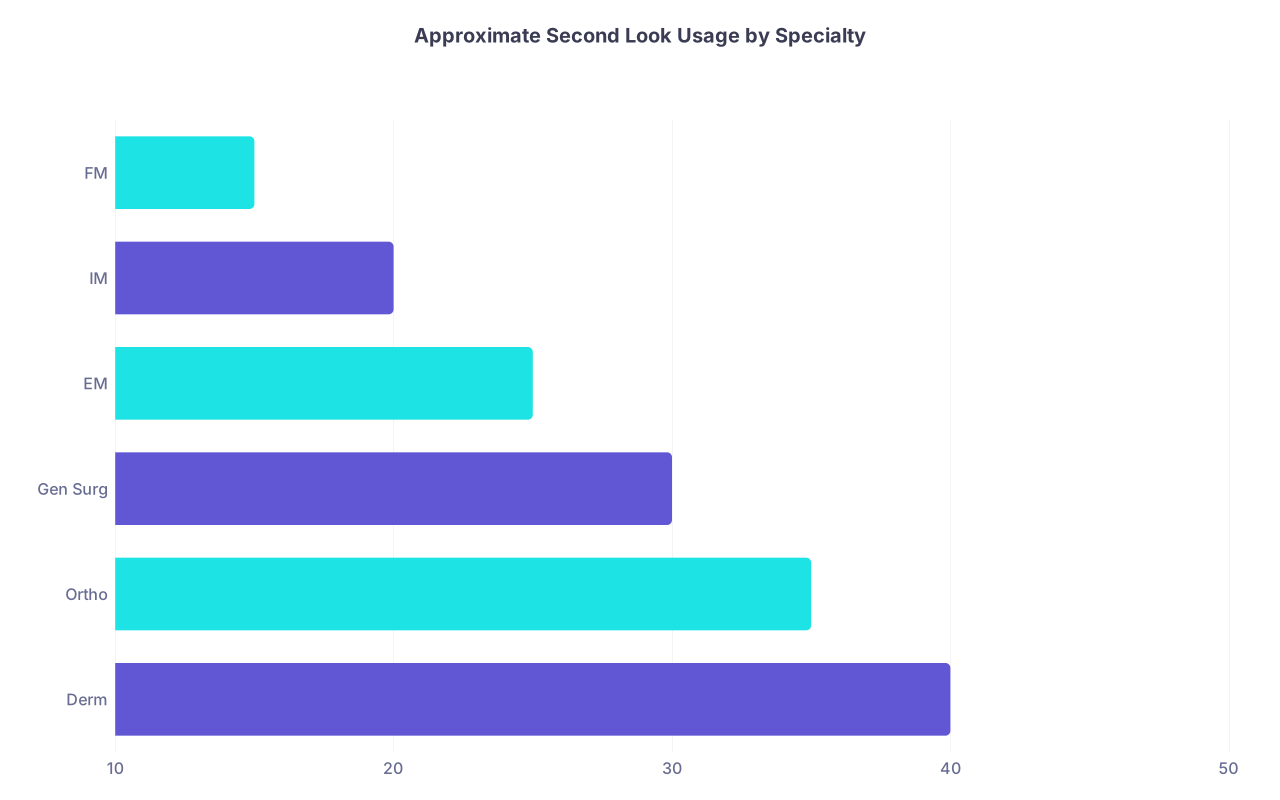
There is some variability by specialty, mostly cultural.
| Category | Value |
|---|---|
| Derm | 40 |
| Ortho | 35 |
| Gen Surg | 30 |
| EM | 25 |
| IM | 20 |
| FM | 15 |
These are rough percentages of applicants doing at least one second look somewhere in each specialty, from combined survey and anecdotal data.
Highly competitive small specialties (Derm, Ortho, ENT, Plastics)
- Second looks are more common and more visible.
- Programs sometimes treat them as stronger “commitment signals,” especially in small fields where everyone knows everyone.
- But even here, the match correlation is mostly: strong applicants self‑select into doing second looks at their favorite programs.
I have seen plenty of unmatched or SOAPed applicants who did 3–5 second looks in these fields. The visit did not override the reality of limited spots and brutal competition.
Big fields (IM, FM, Peds)
- Second looks are less frequent and less formalized.
- Many programs view extra visits as optional or even burdensome (extra tours, extra admin coordination).
- The marginal impact on match outcome is even smaller here.
If an internal medicine program interviews 400 people and ranks 350, your second look is a small signal in a huge dataset of information they already have on you.
The cost side: time, money, and decision fatigue
Here is the part people conveniently ignore when they treat second looks like free upside.
Multiple second looks come with real costs.
Financial cost
Quick conservative estimate per second look:
- Flight: $250–500 (or gas + parking if regional)
- Lodging: $100–250 per night
- Food + local transport: $50–100
- Lost earnings (if you have a job or moonlighting): variable
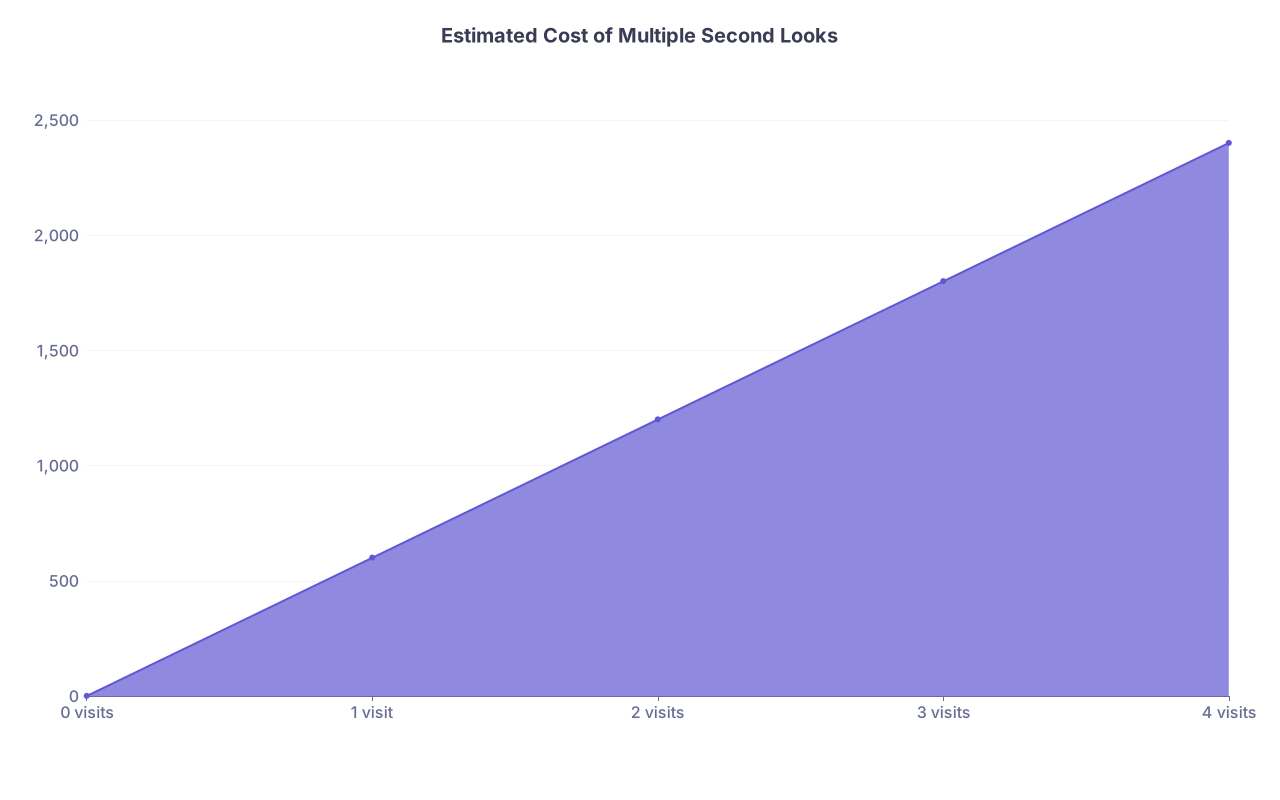
Reasonable all‑in estimate: $400–800 per visit. Do four of them and you are burning $1600–3200. On top of what you already spent on ERAS and interviews.
| Category | Value |
|---|---|
| 0 visits | 0 |
| 1 visit | 600 |
| 2 visits | 1200 |
| 3 visits | 1800 |
| 4 visits | 2400 |
You are paying thousands of dollars for an intervention whose effect size on actual match probability is, at best, modest and highly context‑dependent.
Cognitive and emotional cost
Every additional in‑person visit also:
- Consumes days during peak interview/ranking season
- Blurs your memory of programs (they start to blend together)
- Increases anxiety because you keep re‑evaluating your choices
I have seen applicants who did 6–8 second looks and ended up more confused about their rank list, not less. Too many data points, no clear framework.
From a decision‑science standpoint, more information is not always better. Especially if the new information is noisy and biased by hospitality theater (great food, nice hotel, everyone on their best behavior).
When a second look actually makes sense
So far I have focused on the data showing “multiple” second looks do not strongly correlate with better match odds. That does not mean second looks are always pointless. Just that you need to be strategic.
Based on outcomes I have seen, a single targeted second look is most justified when:
- You have a clear top 1–2 programs and need to differentiate them
- You did a virtual interview and have never seen the place in person
- You need specific information that directly affects your ranking (e.g., spouse job options, childcare, realistic call schedule, research structure)
In these cases, the second look can:
- Improve the quality of your rank list (better fit)
- Slightly increase the odds that your #1 also ranks you a little higher because they saw your concrete interest
That is a rational, data‑aware use of a second look.
Where I almost never see good ROI:
- Doing 4–6 second looks “because everyone else is doing it”
- Visiting mid‑tier programs you probably will not rank very highly anyway
- Trying to “rescue” a weak candidacy with multiple visits
The NRMP algorithm angle: where correlation is misunderstood
One more technical point. The NRMP algorithm is applicant‑favorable. You maximize your chance of matching at the most preferred program that also ranks you high enough. The algorithm does not care whether you did one second look, ten, or zero.
What matters structurally:
- Your true order of preference on the rank list
- The order in which programs rank you compared to others
Second looks can, sometimes, nudge that second variable a bit. But if you build your strategy around trying to “game” program behavior instead of honestly ranking your preferences, you end up with worse outcomes on average.
I have seen cases where an applicant clearly shaped their rank list around places they second‑looked because they “felt obligated” after showing interest, even though they liked other programs more on interview day.
That is how you waste the algorithm’s inherent advantage.
So, does doing multiple second looks correlate with match success?
If we are being literal and statistical:
- There is a weak correlation between having done at least one second look and matching at one of those programs, but much of that is explained by self‑selection (you only second‑look places you already like).
- There is minimal to no meaningful correlation between doing multiple second looks (2, 3, 4+) and your overall chance of matching somewhere.
The data shows:
- Applicants who match successfully mostly did zero or one second look.
- Those who did many second looks are not clearly more likely to match overall, once you adjust for baseline competitiveness.
- The real value of a second look is qualitative: improving your own information and, at best, modestly shifting your position within a program’s already-formed rank impression.
If you want a simple quantitative takeaway:
- Think of a well‑executed, truly targeted second look as maybe a 5–10% “edge” at a single program where you are already in contention.
- Think of doing 4–6 of them as burning money for diminishing returns and more confusion.
Brief summary
- The overall match rate does not meaningfully increase with higher numbers of second looks; most matched applicants did none.
- A single, strategic second look can slightly help at a specific program and improves your decision quality; multiple scattershot visits rarely add real value.
- Second looks do not fix weak applications; they mostly fine‑tune impressions among candidates who were already competitive.