
The way most applicants handle second-look visits is backwards. They treat them like optional field trips instead of strategic data-gathering missions on a tight clock.
You are not “being evaluated” at second look nearly as much as you’re evaluating them. And if you don’t plan that process month by month and week by week, you’ll end up rank-list week staring at a spreadsheet thinking, “I have no idea what actually felt different between these programs.”
Let’s fix that.
Below is a chronological planning calendar from the moment the first interview invite hits your inbox to the day you certify your rank list. I’ll walk you through exactly what to do, and when, so your second looks actually change your rank list instead of just exhausting you and draining your bank account.
Big-Picture Timeline: Where Second Look Fits
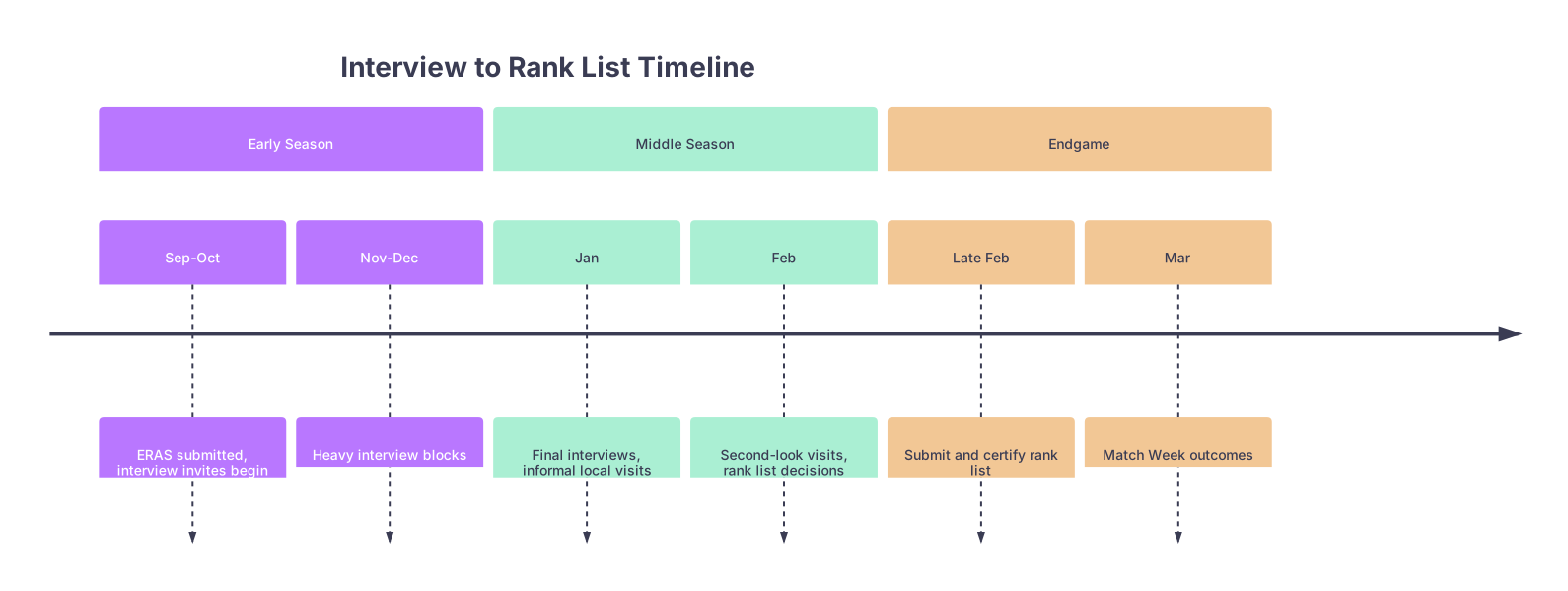
First, anchor the whole season. Here’s the real rhythm of residency applications:
| Period | Event |
|---|---|
| Early Season - Sep-Oct | ERAS submitted, interview invites begin |
| Early Season - Nov-Dec | Heavy interview blocks |
| Middle Season - Jan | Final interviews, informal local visits |
| Middle Season - Feb | Second-look visits, rank list decisions |
| Endgame - Late Feb | Submit and certify rank list |
| Endgame - Mar | Match Week outcomes |
At each phase, your attitude toward second looks should shift:
- Early: Collect possibilities; do not commit to second looks yet.
- Middle: Identify “rankable” programs and start targeted planning.
- Endgame: Use second looks to break ties and confirm your #1–3, not to salvage long-shots.
Phase 1: First Interview Invites to First Interview (3–6 Weeks Before)
At this point you should stop thinking about “second look” as a vague idea and start building your decision framework.
Week 1: Build Your Comparison Grid
Before you schedule a single second look, build the tool that will decide whether you even need one.
At this point you should:
- Create a simple comparison sheet (Google Sheets, Notion, whatever you actually open).
- Add columns for:
- Program name
- Location
- Call schedule
- Fellowships / career paths of grads
- Resident vibe
- PD and leadership impression
- Cost of living
- Wellness / support
- “Would I be happy here?” gut score (1–10)
- “Need second look?” (Yes/No/Maybe)
Here’s a quick example of how you’ll eventually use this:
| Program | Gut Score (1–10) | Need Second Look? | Estimated Travel Cost |
|---|---|---|---|
| Urban U IM | 9 | Yes | $300 |
| Suburban Med Center | 7 | No | $0 (local) |
| Rural Regional | 5 | No | $450 |
| Coastal Academic | 8 | Maybe | $500 |
The whole point: you’re building a system now so you don’t rely on vague feelings in February.
Week 2–3: Clarify What Second Look Is For (For You)
Second looks are not for:
- Repeating the interview
- Impressing faculty into ranking you higher (for most programs, the die is cast)
Second looks are for:
- Seeing off-camera culture: work rooms, sign-out, how people talk when leadership is not in the room.
- Checking dealbreakers: partner jobs, schools for kids, commute, call rooms, real resident apartments.
- Testing “fit” against real days: Do you actually like this city in January? Can you see yourself grocery shopping here post-call?
At this point you should write down:
- 5 non-negotiables (e.g., “must have strong fellowship placement in X,” “must be within 2 hours of partner”).
- 5 “nice to haves” (e.g., “strong global health,” “formal teaching rounds daily”).
- 5 questions you can’t answer from the website or interview day alone.
Those 5 questions become your second-look mission. If you can answer them without flying back, skip the second look.
Phase 2: Peak Interview Season (Nov–Jan)
You’re drowning in interviews. This is where people make bad second-look decisions out of FOMO. Don’t.
Every Interview Day: Capture Data Immediately
At this point you should:
- Block 15 minutes right after each interview to fill your grid while it’s fresh.
- Add:
- 3 things you liked
- 3 things you didn’t like
- 1–2 people you’d want to reconnect with on a second look (resident you clicked with, APD, chief).
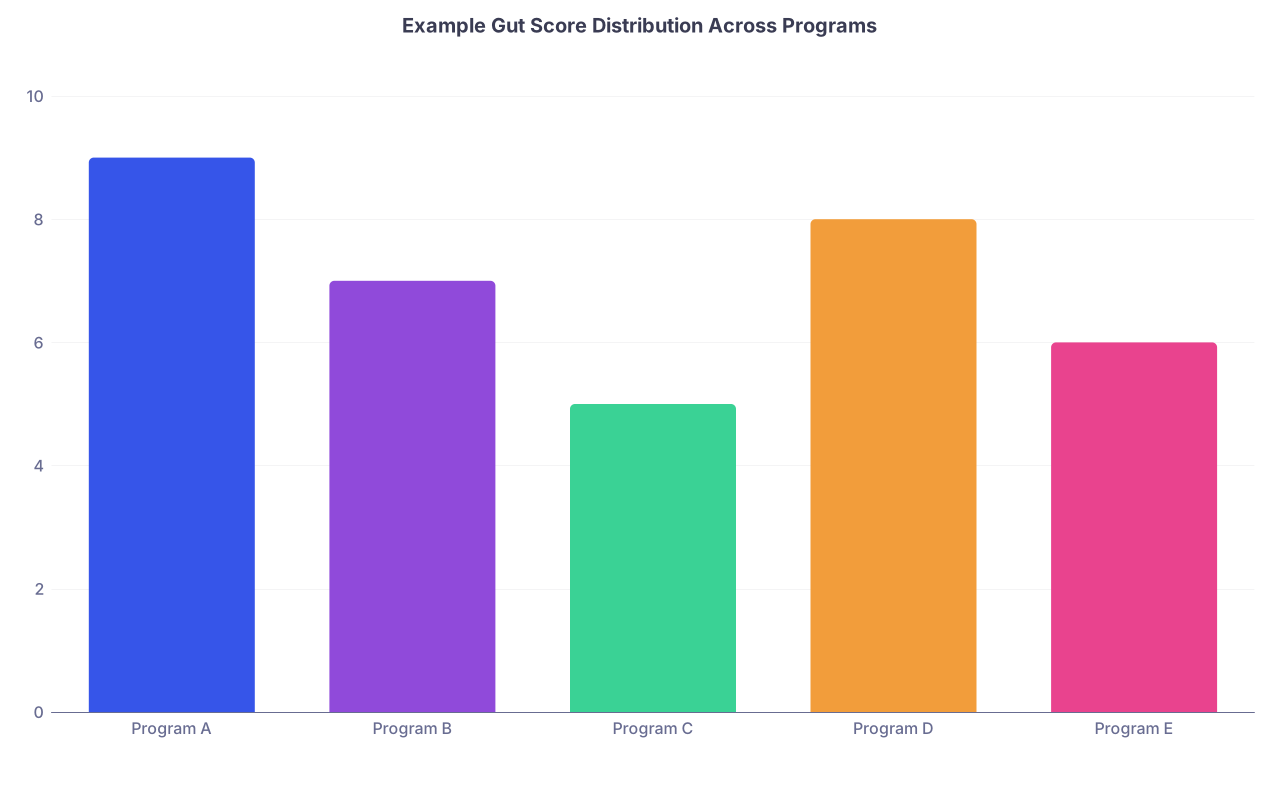
Use a quick rating scale to keep it consistent.
| Category | Value |
|---|---|
| Program A | 9 |
| Program B | 7 |
| Program C | 5 |
| Program D | 8 |
| Program E | 6 |
If a program is sitting at 5/10 with red flags in your notes, it’s not a second-look candidate. Do not spend money trying to convince yourself you like it.
Mid-Season Check (Late December / Early January)
You’ve probably interviewed at 8–15 programs by now. Perfect time for a 2-hour “mini retreat.”
At this point you should:
Sort your programs loosely into tiers:
- Tier 1: “I could see myself very happy here” (true yeses)
- Tier 2: “This could work but I have concerns”
- Tier 3: “Only if I have to”
For each Tier 1 program, ask:
- Am I choosing between similar Tier 1’s in the same city/region?
- Are there major unknowns (partner job, childcare, actual workload)?
- Did the interview day feel too curated to know the truth?
Mark “second-look candidate” only if:
- It’s Tier 1 or very top of Tier 2.
- There’s a specific, concrete reason to go back.
If you do this honestly, you’ll end up needing at most 2–4 second looks. More than that and you’re probably using second looks to avoid making decisions.
Phase 3: January – Quiet Interviews, Start Concrete Second-Look Planning
This is when the calendar matters.
Week 1 of January: Logistics Reality Check
At this point you should:
- Look at:
- Your remaining interview schedule
- Your school rotation schedule
- Your budget
- Decide:
- Max number of second looks you can realistically do (time + money).
- Whether they’ll be in-person only, virtual “second looks,” or a mix.
You should not be flying across the country for a program that is currently sitting at #7 with no realistic shot of moving to top 3. Be ruthless.
Week 2–3 of January: Tentative Second-Look Targets
By now many programs have finished interviews or are close.
At this point you should:
Identify 2–4 programs where:
- You’re already confident they’ll land high on your list.
- A second look could realistically move them up or down.
For each target program, make a one-page “second-look brief”:
- Key unknowns
- People you’d like to see again
- Type of day you want to observe (clinic vs wards, a didactic day, night shift, etc.)
- Any personal logistics to explore (housing, commute test-drive, partner touring hospitals or offices).
Having that brief ready makes your outreach email much sharper and more likely to get a useful visit instead of a generic tour.
Phase 4: Late January – Contact Programs
This is the inflection point: interviews are wrapping, rank list is coming, programs are less frantic.
2–4 Weeks Before Desired Visit: Reach Out
At this point you should email the program coordinator or APD (depending on culture) with a short, specific note. Something like:
- Who you are
- That you interviewed on X date
- That you’re very interested
- What you’d like to see/clarify on a second look
- 2–3 possible windows you’re available
If you’re thinking, “But won’t this pressure them, or be weird?” No. Programs are used to it. The only faux pas is sounding like you expect them to re-interview you.
1–2 Days After Email: Adjust Expectations
Some programs will:
- Offer structured second-look days
- Offer informal visits (shadow a resident, attend conference)
- Politely say they don’t do second looks (common in competitive specialties or big-name places)
At this point you should:
- Respect “no second look” policies. Do not push.
- If offered dates clash with your schedule, decide quickly whether the program is important enough to rearrange.
Remember: your time is finite. Do not break yourself to attend the fourth “maybe” second look.
Phase 5: Planning the Actual Second-Look Day (1–2 Weeks Before Each Visit)
Once a visit is approved, treat it like a targeted recon mission.
7–10 Days Before: Define Your Agenda
At this point you should:
Revisit your “unknowns” list for that program.
Turn them into specific tasks:
- “Ask 3 different residents about autonomy on nights.”
- “See resident work rooms on wards and in ED.”
- “Talk with GME about parental leave policy.”
- “Walk to likely housing area; time commute.”
Plan 3–5 key people or sessions:
- Morning report
- Noon conference
- A ward team sign-out or rounds
- One-on-one with a resident in your intended career path
- If offered, 10–15 minutes with PD/APD (but do not expect this)
Also, set a soft budget: flight, hotel, food, local transport. Know what you’re spending so you don’t end up resenting the process.
2–3 Days Before: Prep Questions and Filters
At this point you should finalize:
5–7 questions for residents:
- “What would you change about this program if you could?”
- “Who is the happiest resident you know here? Who is struggling, and why?”
- “What happens when someone is underperforming—how is that handled?”
- “In the last year, has anyone left or transferred out? Why?”
- “If you had to rank again, where would this program fall?”
3–5 questions for faculty/leadership (if you see them):
- “How do you see this program changing in the next 3–5 years?”
- “What are you most proud of in this residency right now?”
- “How are residents involved in program decision-making?”
You are not there to be polite and vague. You are there to get the information you need to commit 3–7 years of your life.
Phase 6: Second-Look Day Itself
Second look days are weird. You’re not quite a trainee, not quite a guest. The key is to act like a future colleague, not a nervous applicant.
At this point you should:
Dress like a resident on a normal day (unless told otherwise):
- Most internal medicine / peds / psych: business casual + white coat if you own one.
- Surgical fields: lean slightly more formal but not full interview suit unless they say so.
Focus on observation:
- How do residents talk to nurses and each other?
- Does anyone look openly miserable, or is it the usual tired-but-functioning resident baseline?
- Are attendings teaching or just barking orders?
Keep notes on your phone between sessions:
- “Team seemed cohesive; senior backed intern with RN.”
- “Resident told me 80 hours is usual, not occasional.”
- “Noon conference: half residents left midway for pages.”
Test the daily life:
- Try the cafeteria.
- Walk from hospital to a nearby apartment building or neighborhood.
- Time the commute if you’ll be driving.
Do not:
- Try to re-sell yourself as an applicant.
- Fish for rank information. It’s unprofessional and they usually can’t tell you anyway.
- Act like a secret auditor. You’re a guest; be respectful.
Phase 7: Within 24–48 Hours After Each Second Look
Memory decays fast. You’ll mash all these visits together if you don’t capture it quickly.
At this point you should:
Block 30–45 minutes as soon as you’re home or at the hotel to:
- Fill out a structured “Second-Look Debrief”:
- 3 things that improved your view of the program
- 3 concerns that appeared or got bigger
- A single-sentence “headline” for how this place feels (e.g., “High-power, high-burn; incredible training, wellness questionable.”)
- Fill out a structured “Second-Look Debrief”:
Adjust your gut score and provisional rank:
- Did the program move up, down, or stay the same?
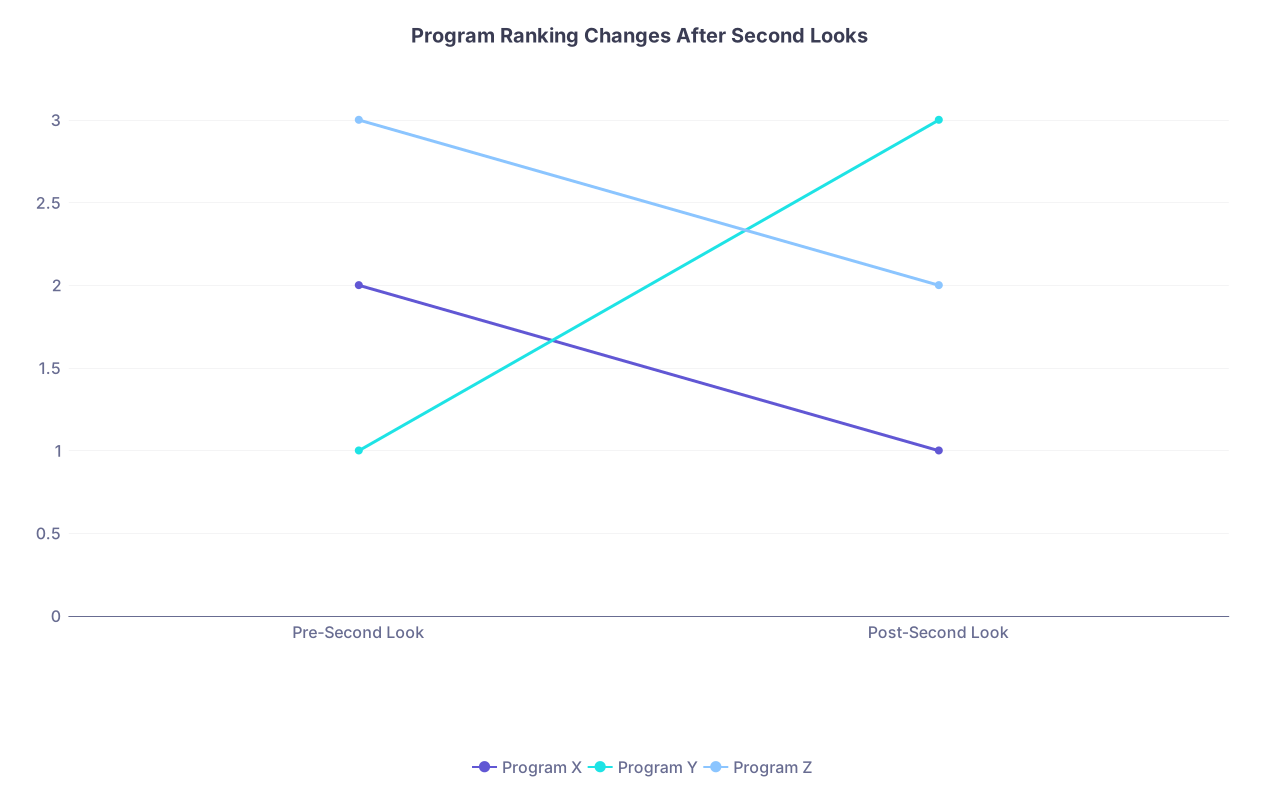
Here’s how shifts might look across your top programs as second looks finish:
| Category | Program X | Program Y | Program Z |
|---|---|---|---|
| Pre-Second Look | 2 | 1 | 3 |
| Post-Second Look | 1 | 3 | 2 |
You’re looking for changes like:
- Program Y drops because residents quietly warn you about toxic leadership.
- Program X moves up because your partner loved the city, and resident culture was healthy.
Phase 8: Final 2–3 Weeks Before Rank List Deadline
This is when you stop collecting data and start deciding. No more new second looks unless something dramatic changes.
3 Weeks Before Deadline: Lock Second-Look Data
At this point you should:
- Freeze the second-look calendar. No new visits.
- Put your programs in provisional order based only on:
- Where you’d be happiest and best trained.
- Where you can realistically live your life (partner, kids, health).
You’ll be tempted to overthink how they might rank you. Do not. The match algorithm favors your preferences if you rank honestly.
2 Weeks Before Deadline: Gut Check + Future You
At this point you should:
- Visualize “Future You” on July 1, first day of intern year, at each of your top 5 programs.
- Ask:
- “Where am I waking up excited, not just proud of the name?”
- “Where do I feel like I’ll have people I can call at 2 am when everything goes sideways?”
This is vague-sounding on purpose. When your spreadsheet and your stomach disagree, second-look memories usually break the tie.
1 Week Before Deadline: Quiet the Noise
At this point you should:
- Stop asking for more opinions. No more group chats polling, “Where would you rank X vs Y?”
- Accept that each second look gave you a snapshot, not a guarantee.
Lock in your list based on your own data and experiences—especially what you saw and felt during second looks, not what residents “say you should do” based on prestige.
When to Skip Second Looks Entirely
Let me be blunt: some of you should not do second looks at all. You should skip them if:
- You’re already certain of your #1–3 and they’re in different cities/regions you know well.
- Money or time constraints would force you to cancel interviews or miss rotations.
- You can answer your unknowns via:
- Long Zoom calls with residents.
- Talking to alumni who matched there.
- Doing one “informal” local walk-through if you’re nearby.
Use your resources intelligently. Second looks are high-yield only when they change your rank list. Not when they confirm what you already know.
Quick Visual: Where Second Looks Fit in Your Time and Budget
| Plan Type | Number of Second Looks | Typical Time Cost | Typical Money Cost |
|---|---|---|---|
| Minimal | 0–1 | 0–2 days | $0–$400 |
| Moderate | 2–3 | 2–5 days | $600–$1,500 |
| Heavy | 4–5 | 5–8 days | $1,500–$3,000 |
| Category | Value |
|---|---|
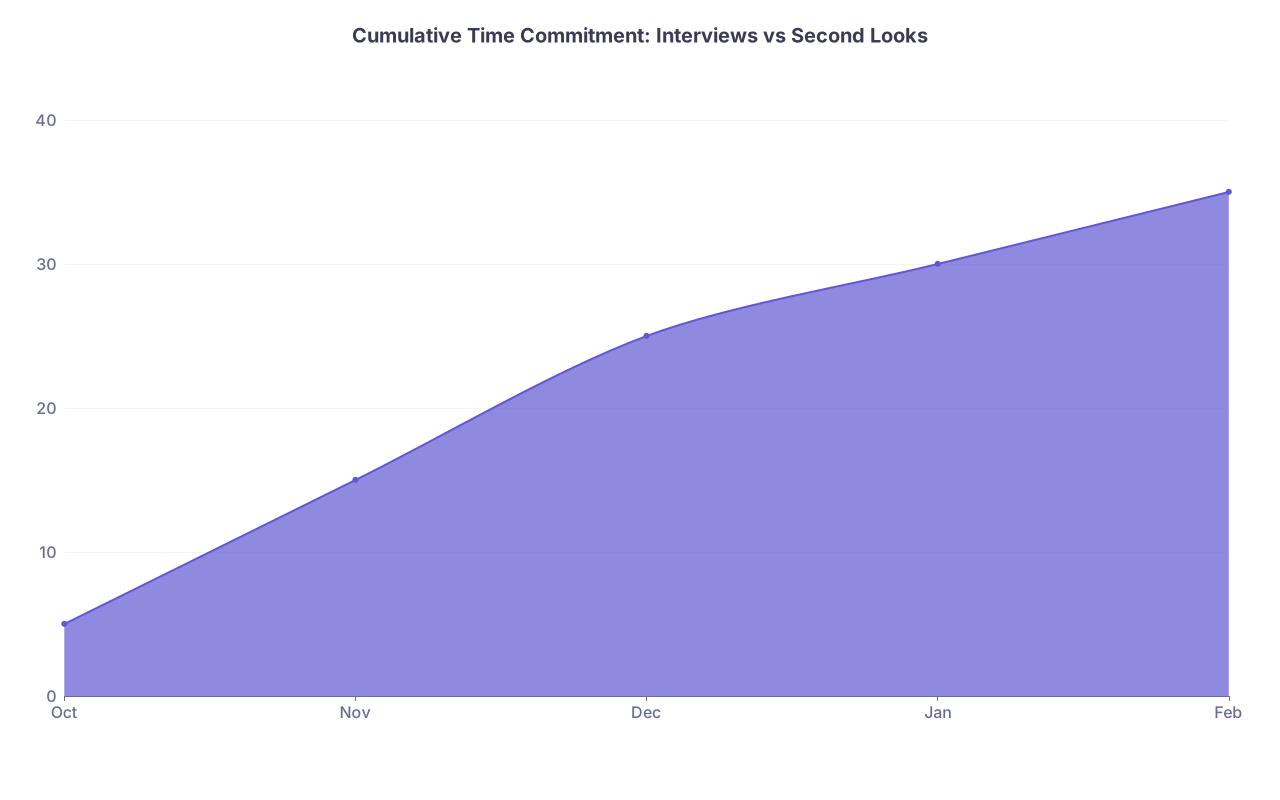
| Oct | 5 |
| Nov | 15 |
| Dec | 25 |
| Jan | 30 |
| Feb | 35 |
By February, your time is already stretched. Piling on extra travel for low-yield visits just adds noise.
Final 3 Days Before Rank List Certification
At this point you should:
- Sit with your final list for 24–48 hours without editing it.
- Re-read your notes from second looks at your top 5.
- Ask one last question: “If I do not match at my #1, will I still be okay with #2 and #3?”
If the answer is yes, you’re done. Certify the list.
The Short Version: What Actually Matters
By the time you hit “Certify,” three things should be true:
- You used second looks surgically—only at programs that were already serious contenders, with clear questions to answer.
- You captured your impressions within 24–48 hours so February-you wasn’t guessing what December-you felt.
- Your final rank list reflects where you can actually live, learn, and not burn out, not just where looked shiny on interview day.
If your second looks helped you move even one program up or down decisively, they did their job. The rest is just noise.