
Only 27% of residents feel their actual autonomy matches what they were promised on interview day.
The rest discover the truth at 2 a.m. on call. When the attending is either nowhere to be found—or sitting next to them, driving every click in the EMR. Second look is your last real chance to figure out which kind of place you are dealing with.
Let me break this down specifically. You are not trying to ask “So… how is supervision here?” That question is useless. Everyone answers the same way: “We give you graduated autonomy with appropriate supervision.” You learn nothing.
You need sharp, concrete, behaviorally anchored questions that expose:
- Who actually makes decisions
- How fast you are trusted with independent work
- How attendings behave when things go wrong
And because this is the “Miscellaneous and Future of Medicine” phase, you also want to see how autonomy and supervision will look 3–5 years from now—under AI, telemedicine, and shifting accreditation pressures.
Below, I will give you advanced second-look questions, how to ask them, what you are listening for, and what should set off alarms.
1. Core Reality Check: Who Actually Holds the Pen?
Start here. If you do not understand who owns orders, notes, and decisions, all the other nuance is noise.
Ask residents variations of these. Do not ask them all at once like a survey. Sprinkle them across different conversations.
1. “On a typical ward day, who usually writes the orders and places critical consults—the intern, the senior, or the attending?”
You want them to talk in specifics:
- “Interns place most orders, seniors double-check complex ones, attendings rarely enter orders unless we are swamped.”
- Versus: “The attending usually puts in all the important orders to be safe.”
If attendings routinely own orders, your “autonomy” will be cosmetic.
2. “For a straightforward admission at 2 a.m., who is expected to generate the initial plan and orders?”
Listen for:
- “The night intern does H&P, plan, and orders. We staff by phone or in the morning depending on acuity.”
- Versus: “We call the attending before placing most orders overnight.”
Excessive overnight hand-holding usually means they do not trust residents or they are terrified of complaints. Neither is good for your growth.
3. “How often do attendings directly edit your notes versus sending feedback or letting them stand?”
You are probing whether you are seen as a learner or as a glorified scribe.
Red flag: “Our attendings prefer to write their own templates so documentation is ‘clean’ for billing.”
That means you are working in their shadow, not learning to think.
2. Graduated Autonomy: How Fast Do They Let Go?
Programs love the phrase “graduated responsibility.” Most never define it. Make them.
4. “Can you walk me through how your level of independence changed from intern year to now on a typical call night?”
A good answer sounds like this (I have heard this at places like UW, Michigan, or UNC):
“As an intern, I would call my senior for all admissions; they expected a full differential and plan before we called the attending. Now as a PGY-3, I see the patient, form a plan, usually run it by my senior only if it is hairy, then staff with the attending. Some attendings are comfortable co-signing without talking to the patient if I know them well.”
Bad answer:
“Honestly it depends on the attending. Some let you run things, others want every decision before you do anything.”
Translation: there is no coherent culture. Your autonomy is a lottery.
5. “What are specific things an intern is not allowed to do here that you think they should be able to do by mid-year?”
You are asking them to expose pain points. Examples they might mention:
- “Interns cannot call certain consults without attending approval.”
- “We are not allowed to discharge without attending seeing the patient, even for 3-day cellulitis.”
Chronic infantilization here is a problem.
6. “By what point in residency do you feel comfortable managing a full service with the attending in the background rather than at the bedside?”
If seniors say “End of PGY-2” or “Early PGY-3” and give concrete stories, that is a good sign. If a PGY-3 shrugs and says “It depends who is on; some people never really let go,” you can predict a weak senior experience.
3. When Things Go Sideways: Supervision Under Stress
You learn more about autonomy in a code or a miss than on a stable clinic afternoon.
7. “Can you tell me about a time a sick patient decompensated unexpectedly—who took the lead, and how did the attending respond?”
You are listening for:
- Residents describing themselves calling the code, leading ACLS, deciding to intubate, then looping in attending.
- Versus attendings walking in and instantly pushing the resident aside.
Green flag example:
“I called the code, ran it, decided to intubate. The attending showed up, stood at the head of the bed, asked a few clarifying questions, but let me run it. We debriefed for 10 minutes afterward.”
Red flag example:
“The attending arrived and basically took over. I was left doing compressions or documenting.”
8. “How does the program handle near misses or bad outcomes involving resident decisions?”
This tells you whether supervision is fear-driven or growth-driven.
Look for language like:
- “We review it at M&M with focus on systems and communication.”
- “The PD met with us, reviewed decision points, and adjusted protocols—but it was not punitive.”
Run if you hear:
- “That resident was never allowed to take overnight call again.”
- “After that, attendings started double-checking every order.”
That is not supervision. That is overcorrection by fear.
4. Autonomy in Clinic, Telehealth, and the “Future” Environment
This is the Miscellaneous and Future of Medicine category; you must ask how autonomy plays out where medicine is actually headed: ambulatory care, telemedicine, and algorithm-heavy environments.
9. “In continuity clinic, at what point are you allowed to independently see, staff, and close the visit without the attending re-examining every patient?”
Good:
“By second year, for simple follow-ups, we see, document, and staff by chart review. Attendings do not re-exam everyone unless there is complexity.”
Bad:
“Attendings are required to see every single patient, so we mostly pre-chart and present quickly.”
That is clinic shadowing, not real ambulatory training.
10. “How are virtual visits supervised here—are attendings silently listening in, or do you run them and then staff?”
You want to hear that residents:
- Conduct the telehealth visit
- Develop a plan
- Then staff asynchronously or briefly with attending
If attendings always sit on the line, you are not learning to own the visit; you are practicing being a PA with an invisible boss.
11. “Are there any AI decision-support tools or embedded pathways that influence orders? How much freedom do you have to override them?”
This is not a tech tourism question. It is autonomy in disguise.
A thoughtful answer:
“We use sepsis prediction and imaging-appropriateness tools. You can override them with justification, and attendings support you if your reasoning is sound.”
Concerning answer:
“The system basically forces you into certain order sets, and attendings get annoyed if you go off-script because it slows things down.”
You will be trained into checkbox medicine, not clinical judgment.
5. Service vs. Education: When Supervision Is Just Billing Control
A lot of supposed “supervision” is about documentation and billing, not your growth. Ask directly.
12. “How often is an attending physically present just to meet billing requirements, even when you already have a solid plan?”
You are not fishing for drama; you are probing the culture. If residents laugh and say, “Yeah, we all know the 10-minute drive-by,” ask:
13. “In those cases, does the attending challenge your reasoning and teach, or mostly cosign what you did?”
If the answer is “mostly cosign,” then you can assume supervision is minimal and autonomy is pseudo-autonomy—you may be doing a lot but not actually getting feedback.
14. “Can you describe a time when an attending overruled your plan mainly for ‘billing’ or ‘protocol’ reasons rather than patient-centered reasons?”
You will sometimes hear:
“We wanted to discharge, but the attending wanted another in-house day for observation because of reimbursement.”
That tells you the power dynamic. And that your “autonomy” will always yield to financial incentives.
6. Inter-specialty Autonomy: How Consults Actually Work
You do not practice in a silo. Autonomy is fragile if every other service can undermine you.
15. “As the primary team, how much authority do you have to push back on aggressive or unnecessary recommendations from consulting teams?”
Good responses:
- “We are encouraged to own the final decision. We document ‘discussed with consult, primary plan differs because…’ and attendings back us.”
Bad ones:
- “Our attendings expect us just to follow whatever cardiology says to avoid conflict.”
16. “Do attendings back you up if you push for a consult when the other service is reluctant to see the patient?”
This is where supervision either protects your autonomy or throws you under the bus.
Green flag:
“If we believe consultation is indicated, our attendings will pick up the phone and advocate. They do not let consultants shame residents for being ‘too cautious.’”
Red flag:
“They usually ask us to ‘work it out’ ourselves; if the consultant refuses, the issue just dies.”
You will learn to stop advocating when you think you are right.
7. Nights, Cross-Cover, and “Real” Independent Work
You want to know what happens when nobody is hovering.
17. “On night float or 24-hour call, what decisions are you expected to make independently before calling the attending?”
Listen for specifics:
- “We adjust insulin, fluids, basic pressor titration, start noninvasive ventilation, call the attending for intubations or transfers to ICU.”
- Or: “We call the attending for any new admission or major order change.”
The latter means you are not actually functioning as a physician on nights. You are a data-collector.
18. “How often do attendings proactively check in at night versus only when you call them?”
There is a sweet spot.
- No contact: abandonment.
- Constant check-ins: micromanagement.
Best answer:
“They usually text at the start of the night to see what is brewing and tell us to call for X/Y/Z. Otherwise, they trust our judgment, but are available and not annoyed when we call.”
19. “Have you ever felt pressure not to call an attending at night even when you thought you should?”
This question usually makes people pause. That pause is informative.
If seniors say:
“With some attendings, yes. They get visibly irritated if you wake them. We warn interns about those names.”
You now know there is an unspoken culture that undermines safe supervision.
8. Feedback Culture: How Autonomy Is Taught, Not Just Granted
Autonomy without feedback is not training; it is neglect.
20. “How often do you get real-time correction of your clinical decisions, not just end-of-rotation evals?”
You want stories like:
“On rounds, attendings routinely ask ‘Walk me through why you chose X over Y’ and then refine your approach.”
Not:
“We get formal Milestone feedback twice a year; daily feedback depends heavily on the attending and often focuses on ‘efficiency’ or ‘communication’ rather than clinical reasoning.”
21. “Can you recall the last time an attending explicitly told you, ‘You have earned more independence in this area’—and then changed their behavior?”
If they cannot recall a single example, “graduated autonomy” is just a brochure term.
A strong program has tangible steps:
- “After my first successful month as senior, they let me run family meetings solo and just summarize afterward.”
- “Once I completed airway training, I was allowed to be primary for intubations with attending backup.”
9. Special Situations: Procedures, ICU, and High-Risk Areas
This is where autonomy is most fragile. And where supervision truly matters.
You are pushing them to name numbers. “It depends” is not helpful.
Example of a good answer from a solid IM program:
“Intern year: guided lines and paras, always supervised hands-on. By mid-PGY-2, if you have documented competence, you can do routine lines with the attending in the room but not scrubbed. By PGY-3, most of us place lines independently with attending available but not present, depending on patient risk.”
23. “Have there been tensions with hospital administration or risk management about residents doing procedures independently? How did the program respond?”
You want to know whose side the PD is on when legal nervousness collides with training.
If you hear:
“After one complication, risk management tried to restrict residents, but the PD fought for structured competency-based sign-offs rather than blanket bans.”
That is the right instinct.
If you hear:
“They just stopped letting us do central lines unless IR was unavailable.”
That is a training failure.
10. How Program Leadership Actually Thinks About Autonomy
You should talk to leadership differently than to residents. They will give you the philosophy; residents tell you the reality.
24. (To PD/APD) “When was the last time you changed a supervision policy because residents were either too constrained or too exposed? What happened?”
If they cannot name a recent example, they are either disengaged or defensive.
Strong programs will say things like:
“We realized our interns had too little say in cross-cover decisions. We changed the escalation algorithm and made sure attendings discussed rationales the next day.”
Or:
“We saw residents were uncomfortable calling attendings at night, so we set a clear expectation: ‘If you are thinking about it, call. You will not be judged.’ Then we held attendings to that.”
25. “How do you measure whether residents are getting the ‘right’ amount of autonomy, beyond Milestone paperwork?”
Look for:
- Chart audits with attention to resident-driven decisions
- Direct observation tools
- Resident surveys specifically about perceived autonomy and safety
If they only mention “accreditation requirements” and “safety metrics,” you know where their priority lies.
11. Comparing Programs: What You Should Actively Track
You are going to hear a lot of qualitative noise. It helps to systematize what you are learning so second-look impressions do not blur together.
| Dimension | Program A | Program B | Program C |
|---|---|---|---|
| Orders mostly entered by | Intern | Attending | Mix |
| Intern overnight independence | High | Low | Moderate |
| Clinic visit ownership by PGY-2 | Yes | No | Partial |
| Procedure independence by senior | Strong | Weak | Moderate |
| Consult pushback supported | Yes | No | Variable |
You can literally sketch something like this on the flight home. It forces you to translate vague vibes into concrete differences.
12. The Future-of-Medicine Angle: Where Is This Going?
Last piece. You are not matching just into 2025. You are matching into the practice patterns of 2030.
26. “How do you see resident autonomy changing here over the next 5–10 years with increasing telemedicine, AI, and system-level oversight?”
You are not looking for futuristic poetry. You want to see if leadership and residents agree on the trajectory.
- If residents say, “We are already feeling more checklists and alerts, but our attendings fight to keep independent decision-making alive,” that is good.
- If leadership says, “We will likely standardize more to reduce variability,” translate that: less autonomy, more protocol.
27. “Do residents have any input when new decision-support pathways, checklists, or telehealth protocols are rolled out?”
This is a small, revealing thing. If residents sit on committees that design pathways, they will be treated as clinicians in training, not just workforce. That mindset extends naturally to autonomy and supervision.
Visual Summary: What Actually Drives Your Autonomy
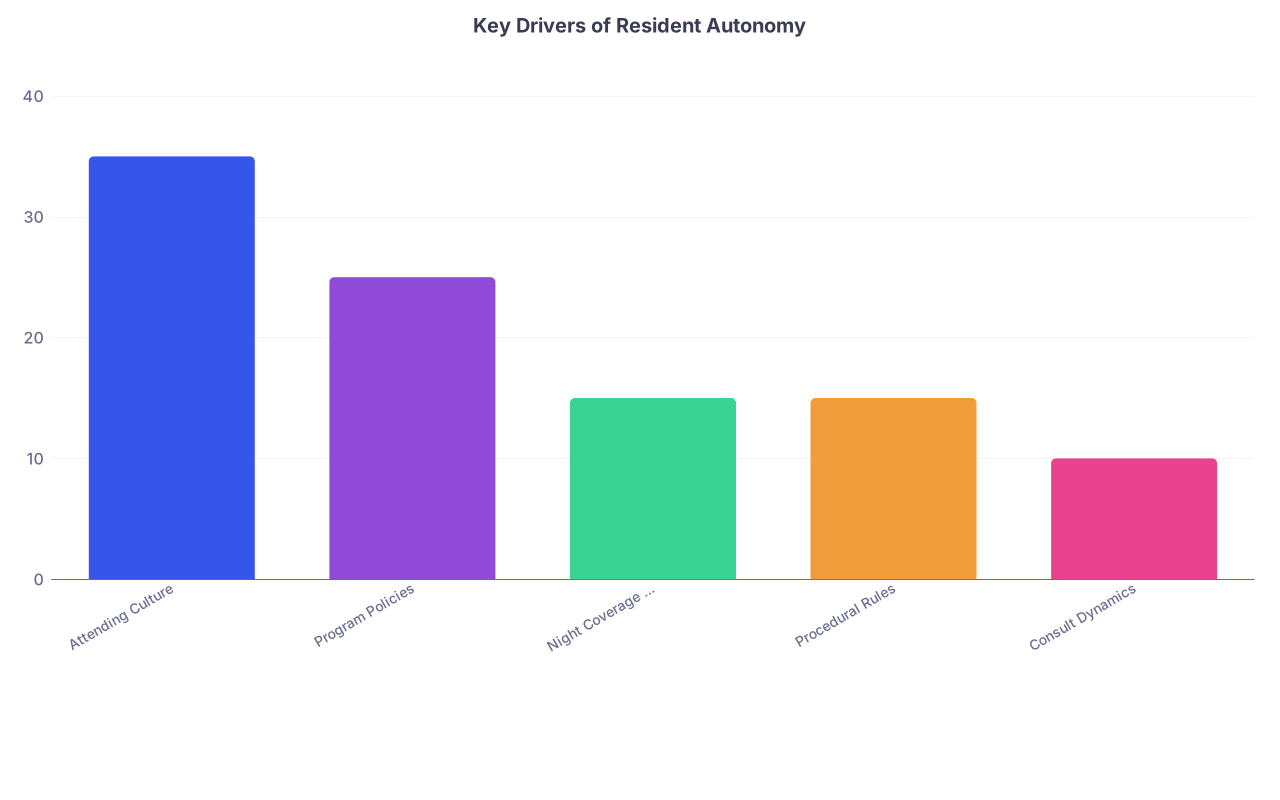
| Category | Value |
|---|---|
| Attending Culture | 35 |
| Program Policies | 25 |
| Night Coverage Model | 15 |
| Procedural Rules | 15 |
| Consult Dynamics | 10 |
Attending culture and program policies dominate. You are using second look to map both.
How to Deploy These Questions Without Sounding Like a Prosecutor
You are not cross-examining. You are sampling.
Structure your second look roughly like this:

| Step | Description |
|---|---|
| Step 1 | Pre-round workroom chat |
| Step 2 | Question about orders and call |
| Step 3 | On rounds side talk |
| Step 4 | Ask about attendings in decompensations |
| Step 5 | Lunch with residents |
| Step 6 | Ask about nights and consults |
| Step 7 | Meeting with PD |
| Step 8 | Ask about policy changes and future |
Do not machine-gun 15 questions at one person. Use 2–3 with interns, 2–3 with seniors, 2–3 with chiefs, and 2–3 with leadership. Then see if the stories align.
Two Moments You Must Watch, Not Ask About
Some autonomy and supervision signals you just observe:

On rounds
Does the attending constantly reword, reframe, and re-decide everything? Or do they say things like: “That is reasonable; I would add X. Let us go with your plan.”In the workroom
Do residents openly question prior-day attending decisions or do they speak in hushed, anxious tones about certain names? A culture of fear shows up in volume and body language more than in formal Q&A.
One Example Schedule of Questions Across the Day
| Time / Setting | Target | Focus Question |
|---|---|---|
| Pre-rounds workroom | Intern | Overnight independence, calling attendings |
| Post-rounds hallway | Senior | Decompensations, running codes |
| Noon conference | PGY-3 | Clinic ownership, consult pushback |
| Afternoon shadowing | Fellow | Procedures, ICU autonomy |
| PD meeting | PD/APD | Policy changes, future autonomy with AI |
You are not interrogating; you are sampling different angles of the same core issue.
One More Lens: Your Risk Tolerance
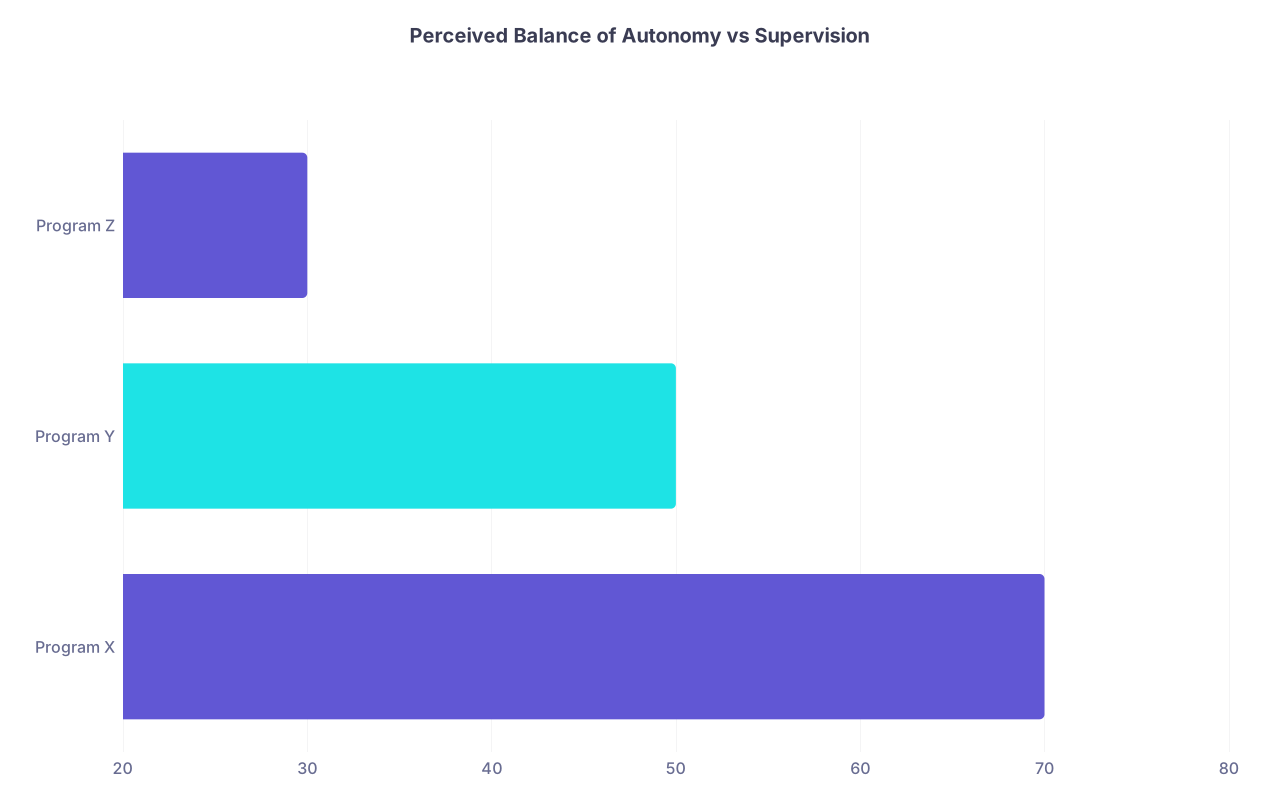
Different programs sit at different points on the autonomy–supervision spectrum.
| Category | Value |
|---|---|
| Program X | 70 |
| Program Y | 50 |
| Program Z | 30 |
- Program X: heavy autonomy, lighter supervision. Great if you are self-directed and comfortable with uncertainty. Risky if you want more guardrails.
- Program Z: heavy supervision, limited autonomy. Good for people who want structured oversight. Risky if you crave independence and rapid growth.
Use these questions to figure where each program sits—then ask whether that fits who you are now and who you want to be in three years.
Final Thoughts
Three key points and I will stop:
- Vague questions about “autonomy and supervision” get brochure answers. Ask about specific situations: nights, codes, consults, clinic, and procedures.
- You are mapping culture, not policy. Listen for stories, inconsistencies between residents and leadership, and how people talk about “good” attendings.
- Autonomy is your main training asset. You want enough independence to grow and enough supervision to be safe. Second look is your last, best chance to see if a program gets that balance right.