
The biggest mistake applicants make on second-look visits is wandering around “getting a feel” instead of executing a plan.
If you treat second look like a vibes tour, you will miss 80% of the real program culture. The hidden 80% is what will determine whether you are supported, exploited, or quietly burned out by PGY-2.
Let me walk you through how to design a ruthless, structured second-look checklist that actually probes culture. Not the laminated “wellness” posters. The truth.
1. What a Second-Look Checklist Is (and Is Not)
A good second-look checklist is a targeted interrogation tool, not a scavenger hunt.
Most applicants show up with vague intentions:
- “I’ll see how happy the residents look.”
- “I’ll ask if people feel supported.”
- “I’ll check out the city.”
Useless. You will get practiced, rehearsed answers and surface-level impressions. Programs know exactly how to look “supportive” and “collegial” for 6 hours.
Your checklist should instead:
- Define specific domains of culture you care about.
- Translate each domain into concrete, observable probes:
- precise questions
- specific people to ask
- behaviors or patterns to look for
- Force you to rate or record what you see, same-day, before memory distortion sets in.
Think of it closer to a mini-ethnographic study than an open house.
To make this real, we will build a checklist around seven culture domains that actually predict resident experience, not brochure quality.
2. The Core Culture Domains You Must Probe
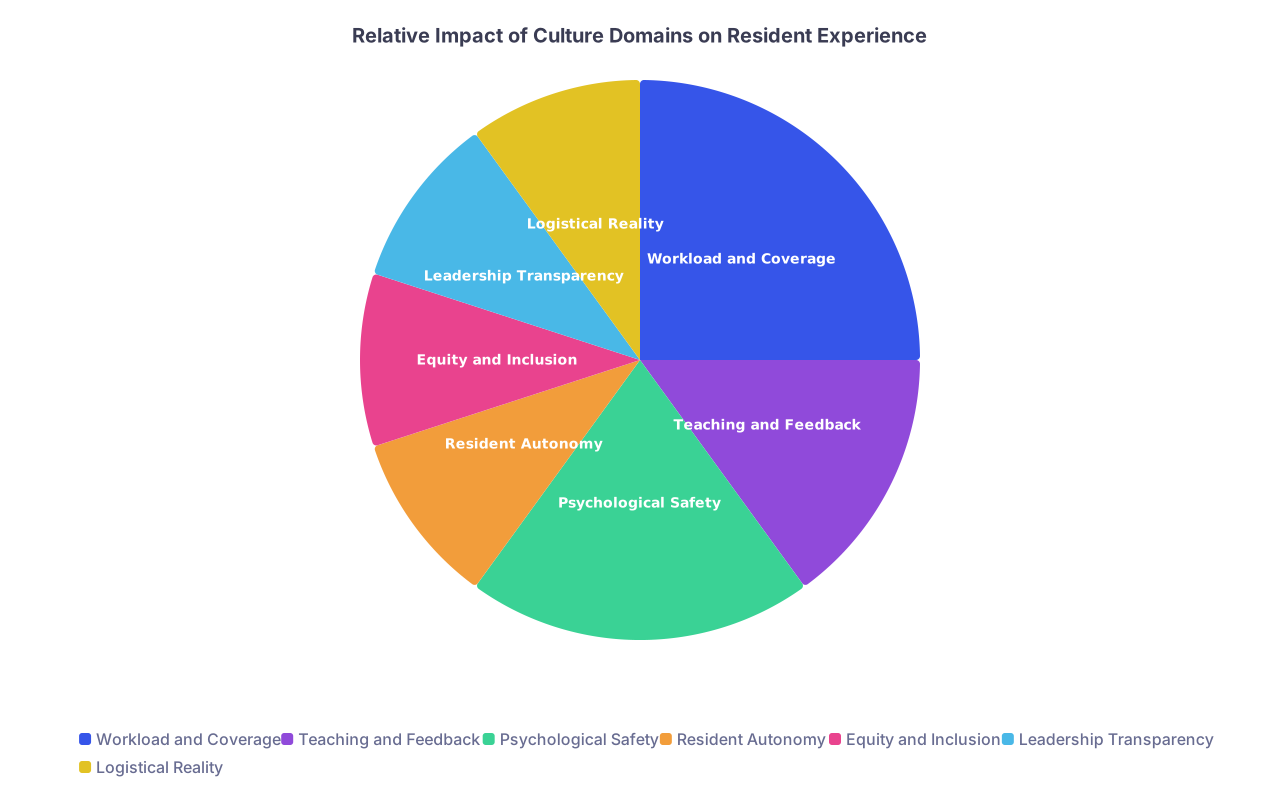
| Category | Value |
|---|---|
| Workload and Coverage | 25 |
| Teaching and Feedback | 15 |
| Psychological Safety | 20 |
| Resident Autonomy | 10 |
| Equity and Inclusion | 10 |
| Leadership Transparency | 10 |
| Logistical Reality | 10 |
These are the domains that repeatedly show up in post-hoc conversations with residents who say “I should have ranked this differently”:
- Workload and coverage norms
- Teaching, feedback, and supervision
- Psychological safety and blame culture
- Resident autonomy vs scut and service
- Equity, inclusion, and how “differences” are handled
- Leadership transparency and responsiveness
- Logistical reality: scheduling, call, flexibility, and “unwritten” rules
We will build questions and observations for each. But first, one key rule.
Who You Talk To Matters More Than What You Ask
If you only talk to:
- PD
- APDs
- Chief residents
- Official “resident ambassadors”
you’ll get the curated version. Not necessarily lies. Just… filtered.
You want:
- 1–2 junior residents (PGY-1 or PGY-2)
- 1 resident who looks tired and is not “on display”
- 1 resident who is a parent / caregiver
- 1 resident from an underrepresented group (racial/ethnic, gender minority, IMG, etc.)
And at least one of those conversations should be off-script:
- Catch them walking between conference and wards.
- Sit with a random table at lunch, not the designated one.
- Ask if there is anyone you can talk to who is on nights or off-site right now (phone, text, Zoom).
Your checklist should specify who you need to hit for each domain.
3. Domain 1: Workload and Coverage – The Unromantic Reality
This is the most heavily whitewashed area on tours. Everyone smiles and says “busy but manageable.” Meaningless. Drill down.
Key Probes
Ask residents, not faculty, and ask for numbers, patterns, and exceptions.
Use questions like:
- “On your heaviest inpatient month, what is a typical day from wake-up to sleep? Walk me hour by hour.”
- “What is the highest number of patients you’ve personally managed on a busy call?”
- “In the last 3 months, how often have you stayed more than an hour past your scheduled time?”
- “What happens if someone calls out sick? Who actually covers?”
You want at least:
- One example of a truly bad day.
- One example of a typical day.
- Confirmation that good days are not rare unicorns.
Red Flags vs Healthy Signs
| Aspect | Healthy Culture Signal | Red Flag Signal |
|---|---|---|
| Patient load description | Gives specific numbers and ranges | “It depends, but it’s fine” with no detail |
| Sick-call coverage | Shared, transparent system | “We just figure it out” or “someone always steps up” |
| Staying late | Acknowledged, tracked, addressed | Brushed off as “part of the job” |
| Vacation coverage | Clear policy, predictable | Guilt, side deals, “we owe each other” |
You are not looking for zero busy days. That does not exist in real programs. You are looking for systems that recognize and manage workload without constant heroics.
4. Domain 2: Teaching, Feedback, and Supervision
Programs all claim “strong clinical training” and “robust didactics.” The question is: for whom, and at what cost?
Specific Questions
Ask residents:
- “How often do attendings directly observe you with patients and give you concrete feedback?”
- “What is the last specific thing you changed in your practice because of feedback from an attending or senior?”
- “Have you ever felt unsafe because of too much autonomy or too little supervision?”
- “How often are conferences protected? Does anyone page you out or pull you away?”
Then ask:
- “What percentage of conferences are high-yield vs a waste of time?”
- “Are there attendings everyone avoids working with? Why?”
If they answer “everyone is great,” that is noise. Real programs have variability. If no one will admit any weakness, either they are terrified or heavily coached.
What You Watch For
Sit in on a real teaching activity if possible:
- Morning report
- Tumor board
- Case conference
- Teaching rounds
You are watching who talks, who gets shut down, and who gets protected.
Do interns ask questions, or only seniors?
Do attendings treat mistakes as learning points or as fodder for humiliation?
You can literally count, in a 60-minute conference:
- Number of times a trainee is cut off mid-sentence.
- Number of times an error is met with “Let us unpack that” vs “No, that is wrong.”
If you walk out of conference with a pit in your stomach, believe that.
5. Domain 3: Psychological Safety and Blame Culture
This is rarely asked directly but makes or breaks your training.
You are trying to answer:
- “What happens here when things go wrong?”
- “What happens when someone struggles?”
Targeted Questions
To multiple residents, ideally of different levels:
- “Tell me about a time someone here seriously struggled clinically or personally. How did the program respond?”
- “Have you ever seen someone harshly blamed for a system problem?”
- “How comfortable are you saying ‘I don’t know’ or ‘I’m overwhelmed’ on rounds?”
- “Do residents ever push back when an order or plan seems unsafe?”
Ask at least one “have you personally…” version:
- “Have you personally ever made a mistake that affected patient care here? How was it handled?”
And one escalation question:
- “If you had a serious issue with a senior or attending, who would you tell, and what would realistically happen?”
Subtle Indicators
You cannot rely only on words. Watch interactions:
- Do residents speak jokingly but respectfully about nurses, consultants, ancillary staff? Or is there contempt?
- Do juniors speak up in front of attendings, or only in the hallway afterward?
- Do residents use phrases like “we can’t say no” / “you just eat it” / “it is what it is”?
Key test: Ask, “What would you change about this program if you had a magic wand?”
If multiple residents say, “Honestly, nothing, it’s perfect,” that is not utopia. That is fear, indoctrination, or second-look theater.
6. Domain 4: Autonomy versus Pure Service
Applicants say they want “strong hands-on training.” Programs translate that into “scut with branding.”
The checklist here is about who is doing the thinking and who is doing the paperwork.
Questions That Expose the Balance
Ask:
- “In your second and third year, which rotations give you the most true decision-making autonomy?”
- “When is the first time you personally led a code, ran a list, or independently handled a cross-cover issue?”
- “On a typical day, what percentage of your time is spent on charting / chasing consults / transportation / making phone calls vs actual clinical reasoning and procedures?”
Force them into percentages.
If every answer sounds like a mission statement, re-ask with: “On your hardest month last year, how did that breakdown actually look?”
Ask focused autonomy questions:
- “When a nurse pages you with a concern, are you allowed to order what you think is needed, or do you always have to page the attending first?”
- “How often do fellows step in and take procedures or decisions that you wanted to do?”
Procedures and Opportunities
For procedural fields especially:
- “Who gets first shot at procedures when there is a fellow on service?”
- “Is there a procedure log or threshold you are expected to hit? How many interns missed that last year?”
- “What happens when someone is weak at a procedure? Extra support? Or they just get sidelined?”
Look for systems that create learning, not just luck.
7. Domain 5: Equity, Inclusion, and How “Different” People Actually Fare
Programs love to show you diversity photos. That tells you almost nothing.
You care about:
- How underrepresented residents are treated.
- Whether microaggressions, harassment, or bias are acknowledged and acted on.
- Whether life circumstances (kids, illness, disability, immigration status) are viewed as problems or realities to be supported.
Questions That Usually Get Real Answers
Ask residents who are not all the same demographic as you:
- “Have you seen or experienced discrimination or bias here? How was it handled?”
- “Do you feel comfortable speaking up when something is off, or do you just vent privately?”
- “Are promotion and fellowship opportunities distributed fairly, or do certain groups seem to get more support?”
Ask about life outside the hospital:
- “How many residents here have kids or significant caregiving responsibilities? How does the program treat them in practice?”
- “Has anyone taken parental leave recently? What actually happened to their schedule?”
This is where programs often say all the right words but the pattern of examples exposes reality.
If three different people say, “We had an issue, but it was taken really seriously and things changed,” that is gold.
If everyone dodges with “I personally have not experienced anything,” you do not yet have enough data.
8. Domain 6: Leadership, Transparency, and Responsiveness
You are not just matching to a bunch of schedules. You are matching to the people who will control your life for years.
You want to measure:
- How often leadership admits mistakes.
- How transparent they are about constraints.
- Whether resident feedback leads to visible change.
Direct Questions to Ask Leadership
During PD / APD / Chair meetings:
- “Can you describe a concrete change you made in the last 1–2 years specifically because residents pushed for it?”
- “What is one thing residents are currently unhappy about that you have not yet solved?”
- “What metrics do you track to monitor resident well-being and burnout, and what have you changed because of concerning trends?”
If leadership answers with:
- Only generic wellness initiatives
- Only ACGME requirements
- Or “our residents are happy overall, we do not have major concerns”
that tells you a lot. Every real program has issues and politics. You want leaders who will say that out loud.
Cross-check With Residents
Then ask residents:
- “What is something you pushed for that actually got changed?”
- “What is something you have been complaining about for years that never moves?”
Compare leadership answers with resident accounts. If they do not line up, assume spin.
9. Domain 7: Logistical Reality – Schedules, Call, and Flexibility
Everyone asks “what is the call schedule?” and then stops. That is like asking “what is your tuition?” and ignoring cost of living, fees, and debt.
You need to get inside the workable vs theoretical schedule.
Build a Micro-Logistics Checklist
Ask:
- “How far in advance do you get your yearly schedule?”
- “How often does your schedule change after it is published?”
- “If something major happens (family emergency, illness, sudden childcare issue), how easy is it realistically to switch? Do people resent you afterwards?”
For call and nights:
- “Show me your actual schedule from your worst month last year. How did you feel by the end?”
- “Post-call, do you usually get out on time or are you working 6–8 more hours?”
- “How many days in a row do you hit 14–16 hours?”
Also ask:
- “How is moonlighting handled? Who gets those opportunities?”
- “Is there an official policy on outside work, or is it ‘don’t ask, don’t tell’?”
You want one resident to literally pull up their schedule app on their phone and walk you through a real block. If no one will show you, that is data.
10. Structuring Your Second-Look Checklist: A Practical Template
Now, let me make this concrete. You need something you can carry (physically or digitally) that structures your day.
Here is a simple, high-yield structure.

A. Pre-Defined Domains and Questions
For each of the 7 domains, pre-write:
- 3–5 key questions
- 1–2 specific people you want to ask (PGY-1, fellow, PD, etc.)
- 2–3 specific things you want to observe, not just ask
B. Rating and Notes Columns
For each domain, build a quick rating:
- Perceived strength (1–5)
- Trust in information (1–5) – how confident you are that answers were honest vs curated
- Examples: space to jot 2–3 short, real examples you heard
Example snippet for your worksheet:
- Domain: Workload/Coverage
- Questions to ask: X, Y, Z
- People: 1 PGY-1 ward, 1 PGY-3 ICU
- Observations: Interactions on sign-out, general affect at noon
- Strength: __/5
- Trust: __/5
- Examples heard:
You want to fill this out the same day, ideally within two hours of leaving.
C. Intentional Free-Text Sections
Leave space for:
- “Weird things I noticed but cannot categorize yet”
- “Comments multiple residents repeated”
- “Contradictions between residents and leadership”
These “misc” notes are where your gut sense often crystallizes later.
11. Designing Your Question Strategy: Direct vs Indirect Probes
Some questions you can ask flat-out. Others need to be more sideways to avoid rehearsed answers.
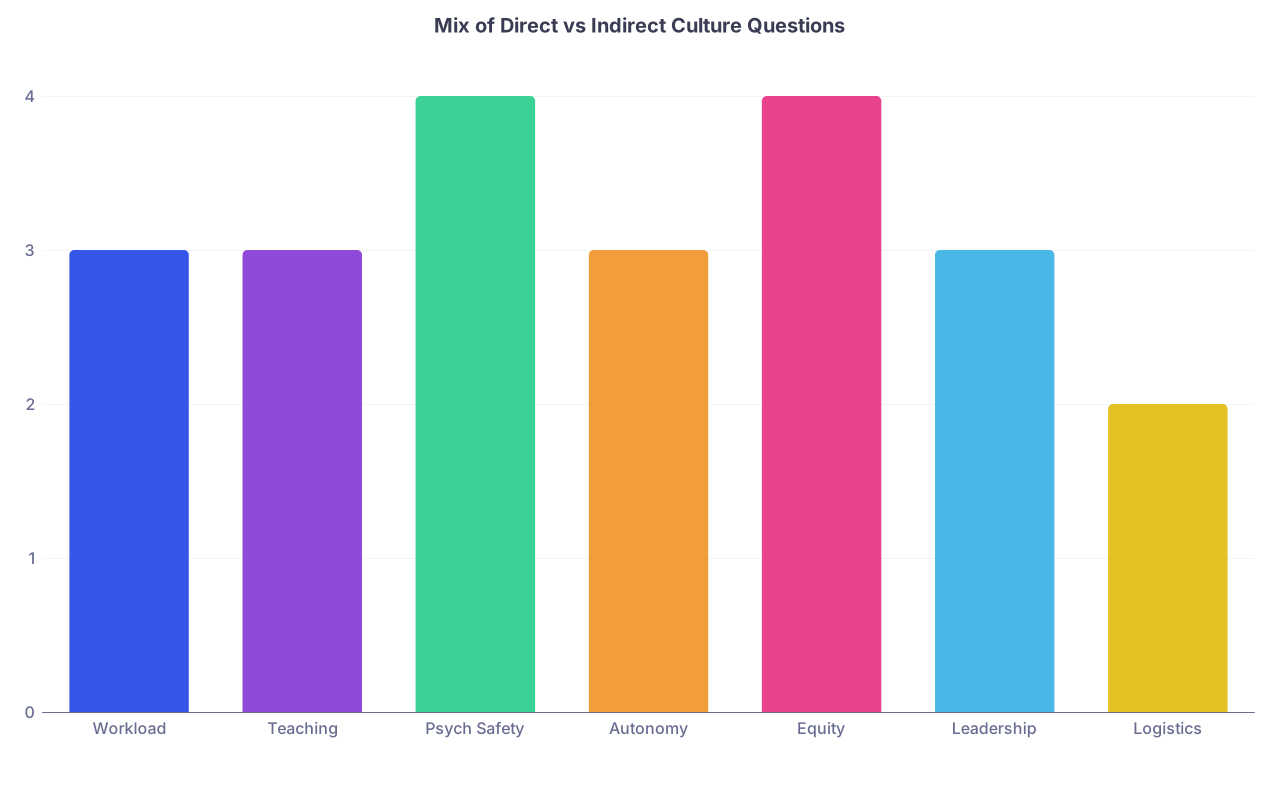
| Category | Value |
|---|---|
| Workload | 3 |
| Teaching | 3 |
| Psych Safety | 4 |
| Autonomy | 3 |
| Equity | 4 |
| Leadership | 3 |
| Logistics | 2 |
(Number roughly indicating how many indirect questions you should prepare per domain.)
Direct Questions
These work when:
- You are in a 1:1 or small-group setting.
- You have already built some rapport.
- The topic is not politically radioactive.
Examples:
- “What would you change about this program?”
- “How is sick coverage handled?”
- “How often do you feel burned out?”
Indirect, Story-Triggering Questions
These work better when people are cautious or heavily observed.
Use:
- “Tell me about the last time…” style:
- “Tell me about the last time you or someone else was seriously overwhelmed here.”
- “Tell me about a time leadership surprised you in a good way.”
- “Tell me about your hardest month so far and how the program responded.”
or:
- “If I asked your co-residents this question, what would they say?”
For example:
- “If I asked your class whether feedback here is mostly helpful or painful, what do you think they would say?”
People often project more honestly when speaking “for others.”
12. Using Off-Script Time Aggressively
The agenda you receive for second look is designed to control your vantage point.

| Step | Description |
|---|---|
| Step 1 | Arrive at Program |
| Step 2 | Formal Welcome |
| Step 3 | Program Overview Talk |
| Step 4 | Guided Tours |
| Step 5 | Structured Resident Lunch |
| Step 6 | Afternoon Sessions |
| Step 7 | Unstructured Gap Time |
| Step 8 | Informal Conversations |
| Step 9 | End of Day |
Your best information usually comes from:
- Between events
- Walking from room to room
- Standing in line for coffee
- Residents who are clearly not on the “showcase” squad
So your checklist should literally have:
- “Use 1 hallway walk to ask about: X”
- “Ask a non-ambassador resident: Y”
- “Check resident room / charting area: observable reality”
Things to eyeball:
- Resident workroom: cluttered but functional vs chaotic misery zone.
- How many residents are charting through conference.
- Tone between nurses and residents at the workstation.
You are not being paranoid. You are sampling the ecosystem.
13. Comparing Programs After Second Look: A Structured Matrix
You will forget details. You will remember emotional impressions. That is fine, but not enough.
After all second looks are done, build a quick comparison matrix.
| Domain | Program A | Program B | Program C |
|---|---|---|---|
| Workload realism (1–5) | 4 | 2 | 3 |
| Psychological safety (1–5) | 5 | 3 | 4 |
| Autonomy vs scut (1–5) | 3 | 4 | 2 |
| Equity & inclusion (1–5) | 4 | 2 | 3 |
| Leadership honesty (1–5) | 5 | 3 | 3 |
Then add two final lines for each program:
- “Biggest strength I actually believe:”
- “Biggest risk I am tolerating if I rank this highly:”
If you cannot articulate the risk, you did not look deeply enough.
14. The Subtle Biases You Need to Guard Against
You are human. You will be swayed by:
- Shiny facilities.
- A city you like.
- One charismatic resident who reminds you of yourself.
- The PD who says they “see you as a great fit.”
Your checklist is your defense against your own bias.
Explicitly separate in your notes:
- “Reasons I like this program emotionally”
- “Evidence I saw of healthy or unhealthy culture”
Because here is the pattern I have seen more than once:
- Applicant loved the city, liked the vibe, and only lightly probed workload.
- Matched there, then discovered:
- 6-day stretches of 15-hour days were normalized.
- Leadership was conflict-avoidant.
- Underrepresented residents quietly left after PGY-1.
- They later say, “I should have asked more direct questions. The signs were there.”
Your goal is not to find a perfect program. It does not exist.
Your goal is to enter with eyes wide open, choosing the trade-offs that align with your values and limits.
15. A Quick, Concrete Example: Building a One-Page Checklist
Let me sketch a compressed, realistic one-page structure you could actually bring.
Top Section: Program Name / Date / Overall Gut (0–10)
- Initial gut on arrival: __/10
- Gut after leaving: __/10
Domain Blocks (each 5–6 lines)
Workload & Coverage
- Ask: “Describe your worst month last year.”
- Ask: “How often do you leave on time?”
- Observe: energy level in resident room at midday.
- Strength: __/5 Trust: __/5
- Example quote: “____________________________________”
Teaching & Feedback
- Ask: “Last specific feedback that changed your practice?”
- Observe: Who talks and who shuts down in conference.
- Strength: __/5 Trust: __/5
- Example: “____________________________________”
Psychological Safety
- Ask: “Tell me about a time someone made a big error here.”
- Ask: “If you feel overwhelmed, who do you tell?”
- Strength: __/5 Trust: __/5
- Example: “____________________________________”
Autonomy vs Service
- Ask: “When did you first feel like the primary decision-maker?”
- Ask: “% of time on paperwork vs thinking?”
- Strength: __/5 Trust: __/5
Equity & Inclusion
- Ask: “Have you seen discrimination and how was it handled?”
- Ask parent or URM resident: “Do you feel supported here?”
- Strength: __/5 Trust: __/5
Leadership & Responsiveness
- Ask PD: “One change from resident feedback last year?”
- Ask residents: “What have you been complaining about for years?”
- Strength: __/5 Trust: __/5
Logistics & Flexibility
- Ask: “Show me your actual worst month schedule.”
- Ask: “What happens with real emergencies?”
- Strength: __/5 Trust: __/5
Bottom Section: Final Reflections
- Major pros (with evidence):
- Major risks (with evidence):
This is not pretty. It is functional. That is exactly what you need.
16. A Note on the “Future of Medicine” Angle
You are not just matching for 2025–2028. You are stepping into a profession that is shifting under your feet:
- More metrics and surveillance.
- More burnout and attrition.
- More scrutiny of wellness and equity (sometimes genuine, sometimes performative).
Your second-look checklist should therefore also ask:
- “How has this program changed in the last 5 years?”
- “What changes do you see coming in the next 3–5 years, and how are you preparing for them?”
You want leaders who:
- Talk honestly about electronic record burdens, staffing issues, and evolving ACGME rules.
- Have specific plans to adapt, not just slogans.
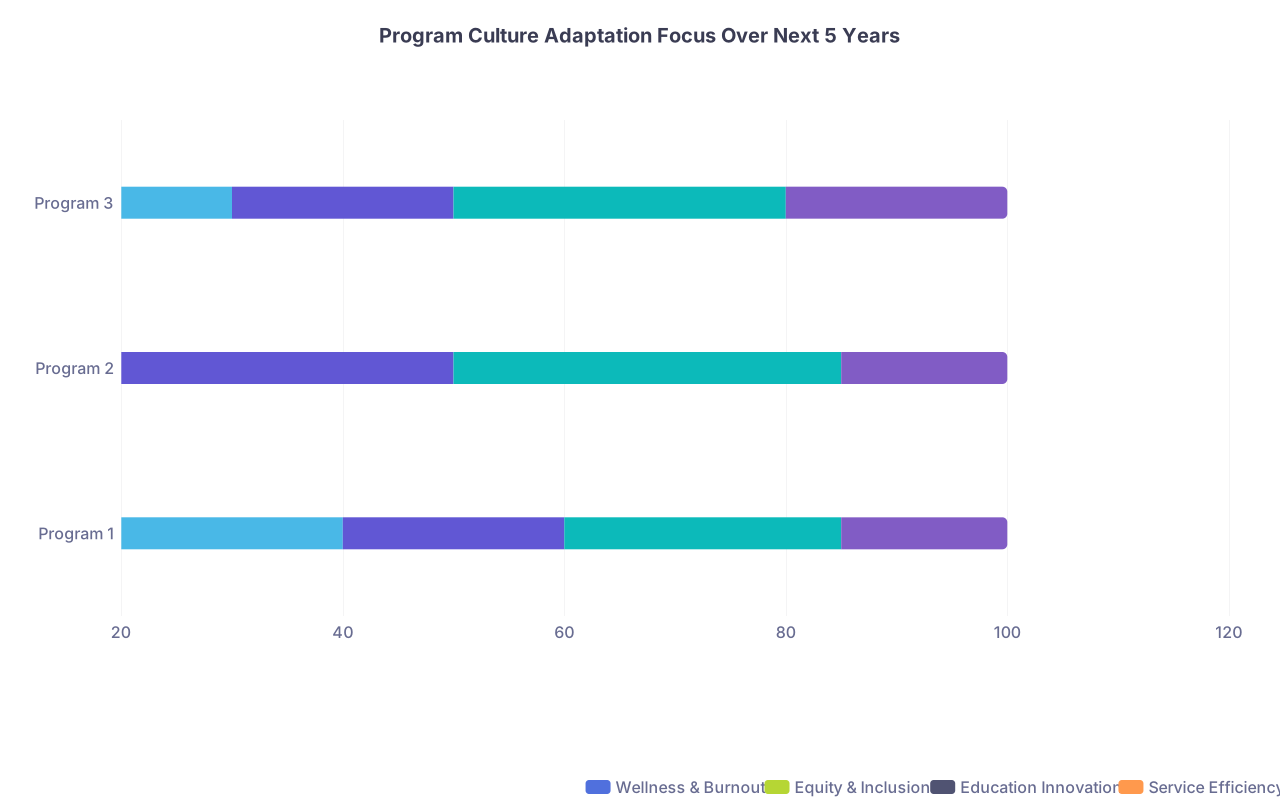
| Category | Wellness & Burnout | Equity & Inclusion | Education Innovation | Service Efficiency |
|---|---|---|---|---|
| Program 1 | 40 | 20 | 25 | 15 |
| Program 2 | 20 | 30 | 35 | 15 |
| Program 3 | 30 | 20 | 30 | 20 |
The programs that own their imperfections and describe where they are heading are generally safer bets than the ones pretending everything is already fixed.
17. Final Synthesis: How to Actually Use This
Last step. Evening of your second look, pull out your checklist and force yourself to answer three questions:
“If I had to start here next month, what would I be excited about?”
Write three concrete things tied to what you saw or heard.“What specific scenario am I afraid of facing here?”
Overwork with no backup? Being the only minority resident with no support? Toxic attending that everyone tiptoes around?“On balance, do I trust this culture to have my back when (not if) I hit a wall?”
Yes / No, with one sentence of justification.
If you cannot say “yes” with some conviction, that program should not sit at the very top of your list, no matter how shiny the nameplate.

Key Points to Take Away
- A second-look checklist is not about being organized. It is about forcing honest, domain-specific interrogation of program culture that cuts through the sales pitch.
- The most predictive domains are workload norms, psychological safety, equity, and leadership responsiveness. Design your questions and observations around those, not just “how happy does everyone look.”
- After each visit, translate your notes into explicit pros, risks, and trust ratings. Your future self, exhausted halfway through intern year, will care much more about the patterns you uncovered than the hospital atrium or the free lunch.