It’s Sunday night. Your phone just buzzed with a reminder: “Second look – 7 days.” You’ve got one or two visits lined up at programs that could end up at the very top of your rank list.
You are past the “spray and pray” phase. This is sniper work now. One week to turn “I liked that place” into “I know exactly where this fits on my list” — and to make sure they remember you as more than “the applicant in the gray suit.”
Here’s what that week should look like, day by day.
Big Picture: What a Second Look Is (and Isn’t)
Before we go day-by-day, you need the frame.
A second look visit is:
- For you to clarify fit, culture, and day-to-day reality
- For them to confirm their read on you (even if they swear it’s “not evaluative”)
- A chance to deepen specific relationships, not re-do interview day
A second look is not:
- A place to re-litigate your CV
- The time to fish for ranking info
- A mandatory event — but it can absolutely swing your own rank decisions
You have 7 days. Treat it like the final week before an exam: targeted, structured, no fluff.
Day 7: Lock Your Strategy and Logistics
Seven days out, you’re setting the board. No improvising later.
At this point you should:
Clarify your goal for this visit Pick 1–2 primary questions the visit must answer. For example:
- “Can I see myself doing 80-hour weeks with these people and not hate my life?”
- “Will they actually support my interest in clinician-educator work, or is that just brochure talk?”
- “How malignant is the call schedule really?”
Write these down. Physically. On paper or in your phone.
Confirm the structure of the day Pull up the email from the program coordinator and actually read it line by line. Look for:
- Arrival time and location (clinic vs main hospital vs education building)
- Dress code (if not mentioned, default to business-casual leaning formal)
- Scheduled events: morning report, noon conference, rounds, social events
- Who you’re meeting: PD, APDs, chief residents, fellows, residents on service
If anything’s unclear, email the coordinator today. Don’t be the person asking “where do I park?” at 6:30 AM the day of.
Lock in travel and backup plans
- Flights/train booked with reasonable buffer (aim to arrive at least the evening before)
- Hotel or housing sorted (close to the hospital, not 45 minutes away in traffic)
- Backup plan: Uber/Lyft numbers saved, hospital address bookmarked, parking instructions screenshotted
Research your key people Make a quick list of 3–5 names you’re likely to see:
- Program director
- One or two APDs or key faculty
- Chiefs
- Any resident you clicked with on interview day
Spend 20–30 minutes:
- Reading their faculty bios
- Noting any overlapping interests (education, QI, global health, specific subspecialty)
- Writing 1–2 specific potential questions per person
Decide how this visit could change your rank list Force yourself to name the competing programs:
- “I’m basically deciding between X and Y.”
- Or “I need to know if X jumps ahead of my current #3.”
Once you admit who you’re comparing, the questions you need to ask become obvious.
Day 6: Build Your Question Bank and Info Targets
Six days out, you’re not rewriting your personal statement. You’re building a targeted reconnaissance plan.
At this point you should:
Identify what you still don’t know Go back to your interview notes (if you did not take notes then, that was a mistake — fix it now by scraping your memory). Look for gaps in:
- Call schedule and actual vs contract hours
- Autonomy: who runs codes, who does procedures, how early interns get real responsibility
- Fellowship outcomes and mentorship patterns
- Program culture: feedback, remediation, how they handle struggling residents
- Location realities: commuting, housing, partner job market, childcare (if relevant)
Group your questions by audience Stop asking residents questions meant for the PD, and vice versa. Rough guide:
Ask residents:
- “What surprised you most, good or bad, after starting?”
- “If you had to pick again, would you still come here?”
- “Who are the attendings everyone wants to work with? Why?”
- “When something goes wrong for a resident, how is it handled?”
Ask PD/APDs/faculty:
- “How do you see the program changing over the next 3–5 years?”
- “What kind of resident thrives here and what kind tends to struggle?”
- “How do you protect resident education when service demands spike?”
- “Can you walk me through how you support residents aiming for [your specific career goal]?”
Create a one-page visit sheet One piece of paper or one phone note with:
- Top 3 goals for the visit
- 6–10 key questions (grouped by resident vs faculty)
- Names of specific people you hope to talk to
- Quick logistics: address, start time, coordinator phone number
You’ll glance at this the night before and in the morning. That’s it.
Reach out to 1–2 residents in advance If there’s a resident you clicked with on interview day or on social media:
- Send a short email/message:
“Hi Dr. X, I’m coming back for a second look next [day]. You were really helpful when we spoke on interview day, and I’d love to say hello and maybe ask a couple more questions if you’re around. No pressure if you’re busy.”
Sometimes that person will quietly become your guide for the day. That’s gold.
- Send a short email/message:
Day 5: Polish Your Profile and Narrative
Five days out, you’re tightening how you come across. No one wants your whole life story on a busy rounds day. They do want clarity.
At this point you should:
Know your 2–3 sentence “who I am + what I want” You’ll be asked variations of “So remind me where you’re from / what you’re interested in?” about 30 times.
Have a tight, consistent answer. Example:
- “I’m a fourth-year at UMich, originally from Ohio. I’m leaning toward cardiology but with a strong interest in medical education, especially curriculum design. I’m looking for a program where there’s strong mentorship and room to grow as a teacher.”
Not a speech. Just a clean starting point.
Update any easily visible profiles
- LinkedIn (if you actually use it)
- Twitter/Threads if you’re active in #MedTwitter and have attendings there
- Institution webpage if you have a student profile
You don’t need a total overhaul. Just make sure:
- Your intended specialty is accurate
- No obviously outdated or cringe content
- Nothing that contradicts what you told them on interview day
Review your own ERAS application Sounds dumb, but I’ve watched applicants blank when an attending says, “Tell me more about that QI project you did with sepsis alerts.” Because they forgot they even mentioned it.
Skim:
- Research entries
- Work/volunteer experiences
- Personal statement key points
Your story should match what they already saw.
Tighten up your wardrobe choice Choose now:
- Main outfit (business-casual or light-suit depending on program vibe)
- Comfortable but clean shoes (you may be walking a ton)
- Layers (hospitals are either meat lockers or saunas)
Try it on. Check for:
- Wrinkles
- Missing buttons
- Shoes that will destroy your feet by noon
Day 4: Deep Dive on Program Reality and Data
Four days out, you move from “vibes” to hard details.
At this point you should:
Review program data and outcomes
Look up:
- Recent fellowship match lists
- Board pass rates (if available)
- Case volume and patient mix (community vs tertiary vs quaternary)
- Any recent expansion or restructuring
Note any specific things you want clarity on:
- “You’re expanding class size from 14 to 18 — how are you adjusting resident coverage?”
- “Your ICU months seem heavier than others — how does that feel to residents in real life?”
Compare this program to your other front-runners
Make a quick comparison grid.
Second Look Comparison Grid Factor Program A Program B Program C Location fit Culture (supportive vs cutthroat) Fellowship prospects Workload / hours Teaching quality You’ll fill this in after the visit, but seeing the blank boxes now reminds you what to pay attention to.
Scan for recent news Google the program and institution:
- “Program name residency changes”
- “Hospital name expansion/news/merger”
- “Department name chair change”
If there’s a new chair, merger, or major reorg, you want to know how they spin it and how residents feel about it. Two very different stories.
Clarify the line between appreciating and pestering You’re allowed to be enthusiastic. You’re not allowed to be clingy.
Bad: “This program is my absolute number one and I’ll die if I don’t match here, can we meet again after my second look?”
Better: “I really enjoyed my interview day and I’m looking forward to seeing more of the day-to-day. I especially want to learn more about X.”
Day 3: Practice Conversations and “On-Stage” Time
Three days out, you practice the soft skills. This part actually moves the needle.
At this point you should:
Rehearse answer frameworks A few things you’re likely to be asked in informal conversations:
- “So what are you looking for in a program?”
- “Where else are you looking seriously?”
- “What kind of career do you see yourself in 10 years from now?”
- “What did you think after your first interview day here?”
You don’t need memorized scripts, but you do need:
- A consistent, honest answer that doesn’t sound scattered
- A way to answer “where else” that isn’t a ranking reveal:
- “I’m mainly focusing on strong academic programs in the [region] with good mentorship in [field]. I’ve seen a few that fit that, and this is definitely in that group.”
Practice shifting the spotlight The easiest way to be memorable in a good way: show thoughtful curiosity.
Get used to phrases like:
- “What do you wish applicants understood about this program that doesn’t come across on paper?”
- “If your best friend were applying here, what would you tell them honestly?”
You’re not there to perform nonstop. You’re there to engage like an actual future colleague.
Tighten your time-on-service etiquette If you’ll be shadowing:
- You do not touch the EMR. You do not offer to “help” place orders. You observe and ask smart questions when the team isn’t drowning.
- You don’t grandstand on rounds. If they ask your opinion on a plan, keep it concise and humble:
- “I was thinking about X, but I’d love to hear how you approach it here.”
- You read the room. If a code just happened, that’s not when you ask about the wellness committee.
Day 2: Logistics Rehearsal and Mental Prep
Two days out, you’re moving from planning to execution mode.
At this point you should:
Walk through the schedule hour-by-hour Picture it:
- “Arrive at 7:15, meet coordinator at 7:30.”
- “Morning report 8–9.”
- “On rounds 9–11.”
- “Noon conference with residents.”
- “Afternoon: clinic / tour / 1:1 with PD.”
Decide when you’ll:
- Ask resident-heavy questions (usually around noon conference / informal time)
- Ask PD/faculty questions (during any dedicated meeting time)
- Take 2–3 minute breaks to jot notes on your phone
Prepare your “pocket kit” Night-before packing list:
- Phone + portable charger
- Pen + mini notepad (yes, still useful)
- Mints, not gum
- Travel-sized deodorant
- Printed or digital copy of the schedule and coordinator contact info
- ID and any required badges/emails accessible
Decide your boundaries Second looks can become awkward when:
- You’re pulled into patient care scenarios that feel uncomfortable
- Someone starts fishing about your rank list
- You’re asked to do something that feels evaluative
Prep phrases:
- Rank-list fishing:
“I’m still finalizing my list, but this visit is a big part of that. I’ve been really impressed by [X/Y].” - Being asked to “help” with real care:
“I’m happy to observe, but I’d rather not place orders or write in the chart since I’m just visiting.”
Day 1: Travel Day and Light Review
Day before. No cramming. Just execution and light mental rehearsal.
At this point you should:
Get there early and eliminate avoidable stress
- Arrive in town with enough buffer for delays
- Check into hotel, locate the hospital on Maps, estimate commute time with rush hour
Walk or drive the route once Even if it’s just a 10-minute walk, know:
- Which entrance you’re using
- Where to park if you’re driving
- How long the elevator ride and internal walk will add
Do a 20–30 minute light review Skim:
- Your one-page visit sheet
- Faculty names and 1–2 things about each
- Your key comparison questions vs other programs
Then stop. No one does better on four hours of anxiety-scrolling.
Set two alarms and lay everything out
- Clothes ironed and ready
- Bag packed with pocket kit
- Alarms set with backup
- Phone fully charged
Aim for 7–8 hours of sleep like you would before Step. You need your brain online.
Day 0: The Second Look Day – Hour-by-Hour Tactics
Today’s the show. You’re not performing for a grade, but you are forming long-term impressions.
At this point you should:
First 30–60 minutes: Observation mode Walking in:
- Notice how residents interact with each other: eye contact, jokes, tension level
- Listen to how they talk about patients and nurses
- Watch how attendings speak to residents in front of you
This tells you more about culture than any official answer.
Morning clinical time: Ask process questions, not resume questions During rounds or clinic:
- “How much autonomy do interns have day to day?”
- “How much does this differ by attending?”
- “When you’re overwhelmed on service, what support actually shows up?”
Don’t argue their answers. Just note them.
Noon hour: Resident reality check Noon conference or lunch is often your best raw-data time. You ask:
- “What’s something you wish you’d known before you matched here?”
- “Is there anything you’d change about the program if you could?”
- “Where do you see most of the graduates going — and do they feel prepared?”
Note how unified or fragmented the responses are. If PGY1s and PGY3s are telling very different stories, that’s a flag to explore.
PD/APD meeting: Future and fit questions This is where you get concrete on your own trajectory. Ask:
- “If I came here and wanted to aim for [fellowship/role], what would you suggest I do in my PGY1 year?”
- “What are you most proud of about how this program has changed recently?”
- “What changes do you foresee in the next few years that would impact residents directly?”
Before leaving that room, say one clear, honest line about your interest:
- “This visit has really solidified that this program is at or near the very top of my list.”
If that’s true, say it. Stop dancing around it.
5. End of day: Immediate debrief (15–20 minutes) Before you go to dinner, before you call friends, sit somewhere quiet and answer:
- Gut check: “Could I see myself here, exhausted and on call, and still okay?”
- “What surprised me in a good way?”
- “What surprised me in a bad way?”
- “How do I feel about this program vs [other serious contender] right now?”
Fill in your comparison grid while it’s fresh. Don’t wait.
Day +1: Convert Impressions into Rank List Movement
The day after matters more than you think. This is when you crystallize what you learned.
At this point you should:
1. Write a short, specific thank-you email Not a novel. 4–6 sentences to:
- Program director / APDs you met
- Any resident who spent meaningful time with you
Template:
Dear Dr. [Name],
Thank you for allowing me to return for a second look yesterday. Seeing [specific conference/rounds/clinic] and talking with your residents gave me a much clearer picture of the program. I was especially impressed by [one concrete detail]. The visit confirmed that your program is one where I could see myself growing as a [future role].
Best,
[Name]
Do not promise you’re ranking them #1 unless that’s absolutely true.
2. Re-rank in a draft, not in your head Pull up your rank list draft and actually move the program up or down based on:
- Culture fit
- Training quality
- Long-term alignment with your goals
- How you felt leaving compared with your other second looks
Don’t over-weight the most recent visit just because it’s fresh. Check against your notes from other places.
- Close the loop on your questions
Anything still nagging at you?
- If it’s a small detail, let it go. No program is perfect.
- If it’s major (e.g., unclear changes that could drastically affect training), one concise follow-up to the coordinator or a trusted resident is reasonable.
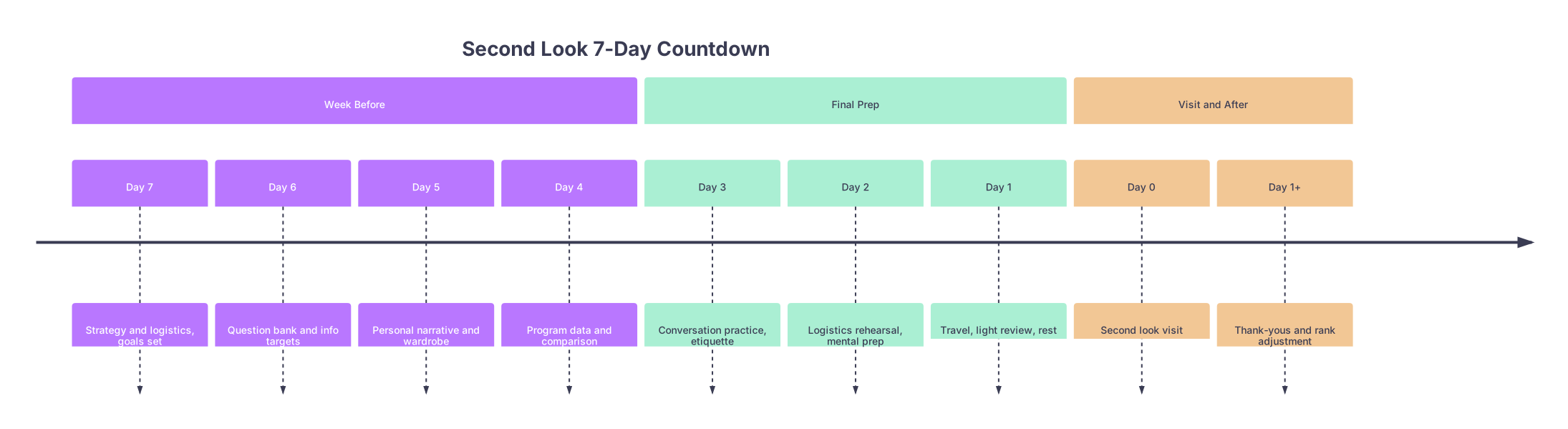
One-Glance Timeline
| Period | Event |
|---|---|
| Week Before - Day 7 | Strategy and logistics, goals set |
| Week Before - Day 6 | Question bank and info targets |
| Week Before - Day 5 | Personal narrative and wardrobe |
| Week Before - Day 4 | Program data and comparison |
| Final Prep - Day 3 | Conversation practice, etiquette |
| Final Prep - Day 2 | Logistics rehearsal, mental prep |
| Final Prep - Day 1 | Travel, light review, rest |
| Visit and After - Day 0 | Second look visit |
| Visit and After - Day 1+ | Thank-yous and rank adjustment |
What You Should Walk Away With
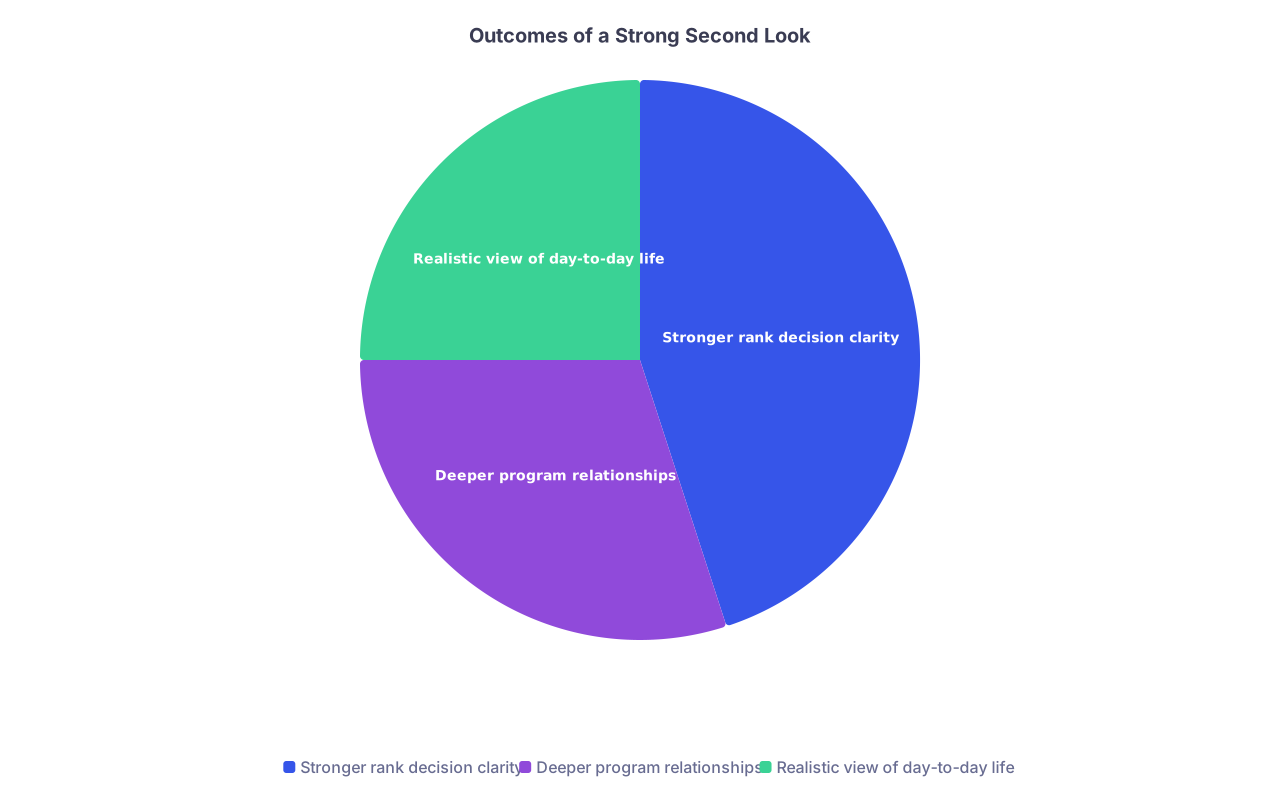
By the time this is done, you’re aiming for three things:
| Category | Value |
|---|---|
| Stronger rank decision clarity | 45 |
| Deeper program relationships | 30 |
| Realistic view of day-to-day life | 25 |
And visually, the “before vs after” clarity should feel like this:
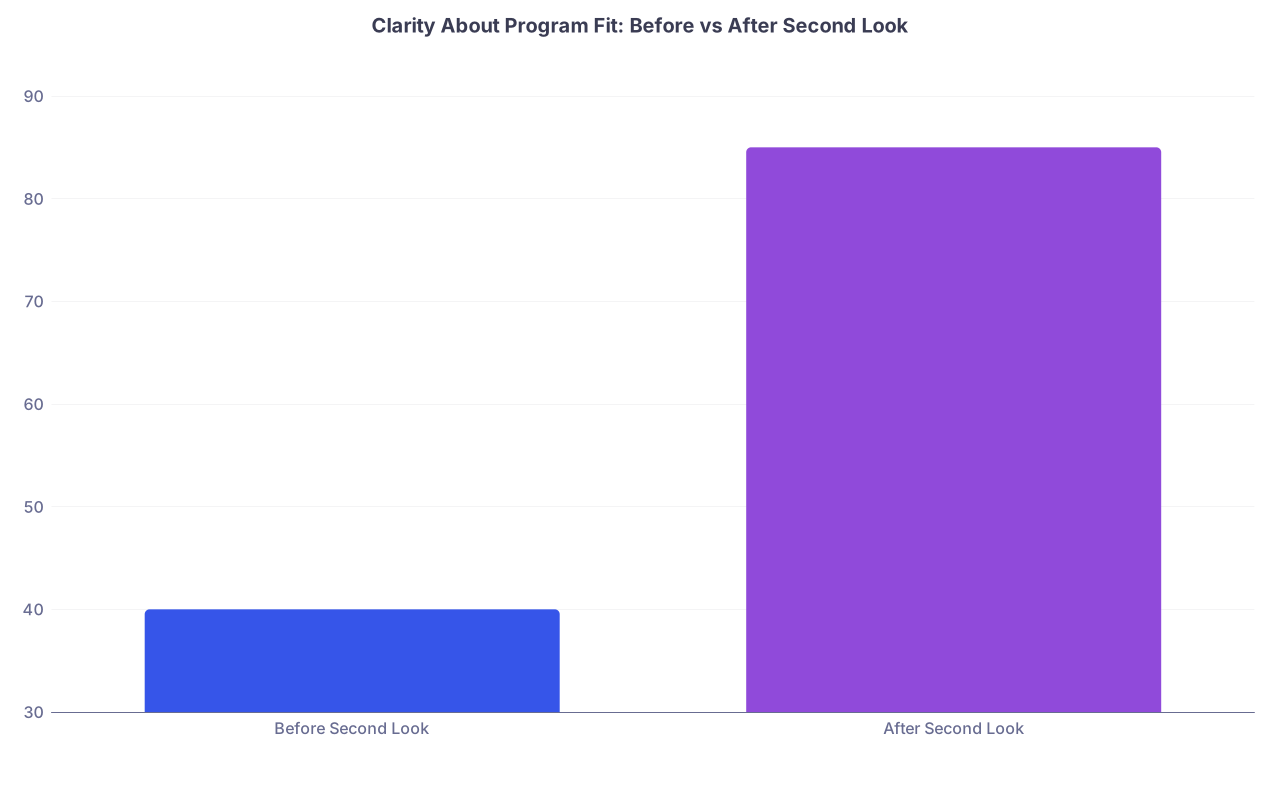
| Category | Value |
|---|---|
| Before Second Look | 40 |
| After Second Look | 85 |
Final 3 Takeaways
- Treat the 7 days before a second look like the last week before a major exam: focused, specific, and planned by the day.
- Go in with clear questions and comparison points, not just “I want to see the vibe again.”
- Use the visit — and the day after — to make hard rank decisions, not to chase validation from the program.